Economics and Investing:

Illinois Revenue Freefall: Fiscal Year-to-Date -8.1% and Worsening. Sadly, my state of Connecticut seems to be going down the same path! Now they are talking about a HUGE tax on our hospitals! – H.L.

o o o

Time To Hedge State Reserve Funds With Gold. Excerpt: “Financially prudent individuals set aside surplus funds to protect against unforeseen expenditures. This way, when faced with loss of income, house repairs, car trouble, or anything else, they will have a buffer against unanticipated downturns.” – H.L.

o o o

Stores Are Closing at a Record Pace as Amazon Chews Up Retailers. Sad. Soon everything will have to be purchased online or over the phone. ?- DSV

o o o

QE Infinity And The Two Biggest Risks To World Markets

o o o

SurvivalBlog and its editors are not paid investment counselors or advisers. Please see our Provisos page for details.


Odds ‘n Sods:

SurvivalBlog reader T.N. joined in the conversation of EMP and our nation’s difficult-to-replace power transformers with this impressive news item from 2015 about one of the huge transformers being delivered to southern Utah: Huge transformer to arrive in Monticello Monday. This certainly puts the problem in perspective!

o o o

Showing once again the futility and pointlessness of gun control laws: Neighbor used homemade air gun to kill Lehigh County mom -Will we outlaw plumbing supplies next? – T.P.

o o o

Map showing why Europe will be extinct These maps show how fragmented Europe is and why the European Union is destined for extinction. – G.P.

o o o

More on the private property issue we have been talking about on SurvivalBlog: Law School Professors Reject Property Rights. – B.B.

o o o

The Vast, Secretive Face Database That Could Instantly ID You In A Crowd – B.B.


Notes for Friday – April 07, 2017

April 7th is the birthday of Colonel Bob Denard (born 1929, died October 13, 2007). He had an amazing life as a mercenary, including four attempted coups in the Comoros.

o o o

Today, we present another entry for Round 70 of the SurvivalBlog non-fiction writing contest. The nearly $15,000 worth of prizes for this round include:

First Prize:

  1. A $3000 gift certificate towards a Sol-Ark Solar Generator from Veteran owned Portable Solar LLC. The only EMP Hardened Solar Generator System available to the public.
  2. A Gunsite Academy Three Day Course Certificate that is good for any one, two, or three day course (a $1,195 value),
  3. A course certificate from onPoint Tactical for the prize winner’s choice of three-day civilian courses, excluding those restricted for military or government teams. Three day onPoint courses normally cost $795,
  4. DRD Tactical is providing a 5.56 NATO QD Billet upper with a hammer forged, chrome-lined barrel and a hard case to go with your own AR lower. It will allow any standard AR-type rifle to have a quick change barrel, which can be assembled in less than one minute without the use of any tools and a compact carry capability in a hard case or 3-day pack (an $1,100 value),
  5. An infrared sensor/imaging camouflage shelter from Snakebite Tactical in Eureka, Montana (A $350+ value),
  6. Two cases of Mountain House freeze-dried assorted entrees in #10 cans, courtesy of Ready Made Resources (a $350 value),
  7. A $250 gift certificate good for any product from Sunflower Ammo,
  8. Two cases of Meals, Ready to Eat (MREs), courtesy of CampingSurvival.com (a $180 value).

Second Prize:

  1. A Model 175 Series Solar Generator provided by Quantum Harvest LLC (a $439 value),
  2. A Glock form factor SIRT laser training pistol and a SIRT AR-15/M4 Laser Training Bolt, courtesy of Next Level Training, which have a combined retail value of $589,
  3. A gift certificate for any two or three-day class from Max Velocity Tactical (a $600 value),
  4. A transferable certificate for a two-day Ultimate Bug Out Course from Florida Firearms Training (a $400 value),
  5. A Trekker IV™ Four-Person Emergency Kit from Emergency Essentials (a $250 value),
  6. A $200 gift certificate good towards any books published by PrepperPress.com,
  7. A pre-selected assortment of military surplus gear from CJL Enterprize (a $300 value),
  8. RepackBox is providing a $300 gift certificate to their site, and
  9. American Gunsmithing Institute (AGI) is providing a $300 certificate good towards any of their DVD training courses.

Third Prize:

  1. A Royal Berkey water filter, courtesy of Directive 21 (a $275 value),
  2. A custom made Sage Grouse model utility/field knife from custom knife-maker Jon Kelly Designs, of Eureka, Montana,
  3. A large handmade clothes drying rack, a washboard, and a Homesteading for Beginners DVD, all courtesy of The Homestead Store, with a combined value of $206,
  4. Expanded sets of both washable feminine pads and liners, donated by Naturally Cozy (a $185 retail value),
  5. Two Super Survival Pack seed collections, a $150 value, courtesy of Seed for Security, LLC,
  6. Mayflower Trading is donating a $200 gift certificate for homesteading appliances,
  7. Montie Gear is donating a Y-Shot Slingshot and a $125 Montie gear Gift certificate.,
  8. Two 1,000-foot spools of full mil-spec U.S.-made 750 paracord (in-stock colors only) from www.TOUGHGRID.com (a $240 value), and
  9. Fifteen LifeStraws from SafeCastle (a $300 value).
  10. A $250 gift certificate to Tober’s Traditions, makers of all natural (organic if possible) personal care products, such as soap, tooth powder, deodorant, sunscreen, lotion, and more.

Round 70 ends on May 31st, so get busy writing and e-mail us your entry. Remember that there is a 1,500-word minimum, and that articles on practical “how to” skills for survival have an advantage in the judging.


The Human-Powered Veggie Garden- Part 2, by J.A.

Deep Digging and Rock Removal

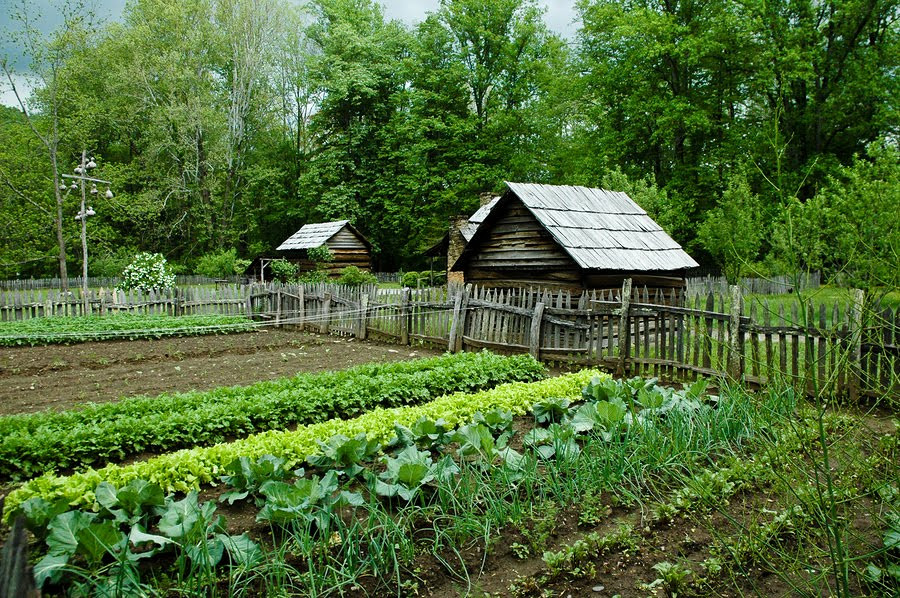
The second round of digging is the hardest work of the whole project. The process is much like the first round, except the goal is to be able to bury the whole head of your shovel in loose soil when you are done. This time, if you hit a rock in the process of achieving that, it has to go. As you back up, some of the rocks will expose an edge you can get under with the shovel. This is where buying good tools, and sharpening your shovel is really going to pay off. Use the shovel to poke under an exposed edge of a stone to create leverage and pry it out. You may have to go slightly off track or attack from a different angle, but if you stick with it for a few seconds, you will find a way to easily pry most of them out. In the instance where you hit a rock that extends far back under the ground you are still standing on and have yet to dig, skip it and remove it while digging another row that exposes enough of it for you to extract it easily. Stay hydrated. Keep your eye on the prize, because when this is done you will be left with the beginning of a great garden bed that only improves with time.

Make Rows and Beds and Smooth the Paths

At this point in the project, if the amendments you used included any non-composted manures or fibrous organic matter, like grasses or leaves, I would let it sit for at least two weeks. If you amended the soil with “well-rotted” compost, you can begin the next step immediately. Depending on how large it is and how your garden is configured, you will need to dig some paths and create more than one bed for the plants. The idea is to not have to step on the beds, thereby eliminating a lot of potential damage to roots. When you avoid stepping on the beds, they stay loose and well-drained, allowing maximum root penetration and oxygen delivery. Dig your paths according to how easily you can reach into the bed to tend to the plants. To dig the path, simply use a transfer shovel to move soil from the intended path up and onto the beds that you will be forming. Dig it down about 6-8” below the tops of the beds you are making. Even out the beds and smooth the paths. Finally, rake the tops of the beds with a ***stone rake to remove rocks and loosen up a seedbed. The beds are now ready to be planted.

Spacing of Plants

The spacing of your plants is critical in the philosophy behind a garden like this. I mentioned earlier about the highly intensive gardening practices used and recommended as part of conventional wisdom. Growing as many plants as possible in a given space is fine for modern society, when we can be reliably sure that we can run irrigation in our gardens on-demand. This works fine when we have chemical fertilizer and literal tons of compost and soil amendments available at multiple retailers in every community. The point here is that if gardening is to work in a survival situation, you may be forced to largely rely upon the rain that falls for your watering.

Spacing becomes an issue because when a canopy of leaves forms, the plants generally stop getting bigger and hit their peak of water consumption. Plants that are spaced closely will be small when this happens. This means they have shallow root systems with small footprints. They don’t penetrate deeply, and if a drought hits, they will need constant supervision to survive until the next rain. Although you can most definitely recover a plant that wilts in the sun from lack of water if you address it quickly, the stress this places on the plant will set it back days and possibly weeks. Plants that are allowed room to grow large before a canopy forms will have deep roots and large, sturdy stems. They can better survive both harsh weather and longer periods without water than plants that are spaced close together.

Every plant has different requirements, so my general rule of thumb for spacing is whatever the seed packet says, I at least double it. The first year of this garden, I grew sweet corn. I did two 10 foot square beds and put four rows of corn in each bed with individual plants spaced 12 inches apart within the rows. These plants had plenty of room to grow and were over six feet tall before any of their leaves touched. They ended up topping out over eight feet, with some plants growing lateral branches and secondary sets of ears. Conventional wisdom might say this is wrong, but if you offset the rows, there is still enough wind protection, and I didn’t have any fall over in that particular year. The second year, I grew peppers in that bed. I did a total of 12 plants in both beds, arranged in four corners, plus two in the middle arrangement. There were bell peppers in one bed and habanero peppers in the other. I was pushing the spacing way out this time, trying to see how it would affect the yield. When I grow habaneros in a raised bed, I might get a dozen or so ripe peppers from a healthy plant. These plants each had over 75 ripe peppers, with the best three having more than 100. Give your plants room to grow. Their odds of surviving long enough to produce go up when they get bigger faster. The payoff in yield will be worth the weeding.

Weeding

Remember the sharp hoe? This is the primary weeding tool, and if you take it with you on your daily patrol of the garden you should never have to dig a weed by hand. If you see a green shoot that is in a position you didn’t plant a seed, use the corner of your hoe to lift it up out of the soil. That’s it. If will almost definitely shrivel and die as soon as the sun hits its now exposed tiny roots. If one happens to slip by you for a couple days, the sharpened bevel of the hoe will easily chop it off just below the soil surface, cutting off the energy supply of the root below. That will die just as easily as the ones you pluck out. The key here is discipline. You can weed once a week if you choose to, but your plants will grow more slowly and the weeding will be more difficult every time. You don’t want to skip a week. Just weed every time you visit the garden. Be diligent about not letting any plant that you don’t want growing in your garden steal vital nutrients from your vegetables. Weeds die very easily when they are young. Once your plants get big and form a canopy, this chore diminishes, but if you are disciplined it never gets hard in the first place.

Here’s a note on “weeds”. A lot of the plants that we typically don’t want growing in our gardens, like wild spinach, dandelions, wood sorrel, and sheep sorrel to name a few, are not only edible but nutritious and delicious. I grow some of each in my garden every year. In a survival situation, simply turning over sod and letting the “weeds” grow could provide you with a lot of food in the form of leafy greens that grow very quickly. The seeds are already in the ground, waiting for the conditions to germinate. Turn the soil over, and they will grow. You would still need something to eat while the garden grows.

Watering

Watering is pretty simple if you space your plants properly and live in a place with consistent rain. Where I live, rains tend to be concentrated in spring. We also have frequent afternoon thunderstorms in summer months, making the amount of watering I do for my double-dug gardens nearly zero. Even on a hot, dry day, if you go down an inch or so into the soil, you will find plenty of usable moisture. As long as the grass isn’t getting crispy, a garden like this with properly spaced plants will not require much watering input on your part. If you do water and you chose a sunny, well-drained location, it’s pretty hard to overdo it if you are watering by hand. I prefer to water in the morning rather than the evening, so that I am not soaking the roots with cold water before hours of darkness. Soil temperature makes a big difference in how quickly things like germination and early growth take place; therefore, I try to water when the sun is coming up so the plants get warmed immediately. There are innumerable strategies for storing and moving water in a grid-down scenario, and they have been covered on this blog in great detail. Your individual strategy will vary from mine, but I plan on running a hose to my garden to gravity feed from an artisanal well.

Maintenance

The ongoing, year to year maintenance of this type of garden is much simpler and less time consuming than the initial start-up. Your thoroughness and diligence in removing large stones and digging in deep the first time through will be rewarded with deep, loose soil that roots can penetrate easily in search of the space they need to make large, resilient plants. When you are finished growing for the year, remove all the above-ground vegetation. I don’t put much thought into whether or not I get the roots out. If you leave them in the ground, they will rot down and add both nutrition and organic matter to the soil for next year. If you remove them from the garden, they will presumably become part of a compost pile and the end result will be nearly the same. After the vegetation is removed, you can be finished and come back when the ground thaws, plant cover crops, or spread amendments that might take some time to break down. These would include un-rotted manure and fall foliage– two that I have used in the past. When you are ready to start again the following spring, you simply spread any amendments you want in the soil for the season and make one pass with the shovel to incorporate the amendments and prepare the soil for planting. It will be easy work this time, since the soil is loose and previously worked. Dig your paths to form the beds, and you are ready for another growing season.

Satisfaction

At this point it would be natural to conclude that this is a ton of unnecessary labor for what you might assume to be similar results to a rototilled garden. This is partially correct in that the labor is currently unnecessary. There are easier ways to garden, and there is currently an abundance of relatively inexpensive, high quality tools, seeds, fuel, and soil amendments. It is also partially incorrect, because if this method is followed and worked with discipline, the results end up far superior. For me personally, gardening was originally inspired by a combination of nutritional reasons and the desire to prepare for harder times by learning a valuable skill. This style of gardening satisfies both requirements for me, while training and instilling confidence in me for the type of gardening that would be required during an extended crisis. This practice will give you a good gauge based on how many hours per week you put into your garden for the yield you get. You can multiply this out to plan for how much land you could personally cultivate as a full-time endeavor. This will give you a good estimate as to whether you currently have enough manpower to grow as many calories as you are planning to need. This information can be used to adjust food storage plans now.

I hope you will find this to be an informative guide on how you can hand-dig a garden that can easily adjust from the current bounty to times of crisis, and that it can be accomplished with a small budget and dedicated work. I’m not recommending you sell your tractor or rototiller, but this is a good way to expand your survival skillset in the comfort of modern luxury with enjoyable and rewarding results.


Letter Re: My Family Preparedness Plan, by R.S.

Hugh,

The best books I have read concerning an EMP are Lights Out by Ted Koppel and Collapse You’re On Your Own by Kay Mahoney. One is fiction, and one nonfiction tells us all we need to know about a terrible event. The first book examines the reality of our delicate electronic infrastructure and how easily it can be shut down. The second book tells the story of the aftermath of an EMP on regular, small town folks, like us, and how we might handle the calamity. I like my electricity and the comforts it provides to me and my family, but I also know our grid is vulnerable in many ways. So, get prepared for no electricity and enjoy the today. – T.M.

o o o

Hugh,

I interviewed Dr. Peter Vincent Pry on my radio show. Dr. Pry is the head of The Commission to Assess EMP. He stated that when it came to testing motor vehicles, they were mandated to “hold back” on the strength of the pulse the vehicles were subjected to, for budgetary reasons. They were further told to do this so the test vehicles would suffer minimal damage, thus making them easy to repair and sell. Therefore, according the Dr. Pry , we really don’t know the consequences/damage a strong pulse will do to modern motor vehicles. The tests of a weak pulse on modern motor vehicles did minimal damage but still allowed them to run. Assuming that they will run when exposed to a strong pulse is wishful thinking. The full report of the commission is a free download at my web site www.thelibertyman.com. I also recommend reading Dr. Pry’s book: Apocalypse Unknown: The Struggle To Protect America From An Electromagnetic Pulse Catastrophe. He’s authored several other books, but I believe this one would give the best overall view on the matter.

The 90% level of fatalities in one year is based on several things not mentioned in what I’ve read thus far in your article.

  1. Prescription medications: The percentage of Americans that take these medications daily to stay alive? One-third of all Americans would be a conservative number. Almost all scrips are for a 30-day supply, which means the average person has a 15-day supply.
  2. The very large, very expensive (million dollar plus) transformers that control the three national power grids in the lower 48 require a full year from the order being made to delivery being made in normal times. No, there is no inventory of replacement transformers in the USA. Granted, hard-working, clever, power company technicians may be able to do work-arounds in limited geographical areas. Those areas would be truly blessed and quickly find themselves overwhelmed with refugees.
  3. In general terms, the following is a true statement: Everything you need to repair what’s broken is also broken.
  4. It will take 2 to 3 days for all municipal water supplies to be exhausted. Waste water systems will go down immediately. Hint: Municipal waste water systems use gravity to get the waste water to pump stations (run be electricity) to pump the waste to the treatment plant. When that stinky brown water starts bubbling up through your basement floor drain, it’s past time to jam rags into the drain pipe. (That’s better done before the fact.)

I’m a big fan of SurvivalBlog and interviewed Mr. Rawles a number of times in the 1998-1999 time frame when I was on WGNU 920 AM in St. Louis. I’m now with Republic Broadcasting Network in TX and do a daily show 0800 to 1000 hours Monday through Friday. – John Moore


Economics and Investing:

From Hubert Moolman: Gold and Silver Boom or Bust – A bit heavy on the charts but interesting nonetheless.

o o o

OPEC’s No.2 Goes Rogue: Plans 600,000 Bpd Oil Output Increase. Despite talks of an OPEC extension, Iraq, which is OPEC’s second-biggest exporter, has plans to boost crude production to 5 million bpd by the end of the year.

o o o

I listened to a sermon one time about the phases that many organizations go through. There is the time of passion in which men and women of great passion do extraordinary things and the organization grows like crazy. They eventually reach a stage where the people in charge sit back on their heels and enjoy the ride that their predecessors created, but eventually, the organization slides to the point where you often hear the phrase “I remember the good ol’ days,” and the organization lives in its past glory days with nothing of real value to add to the current time. It is a hollow organization at that point. Wait, did I just describe our government’s management of America? The Hollowed Out System – link sent in by reader H.L.

o o o

Trump’s Tax Overhaul Keeps Congress Waiting as Questions Pile Up

o o o

SurvivalBlog and its editors are not paid investment counselors or advisers. Please see our Provisos page for details.


Odds ‘n Sods:

Over at SHTFPlan.com: These Two South Carolina Lawmakers Are Planning to Create Survivalist Communities Across the Country

o o o

Nathan, over at The Price of Liberty blog recommended this fascinating article at Gun Culture 2.0: The Problem with Averages in Understanding Guns, Violence, and Crime (Take 2)

o o o

I was doing some web wandering and found this interesting company in Tempe, Arizona: Prepper’s Discount – JWR

o o o

If this report is anywhere even close to true, we are very near the bottom of the slippery slope: Judge Openly LAUGHS At Bundy Ranch Defendants Rights – link sent in by T.R.

o o o

This easy-to-set-up emergency water collection system can save your life – DSV


Hugh’s Quote of the Day:

“Collective wisdom, alas, is no adequate substitute for the intelligence of individuals. Individuals who opposed received opinions have been the source of all progress, both moral and intellectual. They have been unpopular, as was natural.” – Bertrand Russell


Notes for Thursday – April 06, 2017

This is the birthday of Lowell Thomas

o o o

Today, we present another entry for Round 70 of the SurvivalBlog non-fiction writing contest. The nearly $15,000 worth of prizes for this round include:

First Prize:

  1. A $3000 gift certificate towards a Sol-Ark Solar Generator from Veteran owned Portable Solar LLC. The only EMP Hardened Solar Generator System available to the public.
  2. A Gunsite Academy Three Day Course Certificate that is good for any one, two, or three day course (a $1,195 value),
  3. A course certificate from onPoint Tactical for the prize winner’s choice of three-day civilian courses, excluding those restricted for military or government teams. Three day onPoint courses normally cost $795,
  4. DRD Tactical is providing a 5.56 NATO QD Billet upper with a hammer forged, chrome-lined barrel and a hard case to go with your own AR lower. It will allow any standard AR-type rifle to have a quick change barrel, which can be assembled in less than one minute without the use of any tools and a compact carry capability in a hard case or 3-day pack (an $1,100 value),
  5. An infrared sensor/imaging camouflage shelter from Snakebite Tactical in Eureka, Montana (A $350+ value),
  6. Two cases of Mountain House freeze-dried assorted entrees in #10 cans, courtesy of Ready Made Resources (a $350 value),
  7. A $250 gift certificate good for any product from Sunflower Ammo,
  8. Two cases of Meals, Ready to Eat (MREs), courtesy of CampingSurvival.com (a $180 value).

Second Prize:

  1. A Model 175 Series Solar Generator provided by Quantum Harvest LLC (a $439 value),
  2. A Glock form factor SIRT laser training pistol and a SIRT AR-15/M4 Laser Training Bolt, courtesy of Next Level Training, which have a combined retail value of $589,
  3. A gift certificate for any two or three-day class from Max Velocity Tactical (a $600 value),
  4. A transferable certificate for a two-day Ultimate Bug Out Course from Florida Firearms Training (a $400 value),
  5. A Trekker IV™ Four-Person Emergency Kit from Emergency Essentials (a $250 value),
  6. A $200 gift certificate good towards any books published by PrepperPress.com,
  7. A pre-selected assortment of military surplus gear from CJL Enterprize (a $300 value),
  8. RepackBox is providing a $300 gift certificate to their site, and
  9. American Gunsmithing Institute (AGI) is providing a $300 certificate good towards any of their DVD training courses.

Third Prize:

  1. A Royal Berkey water filter, courtesy of Directive 21 (a $275 value),
  2. A custom made Sage Grouse model utility/field knife from custom knife-maker Jon Kelly Designs, of Eureka, Montana,
  3. A large handmade clothes drying rack, a washboard, and a Homesteading for Beginners DVD, all courtesy of The Homestead Store, with a combined value of $206,
  4. Expanded sets of both washable feminine pads and liners, donated by Naturally Cozy (a $185 retail value),
  5. Two Super Survival Pack seed collections, a $150 value, courtesy of Seed for Security, LLC,
  6. Mayflower Trading is donating a $200 gift certificate for homesteading appliances,
  7. Montie Gear is donating a Y-Shot Slingshot and a $125 Montie gear Gift certificate.,
  8. Two 1,000-foot spools of full mil-spec U.S.-made 750 paracord (in-stock colors only) from www.TOUGHGRID.com (a $240 value), and
  9. Fifteen LifeStraws from SafeCastle (a $300 value).
  10. A $250 gift certificate to Tober’s Traditions, makers of all natural (organic if possible) personal care products, such as soap, tooth powder, deodorant, sunscreen, lotion, and more.

Round 70 ends on May 31st, so get busy writing and e-mail us your entry. Remember that there is a 1,500-word minimum, and that articles on practical “how to” skills for survival have an advantage in the judging.


The Human-Powered Veggie Garden- Part 1, by J.A.

A small amount of land, in some cases as little as half an acre if managed correctly, could supply a bountiful vegetable garden even without the luxuries of fossil fuel-driven technology or animal power. The key to the survival of an individual or a family who is either under-prepared or through the course of events is somehow unable to use any fossil fuel-driven technology or animal power is being able to quickly produce edible crops on the ground that they have using nothing but hand tools. The methods necessary to do this are inexpensive to implement, physically rewarding, and beneficial to the long-term health of your garden. Implementing them on a small-scale now will be immediately beneficial to your health via increased nutritional quality and physical activity. You will also gain the confidence of knowing that if gardening should ever be forced upon you as a full-time job, you would be able to put food on the table for the people who are relying upon you for protection and guidance.

I will detail my own experience, gathered over the course of the last four years, which was inspired by the book, Gardening When It Counts by Steve Solomon. It is a brilliantly presented, scientific, yet accessible step-by-step guide to maximizing the production and minimizing the chemical input (to zero, in his case) of your garden. This guide will be a description of how to do it on a small scale. Deciding how to implement it is really up to you and depends on a lot of factors, all of which will vary from one person to the next.

The double dug garden is not a new concept, but it is rarely practiced. Most people use rototillers. Generally speaking, that works given that the power is on and the modern, relatively intense gardening practices can be kept up. (I have more on this later.) Double dug means that all the digging is done with a shovel by hand. Double means you do it twice, until you can bury the entire head of your pointed shovel in loose soil. Does it sound like a lot of work? It is, but after I describe the technique in detail, I will tell you a little more about why it is worth the effort.

Location

To begin, a location must be chosen. If you already have a garden established, you can either use a part of that one or expand it nearby with this technique. For those using this as their first garden, the top priority when choosing a location should be sunlight. Be realistic, and make sure to account for spring growth and summer foliage when looking at nearby tree shadows. Enough sunlight is relative. Read up on what you are growing, considering how often you get a day of full sun, and choose a place where you can generally expect to get at least six full hours of direct exposure to the sun. In the northern hemisphere, orienting towards the south or southeast exposure is the best. I like having the morning sun hit my garden, because I can water it early in the day and the roots get warmed up relatively soon. Drying off the dew early in more humid climates will also benefit the health of your crops when it comes to mold. An easily overlooked but very important aspect of site selection is proximity to the house. The closer you are to your tools and your plants, the better care you will give them and the more and better food you will get in the end.

Tools

Speaking of tools, here are the bare essentials:

That’s pretty much it. There are things that would make life easier, but if that’s all you have you can garden.

Sharpening Tools

So, to get started, the single biggest effort and time saving advice I can give you is to grab that file and sharpen the hoe and pointed shovel. Most of the hand tools you buy, in fact any of the ones I have seen for sale even if they are of fine quality, are not sharp. The difference between having a 1/8” piece of flat steel of a sharpened bevel at the end of your implement many seem trivial, but when it comes to slicing through hard ground full of rocks or simply flicking your wrist to kill a weed with the corner of the hoe, the effort pays off immediately and requires little initial input and even less upkeep. Sharpening these tools is pretty simple. Secure them with one hand and a sturdy object like a workbench, and file a bevel onto the leading edge of your pointed shovel up to about five or six inches out from the point. Do the same to the working edge of the hoe. The first filing takes a few minutes, since you have to grind through the thickness of the metal to bevel it, but once the edge is ground maintaining it after a day’s work takes literally seconds.

Killing the Sod

Now that the site is chosen and you have a sharp shovel, it’s time to kill the sod, which is a mat formed by the grass and its intertwining root system. Ideally, the ground breaking takes place in fall, but with proper timing you should be able to follow this advice and still at least grow some summer and fall crops, even if you have to start this project after the ground thaws in the spring. Killing the sod is pretty simple. Using the pointed shovel, start at the “top” edge of your garden. You will be advancing to the rear as you dig, so keep in mind that going downhill, if grade is even slightly a factor, is much easier. Using your foot, drive the shovel through the sod. There is no need to go for big chunks of dirt. The only goal at this step is to turn shovel-sized chunks of sod over roots up so that the grass dies. Lay the first row of sod on the ground in front of you, laying subsequent rows onto the bare ground that is now where the first row of sod was growing. Repeat for the entire length of your growing area and after all the sod is turned over, you can walk away for a week to ten days to let it die.

Check Out Soil and Gather Amendments

During this time, check out your soil and gather your amendments. For me, amendments fall into two categories: nutritional and water/root management. Nutritional amendments, like fertilizers, compost, and wood ash, feed the plants throughout the growing season. Amendments, like peat moss, vermiculite, and sand, are used to alter the quality of your soil regarding how roots can grow in it and how water is held and drained. Since everyone’s needs are different, I will describe the amendments that went into my garden. I had a lot of rocks to deal with and a slight tendency towards clay but nothing that wouldn’t drain. I decided to add approximately an inch of peat moss across the entire garden to give some improvement in water retention and also to help break up some of the clay. I could have used more, but since my nutritional amendment, composted alpaca manure, would also help with soil tilth I decided an inch would suffice.

Compost

Compost is a touchy subject and opens up huge debates that I’m not going to weigh in on. The stuff I use is made from the composted manure of my parents’ alpacas. When their pens get shoveled out, the “beans”, straw, and whatever urine is mixed in gets piled in rows about four feet at the base and maybe three feet tall. I turn them and let them sit for a few weeks; then, I turn them again until it reduces down to a dark brown, highly potent, all-natural fertilizer that has never failed to grow large and bountiful versions of whatever plant I nurture with it. There are plenty of other ways to make compost, and depending on the quality of the stuff you end up with you may or may not need other methods of fertilization. For my garden, the compost I make is the bulk of the nutritional input. I also dig in some fall foliage to the garden bed, and both wood ash and plant waste are tossed onto the manure pile throughout the year.

After the week has passed, spread half of your amendments onto the overturned sod, which should be mostly dead anyway. You are about to finish it off for good on the first of two rounds of real digging. Start in the same position as when you were removing sod. Drive the shovel through the amendments, dying sod, and as much soil as you can bite off with a good kick. Rock the shovel a little to free any small stones and scoop the load forward, away from you, just like you did with the sod. Unless they come up easily, disregard any large stones you clang the shovel off if they are more than a couple inches down. They will be dealt with in the next round. Once you finish a row, you should have a small trench dug with a pile of dirt in front of it. Go back about six inches, or half a shovel head length, and dig the next row, using the materials you turn over to fill in the trench you just dug. Take your time to chop up any big chunks of sod that are left and cover anything green that happens to have survived. Do this for the entire garden. It’s tough work but not the worst, and when you are finished with this round you will already have a result on par with rototilling. An adult man in decent shape should be able to dig a 10×5 area in about an hour, maybe 90 minutes. In subsequent years, the input is significantly reduced, so don’t fear that this admittedly difficult part of the process will have to be repeated annually. After digging, cover with the second half of your amendments, and get ready for the final dig.


Letters Re: My Family Preparedness Plan – Part 1, by R.S.

SurvivalBlog had an overwhelming number of people write in about this article. We’ve tried to pick a few of the letters

Reader PWS has a pretty good grasp of the whole EMP issue:

There is much mythology around EMP. Based on testing done by the Congressional Commission To Assess The Threat of EMP To the U.S., only about 6% of the national light vehicle fleet will be EMP-ruined. The main problem for most will be fuel. Second, EMP will not damage solar panels in a significant way. Some suffered up to 10% degradation but kept working just fine. The charge controllers are a different story, but by minimizing the exposure of conductors in the system (panel-to-controller) we can probably prevent damage to the circuit cards in them, as well. Metal conduit or flex will be good shielding for this. Grid-tie solar systems are toast because of the flashover effect from EMP coming in off the grid. Stand-alone solar systems will fair pretty well in my view, especially if one has spare components.

The greatest issue for most Americans will be safe, plentiful drinking water and sanitation, assuming they have some access to food. Be thinking about how your family will be able to get water for the next one to two decades. Backpacking filters will fail quite soon. I recommend taking a look at the Lakewater Filter sold by Equinox in Michigan. (I don’t sell these but use one on my property to filter stream water.) Reasonable amounts of safe water can be processed for minimal expenditures in electricity. It is designed to process pond, lake, or stream water for culinary use. The main carbon filter has a life expectancy of 700,000 gallons. Energy and water are top priorities for most any national crisis. Depend on utilities at your own risk.

However, the issue isn’t as straight forward as it seems. While there is a large amount of ridiculous hype around an EMP event, answers just can’t be known definitively. The amount of damage to a device depends upon the amount of energy dumped into its circuits. Basically, the longer the antenna, or the stronger the EMP field, or the weaker the circuits protection, the more damage that will be caused. Your cell phone or watch will probably survive because those circuits have such small antenna areas and have a base level of protection built into them. If you are close enough to a blast to have issues with small electronics, you probably have other, more pressing issues to deal with. However, the telcom or power distribution utilities have massive amounts of antenna (literally thousands or hundreds of thousands of miles of wire), so even a relatively weak EMP can cause significant damage. If your electronic devices are plugged into their chargers at the moment the blast occurs, you can probably kiss them goodbye. Cars are known to have noisy RF environments and generally have a greater amount of protection, making them more robust. Less expensive electronics probably have less protection. Unless the manufacture reports what they have, you have absolutely no idea what to expect.

Reader B.T. gave a description of what he does to help his odds:

For Faraday cages, I use metal 35-gallon trash cans with towels or blankets lining the inside so my gear does not touch the inside walls.

I built a Faraday cage on my deck by making a table out of 1×6 cedar decking. It is like a box table 3’x8′ long x 4′ high. Then I lined the inside on all four sides with 1/4″ wire mesh and metal screen mesh stapled to the sides. It’s easy to do if not in a hurry. I keep my gas generators in there and solar well pump and solar panels too. I even have two solar fans, costing $100 each. And when I entertain, this is where I serve the BBQ. I keep batteries, radios, short wave, and Honda 2000 watt generator inside the trash cans along with extra wire for solar on roof. Solar is up on roof but not protected. Components are in a basement small cabinet to which I also added wire mesh inside to protect components from EMP. Hope this helps all.

Reader Gigiwigi wrote:

In a grid down scenario, it would take time for the cascading failure, maybe not a lot of time but only a few hours. A few hours could buy time to buy last minute supplies, fill up the water BOB, and can what is in the freezer. This would be in stark contrast to the EMP, which would be immediate. So, a different set of actions would follow the realization this was a cascading grid down situation. Let me know your thoughts.

It would probably take less time than you think for the failure to cascade. The power switching electronics and most likely a significant number of large power transformers will not fare well for the reasons given above. While the system is fairly robust at handling cascading failures from small single point failures, an EMP event would cause multiple failures. Assuming connected networks are not brought down by the energy absorbed and transmitted on the power lines themselves, the transfer load would be considerable. Even assuming undamaged circuits, the cascading failure would be fairly rapid because of the multiple points of failure.

Reader Carl wrote:

I maybe wrong, but I think a lot of the talk of issues from an EMP are over blown. An EMP or CME causes damage because it causes a electrical surge in long wires, i.e. power lines or other antenna. Your computer, phone, car, or anything not connected to the grid would more than likely not be affected. Granted, if the grid goes down you won’t be able to charge your phone or computer and you won’t be able to fill your car at the gas station, but your car is not going to die in the middle of the highway like is shown in the movies.

I would agree that issues to smaller electronics and vehicles may be overblown, but how often do you have your small electronics (phone, radio, computer, laptop, et cetera) connected to their chargers? If it’s connected to the power grid, it’s probably toast. Cell phones without cell towers are pretty worthless. There are some options for local use but not really anything that works well. Furthermore, the long-term issues present some significant logistics problems. Most grocery stores do not have more than about 24 to 48 hours of food on the shelves in normal conditions. If there is no fuel, then there is no trucking or rail. How will they restock? How will a large city feed itself if they don’t have gardens or livestock? In addition, the large power transformers likely to be destroyed on the power distribution are heavy, expensive, and usually custom built. How will they be replaced if there is no trucking or rail service? How will we replace as many as could be destroyed if there are not that many spares within the boundaries of the U.S. boarders?

Reader M.A. wrote:

Good morning HJL!

I was just checking on my regular web sites and emails this morning when the first Survival Blog entry/post from R.S. caught my eye. I had been asked to give some classes on Emergency Management and Preparedness and I was starting to work on my initial slide deck. I have a lot of left-leaning folks who have suddenly seen the light for some reason. RS’s opening is perfect for the first class! I have other material I would put in there as well, but his opening is a great summation, and I wanted him to know how much I appreciated it.

Reader OneGuy wrote:

I think the risk of and from an EMP is overblown. First of all, I do not think that anywhere near 100% or even 50% of the electric generation/distribution system will go down or even stay down. Secondly I don’t think it will result in 90% deaths or even 1% deaths. I know that in the event of damage to the electric grid that there are 1000’s of linemen and others who will work around the clock to restore service. I think the EMP is a prepper’s wet dream in that it doesn’t kill them outright but allows them to survive exactly because they prepped thus validating all their beliefs. For this reason it is typically at the top of a vocal prepper’s list.

Refer to the explanations above for the type of damage that can be caused. The 90% deaths are, of course, an estimation, but they are not directly attributable to the blast. It is the aftermath that would cause the casualties. No electricity, no sewer, no food, no transportation, and no preparations will cause the majority of casualties through disease and starvation. Remember, if the entire country’s power distribution is down, there will be no help coming. You are on your own. How long can you go without having to purchase something at the grocery store? What will you do with our waste or the inevitable filth and disease that results when you can’t dispose of it? What about heating your home when it is freezing weather? Yes, people lived without electricity and oil for a long time, but we have our habits, and we have formed our lives around these things. Changing your lifestyle to live without those is no small thing.

Reader Gabriel wrote:

Just wanted to note that it’s not known entirely if cars will cease to function. Some may; some may not. I believe it depends on the model, how dependent the vehicle is on its computerized systems, and how powerful the EMP is. That’s not to mention Providence. My point? Cars could be an asset in a post-EMP event. As for coins and precious metals, I personally don’t think a post-EMP society will use that form of currency. Let me ask you. Will you trade grain or seeds for some gold or silver coins or would you trade it for cans of food or duct tape? I think old school bartering will come back and in force. Keep in mind, the average Joe won’t understand gold and silver values and so forth. And then, not everyone will have these coins, so getting change for a gold coin won’t be realistic. Those are some of my thoughts.

Reader just_AC also wrote:

Re the article, one thing I am always saying is don’t worry about stocking gold. Why? If 90% of the population is dead as reported, how many tons of gold will there be available on the fingers and necks of the dead?

This is one of the reasons that we recommend other preps first. When you’re hungry, you can’t eat gold and silver, so take care of food, meds, and protection (bullets, beans, and band-aids) first. After you have those taken care of, then you can talk about precious metals. Those precious metals are to ensure your wealth survives “The Crunch”, and then on the other side when the PMs have value again you have a leg up. History has shown that PMs will not just be lying around on the fingers and necks of the dead. If you are in a position to collect such valuables, you are probably causing (or involved in) those deaths, and that’s an ethical/moral issue.


Economics and Investing:

After having great success in finding silver half dollars, the intrepid young “Silver Searcher” is still at it. Most recently he found a bank in Oregon that had $2,800 in Eisenhower (“Ike”) dollars available. He really should be searching more carefully, for rare date coins. – JWR

o o o

When the broader markets crash, the value of the precious metals will really take off: Massive Stock Correction To Send Metals Surging & Elites Lose Control

o o o

What I learned about the US real estate market this week

o o o

Short And Sweet: Fed’s New Policies A Longer-Term Positive For Gold Price

o o o

SurvivalBlog and its editors are not paid investment counselors or advisers. Please see our Provisos page for details.


Odds ‘n Sods:

One of my consulting clients was complaining that he was having trouble finding the once-plentiful Czech 26.5mm flare cartridges for his HK flare pistols. Well, here is one company that still has them available: Dan’s Ammo. (This company, located in Pennsylvania, has an amazing warehouse full to the rafters with military surplus ammunition, including some scarce varieties. They are highly recommended.) – JWR

o o o

Sen. Ron Johnson of Wisconsin said on MSNBC, when asked about North Korea, that we need to harden our defenses against an EMP! He said they may be far away from ICBM capabilities but may not be far aware from detonating a nuke in orbit. And of course, no one asked a follow up to that. No good solutions with North Korea, says senator (starts at the 2:00 mark) – P.C.

o o o

Here is a rebuttal by Dr. Peter Pry, regarding the critical article in Popular Mechanics by Kyle Mizokami “No, North Korea Can’t Kill 90 Percent of Americans” (March 31, 2017): Popular Mechanics Publishes “Fake News” On North Korean Nuclear Threat – M.M.

o o o

News Corp chief: Orwellian algorithms of Google and Facebook put us on ‘slippery slope of censorship’ – H.L.

o o o

After Youtube Terminated His Account Twice, Hickok45 Found A New Home – H.L.