We’ve previously covered non-FCC license dependent communications devices and are wrapping up our examination of FCC license dependent communications options, with special consideration for their use in an emergency. Today, we’ll also begin looking at resources and accessories that help us improve communications.
VHF/UHF Radios
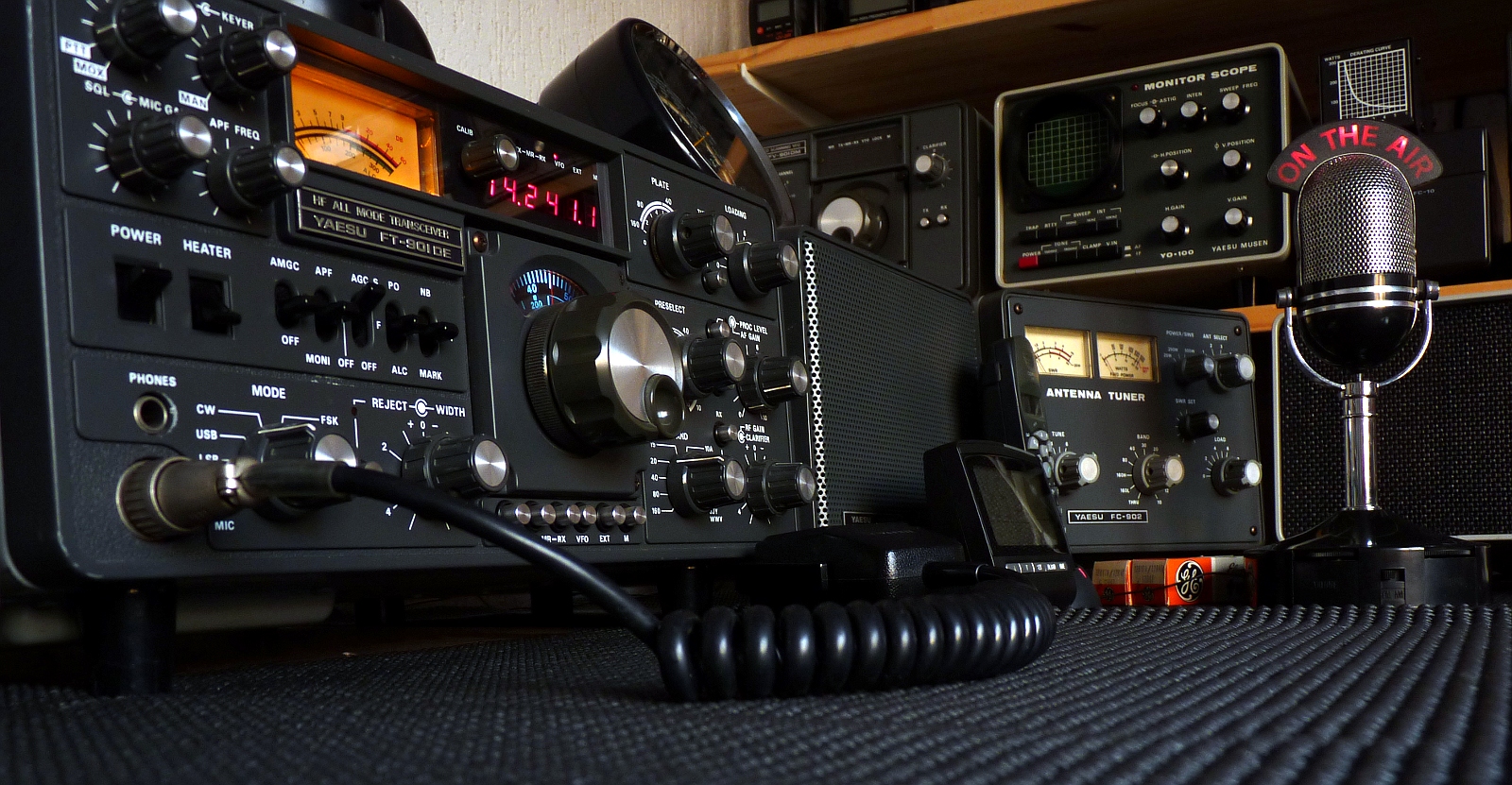
Almost all of the “base station” VHF/UHF radios are designed as car Ham radios. Because of this, they can be very flexible in usage. Most of these are 25-50 watts, and some are even stronger. With the limited range of VHF/UHF, I think that going over 50 watts is probably not needed. FM is the primary modulation for these kinds of radios, and today it is rare to find one that supports AM/SSB. Some vendors support Echolink, D-Star, DMR, and or APRS. Most of these radios also cover the NOAA stations. These (NOAA) emergency radio stations usually report weather but can relay other information. Having access to those stations is a must when I’m looking at a model.
“HT” or Handheld radios are also very useful. (See comments on inexpensive Chinese radios below.) For quality HTs, I recommend paying attention to the IP ratings on these radios. Expect to use this radio in bad weather. These are almost always 5 watt radios, with NOAA and FM radio receive. Some are “smart phone like” with apps for repeater selection based on location. Just make sure you also get the following, if they have them available: programming cable, ear bud, upgraded antenna, and VOX support.
Continue reading“Radio Communication Methods During Emergencies- Part 4, by R. in NC”