I’m a grandmother who has raised her own small livestock and grown two female piglets into full grown hogs. This is my story. In the first three parts of this series, I have told how I began raising pigs, the selection process I went through, preparing their pen and securing them, growing them, and my plan for butchering them. The process didn’t go exactly as expected, and I’m in the midst of telling you what actually ended up happening and what I learned along the way.
Butchering (continued)
Butchering is something I have never done so I was flying blind. With my book next to me, I tried to follow the step-by-step directions. Several hours later, by the time I got both sides divided into legs, loin, hams, ribs, belly, and sides as well as the spine and trotters cut, I was exhausted. We put the parts into clean hunting bags and put them in two coolers. Even though the overnight temperature would be in the 30s, we covered everything with ice and transported the coolers up to the garage using the UTV for the next day’s processing and packaging effort.
Size
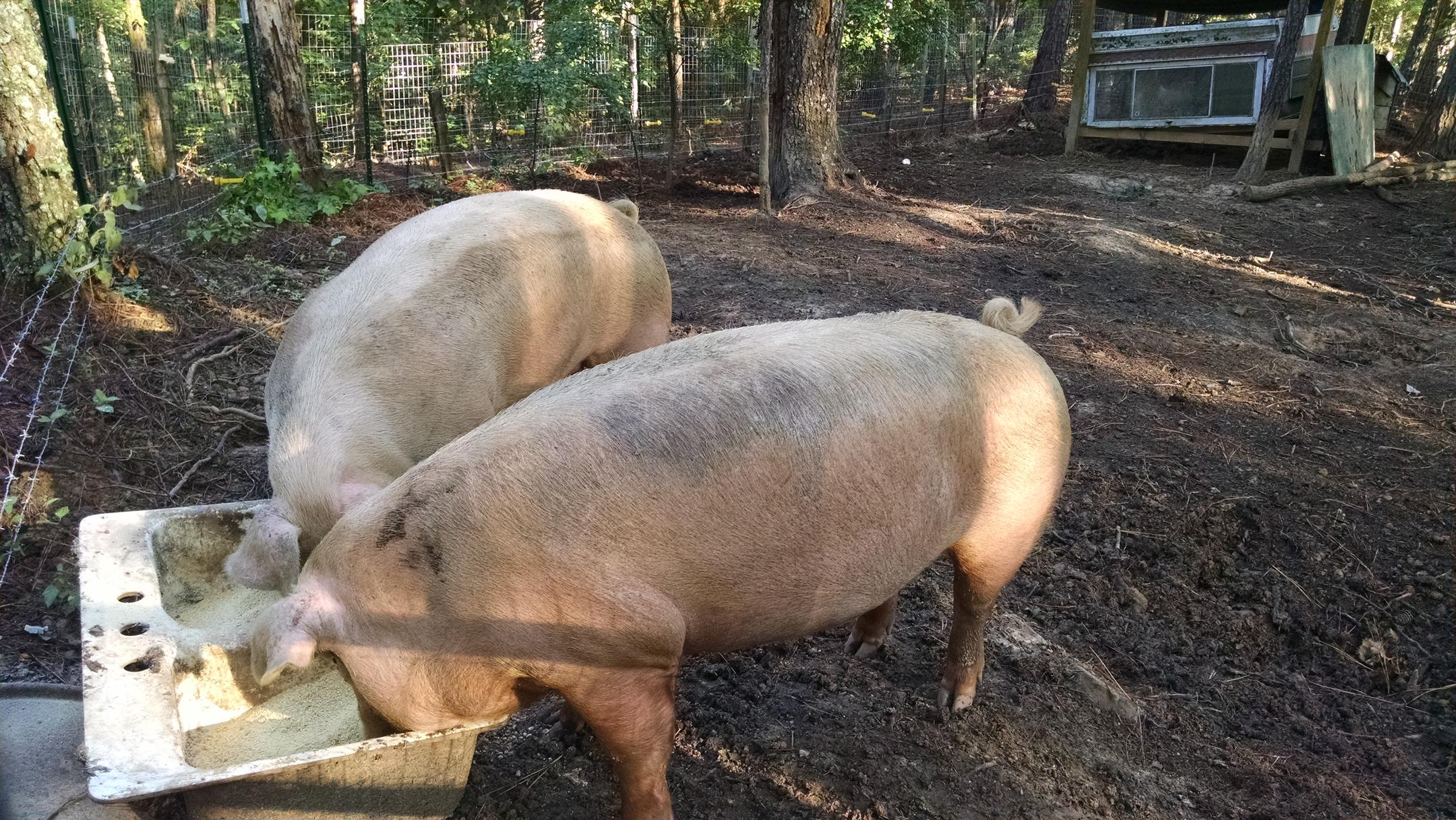
Most hogs are processed at 200 or 225 pounds; my hogs were over 400 pounds. So when I say “shoulder”, it was two hour’s work to cut one into smaller, more normal size portions and then process and wrap those in freezer paper. I cut the Boston butt into three portions. I deboned most of the shoulder chops and loin, as I was saving the bones for bone broth. The pork tenderloin on this hog was 23 inches long and over four inches in diameter, and I cut it into portions for my family size. I divided the ribs and left an extra thick layer of meat on them. Then I had to figure out how to cut the pork belly for bacon. This took more time, because I was constantly referring to my book. The book now has well-greased fingerprints and slighty pink spots on many of the pages.
Continue reading“From Piglets to Bacon- Part 4, by Animal House”