Today is the birthday of celebrated Scottish poet Robert “Bobby” Burns. He was born on January 25, 1759.

Today is the birthday of celebrated Scottish poet Robert “Bobby” Burns. He was born on January 25, 1759.
The very word “test” is enough to make us cringe. Spelling tests, math tests—every school day brought another test. And then there were the “achievement tests”, which were supposed to find out how much we’d learned that year.
From high school, many of us went on to college. Here tests were crucial as we labored through the ACT, SAT, GRE, LSAT, MCAT, et cetera. Our scores helped determine whether we would get into the college and profession we wanted.
I tried hard on all the standardized tests I had to take, but before the actual ACT began I had an interesting experience. We were given a page that wasn’t part of the test; the questions had to do with my parents’ occupation, income, and education level. None of this information, in my opinion, was relevant to my scholastic abilities. I knew what they were after; they wanted to connect my test grade to other life factors. At 17 I was already an accomplished rebel, so I lied on every personal family question.
Note to other rebels: I also don’t believe present-day schools have a right to know parental occupation, educational level, or income. But it’s your decision about whether to provide that information to an institution that will put it into a computer and send it all over the world.
I have also rebelled against giving the expected liberal answer if I believed it was incorrect. When I took the national teacher exam, one of the first questions asked whether intelligence was determined primarily by genetics or upbringing. I marked “genetics” even though I knew it would be counted wrong. Liberals insist environment is the determining factor for intelligence. It has to be, or people might figure out that all the tax money being poured into preschool programs is a complete waste. Follow the money.
I was proven right years later by the Minnesota Twin Study, which studied identical twins who were separated at birth. The study found a strong correlation between genetics and intelligence. But when did liberals ever listen to facts?
Today I’m not concerned with the tests mentioned above. I want to discuss a much more sinister and invasive form of testing: tests that claim they can determine your personality or determine if you have psychological problems. They’re used by lazy psychologists who don’t know how to do real analysis and, more and more frequently, by corporations and law enforcement. They are also ignorant about true mental assessment.
The psychology/testing industry has convinced corporations that they should know as much as possible about the minds of those they hire in order to eliminate applicants who might be dishonest, have emotional problems, or whose personality may be considered a poor fit with the job. Presumably law enforcement believes it can pick up criminal characteristics.
The testing companies have been very successful in promoting their products; it’s currently a $2-to-$4 Billion Dollar per year industry. That gives them several billion good reasons to convince buyers that their product is effective. Like I said, Follow the money.
With the rising use of these tests, you may be asked or required to take one of these tests as a condition of employment. My opinion of these tests is negative for two reasons. First, I don’t believe they produce accurate conclusions; second, I don’t believe anyone has the right to probe your mind without your free consent.
I want to explain some methods of taking these tests yet evading them. It’s not hard at all.
There are three basic formats for personality tests. The first is called a “forced” test because the taker is forced to make a choice between one of two answers. Usually this is “yes” or “no”. For instance, a test may say:
| Yes | No | |
| I admire my father. | O |
O |
| My mother is my friend. | O |
O |
| Most days are I’m happy. | O |
O |
| Bad dreams often bother me. | O |
O |
These tests try to prevent fake answers by asking the same question, with different wording, repeatedly. They assume that there are two possibilities about your test taking: (1) you’re carefully reading and trying to choose the answer that will please them, or (2) you’re being honest about your feelings. The test also claims it can determine which strategy you are using.
The simplest way to avoid giving psychologically revealing answers on such tests is to make an arbitrary, simple rule for how each question will be answered. For example, you might decide that questions with an even number of words will be marked “yes”, and those with an odd number of words will be marked “no”. This means you do admire your father (four words) but your mother isn’t your friend. This will prevent any chance of your true beliefs being reflected in your answers.
The number of words is only the beginning. You might also try looking at the fourth letter in the sentence. If it’s a vowel, mark “yes”. If it’s a consonant, mark “no”. Or use the fifth letter. Or the last letter. You could even use different strategies for different parts of the test.
The second commonly used test format employs a Likert-type scale in which you indicate your level of agreement or disagreement with a statement. These present a sliding Likert scale such as this:
| Strongly Agree | Agree | Neutral | Disagree | Strongly Disagree |
| o ———— | o ————— | o —————— | o —————- | o |
…and they will ask you to respond to statements such as:
This test form is more difficult because you must have five strategies for choosing a random answer. Some possibilities include:
If you follow a system such as this, your answers will have no relation to your true feelings. Try to make your system as simple and easy to remember as possible. The Lickert scale questions are harder to plot than simple “yes-no”, but much more fun.
The third kind of personality test is called a projective test. There is no real answer, but your personality, conflicts, and emotional stability are supposed to be revealed by how you see something which is really nothing.
The best example of such a test is the Rorschach. This test consists of—literally—random ink blots which someone made. The blots don’t resemble anything; what you imagine them to resemble is supposed to reveal your emotional state.
Needless to say, I don’t believe the test reveals anything. One of my favorite movie scenes is from the movie Armageddon where the unlikely astronauts are being tested physically and mentally. One of them, seeing the assorted blots, responds to them something like, “Woman with large breasts. Woman with small breasts. Woman with medium breasts.” That’s a great example of how useful this test is.
Your best strategy, if faced with a compulsory Rorschach, is to be very, very creative. The test comes with an interpretive book which lists many common answers and what they supposedly signify. Forget ordinary; go creative.
“This is a Chinese woman who’s been abandoned by her lover and is about to jump off the top of a large Buddha statue. She’ll be reborn as a snail.”
or,
“This is a triceratops mama defending her nest of eggs from little mammals that, in 70 million years, will turn into us.”
or,
“This is a raincoat hanging off the Eiffel Tower on a windy day.”
If you have a crazy bone hiding in yourself somewhere, use it.
The tests I’ve described are completely different from tests designed to actually determine your competency to do a job.
For instance, I worked as a secretary in college and every job required a typing test. This makes perfect sense; the ability to type was crucial to doing the job well. Side Note: My fastest time, on a Selectric II, was 119 wpm. Yes, I got hired.
Today, secretaries need far more knowledge; they need to know all about spreadsheets, word processing, faxing, etc. Companies are completely justified in testing for these competencies.
Forced answer and Likert tests are usually scored by machines. Your answers are then evaluated by the machine to produce a personality type. A psychologist looks at the results, says “Hum” with great gravity, and declares what kind of personality you have.
If you use the methods I’ve described to evade the test, I have no idea what your test results may be. More than likely the examiner will also be confused because there probably will not have a discernible pattern. Even if the machine can find a pattern, if you’ve used these strategies it will be a false pattern which tells nothing about your true personality. This may or may not affect your chances of employment. It’s a decision you have to make.
Please don’t take this article as a condemnation of the very real science of the human mind. I have great respect for the medical specialty of psychiatry; I’ve seen psychiatrists, as needed, for many years. None of them used the tests I’ve described. They have all been intelligent, kind, and incredibly perceptive. Their ability to see things about me, and help me see them as well (after hours and hours of discussion), has given me great insight into myself and has helped me find peace with my own differences.
I also know many of you tough guys wouldn’t touch a psychiatrist with a ten-foot bump stock. You believe getting psychiatric help indicates weakness, or that you haven’t got enough inner strength to prevail over whatever is distressing you. Or you may believe, as my dear Hubby does, that a psychiatrist can take one look at you and know everything about you. I mentioned this belief to a psychiatrist once and she laughed, “If only!”
Think of it this way: if something goes wrong with your heart, you’d go to a cardiologist. A misbehaving appendix will send you to a surgeon. A broken leg will call for an orthopedist.
The mind can also do things we don’t understand or that make us uncomfortable. If you believe you have an emotional problem, visit a professional—a psychiatrist who has been through medical school, internship, residency, and also has years of experience helping every problem a human mind can have.
Even yours.
Here are the latest news items and commentary on current economics news, market trends, stocks, investing opportunities, and the precious metals markets. We also cover hedges, derivatives, and obscura. And it bears mention that most of these items are from the “tangibles heavy” contrarian perspective of SurvivalBlog’s Founder and Senior Editor, JWR. Today’s focus is on the pinprick of the real estate bubble.
Tickets Please For The Gold Roller Coaster
o o o
Arkadiusz Sieroń: A Weakening Global Expansion Amid Growing Risks. Will Gold Price Benefit?
o o o
JWR was recently a guest on the Kennedy Financial podcast. The other guest for that show was author Jerry Robinson of the great FollowTheMoney.com web site. The show was mainly about disaster prepping, but we started discussing precious metals near the end of the hour.
Over at The Silver Libertaion Blog: Fitch Threatens to Downgrade the US Credit Rating?
o o o
Peter suggested this article: A better way to anticipate downturns. Peter’s comments: “The article is from 2010 but is still an interesting read. Skim toward the end, if needed. Note the author does make reference to the Yield Curve as being one early indicator of trouble ahead.”
o o o
China to pass US in retail sales this year: forecast
Reader H.L. liked this piece at IWB: U.S. Government Debt Bomb Much Higher Than Americans Realize.
o o o
Visualizing The Snowball Of Global Government Debt. Thanks to G.P. for the link.
SurvivalBlog’s Editor at Large Michael Z. Williamson sent us this link from a news piece that ran back in June: Families earning $117,000 now qualify as “low income” in California’s Bay Area. Mike’s Comments: “Choose where you live, wisely.” He also described the S.F. Bay Area tersely: “This area also offers low survivability during an economic crisis.”
o o o
We have already seen the pinprick of the real estate bubble. Some evidence: Q4 Mortgage Lending At Big Three Banks Plunges 20-30% Y/Y. (Thanks to H.L. for the link.)
o o o
US home sales plummeted 6.4 percent in December. JWR’s Comments: When we see seasonally-adjusted figures like this, then we know that the game of Musical Chairs is about to end. Plan accordingly. As I mentioned a couple of months ago: I recommend that my readers sell off any investment property as well as any vacation property that doesn’t double as a retreat. It is best to sell at or near the top and then buy back into the market, in the depths of the coming market bottom.
o o o
At Wolf Street: As Investors Flee Australia’s Housing Bust, Sales of New Houses Plunge to Record Low
G.P. spotted this: Russia Is Considering a Shift to Bitcoin to Limit the Impact of U.S. Sanctions, Report Says
o o o
You Can Now Buy Bitcoin at Some Grocery Stores in the US. This is a venture by Coinme and Coinstar. The article notes: “Though Coinstar kiosks are primarily known for converting coins into cash, Amazon gift cards or other equivalent balances, Thursday’s press release noted that at present, ‘[U.S.] coins cannot be used for bitcoin transactions.’ The kiosks will only accept U.S. dollar bills, with a $2,500 limit.”
SurvivalBlog and its Editors are not paid investment counselors or advisers. Please see our Provisos page for our detailed disclaimers.
Please send your economics and investing news tips to JWR. (Either via e-mail of via our Contact form.) These are often especially relevant, because they come from folks who particularly watch individual markets. And due to their diligence and focus, we benefit from fresh “on target” investing news. We often get the scoop on economic and investing news that is probably ignored (or reported late) by mainstream American news outlets. Thanks!
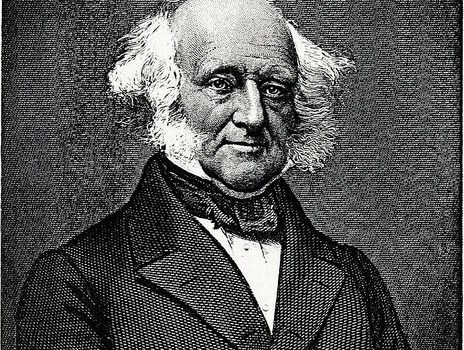
“All the lessons of history and experience must be lost upon us if we are content to trust alone to the peculiar advantages we happen to possess.” – Martin Van Buren
January 24th is the birthday of René Barjavel (born 1911, died November 24, 1985). This prescient French science fiction author wrote several books with survivalist themes, including Ravage, which was titled Ashes, Ashes in its English translation.
Today is also the birthday of Tamara K., the editor of the excellent View From The Porch blog.
There is some bad news from the halls of the U.S. Congress: H.R. 8 has been introduced by Representative Mike Thompson–Democrat of California. Dubbed the Bipartisan Background Checks Act of 2019, this is horrible piece of legislation that is likely to become law! The word from the District of Criminals is that this Private Gun Transfer Ban bill is on the fast-track through committee, for passage. Ominously, it quickly gained 225 co-sponsors. And President Trump has given mixed messages about whether or not he would sign such a bill. Uh-oh!
The mass media is using soft-sounding phrases like “Universal Background Checks”, “Reasonable Step”, and “Closing the Gun Show Loophole”. But with H.R. 8 what we’d get is a Private Gun Transfer Ban with the tyranny of bureaucracy poking its nose into our gun closets. It would make it illegal to sell, give, or even lend a gun to a neighbor without Federal paperwork. And it would make gun shows as we now know them and newspaper ads for used guns quaint things of the past.
Most Americans have not considered the full implications of a nationwide private transfer ban. This would essentially end the privacy of firearms ownership. Nearly all transfers would have to go through an FFL, (for a fee) with an FBI background check. Whether it is a sale, a gift, a trade, or a loan, all gun transfers would have to be “papered” on a ATF Form 4473. The only exceptions would be gifts (not sales) within an immediate family, and transfers of antique (pre-1899 manufactured) guns. All other transfers would require a background check and completion of a dreaded Form 4473!
Since 1992, I have extolled investing in Federally-exempt pre-1899 guns. I wrote a FAQ on the subject that has been updated several times and that is widely cited and cross-posted. You should take the time to read it, but here is the most pertinent point: A December 31, 1898 threshold was set in stone, with passage of the U.S. Gun Control Act of 1968 (GCA-68). Per the Federal law, any guns made on or before December 31, 1898 are legally exempt “antiques”, but those made on or after January 1, 1899 are controlled “firearms.” While state and local laws often differ, under Federal law any antiques can be freely transferred across state lines with no paperwork required. But less than 1/2 of 1% of the guns in the United States are pre-1899 antiques.
I predict that if a nationwide private transfer ban is enacted, suddenly everyone would wake up to the significance of the scarce pre-1899 cartridge guns. There would then be a huge rush to by them. However, since there is such a tiny supply, prices will double with two years. And within five years, their prices will triple. I’m not kidding: I mean a genuine 300% gain. The law of supply and demand is inescapable. Those wishing privacy for cartridge gun purchases will only have one really viable option: Pre-1899 antiques. Buying anything else would require paperwork and an FBI background check.
SurvivalBlog presents another edition of The Survivalist’s Odds ‘n Sods— a collection of news bits and pieces that are relevant to the modern survivalist and prepper from “JWR”. Today we have a special piece on Google and YouTube Spying.
SurvivalBlog’s Editor at Large Michael Z. Williamson wrote to describe a first-hand experience with Google and YouTube spying:
“My daughter was watching YouTube videos. Her YouTube browsing history also shows on my computer, when I go to YouTube. As you know, YouTube is now owned by Google. Yesterday, I referenced that people here at my home have the flu. Just a few minutes later her YouTube feed started showing cartoons about people being sick and needing bed rest. Bottom line: If you don’t want Facebook, Google, the NSA, Wikileaks, the Russians, the Martians, the DNC, the GOP, the drug cartels, 4chan, your parents, your kids, and the local police to know something, then Do NOT Put it on Facebook, or into a Google search.”
Reader Mark O. wrote to ask: “What is your opinion of the 6.5 Creedmoor, 6.5 Grendel, and 6.8 SPC for defensive purposes?”
JWR’s Reply: I’m in “wait and see” mode. A lot depends on the U.S. Army’s commitment to actually procure and field the as-yet-undefined 6.8 rifle. Odds are that it will be a conversion upper for the M16, rather than an entirely new platform. I’m waiting to see: A.) If that ever happens, B.) Exactly what cartridge is chosen, and whether or not it will use reloadable brass. D.) What rifling twist they choose, and E.) What actuating system they choose. I’m assuming that it will be an M16 variant with a piston upper. But they may decide to “go cheap” for the sake of Big Army logistics and lighter weight to go with a traditional Stoner direct impingement gas tube system.
The last I heard (in December, 2018), there was still talk of using a polymer case and/or a cased-telescoped cartridge. This open question will surely lead to endless debate over at AR-15.com.
Bottom Line: There is a good chance that the Pentagon will pour million of dollars into development for the 6.8 Whatzitz for the next few years. Then, when budgets get tight, simply drop it and revert to 5.56mm NATO. Time will tell.
In the meantime, I’m staying the course with 5.56mm NATO. And of course my primary rifles are in 7.62mm NATO/.308 Winchester. It is important to note that although I own several of them, I consider M4gery carbines in 5.56mm NATO as guns primarily for young teens and for anyone frail for any reason.
By way of FreeZoxee Friends, I found this article: Requests to bring in child brides Okayed; legal under US laws.
Here is a quote: “Thousands of requests by men to bring in child and adolescent brides to live in the United States were approved over the past decade, according to government data obtained by The Associated Press. In one case, a 49-year-old man applied for admission for a 15-year-old girl.”
JWR’s Comment: Just how much do the leftists expect us to accept, in the names of “tolerance” and “diversity”?
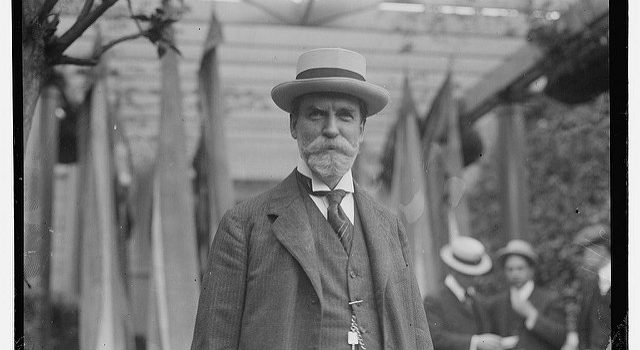
“We still proclaim the old ideals of liberty but we cannot voice them without anxiety in our hearts. The question is no longer one of establishing democratic institutions but of preserving them. … The arch enemies of society are those who know better but by indirection, misstatement, understatement, and slander, seek to accomplish their concealed purposes or to gain profit of some sort by misleading the public. The antidote for these poisons must be found in the sincere and courageous efforts of those who would preserve their cherished freedom by a wise and responsible use of it. Freedom of expression gives the essential democratic opportunity, but self-restraint is the essential civic discipline.” – Supreme Court Chief Justice Charles Evans Hughes
January 23, 1855 was the birthday of John Moses Browning. He was the brilliant designer of dozens of guns, including the M1911 pistol, Browning Automatic Rifle (BAR), and the venerable M2 .50 Caliber Machinegun.
This is also the birthday of my #2 Grandson. His coincidental birthday will ensure that he will inherit a disproportionately large portion of my guns that are Browning designs.
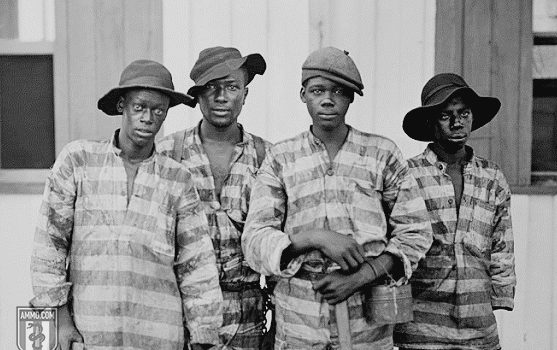
Editor’s Introductory Note: This article was originally published on Ammo.com, and is reposted with permission. This is the concluding continuation of Part 1, which was posted in SurvivalBlog on Tuesday, January 22, 2019.
Anywhere government money is being spent or the state is picking winners and losers, there you will find lobbying. Like the military-industrial complex, private prisons are no exception to this rule. The two largest private prison corporations have put more than $10 million into electing favorable candidates since 1989, and more than $25 million into lobbying.
Marco Rubio is an excellent example of the power of the private prison lobby. He has very close ties to the GEO Group, the second-largest for-profit prison company in the United States. GEO was the recipient of a state contract for a $110 million prison during Rubio’s tenure as the Speaker of the House in Florida. This right after Rubio hired an economic consultant with close ties to the company, which has donated nearly $40,000 to his various political campaigns as of 2015. This makes him the politician with the closest financial relationship to the private prisons industry.
The private incarceration industry has stepped up their lobbying game during the Trump Administration, with the GEO Group spending $1.3 million on lobbying between January and September 2017. That topped the total from the previous year, which was $1 million.
The timing of the increase in lobbying funds is worth considering. Immigration and Customs Enforcement (ICE) was looking to build five new detention centers at the time. Unsurprisingly, companies started lobbying hard to be the ones to build and operate these new facilities. That’s over 54,000 beds. What’s more, ICE is the number-one customer for the GEO Group, which is based in Florida.
Continue reading“Guest Post: The Modern Prison-Industrial Complex- Part 2”
Here are JWR’s Recommendations of the Week for various media and tools of interest to SurvivalBlog readers. This week the focus is on Snow Camouflage. (See the Books and Gear sections.)
o o o
Field Guide to Tracking Animals in Snow: How to Identify and Decipher Those Mysterious Winter Trails
o o o
The Snowshoe Experience: Gear Up & Discover the Wonders of Winter on Snowshoes
Ken Burns: The Civil War 25th Anniversary Edition Blu-ray
o o o
Building Your AR-15 From Scratch
o o o
Heirloom Sewing Techniques for Today’s Quilter
Here are the latest news items and commentary on current economics news, market trends, stocks, investing opportunities, and the precious metals markets. We also cover hedges, derivatives, and obscura. And it bears mention that most of these items are from the “tangibles heavy” contrarian perspective of SurvivalBlog’s Founder and Senior Editor, JWR. Today’s focus is on the importance of buying home vaults. (See the Tangibles Investing section.)
Gold Stocks Remain In A Downtrend
o o o
Bubba Horwitz: Gold and Silver 2019 – What to Expect
Here is an interesting recent piece over at Seeking Alpha, written by Larry Hall: Investor Psychology. Here is a pericope from Hall’s article: “Established economic and financial theory posits that individuals are well-informed and consistent in their decision-making. It holds that investors are ‘rational..it’s clear that in reality, humans do not act rationally. In fact, humans often act irrationally in counterproductive, systematic patterns.’”
o o o
Michael Snyder reports: Shock Survey: 59 Percent Of Americans Support Alexandria Ocasio-Cortez’s Proposal To Raise The Top Tax Rate To 70%
o o o
DSV sent us this: Wondering Why Americans Are Running from Blue States?
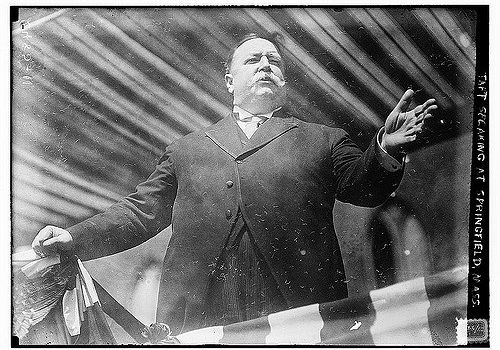
“The President can exercise no power which cannot be fairly and reasonably traced to some specific grant of power in the Federal Constitution or in an act of Congress passed in pursuance thereof. There is no undefined residuum of power which he can exercise because it seems to him to be in the public interest.” – President William Howard Taft
Congratulations to Michael Cargill (the owner of Central Texas Gun Works) for his success in this lawsuit: District Court Fines Austin, TX, $9,000 for Refusing Carry of Handguns at City Hall. Cargill is an upstanding, liberty-minded gentleman. He also runs one of the few gun stores in the country that accepts Bitcoin, in payment. Oh, and he sells Ghostgunner milling machines and 80% receiver blanks. He is quite a guy!
—
On January 22 , 1944 Allied forces began their successful landing at Anzio, Italy.
Editor’s Introductory Note: This article on prisons was originally published on Ammo.com. It is reposted with permission.
The size of the U.S. prison population is of considerable concern to survivalists.- JWR
—
There’s no two ways about it: The United States of America and its 50 state governments love putting people in prison.
The U.S. has both the highest number of prisoners and the highest per capita incarceration rate in the modern world at 655 adults per 100,000. (It’s worth noting that China’s incarceration statistics are dubious, and they execute far more people than the United States. Indeed, the so-called People’s Republic executes more people annually than the rest of the world combined.) Still, that’s more than 2.2 million Americans in state and federal prisons as well as county jails.
On top of those currently serving time, 4.7 million Americans were on parole in 2016, or about one in 56. These numbers do not include people on probation, which raises the number to one in 35. Nor does it include all of the Americans who have been arrested at one time or another, which is over 70 million – more than the population of France.
For firearm owners in particular, the growth in this “prison-industrial complex” is troubling because felons are forbidden from owning firearms and ammunition under the 1968 Gun Control Act. As the number of laws has grown and the cultural shift for police has gone from a focus on keeping the peace to enforcing the law, more and more Americans are being stripped of their 2nd Amendment rights (not to mention other civil rights like voting – as of 2017, 6.1 million Americans cannot vote because of their criminal records). All told, eight percent of all Americans cannot own firearms because of a felony conviction.
For American society as a whole, the prison-industrial complex has created a perverse incentive structure. Bad laws drive out respect for good laws because there are just so many laws (not to mention rules, regulations, and other prohibitions used by federal prosecutors to pin crimes on just about anyone). How did we get here?
Continue reading“Guest Post: The Modern Prison-Industrial Complex- Part 1”