Post-TEOTWAWKI: Groups and Retreats, Pt. 2, by E.M.

(Continued from Part 1)
For a group of neighbors who first come together after a disaster has already occurred, many of whom will barely know each other, if at all, the level of cohesiveness and trust will likely be stretched thin. So expect the question, “Why defend your house, and not mine?”

It would be better if decisions about which properties/neighborhoods would be defended were made in advance of a disaster. While apartment dwellers may be very flexible about the issue because they have little skin in the game, for homeowners in the group, the decision could obviously be a point of conflict that would be difficult to resolve amicably. Again, expect the question, “Why defend your house and not mine?” This decision may well prove to be a nonstarter for those who are considering joining the group in normal times when there is no compulsion to do so.

For those who wait until after a major disaster strikes to attempt to form a group (that is, after it becomes crystal clear to neighbors, for example, that they need to come together to meet serious threats), more individuals would likely decide that it is in their interest to join the group, but they will come to the group with different assets. Serious preppers/survivalists could find themselves with months of food on hand for themselves and their families, while other members of the group might join with almost nothing. (The Millennials who refuse to eat canned goods because they prefer to “eat fresh,” for example, will pose special problems.) Unprepared group members will be telling the prepared group members that, as they say in kindergarten, “sharing is caring.”

The issue of group cohesiveness will become a serious issue after a few weeks, if not sooner, when the clothing of some members of the group has becomes baggy and loose-fitting, and when it is obvious that other members of the group are still eating quite well. Trouble will naturally follow. “How can you stand there and watch my kids starve while you and your family have full bellies?”

Of course, an obvious solution is that members of the group can pool their assets and share what they have. The problem with that solution is that a family of four with a six month food supply will now have not much more than a one month’s supply if it is part of a mutual assistance group composed of four additional families who were poorly prepared.

The reality is that, if a family is not part of a mutual assistance group before a disaster occurs, it may well be unable to shop around and pick and choose which group it wishes to join after a disaster occurs. Geography will likely trump everything else.

THE SURVIVAL GROUP’S RETREAT

I doubt that many people would need to come together at a retreat during any of the local disasters mentioned, except to use it as temporary shelter for a few days/weeks. Its use under such circumstances would be for not much more than what a hotel room might offer.

A factor here is the natural inclination for most homeowners to stay in or close to their homes, or what is left of them, after a hurricane or earthquake, and to protect their possessions from occasional opportunistic looters until order is restored. Another reason they would want to stay relatively close to home after a local disaster is that their job might not have been affected by the local calamity, and they would need to stay within commuting distance of their place of employment.

Yes, I realize that homes can be rendered uninhabitable for months following hurricanes and earthquakes and that a retreat might provide shelter during that time. A neighbor across the street was out of her home for six months after the Northridge Earthquake in 1994, although I am not sure why. Nevertheless, the security and sustainability aspects of retreats in such circumstances would not be all that important after a local or regional disaster. Order would be restored relatively soon.

On the other hand, access to a retreat could be a godsend after an EMP attack, a massive cyberattack, and, of course, a nuclear war. In a post-apocalyptic landscape, many will decide that the survival contest will be best “played” as an away game.

Security of Unoccupied Retreats

Buying property to use as a retreat obviously presents daunting financial issues for most people. Beyond that, leaving the property unoccupied for much of the year presents security issues.

A friend related to me how a co-worker was building a home in a remote area of the High Desert in Southern California (so it wasn’t exactly a retreat as such). He had a large sea-land container there that held supplies while he worked on weekends slowly building the home himself. Despite the property’s rather remote location, people with bad intentions found it.

The thieves took an entire lift of 2x4s, as well as a large amount of roof shingles. They cut through the rear side of his sea-land container with an acetylene torch. They gave up when they could not move the large stack of plywood at the rear so as to allow them to gain entrance. The thieves went so far as to remove the pump from the cabin’s well. The security camera at the location caught much of the theft in progress, but identifying who the thieves were was impossible.

The takeaway here is that in this era of widespread drug addiction, a significant portion of the druggie population has turned to petty crime to fuel habits, and anything that isn’t nailed down, whether at a remote home’s construction site or at a retreat, may well be carted away whenever the owners are not there.

While it might be possible to find someone who was willing to live at a group’s retreat in order to keep an eye on things, the odds are that this person would probably have to be a retiree if the retreat was very far from urban and suburban areas (which is to say, “places of employment”).

Cost Sharing

Some people suggest that one way to ease the financial burden of building a retreat is for the survival group to pool its assets in order to purchase a desirable property.

Getting friends and family members to invest in beans, bullets, and Band-Aids is difficult enough, but getting friends and family members to spend money to invest in a retreat will be even more difficult.

Beyond that, who would agree to buy a share in a retreat without seeing it first? The result would be that, after they visit the property, each person who turned down the offer to buy a share property will know exactly where the safe haven is when disaster strikes. How many of them will show up at the front gate of the retreat once things turn spicy, hoping to take advantage of years of friendship or a family relationship?

Let’s assume that a few like-minded individuals are actually convinced to purchase shares in the retreat. Those in the prime of life with no serious health issues and with important skills will be among the most useful to a survival group. These people are the very people who will be likely to have additional children. As a result, the burden on the land could become more unsustainable with each passing year if the disaster lasted for a great period of time.

It is common in survival novels and dystopian fiction, in general, for characters to be strangely (and conveniently) out of contact with their families–Dad and Mom died three years earlier after a collision with a drunk driver. The brother and the hero had a falling out ten years earlier and the brother’s whereabouts are unknown. Sis is living with her family in Maryland, etc., etc., etc. Death, alienation, or simple distance removes close relatives from the hero’s concern and from the entangling familial issues that might complicate the plot the author has in mind.

The reality is, however, that the majority of people have family members and in-laws who live reasonably close. What does the group do when one couple who are shareholders in the retreat shows up at the retreat with their elderly parents, their in-laws and kids, and even lifelong friends? Will such a situation be the flashpoint that results in the group’s first use of lethal force? I don’t think so. The extra mouths to feed will simply make it more complicated.

And then there are the expenses that need to be shared by the group. The best intentions in the beginning often fade with time. (That the interest in prepping has been reduced since the economy began booming in 2016 has been commented upon by many.) One of my brothers purchased and renovated a nice cabin on a broad creek in rural Indiana. Each of the cabin owners in the area was supposed to pay an annual road maintenance fee of a modest amount. Most did, but some didn’t. The fee was important for upkeep of the access road, but the fee was also small enough that it didn’t justify the expense of hiring a lawyer to collect the fee each year.

After TEOTWAWKI, it will “take a village,” but the devil is still, most assuredly, in the details.

(To be concluded tomorrow, in Part 3.)


Economics & Investing For Preppers

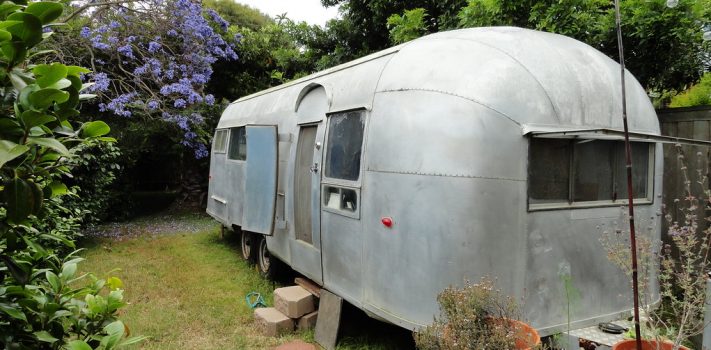
Here are the latest news items and commentary on current economics news, market trends, stocks, investing opportunities, and the precious metals markets. We also cover hedges, derivatives, and obscura. And it bears mention that most of these items are from the “tangibles heavy” contrarian perspective of SurvivalBlog’s Founder and Senior Editor, JWR. Today, we look at investing in vintage Airstream trailers. (See the Tangibles Investing section.)

Precious Metals:

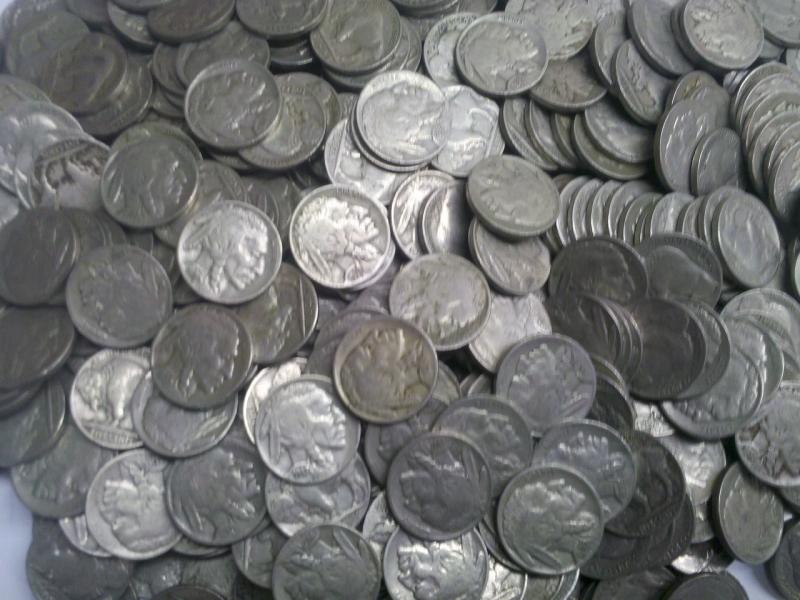
The recent breakout in the spot gold and silver prices show that they have not lost their “safe haven” status in the investing world.   When times get tough and when war drums sound, people all around the world shift to precious metals.  Gold recently crossed the $1,400 line, for the first time since 2013. This may mark the beginning of another bull market. One other observation: Seasonally, this is quite unexpected–since typically the precious metals prices go into Summer Doldrums.

o  o  o

$1,400 Gold Will Breathe New Life Into Miners – Randy Smallwood

Economy & Finance:

At Zero Hedge: Global Negative Yielding Debt Hits Record $12.3 Trillion

o  o  o

California Pension Fund Faces Crisis After Shunning Guns, Tobacco

o  o  o

At Wolf Street: Who Bought the Nearly $1 Trillion of New US Government Debt over the Past 12 Months?

Continue reading“Economics & Investing For Preppers”


Preparedness Notes for Thursday — June 27, 2019

Special Announcement:  We’ve just put our small remaining supply of waterproof SurvivalBlog Archive USB sticks on sale, at just $19.95 each.  This is just until we exhaust the existing batch. This is your chance to order some extras, for gifts. Order yours soon–before they are all sold out!

June 27th is the birthday of economist Dr. Ravi Batra. (Born 1943.)

SurvivalBlog Writing Contest

Today we present another entry for Round 83  of the SurvivalBlog non-fiction writing contest. The more than $12,000 worth of prizes for this round include:

First Prize:

  1. A $3,000 gift certificate towards a Sol-Ark Solar Generator from Veteran owned Portable Solar LLC. The only EMP Hardened Solar Generator System available to the public.
  2. A Gunsite Academy Three Day Course Certificate. This can be used for any one, two, or three day course (a $1,095 value),
  3. A course certificate from onPoint Tactical for the prize winner’s choice of three-day civilian courses, excluding those restricted for military or government teams. Three day onPoint courses normally cost $795,
  4. DRD Tactical is providing a 5.56 NATO QD Billet upper. These have hammer forged, chrome-lined barrels and a hard case, to go with your own AR lower. It will allow any standard AR-type rifle to have a quick change barrel. This can be assembled in less than one minute without the use of any tools. It also provides a compact carry capability in a hard case or in 3-day pack (an $1,100 value),
  5. Two cases of Mountain House freeze-dried assorted entrees in #10 cans, courtesy of Ready Made Resources (a $350 value),
  6. A $250 gift certificate good for any product from Sunflower Ammo,
  7. American Gunsmithing Institute (AGI) is providing a $300 certificate good towards any of their DVD training courses.

Second Prize:

  1. A gift certificate from Quantum Harvest LLC (up to a $2,200 value) good for 12% off the purchase of any of their sun-tracking models, and 10% off the purchase price of any of their other models.
  2. A Front Sight Lifetime Diamond Membership, providing lifetime free training at any Front Sight Nevada course, with no limit on repeating classes. This prize is courtesy of a SurvivalBlog reader who prefers to be anonymous.
  3. A Glock form factor SIRT laser training pistol and a SIRT AR-15/M4 Laser Training Bolt, courtesy of Next Level Training, which have a combined retail value of $589,
  4. A Three-Day Deluxe Emergency Kit from Emergency Essentials (a $190 value),
  5. Two 1,000-foot spools of full mil-spec U.S.-made 750 paracord (in-stock colors only) from www.TOUGHGRID.com (a $240 value).
  6. An assortment of products along with a one hour consultation on health and wellness from Pruitt’s Tree Resin (a $265 value).

Third Prize:

  1. Three sets each of made-in-USA regular and wide-mouth reusable canning lids. (This is a total of 300 lids and 600 gaskets.) This prize is courtesy of Harvest Guard (a $270 value)
  2. A Royal Berkey water filter, courtesy of Directive 21 (a $275 value),
  3. Expanded sets of both washable feminine pads and liners, donated by Naturally Cozy (a $185 retail value),
  4. Two Super Survival Pack seed collections, a $150 value, courtesy of Seed for Security, LLC,
  5. Mayflower Trading is donating a $200 gift certificate for homesteading appliances.

Round 83 ends on July 31st, so get busy writing and e-mail us your entry. Remember that there is a 1,500-word minimum, and that articles on practical “how to” skills for survival have an advantage in the judging.


Post-TEOTWAWKI: Groups and Retreats, Pt. 1, by E.M.

There are many articles on the internet concerning the benefits of forming a group of like-minded individuals who could support each other when times get “spicy” for months or even years, either in their own neighborhood or at a remote retreat.  These groups are sometimes referred to as mutual assistance groups. These articles are based on the premise that choosing a “lone wolf” approach after TEOTWAWKI is unsustainable in the long run, and that even expecting a single family to live and thrive on a remote mountaintop after a societal meltdown is unrealistic and ripe for tragedy in the long term. An important reason for the latter view is that a single family cannot maintain proper 24/7 security while tending to all of its daily needs over time.

A problem with many of these articles is that much of the discussion about forming survival groups all too often involves pie-in-the-sky fantasies and unrealistic platitudes.

Nevertheless, the consensus in most of these articles about surviving a long term apocalyptic event, to borrow a phrase from a certain political figure, is “It takes a village.” (For the purposes of this discussion, I am assuming that most SurvivalBlog readers’ first choice for the location of the “village” is not going to be a FEMA camp.)

While there is a host of useful information about survival groups and forming retreats for them in these articles, it is clear after serious scrutiny that the “devil is in the details.”
Continue reading“Post-TEOTWAWKI: Groups and Retreats, Pt. 1, by E.M.”


The Survivalist’s Odds ‘n Sods:

SurvivalBlog presents another edition of The Survivalist’s Odds ‘n Sods— a collection of news bits and pieces that are relevant to the modern survivalist and prepper from “JWR”.  Today, we take another look at tiny houses.

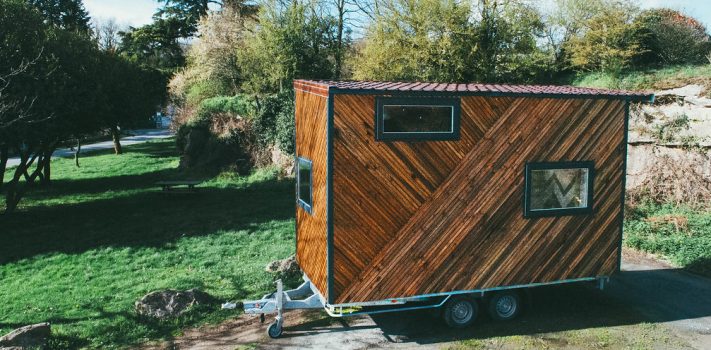
Tiny House Trend Continues

This was included in the McAlvany Intelligence Advisor‘s Daily G2: Tiny houses entice budget-conscious Americans. Here is a snippet:

“Welcome to the world of tiny homes, most of them less than 400 square feet (less than 40 square meters), which savvy buyers are snapping up for their minimalist appeal and much smaller carbon footprints.

The tiny homes revolution, which includes those on foundations and those on wheels, began a few decades ago, but the financial crisis of 2008 and the coming-of-age of millennials gave it a new impetus.

The proliferation of home improvement shows on networks like HGTV fueled the trend, inspiring customers ready to personalize their own small living spaces.

Cost is one of the driving factors — a tiny home of just over 200 square feet with a customized interior can go for about $50,000 — a massive savings over a McMansion in the suburbs.”

50 Secret Hiding Places

50 Secret Hiding Places Thieves Will Never Look.

Charles Carrol Society Finds Details on Idaho RINO Group

This is worth reading: CCS discovers who is behind Idaho Compromising Conservatives.

Continue reading“The Survivalist’s Odds ‘n Sods:”


The Unraveling: A Book Review, by S.A.

Spoilers Alert: I don’t believe this review gives the story away, but if you don’t like any details in advance, then you might not want to read this.

The Unraveling, Book 1 of the Bound to Survive Series
by Charley Hogwood
324 pages
Kindle $5.99

First, who names their baby Tempest? Even in this day and age of last names being used as first names (for example, Smith, Parker, Jackson, Davis for little girls or little boys) and the revival of old-timey girl names (Donna, Ruth, Hazel, Myrtle), “Tempest” seems over the top, unless maybe you are a Shakespeare scholar.

A small group of the woke in Florida forms and comes together just at the outset of a pandemic that arises out of the failed state of Venezuela. Their success just shows us that maybe God does love fools, and this time, just maybe the newly aware will fare as well or better as those who have been accumulating skills and tools for years. Of course, everyone needs lots of guns and proven ability and experience with shooting, and this group has it.

Prepper acronyms and pieces of equipment are explained early on for those readers who are brand new to prepping: Mylar, TEOTWAWKI, SHTF, etc. I believe that is the target audience for this book, but old hands at prepping can enjoy it, too. The characters are likable.Continue reading“The Unraveling: A Book Review, by S.A.”


JWR’s Recommendations of the Week:

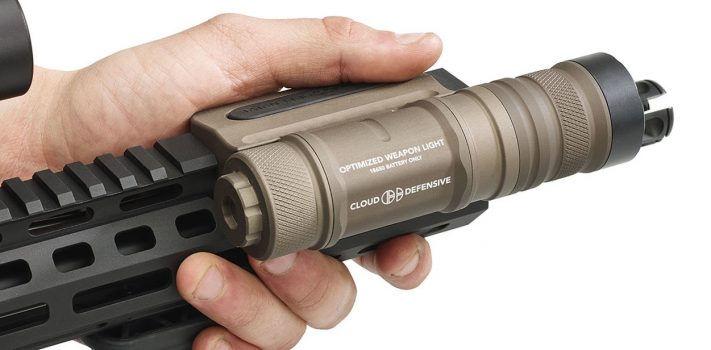
Here are JWR’s Recommendations of the Week for various media and tools of interest to SurvivalBlog readers. This week the focus is on the Gear Cloud Defensive OWL weapons light.  (See the Gear & Grub section.)

Books:

The Prepared Family Guide to Uncommon Diseases

o  o  o

Every Man a Hero: A Memoir of D-Day, the First Wave at Omaha Beach, and a World at War

o  o  o

The Little Ice Age: How Climate Made History 1300-1850, by Brian Fagan

o  o  o

The Pioneers: The Heroic Story of the Settlers Who Brought the American Ideal West

o  o  o

One Giant Leap: The Impossible Mission That Flew Us to the Moon

Continue reading“JWR’s Recommendations of the Week:”


Preparedness Notes for Tuesday — June 25, 2019

On June 25th, 1876, Native American forces led by Chiefs Crazy Horse and Sitting Bull defeated the U.S. Army troops of Lieutenant Colonel George Armstrong Custer in a bloody battle near southern Montana’s Little Bighorn River. The Battle of Little Bighorn–also called Custer’s Last Stand –marked the most decisive Native American victory and the worst U.S. Army defeat in the long Plains Indian War. While complicated, the generally accepted reason for the battle is that the discovery of gold in South Dakota’s Black Hills in 1875 led to the U.S. government disregarding previous treaty agreements. The gruesome fate of Custer and his men outraged many white Americans and confirmed their image of the Indians as wild and bloodthirsty. Meanwhile, the U.S. government increased its efforts to subdue the tribes. Within five years, almost all of the Sioux and Cheyenne would be confined to reservations.

SurvivalBlog Writing Contest

Today we present another entry for Round 83  of the SurvivalBlog non-fiction writing contest. The more than $12,000 worth of prizes for this round include:

First Prize:

  1. A $3,000 gift certificate towards a Sol-Ark Solar Generator from Veteran owned Portable Solar LLC. The only EMP Hardened Solar Generator System available to the public.
  2. A Gunsite Academy Three Day Course Certificate. This can be used for any one, two, or three day course (a $1,095 value),
  3. A course certificate from onPoint Tactical for the prize winner’s choice of three-day civilian courses, excluding those restricted for military or government teams. Three day onPoint courses normally cost $795,
  4. DRD Tactical is providing a 5.56 NATO QD Billet upper. These have hammer forged, chrome-lined barrels and a hard case, to go with your own AR lower. It will allow any standard AR-type rifle to have a quick change barrel. This can be assembled in less than one minute without the use of any tools. It also provides a compact carry capability in a hard case or in 3-day pack (an $1,100 value),
  5. Two cases of Mountain House freeze-dried assorted entrees in #10 cans, courtesy of Ready Made Resources (a $350 value),
  6. A $250 gift certificate good for any product from Sunflower Ammo,
  7. American Gunsmithing Institute (AGI) is providing a $300 certificate good towards any of their DVD training courses.

Second Prize:

  1. A gift certificate from Quantum Harvest LLC (up to a $2,200 value) good for 12% off the purchase of any of their sun-tracking models, and 10% off the purchase price of any of their other models.
  2. A Front Sight Lifetime Diamond Membership, providing lifetime free training at any Front Sight Nevada course, with no limit on repeating classes. This prize is courtesy of a SurvivalBlog reader who prefers to be anonymous.
  3. A Glock form factor SIRT laser training pistol and a SIRT AR-15/M4 Laser Training Bolt, courtesy of Next Level Training, which have a combined retail value of $589,
  4. A Three-Day Deluxe Emergency Kit from Emergency Essentials (a $190 value),
  5. Two 1,000-foot spools of full mil-spec U.S.-made 750 paracord (in-stock colors only) from www.TOUGHGRID.com (a $240 value).
  6. An assortment of products along with a one hour consultation on health and wellness from Pruitt’s Tree Resin (a $265 value).

Third Prize:

  1. Three sets each of made-in-USA regular and wide-mouth reusable canning lids. (This is a total of 300 lids and 600 gaskets.) This prize is courtesy of Harvest Guard (a $270 value)
  2. A Royal Berkey water filter, courtesy of Directive 21 (a $275 value),
  3. Expanded sets of both washable feminine pads and liners, donated by Naturally Cozy (a $185 retail value),
  4. Two Super Survival Pack seed collections, a $150 value, courtesy of Seed for Security, LLC,
  5. Mayflower Trading is donating a $200 gift certificate for homesteading appliances.

Round 83 ends on July 31st, so get busy writing and e-mail us your entry. Remember that there is a 1,500-word minimum, and that articles on practical “how to” skills for survival have an advantage in the judging.


Preparing for Everyday Life, by D.W.

This article doesn’t address When The Schumer Hits The Fan (WTSHTF). No, this is just about preparing for everyday life, and everyday hazards to your property.

Life will always be a higher level of importance than property. However, in this article we will be discussing property and how to mitigate its loss. When we think of being prepared, we think about the worst things imaginable happening, EMP blackout, Nuclear war and civil unrest are just a few. But more likely than not, our individual lives can be affected more frequently by smaller-scale incidents that can have a huge impact on us. A fire, flood, tornado or even a residential burglary. The U.S. Fire Administration (USFA) reported 1.3 million fires in 2017. And according to the FBI Uniform Crime Reporting Statistics of 2015, 11.2 households out of 1,000 will be a victim of a property crime. Add to these, the unpredictable number of tornadoes and flooding or even earthquakes that can occur from year to year in the United States. Being prepared for these is just as important as preparing for any other critical incident. These types of events can happen to anyone, whether you still live in an urban environment or have established a retreat further out from your neighbors.

When thinking about preparedness, one might fall into the trap of tunnel vision. Tunnel vision is explained as being so focused on a result or goal that we lose focus on everything else around it. I have developed the mentality of being an All-hazards preparer rather than focusing on just one incident. Much of the time, the cross-over from one to another only adds a couple of steps, but being mindful to look at what can occur everyday to you or your neighbors is just as important as navigating the larger picture.

Continue reading“Preparing for Everyday Life, by D.W.”


SurvivalBlog’s News From The American Redoubt

Here is SurvivalBlog’s News From The American Redoubt. This weekly column features news stories and event announcements from around the American Redoubt region. We also mention companies of interest to preppers that are located in the region. Today, we focus on Kitfox STOL aircraft. (See the Idaho section.)

Idaho

Raúl Labrador announces candidacy for GOP chairman

o o o

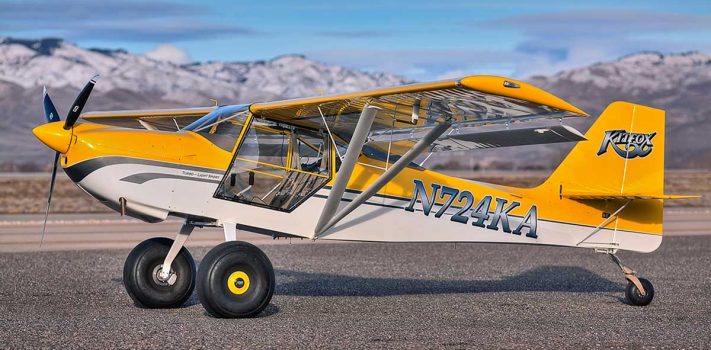
Kitfox STOL Video (with tundra tires, of course): HOT SPRING HOP WITH THE KITFOX!! Flight VLOG (Part 1).  “Silvija and I flew the Kitfox to the Idaho Sawtooths and landed at a few hot springs around the Idaho Sawtooth mountain range. Near Stanley, Idaho, Salmon, Idaho, Barney Hot Springs, Gold Bug Hot Springs  and Craters of the Moon. Almost ground looped the Kitfox. Landed on dirt roads, had a strong crosswind landing and takeoff at Challis, Idaho airport.”

JWR’s Comment:  You gotta love those “casual” dirt road landings in very rural parts of southern Idaho. Given the terrain, there are not many opportunities for that in central and north Idaho, at least with fixed-wing aircraft. But the rotary pilots definitely land in some interesting places.

o o o

Judge orders Sawtooth Valley water diversions examined

Continue reading“SurvivalBlog’s News From The American Redoubt”


The Survivalist’s Odds ‘n Sods:

SurvivalBlog presents another edition of The Survivalist’s Odds ‘n Sods— a collection of news bits and pieces that are relevant to the modern survivalist and prepper from “JWR”.  Today, we look at the recent South American Blackout.

U.S. Put Malware In Russia’s Electrical Grid

G.P. sent this: U.S. Reportedly Planted Offensive Malware In Russia’s Electrical Grid. A quote:

“The New York Times reports that the Cyber Command has been able to infiltrate the electric grid of Russia and plant offensive malware. It’s unclear just how deep it has been able to infiltrate the grid and what this malware is capable of doing. However, it’s evident that this is meant to serve as a weapon should the situation between the United States and Russia reach a point where its use may seem warranted.”

Insider Blows Whistle at Google on 2020 Election Meddling

Reader S.H. sent this bombshell: Insider Blows Whistle & Exec Reveals Google Plan to Prevent “Trump situation” in 2020 on Hidden Cam

Huge South American Blackout

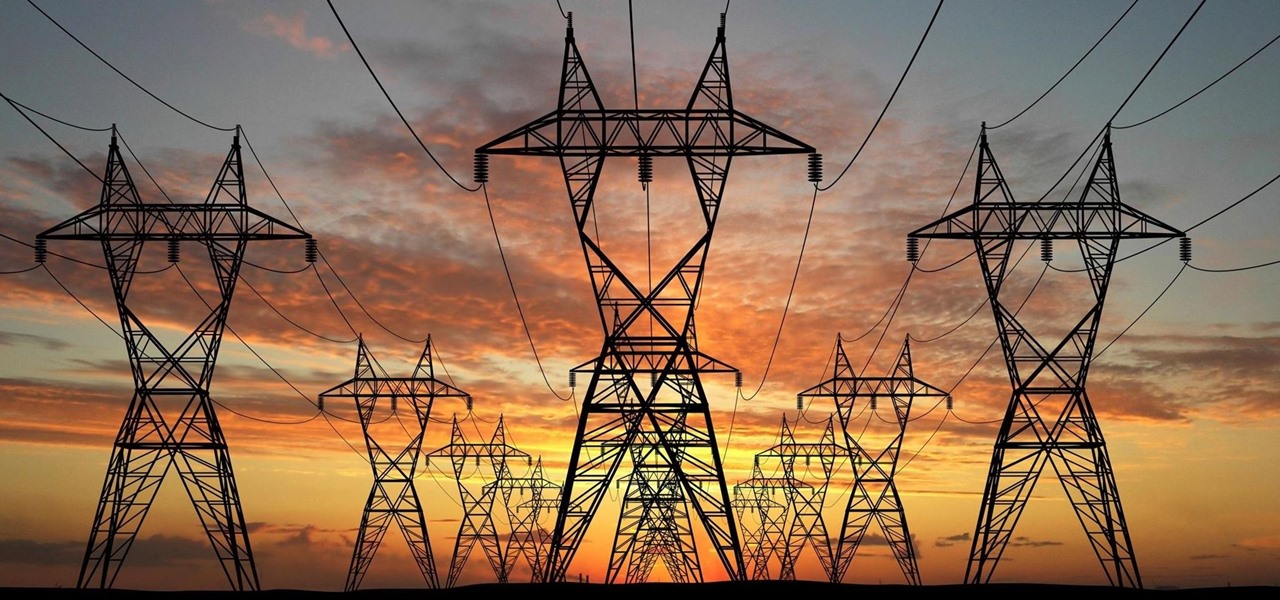
Courtesty of reader Tim J., here is a report from BBC: Argentina and Uruguay reel after massive power outage. This outage left 44 million people in the dark.  The grid failure was not attributed to malware, but rather to a physical problem with a grid inter-tie. Here is a pericope:

“Power has been restored to much of Argentina and Uruguay after a massive electrical failure left tens of millions of people in the dark.

Argentine President Mauricio Macri has promised a full investigation.

Argentine media said the power cut occurred shortly after 07:00 (10:00GMT) on Sunday, causing trains to be halted and failures with traffic signalling.

The blackout was prompted by a failure in an electrical grid that serves both Argentina and Uruguay.

The outage occurred as people in Argentina were preparing to go to the polls for local elections, delaying voting in several regional provinces.

Parts of Paraguay and Chile were also affected, a state energy company said.”

Oregon Senator: “Come Heavily Armed”:

Reader H.L. sent this at Zero Hedge: “Come Heavily Armed”: Oregon Senator Threatens Violence As Governor Hunts Down Lawmakers.

Continue reading“The Survivalist’s Odds ‘n Sods:”