Introductory Disclaimer: This article is about medical first aid care and should only be used in emergency situation. Apply them at your own risk. There is no substitute for hands-on training.
—
I am writing today to touch on a topic that I have seen some discussion in regards to related equipment but not the requisite training. I have heard it many places including on this page that without training, any equipment is useless. I would heartily agree with this sentiment. I would argue that this is particularly true when it comes to medical equipment, and especially with first aid equipment. This is what I will be discussing today.
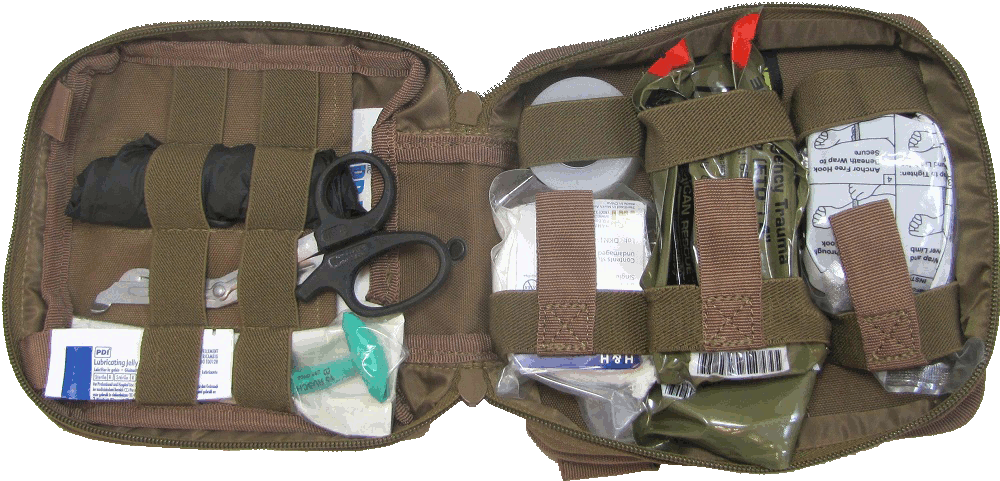
I cannot tell you how many times I have been to the range and at shooting courses and have seen folks carrying their Individual First Aid Kits (IFAK) on their belts, vests, etc. who do not know how to use most of their contents. When I ask, I usually get a response similar to “I am sure someone else around will know how to use them all if I don’t.” To my way of thinking, this is a less than satisfactorily response. If you take the time to purchase and carry the equipment, you should know how to use the equipment. They obviously care enough about equipment training to be at the range or even in a firearms class.
There seems to be a gap in the civilian market for good training for things as simple yet possibly lifesaving as the contents in a simple IFAK. As I speak, I am coordinating with a local shop who sells first aid equipment along with offering firearms and training to use the firearms to develop and teach a class similar to what I am going to go over in this post.
First, a little bit of my background in this subject matter. I am a former Navy Corpsman with time spent in the field overseas shipboard and on the ground with the Marines. I served two deployments in support of Operation Iraqi Freedom/ Operation Enduring Freedom where I trained sailors and Marines how to render first aid/buddy aid as well as served their medical needs. I am now a civilian with more time spent treating patients in emergency rooms and urgent cares. Continue reading“Some IFAK Facts, Part 1 by MtnDoc in Washington”