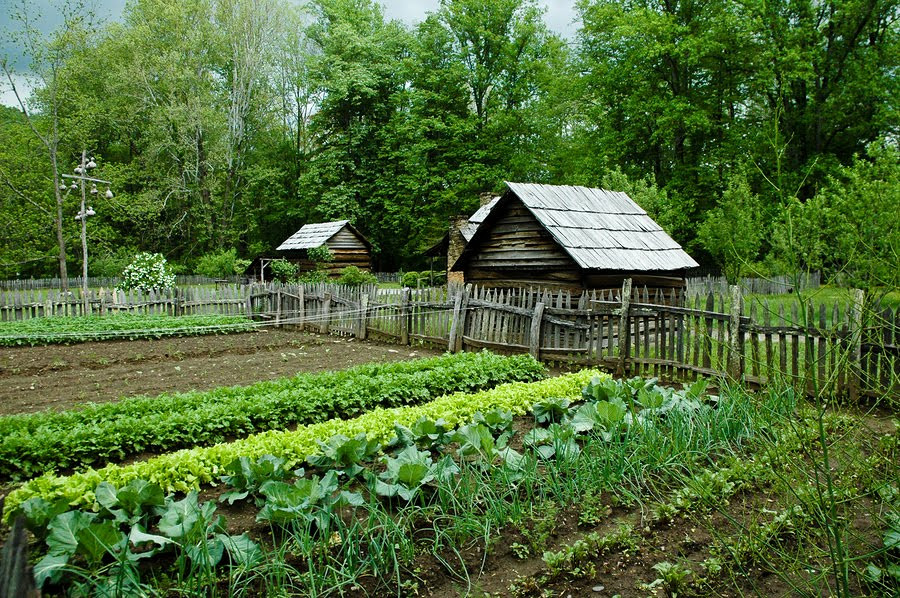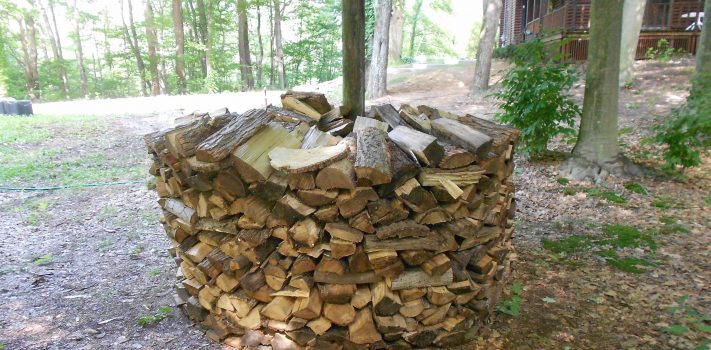
Six years ago, my wife and I slipped the surly bonds of suburbia and sought refuge in less densely populated parts. We settled in a log home in the woods. The northern woods in winter are beautiful but cold. Keeping warm led to a discovery: propane is expensive. So in the interest of fiscal responsibility, we henceforth heated our home by the sweat of my brow.
The details of felling trees, limbing, bucking logs, and hauling billets belong to a tale for another day. My story today concerns splitting wood: the experiences of a smooth-handed greenhorn reducing billets of wood into pieces that will stack and dry well and then be easily handled as they are fed into a wood stove.
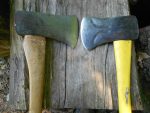 I began my wood splitting journey with the heritage of my fathers: two axes, one inherited from my father, and one inherited from my father-in-law. The planes of my father’s axe are concave, tapering gently up to the eye where the head of the axe surrounds the handle. The planes of my father-in law’s axe tend toward the convex, curving more quickly outward toward its maximum width as it sweeps up toward the eye. These characteristics make my dad’s axe a felling axe, and my father-in-law’s axe a splitting axe.
The felling axe cuts deeply but spreads little. This makes it good for cutting across the grain of the wood. The splitting axe widens the cleft abruptly, before the energy of the blow can be dissipated by the friction of penetration. This makes it good for forcing the billet apart as it explosively creates a cleft parallel with the grain of the wood.
Although it is old, my father-in-law’s axe is a finely crafted and highly effective tool. I have subsequently used many different splitting tools, but I was blessed to begin my wood splitting journey with one of the best.Continue reading“A Beginner’s Wood Splitting Journey – Part 1, by The Novice”