Preamble
The goal of this article to provide readers, the average preppers radio operator, with useful choices that may be capable of meeting a required level of performance. These are some inexpensive, or low power radio options that do not require an Amateur Radio License in the U.S..
Antenna choice is a very important to the part of providing reliable communications within a 10 to 20 mile radius using low powered radios. Terrain also plays an important role. If one located 50 feet higher than the average elevation of the surrounding terrain, the distance it may transmit and receive is much greater. The old rule of thumb in the Amateur Radio world is that ‘height is might’. Even though there will be additional loss of signal in a lengthy run of cable to an antenna that is mounted as high as possible, the additional height of the antenna that avoids obstacles and terrain in the radio wave’s path, easily compensates. In this example, extreme signal loss in a RG-58 cable intended for short runs only, can lose, say half of the signal strength, or 1.5 Dbd, is acceptable if the otherwise low in height antenna installation cannot make reliable communications possible.
Another configuration to consider is that a radio with only 2 watts output, using antenna that mounted at least 15 feet high, and transmits through an antenna with a gain of 1.5 Ddb, can outperform a 10 watt radio transmission that transmits through a 1/4 wave unity gain (no gain) antenna mounted on a vehicle roof. The radio’s frequency also plays an important role in how in negotiates terrain, and obstacles. Radio line of sight in not a straight line. Radio wave can penetrate, or follow the ground, and go around or deflect over hills by about 5 percent, and travel to it’s destination that cannot be seen with the eyes. The longer wave lengths tend to do this much better than the short wave lengths such are used in GMRS radios. GMRS radio using the 3 times shorter in wave length UHF frequencies as compared to VHF frequencies. So they will tend to penetrate some buildings and obstacles much better than VHF. CB radio waves are in the 11 meter band right next to the 10 meter Amateur band. CB transmissions can follow the ground much better than high VHF frequencies that is used in the Multi User Radio Service (MURS) that starts at 151.820MHz.
Three radios and antenna options to consider.
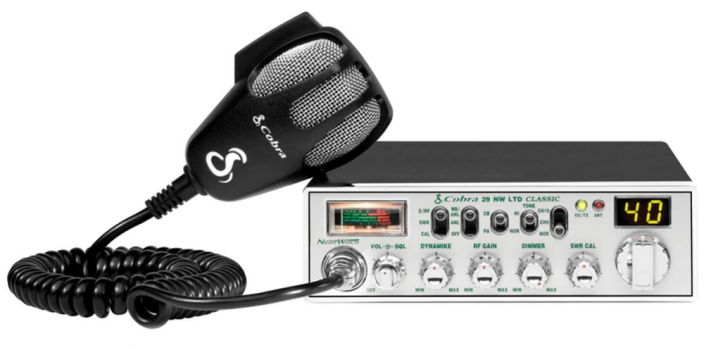
Option 1: SSB CB Radio
Pros:
– No license required.
– Affordable.
– Familiar format.
– No programming needed.
– Can talk with common CB radios.
– Semi-secure. Of the three choices, it provides the highest level of COMSEC.
It is semi-secure, as there a few SSB CBs in use, and standard CBs cannot receive an intelligible signal from SSB CB, when SSB mode is selected.
– Higher effective signal strength due the type of modulation as compared to standard CB radio.
The radio’s rated output is 4 watts, yet when used in Singe Side Band mode, this type modulation has an effective rating of about 12 watts. 12 watts that can provide reliable communications out to at least 10 miles, or more in average terrain. However, both radios in the network need to be CBs with SSB capability.
Cons:
– Large in 20 foot in diameter area needed for the ground plane of the antenna.Continue reading“Useful Transceivers for Most Preppers, by Tunnel Rabbit”