One of the pillars of homestead food production is growing small grains such as wheat, barley, oats, etc. The classic text for homestead grain production is Small-Scale Grain Raising, by Gene Logsdon (1977). His focus is on using small-scale or appropriate technology, usually human powered. For example, harvesting small grains would entail the use of a scythe for cutting the grain, a flail for threshing the grain followed by tossing the grain into the air to winnow or separate the grain from the chaff.
I was raised on a traditional farm in the 1960s and 1970s where we used farm-scale equipment and I understand the process of raising small grains. However, the scale of homestead grain raising doesn’t justify the purchase or operation of the traditional farm equipment used for grain production. If only a few acres or less is dedicated to wheat for personal use on a homestead, buying an expensive combine which is only used once a year is not a prudent use of financial resources.
Logsdon recommends the purchase of small threshers which were usually sold to seed companies as a substitute for large combines. A check of the internet shows that small threshers are still available but cost hundreds of dollars and are built in China or India. With the current pandemic and the decrease in imports from those Asian countries this equipment may not be available in the near future.
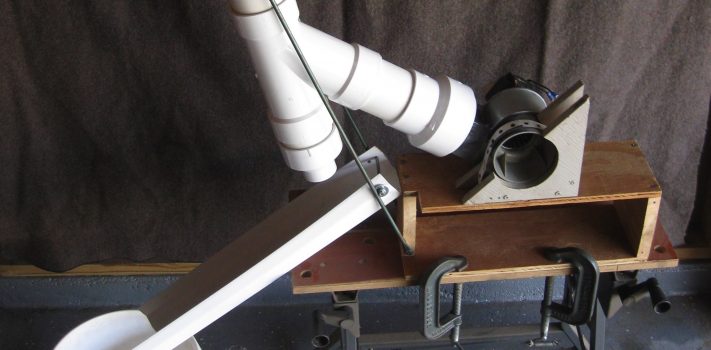
For those who want to raise their own homestead grains and process them at home, one part of that process – winnowing – can be made easier by building and using a homestead-scale grain winnower. I recently built and modified a grain winnower from plans available on the internet. These plans, “Small Electric Winnower“, were designed by Allen Dong and Roger Edberg and are in the public domain. The plans are a bit dated (circa 1998) and somewhat rudimentary. But I found that the basic unit could be easily assembled from commonly available materials using hand/power tools, hacksaw, jig saw, etc. for about $100. (Not including the Black and Decker Workmate stand, where I mounted it.) This was a pleasant project to work on and required me to improvise and make adaptations to the original plans in order to complete the final construction.Continue reading“The $100 Homestead Grain Winnower – Part 1, by PapaP”