Preparedness Notes for Thursday — June 25, 2020

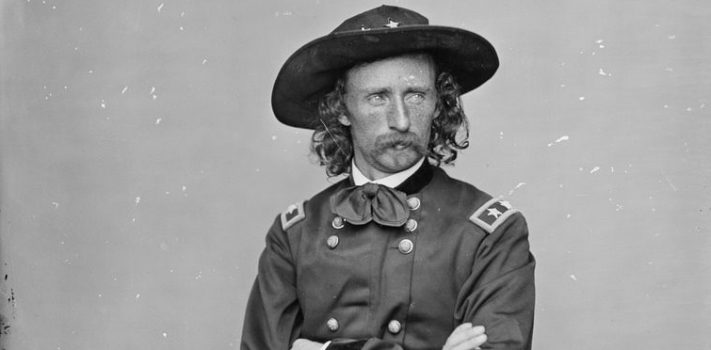
On June 25th, 1876, Native American forces led by Chiefs Crazy Horse and Sitting Bull defeated the U.S. Army troops of Lieutenant Colonel George Armstrong Custer in a bloody battle near southern Montana’s Little Bighorn River. The Battle of Little Bighorn–also called Custer’s Last Stand – marked the most decisive Native American victory and the worst U.S. Army defeat in the long Plains Indian War. While complicated, the generally accepted reason for the battle is that the discovery of gold in South Dakota’s Black Hills in 1875 led to the U.S. government disregarding previous treaty agreements. The gruesome fate of Custer and his men outraged many white Americans and confirmed their image of the Indians as wild and bloodthirsty. Meanwhile, the U.S. government increased its efforts to subdue the tribes. Within five years, almost all of the Sioux and Cheyenne would be confined to reservations.

I just noticed that we’ve passed the 33,000 mark, for posted SurvivalBlog articles, columns, and quotes. And even though we added our Comments feature just a couple of years ago, there are now more than 55,500 posted comments. Thank you for your support, folks, in making SurvivalBlog such a success in these past 14 years! We will strive to continue to keep SurvivalBlog an “Old School” blog, with original content and genuine ethics. Unlike many other blogs, we refuse to sell out to the “paid placement” SEO mongers.

An Observation: Have you noticed how the the American News Cycle has turned into an enormous whipsaw? First, it was 24-hour a day shouting from the rooftops: “Pandemic! Social Distancing is crucial! The sky is falling!”  Then, just as the case numbers started to fall, the mainstream media turned on a dime to: “Mass protests! No need for Social Distancing, because, well, because, well just because we said so.” Then, the protests and riots died down. So they pivoted back to: “Pandemic! Social Distancing is crucial! The sky is falling!”  I think I know what might be the next stroke of the whipsaw…  Memorize this phrase: “Never get involved in a land war in Asia.” Do they really think that the American can’t see through their smokescreen? – JWR
Oral History: A Child of the Great Depression – Part 3

(Continued, from Part 2. This concludes the series.)

We also raised rabbits, in a row of three backyard hutches, that my father built. These were wire mesh hutches on wooden frames that were elevated and protected by a roof. We raised white rabbits with black ears, noses, and paws, as well as some gray rabbits. I was in charge of gathering the rabbit feed. Since Dinuba was a farm town, all of the vacant lots had weeds that were mostly hay grass, or alfalfa. Once every two or three days, I would ride my bicycle around town and use hand shears to cut the grass and alfalfa. We preferred alfalfa. The lot owners never objected because I was cutting their weeds, for free. I would stuff as much as I could into the big basket on my bike. We never paid for any rabbit feed–only salt. Since we knew they’d be butchered, we never named our rabbits.

War Bonds and Scrap Drives

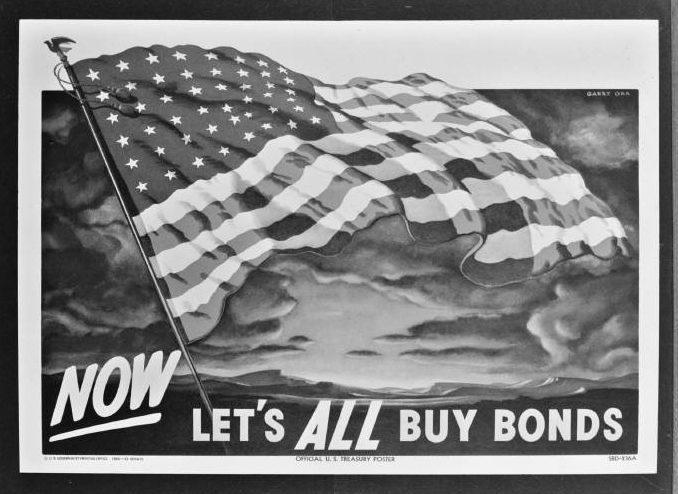
WWII War Bonds PosterIn 1940, with the war in Europe already in progress and American involvement looking likely, a series of Defense Bonds were issued, to help cover the enormous expenditures, as the military ramped up. After Pearl Harbor, these were re-named War Bonds. There were plenty of patriotic exhortations in newspaper and magazine ads, radio commercials, parade floats, and special events like concerts. Movie stars got involved, in the Bond Drive campaigns to sell these war bonds. There was tons of publicity, and they even pushed them on us school kids. Basically, this is how they worked: You would pay $18.50, and then at maturity the bond could be redeemed for $25.00. To make the bonds affordable to working-class people and to children, 10 cent savings stamps could be purchased and pasted in special stamp albums. Once you had saved $18.50 worth of stamps, then you’d have a full bond. Each week, a man from the local bank would come to our grammar school, to sell the War Bond stamps. I can still picture his kindly face.

One of the other ways that the citizenry got involved in the war effort was in scrap metal drives and other civic drives to collect all sorts of things: rubber bands, string,  aluminum foil, paper, and even left-over cooking fat. The kids in Dinuba all got involved, pestering adults for donations, but the kids did most of the work.  Everyone thought it was part of “Doing Our Bit” for the war effort.

Over X-Rayed

One of my father’s many weekend and summer jobs was as a salesman at the shoe store down the street– Don’s Shoes. Surprisingly, it is still in operation in 2020, at the same location! Anita and I, and sometimes accompanied by our neighbor Ruthie Gapen would walk and visit the shoe store. We got a big kick out of being there with Daddy. As little girls, we felt like we were part-owners of the store. While Daddy was waiting on customers, we were standing on the scale, or standing on the X-Ray fluoroscope machine that was used for fitting shoes. We could look at the bones in our feet, and even see our toe bones wiggle, when the machine was turned on. We thought that was fascinating, so we’d take turns doing that, over and over. Daddy would say:  “Hey girls, why don’t you let someone else use that.” This was not because it was considered hazardous, but rather because he didn’t want us distracting the genuine customers, or keeping them away from the machine.Continue reading“Oral History: A Child of the Great Depression – Part 3”


The Survivalist’s Odds ‘n Sods

SurvivalBlog presents another edition of The Survivalist’s Odds ‘n Sods— a collection of news bits and pieces that are relevant to the modern survivalist and prepper from “JWR”. Our goal is to educate our readers, to help them to recognize emerging threats and to be better prepared for both disasters and negative societal trends. You can’t mitigate a risk if you haven’t first identified a risk. Today, we look at the inflation the prices of Rawles XL Voyager knives.

Big Brother’s Tech Advances

Reader C.M. sent this: 10 Things Edward Snowden Didn’t Tell You About Big Brother – Our Beloved Uncle Sam, and his cousins – FBI, NSA & DHS.

Supreme Court Denies Hearing 10 Gun Case Appeals

Reader D.S.V. sent this: SCOTUS Rejection of 2A Cases Moves Up Likelihood of a Forced Choice for Gun Owners

Vincent James: No One is Coming to Save Us

Reader R.J. sent us this video link to conservative commentator Vincent James, describing the out of control leftist iconoclasts: No One is Coming to Save Us.  One instance that he mentioned particularly struck me: Rioters defaced a statue of a 19th Century abolitionist. I’ve often written that we are living in the age of deception and betrayal. But now I’m beginning to believe that we are living in the age of absurd logical inversion!

Washington Now Requires Face Masks

Washington state to require face masks after county runs out of hospital beds.
Continue reading“The Survivalist’s Odds ‘n Sods”


Preparedness Notes for Wednesday — June 24, 2020

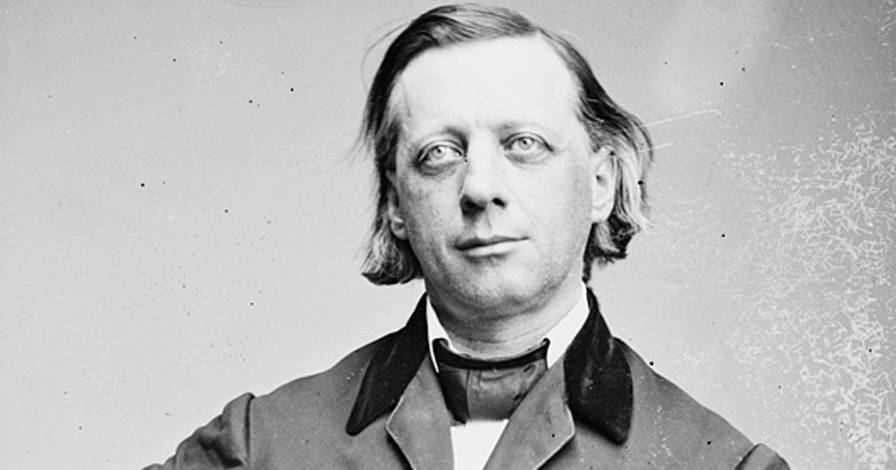
June 24th the birthday of rifle-toting abolitionist pastor Henry Ward Beecher. (Born 1813, died March 8, 1887.) He and his adherents from his church smuggled so many Sharps rifles to Bleeding Kansas that the Sharps rifles picked up the nickname Beecher’s Bibles.

Wikipedia says of Beecher: “Several of his brothers and sisters became well-known educators and activists, most notably Harriet Beecher Stowe, who achieved worldwide fame with her abolitionist novel Uncle Tom’s Cabin.”

I wonder if the monument to Henry Ward Beecher will be the next target of the BLM iconoclasts. I suppose that someone should inform them of the man’s history.

SurvivalBlog readers who live on the west coast, take note of the prediction included in this video by amateur earthquake expert “Dutchsinse”: Another M7.4 Earthquake strikes Pacific – Mexico – Buildings sway cracks form in ground.

Reader M.S. in England wrote to mention: “Someone is taking your posts and is re-posting in French which is odd.”

JWR’s Réponse:Que diable! Incroyable!  Reader M. from Canada notes: “L’imitation est la plus sincère des flatteries.”

Meanwhile, in China.  (Please pray that the flooding ends in China, and for the millions who are downriver of the Three Gorges Dam.)


Oral History: A Child of the Great Depression – Part 2

(Continued, from Part 1.)

The Principal of Dinuba High School, Walter Hellbaum, came up recruiting at UC Berkeley, because Howard Page, his Agriculture and ROTC teacher–who was another Army reserve officer–had been recalled to active duty.  Daddy was a good fit for a position at Dinuba High School because he was qualified to teach both Agriculture and ROTC classes. But then a more experienced Agriculture teacher came along. So my father ended up teaching Math, Science, Spanish, and he led the Junior ROTC program. Daddy moved our family to Dinuba in 1940. We first lived in a modest two-bedroom rental house on Park Way, very close to Dinuba High School. The rent for that house was $27.50 month.

Dinuba is in a portion of the Central Valley hat has very rich soil and a long, mild growing season. You can grow just about anything there. Both then, and now, there is a mix of row crops, vineyards (table grapes and wine grapes), nut orchards, and fruit orchards — including citrus. Other than some dangerously foggy driving conditions in the winter, the climate is just about ideal. It rarely got below freezing.

In addition to his other teaching duties, my father directed high school plays. And he was in the Toastmasters Club, which had meetings in the nearby town of Reedley. He was a jokester and always the clown, at any gathering. Daddy was a man of many interests. For example, he liked to make furniture.

In the 1930s and 1940s, public school teachers were quite poorly paid. So, to support our family, he kept very busy, working on weekends and in the summer months when school was not in session. He worked as a salesman at a shoe store, as a checker at a local grocery store, and as a Spanish tutor. Each summer, he was also hired by the government to work at a migrant labor camp, to be a Spanish Interpreter for the Bracero Program.

Meanwhile, my father DeWitt was still an Army Reserve officer.  He kept current by attending Officer Reserve Corps (ORC) camps for two weeks, each summer, in southern California. Those camps, including travel and meals, were all at his own expense. Army promotions were very slow, in the 1930s. But they accelerated rapidly, when the war began. By 1941, he had been promoted to Captain, but soon after, he became a Major.Continue reading“Oral History: A Child of the Great Depression – Part 2”


JWR’s Recommendations of the Week:

Here are JWR’s Recommendations of the Week for various media and tools of interest to SurvivalBlog readers. The focus is usually on emergency communications gear, bug out bag gear, books and movies–often with a tie-in to disaster preparedness, and links to “how to” self-sufficiency videos. There are also links to sources for both storage food and storage containers. You will also note an emphasis on history books and historical movies. As an Amazon Associate I earn from qualifying purchases. This week the focus is on the Branson-based family bluegrass band The Petersons. (See the Music section.)

Books:

The Lost Art of Reading Nature’s Signs: Use Outdoor Clues to Find Your Way, Predict the Weather, Locate Water, Track Animals―and Other Forgotten Skills

o  o  o

The Darkest Year: The American Home Front 1941-1942

o  o  o

I’m looking forward the release of this book on December 1st: The MeatEater Guide to Wilderness Skills and Survival. (It is already available for pre-ordering.)

o  o  o

Off the Grid: Simple Solar Homesteading

Continue reading“JWR’s Recommendations of the Week:”


Oral History: A Child of the Great Depression – Part 1

JWR’s Introductory Comments: I transcribed and edited the following, from a series of interviews that I recently recorded with my mother, Barbara Marie (Creveling) Rawles. She is now 88 years old, and in failing health. But her memories are still vividly with her. She was born just as the world was entering the depths of the Great Depression. She grew up in a small farm town in California’s Central Valley. There, with a depressed economy, the community’s hardships carried on through World War II.

I took the liberty of some paraphrasing and re-sequencing of a few passages, to keep them in chronological order. I believe that SurvivalBlog readers will find it useful, in formulating their own strategies for surviving the years to come. History doesn’t repeat, but it often rhymes.

I was born in Dallas, Texas, in October of 1931.

My mother, Julia Marie (Kinsella) Creveling was the oldest child of an Irish immigrant, William James Kinsella and his wife Ida (Holloway) Kinsella.  My grandfather’s family arrived from Ireland with little more than a few clothes.  My grandfather was fond of saying: “I came to America with two strong arms and $14.” But by the time his grandchildren reached adulthood, he had a fine house, with a carriage house, behind it. He eventually established his own hat manufacturing company.

Julia was born on August 20, 1905, in Dallas, Texas. She learned how to drive a car when she was 13 years old. Her father never learned how to drive. Growing up, one of her favorite activities was watching their hired cook, and helping her, in the kitchen. Unlike her mother, who never learned to cook, Julia became a good cook and learned how to do canning, in glass jars. After attending Southern Methodist University, she taught school in Dallas until her marriage to DeWitt Creveling in June, 1930.

Following a year living in Mexico, my parents returned to Dallas, where my sister and I were born. In 1937 our family moved to California, eventually settling in the small farming town of Dinuba, in 1940. My father was a teacher at Dinuba High School until his death at age 46, in 1949. My brother, DeWitt, Jr., was then just five years old.

After my father died, my mother Julia was a fifth-grade teacher at Lincoln School in Dinuba for nineteen years. She later tutored and taught special classes at Grandview School until retiring at age 69.Continue reading“Oral History: A Child of the Great Depression – Part 1”


SurvivalBlog’s News From The American Redoubt

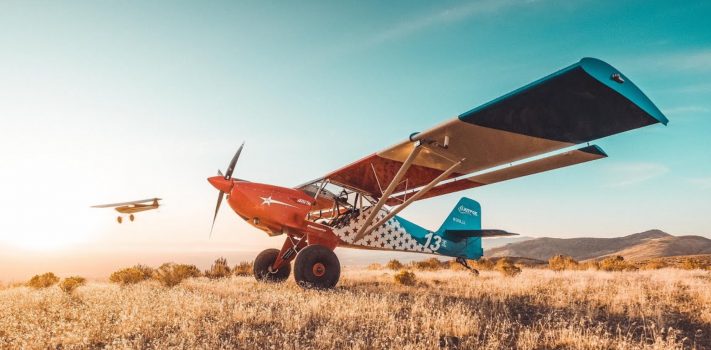
This weekly column features news stories and event announcements from around the American Redoubt region. (Idaho, Montana, eastern Oregon, eastern Washington, and Wyoming.) Much of the region is also more commonly known as The Inland Northwest. We also mention companies of interest to preppers and survivalists that are located in the American Redoubt region. Today, we’re linking to another great Tundra Tire bush plane flying video from Trent Palmer.  (See the Idaho section.)

Idaho

Court documents: Cell phone records led police to missing Idaho children’s remains

o  o  o

Trent Palmer: Some Local Bush Flying Shenanigans

o  o  o

Some slightly dated news, over at Redoubt News, a piece about a Federal “migration corridors” scheme: Heads Up Idaho

o  o  o

The latest YouTube video from the Good Simple Living vlogging family in North Idaho, showing a hike that they took at Kootenai Falls (near Troy, Montana–just across the state line): There Are A Few Things We Need To Address Before Leaving. That is some gorgeous country.  I highly recommend subscribing to their channel!

o  o  o

Over at my #1 Son’s SurvivalReaty blog: Retreat Properties in Salmon, Idaho

Continue reading“SurvivalBlog’s News From The American Redoubt”


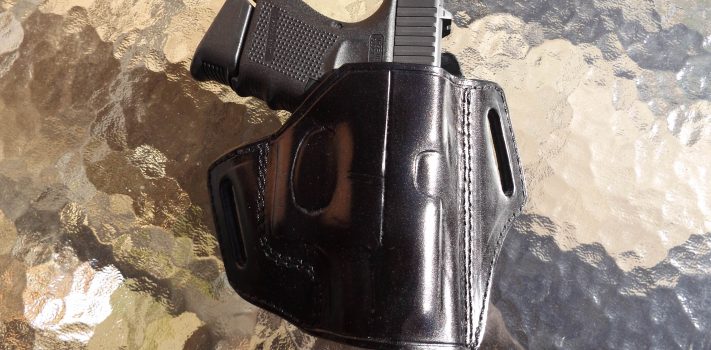
Craft Leather Holsters, by Pat Cascio

There were a few instances, many years ago, when I didn’t carry a handgun in a holster. Several of those times were when I was doing some undercover work as a Private Investigator. One of those times, I carried a tiny Bauer .25 ACP pistol, strapped to my ankle – no holster. One such instance was when I worked a very strange case, where several misguided people planned on hijacking a cruise ship that was sailing from Miami, Florida. I worked closely with the FBI on this case, and to this day, more than 40 years ago, I still have a friendship with one of the undercover FBI agents who I brought on-board as an “arms dealer.” I also worked a suspected murder case in a steel plant, and it turned out to be an actual murder case, Again, for that case I carried a hidden handgun, with no holster.

However, for the most part, I’ve almost always carried a handgun in a holster. Most of the time it was an outside the waistband (OWB) belt holster. I’ve never been a fan of inside the waistband (IWB) holsters. Oh, and I do like some of the better made shoulder holsters. At present, I have a good mix of leather and synthetic holsters. And, I certainly have more holsters than I have guns. I have two huge drawers full of holsters, as well as two very big plastic bins of holsters, and I actually need more holster storage space.

Make no mistake, I’m a big fan of leather holsters, just something about that smell of leather, that draws me to them. However, I own more than a few polymer-framed handguns, and I can often be caught carrying one of those handguns in a polymer or ballistic nylon holster. I love a well-made leather holster, make no mistake about that. However, it is hard to find leather holsters, that are both affordable and really well-made. I’ve owned a few custom-made, handmade leather holsters over the years, as well as belts and magazine pouches. The usual wait time was about 3-4 months for that stuff and more often than not, they weren’t totally made by hand. When it came to molding the holster to fit a particular handgun, it was done, under pressure, by a press. I don’t have a problem with that, for the most part, but in the end, those holsters aren’t exactly made by hand.

Mediocrity Abounds

There are quite a few factory holster makers in the USA, and most produce a decent holster, at a fair price. Some makers are better than others. However, one maker sent me a holster that was supposed to be for a particular handgun I own, only to find out that, the holster was much too big, the gun would easily fall out. I called the maker, and they told me that their leather holsters stretched out over time and use. Excuse me? This was a brand-new holster – not an old and used one. I returned that holster and they sent me another one – same problem – it gun would fall out…I ended up retiring that holster, rather than sending it back. Most of my work over the years, involved concealed carry, and I don’t like a suicide strap on those holsters – many folks do – just make sure you train with the strap fastened. I just prefer an open-top holster for concealed carry. And, the holster needs to be molded properly to hold a particular model of gun, without it falling out of the holster.

In late 2019, Craft Holsters contacted SurvivalBlog.com and asked if they could have one of their holsters tested, and Jim Rawles forwarded this e-mail to me, for action. Up until then, I had never heard of Craft Holsters. So did a little checking on them, before ordering a sample for testing. Craft Holsters is headquartered  in Slovakia, and many of their holsters are made there. Some are also made in a factory in Italy. I have no problem with that, as some of the finest leather in the world comes from Italy. The holsters made in Slovakia are also made from some of this Italian leather. The Craft Holster company is a family-run business, and their goal was to make custom, hand made holsters. Their aim is to provide us all with custom made holsters, at a price point we can afford.Continue reading“Craft Leather Holsters, by Pat Cascio”


Recipe of the Week: “Sis”-Style Salmon Chowder

The following recipe is from SurvivalBlog reader “Sis” for her style of Salmon Chowder.

Ingredients

1/4 cup green onion or chives or regular onion diced.

1 clove of garlic, minced or 1 tsp of garlic powder

2 tablespoons of butter

2- 10-3/4 oz. Cans of cream of potato soup (can be an inexpensive store brand)

2 cans of milk

1/4 tsp of cayenne pepper.

3 oz. of cream cheese. A

1- 15-1/2 can of undrained whole corn

2 cups of salmon, flaked

Directions
  • Saute 1/4 cup green onion or chives or regular onion diced.
  • 1 clove of garlic, minced or 1 tsp of garlic powder In 2 tablespoons of butter in a large saucepan.
  • Add 2 – 10 3/4 oz. Cans of cream of potato soup
  • Add 2 – 10 3/4 oz. Cans cans of milk
  • Add 1/4 tsp of cayenne pepper.
  • When warm, remove approximately 1 cup of mixture and blend that with 3 oz. of cream cheese.
  • Add back into soup mixture.
  • Then add 1- 15 1/2 can of undrained whole corn.
  • Last, add 2 cups of salmon, flaked.
Note

The onion, garlic, cayenne pepper and amount of salmon can be adjusted to taste. Also, I think dehydrated sour cream could be substituted for the cream cheese. However, it does work best with store-bought cream of potato soup.

Do you have a favorite recipe that would be of interest to SurvivalBlog readers? In this weekly recipe column we place emphasis on recipes that use long term storage foods, recipes for wild game, dutch oven and slow cooker recipes, and any that use home garden produce. If you have any favorite recipes, then please send them via e-mail. Thanks!