

“Lord have mercy on my poor country that is so barbarously oppressed.” – Andrew Fletcher
- Ad Elk Creek Company - Federally-Exempt No-Paperwork GunsPre-1899 Antique Cartridge Guns -- No FFL Required. Can be mailed to your doorstep with no Federal paperwork!
- Ad Survival RealtyFind your secure and sustainable home. The leading marketplace for rural, remote, and off-grid properties worldwide. Affordable ads. No commissions are charged!

Preparedness Notes for Wednesday — November 11, 2020
Take heed! We are just about out of articles in the queue for Round 91 of the SurvivalBlog non-fiction writing contest. If you’ve been drafting an article, then this is your chance to finish it and see it in print within just a few days. There are some great prizes being offered for the writers of the top three articles. (See below.) We greatly appreciate you e-mailing us, to share your knowledge in your articles.
—
Pictured is General George S. Patton, Jr.–his birthday was November 11, 1885. He died on December 21, 1945, under circumstances that are still disputed.
—
November 11th is of course Veteran’s Day. If you value your freedom, then thank a veteran.
—
November 11th also marks Rhodesia’s Unilateral Declaration of Independence (UDI), in 1965. Remember Rhodesia.
SurvivalBlog Writing Contest
Today we present another entry for Round 91 of the SurvivalBlog non-fiction writing contest. The prizes for this round include:
First Prize:
- The photovoltaic power specialists at Quantum Harvest LLC are providing a store-wide 10% off coupon. Depending on the model chosen, this could be worth more than $2000.
- A Gunsite Academy Three Day Course Certificate. This can be used for any of their one, two, or three-day course (a $1,095 value),
- A course certificate from onPoint Tactical for the prize winner’s choice of three-day civilian courses, excluding those restricted for military or government teams. Three-day onPoint courses normally cost $795,
- DRD Tactical is providing a 5.56 NATO QD Billet upper. These have hammer forged, chrome-lined barrels and a hard case, to go with your own AR lower. It will allow any standard AR-type rifle to have a quick change barrel. This can be assembled in less than one minute without the use of any tools. It also provides a compact carry capability in a hard case or in 3-day pack (a $1,100 value),
- Two cases of Mountain House freeze-dried assorted entrees in #10 cans, courtesy of Ready Resources (a $350 value),
- A $250 gift certificate good for any product from Sunflower Ammo,
- American Gunsmithing Institute (AGI) is providing a $300 certificate good towards any of their DVD training courses.
Second Prize:
- A Front Sight Lifetime Diamond Membership, providing lifetime free training at any Front Sight Nevada course, with no limit on repeating classes. This prize is courtesy of a SurvivalBlog reader who prefers to be anonymous.
- A Glock form factor SIRT laser training pistol and a SIRT AR-15/M4 Laser Training Bolt, courtesy of Next Level Training, that have a combined retail value of $589,
- Two 1,000-foot spools of full mil-spec U.S.-made 750 paracord (in-stock colors only) from www.TOUGHGRID.com (a $240 value).
- Naturally Cozy is donating a “Prepper Pack” Menstrual Kit. This kit contains 18 pads and it comes vacuum-sealed for long term storage or slips easily into a bugout bag. The value of this kit is $220.
- An assortment of products along with a one-hour consultation on health and wellness from Pruitt’s Tree Resin (a $265 value).
Third Prize:
- Three sets each of made-in-USA regular and wide-mouth reusable canning lids. (This is a total of 300 lids and 600 gaskets.) This prize is courtesy of Harvest Guard (a $270 value)
- A Royal Berkey water filter, courtesy of Directive 21 (a $275 value),
- Two Super Survival Pack seed collections, a $150 value, courtesy of Seed for Security, LLC,
- A transferable $150 purchase credit from Elk Creek Company, toward the purchase of any pre-1899 antique gun. There is no paperwork required for delivery of pre-1899 guns into most states, making them the last bastion of firearms purchasing privacy!
Round 91 ends on November 30th, so get busy writing and e-mail us your entry. Remember that there is a 1,500-word minimum, and that articles on practical “how-to” skills for survival have an advantage in the judging.
- Ad SurvivalRealty.com: Sell Your Remote LandAdvertise your hard-to-sell remote land to eager buters. We specialize in rural, remote, and off-grid properties worldwide. Affordable ads. No commissions are charged!
- Ad Elk Creek Company - Percussion Blackpowder Guns - No FFL Required.Elk Creek Company - Percussion Blackpowder Guns - Pre-1899 Guns - Knives - Bayonets - Magazines - The last bastion of privacy!
Home Insurance 101 – Part 1, by C.J.
Without question, our homestead, retreat, compound, farm, ranch or home is one of our most valuable assets in a TEOTWAWKI scenario. It will be where we hunker down, retreat to and use to protect ourselves from what dangers threaten us. Properly insuring your home and all your survival gear is of great importance. Having insurance to replace what was lost and not having to start over can make all the difference in the world. While insurance certainly isn’t as exciting of a topic as gun reviews, gardening techniques or pretty much everything else we read about on SurvivalBlog, it is as important, and worth having a good working knowledge of what you may need.
We all prepare for the end of the world as we know it, but understanding insurance will help you for “the end of the world as you know it” events we’re all at risk for. Below are my suggestions on what you can do to review your policy as well as understand what coverages you have and might need. I did my best to keep the topics relevant to SurvivalBlog readers and what I anticipate your concerns may be. Please note this is for entertainment purposes only, and you should consult with your specific agent as coverages and laws vary from state to state. Also, please note this is not a complete list of coverages you may need. I simply highlighted some areas I thought might be of particular interest to SurvivalBlog readers.
Dwelling Coverage
This is the coverage that insures the main home. The coverage amount should reflect the price per square foot to build in your area. This can vary greatly based on location, so be sure you understand your local cost to build, and make sure you have a bit more than you may think you need today. As current events in the world can disrupt supply chains, the cost of materials can increase quickly. Many policies will include extended replacement coverage for such scenarios. Be sure you have at least 25% extended replacement coverage. Ideally, 100% extended replacement coverage or guaranteed replacement coverage would be best.
Other Structures
This will most likely pertain to many SurvivalBlog readers. This is the coverage that insures any structure other than the main home. Sheds, shops, barns, stables, fences, etc. are all covered under this coverage. The standard coverage is 10% of the dwelling coverage, which for many people will not be enough. Be sure you adjust this coverage for your specific need.Continue reading“Home Insurance 101 – Part 1, by C.J.”
- Ad STRATEGIC RELOCATION REALTYFOR SALE: Self-sustaining Rural Property situated meticulously in serene locales distant from densely populated sanctuary cities. Remember…HISTORY Favors the PREPARED!
- Ad Survival RealtyFind your secure and sustainable home. The leading marketplace for rural, remote, and off-grid properties worldwide. Affordable ads. No commissions are charged!

JWR’s Recommendations of the Week:
Here are JWR’s Recommendations of the Week for various media and tools of interest to SurvivalBlog readers. The focus is usually on emergency communications gear, bug out bag gear, books, and movies–often with a tie-in to disaster preparedness, and links to “how-to” self-sufficiency videos. There is also an emphasis on links to sources for storage food and a variety of storage and caching containers. You will also note an emphasis on history books and historical movies. As an Amazon Associate, I earn from qualifying purchases. This week the focus is on Trijicon RMR day/night sights. (See the Gear & Grub section.)
Books:
Simple Shelters: Tents, Tipis, Yurts, Domes and Other Ancient Homes (Wooden Books)
o o o
At Home in the Woods: Living the Life of Thoreau Today (Bradford Angier)
o o o
Partisans and Redcoats: The Southern Conflict That Turned the Tide of the American Revolution
o o o
For our readers in eastern Washington and North Idaho: Day Hike! Spokane, Coeur d’Alene, and Sandpoint.
o o o
And for our readers in western Montana: Day Hiking: Glacier National Park & Western Montana: Cabinets, Mission and Swan Ranges, Missoula, Bitterroots
- Ad Click Here --> Civil Defense ManualNOW BACK IN STOCK How to protect, you, your family, friends and neighborhood in coming times of civil unrest… and much more!
- Ad Prepare for chaos with the essential SIEGE belt. Perfected for CCW with flexible, no-stretch, high-grip custom HD ballistic nylon and capabilities unmatched in any other belt. Go anywhere. Solid 5.5-7 oz of persuasion has saved many. Save $20!SIEGE STOVES: in a fuel crisis twigs are free and abundant. Ultra-compact high-performance portable survival stoves. Enter "SBLOG" at checkout for $20 off any belt. USA-made.

The Editors’ Quote of the Day:
“The secret of happiness is freedom, and the secret of freedom, courage.” – Thucydides
- Ad USA Berkey Water Filters - Start Drinking Purified Water Today!#1 Trusted Gravity Water Purification System! Start Drinking Purified Water now with a Berkey water filtration system. Find systems, replacement filters, parts and more here.
- Ad California Legal Rifles & Pistols!WBT makes all popular rifles compliant for your restrictive state. Choose from a wide range of top brands made compliant for your state.

Preparedness Notes for Tuesday — November 10, 2020
November 10th is remembered in the United States as the “birthday” of the U.S. Marine Corps.
Coincidentally, the 10th is also the birthday of the late Mikhail Timofeyevich Kalashnikov, born in 1919, died December 23, 2013. He didn’t design a lot of different guns, but one of his few designs was the prototype for what turned out to be the world’s most widely produced assault rifles. Once an iconic symbol of international communism, the AK’s curved magazine profile has in more recent years become just a symbol of citizens being well-armed.
And November 10th is the anniversary of the sinking of the Great Lakes ore ship Edmund Fitzgerald, in 1975.
—
SurvivalBlog Writing Contest
Today we present another entry for Round 91 of the SurvivalBlog non-fiction writing contest. The prizes for this round include:
First Prize:
- The photovoltaic power specialists at Quantum Harvest LLC are providing a store-wide 10% off coupon. Depending on the model chosen, this could be worth more than $2000.
- A Gunsite Academy Three Day Course Certificate. This can be used for any of their one, two, or three-day course (a $1,095 value),
- A course certificate from onPoint Tactical for the prize winner’s choice of three-day civilian courses, excluding those restricted for military or government teams. Three-day onPoint courses normally cost $795,
- DRD Tactical is providing a 5.56 NATO QD Billet upper. These have hammer forged, chrome-lined barrels and a hard case, to go with your own AR lower. It will allow any standard AR-type rifle to have a quick change barrel. This can be assembled in less than one minute without the use of any tools. It also provides a compact carry capability in a hard case or in 3-day pack (a $1,100 value),
- Two cases of Mountain House freeze-dried assorted entrees in #10 cans, courtesy of Ready Resources (a $350 value),
- A $250 gift certificate good for any product from Sunflower Ammo,
- American Gunsmithing Institute (AGI) is providing a $300 certificate good towards any of their DVD training courses.
Second Prize:
- A Front Sight Lifetime Diamond Membership, providing lifetime free training at any Front Sight Nevada course, with no limit on repeating classes. This prize is courtesy of a SurvivalBlog reader who prefers to be anonymous.
- A Glock form factor SIRT laser training pistol and a SIRT AR-15/M4 Laser Training Bolt, courtesy of Next Level Training, that have a combined retail value of $589,
- Two 1,000-foot spools of full mil-spec U.S.-made 750 paracord (in-stock colors only) from www.TOUGHGRID.com (a $240 value).
- Naturally Cozy is donating a “Prepper Pack” Menstrual Kit. This kit contains 18 pads and it comes vacuum-sealed for long term storage or slips easily into a bugout bag. The value of this kit is $220.
- An assortment of products along with a one-hour consultation on health and wellness from Pruitt’s Tree Resin (a $265 value).
Third Prize:
- Three sets each of made-in-USA regular and wide-mouth reusable canning lids. (This is a total of 300 lids and 600 gaskets.) This prize is courtesy of Harvest Guard (a $270 value)
- A Royal Berkey water filter, courtesy of Directive 21 (a $275 value),
- Two Super Survival Pack seed collections, a $150 value, courtesy of Seed for Security, LLC,
- A transferable $150 purchase credit from Elk Creek Company, toward the purchase of any pre-1899 antique gun. There is no paperwork required for delivery of pre-1899 guns into most states, making them the last bastion of firearms purchasing privacy!
Round 91 ends on November 30th, so get busy writing and e-mail us your entry. Remember that there is a 1,500-word minimum, and that articles on practical “how-to” skills for survival have an advantage in the judging.
- Ad USA Berkey Water Filters - Start Drinking Purified Water Today!#1 Trusted Gravity Water Purification System! Start Drinking Purified Water now with a Berkey water filtration system. Find systems, replacement filters, parts and more here.

Review: Leupold VX-Freedom 3-9X40 Scope, by The Novice
There is a significant tactical difference between cover and concealment. Concealment only protects from observation, while cover protects from hostile fire. But it is true that clearly seeing your target can significantly increase your chances of hitting it. This principle is what can make optics such a significant component in a firearm system.
October 27 through 29, 2020, SurvivalBlog published my range report on the Browning BAR MK3 in .243 Winchester. Leupold was kind enough to loan me their VX-Freedom 3-9X40 Tri-MOA scope with a 1″ tube to help with the evaluation of that firearm. Now I would like to give a more extensive report on the scope itself. The scope is completely designed, machined, and assembled in the USA.
Opening the Box
When the scope was delivered, the shipping box contained the packaging for the scope plus a set of Leupold Browning BAR Quick Release Bases. I needed rings rather than bases, so I ordered the rings from Amazon and did not use the bases.
The shrink-wrapped scope box was well designed to protect its contents. In addition to the scope it contained a helpful manual and a Leupold sticker.
Mounting the Scope
After the Leupold Rifleman rings I ordered from Amazon arrived, I mounted them on the rail I had installed on top of the BAR.
I then removed the top half of the scope rings, placed the scope into the rings, and loosely reattached the top half of the rings. Next I set the scope to maximum magnification, and slid the scope in the rings until it was as far forward as possible while still allowing the sight picture to fill the scope (maximum eye relief).
After this I detached the scope and rings, placed the rifle in a padded vise, placed a level on the rail, and adjusted the rifle in the vise until it was level. I then reattached the scope and rings, rotated the scope in the rings until it was also level, and then gently and evenly tightened the rings in a crisscross pattern until they were secure.
Finally, I focused the reticle by loosening the locking ring on the bezel, pointing the scope at a distant solid color background, and then rotating the focus bezel until the reticle appeared sharp. I then closed my eye for several seconds, and reopened it to make sure that the reticle remained sharply focused. I finished up by tightened the locking ring.
After bore sighting the rifle with a laser bore sighter, I tested the cheek weld by closing my eyes, shouldering the rifle, and then opening my eye to see whether the red dot from the laser bore sighter remained in the center of the crosshairs. Although the comb of the rifle gave me the impression that it was just a little low, I was able to achieve a consistent cheek weld.Continue reading“Review: Leupold VX-Freedom 3-9X40 Scope, by The Novice”
SurvivalBlog’s News From The American Redoubt
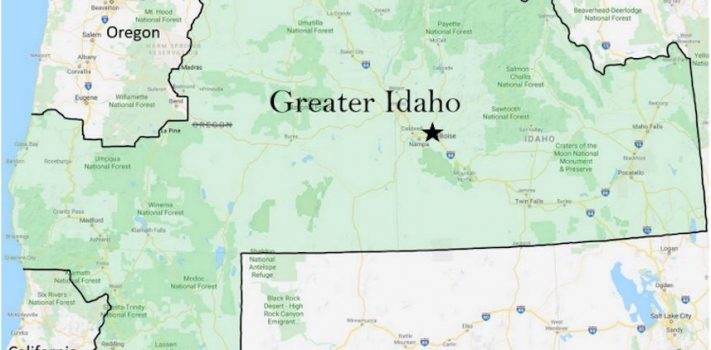
This weekly column features news stories and event announcements from around the American Redoubt region. (Idaho, Montana, eastern Oregon, eastern Washington, and Wyoming.) Much of the region is also more commonly known as The Inland Northwest. We also mention companies of interest to preppers and survivalists that are located in the American Redoubt region. Today, an update on a state partition movement. (See the Region-Wide section.)
Region-Wide
Two conservative Oregon counties vote to join Idaho. The article’s opening lines:
“Tired of Democratic dominance in Oregon, some rural voters on Tuesday endorsed a plan to split off from the liberal state and join their conservative-friendly neighbor Idaho.
Two conservative counties approved a non-binding ballot measure to “Move Oregon’s Borders” as Democratic presidential candidate Joe Biden easily carried the rest of the state, AFP reports. The measure failed in two other counties.
“In the United States, the differences between liberal and conservative… there’s hatred there,” said Mike McCarter, the chief petitioner of the ballot measure in Union and Jefferson counties.
“Populated urban areas are controlling the mass of everybody,” he told AFP.
The Democratic stronghold of Portland dominates Oregon politics statewide. The last Republican presidential candidate to win the state was Ronald Reagan in 1984. Idaho, on the other hand, is a reliable Republican state that has not voted for a Democratic president since 1964.
Neither county that approved the ballot measure borders Idaho. Union County is in the northeastern part of the state while Jefferson County is in the middle on the western half.”
o o o
Meanwhile, across the Canadian border: Northern Rockies Regional Municipality submits a grant for airport upgrades
o o o
Weathercatch: La Niña’s return brings possible winter wallop to Inland Northwest
Idaho
o o o
Dog reportedly attacked by mountain lion near Carey
o o o
Yet another “Perp From Outside The Redoubt”: Meridian Police: Man arrested for drug charges, drug trafficking
o o o
And some great scenery for you: Bonners Ferry (Idaho) Trike Fly-in
Continue reading“SurvivalBlog’s News From The American Redoubt”

The Editors’ Quote of the Day:
“Who controls the past controls the future. Who controls the present controls the past.” – George Orwell, 1984

Economics & Investing For Preppers
Here are the latest news items and commentary on current economics news, market trends, stocks, investing opportunities, and the precious metals markets. We also cover hedges, derivatives, and obscura. Most of these items are from the “tangibles heavy” contrarian perspective of SurvivalBlog’s Founder and Senior Editor, JWR. Today, we look at corporations relocating away from cities.
Economy & Finance:
o o o
At Zero Hedge: Companies Join Exodus To Suburbs As Cities Transform Into “Ghost Towns”
o o o
World’s Negative-Yield Debt Pile Has Just Hit a New Record. ($17 Trillion!)
o o o
At Wolf Street: Sales of New Cars & Trucks Through October Fell by 2.4 Million Vehicles, to 1985 Levels. Back to the Future
o o o
Picture Emerges of Weird Recovery to Historically Awful Level
o o o
And another from Wolf: Interjet Runs Out of Runway. Six Other Latin-American Carriers Already Liquidated or in Bankruptcy
Equities:
H.L. sent us this: Gunmaker Stocks Soar As Biden Lead Grows
o o o
Cramer says a Biden presidency with a GOP Senate would be ‘so boring’ — and that’s great for stocks
o o o
Five Stocks to Sell or Stay Away From in NovemberContinue reading“Economics & Investing For Preppers”

Preparedness Notes for Monday — November 9, 2020
November 9th (1938) was “Kristallnacht”, in Nazi Germany. Be forewarned, folks: Once a group in any society has been singled out for ridicule and persecution, then they can be systematically attacked, physically. Someday it may be “Constitutionalists”, “Messianics”, “Trumpists”, or “Fundamentalist Christians” who are targeted.
—
Last Call! The special pre-order sale for the first press run of my new Survival Retreats and Relocation book ends at midnight tonight (November 9, 2020.) So be sure to get your order in soon, to take advantage of the special pre-order price! ($19 each, instead of $24 each.)
—
Today we’re posting another product review by our Oregon-based Field Gear Editor, Pat Cascio

Ruger Officer-Style SR1911, by Pat Cascio
Anyone who has followed my articles for the past 28 years, will surely know that I have a love affair with 1911-style handguns – all of them, in all sizes and calibers. I still prefer a 1911 in .45 ACP over any other calibers, but I’ve owned them in 9mm, .38 Super, .40 S&W, 10mm, and a few others. The latest FBI findings state that the 9mm, .40 S&W and .45 ACP calibers are all about the same when it comes to stopping power – I just don’t buy into that. I’m not going to believe that a 9mm – stops a bad guy just as fast as a .40 S&W or a .45 ACP does – just my take on it, and it’s just my opinion.
For a lot of years, I stated that if I were limited to one handgun for the rest of my life, it would be some kind of 4-inch barrel .357 Magnum revolvers of some sort – and it was, and still is a decent choice. However, some years later, I said that a 1911 in .45 ACP would be my choice if limited to only one handgun – and it was, and still is a great choice. It took a lot of convincing, to sway me from a 1911, and my choice these days, would be a Glock 19x and I will have an article forthcoming on my reasoning for this. Still, I love the grand old 1911…
For many years, the full-sized Government Model 1911 was the only type to be had. Then the Commander-sized 1911 came along – and even though it was only ¾ of an inch shorter in slide and barrel length, it was easier to pack. Then came along the Officer’s style of 1911, and it comes in different slide/barrel lengths, depending on who is making them, but they all have the same shorter frame that usually holds one less round of ammo in the magazine. Then there were the specialty makers, like Detonics and they were in a class all their own. And now, in the 21st Century there are even more makers out there, doing their own thing, when it comes to 1911s.
Today, we’re reviewing the Ruger SR1911 Officer-style 1911 handgun, in .45 ACP. Some time back, I did a review on this same handgun in 9mm and really loved it. It had a lightweight frame, too – easy to pack all day long. The sample SR1911 Officer-style I received for testing is an all stainless steel model, with the frame and slide manufactured out of a nice brushed – subdued – stainless steel, for a stealth-type look. I like it, a lot! I wanted an all-steel version, because I wouldn’t be packing this gun much – or at least that was my plan – just shoot it a lot, and the all-steel model, versus the light-weight Aluminum alloy frame reduces the felt recoil associated, with +P .45 ACP ammo.Continue reading“Ruger Officer-Style SR1911, by Pat Cascio”

Recipe of the Week: Pressed Chicken
The following recipe for pressed chicken is from The New Butterick Cook Book, by Flora Rose, co-head of the School of Home Economics at Cornell University. It was published in 1924. A professional scan of that 724-page out-of-copyright book will be one of the many bonus items included in the next edition of the waterproof SurvivalBlog Archive USB stick. This special 15th Anniversary Edition USB stick should be available for sale in the third week of January, 2021. The 14th Edition sold out quickly, so place a reminder in your calendar, if you want one.
Ingredients
- 1 chicken
- 1 tablespoon gelatin to each pint of broth
- Salt
- Pepper
Directions
- Clean, singe, and cut up a chicken.
- Place it in a kettle with a little water, cover closely and simmer until the meat will fall from the bones.
- Lift the meat from the kettle with a skimmer.
- Separate the white meat from the dark, scrape it all from the bones, taking out the pieces of skin.
- Season with salt and pepper.
- Soften gelatin in two tablespoons water for each tablespoon of gelatin and add to the boiling chicken broth.
- Place the meat in the dish it is to be pressed in, laying the white and dark meat in alternate layers, and adding from time to time a little of the broth to moisten all well.
- When all the meat is in the dish, lay a plate on top of it.
- Place a heavy weight upon the plate and set away in a cool place.
SERVING
This makes a pretty dish lor a luncheon, sliced and garnished with parsley.
—
Do you have a favorite recipe that would be of interest to SurvivalBlog readers? In this weekly recipe column, we place emphasis on recipes that use long term storage foods, recipes for wild game, dutch oven and slow cooker recipes, and any that use home garden produce. If you have any favorite recipes, then please send them via e-mail. Thanks!

The Editors’ Quote of the Day:
“Now y’all look at this nine year Dow/Gold Ratio chart and it’s quite all right if your eyes bug right out of your head and roll across the floor. This is a picture of a market broke as the Ten Commandments. Mercy y’all, below 69.3 there ain’t nothing at all to catch it! And what does a falling ratio mean? Right, give that man a nickel — it means silver and gold shooting to the moon.” – Franklin Sanders, in The Moneychanger newsletter

Preparedness Notes for Sunday — November 8, 2020
Today is the 106th birthday of actor/director/producer Norman Lloyd. He was born November 8, 1914. His most recent film role was in 2015. Hang in there, Norman!
—
SurvivalBlog Writing Contest
Today we present another entry for Round 91 of the SurvivalBlog non-fiction writing contest. The prizes for this round include:
First Prize:
- The photovoltaic power specialists at Quantum Harvest LLC are providing a store-wide 10% off coupon. Depending on the model chosen, this could be worth more than $2000.
- A Gunsite Academy Three Day Course Certificate. This can be used for any of their one, two, or three-day course (a $1,095 value),
- A course certificate from onPoint Tactical for the prize winner’s choice of three-day civilian courses, excluding those restricted for military or government teams. Three-day onPoint courses normally cost $795,
- DRD Tactical is providing a 5.56 NATO QD Billet upper. These have hammer forged, chrome-lined barrels and a hard case, to go with your own AR lower. It will allow any standard AR-type rifle to have a quick change barrel. This can be assembled in less than one minute without the use of any tools. It also provides a compact carry capability in a hard case or in 3-day pack (a $1,100 value),
- Two cases of Mountain House freeze-dried assorted entrees in #10 cans, courtesy of Ready Resources (a $350 value),
- A $250 gift certificate good for any product from Sunflower Ammo,
- American Gunsmithing Institute (AGI) is providing a $300 certificate good towards any of their DVD training courses.
Second Prize:
- A Front Sight Lifetime Diamond Membership, providing lifetime free training at any Front Sight Nevada course, with no limit on repeating classes. This prize is courtesy of a SurvivalBlog reader who prefers to be anonymous.
- A Glock form factor SIRT laser training pistol and a SIRT AR-15/M4 Laser Training Bolt, courtesy of Next Level Training, that have a combined retail value of $589,
- Two 1,000-foot spools of full mil-spec U.S.-made 750 paracord (in-stock colors only) from www.TOUGHGRID.com (a $240 value).
- Naturally Cozy is donating a “Prepper Pack” Menstrual Kit. This kit contains 18 pads and it comes vacuum-sealed for long term storage or slips easily into a bugout bag. The value of this kit is $220.
- An assortment of products along with a one-hour consultation on health and wellness from Pruitt’s Tree Resin (a $265 value).
Third Prize:
- Three sets each of made-in-USA regular and wide-mouth reusable canning lids. (This is a total of 300 lids and 600 gaskets.) This prize is courtesy of Harvest Guard (a $270 value)
- A Royal Berkey water filter, courtesy of Directive 21 (a $275 value),
- Two Super Survival Pack seed collections, a $150 value, courtesy of Seed for Security, LLC,
- A transferable $150 purchase credit from Elk Creek Company, toward the purchase of any pre-1899 antique gun. There is no paperwork required for delivery of pre-1899 guns into most states, making them the last bastion of firearms purchasing privacy!
Round 91 ends on November 30th, so get busy writing and e-mail us your entry. Remember that there is a 1,500-word minimum, and that articles on practical “how-to” skills for survival have an advantage in the judging.