I have heard it said that preppers should stockpile beans, bullets, band-aids, and Bibles. Beans, bullets and band-aids are easy to understand: in a disaster, we may need something to eat, something to defend ourselves with, and something to provide for our own medical care. But why Bibles?
In Mark 8:36, Jesus said, “For what shall it profit a man, if he shall gain the whole world, and lose his own soul?” The best stockpile of tools and supplies, even when well utilized in the most effective possible manner, cannot prevent someone from being eternally lost.
In 2 Timothy 3:15, Paul said of Timothy, “And that from a child thou hast known the holy scriptures, which are able to make thee wise unto salvation through faith which is in Christ Jesus.” It is the scriptures which bring understanding of the gospel of salvation through faith in Jesus Christ.
With that in mind, the prep that gives the most long-lasting benefit is the Bible.
Bibles
God has blessed me with such an abundance of spiritual resources that I do not even know how many Bibles I own. I have English Bibles, Norwegian Bibles, Swedish Bibles, Greek Bibles, Hebrew Bibles and Latin Bibles. I have interlinear Bibles, parallel Bibles, chronological Bibles, reference Bibles, and study Bibles. I have paperback Bibles, hardback Bibles, leather bound Bibles and electronic Bibles. The Lord has certainly filled my mouth with good things.
My Favorite Bible
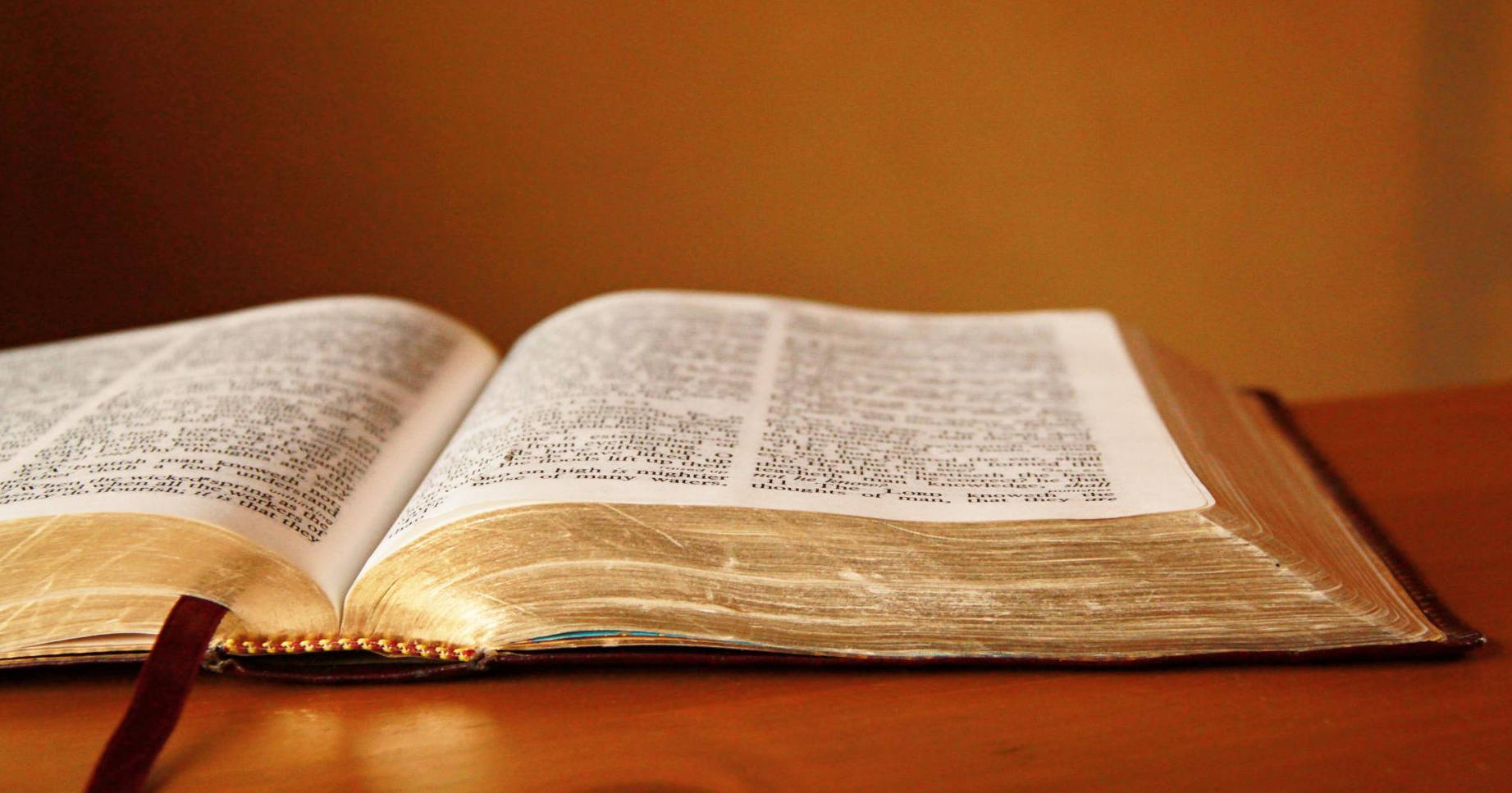
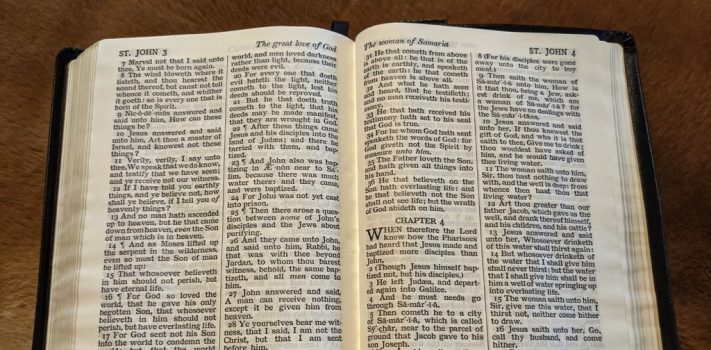
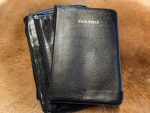 What if times got hard, and I had to flee with just one Bible? What if I knew that it would probably be the only Bible that I would have access to for the rest of my life? What if it would be the only Bible that I would be able to hand down to my children and grandchildren? If that happened, then the Bible that I would pick would be the Cambridge University Press KJV Large Print Text Bible in black French Moroccan leather. One of the reasons I would chose this Bible is because it is trustworthy. The translators of the King James Version did an outstanding job of faithfully rendering God’s inspired word from the original languages into English. And then Cambridge University Press did an outstanding job of accurately printing that faithful translation. I have read this particular edition from cover to cover many times, and have never found a single error of translation or typography.
A second reason that I would chose this particular Bible is because it is legible. My eyes are not as young as they once were. There are many editions of the Bible that I find difficult or impossible to read without my bifocals. I have other Bibles that advertise themselves as large print, giant print or super giant print. None of them combine the easily legible text and convenient size of this Cambridge edition. I can read it without my bifocals without any eye strain whatsoever.
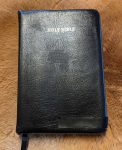 A third reason I would chose this particular Bible is because it is durable. I have subjected it to 20 years of heavy use. It looks broken in, but it is not even beginning to look worn out. I have had other Bibles with lifetime warrantees that I have needed to replace in that same 20 year period. Even some of the warrantee replacements look more worn than my more heavily used Cambridge Bible.
A final reason that I would chose this particular Bible is because it is beautiful. A really nice, leather-bound Bible is a work of art as well as a guide to eternal life and a useful tool. I love the way it looks as I take it out of its case. I love the way the leather cover feels in my hands. I love the way the pages turn. I love the way it smells. God’s word is a priceless treasure even on the roughest paper in the ugliest binding. On quality paper in a beautiful binding it is like apples of gold in pictures of silver.
Reading the Bible
Like any other prep, the Bible is most effective if regularly used. If you buy a ferrocerium rod, for example, and stick it in a drawer and never use it, you may find it difficult to start a fire when you are cold. If you buy a rifle and stick it in a gun safe and never use it, you may find it difficult to shoot game when you are hungry. If you buy a Bible and stick it on the shelf and never use it, you may find it difficult to find guidance and comfort in a time of spiritual need.
I recommend a consistent pattern of daily Bible reading and prayer as the single most important preparation for difficult times.Continue reading“Review: Cambridge University Press KJV Large Print Bible, by The Novice”