Sir Franics Bacon is attributed with saying, “Knowledge is power.” And nothing could be more true than when it comes to prepping for emergencies and SHTF situations. When the forces of nature or the whims of men (or women) turn life upside down, we need to have a plan for reacting. If you’re reading this then you, more than anyone else, understands how true this is. For those who are unprepared it can literally mean the difference between life and death. Shortly after I began writing this article the people in Texas were put to the test with massive loss of power and freezing temperatures that sadly resulted in many deaths.
Signals Intelligence
One area that seems to get little attention in the prepping community is that of radio frequency (RF) communications. While many understand the importance of radio communications, few seem to understand the vital imperative of signals intelligence. I’ve read through many prepping sites and books that talk about how you need to get an amateur radio license and then buy basic ham radio (or CB) gear that allows you to communicate with others.
But what about monitoring what’s going on out there, without ever saying a word? Do you understand the wealth of information that is flying around you, sight unseen? Do you have any idea of the number of local, state, and federal agencies that are broadcasting information free and clear for you to listen to? This includes all kinds of police, fire, and EMS personnel as well as dozens of governmental agencies. Most large businesses own or lease radio equipment to talk back and forth. Our armed forces use many means of communication including satellites but they also rely on good, old VHF and UHF radio systems. Commercial aircraft, railroads, maritime, and public utilities are also favorite monitoring targets. The list goes on and on.
Gathering Reliable Inteligence
All it takes is a bit of education and preparation to put yourself in the position to be a source of reliable intelligence about what’s really going on out there when things go sideways. You will be able to listen to events as they unfold. You will be able to get the word from boots on the ground when bad weather hits or a riot breaks out or an accident closes down a road. You will have the ability to possess the truth and be much less dependent on the lamestream media. If you choose, you can pass along what you have learned to family and friends to keep them informed as well.
What we need to do, then, is to find out what we want to listen to, what equipment we need to listen to it, program our equipment accordingly, learn to use the equipment effectively to monitor intended targets and finally, prepare for the day when an emergency strikes. During a real emergency, we must have the expertise to monitor as well as the power sources needed to keep us running if the electrical grid goes down. Being able to effectively use a radio scanner can provide us with important information that can be found nowhere else and long before it comes across the usual news media outlets.
What Is A Radio Scanner?
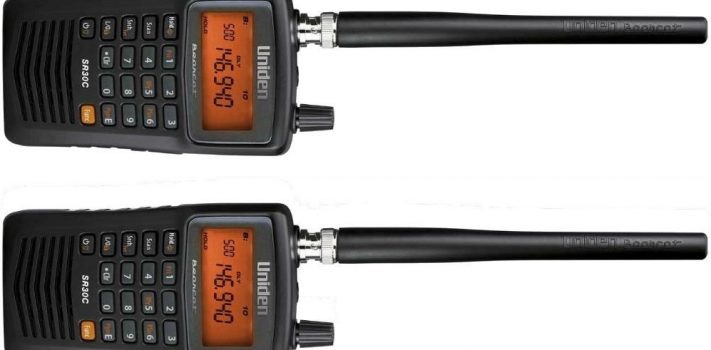
For starters, we need to define what radio scanning really is. Put simply, scanning is the hobby of using a radio receiver to intercept signals in order to hear the voice messages being carried on each signal. When we have a radio frequency we want to listen to, say the dispatch channel for the local police, we would program that frequency into a memory channel of our radio receiver. We could also program other channels to listen to the fire and EMS frequencies. A radio scanner now allows those channels to be sampled briefly for activity. This act of going through all of the programming memory channels looking for activity is referred to as scanning. The memory contents are being scanned, sampled one at a time in a continuous loop, until activity is detected. Once an active signal is found, the scanner stops on that frequency to allow us to hear the audio signal and thus listen to what is being communicated.Continue reading“RF Scanning for Preppers – Part 1, by R.W.”