Every year that I can make it I go on summer vacation for a week in Colorado in a remote wilderness area, camping, hiking and fishing with old buddies. It is roughly 50 miles off of the nearest paved road. The area we use is a primitive camping area and at 10,000 feet. Temperatures can range from 34 F to 92 F.
I use this time partly to keep up my outdoor skills, practice axe skills, evaluate new camping equipment and ideas, practice alternate fire building skills, and sit around the campfire with the guys telling stories about how fast we used to be. I even catch a trout once in a while.
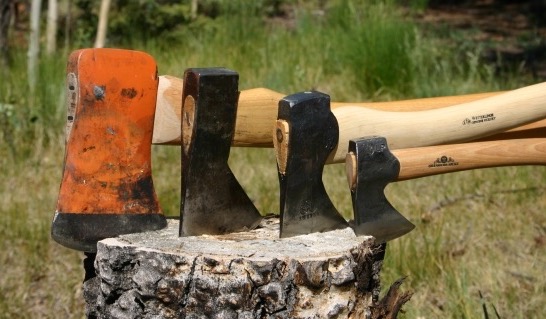
I am not an axe expert but do like to learn about axe history and use them in the woods. On these trips, I generally carry my full-size 3-pound head axe, a 2-1/4 pound Collins Legitimus ¾ (or Hudson Bay type) axe, and my old Gränsfors Small Hatchet. I carry all three to Colorado in a hard side rifle case which has worked out well.
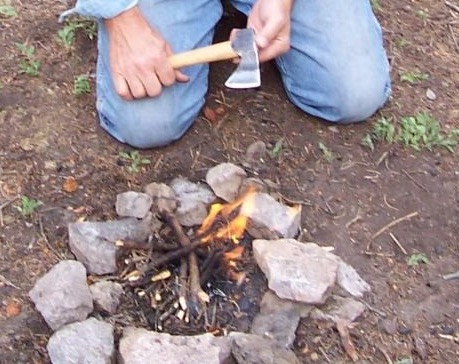 I like using axes as a traditional and useful skill that connects us with the ages and warms you twice. On a side note, axes don’t foul spark plugs or run out of gas. As a long-time axe user I know some of this report may be obvious to experienced axe users, but I still occasionally learn a few new things on these outings. Once in a while I bring a new-to-me axe to test against my three favorites, and have my buddies try them out. This time the new fourth axe was a short handle Wetterling 20H Hunters Axe, one of the few axes along with the Gränsfors mini axe that I have purchased new. All of these axes were used on this trip by cutting the abundant dry deadfall, felling standing dead aspen, cutting kindling, general fire building chores, and making fuzz sticks.Continue reading“Using Different Size Axes, by Steve Acker”