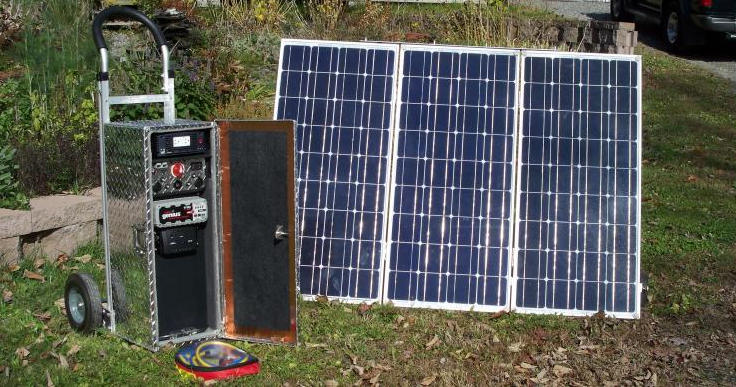
This article presents my photovoltaic power experiences to give fellow do-it-yourselfers an understanding of what it takes to use the sun for energy.
I am a 69-year-old carpenter with experience in residential, commercial and industrial construction. I abhor relying on others for needs. So that is what drove me in the area of energy, especially stored energy. By “stored energy, I mean propane, solar battery systems, stored food, and so forth.
I live in Arkansas which is considered a subtropical climate in late spring to early fall. The heat in summer coupled with humidity from the Gulf of Mexico is terribly oppressive, even to us natives. And for this reason you need to at least move the air in summer to help with these conditions. I set out on my solar journey about three years ago. I decided that my goal would be to have a system that would run lights (LED), operate fans, and charge Dewalt 20 VDC tool batteries. I ended up with 3 systems and wasted a lot of money. But the “good thing” that I achieved is redundancy (i.e. having backup systems).
My First System
A Zamp 200P (P means Portable) system. I wanted to stay in the 12 volt arena versus the 24V, 36V or 48V systems because I better understand 12V systems because that is what automobiles, boats, etc. use. I also wanted to stay in the Recreational Vehicle arena because of portability as well as the simplicity (plug and play). The Zamp 200P system included:
- 2 – Zamp brand 100 watt solar panels (for a total of 200 watts of input on a clear day)
- 1 – Z15AW (Z means Zamp, A means Amps, W means weatherproof) charge controller
I added the following to the system from separate vendors:
- 1 – Xantrex ProWatt 2000 inverter (an 1,800 Watt invertor which takes DC battery power and converts it to 120VAC (household) power.
- 2 – 6-1 volt golf cart batteries connected in series (instead of parallel connection) which make it a single 12 volt battery. These are lead acid batteries similar to a 12V trolling motor battery.
Various wires, cables, connectors, fuses etc.. The Zamp instruction manual explains diagrams to connect all this and is simple to follow).
This system cost around $1,900.. This system would run lights, fans, and charge tool batteries. But it is just enough power to make you wish you had some serious power. This system might be good for emergency storm backup power for 24 to 36 hours of cloudy weather. However, it whetted my appetite for more, so I continued my journey.Continue reading“Simple Photovoltaic Power, by A. DoItYourselfer”