

“Among other evils which being unarmed brings you, it causes you to be despised.” – Charlton Heston
- Ad Elk Creek Company - Percussion Blackpowder Guns - No FFL Required.Elk Creek Company - Percussion Blackpowder Guns - Pre-1899 Guns - Knives - Bayonets - Magazines - The last bastion of privacy!
- Ad USA Berkey Water Filters - Start Drinking Purified Water Today!#1 Trusted Gravity Water Purification System! Start Drinking Purified Water now with a Berkey water filtration system. Find systems, replacement filters, parts and more here.

Preparedness Notes for Wednesday — July 21, 2021
July 21st is the birthday of Ernest Hemingway. He was born in 1899 in Oak Park, Illinois. He committed suicide in July 2, 1961 in Ketchum, Idaho, after being diagnosed with haemochromatosis, and after electroshock treatments failed to lift him from chronic alcoholic depression. He had a sad personal life but was a great writer.
—
As I’m sure most of you readers know, I sell antique guns, through Elk Creek Company — my home-based mailorder business. Per Federal law, these guns do not require an FFL, and are also exempt from paperwork under most state laws. But occasionally, I upgrade my personal gun collection, and consequently sell a few excess modern (post-1898) guns through a trusted friend who has a FFL. He just started auctions on three particularly nice guns from my collection, on GunBroker.com. Take a look. I hope that you’ll consider bidding:
- Seecamp LWS 380 Milford CT NEW IN BOX w/3 Factory Mags, Extra Springs.
- COMBAT 2 Tone Sig Sauer P220 45 ACP SIGLITE Tritium Sights w/3 Factory Mags
- MINT UNISSUED Venezuelan FN49 7mm Belgian Made FN 49 7×57 Mauser
Note: These auctions are scheduled to end on the evening of Sunday, August 1st.
—
SurvivalBlog Writing Contest
Today we present another entry for Round 95 of the SurvivalBlog non-fiction writing contest. The prizes for this round include:
First Prize:
- The photovoltaic power specialists at Quantum Harvest LLC are providing a store-wide 10% off coupon. Depending on the model chosen, this could be worth more than $2000.
- A Gunsite Academy Three Day Course Certificate. This can be used for any of their one, two, or three-day course (a $1,095 value),
- A course certificate from onPoint Tactical for the prize winner’s choice of three-day civilian courses, excluding those restricted for military or government teams. Three-day onPoint courses normally cost $795,
- DRD Tactical is providing a 5.56 NATO QD Billet upper. These have hammer forged, chrome-lined barrels and a hard case, to go with your own AR lower. It will allow any standard AR-type rifle to have a quick change barrel. This can be assembled in less than one minute without the use of any tools. It also provides a compact carry capability in a hard case or in 3-day pack (a $1,100 value),
- Two cases of Mountain House freeze-dried assorted entrees in #10 cans, courtesy of Ready Made Resources (a $350 value),
- A $250 gift certificate good for any product from Sunflower Ammo,
- American Gunsmithing Institute (AGI) is providing a $300 certificate good towards any of their DVD training courses.
Second Prize:
- A Front Sight Lifetime Diamond Membership, providing lifetime free training at any Front Sight Nevada course, with no limit on repeating classes. This prize is courtesy of a SurvivalBlog reader who prefers to be anonymous.
- A Glock form factor SIRT laser training pistol and a SIRT AR-15/M4 Laser Training Bolt, courtesy of Next Level Training, that have a combined retail value of $589,
- Two 1,000-foot spools of full mil-spec U.S.-made 750 paracord (in-stock colors only) from www.TOUGHGRID.com (a $240 value).
- An Israeli CBRN Gas Mask with Hydration Straw and two Extra 40mm NATO Filter s – Manufactured in 2020 (a $229.99 value), courtesy of McGuire Army-Navy.
- Naturally Cozy is donating a “Prepper Pack” Menstrual Kit. This kit contains 18 pads and it comes vacuum-sealed for long term storage or slips easily into a bugout bag. The value of this kit is $220.
- An assortment of products along with a one-hour consultation on health and wellness from Pruitt’s Tree Resin (a $265 value).
Third Prize:
- Three sets each of made-in-USA regular and wide-mouth reusable canning lids. (This is a total of 300 lids and 600 gaskets.) This prize is courtesy of Harvest Guard (a $270 value)
- A Royal Berkey water filter, courtesy of Directive 21 (a $275 value),
- Siege Stoves is generously donating a SIEGE® STOVE kit, including a Titanium Gen 3 Flat-Pack Stove with titanium Cross-Members and a variety of bonus items including a Large Folding Grill, a pair of Side Toasters, a Compact Fire Poker, and an extra set of stainless steel universal Cross-Members. (In all, a $200 value.)
- Two Super Survival Pack seed collections, a $150 value, courtesy of Seed for Security, LLC,
- A transferable $150 purchase credit from Elk Creek Company, toward the purchase of any pre-1899 antique gun. There is no paperwork required for delivery of pre-1899 guns into most states, making them the last bastion of firearms purchasing privacy!
Round 95 ends on July 31st, so get busy writing and e-mail us your entry. Remember that there is a 1,500-word minimum, and that articles on practical “how-to” skills for survival have an advantage in the judging.
- Ad USA Berkey Water Filters - Start Drinking Purified Water Today!#1 Trusted Gravity Water Purification System! Start Drinking Purified Water now with a Berkey water filtration system. Find systems, replacement filters, parts and more here.
- Ad Prepare for chaos with the essential SIEGE belt. Perfected for CCW with flexible, no-stretch, high-grip custom HD ballistic nylon and capabilities unmatched in any other belt. Go anywhere. Solid 5.5-7 oz of persuasion has saved many. Save $20!SIEGE STOVES: in a fuel crisis twigs are free and abundant. Ultra-compact high-performance portable survival stoves. Enter "SBLOG" at checkout for $20 off any belt. USA-made.
The Tao of Cordage – Part 2 , by J.M.
(Continued from Part 1. This concludes the article.)
Paracord
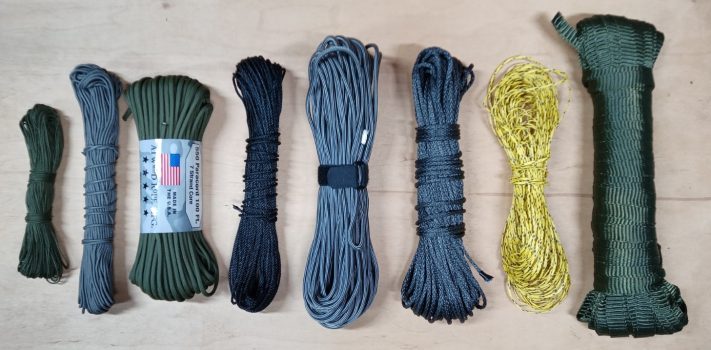
As I’ve mentioned several times, 550 paracord is the granddaddy of prepper cordage. Virtually every survival-related blog, forum, book and other information source has recommendations to include 550 paracord in your preps. 550 paracord was originally developed to use as lines on parachutes, so it’s strong and stretches a lot (up to 30%) to absorb the shock of the parachute deploying. From a survival perspective, it’s a kernmantle style, so you can extract the internal strands and use those for fishing line, sewing thread, etc. and still use the external sheath for other heavier tasks.
While I have several spools of 550 paracord in my home preps, I believe that it’s not necessarily the best option for my mobile kits like EDC, get home bags (GHBs) and bug-out bags (BOBs), and it’s certainly not a good choice for camping and backpacking. 550 paracord has 7 internal strands, and carrying 100’ of 550 paracord means that I’ll have 700’ of thin line, which is significantly more than I’ll ever conceivably need, and I don’t need 550 lbs. of static strength to make shelters. Decent quality 550 paracord runs about $0.10 per foot.
For mobile kit there are other paracord options that I believe make more sense. Not everyone is aware of it, but there are several other classes of paracord, including 750, 425, 375 and 275. Each of them has a different number of internal strands with different thicknesses, but the one I’ve settled on for most of my mobile kit is 275 paracord. 275 lbs. of static strength is more than enough for most of the tasks I’m planning on, and it has 5 thin internal strands that I can still remove for lighter tasks. It’s a lot lighter and thinner than 550 cord, so I can carry almost 4 times as much for the same space and weight if I need to, or the same length for ¼ of the weight and space. Quality 275 paracord runs about $0.08 per foot.Continue reading“The Tao of Cordage – Part 2 , by J.M.”
- Ad Survival RealtyFind your secure and sustainable home. The leading marketplace for rural, remote, and off-grid properties worldwide. Affordable ads. No commissions are charged!
- Ad Survival RealtyFind your secure and sustainable home. The leading marketplace for rural, remote, and off-grid properties worldwide. Affordable ads. No commissions are charged!
SurvivalBlog Readers’ & Editors’ Snippets
This weekly column is a collection of short snippets: practical self-sufficiency items, how-tos, lessons learned, tips and tricks, and news items — both from readers and from SurvivalBlog’s editors. We may select some long e-mails for posting as separate letters.
Our Editor-At-Large Michael Z. Williamson wrote:
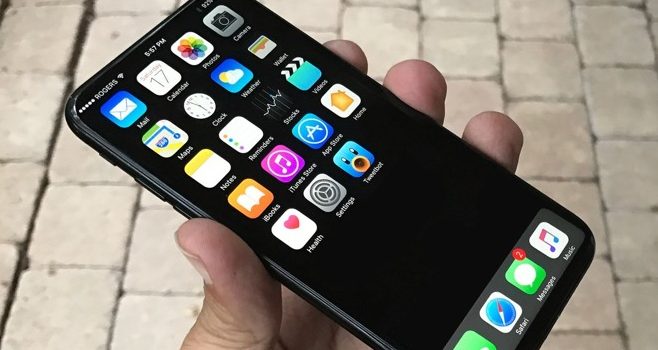
“My passenger was using an iPhone (I call them “spiPhones”) to navigate this weekend. The phone’s navigation system said:
‘Turn right at the red car.’
It was gathering enough private information in real-time to know what color a car ahead of us was. If that doesn’t bother you, then you’re oblivious.”
o o o
Video: Massive Uprising in France Has Begun! And here is an article about the uprising: French Police Lay Down Shields Join 100,000 Protesters Marching Against Vaccine Passport.
o o o
Avalanche Lily heard about this legislation: Voters will decide if Mainers have a constitutional right to grow food. Hopefully, this will pass and become model legislation for other states.
o o o
The latest vlog from Matt Christiansen: The White House Is Openly Directing Social Media Censorship | ‘Misinfo Takes Away Our Freedom’. JWR’s Comment: You’ve gotta love how the Bidenistas are now using the old Soviet term “disinformation” (Dezinformatsiya.) That is somehow sweet and fitting.
o o o
Reader C.B. just wrote to mention that the WSJ Housing Index just put Billings, Montana and Coeur d’Alene, Idaho as their #1 and 2 picks for housing destinations. Locals: Brace yourselves. You’re now living boomtowns.
o o o
H.L. suggested this piece posted over at Zero Hedge: Is South Africa’s Present America’s Future?
- Ad SurvivalRealty.com: Sell Your Remote LandAdvertise your hard-to-sell remote land to eager buters. We specialize in rural, remote, and off-grid properties worldwide. Affordable ads. No commissions are charged!
- Ad STRATEGIC RELOCATION REALTYFOR SALE: Self-sustaining Rural Property situated meticulously in serene locales distant from densely populated sanctuary cities. Remember…HISTORY Favors the PREPARED!

The Editors’ Quote of the Day:
“However desperate the situation and circumstances, don’t despair. When there is everything to fear, be unafraid. When surrounded by dangers, fear none of them. When without resources, depend on resourcefulness.” – Sun Tzu
- Ad Click Here --> Civil Defense ManualNOW BACK IN STOCK How to protect, you, your family, friends and neighborhood in coming times of civil unrest… and much more!
- Ad Elk Creek Company - Federally-Exempt No-Paperwork GunsPre-1899 Antique Cartridge Guns -- No FFL Required. Can be mailed to your doorstep with no Federal paperwork!

Preparedness Notes for Tuesday — July 20, 2021
Today is the birthday of novelist Cormac McCarthy (born, 1933.) He is the author of the survivalist novel The Road, which later became a popular movie with the same title.
On July 20th, 1969, at 10:56 p.m. EDT, American astronaut Neil Armstrong, 240,000 miles from Earth, spoke these words to more than a billion people listening at home: “That’s one small step for man, one giant leap for mankind.” Stepping off the lunar landing module Eagle, Armstrong became the first human to walk on the surface of the moon. Armstrong later recounted that he had meant to say: “…step for a man…”
—
SurvivalBlog Writing Contest
Today we present another entry for Round 95 of the SurvivalBlog non-fiction writing contest. The prizes for this round include:
First Prize:
- The photovoltaic power specialists at Quantum Harvest LLC are providing a store-wide 10% off coupon. Depending on the model chosen, this could be worth more than $2000.
- A Gunsite Academy Three Day Course Certificate. This can be used for any of their one, two, or three-day course (a $1,095 value),
- A course certificate from onPoint Tactical for the prize winner’s choice of three-day civilian courses, excluding those restricted for military or government teams. Three-day onPoint courses normally cost $795,
- DRD Tactical is providing a 5.56 NATO QD Billet upper. These have hammer forged, chrome-lined barrels and a hard case, to go with your own AR lower. It will allow any standard AR-type rifle to have a quick change barrel. This can be assembled in less than one minute without the use of any tools. It also provides a compact carry capability in a hard case or in 3-day pack (a $1,100 value),
- Two cases of Mountain House freeze-dried assorted entrees in #10 cans, courtesy of Ready Made Resources (a $350 value),
- A $250 gift certificate good for any product from Sunflower Ammo,
- American Gunsmithing Institute (AGI) is providing a $300 certificate good towards any of their DVD training courses.
Second Prize:
- A Front Sight Lifetime Diamond Membership, providing lifetime free training at any Front Sight Nevada course, with no limit on repeating classes. This prize is courtesy of a SurvivalBlog reader who prefers to be anonymous.
- A Glock form factor SIRT laser training pistol and a SIRT AR-15/M4 Laser Training Bolt, courtesy of Next Level Training, that have a combined retail value of $589,
- Two 1,000-foot spools of full mil-spec U.S.-made 750 paracord (in-stock colors only) from www.TOUGHGRID.com (a $240 value).
- An Israeli CBRN Gas Mask with Hydration Straw and two Extra 40mm NATO Filter s – Manufactured in 2020 (a $229.99 value), courtesy of McGuire Army-Navy.
- Naturally Cozy is donating a “Prepper Pack” Menstrual Kit. This kit contains 18 pads and it comes vacuum-sealed for long term storage or slips easily into a bugout bag. The value of this kit is $220.
- An assortment of products along with a one-hour consultation on health and wellness from Pruitt’s Tree Resin (a $265 value).
Third Prize:
- Three sets each of made-in-USA regular and wide-mouth reusable canning lids. (This is a total of 300 lids and 600 gaskets.) This prize is courtesy of Harvest Guard (a $270 value)
- A Royal Berkey water filter, courtesy of Directive 21 (a $275 value),
- Siege Stoves is generously donating a SIEGE® STOVE kit, including a Titanium Gen 3 Flat-Pack Stove with titanium Cross-Members and a variety of bonus items including a Large Folding Grill, a pair of Side Toasters, a Compact Fire Poker, and an extra set of stainless steel universal Cross-Members. (In all, a $200 value.)
- Two Super Survival Pack seed collections, a $150 value, courtesy of Seed for Security, LLC,
- A transferable $150 purchase credit from Elk Creek Company, toward the purchase of any pre-1899 antique gun. There is no paperwork required for delivery of pre-1899 guns into most states, making them the last bastion of firearms purchasing privacy!
Round 95 ends on July 31st, so get busy writing and e-mail us your entry. Remember that there is a 1,500-word minimum, and that articles on practical “how-to” skills for survival have an advantage in the judging.
- Ad California Legal Rifles & Pistols!WBT makes all popular rifles compliant for your restrictive state. Choose from a wide range of top brands made compliant for your state.
The Tao of Cordage – Part 1 , by J.M.
If you ask anyone involved in preparedness ‘what are five things I should always include in my kit?’, the one item that is guaranteed to appear near the top in every list is ‘cordage’, or more specifically, parachute cord {“paracord”). The idea of including cordage as part of your survival preps and everyday carry kits makes a lot of sense, as it has dozens of uses in survival situations, including:
- Making a shelter
- Making a splint
- Make a sling
- Fishing line
- Restraining someone
- Making traps
- Attaching gear
- Making repairs
- Raising and lowering things
- Grip wrapping
- Climbing
- Bundling
- Pulling/towing
These are just a few of the things you can do with the right cordage. However, all cordage isn’t the same, and the typical 550 paracord may not always the best answer. My goal in this article is to provide you with some details on a number of common options for cordage in order to help you select the right one(s) for your specific needs.
Factors
When you’re looking at cordage as part of your various preps, you need to understand what your requirements are in order to make the best decision. Think about the various situations you may run into and how you might use cordage in each of them. In many instances the best answer may be to stock different types of cordage for different situations; that’s obviously a lot easier to do at home or in your vehicle as opposed to when you’re on foot, but given the light weight and relative strength of modern cordage options, carrying two or three different types of cordage makes a lot more sense today than it did a few decades ago.
Once you have a handle on your requirements you next need to understand what the strengths and weaknesses are for different types of cordage options. Like everything in life, different types of cordage have different characteristics, so you’ll need to balance your requirements and the tradeoffs of each type in order to make the best decision.Continue reading“The Tao of Cordage – Part 1 , by J.M.”
SurvivalBlog’s News From The American Redoubt
This weekly column features news stories and event announcements from around the American Redoubt region. (Idaho, Montana, eastern Oregon, eastern Washington, and Wyoming.) Much of the region is also more commonly known as The Inland Northwest. We also mention companies of interest to preppers and survivalists that are located in the American Redoubt region. Today, we focus on the drought and worsening fire conditions in the American Redoubt states.
Region-Wide
The latest on fires burning across the Inland Northwest and more top stories on Krem 2 News at Noon.
o o o
Wildfires torch through 10 Western states.
o o o
Log Prices in North Idaho and the Inland Northwest.
Idaho
Reader A.K. sent us the link to this newscast video: Idaho wildfires: Mud Lick Fire forces evacuations, fires in North Idaho continue to grow, Snake River Complex Fire.
o o o
Idaho ranks 49th for property crime per capita, study says.
o o o
New legal moves in the murder trial of Lori Vallow-Daybell.
Continue reading“SurvivalBlog’s News From The American Redoubt”
The Editors’ Quote of the Day:
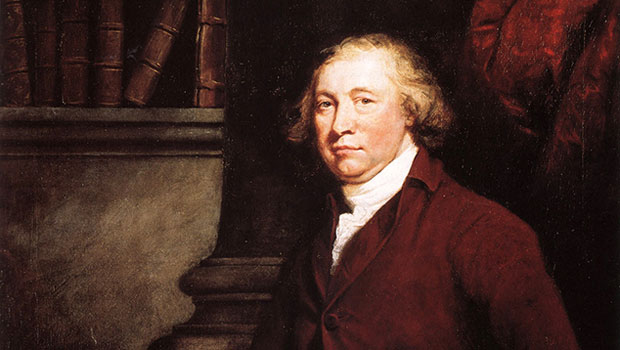
“When ancient opinions and rules of life are taken away, the loss cannot possibly be estimated. From that moment, we have no compass to govern us, nor can we know distinctly to what port to steer.” – Edmund Burke

Preparedness Notes for Monday — July 19, 2021
July 19th is coincidentally the birthday of handgun designers Samuel Colt (pictured, born 1814) and Gaston Glock (born 1929).
On July 19, 1799: The Rosetta Stone was found by a French soldier serving under Napoleon.
—
All of the orders for the recent batch of 250 SurvivalBlog archive USB sticks should be mailed out by July 23rd, 2021. Please wait until a few days after that to contact us, if your’s hasn’t arrived. Thanks for your patience.
—
Today we present a review written by our Field Gear Editor, Pat Cascio.
Choosing (or Assembling) Your IFAK, by Pat Cascio
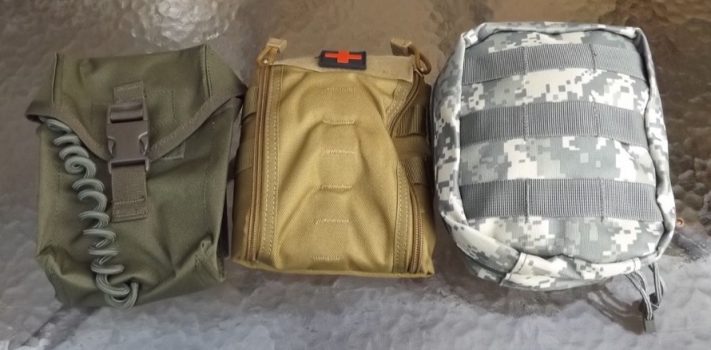
IFAK stands for Individual First Aid Kit. It has been a staple in the US Military for quite some time now. I’ve always had an interest in first-aid, to the point I became a Paramedic many years ago. I got tired of that job in short order, especially when you had to carry a person down a 3- or 4-storey walk-up. There is no better way to get a bad back than doing that several times per day. Still, I loved the medical aspects of the work. I then went to work for a doctor who I knew for many years, as his assistant – and this was long before the term Physician’s Assistant came into being. The doctor even had me assisting him in minor outpatient surgeries quite often. Still, I couldn’t keep up with him – 18-to-20 hour days were the norm. I opened my own clinic after that. The majority of our work was doing enlistment physicals for the Illinois National Guard. I got tired of that, too.
Still, to this day, I’m hungry for just about anything written on first-aid, and in these dangerous times we live in, it just makes great sense to learn as much about this subject as possible, in the event you end up being the first responder, when there is no other medical help available. I wrote an article some years back on the Blackhawk medic bag, you can find it in our SurvivalBlog archives. I own several medic bags, that are actually better equipped (supplied) than those you’d find a Combat Medic carrying these days. One medic bag is better-equipped than some small-town ERs are – I don’t carry that one – that is for a static position for medical care, the other is smaller and lighter, but will get the job done just the same.
The IFAK term hasn’t been around all that long. It used to be, we had a small first-aid pouch on our A.L.I.C.E. suspenders, (that I still carry on my A.L.I.C.E. suspenders) and inside of it, we had a single, compression (type) bandage, that would hopefully – at the very least – stop bleeding from a gunshot wound – it was better than nothing back in the day. Today, the military issues the IFAK, and it is much more useful, because it has other advanced life-saving medical gear inside it, and every soldier is required to have this on their gear. While it is quite a bit bigger than the old bandage pouch, with a single bandage in it, it is worth the small extra weight and inconvenience to have it with you. The idea is that, if you are wounded, you use your own medical gear inside the pouch first, and even a medic will use your own first-aid supplies first, if possible, on you.
My youngest daughter, who served in the US Army as a combat medic, was more than a little surprised at the number of soldiers, who didn’t bother to carry their own IFAK with them – that was and is still is a mistake. Matter of fact, during the first year my youngest daughter was a combat medic, even the medics didn’t have a medic bag – when they went afield, they had their medical supplies packed in a cardboard box. What’s up with that? After I heard that, I requested a Blackhawk Products medic bag for her – in short order, other medics purchased the same bag themselves, as well as other more advanced medic bags, with their own funds. Leave it to Uncle Sam, to stupidly not provide our soldiers the gear that they need to function fully!Continue reading“Choosing (or Assembling) Your IFAK, by Pat Cascio”

Recipe of the Week: Joe’s Large Batch Spaghetti Sauce
The following recipe for Large Batch Spaghetti Sauce is from SurvivalBlog reader Joe T.
This recipe is for making a large quantity of sauce to store in the freezer for future use. You will need one large 4 gallon kettle or two 2 gallon kettles.
Ingredients
- Italian sausage, 4 lb
- Hamburger, 4 lb
- 7, 24 oz Classico pasta sauce or 5 quarts homemade pasta sauce
- 4, 32 oz home-cooked stewed tomato
- 20 diced garlic cloves
- 4 tsp Oregano
- 4 tsp Cilantro
- 8 TBL diced Rosemary
- 4 TBL diced Thyme
- 4 TBL salt
- 4 diced onion
- 4 to 10 TBL sugar (to remove likely bitterness of sauce)
Directions
- Fry hamburger and sausage until done. Remove all grease by squeezing meat through a strainer, discarding the grease. Set meat to one side.
- In a separate large pot, add all of the above except sugar and meat. Cook on a low boil for two hours, stirring occasionally to prevent sticking. Allow ingredients to evaporate excess water so that the sauce thickens.
- Add meat to the sauce and cook on a low boil for another hour. If the final batch is too runny, cook until it thickens to a desired level.
- Taste for salt and bitterness. If necessary, add sugar to enhance the flavor.
Makes about 3 gallons of sauce. Fills about 12 quart Ziploc freezer bags.
STORAGE
Can be stored frozen for many months.
—
Do you have a favorite recipe that would be of interest to SurvivalBlog readers? In this weekly recipe column, we place emphasis on recipes that use long term storage foods, recipes for wild game, dutch oven and slow cooker recipes, and any that use home garden produce. If you have any favorite recipes, then please send them via e-mail. Thanks!
Economics & Investing For Preppers
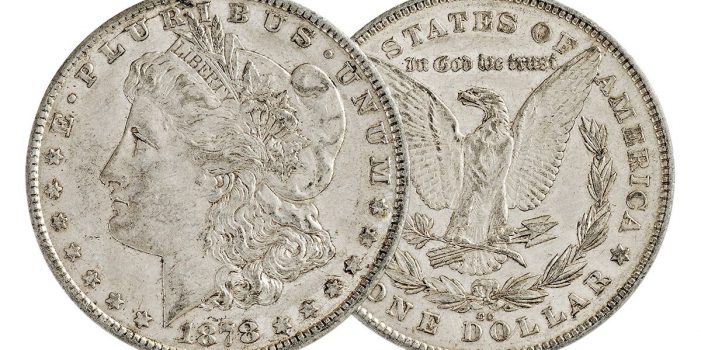
Here are the latest news items and commentary on current economics news, market trends, stocks, investing opportunities, and the precious metals markets. We also cover hedges, derivatives, and obscura. Most of these items are from the “tangibles heavy” contrarian perspective of SurvivalBlog’s Founder and Senior Editor, JWR. Today, we look at the thin silver market. (See the Precious Metals section.)
Precious Metals:
Can Reddit’s silver ‘apes’ beat the market? JWR’s Comments: In a market this thin, yes, the Reddit crowd could indeed trigger a large market rally and a lot of short covering! What do I mean by “thin”? A thin market is the opposite of a liquid market. A thin market has just a few traders, and high volatility. Compared to the equities market, the size of the silver market is tiny. COMEX open interest is now over 1 billion Troy ounces. There are large discrepancies between physical silver and paper silver. And the amount of leverage employed (paper versus physical) is huge. This makes the silver market fairly volatile at all times and incredibly susceptible to manipulation. In times of market crisis, silver could easily triple or even quintuple. Be prepared for some big price swings. Buy low and then buckle up, folks. And if silver does ever double quickly, then don’t hesitate to then sell half of your holdings. At that point, your cost on what is left will be zero, and thus you can enjoy the ride, despite the dramatic price swings.
o o o
The recent dip in gold and silver is worth mentioning. This has brought the retail price of physical metals down. For instance, APMEX is now selling $1,000 face value bags of circulated pre-1965 silver for less than $22,000. It is a good time to buy.
Economy & Finance:
o o o
The Economic Cost of Cuban Socialism.
o o o
And over at the CNBC Perpetual Cheering Section: Dow drops nearly 300 points on Friday, snaps 3-week winning streak.

The Editors’ Quote of the Day:
“Military retreat from the mountains of the Hindu Kush or the plains of Mesopotamia has long been a harbinger of imperial fall.” – Niall Ferguson, a British historian, in his July 28, 2010 John Bonython lecture in Sydney, Australia

Preparedness Notes for Sunday — July 18, 2021
July 18th, 1954 is the birthdate of Ricky Skaggs, an American country and bluegrass singer, musician, producer, and composer. He primarily plays mandolin; however, he also plays fiddle, guitar, mandocaster, and banjo.
—
SurvivalBlog Writing Contest
Today we present another entry for Round 95 of the SurvivalBlog non-fiction writing contest. The prizes for this round include:
First Prize:
- The photovoltaic power specialists at Quantum Harvest LLC are providing a store-wide 10% off coupon. Depending on the model chosen, this could be worth more than $2000.
- A Gunsite Academy Three Day Course Certificate. This can be used for any of their one, two, or three-day course (a $1,095 value),
- A course certificate from onPoint Tactical for the prize winner’s choice of three-day civilian courses, excluding those restricted for military or government teams. Three-day onPoint courses normally cost $795,
- DRD Tactical is providing a 5.56 NATO QD Billet upper. These have hammer forged, chrome-lined barrels and a hard case, to go with your own AR lower. It will allow any standard AR-type rifle to have a quick change barrel. This can be assembled in less than one minute without the use of any tools. It also provides a compact carry capability in a hard case or in 3-day pack (a $1,100 value),
- Two cases of Mountain House freeze-dried assorted entrees in #10 cans, courtesy of Ready Made Resources (a $350 value),
- A $250 gift certificate good for any product from Sunflower Ammo,
- American Gunsmithing Institute (AGI) is providing a $300 certificate good towards any of their DVD training courses.
Second Prize:
- A Front Sight Lifetime Diamond Membership, providing lifetime free training at any Front Sight Nevada course, with no limit on repeating classes. This prize is courtesy of a SurvivalBlog reader who prefers to be anonymous.
- A Glock form factor SIRT laser training pistol and a SIRT AR-15/M4 Laser Training Bolt, courtesy of Next Level Training, that have a combined retail value of $589,
- Two 1,000-foot spools of full mil-spec U.S.-made 750 paracord (in-stock colors only) from www.TOUGHGRID.com (a $240 value).
- An Israeli CBRN Gas Mask with Hydration Straw and two Extra 40mm NATO Filter s – Manufactured in 2020 (a $229.99 value), courtesy of McGuire Army-Navy.
- Naturally Cozy is donating a “Prepper Pack” Menstrual Kit. This kit contains 18 pads and it comes vacuum-sealed for long term storage or slips easily into a bugout bag. The value of this kit is $220.
- An assortment of products along with a one-hour consultation on health and wellness from Pruitt’s Tree Resin (a $265 value).
Third Prize:
- Three sets each of made-in-USA regular and wide-mouth reusable canning lids. (This is a total of 300 lids and 600 gaskets.) This prize is courtesy of Harvest Guard (a $270 value)
- A Royal Berkey water filter, courtesy of Directive 21 (a $275 value),
- Siege Stoves is generously donating a SIEGE® STOVE kit, including a Titanium Gen 3 Flat-Pack Stove with titanium Cross-Members and a variety of bonus items including a Large Folding Grill, a pair of Side Toasters, a Compact Fire Poker, and an extra set of stainless steel universal Cross-Members. (In all, a $200 value.)
- Two Super Survival Pack seed collections, a $150 value, courtesy of Seed for Security, LLC,
- A transferable $150 purchase credit from Elk Creek Company, toward the purchase of any pre-1899 antique gun. There is no paperwork required for delivery of pre-1899 guns into most states, making them the last bastion of firearms purchasing privacy!
Round 95 ends on July 31st, so get busy writing and e-mail us your entry. Remember that there is a 1,500-word minimum, and that articles on practical “how-to” skills for survival have an advantage in the judging.