(Continued from Part 1. This concludes the article.)
#4. “Tempered less than Mason jars.” Nearly every book, website, and blog discussing this subject insists that Mason jars are tempered. They’re definitely, absolutely, NOT tempered. Glass has three basic hardening options: tempering, heat strengthening, and annealing. All commercial and home-canning jars are annealed, not tempered. Annealing is a process where jars are cooled down very slowly after production to make them more consistent and to minimize stresses. Whenever glass breaks into the sharp jagged pieces seen when we break a jar or window it’s merely annealed, not tempered or heat strengthened.
That brings up the logical question, are there different annealing processes to make Mason jars stronger than salsa and pickle jars? I contacted another large glass and jar manufacturer who’s been in business for 100+ years. The general manager was kind enough to answer the question himself. Paraphrasing his reply, all the jars they make follow a similar annealing process as do jars made by other manufacturers. He said further, anyone who claims home-canning jars are stronger is using it as a selling tactic, but it’s not true. When I asked if a jar is a jar, he replied yes, basically a glass jar is a glass jar.
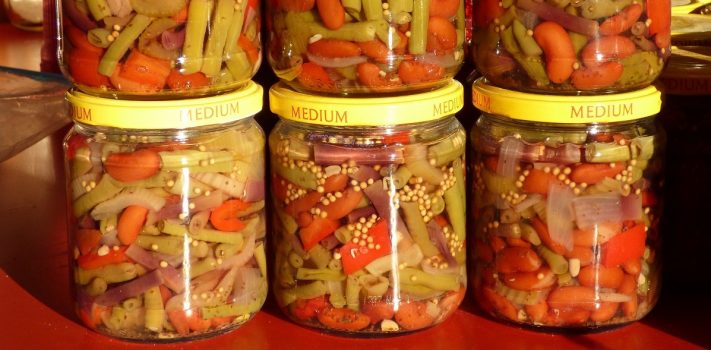
#5. “ [commercial jars] may be weakened by repeated contact with metal spoons or knives used in dispensing mayonnaise or salad dressing. Seemingly insignificant scratches in glass may cause cracking and breakage while processing jars in a canner.” More pure conjecture and there’s no data to support it. Manufacturers put a tin-oxide coating on the outside of jars before they’re annealed to prevent scratches by commercial and home canners. I tried a spoon, fork, butter knife, and finally the sharp tip of a Swiss-made steel kitchen knife but I was unable to make a scratch in the glass. Many have experienced the same when scraping label adhesive off commercial jars with a knife. Chips in the rim are possible but it seems a rounded jar rim would be less damaged during use than a flat rim with its right angles at the edges which could more easily be broken off.
Canning Lid Shelf Life – Even though companies such as Ball recommend using lids within a year of purchase, they concede they can still be used 3-5 years later. The USDA Complete Guide to Home Canning, p 1-15 says, “Gaskets in unused lids work well for at least 5 years from date of manufacture. The gasket compound in older unused lids may fail to seal on jars. Buy only the quantity of lids you will use in a year.” Again, no experiments with data have been done on this. Many of us know from experience that modern lids have a much longer shelf life than five years. For his article, I dug through my stash of used lids and found one from 2007 and several from 2008 and 2009. I reconstituted them in hot water and when placed on jars of boiling water, all sealed. All my commercial pickle and salsa jars were bought prior to 2013 and still continue to seal every year.Continue reading“The Science: Reusing Canning Jar Lids – Part 2, by St. Funogas”