The mention of hunting will most likely bring two responses. The first of the non-hunter, sometimes anti-hunter, and that is of disgust. The other is of the hunter himself. It is one who smiles widely and tells a couple of hunting stories, however true they may be.
When I was young and growing up my response would have been the first. That is not entirely my fault because most of the so-called hunters in my area think nothing of killing an immature animal, or worse yet, not being a marksman and wounding the animal. For me, wounding an animal and risking the possibility of not being able to utilize it was unforgivable.
Things do change however, and my family moved out to the country when I was eleven. This move brought innumerable blessings. Living out in the country also brought me in contact with situations to which I would have never been exposed in the city. Some of these situations were of the death of an animal, and over time this changed my view on hunting. I am still disgusted, as any sportsman should be, when I hear of an animal being shot and lost. What I finally began to realize is that all animals die. Some animals die of old age in the winter. Others die quickly from a hunter’s bullet. Their meat is eaten and enjoyed and thanks is given for the blessing of their nutrients.
I have now been blessed to have hunted a season, bagged a deer, and learned many valuable lessons about hunting as a way of self-reliance. I have also learned many things about myself through hunting. My prayer is that through this article I can prevent someone else from making the same mistakes I made during my first season, so they can be more focused on finding and learning about themselves through this activity in which the crazy, outside world has no business. In order to best show what needs to be developed to be a successful hunter and sportsman, we will look at choosing a rifle, hunting equipment, hunting strategies, marksmanship development, scouting, and my experience of the hunt.Continue reading“Becoming a Hunter – Part 1, by Remington Smith”
FOR SALE: Self-sustaining Rural Property situated meticulously in serene locales distant from densely populated sanctuary cities. Remember…HISTORY Favors the PREPARED!
#1 Trusted Gravity Water Purification System! Start Drinking Purified Water now with a Berkey water filtration system. Find systems, replacement filters, parts and more here.
This weekly column is a collection of short snippets: practical self-sufficiency items, how-tos, lessons learned, tips and tricks, and news items — both from readers and from SurvivalBlog’s editors. We may select some long e-mails for posting as separate letters.
—
We’ll start with this advice on growing peppers, from Sean B.:
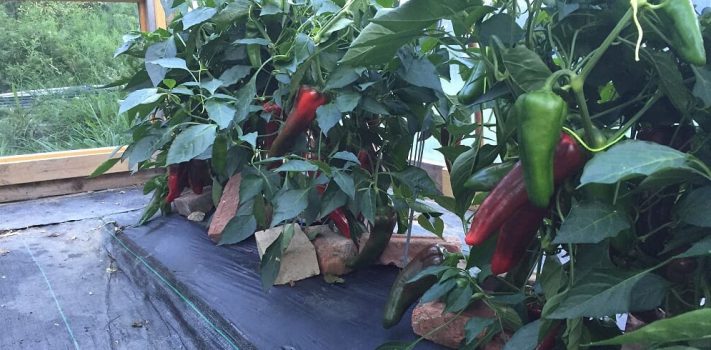
“Although I have been saving seeds from my garden vegetables and fruits for more than five years now, this year I am harvesting the result of a rookie mistake I made last year. Not knowing that bell peppers and jalapeno peppers can cross-pollinate, my bell pepper seeds from last year are now growing a hybrid and my jalapeno seeds from last year have very poor germination and low survivability in the plants. My hybrid bell pepper/jalapeno plants are now growing what looks like a very large jalapeno, that is spicier than a bell pepper, but not spicy enough to be a “hot” pepper. They also don’t have the nice thick fleshy fruit wall we expect from a bell pepper. So, although the hybrid is edible, it is closer to a “worst of both worlds” combination.
Next year I will either have to try growing my saved two-year-old bell pepper and jalapeno seeds (collected before the cross-pollination), or buy new seeds. A reminder to the seed savers out there, if you are not doing it already, keep similar plants far enough apart to prevent cross-pollination. Also, each year, pack away some “just in case” seeds so if something goes south, you have some 2-year old seeds as a backup. Were this year’s harvest happening during a TEOTWAWKI scenario, these “worst of both worlds” peppers would be a very unpleasant surprise.”
#1 Trusted Gravity Water Purification System! Start Drinking Purified Water now with a Berkey water filtration system. Find systems, replacement filters, parts and more here.
Every bespoke SIEGE buckle goes through an hours-long artisanal process resulting in a belt unlike anything else, with blazing fast performance and looks and comfort to match.
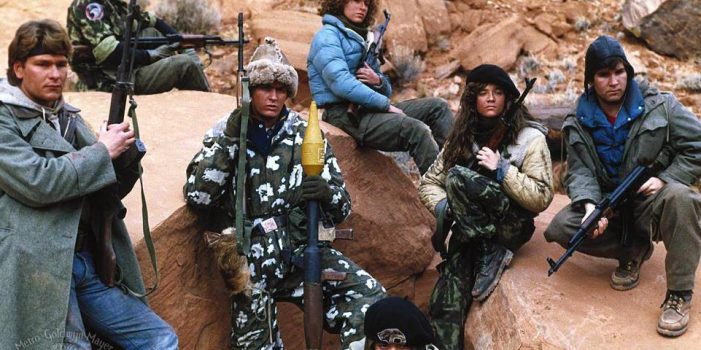
On August 10th, 1984, Red Dawn, the first PG-13 rated movie, starring Patrick Swayze was released. The movie (the 1984 original, not the 2012 remake) is a favorite of both JWR and HJL. This fine John Milius movie embodies the independent, indomitable spirit that created this country.
The photovoltaic power specialists at Quantum Harvest LLC are providing a store-wide 10% off coupon. Depending on the model chosen, this could be worth more than $2000.
A course certificate from onPoint Tactical for the prize winner’s choice of three-day civilian courses, excluding those restricted for military or government teams. Three-day onPoint courses normally cost $795,
Two sets of The Civil Defense Manual, (in two volumes) — a $193 value — kindly donated by the author, Jack Lawson.
Second Prize:
A Front Sight Lifetime Diamond Membership, providing lifetime free training at any Front Sight Nevada course, with no limit on repeating classes. This prize is courtesy of a SurvivalBlog reader who prefers to be anonymous.
Naturally Cozy is donating a “Prepper Pack” Menstrual Kit. This kit contains 18 pads and it comes vacuum-sealed for long term storage or slips easily into a bugout bag. The value of this kit is $220.
An assortment of products along with a one-hour consultation on health and wellness from Pruitt’s Tree Resin (a $265 value).
Third Prize:
Three sets each of made-in-USA regular and wide-mouth reusable canning lids. (This is a total of 300 lids and 600 gaskets.) This prize is courtesy of Harvest Guard (a $270 value)
Siege Stoves is generously donating a SIEGE® STOVE kit, including a Titanium Gen 3 Flat-Pack Stove with titanium Cross-Members and a variety of bonus items including a Large Folding Grill, a pair of Side Toasters, a Compact Fire Poker, and an extra set of stainless steel universal Cross-Members. (In all, a $200 value.)
A transferable $150 purchase credit from Elk Creek Company, toward the purchase of any pre-1899 antique gun. There is no paperwork required for delivery of pre-1899 guns into most states, making them the last bastion of firearms purchasing privacy!
Honorable Mention:
A transferable $100 FRN purchase credit toward the purchase of any antique or percussion replica gun from Elk Creek Company will be awarded to each Honorable Mention prize winner.
—
Round 96 ends on September 30th, so get busy writing and e-mail us your entry. Remember that there is a 1,500-word minimum, and that articles on practical “how-to” skills for survival have an advantage in the judging.
Find your secure and sustainable home. The leading marketplace for rural, remote, and off-grid properties worldwide. Affordable ads. No commissions are charged!
Click Here --> The Civil Defense Manual... The A to Z of survival. Looks what's in it... https://civildefensemanual.com/whats-in-the-civil-defense-manual/
“Oh no, not someone else talking about Bitcoin!” That is what you’re probably thinking right now.
I know Bitcoin and other cryptocurrencies have been a hot topic of late. And there are more than enough “wanna-be” experts out there.
When looking through SurvivalBlog.com, I realized that it’s been quite a while since there was a dedicated piece on cryptocurrencies. Since the technology (and the economy) is changing so rapidly, I wanted to do a primer on Bitcoin for Preppers. I’ll include Use Cases and some How-To.
In this article, I’m going to make the case for Bitcoin, not as an investment (which I believe it is), nor a great store of value (which I also believe it is becoming), but instead, I’m going to simply state that having some Bitcoin in offline storage should be an essential part of any prepper’s toolkit.
Recently, a former JPMorgan cross-asset strategist said about Bitcoin,
“If..one’s risk scenario is of the Thunderdome variant characterized by the simultaneous collapse of a currency and its payments system, then there is no better hedge than private, digital money.”
If JPMorgan sees it as a prepping tool, maybe you should as well.
And I don’t claim to be a Bitcoin expert. I’m not a developer or a software programmer, but over the past four years, I’ve dug pretty deep down the crypto rabbit hole and I’ve become convinced that at least a little Bitcoin should be part of your preparations for an unpredictable future.
Let me tell you why…
What a Bitcoin Is
Before we jump down the Bitcoin rabbit hole, let’s first talk about what Bitcoin is. If you’re familiar with Bitcoin, you can skip this part. If you’re unfamiliar, I’m going to give a hyper-abbreviated intro to Bitcoin.
This weekly column features news stories and event announcements from around the American Redoubt region. (Idaho, Montana, eastern Oregon, eastern Washington, and Wyoming.) Much of the region is also more commonly known as The Inland Northwest. We also mention companies of interest to preppers and survivalists that are located in the American Redoubt region. Today, we focus on the politicized — and botched — prosecution of some “Soviet Moscow” protestors, as reported by Redoubt News. (See the Idaho section.)
I just heard about a firearms and survival gear company located in Moscow, Idaho. They tell me that they will operate by e-commerce for the time being until open up a retail store: Holzman Arms.
“In our family, there was no clear line between religion and fly fishing. We lived at the junction of great trout rivers in western Montana, and our father was a Presbyterian minister and a fly fisherman who tied his own flies and taught others. He told us about Christ’s disciples being fishermen, and we were left to assume, as my brother and I did, that all first-class fishermen on the Sea of Galilee were fly fishermen and that John, the favorite, was a dry-fly fisherman.” – Norman Maclean
August 9th, 1831was the birthday of James Paris Lee (August 9, 1831 – February 24, 1904). He was a Scottish-Canadian and later American inventor and arms designer, best known for inventing the bolt action that led to the Lee-Metford and Lee-Enfield series of rifles. But most notably, Lee was the inventor of the spring-loaded detachable box magazine that has become standard in the vast majority of modern rifles and pistols, worldwide.
Starting today, in honor of James Paris Lee’s birthday, we are running a two-week sale at Elk Creek Company. I’ve set sales prices with discounts from 5% to 25% on nearly all of my inventory. Note that because of a shopping cart software glitch, the special sale prices are showing up on the main pages, but not on the detail pages. So your total will be based on the sale price, regardless of what you see quoted at checkout. Get your order in soon, while the selection of antique guns is still good. Also note that we no longer take credit card payments, but we do take pre-1965 U.S. silver coins or inflated FRNs in the form of cash, checks, or money orders. (At my store, you may toggle between silver and FRN pricing.)
—
Today we present a review written by our redoubtable Field Gear Editor, Pat Cascio.
It is really hard to keep up with all the new firearms coming out of the Springfield Armory company. They don’t sit back on past accomplishments. Nope – they keep coming out with new or improved designs. That is commendable.
I’ve tested several of the Springfield AR rifles and pistols over the years, and loved every one of them. Today, we’re looking at their newest AR pistol design, and it is simply called an AR Pistol. The lower receiver has a “Saint” logo, so i suppose this is considered part of their Saint series. The Springfield Armory item number is ST9096556BM. They offer another similar model, and about the only difference between the two that I can see are some minor changes in some of the arm brace and fore-end furniture.
With one party in control of the White House, Senate, and House of Representatives, all pushing for some crazy gun control measures, we can be assured that some of this craziness will pass and become law this year. Sure, there will be challenges made and it will reach the US Supreme Court at some point, but that can take years to be heard. Everyone’s “favorite” anti-gunner is Senator Diane Feinstein, and she promises to reintroduce the “assault weapons” ban – will probably do so, before this article is even published. She is rabid when it comes to her hatred of guns in the hands of private citzens. So, I’d advise anyone looking to purchase some type of AR or AK firearms, to do so now – not later!
As most of us know, there is a shortage of firearms and ammunition these days. I couldn’t tell you how many times my local FFL contacted me, and wanted me to sell them some ammo, and its like this every place you look. When I alerted my FFL that this Springfield AR pistol was coming, they asked two questions – “what model is it, and how much do you want to sell it for?” Nope, not happening. End of story! On many ARs prices doubled – and in some cases, prices tripled. But be advised that prices seem to finally be coming back down – a bit.
Let’s take a look at the specs on this particular AR pistol from Springfield Armory. The upper receiver is forged 7075 Aluminum – tough stuff. It has a type III hardcoat anodized on it – plus a forward assist, and M4 feed ramps. Many ARs simply have a barrel with M4 feed ramps – not the upper as well. The lower receiver is also 7075 Forged Aluminum, again with the Type III hardcourt anodizing finish. Springfield has added the Accu-Tite tension system, for keeping the upper and lower receivers locked tightly together. That is adjustable, as well.Continue reading“Springfield Armory AR Pistol, by Pat Cascio”
The following recipe for Cajun Goulash was kindly sent by SurvivalBlog reader Gwen. It is Gwen’s original recipe.
Ingredients
1-to-2 lbs of ground meat
3 cups of Basmati Rice (or whatever quantity you desire, as a bed for your goulash.)
1 can petite tomatoes
Corn starch or arrowroot powder
Avocado oil
Use any fresh vegetables you prefer. These are what I use:
Mushrooms
Green beans
Sweet yellow pepper
Zucchini
Directions
Start a batch of Basmati rice.
Meanwhile, chop the veggies and sauté them in avocado oil or oil of preference. Season with Slap Your Mama.
Scoop cooked veggie mix into a bowl.
Brown 1-2 lbs of ground meat. Season with Slap Your Mama.
Mix the vegetables with the meat.
Add 1 can of beef broth and one can of petite tomatoes. Reserve a little liquid. Add corn starch or arrowroot powder to thicken.
SERVING
We serve this over steamed Basmati Rice.
—
Do you have a favorite recipe that would be of interest to SurvivalBlog readers? In this weekly recipe column, we place emphasis on recipes that use long term storage foods, recipes for wild game, dutch oven and slow cooker recipes, and any that use home garden produce. If you have any favorite recipes, then please send them via e-mail. Thanks!
Here are the latest news items and commentary on current economics news, market trends, stocks, investing opportunities, and the precious metals markets. We also cover hedges, derivatives, and obscura. Most of these items are from the “tangibles heavy” contrarian perspective of SurvivalBlog’s Founder and Senior Editor, JWR. Today, we again look at investing in military surplus (“mil-surp”) rifles. (See the Tangibles Investing section.)
Precious Metals:
Friday’s news: Why did gold price drop 2% today? More downside coming? Gareth Soloway on metals, stocks, Bitcoin.JWR’s Comments: I expect the futures and spot prices of gold and silver to recover, certainly by this fall. If the $1.2 Trillion “Infrastructure” legislation passes, (and that’s likely) then we can expect renewed currency inflation. That, in turn, will trigger higher prices for precious metals. Presently, it is a good time to buy silver. As an aside: I’ve just dropped the silver to Federal Reserve Note (FRN) price multiplier on my antique guns to 20.1 times face value, at Elk Creek Company. (Thus, a gun priced at $20 in pre-1965 silver coinage would be priced at $402 in FRNs.)
“We can’t spend money we don’t have. Period. Just look at what is happening with inflation. We were promised this infrastructure bill was fully paid for, and now we see that it’s not. This was nothing more than a bait and switch. $205 billion of this bill was to be paid for with repurposed COVID funds. The latest proposal only shows $50 billion in COVID funds being used, as well as a lot of the proposed ‘pay-fors’ missing. So we are asking our colleagues: How is this infrastructure spending bill being paid for? We still don’t know. We still don’t have a score on this legislation from the Congressional Budget Office. Let’s not forget, this is just the first step in the Democrats’ plan to pass their $5.5 trillion tax-and-spend liberal wish list. We support infrastructure, but it has to be paid for. This proposal isn’t it.” – U.S. Senator Ted Cruz, from a joint statement released by U.S. Senators. Ted Cruz (R-Texas), Ron Johnson (R-Wis.), Rick Scott (R-Fla.), Marsha Blackburn (R-Tenn.), Mike Braun (R-Ind.), Josh Hawley (R-Mo.), and Mike Lee (R-Utah)
August 8th is the birthday of Terry Nation (August 8th, 1930 – March 9th, 1997), who was a Welsh television writer and novelist. Nation wrote two series, Survivors and Blake’s 7, in the 1970s. Survivors was re-made a few years ago.
The photovoltaic power specialists at Quantum Harvest LLC are providing a store-wide 10% off coupon. Depending on the model chosen, this could be worth more than $2000.
A course certificate from onPoint Tactical for the prize winner’s choice of three-day civilian courses, excluding those restricted for military or government teams. Three-day onPoint courses normally cost $795,
Two sets of The Civil Defense Manual, (in two volumes) — a $193 value — kindly donated by the author, Jack Lawson.
Second Prize:
A Front Sight Lifetime Diamond Membership, providing lifetime free training at any Front Sight Nevada course, with no limit on repeating classes. This prize is courtesy of a SurvivalBlog reader who prefers to be anonymous.
Naturally Cozy is donating a “Prepper Pack” Menstrual Kit. This kit contains 18 pads and it comes vacuum-sealed for long term storage or slips easily into a bugout bag. The value of this kit is $220.
An assortment of products along with a one-hour consultation on health and wellness from Pruitt’s Tree Resin (a $265 value).
Third Prize:
Three sets each of made-in-USA regular and wide-mouth reusable canning lids. (This is a total of 300 lids and 600 gaskets.) This prize is courtesy of Harvest Guard (a $270 value)
Siege Stoves is generously donating a SIEGE® STOVE kit, including a Titanium Gen 3 Flat-Pack Stove with titanium Cross-Members and a variety of bonus items including a Large Folding Grill, a pair of Side Toasters, a Compact Fire Poker, and an extra set of stainless steel universal Cross-Members. (In all, a $200 value.)
A transferable $150 purchase credit from Elk Creek Company, toward the purchase of any pre-1899 antique gun. There is no paperwork required for delivery of pre-1899 guns into most states, making them the last bastion of firearms purchasing privacy!
Honorable Mention:
A transferable $100 FRN purchase credit toward the purchase of any antique or percussion replica gun from Elk Creek Company will be awarded to each Honorable Mention prize winner.
—
Round 96 ends on September 30th, so get busy writing and e-mail us your entry. Remember that there is a 1,500-word minimum, and that articles on practical “how-to” skills for survival have an advantage in the judging.
(Continued from Part 1. This concludes the article.)
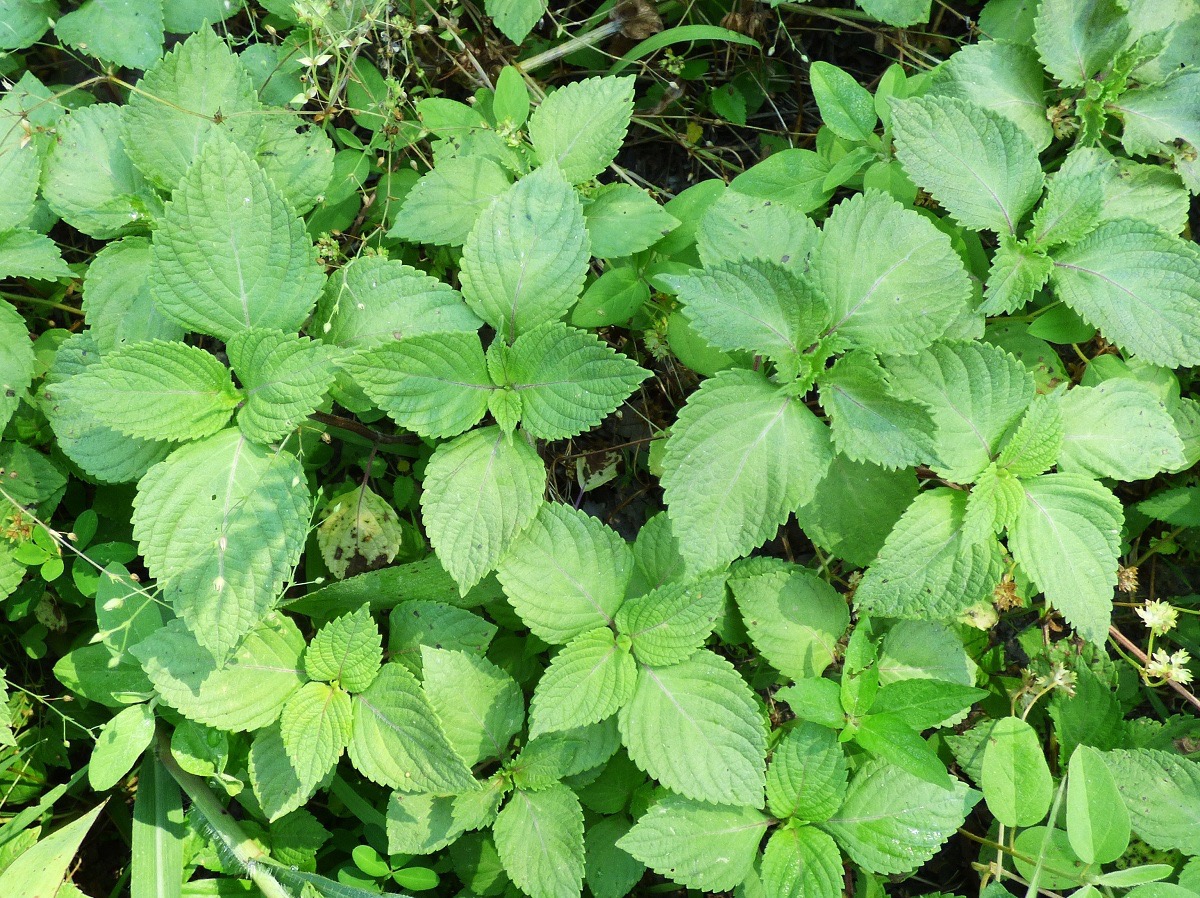
Most of your weeds will be annuals which must grow from seed each year and tend to be easy to deal with. My handful of “good weeds” grow large, are easy to pull up even when mature, and remain supple without getting too fibrous or woody making them excellent composting plants. An example is the perilla seen in Photo 5. This is my best composting weed so I let them get large (36”) as long as they’re not obstructing any crop plants. Others in this same category are most of the tender spring weeds which remain soft and never get very large such as henbit and chickweed, and are easy to pull up.
Photo 5
One critical reason to get to know your weeds is that some of them are toxic to certain animals including humans. The perilla I just mentioned can be fatally toxic to cattle, horses, and goats among others depending on the stage of the plant, so this is a topic worthy of research for those with animals. Other weeds such as the poison ivy I deal with every year have toxin properties which are not fatal but can cause severe skin and other bad reactions in some people. Do an internet search on poisonous plants in your area to find out which weeds to be wary of.
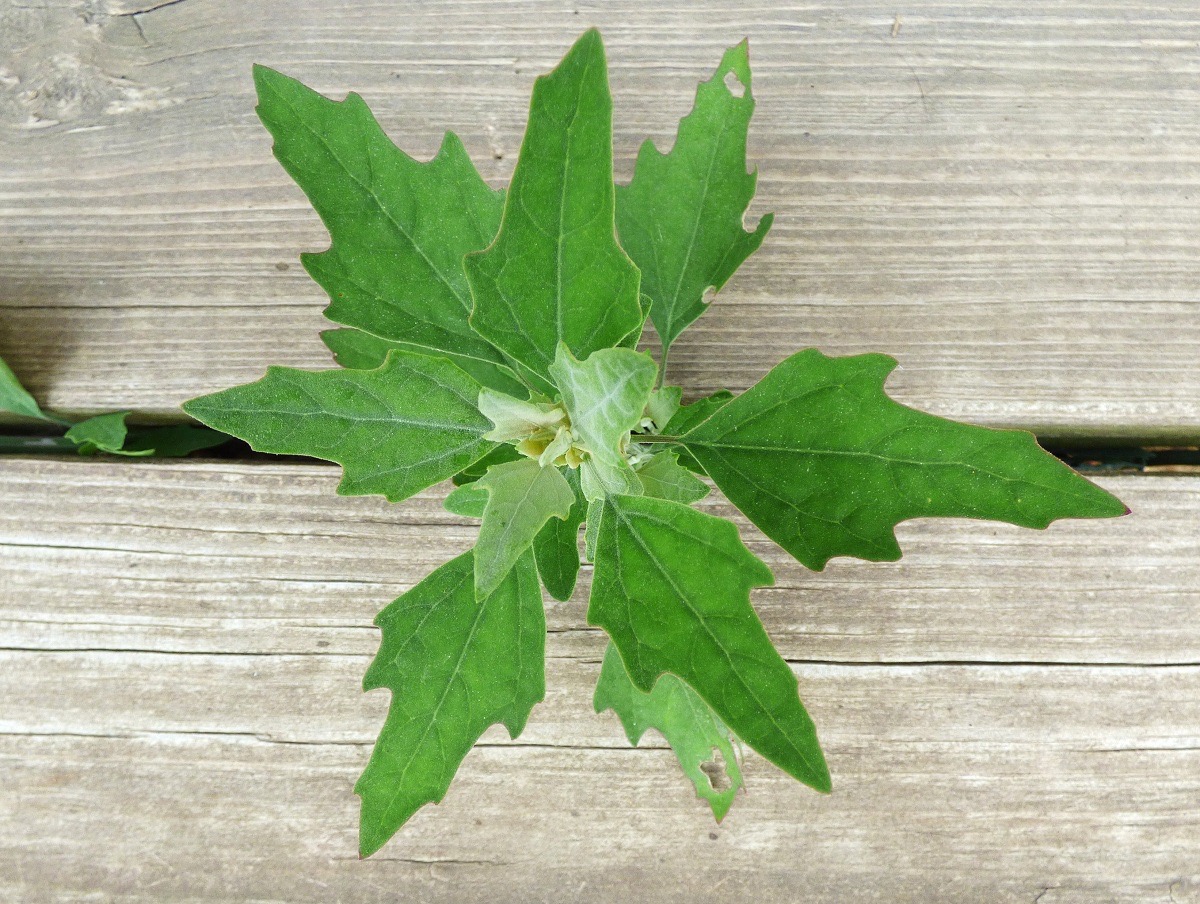
Other good weeds to be looking for are the edible and medicinal weeds. Many edible weeds taste like weeds (or worse) but some such as lambs quarter (Photo 6) are closely related to spinach and quinoa (all three in a group called chenopodiums) and for some of us they taste better than spinach. It’s so tasty I did selections over a three-year period to select for huge plants which were heavy seed producers. Do an internet search for medicinal plants in your area and you’ll find that some of them will be growing in your garden. Mullein and plantain are two of the more common medicinal weeds in my garden.
Photo 6
A few weeds will be perennials that come back from the roots even though you thought you removed them. These tend to be much more difficult to manage due to their strong root systems and some are prolific seed producers as well.
My worst emergency weed, nearly impossible to eradicate, is a perennial called buttonweed (Diodia virginiana, Photo 7). It’s very soft and supple, almost succulent, and makes good compost in its early stages. It goes into the compost pile as long as there are no seeds or flowers, then to the burn pile once they get to that stage.
Photo 7
My second worst weed is a legume called lespedeza. The gnarly roots are extremely difficult to pull up making the plant nearly impossible to eradicate. When I first fenced off my garden, one corner was full of lespedeza. My only chemical-free option was to mow the area as short as I could, then put down old tarps covered with mulch. I planted squash in that area using individual grow boxes on top of the mulch. Two years later when I pulled up the tarps, the lespedeza was gone. Sometimes you have to go to these extremes to eradicate the worst weeds.
The last perennial I deal with is Johnson grass and its relatives. This is a very large bunchgrass and is difficult to mow and eradicate along fence lines. In the garden I use a shovel to dig it up and flip it over so the roots can dry out, returning later to shake off the dry soil before consigning them to the compost pile. Knowing which weeds can be pulled and which need a shovel can help eradicate perennial weeds much more quickly.
Get to know your weeds and be able to identify the perennials from the annuals.
Weed Seeds in the Compost Pile
Another aspect of getting to know your weeds is learning which ones to keep out of the compost pile. One of my most common weeds is a species of wild onion. I’ve tried cooking them all sorts of ways, even using the tender green shoots as chives, but they are so tough and stringy they have no use that I can discover. They multiply like crazy so when weeding, I begin by pulling all the wild onions and tossing them into the burn pile, then I pull the other weeds.
Conventional wisdom says not to put weeds into the compost pile which have gone to seed. “One year’s seeds equals seven year’s weeds,” is a nifty little rhyme but not especially useful for me personally. Weeds are ubiquitous and eternal so I ignore this advice for most annual weeds. There are so many other sources of weed seeds that I get more benefit from the compost than detriment from their seeds. Once the compost is tilled into the soil two years after the weeds were put into the compost pile, some of the seeds are no longer viable and after tilling, the percentage of seeds close enough to the surface to germinate is not enough for me personally to worry about. YMMV.
If you’re a normal gardener and don’t want weed seeds in your compost pile, learn when they go to seed so they can be pulled before that time. Many plants are day-length sensitive so will form seeds more or less the same week each year, letting you know to weed before then. One weed I don’t let go to seed I call Princess Anne (smaller relative of Queen Anne’s lace). The seeds annoyingly stick to my weeding gloves, pants and everything else.
One last thought on weeds in the compost pile. Since my area gets enough rain to keep the compost pile moist year round, some weeds continue growing after being tossed onto the pile. Perennials with runners or large root systems are especially prone to this. Perennial mints often have lots of runners so I let them dry down before adding to the pile. Some weeds have lot of soil sticking to the roots which is difficult to remove, but remember, all soil which goes to the compost pile will be returned to the garden when the composting cycle is over.
TOOLS FOR THE WAR ON WEEDS
Diamond Hoe – Also known as a scuffle hoe. I mentioned in another article on gardening that this is the single-most important tool in my weeding arsenal because it cuts way down on the amount of time it takes to weed. While a normal hoe must be raised into the air and then lowered again to get a single chop on weeds, a diamond hoe blade remains in constant contact with the soil so it’s more like scrubbing a floor with a mop. The hoe cuts weeds on both the push and the pull stroke so it’s very quick compared to a conventional hoe. The diamond-shaped head has points at the 3, 6, 9, and 12 o’clock positions. The longer right and left points allow you to slow down around the stems of your crops and very delicately hoe the weeds which you could never get with a conventional hoe, leaving less hand weeding afterwards. I got mine from Homestead Iron, a blacksmith who makes them right here in the U.S.A. and sells them at the Mother Earth News festivals and on his website, where he indicates they’re only for small weeds. This is not true. Depending on the species, I can cut some pretty large weeds on the pull stroke. I use mine all season long: like a mop in the spring, then with just the pull stroke later in the season on larger weeds. I highly recommend this tool, also available at other locations in slightly different variations, quality, and durability. The Homestead Iron hoe is also well worth the price because of the way the way the head is attached to the handle. We’ve all had rakes and hoes separate from the handle because they were pushed into a small thin tube with a bolt or rivet holding the head on, which eventually gives way. With Homestead Iron tools, the metal collar and heads are a single piece, attached to the hickory handle in such a way they should last for decades.
Leaf Rake – I was late to the party discovering leaf rakes as a garden tool. While growing up we only ever used a rock rake (which we always called a garden rake) in the garden. The trouble is, rock rakes also rake up a lot of soil with the hoed weeds. A leaf rake works much better for raking those finer weeds after they’ve ben hoed and can be turned so only a few tines are pointing down to get into the tighter areas. I’m now hunting at auctions for a narrower leaf rake with only five or six tines across. The cultivator I bought at my local hardware store also works for raking larger weeds.
Shovel – I’ve already mentioned a shovel for those really large-rooted perennial weeds, especially bunch grasses. Don’t procrastinate, dig them up as soon as you realize what they are before they get any bigger with a more extensive root system. For a hand shovel, nothing beats the rock-solid soil knife made by A.M. Leonard Company. It’s actually a small hand spade with the edges semi-sharpened. The stainless steel blade is very thick and durable, good for hand digging small tough perennial weeds and bunch grasses without bending.
Photo 8
Hand Hoe – I have a triangle hand hoe (Photo 8) which I find indispensible in gardening and I probably use it for more jobs than all my other tools. The point is perfect for digging planting holes and furrows and when turned on edge, makes a good weeder for smaller or tighter areas. In Photo 9 you can see how I use this hoe for delicate weeding before putting mulch down on my cucumber rows. The top half of the photo is before weeding, the bottom after.
Photo 9
Tarp – A wheelbarrow or hand cart is the best way to get many weeds to the compost pile. An old tarp works wonders as well. I get tarps free from the hardware store which they take off bundles of lumber. Imagine trying to move enough leaves to mulch a large garden using a wheelbarrow. Since leaves are very bulky but lightweight, now imagine piling them all onto a tarp and dragging it over to the garden or compost pile. You can move a lot of leaves in a hurry. When getting leaves from my neighbors, I collect them on the tarp, then hoist the tarp up into the bed of my pickup to offload the leaves. The same principle works well for mulch-bound grass clippings which I let dry out for a few hours or overnight to make them lighter and easier to rake and move on the tarp.
CONCLUSION
I hope by now you’ve gained an appreciation of the importance of understanding your weeds before TEOTWAWKI Day One. Like gardening and composting, it’s a steep learning curve and you’ll have more failures than successes in the very beginning, but don’t give up. Failures are okay while supply chains are still keeping grocery shelves full but when the SHTF, these things will be critical knowledge that can make the difference between surviving and starving.
Imagine the amount of manual labor each of us will be doing in a grid-down world. Most of our non-sleeping hours will be filled with chores. Many survivors will spend way too much time weeding which could have been avoided had they gained some knowledge ahead of time. Weeding will be a vital task in that world where we must produce all our own food once the freeze-dried stroganoff runs out. The more efficiently we can be about weeding the more time we’ll have for firing up the generator and watching those Saturday-night Gilligan’s Island DVDs. Not only will knowing our weeds be important for proper management, but how to minimize them in the first place using various mulches.
[Disclosure notice: I receive no compensation for books and products mentioned in this article.]