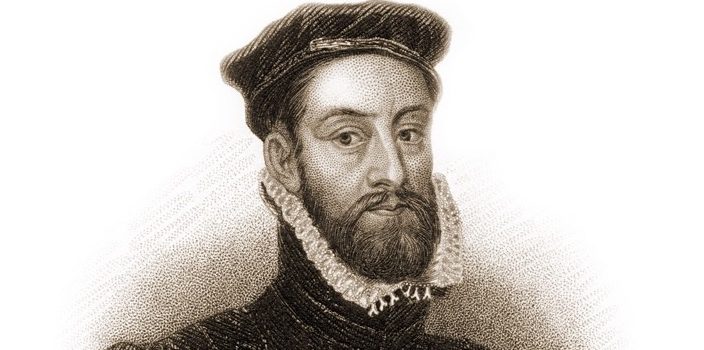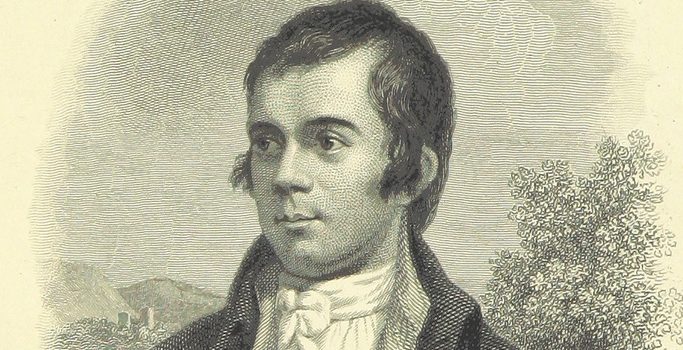
Today is the birthday of celebrated Scottish poet Robert “Bobby” Burns. He was born on January 25, 1759.
—
A quick update on the latest edition of the SurvivalBlog Archive USB stick: 455 orders have already been mailed. The remainder of the first batch of 1,000 sticks should be in the mail by early February. Since the first batch sold out so quickly, we’ve already ordered another 600 sticks, and we are taking backorders. Mailings from that second batch should begin in the third week of February. Thanks for your patience.
SurvivalBlog Writing Contest
Today we present another entry for Round 98 of the SurvivalBlog non-fiction writing contest. The prizes for this round include:
First Prize:
- The photovoltaic power specialists at Quantum Harvest LLC are providing a store-wide 10% off coupon. Depending on the model chosen, this could be worth more than $2000.
- A Gunsite Academy Three Day Course Certificate. This can be used for any of their one, two, or three-day course (a $1,095 value),
- A course certificate from onPoint Tactical for the prize winner’s choice of three-day civilian courses, excluding those restricted for military or government teams. Three-day onPoint courses normally cost $795,
- Two cases of Mountain House freeze-dried assorted entrees in #10 cans, courtesy of Ready Made Resources (a $350 value),
- A $250 gift certificate good for any product from Sunflower Ammo,
- American Gunsmithing Institute (AGI) is providing a $300 certificate good towards any of their DVD training courses.
- Two sets of The Civil Defense Manual, (in two volumes) — a $193 value — kindly donated by the author, Jack Lawson.
Second Prize:
- A Front Sight Lifetime Diamond Membership, providing lifetime free training at any Front Sight Nevada course, with no limit on repeating classes. This prize is courtesy of a SurvivalBlog reader who prefers to be anonymous.
- A Glock form factor SIRT laser training pistol and a SIRT AR-15/M4 Laser Training Bolt, courtesy of Next Level Training, that have a combined retail value of $589,
- Two 1,000-foot spools of full mil-spec U.S.-made 750 paracord (in-stock colors only) from www.TOUGHGRID.com (a $240 value).
- A transferable $150 FRN purchase credit from Elk Creek Company, toward the purchase of any pre-1899 antique gun. There is no paperwork required for delivery of pre-1899 guns into most states, making them the last bastion of firearms purchasing privacy!
Third Prize:
- Three sets each of made-in-USA regular and wide-mouth reusable canning lids. (This is a total of 300 lids and 600 gaskets.) This prize is courtesy of Harvest Guard (a $270 value)
- A Royal Berkey water filter, courtesy of Directive 21 (a $275 value),
- Two Super Survival Pack seed collections, a $150 value, courtesy of Seed for Security, LLC,
- A transferable $100 FRN purchase credit from Elk Creek Company, toward the purchase of any pre-1899 antique gun.
—
More than $725,000 worth of prizes have been awarded since we started running this contest. Round 98 ends on January 31st, so get busy writing and e-mail us your entry. Remember that there is a 1,500-word minimum, and that articles on practical “how-to” skills for survival have an advantage in the judging.