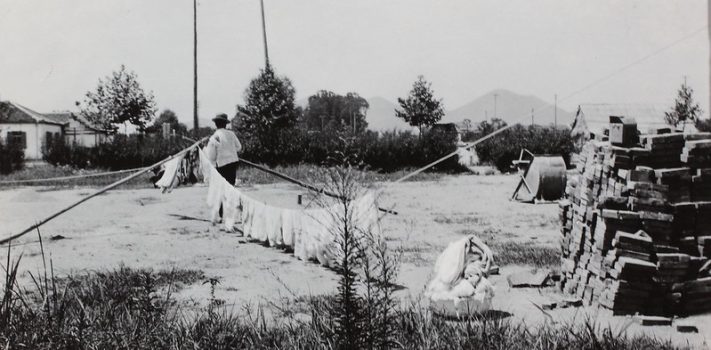
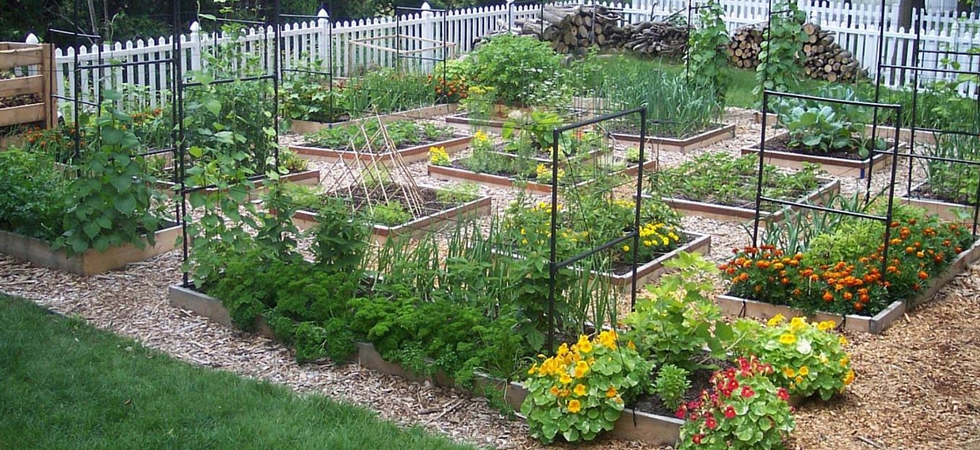
It’s always surprising how much “stuff” gardeners need and can use in order to grow the simplest crops. My son always shakes his head at the number of T-posts, sticks, concrete blocks, strings, wires, fences, plastic sheets, bedsheets, etc. that appear in and around my gardens from time to time. Here are some of the “architectural ideas” that help me produce a widely varied harvest.
Plastic Jugs
Ya ha ha! You an’ me, Little Plastic Jug, How I Love Thee! Farmers and gardeners have always had to rely on their own ingenuity when confronted by surprise conditions that threatened their crops and their livelihoods. In more recent times, it’s sometimes easy to assume that most solutions come in the form of chemicals and the machines that apply them. But often this assumption misses easy, safe, and cheap solutions that turn out much better in the long run.
One of my favorite garden problem solvers is the plain old gallon plastic jug. You know the kind—you get them weekly containing milk, juice, or distilled water (from CPAP machine users), and maybe throw them into recycling just as frequently. Worse still, they may end up by millions in public landfills. But wait! This is a highly usable treasure that is well worth your time in propagating your crops and protecting them when they are most vulnerable.
So take your dear little milk jug, rinse it out thoroughly, and cut off the bottom just at the line where it joins the side. I use a box cutter-type knife to start an opening, and go around the jug with a heavy-duty plant scissors. Be careful because the plastic is bendable and you can cut yourself. You now have a mini-greenhouse that will perform magic! Plant a few seeds in a space that can be covered by your jug, add a little fertilizer and water, then heap up soil about half-way up the sides of the jug so it won’t blow away in the wind. Make sure you take off the cap so the inside can “breathe,” but save the cap.Continue reading“Garden Architecture, by R.B.”