This is the birthday of painter and book illustrator N.C. Wyeth (1882–1945).
It is also the birthday of actor Jeff Goldblum (born 1952), who had unforgettable roles in Buckaroo Banzai and in the Jurassic Park and Independence Day films.
—

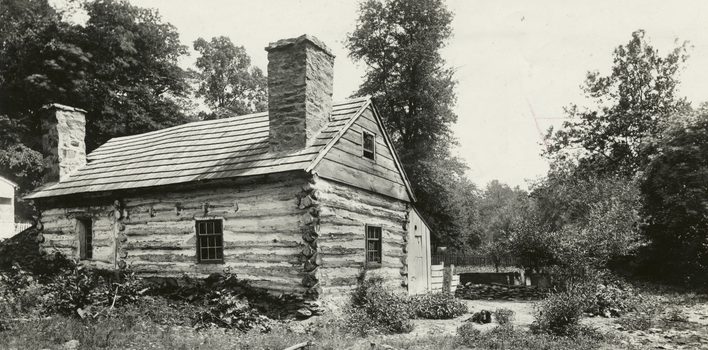
This is the birthday of painter and book illustrator N.C. Wyeth (1882–1945).
It is also the birthday of actor Jeff Goldblum (born 1952), who had unforgettable roles in Buckaroo Banzai and in the Jurassic Park and Independence Day films.
—
The odds of survival for those attempting to defend themselves in a Mad Max kind of world, or less dangerous environment, are higher if we have a solid communications plan. The amount of time and effort applied to establishing easy-to-use, and redundant communications is a critical investment that could pay dividends in many ways. As always, I’d rather have too much of a critically essential, rather than not enough. And surprisingly, the cost could be less than that of an HF transceiver. I could do without an HF transceiver as those whom are closest in proximity will be far more important than those only a few miles away, let alone a hundred, or thousands of miles away.
First, consider that without communications, we’ve got nothing. Communications of various types are central to any security plan. In other words, all of our efforts to prepare could be meaningless if we are unable to coordinate a strong defense that enables us to keep what we have. It is better to have a stronger defense than needed, than a lack of it. When we are developing a commo plan, we are sculpting a future battlefield to our favor. It is not only an electronic battlefield. We should not strive for parity, but for an advantage over potential future attackers — such as roving gangs. If we examine the capabilities of Mexican drug cartels, and the potential warloads that may have serious military experience, we could be faced with a very capable ‘gang’.
An ability to thwart current high-tech SIGINT efforts could be the difference between success or failure. Fortunately, there is an affordable low-tech option. As the threat goes high tech, we could go low tech with good old-fashioned military surplus field telephones. Using those as a primary means of communication, with transceivers as a supplemental means, we would have a tiered and redundant system that attains a much higher level of COMSEC. And there are many other advantages as well.
Continue reading“Advanced Field Telephone Techniques – Part 1, by Tunnel Rabbit”
To be prepared for a crisis, every Prepper must establish goals and make long-term and short-term plans. In this column, the SurvivalBlog editors review their week’s prep activities and planned prep activities for the coming week. These range from healthcare and gear purchases to gardening, ranch improvements, bug out bag fine-tuning, and food storage. This is something akin to our Retreat Owner Profiles, but written incrementally and in detail, throughout the year. We always welcome you to share your own successes and wisdom in your e-mailed letters. We post many of those –or excerpts thereof — in this column, in the Odds ‘n Sods Column, and in the Snippets column. Let’s keep busy and be ready!
I had my plans for the week put in slow motion, because of a sprained ankle. That always provides a refresher lesson in humility. But despite that injury, I still managed to help a friend ready his cabin for winter. I also picked up a load of dimensional lumber and plywood– enough to complete my workshop renovation. I hope to wrap up that work after there is snow on the ground. And we are expecting snow, soon.
Now, over to Lily…Continue reading“Editors’ Prepping Progress”
“The transgression of the wicked saith within my heart, that there is no fear of God before his eyes.
For he flattereth himself in his own eyes, until his iniquity be found to be hateful.
The words of his mouth are iniquity and deceit: he hath left off to be wise, and to do good.
He deviseth mischief upon his bed; he setteth himself in a way that is not good; he abhorreth not evil.
Thy mercy, O Lord, is in the heavens; and thy faithfulness reacheth unto the clouds.
Thy righteousness is like the great mountains; thy judgments are a great deep: O Lord, thou preservest man and beast.
How excellent is thy lovingkindness, O God! therefore the children of men put their trust under the shadow of thy wings.
They shall be abundantly satisfied with the fatness of thy house; and thou shalt make them drink of the river of thy pleasures.
For with thee is the fountain of life: in thy light shall we see light.
O continue thy lovingkindness unto them that know thee; and thy righteousness to the upright in heart.
Let not the foot of pride come against me, and let not the hand of the wicked remove me.
There are the workers of iniquity fallen: they are cast down, and shall not be able to rise.” – Psalm 36 (KJV)
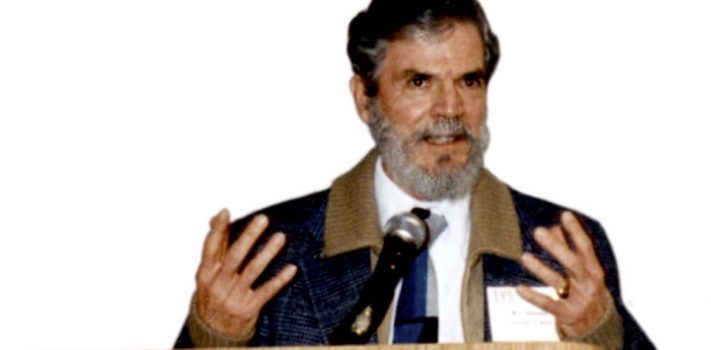
Today is the birthday of the late R.J. Rummel. October 21, 1932 – March 2, 2014. He was was professor emeritus of political science at the University of Hawaii. He spent his career assembling data on collective violence and war with a view toward helping their resolution or elimination. Rummel coined the term democide for murder by government (compare genocide), and his research suggests that six times as many people died of democide during the 20th century than in all that century’s wars combined. He is best known as the author of: Death by Government: A History of Mass Murder and Genocide Since 1900.
—
Today’s feature article was written by SurvivalBlog’s founder, James Wesley, Rawles (JWR).
—
W eare seeking entries for Round 103 of the SurvivalBlog non-fiction writing contest. More than $750,000 worth of prizes have been awarded since we started running this contest. Round 103 ends on November 30th, so get busy writing and e-mail us your entry. Remember that there is a 1,500-word minimum, and that articles on practical “how-to” skills for survival have an advantage in the judging.
Introductory Note: This is an update to a couple of articles that I wrote back in the early days of SurvivalBlog.
—
I often get e-mails from readers claiming either directly or indirectly that preparedness is “only for wealthy people.” They believe that working-class people cannot afford to prepare. That is nonsense. By simply re-prioritizing your budget and cutting out needless expenses (such as alcohol, cigarettes, convenience foods, and subscription movie streaming services) almost anyone can set aside enough money for a year’s worth of storage food in fairly short order.
It is amazing what can be done with hard work, ingenuity, and very little money. Some of the best lessons on frugality can be learned from people who live on society’s margins. While I do not endorse interloping on public lands nor do I suggest that you live like a hermit, the following stories are indicative of what can be accomplished with next to no cash.
First, a father and daughter lived undetected for four years undetected in a Portland, Oregon park.
Next, a story about a hermit who secretly lived for at least three years inside the “secure” Los Alamos nuclear research reservation in New Mexico.
Next, an article about New York City’s “Mole People”.
And this article is also illustrative: A Nantucket Hermit Is Pulled From His Shell.
I recommend the book The Last of the Mountain Men. It is the story of Sylvan Hart (a.k.a.”Buckskin Bill”), a famous Idaho solitary who lived deep in a roadless section of Idaho’s River of No Return Wilderness. His solution to his own unemployment during the Great Depression was to move to the wilderness and live self-sufficiently. The book describes how Hart lived from the 1930s to the 1970s. He mined and smelted his own copper, made his own muzzleloading rifles and pistols, and constructed his house and garden. It is a fascinating book.
And I highly recommend the book Possum Living, by Dolly Freed. She describes how to truly live on next to nothing. It was updated, a few years ago.
And for someone with a “maxi” budget? Consider the Ultimate Secure Home.
I didn’t point out all of the preceding references because I want you to live like hermits or flee into the wilderness and live in a hollowed-out tree like the boy in My Side of the Mountain. Rather, I just want you to start thinking outside the box. Survival is 90% sweat, ingenuity, and perseverance. It is only the remaining 10% that requires cash. Never lose sight of the fact that there is a direct correlation between sweat (or man hours), versus money. If you take the time to do some research and then use even more time and effort to fabricate your own gear, then you can save hundreds if not thousands of dollars. Although SurvivalBlog is fairly heavy on gear recommendations, since we are, after all, talking about preparedness for in the worst case a multigenerational societal collapse.
Here at the Rawles Ranch, we live out in the hinterboonies on a tight budget. When it came time to erect our garden fence, I made all of the posts from cedar trees that I felled here on the property, rather than buying fancy uniform-looking chemically-treated posts from the lumber yard.
Instead of heating our home with propane or electricity (like some of our more wealthy neighbors do), we heat almost exclusively with firewood. I cut all of our wood myself, either here at the ranch. The only expenses for our firewood are gasoline, gas mixing oil, and bar lubricating oil.
Yes, this all takes time. So does butchering, canning, and dehydrating after harvest. But consider this: Not only are we pinching pennies, but we are also learning useful skills and building a small-scale self-sufficiency infrastructure that will be invaluable when the Schumer Hits The Fan.
Here are the latest news items and commentary on current economics news, market trends, stocks, investing opportunities, and the precious metals markets. We also cover hedges, derivatives, and obscura. Most of these items are from the “tangibles heavy” contrarian perspective of SurvivalBlog’s Founder and Senior Editor, JWR. Today, a historical view of how inflation precipitates societal collapse. (See the Inflation Watch section.)
Société Générale sees gold prices falling to $1,550 in 2023 and recovering to $1,900 by 2024.
o o o
The Dollar, Safe Haven or Leaky Lifeboat?
In Fortune: ‘These are very, very serious things’: Jamie Dimon sees a recession coming in 9 months or less.
o o o
At Zero Hedge: Fed Rate-Hikes Approaching The “Breaking Point”.
o o o
Video from gloom and doom stock picker Neil McCoy-Ward, who asks: Is This Why PayPal Are FREEZING Accounts?! (Including Mine)
o o o
Bloomberg: El-Erian Blames Fed for ‘Very High’ Risk of a Damaging Recession.
“Compromise makes a good umbrella but a poor roof.” – James Russell Lowell
“October, the extravagant sister, has ordered an immense amount of the most gorgeous forest tapestry for her grand reception.” – Oliver Wendell Holmes
October 20th is also the birthday of actor Viggo Mortensen (born 1958.) He lives somewhere in the American Redoubt. On his ranch is his horse-for-life “TJ”–one of the five paint horses used in the filming of the movie Hidalgo. Most SurvivalBlog readers probably know him best for his starring role in The Road.
Today is also the birthday of the late Tom Petty. (Born October 20, 1950, died October 2, 2017). He was a great singer-songwriter and a passable actor.
An today is the birthday of shootist Ed McGivern (born 1874, died December 12, 1957.) He was born in Nebraska, but was a long-time resident of Butte, Montana. His book Fast and Fancy Revolver Shooting is fascinating reading.
—
Today’s feature article is a review penned by Field Gear Editor Thomas Christianson.
—
We are seeking entries for Round 103 of the SurvivalBlog non-fiction writing contest. More than $750,000 worth of prizes have been awarded since we started running this contest. Round 103 ends on November 30th, so get busy writing and e-mail us your entry. Remember that there is a 1,500-word minimum, and that articles on practical “how-to” skills for survival have an advantage in the judging.
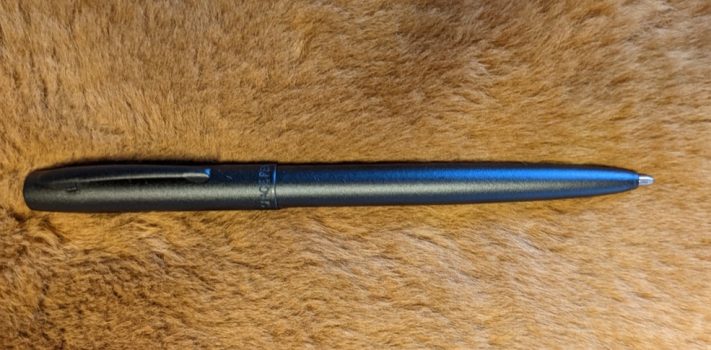
The Fisher Space Pen is a writing tool that is well adapted to working under adverse conditions. It is designed to write in the cold, in the heat, over grease, in zero gravity, and even under water. This makes it an excellent choice for the outdoorsman, who may need to write under adverse field conditions.
The model that I tested, the #SM4B Military Space Pen, is available for $22 from www.spacepen.com. PR4 black medium refills are available for $6.75 each.
When I was 16 years old, back in the 1970s, I went to Washington DC to visit my Uncle and Aunt. My Uncle was an aide to a US Senator. I stayed with my Uncle and Aunt for a week or so, and rode in to Washington each day with my Uncle as he drove to work. As my Uncle went about the nation’s business, I went sightseeing. I visited the House and Senate chambers in the Capitol, had a tour of the White House, walked past the Supreme Court Building, visited sites like the Washington Monument, the Lincoln Memorial, and Ford’s Theater, and toured FBI Headquarters. I had a less jaundiced view of the Federal government at the time, and was in awe of the seat of its operations.
While in Washington, I spent most of my time at the Smithsonian Institute. And most of my time at the Smithsonian was spent at the National Air and Space Museum. I was fascinated with historic aircraft and spacecraft. I wandered about wide-eyed and open-mouthed through the galleries, soaking in the collections and carefully reading all of the placards.
Finally, as a memento of my visit, I stopped by the gift shop and purchased a Fisher Space Pen. I was very proud to own the same kind of pen that an astronaut might have used on the moon.Continue reading“Fisher #SM4B Military Space Pen, by Thomas Christianson”
SurvivalBlog presents another edition of The Survivalist’s Odds ‘n Sods— a collection of news bits and pieces that are relevant to the modern survivalist and prepper from “JWR”. Our goal is to educate our readers, to help them to recognize emerging threats, and to be better prepared for both disasters and negative societal trends. You can’t mitigate a risk if you haven’t first identified a risk.
The reference book Nuclear War Survival Skills has been updated and expanded in the 2022 Edition. It now highlights recent events in Ukraine and Russia.
This was linked over at the Whatfinger.com news aggregation site: Uganda locks down two districts amid Ebola outbreak: President orders night curfew, bans personal travel and shuts markets, bars and churches as fears grow over spread of killer virus. The article begins:
“Two districts in Uganda have entered an immediate 21-day lockdown which will include a nightly curfew, travel bans and the closure of places of worship in a bid to stem the spread of a new wave of Ebola.
President Yoweri Museveni said on Saturday he would impose an overnight curfew effective immediately in the Mubende and Kassanda districts in central Uganda.
Bars, markets and all places of worship will also be closed for 21 days as part of the measures.”
Reader D.S.V. sent this: Apple Glasses new headset will scan your iris to let you make payments – and could be released as early as next year.
“And, sir, when we think of eternity, and of the future consequences of all human conduct, what is there in this life that should make any man contradict the dictates of his conscience, the principles of justice, the laws of religion, and of God?” – William Wilberforce
October 19th is the birthday of three notables: investor Jim Rogers (pictured, born 1942), the late Alexander Zeisal “Zus” Bielski (born 1912), and James Howard Kunstler (born 1948).
According to the Infogalactic Wiki:
“James Beeland “Jim” Rogers, Jr. (born October 19, 1942) is an American businessman, investor and author. He is currently based in Singapore. Rogers is the Chairman of Rogers Holdings and Beeland Interests, Inc. He was the co-founder of the Quantum Fund and creator of the Rogers International Commodities Index (RICI).”
Kunstler is well known to SurvivalBlog readers as the author of the novel World Made by Hand and the nonfiction book The Long Emergency.
A fictionalized portrayal of Zus Bielski is seen in the movie Defiance. This movie was loosely based on the excellent book Defiance: The Bielski Partisans by Nechama Tec.
—
Today we present another entry for Round 103 of the SurvivalBlog non-fiction writing contest. The prizes for this round include:
—
More than $750,000 worth of prizes have been awarded since we started running this contest. Round 103 ends on November 30th, so get busy writing and e-mail us your entry. Remember that there is a 1,500-word minimum, and that articles on practical “how-to” skills for survival have an advantage in the judging.
(Continued from Part 1. This concludes the article.)
These suggestions are appropriate as means of ‘last resort’ in an attempt improve a degraded fuel. Another advantage of storing Avgas is that we can blend it with other gasolines to bring up the octane level and to dilute the degraded automotive gas. Dilution is the solution. The combination of non-ethanol unleaded premium and Avgas 101LL can restore the depleted octane level of the automotive gasoline (Mogas) that has lost its octane rating over a one-year or much longer period of time. This blend can bring it back closer to a level that our chainsaw manufacturer recommends as the minimum needed to operate the saw without damaging it. For modern Stihl brand chainsaws, this minimum octane rating is 91. Older generators that are 4-cycle engines are designed to be low compression motors that can operate well on degraded stored gasoline with a reduced octane level.
Very old automotive gas could be blended in small proportions with fresher gasolines, or Avgas to extend our fuel reserves. A word of caution: Do not mix too much of this old gasoline that smells like turpentine in with too little fresh gas, or attempt to use it even if runs the engine after the engine is started with a fresher fuel, as it might cause lacquer to build up on the compression rings and ruin the motor.
If we are desperately low on gasoline, yet there happens to be a few gallons of white gas (Coleman fuel) and we need to run a small generator to charge batteries or a chainsaw, we can blend in:
3 parts 96 octane Avgas (Aviation gasoline) with one part white gas,
or,
4 parts fresh automotive gasoline with with one part white gas.
Fresh Avgas has an octane rating of 96. White gas, 55. As a estimate only, we can ballpark the octane level of this blend of fuels by a simple calculation that roughly gauges the octane level of our fuel blend. Where 1 part Avgas is, then use the number 96. And for 1 part of white gas, use the number 55. To find the average and the resulting octane level of a blend: 96+96+96+55 divided by 4 = 85.75, the approximate octane rating.
And if there is 75% or higher in concentration alcohol available, we can further improve the octane level, by adding enough until the motor ceases to ping, or knock. Because 4-cycle small motors are generally lower compression motors, this blend might be satisfactory. If not, then add a bit more Avgas, fresh automotive gas, alcohol, or toluene.
Instead of white gas, if we only have degraded automotive gasoline to extend our dwindling supply, the same approach can be taken. Of course, the octane level of the old fuel would be unknown and we would have to just do the best we can, and mix in only one part for every three parts of Avgas, or less. If the motor pings or knocks, then we can add alcohol or toluene to further increase the octane level. In the event that we must run this blend in a motor “as is”, only run the motor for short periods and lower speeds, so that it does not become too hot, and create the conditions where there is risk of melting a hole in the piston.Continue reading“Long-Term Storage of Gasoline Fuels – Part 2, by Tunnel Rabbit”