Introduction
This is an extension to my recent SurvivaBlog article titled Advanced Field Telephone Techniques, yet it examines and details the topic in the context of a specific threat. It often pays to reiterate and reinforce. While partly an intellectual pursuit, this discussion is grounded in decades of real world experience, sans actual battlefield experience, or military training. With this disclaimer stated, we can rest assured because the method of remotely operating transceivers via field phones was once SOP (Standard Operating Procedure) for U.S. military forces. It is well-proven on the battlefield as method of avoiding RDF, and subsequent direct attack by enemy forces.
It is also a method that can be used as a substitute for a radio repeater. However, in this modern age, we should be aware that the best that we can attempt is mitigation, and should not expect that we can totally avoid the threat. At any time that there is RF generated by any device to include, for example, the charge controller of our PV array, there exists RF (Radio Frequency) energy that could be detected. Total RF silence at a base station should be in effect for best results. I, therefore, use relatively RF-quiet charge controllers, the Morningstar TS-45/60 with the PWM switched off to lower my RF footprint. Typically, many MPPT-type charge controllers are relatively RF noisy.
JWR Adds: Even the local oscillator within a radio receiver produces detectable RF energy — but minuscule, compared to what you’d produce in operating a transmitter.
Understanding the Threat
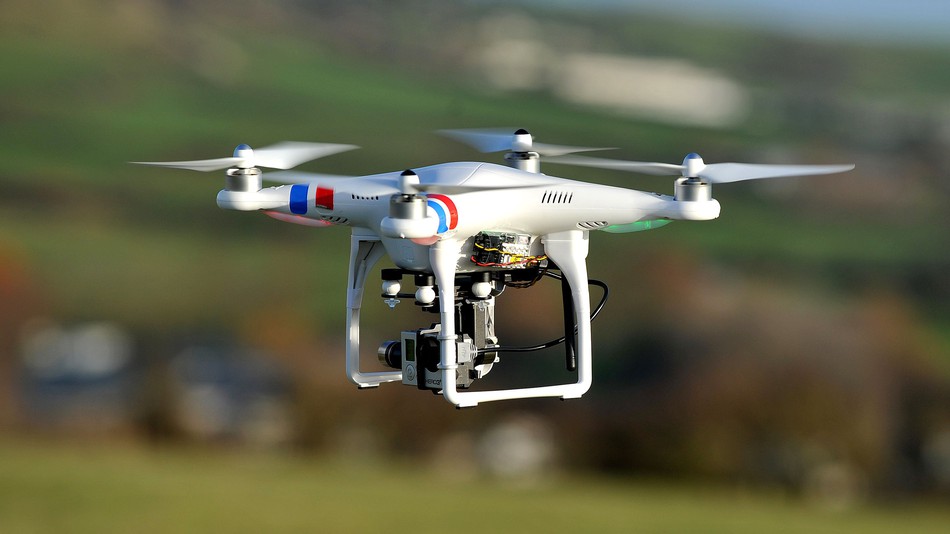
Drone technology is here to stay and drones will increasingly become problems in many ways. They can be used to gather intelligence visually, day and at night. Thermal imaging can be used both during the day and at night. And now affordable drones have Radio Direction Finding (RDF) capabilities. Drones are increasingly used for intelligence gathering, and kinetic (offensive) measures. An ability to use doppler RDF technology, allows drones to locate a potential target. Learning how to deal with such a growing threat will be an ongoing process. As technology advances, we can adopt low-tech practices that can help us conduct a more secure communications plan. To better understand the threat and the measures proposed, we need to understand how drones are used in RDF operations. There is an excellent video on how RDF using drones works. Please first view this instructional video from S2 Underground, and then come back to this article:
Radio Direction Finding: AKA How “They” Can Find You
A drone does not necessarily need to have RDF capability to be a threat. Rudimentary direction-finding methods involving a yagi or a moxon antenna, and a handheld receiver with a strength meter, or simply a good ear, and a map of the area, can give the user a rough bearing as to where he should fly his drone to pinpoint a retreat location visually. If the location has enough electrical power to run a radio, then it is of interest as it likely has other desirable or essential supplies to attract looters.
Remote Transceiver Operation Using Field Phones
We begin with the most effective method that is available, one that may work for most people without much background in the subject. Field phones, and the devices mentioned, are relatively simple devices, devices so simple, that as a child, I was ‘messing with this stuff’. If I can, then you can. I would encourage anyone with any understanding of electrical circuits to use these methods. The terms mentioned in this article might be new and strange to the reader. But do not be discouraged, since this stuff is not rocket science. Anyone who can connect two wires to a field phone could be in business. And that is the beauty and strength of field phones, rugged simplicity that is sustainable low technology that can defeat the highest tech, and cutting edge of surveillance means and methods. It is a 25-cent solution to a million-dollar problem.Continue reading“Mitigating the Drone/RDF Threat – Part 1, by Tunnel Rabbit”