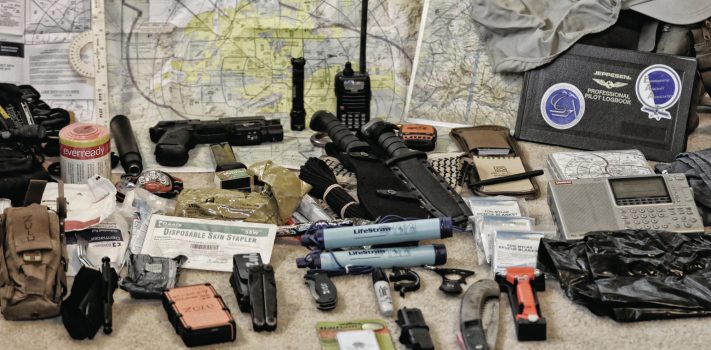
Notes for Sunday – December 14, 2014

December 14th is the birthday of the late John Warren Wadleigh (born 1927, died September 24, 2013). Wadleigh was better known to many SurvivalBlog readers by his pen name– Oliver Lange. He was the author of the best-selling resistance warfare novel Vandenberg.

This is also the birthday of Air Force General James H. “Jimmy” Doolittle, who died September 27, 1993.

o o o

Today, we present another entry for Round 56 of the SurvivalBlog non-fiction writing contest. The $12,000+ worth of prizes for this round include:

First Prize:

  1. A Gunsite Academy Three Day Course Certificate, good for any one, two, or three course (a $1,195 value),
  2. A course certificate from onPoint Tactical. This certificate will be for the prize winner’s choice of three-day civilian courses. (Excluding those restricted for military or government teams.) Three day onPoint courses normally cost $795,
  3. DRD Tactical is providing a 5.56 NATO QD Billet upper with a hammer forged, chromlined barrel and a hard case to go with your own AR lower. It will allow any standard AR type rifle to have quick change barrel which can be assembled in less then one minute without the use of any tools and a compact carry capability in a hard case or 3-day pack (an $1,100 value),
  4. Gun Mag Warehouse is providing 30 DPMS AR-15 .223/5.56 30 Round Gray Mil Spec w/ Magpul Follower Magazines (a value of $448.95) and a Gun Mag Warehouse T-Shirt. An equivalent prize will be awarded for residents in states with magazine restrictions.
  5. Two cases of Mountain House freeze dried assorted entrees in #10 cans, courtesy of Ready Made Resources (a $350 value),
  6. A $300 gift certificate from CJL Enterprize, for any of their military surplus gear,
  7. A 9-Tray Excalibur Food Dehydrator from Safecastle.com (a $300 value),
  8. A $300 gift certificate from Freeze Dry Guy,
  9. A $250 gift certificate from Sunflower Ammo,
  10. KellyKettleUSA.com is donating both an AquaBrick water filtration kit and a Stainless Medium Scout Kelly Kettle Complete Kit with a combined retail value of $304,
  11. TexasgiBrass.com is providing a $300 gift certificate, and
  12. Two cases of meals, Ready to Eat (MREs), courtesy of CampingSurvival.com (a $180 value).

Second Prize:

  1. A Glock form factor SIRT laser training pistol and a SIRT AR-15/M4 Laser Training Bolt, courtesy of Next Level Training, which have a combined retail value of $589,
  2. A FloJak EarthStraw “Code Red” 100-foot well pump system (a $500 value), courtesy of FloJak.com,
  3. Acorn Supplies is donating a Deluxe Food Storage Survival Kit with a retail value of $350,
  4. The Ark Instituteis donating a non-GMO, non-hybrid vegetable seed package–enough for two families of four, seed storage materials, a CD-ROM of Geri Guidetti’s book “Build Your Ark! How to Prepare for Self Reliance in Uncertain Times”, and two bottles of Potassium Iodate– a $325 retail value,
  5. $300 worth of ammo from Patriot Firearms and Munitions. (They also offer a 10% discount for all SurvivalBlog readers with coupon code SVB10P),
  6. A $250 gift card from Emergency Essentials,
  7. Twenty Five books, of the winners choice, of any books published by PrepperPress.com (a $270 value),
  8. TexasgiBrass.com is providing a $150 gift certificate,
  9. Organized Prepper is providing a $500 gift certificate, and
  10. RepackBox is providing a $300 gift certificate to their site.

Third Prize:

  1. A Royal Berkey water filter, courtesy of Directive 21 (a $275 value),
  2. A large handmade clothes drying rack, a washboard, and a Homesteading for Beginners DVD, all courtesy of The Homestead Store, with a combined value of $206,
  3. Expanded sets of both washable feminine pads and liners, donated by Naturally Cozy (a $185 retail value),
  4. Two Super Survival Pack seed collections, a $150 value, courtesy of Seed for Security,
  5. Mayflower Trading is donating a $200 gift certificate for homesteading appliances,
  6. Ambra Le Roy Medical Products in North Carolina is donating a bundle of their traditional wound care and first aid supplies, with a value of $208,
  7. APEX Gun Parts is donating a $250 purchase credit,
  8. Montie Gear is donating a Y-Shot Slingshot and a Locking Rifle Rack (a $379 value).

Round 56 ends on January 31st, so get busy writing and e-mail us your entry. Remember that there is a 1,500-word minimum, and that articles on practical “how to” skills for survival have an advantage in the judging.


Spanked!, by K.B.

I saw a weather commentary on television one night in late August, 2005, that was a bit different from any I had ever seen before. It appeared that a pair of chubby fraternity brothers were yucking it up over an incoming hurricane. They were downright giddy.

“Yes, indeedy,” the first guy said with a big smile. “It sure looks like Louisiana is a-gonna get spanked. And spanked good! This looks like it might just be the best hurricane ever!”

The other guy agreed with great enthusiasm. “Yes, indeed! A once in a century event. Maybe even a once in a lifetime event and it looks like we’re going to get to see it all right here!”

Apparently, neither of them had gone for weeks without electricity in the Subtropics in late summer, where the heat index can go as high as a hundred and twenty degrees. They had probably never gone to a grocery store to find the shelves stripped bare or waited in line for hours for ice that may or may not be there when the front of the line is finally reached.

I don’t remember which station those idiots were on, but it was probably one of the big stations up north. I don’t remember seeing either one of them on TV ever again either.

We had been through many hurricanes and tropical storms over the years (Camille and Andrew immediately come to mind), but there was something particularly ominous looking about this one. It was huge, the eye was extremely tight, and it looked like we were going to be on the western side of the hurricane when it made landfall.

I went out that Saturday to fill the car up with gas and to pick up a few odds and ends that might come in handy over the coming days, though I wasn’t planning on going anywhere. I was doing this simply because the gas stations had run out of gas after previous storms.

Charcoal had been quite useful after previous storms when the electricity had gone out, so I picked up an extra twenty-pound sack. A few briquettes can heat a cast iron skillet very quickly. I’d been meaning to get one of those propane camp stoves, but whenever I could find the money and actually made the effort to go out to pick one up (usually at the start of hurricane season), the local sporting goods places were always out of them.

Ah, well. Somebody once said that you don’t go to war with the army you want. You go to war with the army you have.

Two cinder blocks and an old refrigerator shelf on a concrete patio table had done service as a stove on other occasions. I also have an old coffee can that has been converted to a hobo stove. (This is done on the outside patio, of course, because of the carbon monoxide, you know.) Two briquettes generally do the trick for the morning coffee, which I’ve brewed on numerous occasions in my very handy German mess kit. It’s aluminum and has a bail handle and a lid that doubles as a small skillet. I’ve actually cooked rice (not the minute stuff but enriched long-grain white rice) with it, and two briquettes can boil a quart of water almost instantly when the lid is on. The mess kit was a daily special from one of the big military surplus mail-order places. They practically gave it to me after I ordered a pair of boots over the phone. Maybe I’ll get one of those propane camp stoves this year.

Batteries were still plentiful at the dollar stores. Also, there were pallets of bottled water and charcoal stacked up in front of nearly every convenience store and service station, and nobody appeared to be buying any of it. There was no sense of urgency among my fellow shoppers that morning or the even next day, when I went out to pick up a couple of extra fifths of eighty-proof nerve tonic. Very few people appeared to be taking the weather warnings seriously. There had been too many misses over the last few years. (However, over the next year or so afterward, if it so much as drizzled, the store shelves would be completely stripped of bread, soft drinks, bottled water, and batteries within an hour.)

I secured the things in the yard that could potentially blow away and went about making the other usual pre-storm preparations. I cleaned out the ice chests and filled them with soft drinks and ice and filled two five-gallon jerry cans with tap water from the bathtub. We had gravity feed from a water tower, so as long as the thing didn’t blow down we would have water for awhile; the toilets would flush, and we would be able to take baths. If things started to get thin there, I had a big stainless steel cauldron we could use to boil water from a nearby creek, and of course we had bleach.

I also arranged the two cases of bottled water in the deep freeze. They would prove to be very useful, as both ice and as drinking water after the ice in the ice chests melted, if the power was out for an extended period.

Over the years we had pretty much converted all of our flashlights and portable radios to AA battery, and we had tons of batteries and candles. Last but not least, I found a couple of pairs of my olive drab, Vietnam-era 100% cotton tropical shorts. I saved them for such occasions.

I also had four seventy-two count cases of MRE entrees and a case of a hundred assorted MRE pound cakes stacked up in a dark corner of the utility room. I picked them up at a very, very good price, shortly after the Y2K thing blew over. They would come in handy in the event of things getting really thin.

I found it interesting that my neighbor in the National Guard Engineer Detachment in town hadn’t been put on alert. He was getting ready to take his family on vacation the day before the storm was scheduled to make landfall, and no silly old hurricane was about to stop him. There was still a chance that the storm would miss us, and the governor was gambling that it would because an alert would cost the state a small fortune.

The mayor of New Orleans called for a mandatory evacuation of the city on the 28th of August, and the Contraflow Plan was activated. All the lanes of I-10 and the other major highways intersecting the city would be directed out, and all the lanes of I-55 were directed north. We were approximately seventy five miles from New Orleans, and our exit was the first place where the Contraflow evacuees would be allowed to get off of the highway.

Our electricity went off shortly after dark the night before the hurricane made landfall. The little Grundig Traveler AM/FM shortwave would be our only source for news from the outside world until the lights came back on.

It was different from the other hurricanes we’d been through. There was almost no rain, and it was still a Category 3 after it made it a hundred or so miles inland. We would find out later that the winds were so strong that the rain became mist before it could hit the ground. The young pine trees in the front yard were bent completely over to where their tops touched the ground. The big oak trees took a pretty good pounding, and there was lots of potential firewood scattered around the yard.

A couple of shingles blew off the roof, but otherwise we were left relatively unscathed. The people who had ridden out the storm in the city started to pick up the broken limbs and other scattered debris.

Then the levees broke.

Several months later, I ran into an old acquaintance who had lived in the city near the 17th Street Canal. He said that after the storm passed, he went inside and started getting the stuff together to do a little outdoor grilling. While he was in his kitchen, he noticed a trickle of water coming from under the door that led to his patio. Next thing he knew, his face was pressed against the ceiling and he was treading water. He and his wife somehow managed to make it into their attic and they dug a hole in the roof with a pocketknife after the water hadn’t gone down for a couple of days. They were eventually picked up by a helicopter.

He’s still got that pocketknife and never goes anywhere without it.

The local news reports were nonexistent, as all of the local radio towers were down. Cell phones were useless, as most of their towers were down as well and the underground landlines were very shaky at best. About all we could really tell from the initial radio broadcasts coming out of Baton Rouge was that several levees had broken and a massive evacuation operation was starting to take place in the New Orleans Metro Area. They didn’t say where they were bringing the evacuees.

There were lots and lots of large military aircraft flying over at the time, mostly C-17s, C-130s, CH-53s, Blackhawks, and Chinooks. More than once, we were shaken out of bed by low-flying CH-53s and Chinooks.

It appeared that the main sources for most of the early radio broadcasts coming out of Baton Rouge were just people calling in to the stations.

Somebody said that a hundred thousand body bags had been staged outside New Orleans. Somebody else said that people were shooting at the rescue helicopters as they passed over. Some people were setting buildings on fire so they could shoot and rob any firemen who might still be around and interested. Giant rats had formed a caravan and were using the I-10 to relocate from New Orleans to Baton Rouge. Crabs from the lake were getting fat from the dead bodies floating around the city. Sharks had escaped from the aquarium and had eaten several people. (There are still a hundred and thirty-five people listed as missing.) Rock and roll legend Antoine “Fats” Domino was missing. (He was eventually found; he had been rescued by a Coast Guard helicopter.) Roadblocks had been set up on bridges to keep evacuees from New Orleans out of Gretna and other areas that were connected directly to the city.

Dangerous prisoners who were being evacuated from New Orleans had escaped. (Two of them were apprehended in an abandoned trailer near my mom’s house.) Citizens were having their firearms seized by law enforcement. Intensive care patients and the nursing home residents were being euthanized by their medical staffs and caretakers. A United States Congressman had commandeered two rescue helicopters to save the furniture from his house, while many of his constituents were trying to survive on rooftops. (The U.S. Congressman who commandeered the rescue helicopters to save his personal belongings is currently in prison, but they didn’t get him for that. He was convicted for racketeering and a bunch of other stuff.) Street gangs had taken over the city.

Nearly four hundred New Orleans Police Officers were missing and presumed lost in the flood. These police officers were eventually accounted for. A large number of them had selflessly saved their patrol vehicles for future use by driving them to Houston or Lafayette before the chaos and looting really got out of hand. Some of the officers did stay and performed as admirably as they could have under the circumstances, and there were others who have since gone to prison for various atrocities. A few of them were convicted and sent to prison in 2011 for the Henry Glover murder and the subsequent cover-up. Five others were sent to prison after the Danziger Bridge shootings. Both incidents involved law enforcement opening fire on unarmed civilians.

A brigade from the 82nd Airborne was supposed to be arriving soon to help restore order in the city. The various local and national leaders did a very good job of making sure the words “martial” and “law” were never strung together in a sentence. “Declared State of Emergency” did have a nicer ring to it.

I finally ventured out about a week after the massive evacuation operation began to see if I could find out anything in town, since the news reports we were getting from the radio were just short of useless. The four-lane highway had pretty much become an eight-lane parking lot for miles in either direction. There were hundreds, if not thousands, of dirty, ragged, and sunburned people just wandering around between the cars and looking up at the sky. A few were sitting under trees or whatever shade they could find; they all had the same glazed-over look. I had seen it before– usually in people who were way too tired and had been through way too much. It was like something out of a zombie movie, except they weren’t zombies and this wasn’t a movie.

The first thing I found out was that over the previous week, the population of our sleepy little town had grown significantly. Later, there would be estimates that our population had gone from around 4,500 to approximately 35,000.

It took nearly two hours for me to drive the four miles into town. Uniformed troops of an unknown origin were attempting to direct traffic, and I somehow wound up getting directed into a MRE distribution line that had been set up in the parking lot of a shopping center.

“How many?” a young-looking E-6 asked. He had an accent that wasn’t local.

“How many what?” I asked.

“How many you got to feed?” He sounded like he might have been from the Northeastern United States.

“Uh, six.” One of my older kids had a friend staying over during the storm.

“Got it.”

Four troops near the back of the truck threw four cases of MREs, four cases of bottled water, and two twenty-pound sacks of ice over the tailgate and tapped it twice.

“Where you guys from?” I asked as I started to drive away. I could tell from the patches they weren’t Regulars and they weren’t local Guard or Reserve.

“Pennsylvania. We’re Pennsylvania National Guard.”

They were from Pennsylvania?

Police from all over the United States were everywhere. I saw a K9 Cadaver Recovery Unit from Idaho.

Idaho?

Somebody must have thought we were in pretty deep poop. I don’t remember seeing any local, parish, or state law enforcement at all. It had been a week since the landfall, and they had probably been pretty busy. They were probably taking a break.

“Any news from the outside world?” I asked one of the National Guardsman who was helping direct the traffic out of the MRE distribution point.

“I don’t know. They sent us here to hand out MREs and water. How and the hell do you people live down here with these mosquitoes?”

I asked another who was halting the traffic on the highway, so the traffic going through the MRE distribution point could exit.

“I don’t know. How in the hell do you people live down here in this heat?”

That was about all I could get out of the Pennsylvania National Guard on that first trip to town. It’s not that they were unfriendly or anything. I don’t think they knew what was going on, either. Plus, they had been busy.

Most of the Louisiana National Guard was still scattered and gone. They were all at home or somewhere else when the chaos started. It would take weeks to get them mobilized at this point.

I decided to attempt to take seldom used back roads in an attempt to get home, since the Red Cross had set up a relief center in a large vacant lot across the highway from the MRE distribution point and I really didn’t want to get directed into a two-hour long line for clean clothes and toiletries that we didn’t need. I was surprised to find the old, gravel roads clogged with utility bucket trucks and military vehicles, but I still managed to make it home in under an hour.

I quickly discovered that given the traffic considerations, the shortest route into town was actually through the MRE line. I was still fairly fluent in the language of the Regular Army and the troops did eventually start to let tidbits of information slip when they got it, which was a bit sooner than the general public did, since they were also there to provide security details. I found out that the Post Office would be opening in a week and that the people who got rural delivery would be able to pick up their mail. The big Postal Processing Center in New Orleans had been flooded out, and the big Postal Processing Center in Baton Rouge was trying to pick up the slack. I also found out that they would soon announce that I was eligible for $750 worth of emergency food stamps and that the Red Cross was going to give all the families in the disaster area $1275 apiece for just having been in the disaster area when the storm hit.

I also found out that this particular Pennsylvania National Guard Battalion had just received a bunch of brand-new 5.56 NATO M249 Squad Automatic Weapons and that, even though none of the troops were ever seen carrying weapons out in the open, there were several fully armed, locked and loaded special reaction teams dispersed out of plain sight at various strategic locations around town. They were behind the Post Office, behind some buildings near the MRE line, and behind the food stamp office, just in case things started to get out of hand for whatever reason.

I figured I’d better go check on my other neighbors. I had known them since I was a little kid, and Mrs. D was a serious busybody. If there was any real news to be had, she would have it. If not, she would at least have some interesting gossip. She and her husband were retired professionals, who lived in a very nice house with an extremely well-manicured lawn. They had been without electricity for about a week. As I approached their yard, I cinched up my belt a few notches and slipped the big Colt Government Model into my back pocket, because I didn’t want to cause Mrs. D. any undue concern. I had been bringing it everywhere lately, and my shirt tail covered it when it was in my back pocket. I hid the old black flap holster and heavy web pistol belt under hedge bush near the front door. All of the doors and windows of the house appeared to be open wide.

“Hello?”

“Back here!” came the answer.

I walked around to the back of the house to see Mrs. D. draping an enormous pair of freshly wrung boxer shorts over her chain-length fence. She had been doing her laundry with a hosepipe, a five-gallon bucket, and an old washboard that had been a decoration on her patio the week before.

“I really miss my washer and dryer, and I’m afraid this heat is killing poor Mr. D. All he does is lie on that mattress we drug out in front of the big window after the air conditioner stopped working. He never did take care of himself the way he should have.”

“He should be acclimated before too long,” I said.

A few weeks before the storm, I thought I had seen a Sasquatch or a bear or something in Mrs. D.’s yard. It turned out it was only Mr. D. He wasn’t wearing a shirt at the time.

“Oh. Did you hear? Uncle Paul’s going to open the store for a little while tomorrow. The bread man, the potato chip man, and the beer man are all supposed to make deliveries in the morning, if they can get through.”

“Whoa. What time?”

“There’re opening at ten in the morning. It looks like we’re going to have to shop by candlelight.”

After that, I made it a point to check in with Mrs. D. every couple of days or so.

Mrs. D’s uncle ran a small grocery store a few hundred yards away from where my driveway intersected with the highway. They were closed on Sundays and had been closed since before the storm made landfall that Monday morning. They would probably still be pretty well stocked. Unfortunately, I was a little short on folding money at the time.

Whoops.

I knew I was forgetting something during those pre-storm preparations. The banks were all closed until further notice, and ATMs did not work without electricity. Mrs. D.’s uncle was a mean old man. I knew people who wound up driving as far away as Arkansas to find ATMs during those first weeks. I did have a big jar of change I kept for emergencies. It was mostly nickels and pennies, but it was still legal tender. There were probably a few dimes in there, too.

There was already a long line outside the store when we got there, shortly before ten. Word of such events gets around fast in a disaster area.

One of Mrs. D.’s cousins was allowing people to enter in twos and threes, while two more of her cousins escorted them around the store. After we finally made it inside, we saw Uncle Paul sitting on a stool behind the liquor counter and manning an old mechanical cash register that had been little more than a decoration the week before. There were six or seven racks of fresh white bread stacked next to the counter and several more empty ones leaning against the wall behind it. Two large ice chests were lined up on the floor in front of the counter. One was labeled “DAIRY” and the other was labeled “MEAT.” Uncle Paul was wearing what looked to be an old Smith and Wesson Service Model .38 on his right hip, and he was dripping with sweat.

Lit candles were arranged between the isles at six-foot intervals, which didn’t help the sauna-like conditions inside the store at all. Shopping carts were not allowed, because of the danger of someone running over a candle. Uncle Paul grunted and nodded toward a sign that said “CASH ONLY” and then toward a stack of shopping baskets. The wife picked one up.

He didn’t appear to notice the big jar of change I was holding, and the improvised back-pocket method for carrying the big Colt piston was still working out pretty okay for the time being.

We picked up a twelve-pack of red Coca-Cola (limit of one per customer), two cans of deviled ham, a big bag of potato chips (another item limited to one per customer), a pound of butter (the only thing left in either of the ice chests, except for the ice), two loaves of bread, and what were possibly the last two packs of red Marlboros to be found in the Gulf South Region.

“Limit one loaf per customer,” Uncle Paul grunted. I put one of the loaves back.

He looked over everything, punched a few buttons on the old cash register, hit the big total button, and said, “Seventeen dollars.”

I set the big jar of change on the counter.

“What is that for?” he asked as his hand moved toward the butt of the revolver.

“It’s money. Give me a minute to count it.”

“You’re crazy if you think I’m going to fool with all that.” Uncle Paul grunted as he rested his hand on the butt of the revolver.

The wife stepped in. “It’s seventeen dollars even, right? Can I just write a check?” Uncle Paul glanced over his shoulder at the long line of people still waiting outside. He grumbled and nodded.

I don’t really think the mean old man would have shot me for attempting to pay for $17 worth of groceries with nickels and pennies. However, at the time, I wasn’t so sure.

The traffic and chaos began to slack up a little after a few weeks. Our electricity did come back on at some point during that time. Ours were among the first lights to come back on, as living down the road from a light company executive does have some advantages. There were people on the other side of town who went several more weeks without electricity. I did eventually find a working ATM at a local bank shortly after the lights came back on in town and it still had some money in it when I finally made it to the front of the long line, but there was a $40 limit on withdrawals.

Rows and rows of small, white, rectangular FEMA trailers had begun to appear in vacant lots and open fields all over the place, and every bit of useable indoor space was occupied by somebody or something. The house in front of ours that had been vacant shortly before the storm, had three families of evacuees from New Orleans sharing it afterward. Somebody even camped out one night in an abandoned barn in a nearby field. I saw their headlights and went to check it out the next morning, but all I found were tire tracks and a few empty beer cans. The brigade from the 82nd Airborne set up shop at a nearby university.

The shortages continued and things in red packaging were particularly hard to find. It was impossible to find red cans of regular Coca-Cola or red Marlboros. (There was plenty of Diet Coke though.) While no fresh meat, fresh produce, or dairy ever seemed to make it to the grocery store shelves, somehow the beer trucks always found a way to make it through, and the Pennsylvania National Guard made sure we had plenty of ice. They were very sharp and professional.

Mrs. D told me that she heard the electricity was back on in the city where the brigade from the 82nd Airborne was and that they were going to open the big Walmart. We probably should have waited a few weeks before making that trip, especially since there wasn’t anything we really needed, but we went anyway. Cabin fever and curiosity got the best of us. The traffic was still pretty rough, and it took nearly an hour to make what had been a twenty-minute trip.

Several hundred people (if not more) were milling around the parking lot. There were people looking for lost relatives. (Message boards had sprung up all over the place since the mass evacuation operation had started and there was still no cell phone service.) Families were looking to pick up a few supplies they should have picked up before the storm, and others were looking to restock their pantries after the unexpected arrival of evacuee friends and relatives from New Orleans. One family I knew had over thirty people move in with them after the storm. People were sleeping in their utility room and tool shed.

Only one of the big store’s entrances was open. I saw people waiting in a long line to pass through a metal detector as we looked for a place to park. I hated to do it, but I was going to have to leave my pocketknife and the big Colt pistol in the car. Two security guards in black BDUs and body armor wanded us after we passed through the metal detector, while two more stood off to the side. They were both holding HK submachine guns, and all of them were armed with big Glock pistols. They were all wearing tactical headsets and Terminator-style sunglasses.

“Where are you guys from?” I asked, as I passed through the metal detector.

I got no answer. He silently waved us into the store. There were no distinctive markings or name tags on their uniforms or body armor. They all had shaved heads, and they were all tall, lean, and muscular. The ripple-soled boots they were wearing probably added a couple of inches to each of them.

I remember being surprised that there were not very many people in the big store, but there wasn’t a whole lot to shop for. The shelves were mostly bare; it was “CASH ONLY”; the ATMs all had “out of service” signs on them; there were no batteries of any kind (which was okay since we still had plenty); and there wasn’t as much as a crumb of charcoal to be found (but that was okay too, since our electricity had come back on). There was no fresh meat or produce, but they did have gallons of whole milk (limit one per customer), and their bakery had been working overtime to keep the bread and doughnuts flowing. Another pair of security guards stood at each end of the bakery counter.

“Where you guys from?” I asked.

Again, there was no answer.

I glanced down to see the selector switch on his HK submachine gun was set on burst.

These were no regular security guards. They were too well equipped, too well armed, too lean and muscular, and too well disciplined. I couldn’t get a word out of them, so I had no chance of picking up an accent.

Mercenaries? Foreigners? Foreign mercenaries guarding a Walmart?

Maybe my imagination was slipping into overdrive, but things were strange all over.

As was typical, we had spent way more time waiting in line to get into the store than we actually spent in the store itself. Probably an hour in the line for the metal detector and twenty minutes to pick up a loaf of bread, a gallon of milk, and a dozen fresh doughnuts.

It may have seemed like a lot to go through for a loaf of fresh bread, a gallon of milk, and a dozen glazed doughnuts, but at the time, they were the best doughnuts in the entire world.

Many of the evacuees were having a hard time adjusting to the current situation. Our small town was in no way prepared for the traffic nightmares that came about after a sudden infusion of 30,000 new residents. Fender-benders and road-rage incidents became common occurrences. A couple of months after the storm, a little fellow in a great big pickup truck parked way too close to me in the grocery store parking lot. Instead of backing out and attempting to park again, he started slamming his door into the passenger side of my much smaller truck. He then shimmied through the partially open door and started screaming and cursing. He clenched his fists and took on a somewhat more threating posture after he stomped around to where I was still sitting in the driver’s seat. His shirtless passenger was right behind him. He was waving his arms around in the air for some reason.

I had already slipped the big Colt pistol out of the old black flap holster, but I didn’t actually cock it until he put his hands on the edge of the open window.

“Can I help you with something?” I asked.

His eyes grew large and his mouth dropped open. He made a kind of squeaky sound as he slowly removed his hands and backed away. He grabbed his passenger by the arm and led him back to the great big pickup truck. He hopped in the passenger side and slid across into the driver’s seat. His passenger got in behind him, and they quietly drove away.

I remember being worried about shooting through my rolled-down window.

It wouldn’t be the last time I cocked the big pistol during what was now being called, “The New Normal”.

Several weeks later, a large SUV came creeping down my long, ill-repaired driveway with its lights off. It was a little after 4:00 a.m. and still very dark, when three little fellows got out of the vehicle and approached my front door.

I have six treacherous little dachshunds that are capable of making quite a terrible racket when they’re disturbed, and they are very easily disturbed. They’re also extremely vicious and have very large teeth, for being such small dogs. We can no longer have visitors, as they tend to bite people– even people they know. Last time my son visited, he wound up trying to get out of the door with one clamped tightly on his rear end. One of them bit my older daughter (also in the same area) the last time she visited, and they raised them as puppies. I have no doubt they wouldn’t leave a scrap of meat on the bones of a stranger.

Anyway, the dachsies made such a terrible racket that I had no trouble at all slipping out the back door unnoticed with the big Colt pistol. I was standing no more than ten feet away and noticed that one of the little fellows appeared to be holding a pry-bar or something. They appeared puzzled as they looked through the window of the front door while the dachsies continued to bark, shriek, and howl. They were making such a racket that I couldn’t hear a thing those little fellows were saying, nor could they hear me cocking the pistol.

Fortunately, they got back in their vehicle and left without further incident. It probably wouldn’t have looked too good if I’d shot them in the back while they were attempting to break in my front door. Of course, they may have just been looking for directions or something.

We had Thanksgiving without a turkey that year. My sister did find a turkey in Baton Rouge for Christmas, but she has connections. We also had a hard time finding Easter candy that spring.

Most of the evacuees eventually started going home to start rebuilding. A few stayed in the area, and some went somewhere else to start over. We actually ran into a few while passing through Northern Georgia the next summer.

For a very long time afterward, the name “Katrina” wasn’t spoken out loud by the locals. It was a weird, almost tribal, kinda thing. It was as if we said the boogeyman’s name, he would come back and get us. When we relate incidents, we say “before the hurricane” or “after the hurricane”.

It’s been nearly ten years, and there are still reminders everywhere. Just the other day I saw a herd of dairy cows around in a pasture between long rows of utility hookups that once serviced a couple of hundred FEMA trailers. We still have the ridiculously over-sized traffic signs that came into vogue after many, many traffic accidents occurred at a couple of intersections that were either beyond the patience or the comprehension of the evacuees. Also, my pine trees are still crooked.


Letter Re: Stomping Laundry Clean in TEOTWAWKI

Hugh,

Another alternative: Take two laundry baskets. Put the wet clothes in the first, nest the second inside the first, and stomp away. Water will flow through the holes. You may have to drill holes lower in the basket, if the floor of the basket is solid.

Alternatively, you can use two buckets. Drill large holes in the bottom bucket. – CDV


Economics and Investing:

Cronyism and ensuring American taxpayers bailout the finance industry during the next crash: Nostradamus like spending bill will ensure big banks never fail with your money.

o o o

The US Mint (and Congress) inch forward to composition changes (or phase out) of pennies and nickels.

(It looks like we will have at least one more year to accumulate “25/75” composition nickels.)

o o o

Items from Mr. Econocobas:

Giving Up Your U.S. Passport Getting More Expensive

Russia’s Rate Increase Fails to Halt Ruble’s Slide to Record

Congress Narrowly Averts Government Shutdown


Odds ‘n Sods:

From the desk of Mike Williamson, SurvivalBlog’s Editor At Large: Widener’s is out of Mosins, but has M48 Yugos for $199. My Mosin Nagants arrived well packed, arsenal refurb new, with bayonets and accessories. An excellent quality deal.

o o o

SLC man gets stolen shotgun back 37 years after it was taken. – T.P.

o o o

Where is the mainstream media on this one?Christian Man Asks Thirteen Gay Bakeries To Bake Him Pro-Traditional Marriage Cake, And Is Denied Service By All Of Them. – RBS

o o o

For everyone who thinks that small towns will escape trouble WTSHTF….. – T.P.

o o o

Iowa Drivers Will Soon Be Using Their Cell Phones as IDs. – G.F.


Hugh’s Quote of the Day:

“He that cometh from above is above all: he that is of the earth is earthly, and speaketh of the earth: he that cometh from heaven is above all.” John 3:31 (KJV)


Notes for Saturday – December 13, 2014

Book Bomb Day is December 30, 2014: Tools for Survival: What You Need to Survive When You’re on Your Own

Now available for pre-ordering at Amazon.com, but I’d prefer that you wait for December 30th to order: Tools for Survival: What You Need to Survive When You’re on Your Own. This book is a guide to the selection, use, and care of tools. It will also be available as an e-book and audiobook. -JWR

o o o

December 13th is the birthday of Sergeant Alvin York.

o o o

Today, we present another entry for Round 56 of the SurvivalBlog non-fiction writing contest. The $12,000+ worth of prizes for this round include:

First Prize:

  1. A Gunsite Academy Three Day Course Certificate, good for any one, two, or three course (a $1,195 value),
  2. A course certificate from onPoint Tactical. This certificate will be for the prize winner’s choice of three-day civilian courses. (Excluding those restricted for military or government teams.) Three day onPoint courses normally cost $795,
  3. DRD Tactical is providing a 5.56 NATO QD Billet upper with a hammer forged, chromlined barrel and a hard case to go with your own AR lower. It will allow any standard AR type rifle to have quick change barrel which can be assembled in less then one minute without the use of any tools and a compact carry capability in a hard case or 3-day pack (an $1,100 value),
  4. Gun Mag Warehouse is providing 30 DPMS AR-15 .223/5.56 30 Round Gray Mil Spec w/ Magpul Follower Magazines (a value of $448.95) and a Gun Mag Warehouse T-Shirt. An equivalent prize will be awarded for residents in states with magazine restrictions.
  5. Two cases of Mountain House freeze dried assorted entrees in #10 cans, courtesy of Ready Made Resources (a $350 value),
  6. A $300 gift certificate from CJL Enterprize, for any of their military surplus gear,
  7. A 9-Tray Excalibur Food Dehydrator from Safecastle.com (a $300 value),
  8. A $300 gift certificate from Freeze Dry Guy,
  9. A $250 gift certificate from Sunflower Ammo,
  10. KellyKettleUSA.com is donating both an AquaBrick water filtration kit and a Stainless Medium Scout Kelly Kettle Complete Kit with a combined retail value of $304,
  11. TexasgiBrass.com is providing a $300 gift certificate, and
  12. Two cases of meals, Ready to Eat (MREs), courtesy of CampingSurvival.com (a $180 value).

Second Prize:

  1. A Glock form factor SIRT laser training pistol and a SIRT AR-15/M4 Laser Training Bolt, courtesy of Next Level Training, which have a combined retail value of $589,
  2. A FloJak EarthStraw “Code Red” 100-foot well pump system (a $500 value), courtesy of FloJak.com,
  3. Acorn Supplies is donating a Deluxe Food Storage Survival Kit with a retail value of $350,
  4. The Ark Instituteis donating a non-GMO, non-hybrid vegetable seed package–enough for two families of four, seed storage materials, a CD-ROM of Geri Guidetti’s book “Build Your Ark! How to Prepare for Self Reliance in Uncertain Times”, and two bottles of Potassium Iodate– a $325 retail value,
  5. $300 worth of ammo from Patriot Firearms and Munitions. (They also offer a 10% discount for all SurvivalBlog readers with coupon code SVB10P),
  6. A $250 gift card from Emergency Essentials,
  7. Twenty Five books, of the winners choice, of any books published by PrepperPress.com (a $270 value),
  8. TexasgiBrass.com is providing a $150 gift certificate,
  9. Organized Prepper is providing a $500 gift certificate, and
  10. RepackBox is providing a $300 gift certificate to their site.

Third Prize:

  1. A Royal Berkey water filter, courtesy of Directive 21 (a $275 value),
  2. A large handmade clothes drying rack, a washboard, and a Homesteading for Beginners DVD, all courtesy of The Homestead Store, with a combined value of $206,
  3. Expanded sets of both washable feminine pads and liners, donated by Naturally Cozy (a $185 retail value),
  4. Two Super Survival Pack seed collections, a $150 value, courtesy of Seed for Security,
  5. Mayflower Trading is donating a $200 gift certificate for homesteading appliances,
  6. Ambra Le Roy Medical Products in North Carolina is donating a bundle of their traditional wound care and first aid supplies, with a value of $208,
  7. APEX Gun Parts is donating a $250 purchase credit,
  8. Montie Gear is donating a Y-Shot Slingshot and a Locking Rifle Rack (a $379 value).

Round 56 ends on January 31st, so get busy writing and e-mail us your entry. Remember that there is a 1,500-word minimum, and that articles on practical “how to” skills for survival have an advantage in the judging.


Becoming a Top-Tier Survivalist and Representing the Prepper Community, by M.M. – Part 5

Continuing with the final portion of this article of six points that are presented and detailed that, if implemented in your own life, will greatly increase your chances of success, both in surviving TEOTWAWKI and in breaking the stereotype of the “kooky prepper.”

5. Have Faith in Christ

While serving in Virginia Beach back in 2003, I went home for a three-day weekend to attend my former high school’s Monday track meet to watch some friends compete, and there I met a girl who I really liked. She was a Christian and I was not, although I thought I was because that’s what my family had led me to believe. She was not allowed to date me because of that and the fact she was five years younger than me. I told her I would read the Bible and see what it had to say so we could discuss it when she turned eighteen. I bought a *New American Standard Bible, which was the version her church used. (I later bought this 1611 King James Version and read it from beginning to end over the course of about fifteen months – finishing about two weeks before her birthday.) During that time, I attended her church each Sunday to hear the sermon and I also listened to the local Christian talk radio station from 0700 until about 2030 every day. (You can listen, too, at www.wdac.com).

I had previously been under the impression that the Bible was a collection of short stories, poems, songs, and rules to live by and that it was written during the middle ages by monks who wanted people to behave properly and be nice to each other. I also thought that Christians were sissies and needed the Bible as a “crutch” to get through life. (Actually, I still think that a lot of so-called Christians are sissies.) When I began reading, I quickly realized that I was quite mistaken about many things and that the Bible was actually a compilation of books written over the course of nearly two thousand years by multiple authors, including the Jews and the earliest followers of Christ. The Bible is the spiritually-relevant history of the world from Creation until the Church Age, and God’s plan for the future is integrated throughout. Upon reading the Gospel of Matthew, I understood that my sins would prevent me from entering the Kingdom of Heaven and that Jesus’ death on the cross was the only acceptable sacrifice to make up for the wrong things I’ve done. There is no other way to avoid God’s righteous judgment and an eternity separated from Him in the Lake of Fire. I immediately asked Jesus to forgive my sins and I’ve had faith in Him as my Savior ever since. He has changed my life tremendously by assuring me of eternal life, by removing immoral behavior from my Earthly life that was getting me in trouble at the time, by providing me with strong Christian friends who have interests similar to my own, and by providing me with an amazing godly wife (who was previously an atheist but believed in Christ about the same time as I did, before we met each other).

I recommend that you read the Bible all the way through if you haven’t already done so. Educate yourself in God’s word, and place your faith in Jesus Christ. This is the most important step in being prepared. It’s also completely free, and He wants you to do it and become a part of His kingdom! No matter what happens here on Earth, nobody can take eternity with the Lord away from you!

According to the best of my understanding, I would say that we Christians need to focus most of our preparations on resistance against domestic tyranny and the spread of Islam– both of which we’re seeing increase at an alarmingly rapid rate in these last days, and both of which tend to target Christians more than others. Unbelievers need to prepare to resist these human forces as well, but they also need to prepare to survive just about every natural disaster imaginable (aside from a worldwide flood, which God promises will not happen again). Unfortunately, the people who need to read biblical prophecy the most are the least likely to do so. It’s our job, as Christians, to spread the Gospel message and warn others about the dangers of not believing in Jesus while we’re still around; don’t waste the opportunities that God provides for you today.

6. Involve Your Friends and Family

If your situation is anything like mine, then you have both friends and family who believe preparedness is either a mere hobby or an unhealthy obsession and, in either case, a waste of time. They would rather go to bars, watch a game on TV, or engage in some other trivial pursuit to pass their time away rather than be foresightful and constructive with their lives. It will probably take considerable effort to get these sorts of people to even consider the idea of the world, as they know it, falling apart. I usually try to find something useful to give such people for birthdays and Christmas, and I’ll occasionally share some of my thoughts with them, but that’s about all that can be done.

Affiliating with Like-Minded Survivalists

Fortunately, I do have friends and a wife who are aware of, and interested in, many aspects of preparedness and survival. Some were in the military, like me, and continue to practice the skills acquired there. Others simply research and experiment with their own time and money. Either way, I’m grateful for these friendships, because the time spent together is usually productive and interesting, and sometimes we get to have an adventure! I believe that true friends are introduced to one another by divine appointment; however, you may increase your chances of meeting like-minded survivalists by attending church, joining the military, or frequenting a local shooting range, rather than hanging out at parties, bars, and clubs. Also, if you have old friends who joined the military after high school or college and were never heard from again, see if you can find them on Facebook and get back in touch. (Granted, this will be more worth your effort if their job in the military is/was in a combat-related position rather than a technical or administrative one.) I’ve had a few high school friends contact me asking to get together for preparedness purposes, and I felt honored and was happy to oblige them. I’m most blessed to have a wife who is entirely on-board with everything I’ve written here. It should be common sense and only natural to date and marry somebody who has the same interests and beliefs as you. I definitely recommend against marrying someone who has any sort of problem with firearms being in the home. If you find out that your significant other is a hoplophobe and you’re unable to resolve her problem, end the relationship or you will regret it.

Children

If the Lord gives my wife and me children, we plan to raise them to be God-fearing, wise, brave, responsible, and well trained to deal with adversity. Whether they are boys or girls, I hope to create warriors and teach them everything I know. Hopefully, you will have the same opportunity within your own family. My advice here is as follows:

  • Always be honest with your children according to your best knowledge, but keep things age-appropriate; if something is “too adult” for them at a certain point, tell them that they don’t need to know it yet rather than fabricating a story, because later in life they will resent having been lied to.
  • Beginning as young as possible, teach your children to properly handle and use a variety of practical weapons, including firearms, pepper spray, knives, and blunt objects. (Nutnfancy has posted an excellent video about raising children to be responsible and proficient with firearms).
  • Take your children outdoors to do adventurous activities, such as hiking, camping, climbing trees and rocks, and swimming in natural waters.
  • Also, involve them in your household/homesteading work to the point that they can confidently perform the same skills as you, without your supervision.
  • Do not allow any video games in your home. Like your parents have probably told you: just because everyone else is doing it doesn’t mean you need to do it too. Video games are a total waste of time and money and cause disengagement and isolation from family and friends.
  • Be active and have fun with your kids, so that your entire family stays in good shape and gets to enjoy each other’s company.
  • Be responsible and use common sense, but don’t be a safety zealot. People have survived fine for thousands of years without all the helmets, pads, harnesses, glasses, life-vests, et cetera that have recently been prescribed by “professionals” for every activity under the sun. These things could possibly prevent an injury or they may never prove necessary, but they will definitely drain your kids’ excitement and motivation to participate in any given activity. Use only necessary forms of protection.
  • Take your children to church and keep them with you to worship and hear the sermon; don’t send them off to “children’s church” daycare to play games, watch puppet shows, and talk about sheep and shepherds. If you have a good Bible-believing pastor who presents relevant messages to the congregation, then your children should be able to sit and listen to him for 30 to 45 minutes once a week; if not, then you either need to better discipline your children or move on to a better church.
  • In all things, remember that your children are individuals and won’t necessarily be just like you or each other. Don’t force them to participate in purposeless activities that they dislike, but encourage them to learn and practice the important things.

I hope my advice has been beneficial and interesting and given you some new ideas to contemplate. Work hard and put forth the time and money necessary to become a well-trained, well-equipped, and well-rounded survivalist. Make sure your speech, actions, and appearance reflect well upon the prepper community, and most importantly “Fear God, and give Him glory, because the hour of His judgment has come; worship Him who made the heaven and the earth and sea and springs of waters” (Revelation 14:7).


Letter Re: Waterwise Distiller

Hugh and Jim,

Regarding the recent post on drinking water without a filter from ‘The Daily Sheeple’:

I am sure you are aware, but your readers may not be, but distilled water is not something you would want to consistently consume. It will rob your bones of minerals and you will break apart.

o o o

Hugh,

You linked to the water distillation video on The Daily Sheeple that featured the Waterwise distiller. I purchased one of those distillers and subsequently sold it, as I was not satisfied with it for a number of reasons.

  1. The water produced had a very metallic taste. Perhaps this would go away with usage. However, distilled water produced this way would probably not be suitable for applications that require the water be free of metal ions.
  2. The water placed in the condenser becomes very hot and produces a large amount of steam. If the distiller is used outside, that is not a problem. Inside, it could be a problem, as all that water will eventually condense somewhere. If it is cold outside and you have holes in your house’s vapor barrier, you will likely have frost collecting in your insulation. When the temperature warms and the frost melts, you could have water come through your ceiling as the frost melts and forms water.
  3. The water evaporated from the condenser leaves behind a residue that is difficult to remove, given the way the condenser is constructed. The condenser looks nice when it is new, but don’t expect it to stay that way. Also, a thick enough layer of the residue may significantly decrease the efficiency of the condenser as well.
  4. The only thing separating the contaminated water from the distilled water is a metal screen that rides on the boiling water. This is supposed to keep the contaminated water from splashing into the collection ring. This may work fine. However, I would prefer a design that keeps the contaminated water far away from the purified water. – M.H.


Odds ‘n Sods:

GOP rep attempted late bid to kill spy bill – CDV

o o o

From the “You-just-can’t-make-this-stuff-up” department: FDIC insurance will soon cover swaps and derivatives. – CDV

o o o

DHS: 100 Million Americans Could Lose Power in Major Sun Storm. – P.M.

o o o

The Game Is Rigged: Why Americans Keep Losing To The Police State. – B.B.

o o o

So, you think you’re a real man? Video: Flintknapper and primitive skills educator, Mike Cook of www.artofishi.com creates and shaves with obsidian blades.. – K.T.


Hugh’s Quote of the Day:

“For the transgression of a land many are the princes thereof:
but by a man of understanding and knowledge the state thereof shall be prolonged..” Proverbs 28:2 (KJV)


Notes for Friday – December 12, 2014

Ready Made Resources is offering four extra cases of Mountain House with the purchase of their Premier Gold Package of Mountain House Foods, in addition to the standard package. That’s two cases of Rice and Chicken, and two cases of Lasagna, a $636 value. That is in addition to the five cases of Yoder’s meats, one case of Red Feather butter, one case of Bega cheese, and 18 Yahoo canned cakes. Overall, that is $5,390 worth of storage food for only $3,895.

o o o

Today, we present another entry for Round 56 of the SurvivalBlog non-fiction writing contest. The $12,000+ worth of prizes for this round include:

First Prize:

  1. A Gunsite Academy Three Day Course Certificate, good for any one, two, or three course (a $1,195 value),
  2. A course certificate from onPoint Tactical. This certificate will be for the prize winner’s choice of three-day civilian courses. (Excluding those restricted for military or government teams.) Three day onPoint courses normally cost $795,
  3. DRD Tactical is providing a 5.56 NATO QD Billet upper with a hammer forged, chromlined barrel and a hard case to go with your own AR lower. It will allow any standard AR type rifle to have quick change barrel which can be assembled in less then one minute without the use of any tools and a compact carry capability in a hard case or 3-day pack (an $1,100 value),
  4. Gun Mag Warehouse is providing 30 DPMS AR-15 .223/5.56 30 Round Gray Mil Spec w/ Magpul Follower Magazines (a value of $448.95) and a Gun Mag Warehouse T-Shirt. An equivalent prize will be awarded for residents in states with magazine restrictions.
  5. Two cases of Mountain House freeze dried assorted entrees in #10 cans, courtesy of Ready Made Resources (a $350 value),
  6. A $300 gift certificate from CJL Enterprize, for any of their military surplus gear,
  7. A 9-Tray Excalibur Food Dehydrator from Safecastle.com (a $300 value),
  8. A $300 gift certificate from Freeze Dry Guy,
  9. A $250 gift certificate from Sunflower Ammo,
  10. KellyKettleUSA.com is donating both an AquaBrick water filtration kit and a Stainless Medium Scout Kelly Kettle Complete Kit with a combined retail value of $304,
  11. TexasgiBrass.com is providing a $300 gift certificate, and
  12. Two cases of meals, Ready to Eat (MREs), courtesy of CampingSurvival.com (a $180 value).

Second Prize:

  1. A Glock form factor SIRT laser training pistol and a SIRT AR-15/M4 Laser Training Bolt, courtesy of Next Level Training, which have a combined retail value of $589,
  2. A FloJak EarthStraw “Code Red” 100-foot well pump system (a $500 value), courtesy of FloJak.com,
  3. Acorn Supplies is donating a Deluxe Food Storage Survival Kit with a retail value of $350,
  4. The Ark Instituteis donating a non-GMO, non-hybrid vegetable seed package–enough for two families of four, seed storage materials, a CD-ROM of Geri Guidetti’s book “Build Your Ark! How to Prepare for Self Reliance in Uncertain Times”, and two bottles of Potassium Iodate– a $325 retail value,
  5. $300 worth of ammo from Patriot Firearms and Munitions. (They also offer a 10% discount for all SurvivalBlog readers with coupon code SVB10P),
  6. A $250 gift card from Emergency Essentials,
  7. Twenty Five books, of the winners choice, of any books published by PrepperPress.com (a $270 value),
  8. TexasgiBrass.com is providing a $150 gift certificate,
  9. Organized Prepper is providing a $500 gift certificate, and
  10. RepackBox is providing a $300 gift certificate to their site.

Third Prize:

  1. A Royal Berkey water filter, courtesy of Directive 21 (a $275 value),
  2. A large handmade clothes drying rack, a washboard, and a Homesteading for Beginners DVD, all courtesy of The Homestead Store, with a combined value of $206,
  3. Expanded sets of both washable feminine pads and liners, donated by Naturally Cozy (a $185 retail value),
  4. Two Super Survival Pack seed collections, a $150 value, courtesy of Seed for Security,
  5. Mayflower Trading is donating a $200 gift certificate for homesteading appliances,
  6. Ambra Le Roy Medical Products in North Carolina is donating a bundle of their traditional wound care and first aid supplies, with a value of $208,
  7. APEX Gun Parts is donating a $250 purchase credit,
  8. Montie Gear is donating a Y-Shot Slingshot and a Locking Rifle Rack (a $379 value).

Round 56 ends on January 31st, so get busy writing and e-mail us your entry. Remember that there is a 1,500-word minimum, and that articles on practical “how to” skills for survival have an advantage in the judging.

But first, a word from the Senior Editor:


A Retraction: I’m Again Recommending Northwest Territorial Mint

Just over a week ago, I made a post in my blog that no longer recommended Northwest Territorial Mint and that I would be dropping them as an advertiser. I made a hasty decision, based primarily on one letter from a blog reader. Because I had recently seen two precious metals firms go out of business, I felt that I had to take immediate action to protect the best interests of my readers. (Nobody likes to be the proverbial “third guy in line.”) It was only later that learned the full details on this reader’s order. It was for a fairly substantial number of Canadian Silver Maple Leaf coins. This was an unusual order, because it was for a product that Northwest Territorial Mint does not produce itself. Therefore, the availability of these coins was partially beyond their control. In the past year, silver has gone through some huge price swings and the national mints have sold out of inventory, or rationed their shipments. The latter is what delayed and eventually caused cancellation of this particular customer’s order.

Part of my initial reaction to this reader’s letter was based on having seen several previous complaints, because of slow deliveries. (Not canceled orders–just slow deliveries.) This colored my judgment. What I didn’t take into account was the huge volume of orders that Northwest Territorial Mint handles. The number of complaints seemed large, compared to my other advertisers, but as an actual percentage of sales, they were actually quite low. Northwest Territorial Mint does $300 million worth of business each year and they have several hundred employees. In addition to bullion coins and bars, they also produce military service medals for the U.S. military. They are in fact the largest private mint in the country. That is an entirely different scale of business, compared to many of my other advertisers. It only stands to reason that they would have a larger number of complaint e-mails. But the fact is that 97% of Northwest Territorial Mint customers were getting their orders shipped within their agreed contract terms. That is a much more useful metric than just the total number of complaints I heard each year.

The bottom line was that this customer’s refund did arrive a few days later than he had been promised. (The company had promised “7 to 10 working days” for the refund, but it actually took around 14 days.) However, it bears special mention that for the sake of customer satisfaction, Northwest Territorial Mint took an approximately $3,000 loss when they reimbursed this customer. (The customer had canceled his order after the price of silver dropped substantially, and the mint ended up “eating” the difference.)

My apologies for questioning the integrity of Northwest Territorial Mint. I let one very vociferous complaint letter effect me more than it should have. Upon further examination of the facts, I can see that the company does indeed deserve your business.

But here I must make one special note: Things are different when dealing with a mint rather than with a coin dealer. When you place an order with a mint, remember that it is a manufacturer, so keep in mind that delivery times from mints are often extended. This is because orders are often put into a queue, to accumulate sufficiently-large batches (“minting runs”) of particular coins or bars, to provide economies of scale. So if you want to get immediate delivery of coins or bars, then order through a dealer, with a high markup. (A coin dealer just resells existing coins or bars, so order delays are usually very short.) But if you are willing to wait up to 90 days (although the delays are usually much less), then order from Northwest Territorial Mint. They have some of the lowest markups in the precious metals industry. You get more for your money when you buy from a mint, but you have to be a little more patient.

I hereby retract my previous post, which was removed from the blog four days after its initial posting, as I was digging into the full details. I apologize to my readers and to Northwest Territorial Mint.

Sincerely, – James Wesley, Rawles


Becoming a Top-Tier Survivalist and Representing the Prepper Community, by M.M. – Part 4

Today, we’re continuing the list of EDC gear detailed under the fourth point– “Carry and Use Quality Gear”– of the six points that will be presented and detailed that, if implemented in your own life, will greatly increase your chances of success, both in surviving TEOTWAWKI and in breaking the stereotype of the “kooky prepper”.

Lighter

I have carried a lighter since I was very young, because of it’s usefulness. It can be used for a variety of tasks, including lighting fires, candles, and fuses; fusing the ends of synthetic cords and ropes; securing heat-shrink tubing; firing up gas stoves; sterilizing needles; and more. My current lighter is a Zippo that I DuraCoated MultiCam. I have been carrying this particular lighter since I was a Boy Scout, over fourteen years ago at which time it still wore its factory woodland camo finish. It never fails me as long as I keep a bottle of spare fluid on hand for when it dries out. Others have mentioned sealing their Zippos with a section of bicycle tire tube to keep the fuel from evaporating, but I use mine so frequently that this would be annoying to deal with, and I would rather just refill it, which is necessary about every two to three weeks. If you can’t or don’t want to carry spare fuel or use the bicycle tube trick, and you’re concerned about your Zippo running out of fluid at an inopportune time, I have read that they will function with nearly any flammable liquid. So, in TEOTWAWKI, you could theoretically refuel your Zippo with diesel, kerosene, lamp oil, nail polish remover, paint solvents, or some other fuel. If you decide to try any of those in your lighter, let the rest of us know how it turns out.

I keep a spare wick in the bottom of my lighter case, as well as several extra flints between the felt pad and the packing material inside the fuel chamber. The wicks aren’t too difficult to replace with a pair of needle-nosed pliers, but you can virtually avoid such a chore altogether by extinguishing the flame as soon as you sense the lighter to be running low on fuel: I’m still using the same wick I was using ten years ago. A good lighter will outlast all the matches you could buy and store, and it will be much more practical for the average task than a ferrocerium rod, magnesium block, or other wilderness fire-starters. (I do carry the Swedish “Light My Fire” ferro rods in the pouches of my fixed-blade knife sheaths for making emergency campfires because they’ll still work even after being submerged in water.) The Zippo is a quality, American classic made in Bradford, PA, and nothing beats it for EDC.

Pocketknife

A pocketknife will probably be your most useful gear item, and there are many good choices. The blade should be made of a known quality stainless steel such as AUS8, ATS-34/CM134, S30V, or VG-1. If you can’t determine what type of steel a blade is made of, then don’t buy the knife. A blade measuring between 3-1/2” and 6” will be practical for most EDC tasks; I consider a 4” blade to be standard. A pocket clip is essential for comfort and for keeping the knife handy. (Tip-up carry allows the knife to be removed from the pocket and opened in the most natural manner.) You’ll need to choose between one-handed opening options, such as a thumb stud, thumb hole, or pocket hook for ease of deployment (as opposed to nail nicks, which generally require both hands for opening). If you are left handed, be sure to choose a knife with a reversible pocket clip. Most modern folders already have ambidextrous opening options. The blade needs to lock open for strength and safety; lock-back and axis-lock mechanisms are stronger than liner locks and tend to not loosen as easily over time. Cold Steel alleges that their Tri-Ad lock is the toughest lock-back mechanism available, and I agree with them; however, the design is frequently executed in a way that makes the lock very difficult to disengage when you’re ready to close the blade. This can be remedied with a very small amount of careful rounding of the corners on the locking bar and tang notch using a fine-grit belt grinder. You’ll have to disassemble the knife, study the parts, and make your grinds on a very squared table to maintain the lock’s integrity and functionality. (This really isn’t as hard as it sounds.)

As far as blade shape is concerned, avoid tantos, unless you spend a lot of time in urban environments where the reinforced tip would be useful for prying at man-made objects; tantos are not as practical for a wide range of outdoor cutting tasks, like slicing and whittling, as clip-points or drop-points because of the angle in the blade. I would also avoid blades with any serrations, due to the same limitations as well as being difficult to sharpen. Serrations are generally intended for cutting rope and webbing and for slicing bread. I’ve found that a non-serrated blade will usually cut rope and webbing just as well as, if not better than, a serrated edge.

As for which company’s knife to choose, I recommend Benchmade for American quality, or Cold Steel if you don’t mind your blade having Taiwan stamped on it (although if you look around on eBay you may be able to find some discontinued Japanese models). Despite the Taiwanese manufacture, Cold Steel does produce very strong and sharp blades that have survived torturous testing. I would highly recommend any of Cold Steel’s Voyager series clip-point blades if you prefer a tactical look, their Mackinac or Lonestar Hunters for a more traditional look. (These are a bit heavier than the Voyagers of similar size.) I, personally, like to carry their Counter Point I during PT, in case I get chased by vicious dogs while running, which has happened to me several times. From Benchmade, I would select one of their blue-line or black-line axis-lock knives. Benchmade is currently offering their excellent Griptillian and several other models for custom ordering; you can select your own combination of blade steel, shiny or blackened blade and hardware, handle scale colors and patterns, and images and/or writing to be printed on the blade. (Their images include several variants of the Gadsden Flag.) All Benchmade blade steels are extremely sharp, and their axis-lock allows for very smooth one-handed opening and closing, similar in ease of use to a good OTF switchblade. Spyderco also offers some nice knives. Their Endura 4” is thin and lightweight, and it’s available with a variety of handle colors, including OD green and flat dark earth. You’ll normally be able to find hard-to-beat prices on knives at www.knifecenter.com. If you don’t EDC a pocketknife already, start now; you’ll soon wonder how you ever got along without it. Every survivalist needs a great knife.

Handgun

Although it will be used the least frequently out of all your EDC gear (at least during ROL), your handgun will be your most important gear item, should you need to use it. With proper function being an absolute necessity when you’re under attack, you should definitely not be cheap about this purchase. I have owned or been issued handguns made by Beretta, Glock, HK, Kahr, Kel-Tec, MasterPiece Arms, Ruger, Sig Sauer, Smith & Wesson, and Springfield. I have handled and dry-fired most other makes and models. My preference is for SA/DA (single-action/double-action) semi-autos and SA/DA magnum revolvers. I do not buy into the current group-mentality that every trigger pull must feel exactly the same, and I believe that DAO (double-action only) and striker-fired handguns are generally intended for novices, who want to avoid the “confusion” of dealing with manual controls. I appreciate having a spurred hammer, decock lever, and safety lever if possible. I like all my firearms to be stainless, as rusty parts would cause major problems. If you don’t like the looks of a shiny stainless firearm, then get yourself a blackened stainless firearm, or buy a shiny firearm and have it bead blasted, DuraCoated, Cerakoted, et cetera. Avoid blued steel; it will rust if you carry it regularly. Your handgun should be chambered in a common caliber that has effective stopping power. There is no “best caliber” for self-defense, but I wouldn’t carry anything chambered for a lesser cartridge than 9mm. (Stay away from .380 ACP; it’s expensive and underpowered.) You would be wise to select a handgun chambered in 9mm, .40 S&W, .45 ACP, .357 Magnum, or .44 Magnum, if you can handle it.

Regardless of caliber choice, I highly recommend Speer Gold Dot ammunition for EDC. It’s bonded design mushrooms upon impact and remains intact throughout its penetration, unlike other hollow point bullets that fragment, and thus expends its energy effectively within the target. This is the top choice of law enforcement and security personnel. You’ll probably have to buy Speer ammo at a gun store, as Walmart does not normally carry it.

For a service pistol, I can highly recommend the Sig P226 and similar aluminum-framed Sigs, such as the new P227 (essentially a P226 in .45 ACP). I can also highly recommend the HK USP and USP compact pistols, although the magazines for them cost around $60 apiece, last time I checked, compared to Sig’s magazines costing around $40. If you were trained on a Glock and can’t adapt to any non-Glock platform, I can highly recommend any of their full-size and compact models in the Generation 3 series, which share parts commonality with Generations 1 and 2 while also providing a light rail on most models and a more secure grip.

For a sub-compact/micro-compact “pocket gun”, I recommend the Kahr P and PM series pistols (the “P” for larger hands and “PM” for smaller hands) despite being striker-fired because they are simply the most compact handguns available per caliber. I also recommend them because they are made with stainless steel and come with tritium night sights (or at least allow for night sights to be installed by the buyer), whereas most other micro-compacts are not and do not. I extensively researched and handled every reputable company’s micro-compact handguns before purchasing my own Kahr PM9, and I concluded that it was superior to the competition in every way, and I will keep it until Sig or HK decide to produce a 9mm SA/DA micro-compact “P226” or “USP”.

If you’re interested in carrying a revolver, the Ruger GP-100 is an excellent choice. It is very comparable to the S&W 686, but the Ruger is allegedly the tougher gun and you can easily install night sights on it yourself, whereas the S&W will require the services of a gunsmith to do so (although the S&W is available with a 7-round cylinder compared to Ruger’s six). It would only be logical to purchase a revolver chambered in .357 Magnum rather than .38 Special, as the former can fire both cartridges but the latter cannot. (I find it odd that any companies even produce revolvers chambered exclusively for .38 Special anymore.) If you can manage the recoil and sheer size/weight of carrying a .44 magnum, then either the Smith & Wesson Model 29 or the Ruger Super Redhawk are excellent choices. Again, I prefer the Ruger, but you’ll need to get the barrel shortened and have the front sight re-installed by a competent gunsmith (such as Gundoc at www.greatwestgunsmithing.com) if you want to EDC it. More often than not, if a firearm is issued to U.S. military, police, or government agencies, then it is a quality piece and you can feel confident in buying one for yourself. For those of you who are under 21, many states will allow you to own and openly-carry a handgun, but your parents will have to buy it for you. If they are agreeable, that’s great, but if not, then you’re unconstitutionally out of luck for now. You will probably find the best deals on firearms at www.gunbroker.com (the “eBay” of firearms). Aside from custom models and special editions that really just offer unnecessary luxuries, don’t let price be the major factor in your handgun selection. Only buy and carry one of the best.

As an additional point, it is entirely unacceptable to hide unsecured firearms around your home, in your vehicles, or on your property where they could be discovered, stolen, and misused by irresponsible persons or criminals. Any firearm that is not under the immediate control of its rightful owner must be kept locked up in a quality gun safe. Simply purchasing a safe, placing it in your house, and filling it with your valuable firearms is not enough though.

Safes for Storing Firearms

Criminals can knock a safe onto its back and use pry bars and the force of their full body-weight to pry the door open; this is especially true of inexpensive safes. Many safe break-ins are perpetrated by cutting through the thin sides of the safe, rather than dealing with the thick door. Criminals can also steal your entire loaded safe and take it to a less-risky location to spend as long as they like prying or cutting it open. Therefore, your safe needs to be bolted to the floor and, if possible, to any walls around it as well. Corner locations are better than having only a single wall behind your safe. A cove surrounding the safe on three sides is better yet. During ROL, a good safe combined with a cell-guard-equipped home security system will make it extremely difficult for anybody to steal your firearms. The best value in safes that I have found is the Liberty Safe Company. Their safes are available in a wide range of sizes in several degrees of plainness or luxury, and they can be purchased straight from the manufacturer or through retail outlets such as Cabela’s and Gander Mountain. You will pay about as much for a good safe as you would pay for one or two quality firearms. It will protect your investments from criminals, house guests, and (to some degree) fires. Owning a safe will help to protect everybody in your community, and it will give you peace of mind. If you are concerned about your children being able to defend themselves when they are home alone, I would suggest leaving one long gun per responsible child locked in a wall-mounted type of rack– preferably in a concealed location in their own bedroom– and giving them the key or combination to quickly access it in an emergency. If you decide to do this, it is your responsibility to make sure your child is properly trained to use the firearm, confirm that they understand when to use it and when not to use it, and ensure that your child does not leave your property (or even your house in some circumstances) with the firearm, or disclose its presence or accessibility to their friends. You can place a Uline seal through the ejection port and mag-well (rifles) or feed port (shotguns), and the rack itself, as an indicator of whether or not the firearm has been tampered with. If the seal goes missing without an emergency having occurred, that child would lose his or her accessibility, at least for a time. You could also provide the child with only “less-lethal” ammunition (mainly for shotguns), such as bean-bag or rubber ball-filled shells. These have very low recoil, so they are highly suitable for children to use, and their misuse would have less dire consequences than buckshot or slugs.