
June 20th is the birthday of Audie L. Murphy, who was born in 1925. He died in a plane crash on May 28, 1971. This is also the anniversary of the death of novelist Vince Flynn (born April 6, 1966, died June 19, 2013). His death, at age 47, was a loss to the literary world.
- Ad Ready Made Resources, Trijicon Hunter Mk2$2000 off MSRP, Brand New in the case
- Ad Civil Defense ManualClick Here --> The Civil Defense Manual... The A to Z of survival. Looks what's in it... https://civildefensemanual.com/whats-in-the-civil-defense-manual/
Guest Post: Living On The Edge When The Grid Fails, by A.M.
Using Waldon Pond as a guide and an early Banner motor home as an inspiration, 22+ years ago I wired my 2,000 square foot home for 12-volt and 110-volt solar emergency lighting and light work.
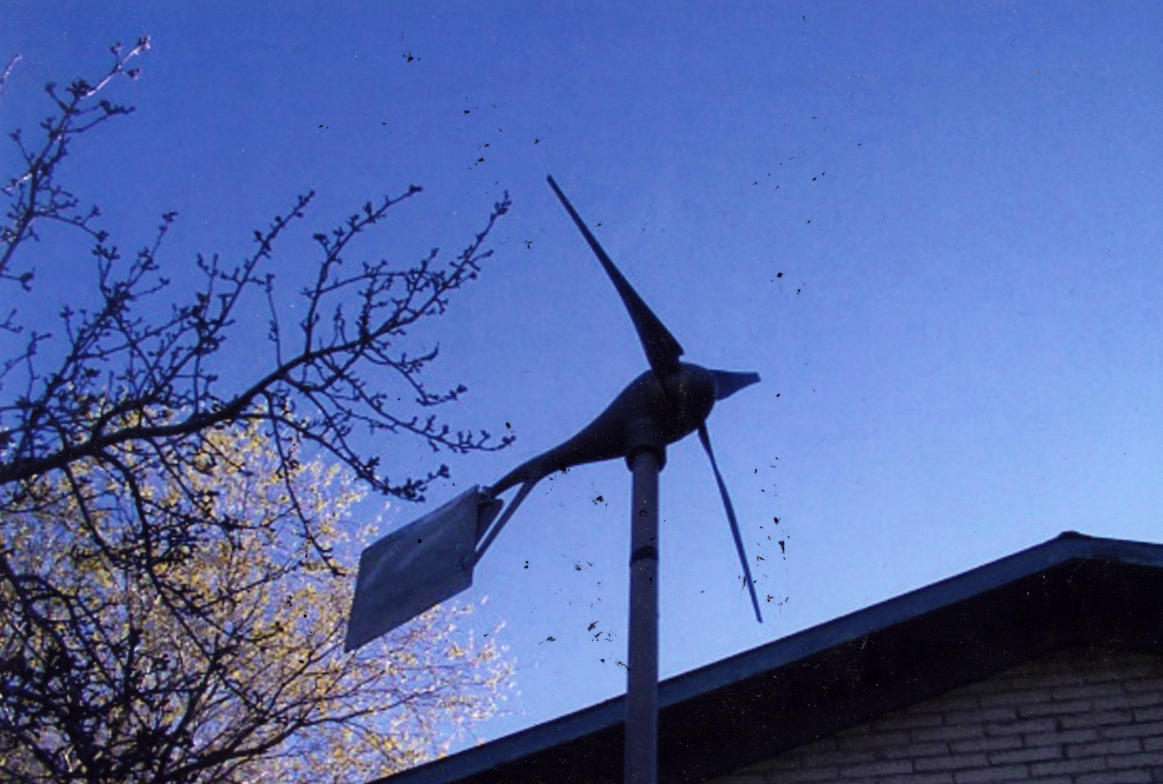
Pictured is the home-built control center for the three panel system, which is 100 watts. The 300 watt wind turbine can be used for pumping water when hooked to the single battery or it may be used to charge a neighbor’s battery for barter.
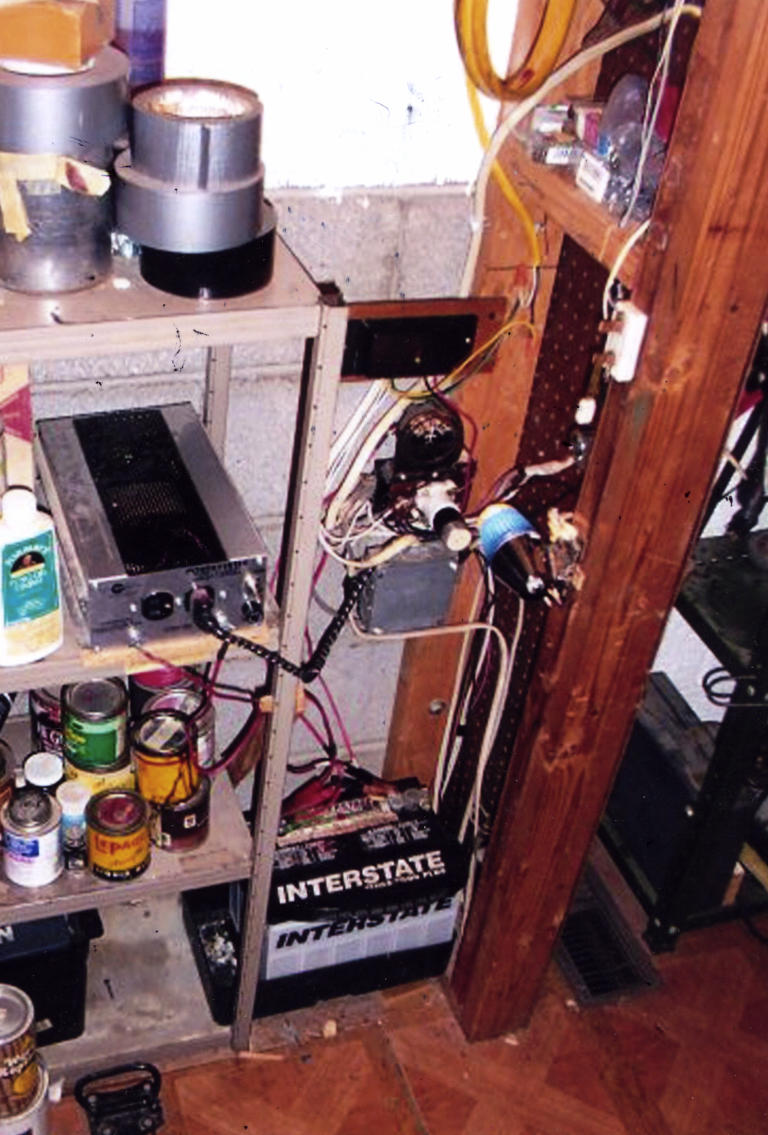
A short-run gas generator (110 volt 22 amp) handles the heavy loads when the grid is down and is disconnected from the home wiring. (This is entirely seperate from the solar electric wiring.) The gas generator is used about two hours per month, as I have use of a propane refrigerator, a window box, hand tools, a non-electric heating system, and a camp stove. This greatly simplifies fuel storage for the generator and maintance.
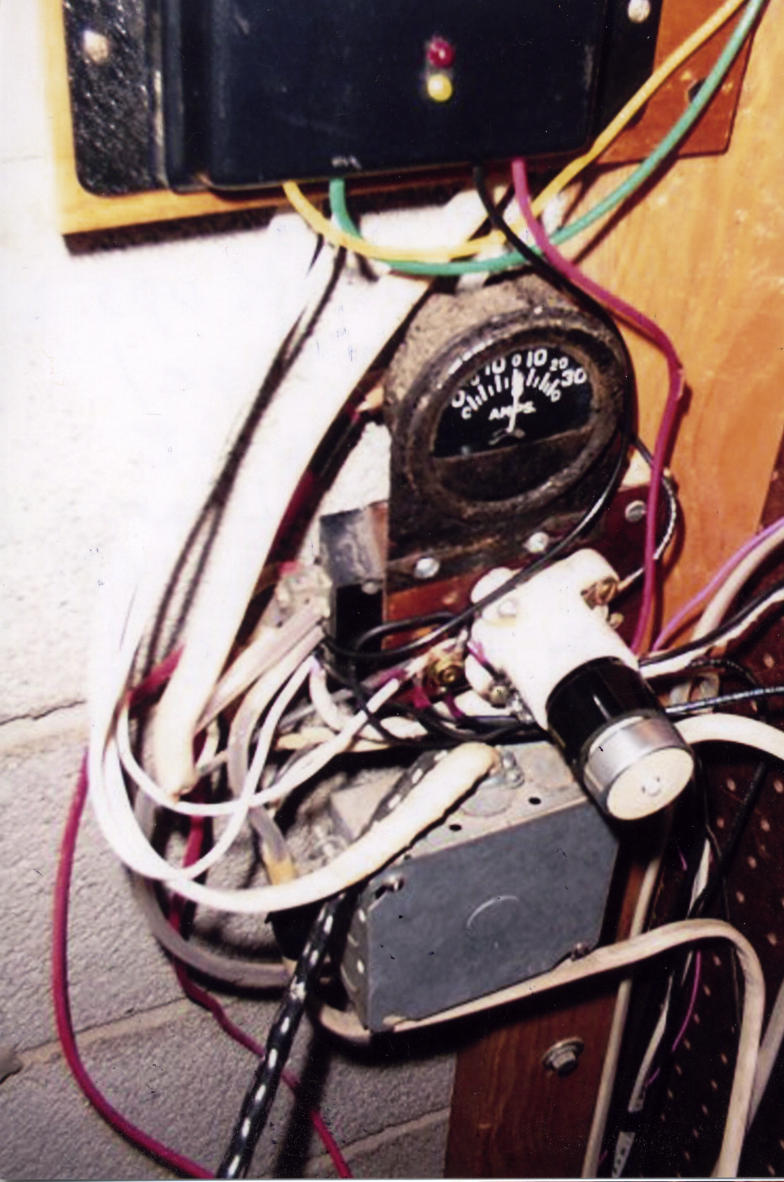
In summer, I have customized this emergency electrical system to meet my expectations and needs. It’s not fancy or expensive, but it will allow me to work and live.
Over these 22+ years, I have noticed that replacing large banks of lead acid type batteries can account for 1/2 to 3/4 of the total cost of the solar electrical system.
LED light and a volt meter (not pictured) allow me to moniter my electric usage and not deep cycle my battery, which is a take out from a friend’s truck. He upgraded at five years, and I have used it two additional years in my home.
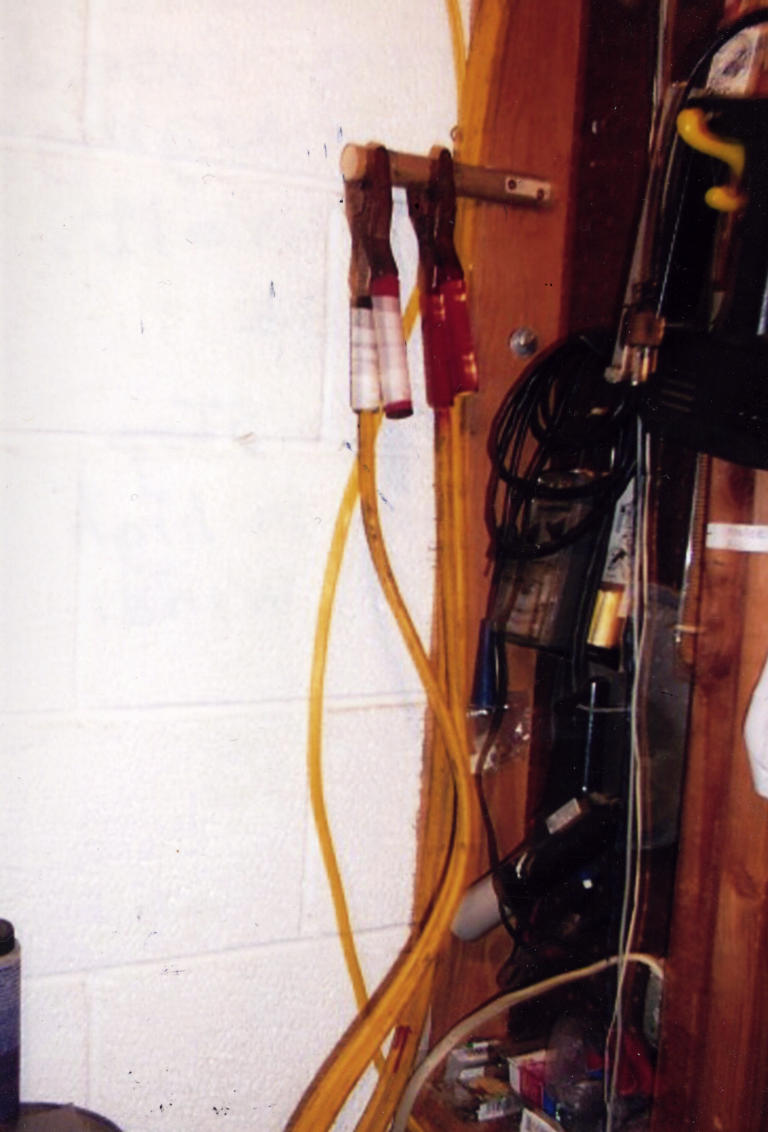
All but one of my solar panels was acquired used. The 12-year-old air marine was acquired through traded. The mast came from the used metal yard for $7, as were my glory pile, base, and braces. I made two solar panel mounts and bought the third from Harbor Fraight. I bought two inverters new, and paid only $10 at a swap meet for a regulator. I did the wiring and instillation myself. Yes, a small solar electric system can be affordable. I was tempted to by a RV solar add-on kit, but I didn’t.
- Ad SIEGE belts: The essential go-anywhere GRAY MAN accessory. Solid 5.5-7 oz of persuasive power has saved many on their daily routines & travels. Revered "Thousand-Year Buckles" with stunning hand-crafted finishes. Complements CCW. Lear more..SIEGE STOVES: the ultimate high-performance portable survival stove. SIEGE BELTS: Use code "SBLOG" at checkout for $20 off any belt & be ready! Gifts that will last lifetimes.
- Ad Trekker Water Station 1Gal Per MinuteCall us if you have Questions 800-627-3809
Guest Post: 150,000 Cigarettes or 3,275 Ounces of Silver, by Gary Christenson
Suppose on January 1, 1995, over 20 years ago, you quit smoking one pack per day and bought silver instead…
Assume:
- One pack of cigs per day at their average price each month over those 20 years in the United States.
- Instead of buying cigs, you purchased silver once per month on the last day of the month with the savings.
- Some states have higher or lower taxes than average. For example, the national average price for a pack of cigs might be $6.50, while some states average over $10 per pack. Use the average price for calculations.
Savings:
- One pack per day is about 150,000 cigarettes over 20.5 years. Given monthly average prices for cigs and silver, you would have accumulated about 3,275 ounces of silver, which at today’s diminished silver price is worth over $50,000.
- Using the money saved from NOT buying two packs per day for over 20 years would be about $100,000 in today’s prices. At the peak price for silver in 2011, it would have been over $300,000.
When silver sells for $100 per ounce will cigarettes sell for $40 per pack? This isn’t as outrageous as it sounds. I remember buying Marlboros for 19 cents per pack back in ancient times. Cigarettes are about 35 times as expensive now as they were in my youth. The current price is $6.50 for a pack, and 35 times that price would be about $225 per pack. Outrageous! The loss of purchasing power in fiat currencies is also outrageous.
Other Savings:
What about driving to work? Assume traveling 50 miles round trip five days per week. Assume gasoline costs an average of $4.00 per gallon (U.S. prices) and your mileage changes from 15 mpg to 30 mpg. Total savings is about $145 per month, or the equivalent of ¾ of a pack of cigs per day. A more efficient car saves about 2,500 ounces of silver in 20.5 years.
You can do the math yourself, but consider some possibilities:
- Instead of consuming one $30 bottle of wine per night, you drink two beers. Savings is about 13,000 ounces of silver in 20.5 years.
- Instead of a new Mercedes every three years, you might purchase a new Toyota every four years. This could be 26,000 ounces of silver.
- Instead of a new 150-foot yacht every decade, you might purchase a used 100-foot yacht every second decade. Many ounces of silver!
- Instead of a dozen new F-35 fighter aircraft … dream on!
- Instead of a three wars in Iraq … I can’t count the ounces of silver, but it is a huge number.
Another comparison:
According to Steve St. Angelo the major U.S. and European banks have paid over $128 Billion in fines and settlements since 2009. He notes that the mine supply of silver in those six years totaled about $113 Billion. The major banks have paid more in fines than the cumulative value of all silver mined in six years. Moving fiat paper around is quite profitable. The silver is real, but how real are the banking profits?
Summary:
- A pack of Marlboros cost $0.19 many years ago. A typical price is now $6.50. Since we use unbacked debt based fiat currencies, inflation is here to stay, along with occasional panics, periodic crashes, and wealth transfers to the financial cartel.
- Exchanging a small expense every day for a purchase of silver will create a considerable stack of silver over 20 years. The expense is gone, but the silver endures.
- We have choices as individuals and as nations. More silver and less fiat currency is, in my opinion, a good choice.
– Gary Christenson of The Deviant Investor
- Ad Survival RealtyFind your secure and sustainable home. The leading marketplace for rural, remote, and off-grid properties worldwide. Affordable ads. No commissions are charged!
- Ad Lessons From the Rhodesian Bush War: A Study in Survival, Rural Defense, and CollapseDrawn from a real guerrilla war, learn what a modern collapse in a rural area might look like. Hard lessons on security, farms, patrols, and attacks from Africa for SHTF.
Letter: Clothes Hanger for Armor
Hugh,
Many in the community have invested in steel plate body armor. Due to the weight, use of ordinary hangers is out of the question, so it ends up sitting in a heap on the floor or hooked to a nail in the wall. Constructing an effective clothes hanger for your rig so that it can hang in the closet and up off the floor takes about 15 minutes, six dollars, and a trip to Home Depot.
Bill of Materials:
- 1 each 2-ft section of 1.25 inch diameter schedule 40 PVC Pipe $3.23
- 2 each PVC Pipe end caps 1.25 inch diameter $0.83
- 1 each vinyl-coated screw-in Bicycle Hook 5/16×6 25lb load $1.74
Usual closet hangers are 16 inches wide. Cut the PVC pipe to 18 inches and then glue the end caps on both ends. The end caps create a raised edge so that the vest is less likely to slide off the end if it is hit or snagged when another garment is placed next to it in the closet. The Bicycle hook is located in the center. Drill a small hole and screw the hook in. The smaller the hole, the better. The hook has an aggressive thread and easily bites into the PVC material.
Remember that the clothes rod has to carry the weight, so locating the vest near the end of the rod rather than in the center of the span will help the rod bear the additional load. – Freeman
- Ad USA Berkey Water Filters - Start Drinking Purified Water Today!#1 Trusted Gravity Water Purification System! Start Drinking Purified Water now with a Berkey water filtration system. Find systems, replacement filters, parts and more here.
- Ad California Legal Rifles & Pistols!WBT makes all popular rifles compliant for your restrictive state. Choose from a wide range of top brands made compliant for your state.
Economics and Investing:
- Ad USA Berkey Water Filters - Start Drinking Purified Water Today!#1 Trusted Gravity Water Purification System! Start Drinking Purified Water now with a Berkey water filtration system. Find systems, replacement filters, parts and more here.
- Ad STRATEGIC RELOCATION REALTYFOR SALE: Self-sustaining Rural Property situated meticulously in serene locales distant from densely populated sanctuary cities. Remember…HISTORY Favors the PREPARED!
Odds ‘n Sods:
Law Enforcement Seizes $11,000 From 24-Year-Old. Lesson is do NOT get caught anywhere with a LOT of cash, especially on public transportation, but cops at routine traffic stops HAVE seized CASH, and some people NEVER get it back. You are GUILTY until you prove yourself innocent. So many Americans smoke or are around pot that many of our folding money bills smell of it to a canine dog. – H.L.
JWR Adds: And, needless to say, NEVER consent to a search of your private conveyance! The police must have “plain view”, “probable cause”, or at least “reasonable and articulable suspicion” grounds to justify a search without your consent. Lacking consent or any of those, anything that they find is not admissible evidence.
o o o
You’ve Been Warned – Calls for Mandatory “National Service” for Americans Aged 18-28 Has Begun. – T.P.
o o o
How Government Stifled Reason’s Free Speech. – T.C.
o o o
Colorado Springs vs. Charleston: The Church Massacre That Ended Differently . – T.P.
o o o
- Ad Click Here --> Civil Defense ManualNOW BACK IN STOCK How to protect, you, your family, friends and neighborhood in coming times of civil unrest… and much more!
- Ad LifeSaver 20K JerryCan Water PurifierThe best water jerrycan you can buy on the market! Mention Survivalblog for a Free Filter ($130 Value)
Hugh’s Quote of the Day:
“And it came to pass, as he had made an end of speaking all these words, that the ground clave asunder that was under them: and the earth opened her mouth, and swallowed them up, and their houses, and all the men that appertained unto Korah, and all their goods. They, and all that appertained to them, went down alive into the pit, and the earth closed upon them: and they perished from among the congregation. And all Israel that were round about them fled at the cry of them: for they said, Lest the earth swallow us up also. And there came out a fire from the Lord, and consumed the two hundred and fifty men that offered incense.” Numbers 16:31-35 (KJV)
Notes for Friday – June 19, 2015
June 19, 1834 was the birthday of Charles Haddon (C.H.) Spurgeon, who died 31 January 1892. He was a British Particular Baptist preacher.
o o o
Infidel Body Armor is having their “Infidel Friday” sale today. You get $40 off of body armor packages, a patch, and decal, and they throw in the shipping with the purchase (a $75 value). This sale runs for 24 hours only!
o o o
Today, we present another entry for Round 59 of the SurvivalBlog non-fiction writing contest. The $12,000+ worth of prizes for this round include:
First Prize:
- A Gunsite Academy Three Day Course Certificate, good for any one, two, or three day course (a $1,195 value),
- A course certificate from onPoint Tactical. This certificate will be for the prize winner’s choice of three-day civilian courses. (Excluding those restricted for military or government teams.) Three day onPoint courses normally cost $795,
- DRD Tactical is providing a 5.56 NATO QD Billet upper with a hammer forged, chromlined barrel and a hard case to go with your own AR lower. It will allow any standard AR type rifle to have quick change barrel, which can be assembled in less than one minute without the use of any tools, and a compact carry capability in a hard case or 3-day pack (an $1,100 value),
- Gun Mag Warehouse is providing 20 Magpul pmags 30rd Magazines (a value of $300) and a Gun Mag Warehouse T-Shirt. (An equivalent prize will be awarded for residents in states with magazine restrictions.),
- Two cases of Mountain House freeze dried assorted entrees in #10 cans, courtesy of Ready Made Resources (a $350 value),
- A pre-selected assortment of military surplus gear from CJL Enterprize (a $300 value),
- A Model 120 Series Solar Generator provided by Quantum Harvest LLC (a $340 value),
- A $300 gift certificate from Freeze Dry Guy,
- A $250 gift certificate from Sunflower Ammo,
- KellyKettleUSA.com is donating both an AquaBrick water filtration kit and a Stainless Medium Scout Kelly Kettle Complete Kit with a combined retail value of $304,
- TexasgiBrass.com is providing a $300 gift certificate, and
- Two cases of meals, Ready to Eat (MREs), courtesy of CampingSurvival.com (a $180 value).
Second Prize:
- A Glock form factor SIRT laser training pistol and a SIRT AR-15/M4 Laser Training Bolt, courtesy of Next Level Training, which have a combined retail value of $589,
- A FloJak EarthStraw “Code Red” 100-foot well pump system (a $500 value), courtesy of FloJak.com,
- Acorn Supplies is donating a Deluxe Food Storage Survival Kit with a retail value of $350,
- The Ark Institute is donating a non-GMO, non-hybrid vegetable seed package–enough for two families of four, seed storage materials, a CD-ROM of Geri Guidetti’s book “Build Your Ark! How to Prepare for Self Reliance in Uncertain Times”, and two bottles of Potassium Iodate– a $325 retail value,
- A $250 gift card from Emergency Essentials,
- Twenty Five books, of the winners choice, of any books published by PrepperPress.com (a $270 value),
- TexasgiBrass.com is providing a $150 gift certificate, and
- RepackBox is providing a $300 gift certificate to their site.
Third Prize:
- A Royal Berkey water filter, courtesy of Directive 21 (a $275 value),
- A large handmade clothes drying rack, a washboard, and a Homesteading for Beginners DVD, all courtesy of The Homestead Store, with a combined value of $206,
- Expanded sets of both washable feminine pads and liners, donated by Naturally Cozy (a $185 retail value),
- Two Super Survival Pack seed collections, a $150 value, courtesy of Seed for Security, LLC,
- Mayflower Trading is donating a $200 gift certificate for homesteading appliances,
- APEX Gun Parts is donating a $250 purchase credit,
- Montie Gear is donating a Precision Rest (a $249 value), and
- Two 1,000-foot spools of full mil-spec U.S.-made 750 paracord (in-stock colors only) from www.TOUGHGRID.com (a $240 value).
Round 59 ends on July 31st, so get busy writing and e-mail us your entry. Remember that there is a 1,500-word minimum, and that articles on practical “how to” skills for survival have an advantage in the judging.
Planning Your Preps Using the Rule of 3s, by Last NJ Conservative
I have been an avid reader and novice practitioner of prepping for some time now and, like many, I have been bewildered by the vast amount of information and details available on the subject matter. One area in particular that I have found utterly confusing has been tying it all together to develop a start up, or a beginning plan, to guide us in a prioritized and scaled approach. Using some basic doctrine that is already available on the Internet and modifying some common sense tenets into it, I believe a generic footprint follows to assist you in your efforts. It has assisted me greatly.
The United States Rescue & Special Operations Group (www.usrsog.org) has in their “Six Ways In & Twelve Ways Out” manual a “Rule of 3’s” strategy that states: “A man/woman can go 3 minutes without air, 3 hours without shelter, 3 days without water, and 3 weeks without food.” This is also their building block for their “Survival and Evasion” course. I have paraphrased and added to their published concept, as the basis for this article.
The Rules of 3’s directly contribute to many parts of our lives, but most importantly they also shape how we should prepare for the worst. Before doing so, while doing so, and after doing so (in itself another Rule of 3), we must have religion and have already cultivated your relationship with God. Once established and continually nurtured, your spiritual foundation will provide the bedrock footing which we can build upon for our prepping.
Rephrasing and adding a few concepts brings us to our Rules of Three’s for your consideration:
Without individual or group security, you can be killed in three seconds by not having means to adequately protect yourself or defend your home. Without air, your life will expire in three minutes from suffocation. Without clothing or shelter, your life can be lost to exposure in three hours. Without water, your body will die from dehydration in three days. Without food, your body will die from starvation in three weeks. Without family or friendly mutual support, you could easily die within three months. Without community or government, instability and lack of communal protection against larger bands of marauders could easily enslave or kill you within three years.
Weapons for Defense and Hunting
You simply can’t go at it alone indefinitely so let’s start from the top with individual or group security. Humans can be horrific to each other under the best of circumstances. Put them in a survival situation in which the end of the world as we knew it has occurred and they will be even more cut throat, no pun intended. Additionally, they will be looking to take the things you prepared with for this eventuality. Sooner or later, you will need force to repel an assault and protect your loved ones; never mind your stores.
You need an individual firearms battery to meet this threat. Four simple firearms should see you through most sticky situations, if employed properly and you utilize basic tactics. They also can provide the “working” end for hunting to continue to put meat on the table. A center fire rifle is needed first. It should be bolt action with a fixed power telescopic sight. It should have an integral magazine that can hold a hand full of rounds in its reservoir. It should have a sling. The rifle’s barrel length is typically 20 to 24 inches in length. The recommended caliber is .308 Winchester or .30-06 Springfield, whichever is more prevalent in your area. This rifle, in the hands of a practiced rifleman owner, should allow you to deliver first round strikes on a human torso at 1,000 yards. The rifle should be used to engage targets at long range before the threat gets close to you and also to harvest medium and large game.
A 12-gauge pump action shotgun is needed next. It should have an 18-inch barrel for anti-personnel use and a 28-inch barrel, both with bead sights, for medium and small game, which includes waterfowl and the like. It should have an integral tubular magazine underneath the barrel assembly. It should have a sling. The shorter 18-inch barrel should have a “weaponlight” forend or attachment. It should be chambered for 3-inch magnum length shells and it should also accept 2¾ inch standard shot shells. A good mix of buck shot, bird shot, slugs, and other specialty rounds should be available for use. Generally, #4 buck is a “crowd pleaser” in riot situations for multiple pellet dispersion, while OOO buck has the largest and fewest pellets for medium game hunting up close. OO buck is the standard police round although #1 buck is the exact middle of the buck shot spectrum and finds its general purpose tactical usage increasing. BB size is a bird shot that could double in a .177 caliber air or BB gun. Then there are door breaching rounds, flare rounds, gas rounds, flechette rounds, and others that are available for designated situations that may or may not aid in your use or applications. Without a doubt the 12-gauge shotgun is an awesome close in defensive weapon, which is also capable of providing excellent varied hunting abilities.
Third should be a handgun for those most inopportune times when you placed your rifle or shotgun down and you have to fight your way back to it. It should also be on you person (typically a belt holster, although shoulder and chest and ankle carry is increasingly popular) at most all times thus available for employment. A revolver chambered for .357 Remington Magnum also allows .38 Special rounds to be utilized. The .357 Magnum is still the most popular handgun man stopping round in its 125 grain semi-jacketed hollow point version. The revolver should have a 4- to 6-inch barrel length, although a 3- or 8-inch barrel will suffice. It should have at least a 5-round integral rotary magazine. XS sights work unbelievably well. A rail or attached weapon light works wonders, as does an integral or attached laser designator. A handful of speed loaders should be available as well as a secure and sturdy holster. A military style lanyard is recommended for rugged outdoor use.
The fourth and last firearm rounding out your individual survival battery is the “Gator or Croc Gun”– a rim fire rifle. It too should be bolt action, with a barrel length of 16 to 20 inches, a fixed power telescopic sight, a sling, and an integral tubular magazine. This usually lends itself toward our survival situation. It can be used on small game and vermin as well as target practice and training. Thousands of rounds of .22 Long Rifle caliber are inexpensive and also can provide a source of “ballistic wampum” for barter and trade. If you every watched the cable channel show “Swamp People” you can see how effective a .22 rim fire round when properly employed with accuracy can make one shot kills to alligators and crocodiles weighing in over 1,000 pounds and being well over 10 feet long.
The rifle should dispatch threats around 100 yards distant and more. The shotgun should dispatch threats around 100 yards and closer, with buckshot out to 50 yards and slugs 50 to 100 yards. The handgun could be used as backup or actually employed with magnum loads out to 100 yards with skilled operators. The rim fire rifle, believe it or not, could be employed out to 100 yards with an experienced operator who is very accurate. Never discount this diminutive round as totally ineffective; see the above note on its stopping power. The key here is training and planning. Obviously a gang of two dozen could not be engaged at very close range with all four of the individual survival battery fully loaded. That is where your tactical training and emergency planning comes in. Here is the classic example of safety in numbers. One person with a survival battery should not expect a winning outcome against two dozen, armed, gang members. However, two or three or four similarly equipped people with basic tactical knowledge would make quick order against the same marauders under the same circumstances. Your mileage may vary. Nonetheless, this recommendation is a start in the right direction and should provide security and ample game harvesting when properly employed.
Others take a more militaristic approach, and in many cases it most certainly warrants your serious consideration. A semi-automatic “main battle rifle” with detachable box magazines are the standard for many Patriots throughout the country. An auto-loading “defensive pistol” with detachable box magazines similarly adorn the holsters of the military, police, and serious shooters everywhere, and a semi-automatic “combat shotgun” also works well with trained and experienced shooters. When expecting or preparing for fights against the two-legged upright walking creatures, that is what my personal survival battery resembles as well. Know what you are planning for, and be guided accordingly. The same gang of armed marauders noted above could be engaged with this battery and have a much better outcome than if going at it alone. The same group of two or three or four like-equipped allies would dispatch the entire gang in short order, provided basic tactics are properly employed. Be guided accordingly.
Clean Air
The second thing I want to address is air. The air you breathe is actually a gas comprised of 78% nitrogen, 21% oxygen, and 1% combinations of a half dozen or so other gases. The human body needs 19.5% oxygen to sustain life through respiration. Emergency services personnel trained in pre-hospital care can usually administer 100% oxygen to persons experiencing illness or injury. Some fellow first responders have been known to breathe pure (100%) oxygen after a long night out of bar hopping to recover faster. Fire fighters bring compressed air, not oxygen, in their self-contained breathing apparatus (SCBA) in fire situations due to the immediately dangerous to life and health (IDLH) atmospheres encountered. Oxygen in and of itself does not burn, but it is one-quarter of the fire tetrahedron that must be present for anything to burn, (the other three being: heat, fuel, and the chain reaction between all the afore noted); this means that oxygen supports combustion and accelerates it in most eventualities. We cannot run around forever with an SCBA on, because it runs out quickly (very generally figured at one minute of breathing air for each 100 pounds per square inch of compressed air with typical bottles having 4,500 pounds of compressed air inside, although there are other variants) and perhaps only a handful, if any, of us have an air cascade or compressor system suitable for refilling. Both the military and police, as well as the chemical industry, utilize air purifying respirators (APR) of one variety or another. Sometimes referred to as field protective masks or gas masks, they all generally do the same thing– filter out contaminated particles before it reaches your respiratory tract. There are also multiple “do it yourself” videos and instructions on the Internet to make your own improvised APR with charcoal and other items. The APR generally can be used for hours as opposed to the SCBA, which is typically used up within minutes. Regardless of what or how you plan, some sort of “clean” air could be needed, so either bring it with you or purify it there.
Clothing and Shelter
Both clothing and shelter are huge factors in your survival considerations. Exposure to the elements, even just rain on a windy 40 degree day without protection, can lead to your expiration in a matter of minutes or hours. Falling through the ice into freezing water or getting caught in the middle of a wildland fire are examples on the shorter end of the spectrum which reduces your survivability to mere minutes. Planning is the key. Know your climate at home and your bug out location. Have appropriate clothes for the season, and be prepared to make a shelter to aid in your travels to and from your bug out location. Have repair equipment and tools at both home and your bug out location. Have backup clothing at both places as well. Fire starting gear should be included in your bug out bag for your Get Out Of Dodge contingencies, because you can use heat to dry your wet clothes and provide warmth to keep from freezing.
Water and Fluids
After just a few hours of even slow or measured activity, you will need fluids to replenish your body and quench thirst. Some sort of water purification is needed. You can go the military tablet route, or use commercial filters, or you can also use good old fashioned boiling and sunlight. Whichever method(s) you choose, you should be knowledgeable in its use and application and have backups. Water is heavy. Know your area and bug out routes. Have stored water both home and at your bug out location. Carry two canteens, but anything more becomes very heavy, very quickly, so have purification means. Be flexible for when you run out of tablets or your filter breaks. Know traditional means, such as using sunlight and boiling. A bandana or towel can make a better-than-nothing strainer when on the run. Again, pre-planning is everything.
Food
While you could go days, and possibly weeks, without food before dying, you will be reduced to a pile of skin and bones without nutrients, especially during increased physical activity times. You can carry MREs (meals ready to eat, in military-style), but they also are bulky and heavy. Stores should be kept at both home and your bug out location. To lessen the load, have enroute caches pre-positioned for all your evacuation routes. Can, jar, smoke, or otherwise preserve foods for long-term storage. There are entire manuals and books on various food storage methods, so pick something applicable to your situation and liking and use it long before the time it’s needed. The Latter Day Saints of Jesus Christ, also known as the Mormons, have an excellent manual that is referred to as the gold standard in this endeavor. That, coupled with their practices of every household stocking a year’s supply of food for their family’s use, makes a solid prepared community. JWR’s ”Rawles Gets You Ready“ plan is also another excellent resource to assist you.
Allied Support
While there is safety and strength in numbers, you will need some sort of assistance from family and/or friends and/or perhaps your community “inner circle”. Like-minded people who are similarly prepared would be the obvious choice, as this group can benefit from all uniting together. Unfortunately, that is the exception rather than the rule. Even getting some of my family and neighbors on board with prepping is a difficult task under the best of circumstances. You will be fighting for your lives with these people in your group, so if they aren’t on board with you now you can figure that into your plans. Realistically assess your status, and plan accordingly. Plan for when the manure hits the oscillator and your nuclear family members or neighbors aren’t prepared as they should have been. If you plan on keeping them away from your stores, then plan that, and discuss that with them to show how serious you are. Perhaps not telling them of your bug out location would be prudent if they don’t get on board. Plainly state you will use whatever means necessary to protect your family and your provisions from those who chose to ignore your warnings. Tell them not to come to your home, and don’t tell them where your bug out location is, so they don’t show up anyway. At least they will have been put on notice so your conscience can be clear.
Protection
I’m referring here to protection on a community or area scale. Eventually, bigger and “badder” groups will try to impose themselves upon you and your family and neighbors to enslave you; if you don’t comply, they will torture and kill you. You will need to have a robust community and perhaps a local government to meet these challenges. If there is a total government failure, some totalitarian or dictatorial jokers will try to impress their will upon you and enslave you by making you comply, with force if necessary. Be prepared. Don’t allow them the opportunity to subjugate you in any manner. If you try the pacifist conscientious objector mentality, it will lead to your torture and dying a slow and painful death, with family and friends ordered to watch so they can make an example of you. Stick to your convictions, and ally yourself and family and neighbors to like-minded community members who will resist encroachment upon your way of life. Rebuild a local government with constitutional republican roots and democratic voting principles. Rebuild your local government upon our Constitution and Bill of Rights and free market capitalism and those likes. We have the greatest government known to man, even though there are many shortcomings and problems. Build upon it in core libertarian principles. Liberty and freedom should be the hallmarks with as little government encroachment as possible. Have safeguards for runaway political pundits, so they don’t destroy everything you work hard for. Have the means to fight tyranny and preserve your way of life at all costs.
This primer is just a very generic blueprint touching upon the “Rules of 3’s”, which we all would benefit from taking into consideration. For those new or looking for organization in their venture, I have found this road map guides me to be organized and systematic in a prioritized approach.
Letter Re: Does the Number of the Beast Have an Area Code?
Hugh,
The worst part of ditching your tether is seeing how far gone the average person has become. I only write to point out something from the last paragraph. The author said, “The smart phone is a source of knowledge, and knowledge is power. Is it really empowering? Is it really making us more knowledgeable?” Knowledge is not the same as information. Your phone and the Internet, at large, have the power to put a mind-boggling amount of information in front of you. The average person who I encounter doesn’t know why you change the rotation on a ceiling fan with the seasons and is dumbfounded by the explanation. The information overload and decrease in the perceived need to actually know anything is, in my opinion, the most insidious result of society’s addiction to convenience. Thanks for posting the article, and I hope more people get inspired to actually make plans and be punctual. Those two items have completely gone out the window since the advent of instant communication. – J.A.
Economics and Investing:
ECB not sure if Greek banks would open on Monday. – G.P.
o o o
The Economic Depression In Greece Deepens As Tsipras Prepares To Deliver ‘The Great No’. – H.L.
o o o
Items from Mr. Econocobas:
Game Over For Greek Banks: Depositors Yank €2 Billion In Past Three Days
Bank of Greece Issues Grave Warning of Grexit as British Government Prepares for Fallout
Greece Could be Forced to Lock Down Savers’ Cash as Debt Crisis Worsens
U.S. Mortgage Applications Fall as Rates Highest Since October 2014
Odds ‘n Sods:
Divisive Obama Exploits Charleston Church Murders To Push Gun Control. – D.S.
o o o
Nigerian Restaurant Shut Down for Serving Human Flesh Why our politicians keep America’s borders open and import so many of these brutal cultures into our cities makes you wonder whose side they are on. – C.T.
o o o
Facebook’s facial recognition means privacy loss in social media age. – B.B.
o o o
Nato shows its teeth to Russia with elaborate Baltic training exercise. – H.L.
o o o
Horribleness Beyond Measure. – MTH

Hugh’s Quote of the Day:
“I would remind you that extremism in the defence of liberty is no vice!
And let me remind you also that moderation in the pursuit of justice is no virtue!” – Barry Goldwater, Speech accepting the presidential nomination, 16 July 1964
Notes for Thursday – June 18, 2015
June 18th is birthday of Pastor Douglas Wilson. Born in 1953, he is the pastor at Christ Church in Moscow, Idaho and a prodigious author on Reformed theology.
o o o
Today, we present another entry for Round 59 of the SurvivalBlog non-fiction writing contest. The $12,000+ worth of prizes for this round include:
First Prize:
- A Gunsite Academy Three Day Course Certificate, good for any one, two, or three day course (a $1,195 value),
- A course certificate from onPoint Tactical. This certificate will be for the prize winner’s choice of three-day civilian courses. (Excluding those restricted for military or government teams.) Three day onPoint courses normally cost $795,
- DRD Tactical is providing a 5.56 NATO QD Billet upper with a hammer forged, chromlined barrel and a hard case to go with your own AR lower. It will allow any standard AR type rifle to have quick change barrel, which can be assembled in less than one minute without the use of any tools, and a compact carry capability in a hard case or 3-day pack (an $1,100 value),
- Gun Mag Warehouse is providing 20 Magpul pmags 30rd Magazines (a value of $300) and a Gun Mag Warehouse T-Shirt. (An equivalent prize will be awarded for residents in states with magazine restrictions.),
- Two cases of Mountain House freeze dried assorted entrees in #10 cans, courtesy of Ready Made Resources (a $350 value),
- A pre-selected assortment of military surplus gear from CJL Enterprize (a $300 value),
- A Model 120 Series Solar Generator provided by Quantum Harvest LLC (a $340 value),
- A $300 gift certificate from Freeze Dry Guy,
- A $250 gift certificate from Sunflower Ammo,
- KellyKettleUSA.com is donating both an AquaBrick water filtration kit and a Stainless Medium Scout Kelly Kettle Complete Kit with a combined retail value of $304,
- TexasgiBrass.com is providing a $300 gift certificate, and
- Two cases of meals, Ready to Eat (MREs), courtesy of CampingSurvival.com (a $180 value).
Second Prize:
- A Glock form factor SIRT laser training pistol and a SIRT AR-15/M4 Laser Training Bolt, courtesy of Next Level Training, which have a combined retail value of $589,
- A FloJak EarthStraw “Code Red” 100-foot well pump system (a $500 value), courtesy of FloJak.com,
- Acorn Supplies is donating a Deluxe Food Storage Survival Kit with a retail value of $350,
- The Ark Institute is donating a non-GMO, non-hybrid vegetable seed package–enough for two families of four, seed storage materials, a CD-ROM of Geri Guidetti’s book “Build Your Ark! How to Prepare for Self Reliance in Uncertain Times”, and two bottles of Potassium Iodate– a $325 retail value,
- A $250 gift card from Emergency Essentials,
- Twenty Five books, of the winners choice, of any books published by PrepperPress.com (a $270 value),
- TexasgiBrass.com is providing a $150 gift certificate, and
- RepackBox is providing a $300 gift certificate to their site.
Third Prize:
- A Royal Berkey water filter, courtesy of Directive 21 (a $275 value),
- A large handmade clothes drying rack, a washboard, and a Homesteading for Beginners DVD, all courtesy of The Homestead Store, with a combined value of $206,
- Expanded sets of both washable feminine pads and liners, donated by Naturally Cozy (a $185 retail value),
- Two Super Survival Pack seed collections, a $150 value, courtesy of Seed for Security, LLC,
- Mayflower Trading is donating a $200 gift certificate for homesteading appliances,
- APEX Gun Parts is donating a $250 purchase credit,
- Montie Gear is donating a Precision Rest (a $249 value), and
- Two 1,000-foot spools of full mil-spec U.S.-made 750 paracord (in-stock colors only) from www.TOUGHGRID.com (a $240 value).
Round 59 ends on July 31st, so get busy writing and e-mail us your entry. Remember that there is a 1,500-word minimum, and that articles on practical “how to” skills for survival have an advantage in the judging.
KEL-TEC SU-16C: The Ultimate Prepper Rifle?, by R.S.
Calling the Kel-Tec SU-16C the ultimate prepper rifle is like calling a Leatherman the ultimate hand tool; I suppose you could drive a nail with a Leatherman, but it is certainly not the right tool for the job. In the same way there are tasks that are less well-suited to the SU-16C. If I was hunting squirrels for dinner, I would much prefer a .22 rifle and scope. If someone was breaking through my front door, they would be more likely to face a 12-gauge pump shotgun loaded with 00 buckshot. If I had to take down a zombie at 300 yards, it would be better accomplished with a good bolt action .308. Even certain combinations of tasks could be better accomplished with a different firearm; if I needed a semi-automatic battle rifle that was also able to take that zombie at long range, I would likely choose an AR-10, like the Smith and Wesson M&P 10.
However, if we approach the question in a different manner by asking “if I could only have one long gun…”, the answers begin to change. I would want an effective defensive caliber that is capable both up close and at a distance. I would want a long gun that is highly portable– light-weight and compact. I would want the accompanying ammunition to have a good ratio of size/weight to stopping power. As I am not rich, I would want a gun that is not prohibitively expensive, yet it must also be durable and reliable.
Some may question the premise, because we plan and expect to have multiple firearms at our disposal so that we can choose the best “tool” for the job. Nevertheless, we also plan for the eventuality that we must “bug out”, “get home”, or otherwise travel to or from our weapons stash, including the possibility that we must travel on foot or, at least, with no more than we can personally carry. Much as I would like to have a .22 rifle and a 12-gauge shotgun and a bolt-action .308 and/or an M&P 10 along with an abundant supply of ammunition for each, this may not be feasible, which brings me back to the original premise: if I could only have one long gun, a strong argument can be made that it should be a Kel Tec SU-16C. Consider some of the qualifications of this particular firearm:
Caliber
While there are many who swear by their Ruger 10/22 (or similarly reliable .22 semi-automatic rifle) and while these firearms have some very clear advantages, they have one serious, disqualifying disadvantage: the .22 long rifle cartridge is not a reliable man-stopper. That is not to suggest that they cannot be lethal (I certainly would not want to be shot by one), particularly when the shot is carefully placed and followed up by many more. However, the .22 long rifle cartridge simply does not have the range or the penetrating power of a center-fire cartridge.
Meanwhile, there are those who are devoted to their shotguns. While they are an awesome and effective up close weapon, they are not designed to project beyond 50 yards.
The 5.56/.223 caliber is an effective defensive caliber with considerably more power than a .22 and considerably more range than a shotgun. Numerous battle rifles exist in these calibers because they work; they have the range and the penetrating power to effectively engage an enemy up close or at a distance.
Weight
Of course, if we are concerned with stopping power, why limit ourselves to 5.56/.223? Why not choose a .308 battle rifle? The .308 has considerably more range, penetration, and stopping power. Fortunately for us the U.S. military has already addressed this question. The .308 round is nearly twice the size/weight of the 5.56/.223 round. In other words, we can carry twice the number of 5.56/.223 rounds for the same weight/size. If it becomes necessary to take only what we can carry (possibly on foot), this becomes a huge consideration. I would rather have 300 rounds of 5.56/.223 than 150 rounds of .308.
This consideration becomes even more significant when considering the rifle itself. You would be hard-pressed to find a center-fire, semi-automatic rifle to match the sub-five-pound weight of the SU-16C. I very much like my Ruger Mini-14, but it is several pounds heavier. Apart from the extra weight of the steel magazines; the SU-16C is entirely comfortable with polymer AR-15 magazines. If I was required to travel on foot, those extra pounds would become a serious issue. The same may be said of virtually any other long gun, including anything remotely resembling a battle rifle– AR-15, AR-10, AK-47 (not to mention the wonderful but extremely heavy classic battle rifles and their modern variants like the SOCOM). If there is a semi-automatic center-fire rifle and 300 rounds of ammunition that weighs less than the SU-16C while retaining (at least) the range and power of the 5.56/.223 cartridge, I am not aware of it.
Size
While AR-15-style rifles commonly have collapsible stocks to reduce their overall length, the mechanism of the AR-15 makes a folding stock impossible. The SU-16C has a true folding stock that reduces to a total length of approximately 26 inches, which is small enough to conceal in many backpacks. This could become a decided advantage if circumstances dictate stealth. While most of the SU-16 models have a folding stock, the C model folds to the smallest overall package and is the only model that may be fired while folded.
Durability/Reliability
While initially having the appearance of a somewhat cheaply-made gun, numerous reviews and YouTube videos bear testament to the durability and reliability of the SU-16C. I purchased a used SU-16C with 1500 rounds of ammunition through it already, yet it has functioned flawlessly after another several hundred rounds. Owners quickly discover that, while not an elegant firearm, it has been designed and manufactured for reliable utility.
Cost
A new SU-16C retails for $779, however, your street price may vary. Regardless, it is likely to be comparable to an entry level AR-15, a typical AK-47, or a used Mini-14. My used SU-16C set me back $500. As the previous owner had secretly longed for an AR-15 for some time before actually getting one, he had attempted to convert the SU-16 to a pseudo AR-15 with a replacement stock/adaptor and fore end. I immediately re-installed the original stock but kept the AR-style fore end (although the stock fore end adds some utility, as it can be deployed as a bipod). Add a few inexpensive 30 round PMags and I have a reliable, effective semi-automatic rifle for $550.
So what is wrong with the SU-16C? There is just one thing as far as I can tell; they are difficult to obtain, due to very limited supply. Kel Tec does not have dealers. Instead, virtually any dealer can order one through a distributor who, invariably, does not have one in stock. I was on a waiting list at my favorite gun shop for a month before finding one on the used market. Apart from this, I would be hard-pressed to think of one thing about which I am dissatisfied.
There is typically only one additional decision to be made with respect to an SU-16C, and that is sights/optics. I have found the stock iron sights (rear peep and front AR-style post) to be surprisingly effective despite my aging eyes. I am deadly at 50 yards and dangerous to 100 yards. However, the sight rail molded into the frame of the SU-16C allows easy attachment of optics such as the inexpensive but highly regarded TRS-25 red-dot or my personal favorite– a low-power variable scope with illuminated reticle. I am confident suitable optics would make me deadly to 100 yards and dangerous to 200.
Let the debate begin. A strong case may be made for a Ruger 10/22, an AK-47, a Mini-14, or a short-barreled shotgun. (Any of these may be equipped with a folding stock to reduce size when needed.) Others will swear by their AR-15, AR-10, M1A, et cetera. However, if I could only take what I can carry, I would add a handgun (either a substantial center fire caliber like 9 mm or .40 S&W for concealed personal protection, or an accurate .22 for use in hunting small game) to my SU-16C and stack that configuration against any other combination for weight, size, versatility, reliability, and firepower at a modest cost.