Odds ‘n Sods:

10 Very Strange Things That Have Happened In Just The Past Few Weeks

o o o

Preparedness Critics Are History’s Cannon Fodder – JBG

o o o

Spain Government Goes Full Police State; Enacts Law Forbidding Dissent, ‘Unauthorized’ Photography Of Law Enforcement

o o o

Florida Man Sentenced to 8 Months for Driving Away from Interior Border Patrol Checkpoint Too Quickly – T.P.

o o o

15 year olds can now get govt funded sex change surgery without parental permission – G.P.

o o o

70 HOWTOs For Your Preps – G.W.


Notes for Thursday – July 09, 2015

Today, we present another entry for Round 59 of the SurvivalBlog non-fiction writing contest. The $12,000+ worth of prizes for this round include:

First Prize:

  1. A Gunsite Academy Three Day Course Certificate, good for any one, two, or three day course (a $1,195 value),
  2. A course certificate from onPoint Tactical. This certificate will be for the prize winner’s choice of three-day civilian courses. (Excluding those restricted for military or government teams.) Three day onPoint courses normally cost $795,
  3. DRD Tactical is providing a 5.56 NATO QD Billet upper with a hammer forged, chromlined barrel and a hard case to go with your own AR lower. It will allow any standard AR type rifle to have quick change barrel, which can be assembled in less than one minute without the use of any tools, and a compact carry capability in a hard case or 3-day pack (an $1,100 value),
  4. Gun Mag Warehouse is providing 20 Magpul pmags 30rd Magazines (a value of $300) and a Gun Mag Warehouse T-Shirt. (An equivalent prize will be awarded for residents in states with magazine restrictions.),
  5. Two cases of Mountain House freeze dried assorted entrees in #10 cans, courtesy of Ready Made Resources (a $350 value),
  6. A pre-selected assortment of military surplus gear from CJL Enterprize (a $300 value),
  7. A Model 120 Series Solar Generator provided by Quantum Harvest LLC (a $340 value),
  8. A $300 gift certificate from Freeze Dry Guy,
  9. A $250 gift certificate from Sunflower Ammo,
  10. KellyKettleUSA.com is donating both an AquaBrick water filtration kit and a Stainless Medium Scout Kelly Kettle Complete Kit with a combined retail value of $304,
  11. TexasgiBrass.com is providing a $300 gift certificate, and
  12. Two cases of meals, Ready to Eat (MREs), courtesy of CampingSurvival.com (a $180 value).

Second Prize:

  1. A Glock form factor SIRT laser training pistol and a SIRT AR-15/M4 Laser Training Bolt, courtesy of Next Level Training, which have a combined retail value of $589,
  2. A FloJak EarthStraw “Code Red” 100-foot well pump system (a $500 value), courtesy of FloJak.com,
  3. The Ark Institute is donating a non-GMO, non-hybrid vegetable seed package–enough for two families of four, seed storage materials, a CD-ROM of Geri Guidetti’s book “Build Your Ark! How to Prepare for Self Reliance in Uncertain Times”, and two bottles of Potassium Iodate– a $325 retail value,
  4. A $250 gift card from Emergency Essentials,
  5. Twenty Five books, of the winners choice, of any books published by PrepperPress.com (a $270 value),
  6. TexasgiBrass.com is providing a $150 gift certificate, and
  7. RepackBox is providing a $300 gift certificate to their site.

Third Prize:

  1. A Royal Berkey water filter, courtesy of Directive 21 (a $275 value),
  2. A large handmade clothes drying rack, a washboard, and a Homesteading for Beginners DVD, all courtesy of The Homestead Store, with a combined value of $206,
  3. Expanded sets of both washable feminine pads and liners, donated by Naturally Cozy (a $185 retail value),
  4. Two Super Survival Pack seed collections, a $150 value, courtesy of Seed for Security, LLC,
  5. Mayflower Trading is donating a $200 gift certificate for homesteading appliances,
  6. APEX Gun Parts is donating a $250 purchase credit,
  7. Montie Gear is donating a Precision Rest (a $249 value), and
  8. Two 1,000-foot spools of full mil-spec U.S.-made 750 paracord (in-stock colors only) from www.TOUGHGRID.com (a $240 value).

Round 59 ends on July 31st, so get busy writing and e-mail us your entry. Remember that there is a 1,500-word minimum, and that articles on practical “how to” skills for survival have an advantage in the judging.


A Portable and Easily Constructed Manual Water Pump – Part 2, by G.G.

Parts Required

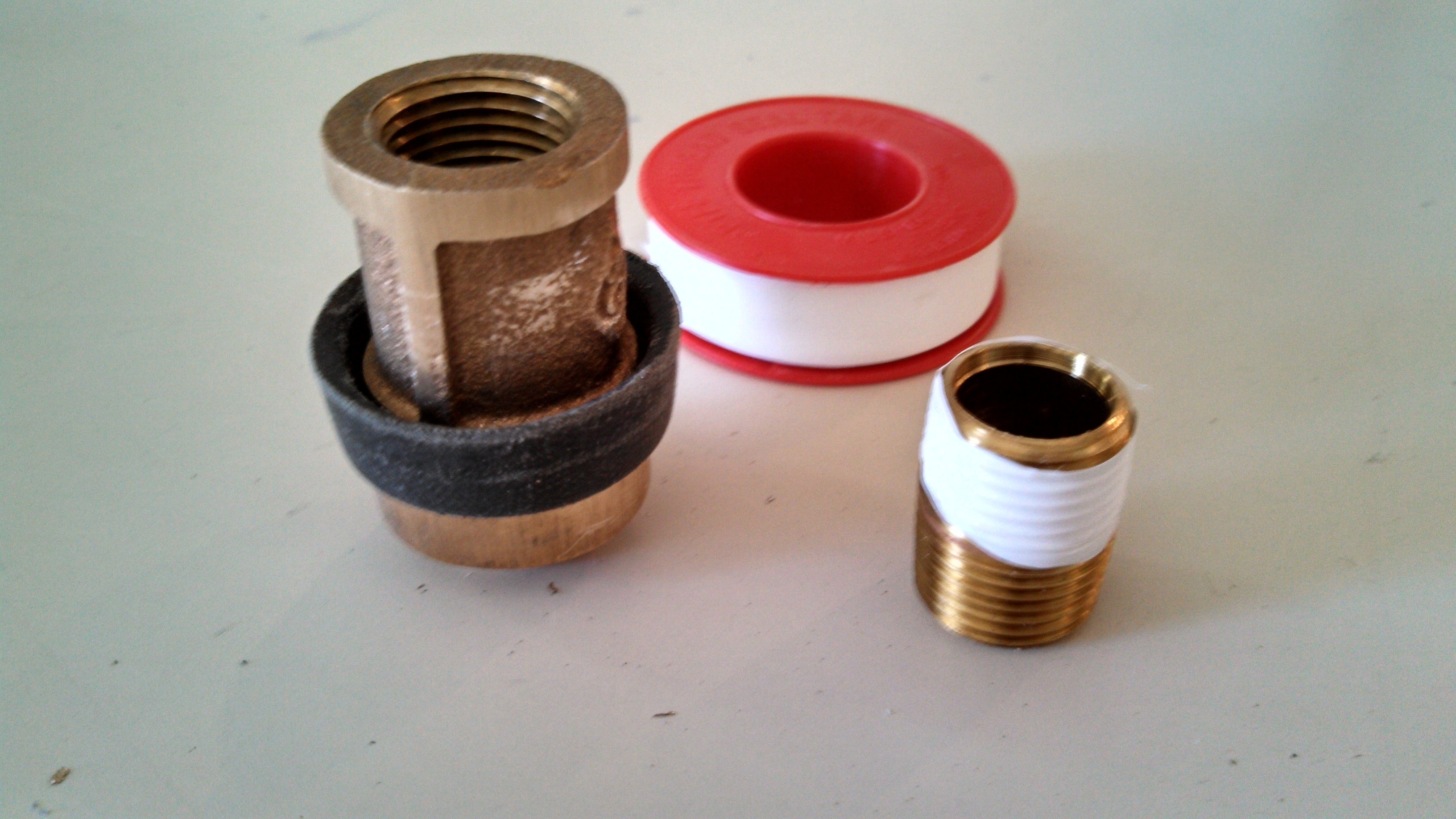
First, here is a picture of the necessary parts. All metal parts are made of brass, and all plastic parts are made of PVC.

Brass parts and seal:

well01

  • 1 @ 1/2” x 3” brass nib
  • 2 @ 1/2” x 1” brass nibs
  • 2 @ 1/2” threaded brass coupler
  • 1 @ 1/2” threaded brass ring/nut (I had to sand mine down as it was hexagonal)
  • 1 @ piston cup seal – McMaster Carr part # 9411K12
  • 1 @ 1/2” brass check valve (I used Merril 800 series CV50)
  • 1 @ 1 1/2” brass check valve with filter screen

PVC Parts:

  • 1 @ 1 1/2” male adapter t x s
  • 1 @ 1 1/2” coupler t x s
  • 1 @ 1/2” x 3/4” male adapter t x s
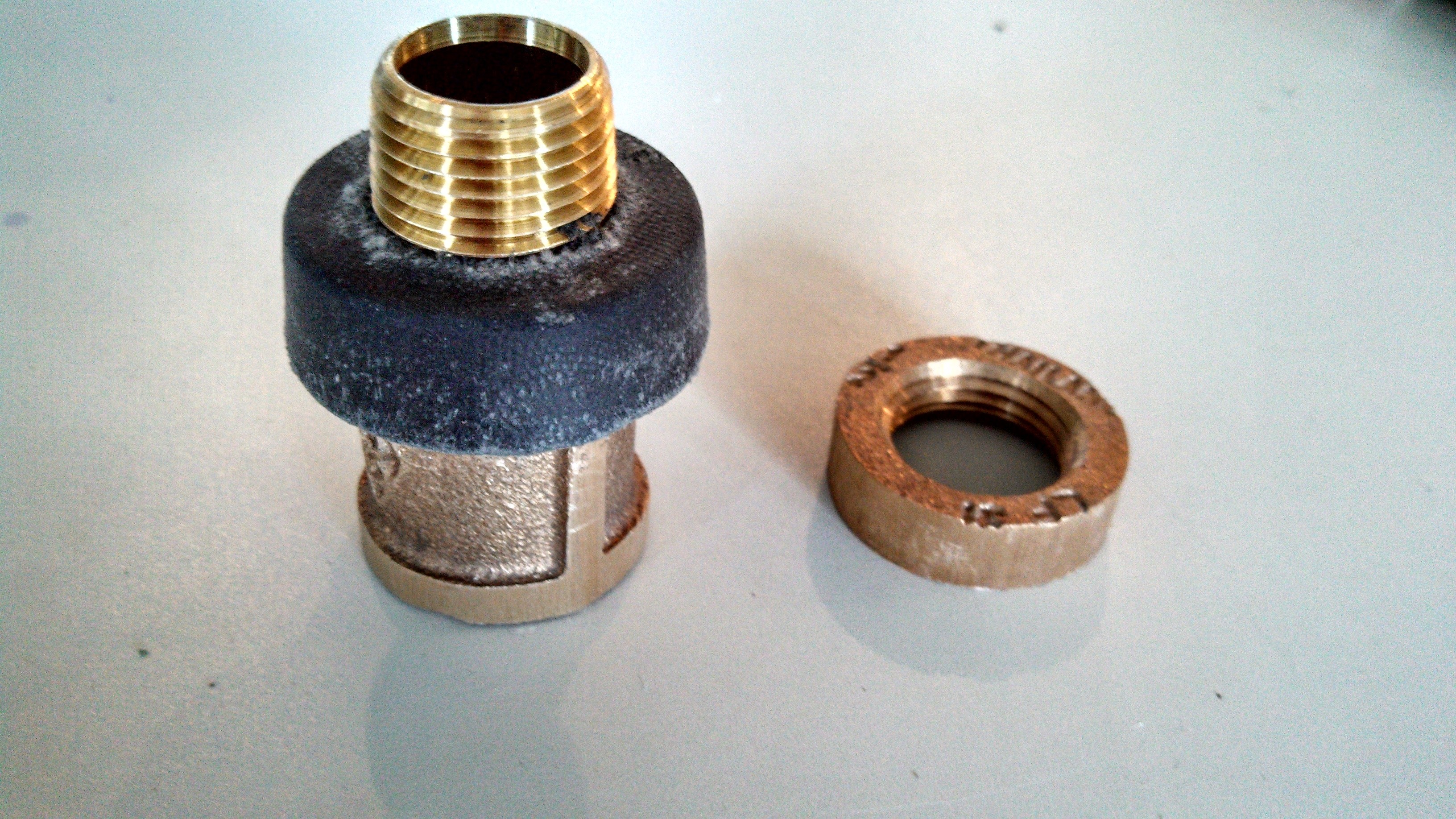
  • 1 @ 1 1/2” poly pipe male adapter t x s (dark gray in picture
  • 1 @ 2 feet of 3/4” schedule 40 PVC pipe
  • 1 @ 2 feet of 1 1/2” schedule 40 PVC pipe

Additional Items:

well16

  • Teflon Tape
  • Silicone
  • Grease
  • JB weld
  • PVC purple primer
  • PVC clear glue

Assembly

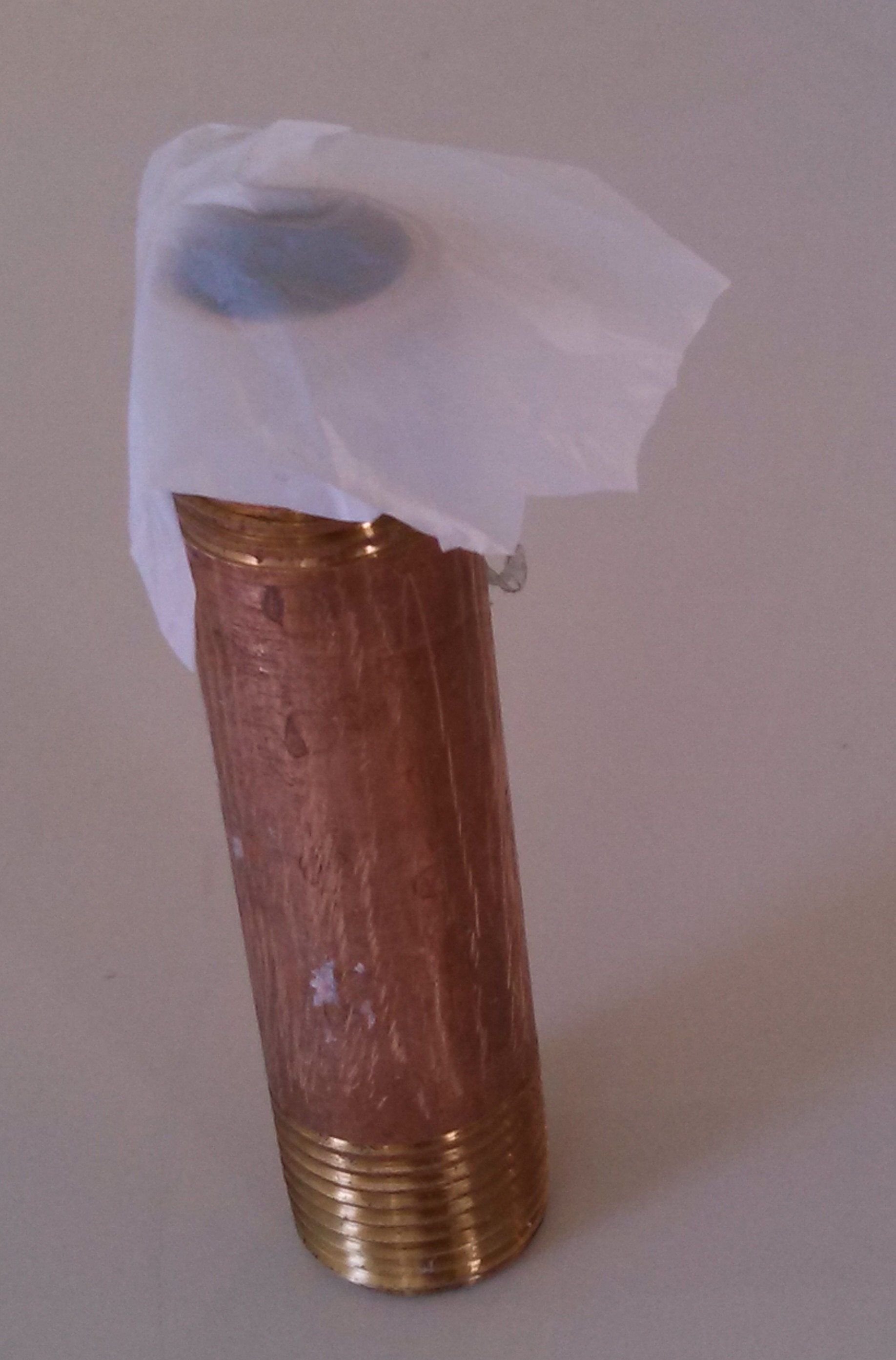
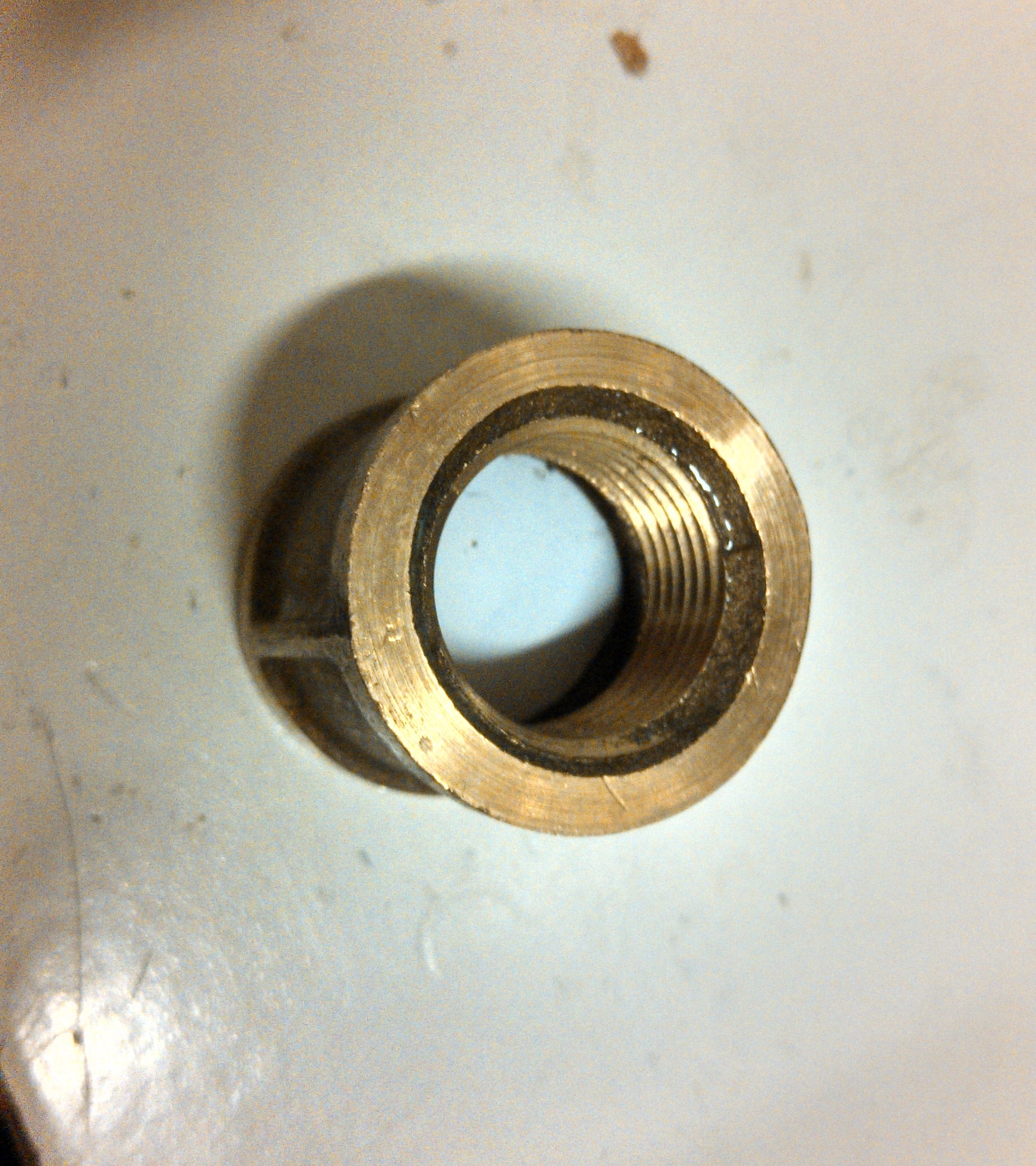
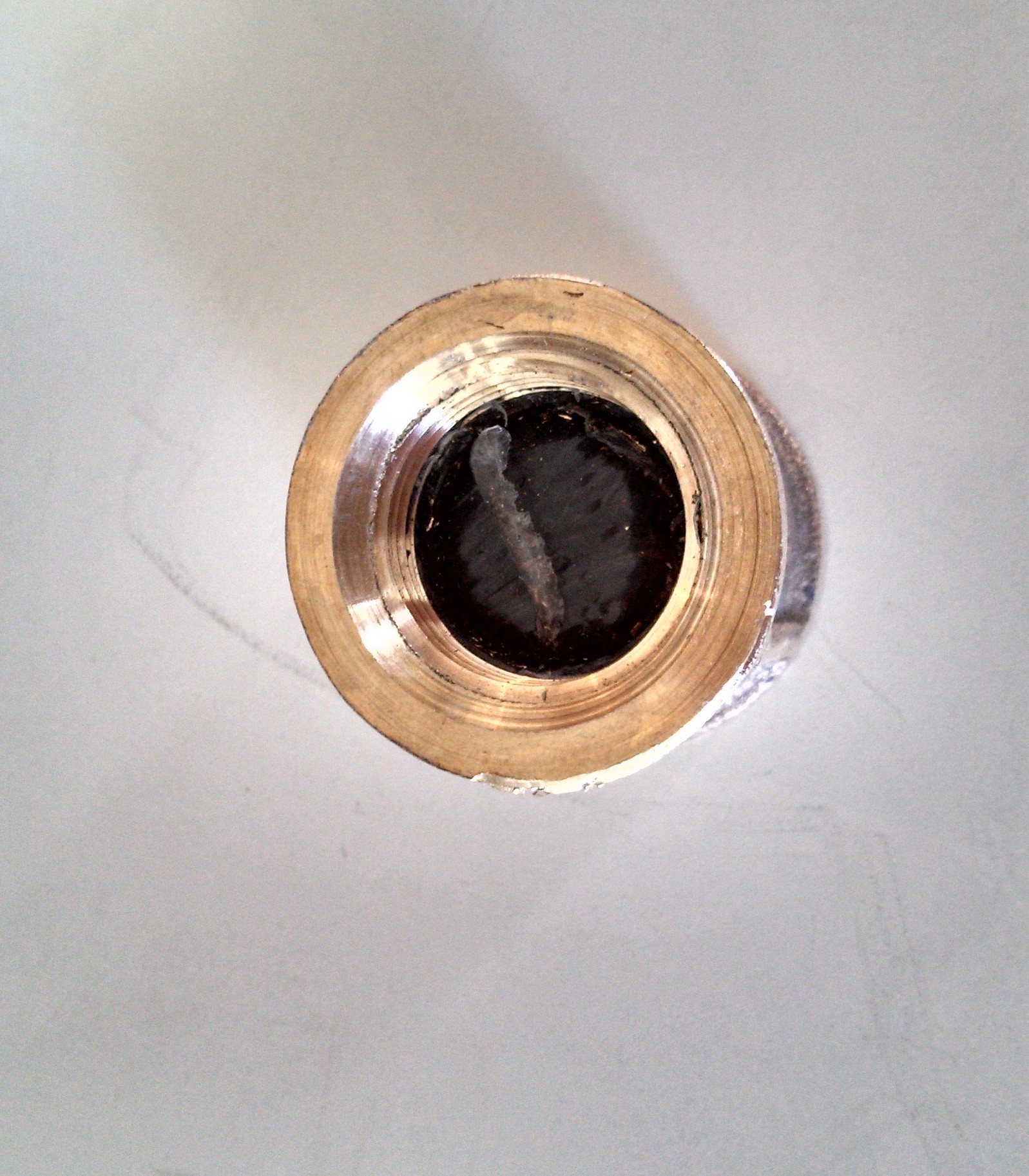
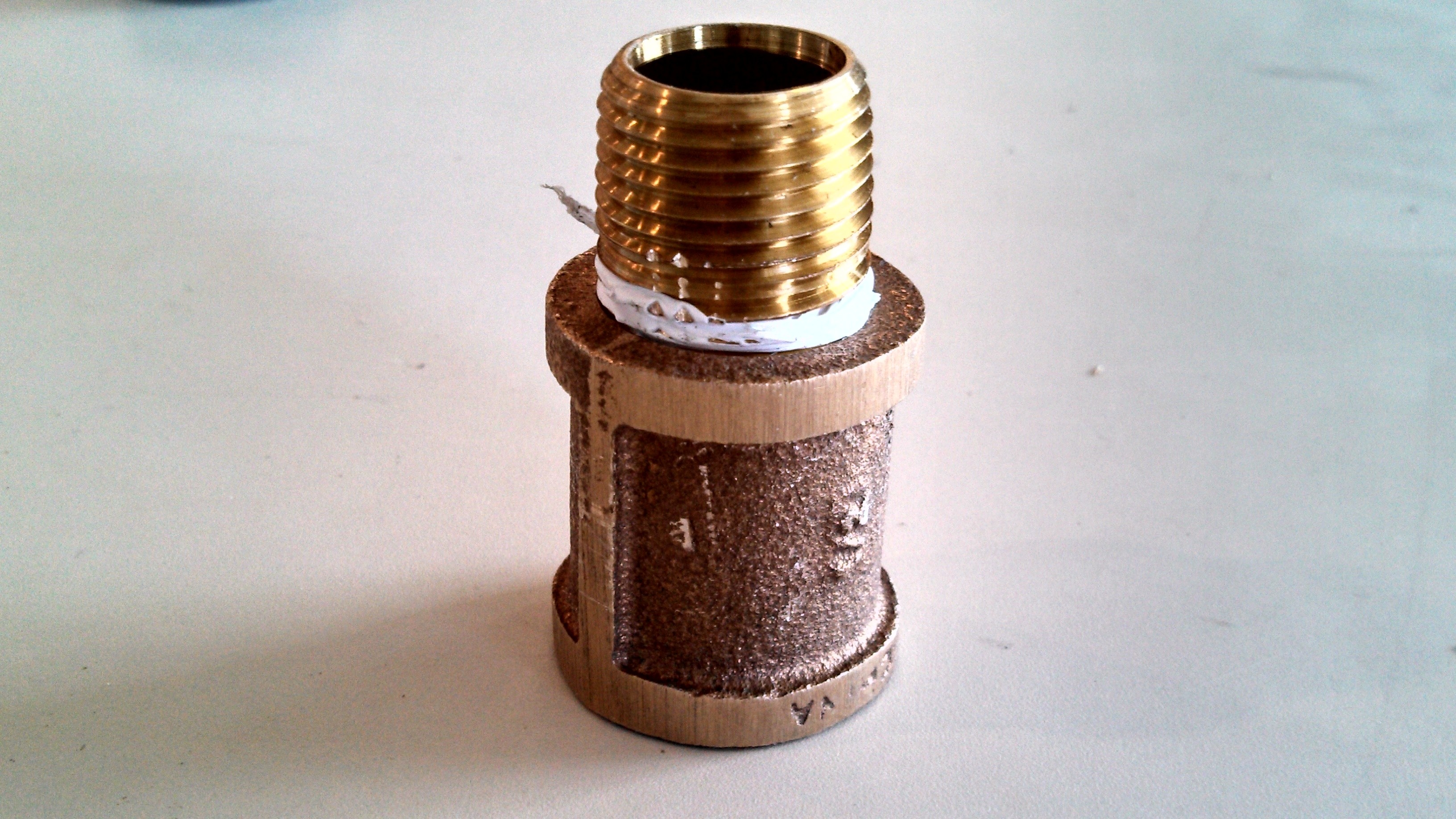
Step one – plug one of the brass couplers with JB weld:

well05

  • Place thin plastic over end of brass nib and screw in threaded coupler as deep as it will go using pliers.
  • Or cut a small disk of card stock to fit in the space between the threads coming from each end. Make sure and prep the coupler with acetone, brake cleaner, etc. to remove any oils used during machining.
  • well06

  • Carefully pour JB weld into coupler until it just reaches the threads coming down from the top.
  • well07

  • Let JB weld cure.
  • well08

Step two – assemble PVC pipe and fittings:

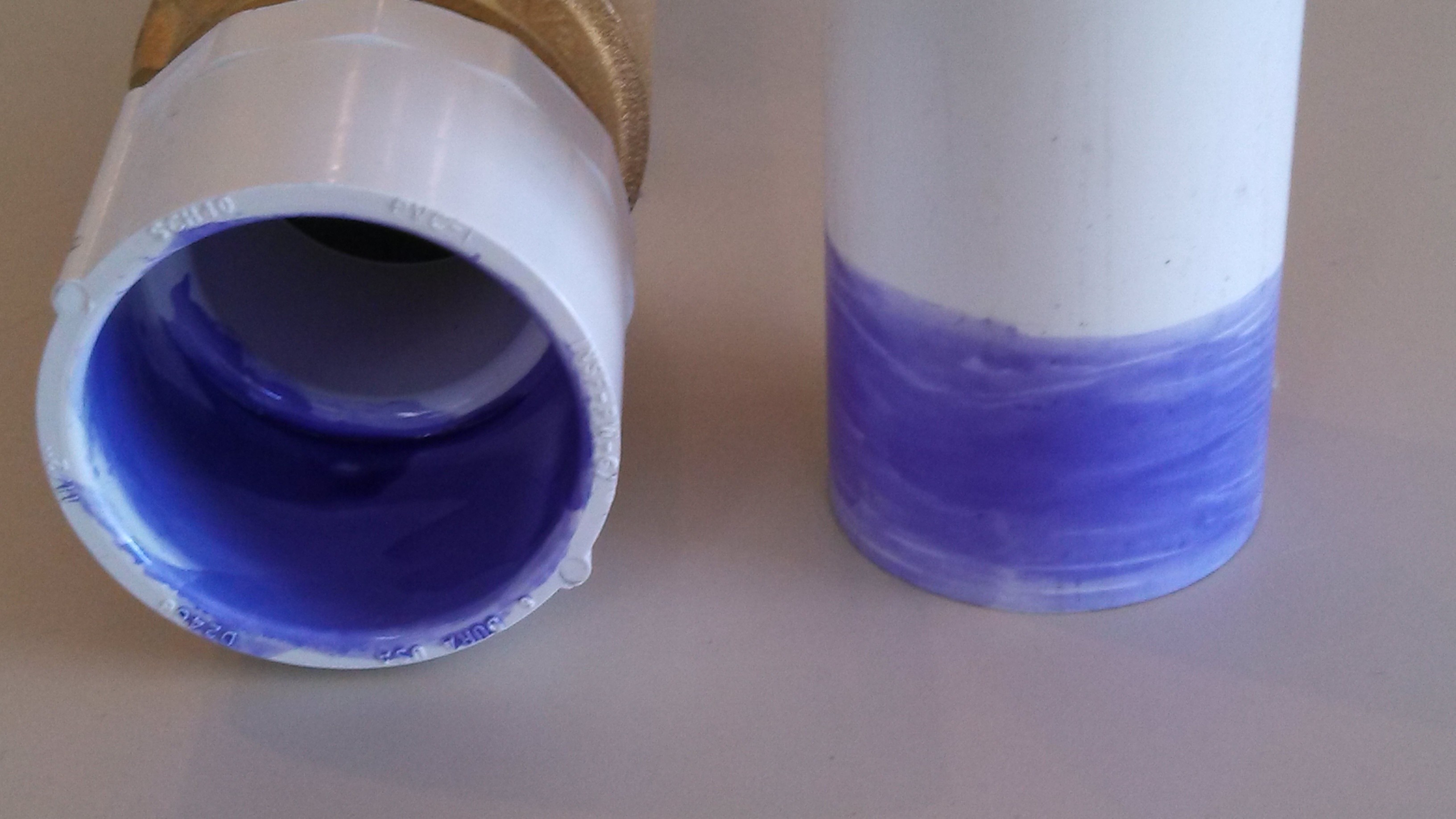
  • Prime 1 1/2” male adapter and one end of the 1 1/2” PVC pipe with PVC primer.
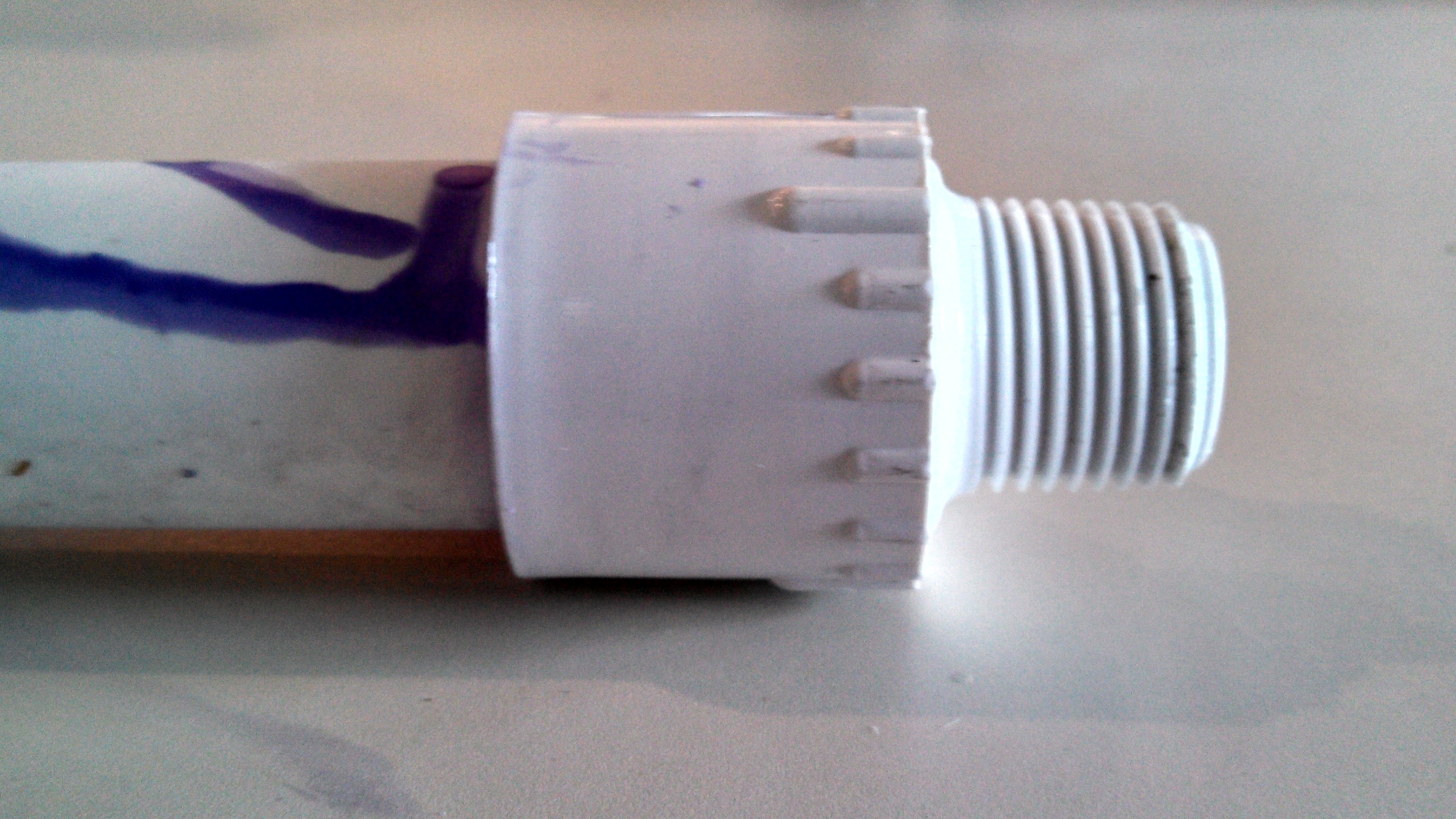
  • Apply clear glue to primed surfaces and insert pipe into the slip end of the male adapter. Hold together for 30 seconds (it wants to push itself back out if you don’t hold it).
  • Screw this pipe into the female end of the screened 1 1/2” check valve.
  • well09

  • Repeat primer / glue sequence for the other end of the 1 1/2” pipe and the slip end of the s x t 1 1/2” coupler.
  • Repeat primer / glue sequence for the end of the 3/4” pipe and the slip end of the s x t 3/4” x 1/2” male adapter.
  • well11

  • Lay both assemblies aside.

Step three – assemble inner check valve assembly:

  • Apply Teflon tape to one end of a 1/2” x 1” brass nib and screw firmly into 1/2” brass coupler using pliers.
  • well12

  • Ream out piston cup seal center to allow it to screw over top of nib.
  • Screw piston cup seal down over nib with cup side against coupler.
  • well14

  • Tightly screw brass nut over nib.
  • Apply Teflon tape over one end of the other 1/2” x 1” brass nib and screw tightly into threaded brass coupler.
  • well16

  • Apply Teflon tape over other end of 1/2” x 1” brass nib just inserted into coupler.
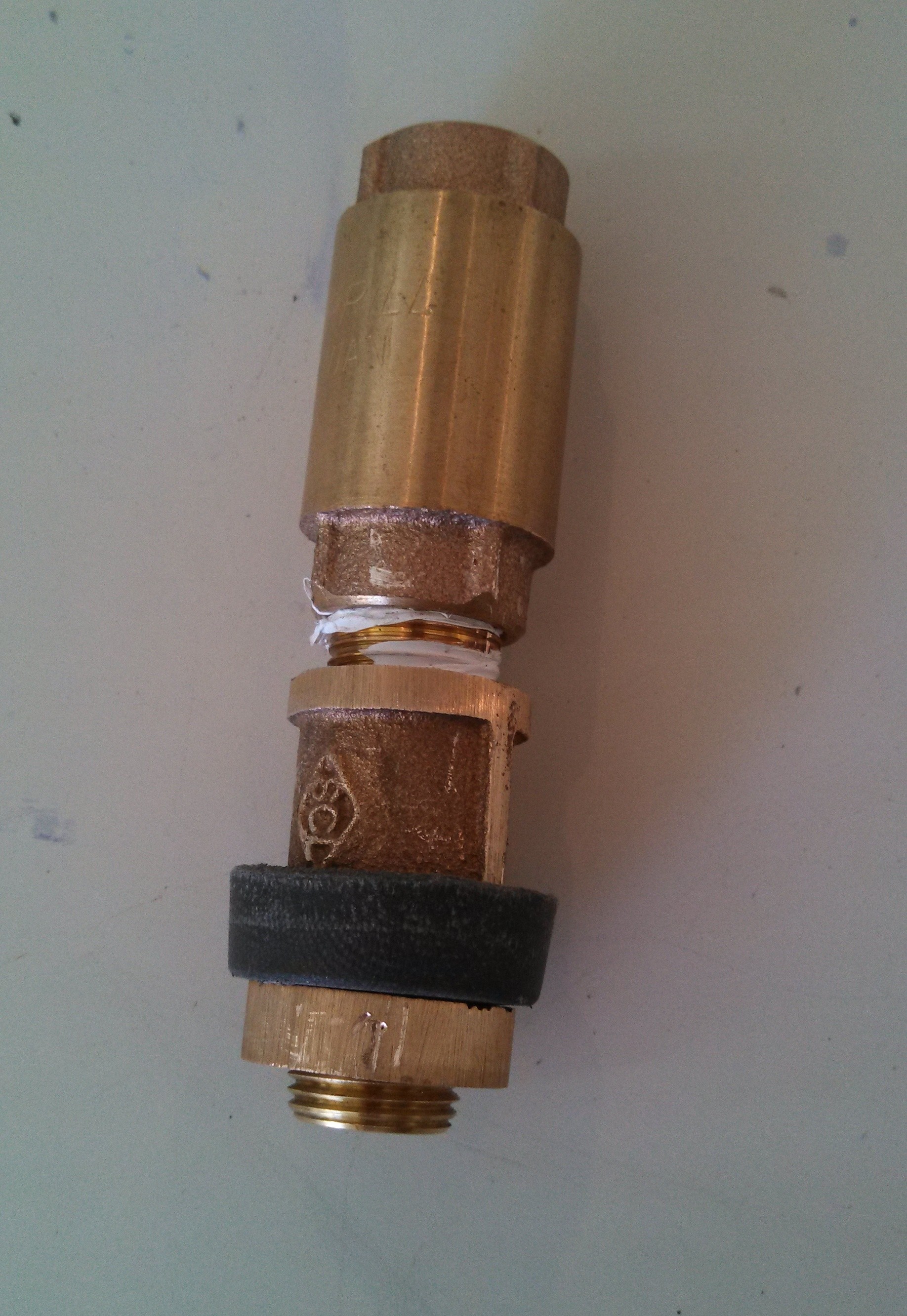
  • Screw brass nib into 1/2” brass check valve. Make sure check valve direction allows fluids to flow away from the end where the piston cup seal is located.
  • well18

  • Drill a 3/8” hole all the way through the side of 1/2” x 3” brass nib, rotate 90 degrees and drill all the way through again but about 1 inch away from the previous holes.
  • Apply Teflon tape to both sides of the 1/2” x 3” brass nib and screw one end into the brass check valve and screw the other end into the plugged brass coupler.
  • Screw male end of the 3/4” x 1/2” male adapter into the plugged brass coupler.
  • Set this assembly aside.

Step four – put pump together:

  • Liberally apply silicone grease to outside of piston cup seal and to inside of 1 1/2” PVC pipe.
  • Insert inner pump assembly into the 1 1/2” PVC pipe assembly.
  • Screw the 1 1/2” poly pipe adapter into the threaded end of the 1 1/2” PVC coupler.

Step five – place into well and secure:

  • Attach the 1” x 160 psi NSF polyethylene pipe to the end of the 3/4” pipe to reach the bottom of the well plus about 2 feet.
  • Attach enough 1 1/2” poly pipe to the 1 1/2” poly pipe adapter to reach the bottom of the well.
  • Secure the larger poly pipe to the top of the well.
  • Insert a 1 1/2” poly pipe to PVC adapter onto the larger poly pipe.
  • Attach a threaded female coupler to the adapter.
  • Glue a tee to this coupler with the side opening of the tee perpendicular to the poly pipe.
  • If you want, glue a 1 1/2” x 1” reducer bushing to the top of the tee where the smaller pipe comes out; the inside of the reducer should be reamed out to allow the smaller pipe to slide easily.
  • The smaller pipe should stick out of the top opening of the tee.
  • Water will come out the side opening of the tee.

That’s it. You are done!

Using the Manual Water Pump

To use:

  • Fill the outer pipe with water, or begin pumping to self-prime the outer pipe; expect to lift the weight of the entire smaller pipe while the outer pipe fills.
  • Once primed, move the smaller pipe up and down to begin pumping; water should come out of the side of the tee both with the up stroke and with the down stroke.
  • The force required to pump the water out should not change as the water travels up inside of the poly pipe or with the depth of the water source.

I have not patented this idea nor will I. I haven’t looked to see if someone else has patented this idea either. I only hope the ideas presented in this paper are useful. Please pass them on.


Letter Re: Churches and the IRS

HJL,

Considering recent events, worries about what will happen to churches, and the two letters on SurvivalBlog referring to tax exempt status of churches, I recommend this article. It breaks it down nicely, with bible references throughout. I have no knowledge about the rest of the site. Hope this helps people who are wondering about the implications of putting churches under the authority of the state. – SJB


Economics and Investing:

Banks Quickly Abolishing Your Ability to Use & Store Cash. – D.S.

o o o

Priorities: Greeks Rush to Buy Laptops and Games Consoles in Anticipation of Economic Collapse. – JBG

o o o

Items from Mr. Econocobas:

China ‘Heading Towards 1929 Market Crash’…

Chinese Retail Investor Savings ‘fall into abyss’…

‘Greece Is On The Edge of Catastrophe. There Will be Riots and Chaos’

Greek Crisis – Breakdown Of Situation With Mike Maloney


Odds ‘n Sods:

Real time cyber attack map. – P.M.

o o o

U.S. Military Makes Monumental Shift To Hollowpoint Pistol Ammunition – T.P.

JWR’s Comment: To the best of my knowledge the U.S. government has never been a signatory to the Hague Convention, which bans soft nose ammunition for military use. (Here, I must peremptorily state that it is NOT “The Geneva Convention”, as is popularly and incorrectly cited.) For MANY years, the U.S. military has issued riot shotguns with size 00 soft lead pellet buckshot, which is technically banned by the Convention. And as I recall, the U.S. Army has issued some match ammunition fro sniping that is not truly “full metal jacket.” And for that matter the 55 grain bullet used in our long-issued M193 ball ammunition was never completely Kosher under the Hague Convention, since it has a tendency to yaw, tumble, and occasionally disintegrate into nasty bits after hitting a human body. And, FWIW, the U.S. has largely abided by the Hague Convention, but we are not bound by it, since we were never a signatory.

o o o

A Nation of Snitches: 37% More Taxpayers Turned in Other Taxpayers to the IRS in 2014. – PLC

o o o

Ask Well: Guidelines for When Food Goes Bad. – G.G.

o o o

From Wranglerstar: Wildland Firefighting What’s It Like?


Notes for Wednesday – July 08, 2015

For those looking to relocate: Dark Sky map

JWR’s Comment: These are VERY detailed, zoomable maps. Quite useful! (But note, they may take a while to load, depending on your connection speed.)

o o o

Today, we present another entry for Round 59 of the SurvivalBlog non-fiction writing contest. The $12,000+ worth of prizes for this round include:

First Prize:

  1. A Gunsite Academy Three Day Course Certificate, good for any one, two, or three day course (a $1,195 value),
  2. A course certificate from onPoint Tactical. This certificate will be for the prize winner’s choice of three-day civilian courses. (Excluding those restricted for military or government teams.) Three day onPoint courses normally cost $795,
  3. DRD Tactical is providing a 5.56 NATO QD Billet upper with a hammer forged, chromlined barrel and a hard case to go with your own AR lower. It will allow any standard AR type rifle to have quick change barrel, which can be assembled in less than one minute without the use of any tools, and a compact carry capability in a hard case or 3-day pack (an $1,100 value),
  4. Gun Mag Warehouse is providing 20 Magpul pmags 30rd Magazines (a value of $300) and a Gun Mag Warehouse T-Shirt. (An equivalent prize will be awarded for residents in states with magazine restrictions.),
  5. Two cases of Mountain House freeze dried assorted entrees in #10 cans, courtesy of Ready Made Resources (a $350 value),
  6. A pre-selected assortment of military surplus gear from CJL Enterprize (a $300 value),
  7. A Model 120 Series Solar Generator provided by Quantum Harvest LLC (a $340 value),
  8. A $300 gift certificate from Freeze Dry Guy,
  9. A $250 gift certificate from Sunflower Ammo,
  10. KellyKettleUSA.com is donating both an AquaBrick water filtration kit and a Stainless Medium Scout Kelly Kettle Complete Kit with a combined retail value of $304,
  11. TexasgiBrass.com is providing a $300 gift certificate, and
  12. Two cases of meals, Ready to Eat (MREs), courtesy of CampingSurvival.com (a $180 value).

Second Prize:

  1. A Glock form factor SIRT laser training pistol and a SIRT AR-15/M4 Laser Training Bolt, courtesy of Next Level Training, which have a combined retail value of $589,
  2. A FloJak EarthStraw “Code Red” 100-foot well pump system (a $500 value), courtesy of FloJak.com,
  3. The Ark Institute is donating a non-GMO, non-hybrid vegetable seed package–enough for two families of four, seed storage materials, a CD-ROM of Geri Guidetti’s book “Build Your Ark! How to Prepare for Self Reliance in Uncertain Times”, and two bottles of Potassium Iodate– a $325 retail value,
  4. A $250 gift card from Emergency Essentials,
  5. Twenty Five books, of the winners choice, of any books published by PrepperPress.com (a $270 value),
  6. TexasgiBrass.com is providing a $150 gift certificate, and
  7. RepackBox is providing a $300 gift certificate to their site.

Third Prize:

  1. A Royal Berkey water filter, courtesy of Directive 21 (a $275 value),
  2. A large handmade clothes drying rack, a washboard, and a Homesteading for Beginners DVD, all courtesy of The Homestead Store, with a combined value of $206,
  3. Expanded sets of both washable feminine pads and liners, donated by Naturally Cozy (a $185 retail value),
  4. Two Super Survival Pack seed collections, a $150 value, courtesy of Seed for Security, LLC,
  5. Mayflower Trading is donating a $200 gift certificate for homesteading appliances,
  6. APEX Gun Parts is donating a $250 purchase credit,
  7. Montie Gear is donating a Precision Rest (a $249 value), and
  8. Two 1,000-foot spools of full mil-spec U.S.-made 750 paracord (in-stock colors only) from www.TOUGHGRID.com (a $240 value).

Round 59 ends on July 31st, so get busy writing and e-mail us your entry. Remember that there is a 1,500-word minimum, and that articles on practical “how to” skills for survival have an advantage in the judging.


A Portable and Easily Constructed Manual Water Pump – Part 1, by G.G.

“Water, water everywhere but nary a drop to drink”

– Samuel Taylor Coleridge’s “The Rime of the Ancient Mariner”.

Finding water becomes the major problem faced by people in a survival situation. Go without water only a few days and death ensues. Storing water in the form of barrels is a logistical nightmare. They must be drained and refilled annually. Further, you only have as much water as you have stored.

Living in Idaho gives those of us who live here access to one of the world’s largest aquifers. In fact, that body of water lies only 70 feet below my house. The problem I have is getting through the layers of hard pan, lava, gravel, and dirt that lie in between. Yes, I do have a well, but when TEOTWAWKI comes, there will be no electricity to bring that water to the surface. I guess you could say I am lucky water is only 70 feet down for me. Others in the Treasure Valley have to go down 400 feet or more to reach potable water. In order to access this water source, a portable, easily constructed manual pump is needed. (What follows is a mildly technical description of the principles employed by this pump. If this does not interest you, skip down to the assembly of the pump).

Technical Description of Manual Pump

Typical hand pumps can only pump water up from about 33 feet (14.7 psi or 1 atmosphere). Pumping water further than that pulls the dissolved air out of the water and creates bubbles. An example of this can be seen when a nurse draws medication out of a vial. Air always ends up in the syringe even though the needle remains submerged in the solution in the vial. This is due to the negative pressure being applied by the syringe. Where the air in the solution is dissolved at a higher pressure than what exists inside the syringe a natural gradient causes the dissolved gases to boil out. (This is also similar to what happens when a can of soda foams up. If the pressure outside of the open can was higher than the pressure with which the gas was dissolved in the soda, no fizzing would occur.)

So, the problem remains; how do we access water deeper than 33 feet? As I have thought about this, I kept thinking that electric pumps usually push water up from the bottom of the well, since most pumps are located at the bottom of the well, rather than pull the water up (unless special pump considerations are made). Furthermore, it is easy to conclude that a pump down at 400 feet needs to generate more pressure to push the water out than a pump at 70 feet does.

The answer to this problem came partly when I was studying for my PADI Dive Master rating. In the physics portion of this course, we learned about buoyancy. This is also known as Archimedes principle. Simply put, it means that the amount of force trying to lift a submerged object is equal to the weight of the water displaced by that object. For example, each cubic foot of seawater weighs 64 pounds. If a 1 ft3 container was placed in sea water, it is pushing away 64 pounds of salt water. Now, if we were to attach a 64-pound weight to that container, the container would be neutrally buoyant. In other words, there is no force trying to move the container up or down in the water. However, if we attached a 63-pound weight, the container would float up or would be positively buoyant. If we attached a 65-pound weight, the container would sink, or would be negatively buoyant.

If we were to consider these principles as they apply to water in a pipe, we would find there is no difference between the principles of buoyancy inside the pipe versus those inside the ocean. Application of these principles implies that in order to bring water up from the bottom of a well, the weight of that column of water (the water in the pipe) would have to be overcome.

For instance, if we had a 1-inch square column of water, the weight of that water would be 14.7 pounds for every 32 feet. Therefore the amount of pressure to elevate water from 70 feet would be (70 / 32) x 14.7 = 32.16 psi. The amount of pressure to elevate water from 400 feet would be (400 / 32) x 14.7 = 183.75 psi.

Let’s shift gears for a moment and consider areas of a circle. Take two circles of different diameter and place one circle inside a larger circle. Let’s make the area of the smaller circle equal the area between the smaller circle and the larger one. Let’s make the circles such that half of the area is outside the small circle and half is inside of it. Rather than going through the algebra to figure this problem out, let’s just calculate the area of several circles:

The area of a 1½” circle: A = ?R2 or, 3.14 x 0.75 x 0.75 = 1.766 square inches.

To make the area inside the smaller circle equal the area outside of the smaller circle, we divide 1.766 / 2 = 0.883 square inches

The area of a ¾” circle is 0.442 square inches.

The area of a 1” circle is 0.785 square inches

The area of a 1 1/8” circle is 0.993 square inches.

Now, if we extend these circles to a third dimension, we would essentially have one pipe inside of another. Because pipes only come in certain sizes, let’s look at this problem using what is available to us.

I feel polyethylene pipe is ideal for this application, due to its inherent flexibility. This means the pipe can be pulled by hand out of the well in one continuous length. PVC, or some other stiff pipe, must be separated length by length as the pipe is lifted out of the well. This means that each section must be connected to each other by fittings, which can fail either by separating due to faulty gluing or by leaking due to improper sealing. The most fail-safe pipe material is the flexible polyethylene pipe. I have included calculations for PVC pipe below, if this material is chosen.

The actual inside diameter (ID) of a 1.5” x 160 psi NSF polyethylene pipe is 1.61” (Home Depot Internet # 205909030). This gives an area of 2.035 in2. The actual outside diameter of a 1” x 160 psi NSF polyethylene pipe is 1.125” (Home Depot Internet # 1000030866). This gives an area of 0.994 in2. So, if we were to subtract the inside area of the larger pipe from the outside area of the smaller pipe, we would get, 2.035 in2 – 0.994 in2 = 1.041 in2. In other words, the larger pipe is 0.047 in2 greater than the smaller pipe. This difference is important

So, by plugging the bottom end of the smaller pipe, it will remain hollow as water fills the volume outside of this pipe. To use our scuba diving analogy, we want the hollow container (smaller pipe inside the 1 1/2” larger pipe) to lift with a force equal to weight of the water surrounding it.

Because the smaller pipe is 0.047 in2 smaller than the larger pipe, there will be a net force lifting the smaller pipe. This would make it difficult to push down the inner pipe to move the pump mechanism. However, if the weight of the smaller pipe is considered, the forces become negligible. Thus, this system is in a neutrally buoyant condition. It will lift the water from the bottom of the well with very little force. The depth of the well is irrelevant.

So, the final solution to our initial problem is the overwhelmingly simple principle of buoyancy.

Tomorrow, we will put this pump together.



Letter Re: Illusive Self Sufficiency

Hugh

Mrs RLB ends her letter with a profound observation: “I am one of those who has worked on a Sunday trying to get some task done, only to be tired all week”.

When I was much younger, I was starting out with a partner in a very small architectural mill work endeavor. We had landed a contract for casework in a school that had to be installed by September first. We were running hard, seven days a week, 10 hours plus.

I no longer recall all the precise details. I do recall being, by the second week of this regime in spite of sleep, very very tired and that we then suffered a series of mishaps as a result, the last of which nearly resulted in the loss of important anatomy.

Neither of us were believers at that time. Nevertheless, we vowed that in the future, no matter what the pressure happen to be, one day off in seven was mandatory.

It was some years before I fully appreciated that God was there ahead of me. And in this matter, as in all others, His advice is always the best available. Of course it is up to me to read and heed.

Dollardog


Hugh’s Quote of the Day:

“The aim of public education is not to spread enlightenment at all, it is simply to reduce as many individuals as possible to the same safe level, to breed and train a standardized citizenry, to put down dissent and originality.” – H. L. Mencken