Greece Today, America Tomorrow?
o o o
For America’s economy, the end is nigh – H.L.
o o o
o o o
Global Banking System on the Verge of Total Collapse
o o o
Why Greece Is The Precursor To The Next Global Debt Crisis – H.L.

Our friend Commander Zero had a link to a fascinating article by a Montana journalist Michael Finkel: The Strange & Curious Tale of the Last True Hermit
o o o
An excellent article on the mentality of homesteading: There’s Nothing You Can Do?
o o o
The liberal-progressives are at it again: Don’t make a success out of life – ( It’s simply too rough on your health ) – T.P.
HJL adds: Contrast that article with the one just above it!
o o o
Are Private Companies Color Coding Your House For Law Enforcement? In other words, if the guy delivering your pizza has ANY type of previous involvement with the criminal justice system, your home just made the fusion center “red list” even if you don’t know the man personally. His cell number is now linked with yours on metadata. It’s comforting, isn’t it? – T.P.
o o o
When the Trucks Stop Delivering, ‘The System’ Will Collapse Of course, you already knew that. – B.B.
“When politicians say ‘I’m in politics,’ it may or may not be possible to trust them, but when they say, ‘I’m in public service,’ you know you should flee.” – Albert Jay Nock
On this day in 1787, Congress enacted the Northwest Ordinance, structuring settlement of the Northwest Territory and creating a policy for the addition of new states to the nation. The members of Congress knew that, if their new confederation were to survive intact, it had to resolve the states’ competing claims to western territory.
One of life’s little problems is how to carry the things we need. A lot of junk can go into pockets, but what about all the stuff that can’t, particularly in a self-defense scenario? We may have to hide our defensive equipment, but in some scenarios we don’t. That’s where gear like belts, chest rigs, and plate carriers can come in handy, especially if they have the Pouch Attachment Ladder System (PALS) found on most western military Modular Lightweight Load-carrying Equipment (MOLLE) these days.
PALS is a system of webbing that allow you to mesh one piece of gear to another with a strap or plastic strip run through the webbing on each piece to lock them together. The straps are one inch wide and run horizontally across pouches and carriers. There are usually several rows, and they are stitched down vertically every 1.5 inches along the webbing. By alternately weaving a strap or strip through a section of web on the pouch and then through a section on the carrier, you can solidly attach your gear to a carrier and later move it to a different spot as needed. While it is a bit of a pain to use, it works extremely well and allows one to tailor their equipment to their needs.
PALS is widely used by militaries in the western bloc of nations as well as neutrals. I am pretty sure I have also seen it, or something similar, in news photos of soldiers from the “former” communist bloc. It is showing up in gear that hunters might use and is certainly widely available to the prepper world. There are probably hundreds of companies making the stuff today, and one that caught my eye is Emdom– a New York City-based firm that makes gear used around the world, including in the U.S. special operations community. I will admit that New York is a location I find odd for this sort of product, but they offer some very smart gear despite apparently being yankees.
As to be expected with tactical gear, you get choices for colors that include MultiCam, sewer green, coyote, black, and SDU Grey. Colors get confusing, and they vary a bit from maker to maker. While the government does have official specs for colors, it is hard to find a sheet with chips on it to judge them the way you can paint at the home store. Emdom does show all of the colors for one of their magazine pouches to help you pick, but they don’t show all of the colors with all of their products. I thought I would go over the choices as I have had lot of trouble picking what is best for me. I hope this will be helpful for others.
I’m not sure what SDU stands for, but the color is a darkish grey. I haven’t seen it in person, but greys have started winning popularity, particularly for urban and maritime use. Some versions seem to have a touch of green or brown to them, which helps in areas with less concrete and more foliage. It reminds me of the field grey (feldgrau) effectively worn by the German army in the two world wars. Grey has the advantage of fading into shadows and picking up some of the reflected colors of the surroundings and is a good choice for many uses. The Germans certainly made it work well across most of Europe.
MultiCam is the scheme developed by Crye Precision that won its spurs with U.S. forces in Afghanistan. It originally lost the Army contract to replace the older Woodland and Desert patterns to the Universal Camouflage Pattern (UCP), but UCP turned out to be more like a Universally Visible Pattern, particularly in the Mideast. Our special operations troops quickly adopted MultiCam when deploying to those regions. It worked so well for them that the big Army also adopted it for Afghanistan. In fact, everyone except the Marines, who had come up with their own Marine Pattern (MARPAT) camouflage that worked quite well, adopted MultiCam for that part of the world. The Army is now in the process of adopting the Operational Camouflage Pattern (OCP) for general issue, and it looks a whole lot like MultiCam.
MultiCam and OCP have a lot of brown and tan in them along with greens and are designed to work well over a large range of environments. This sort of pattern is sometimes called a transitional one to cover areas that aren’t woodland or desert. They were also designed to be less visible to night vision users, particularly those using illumination. Don’t, however, wash this stuff with normal detergent, as the brighteners make things glow in a night vision device. Find a detergent for hunting clothes that promises no brighteners or scents.
The basic problem with camouflage, of course, is that what works great in one spot is often rotten someplace else. While MultiCam is supposed to work pretty well almost anywhere, it is significant to me that Crye has come out with additional variants for desert and jungle use. The Army also recognized this and plans to resume having desert and woodland uniforms available to soldiers deployed to those environments. I was initially hopeful that MultiCam would do the trick for me but realize now that my part of the country is too green most of the year for it to work as well as I would like. I would be better off with the Tropic version, but it is not very available.
Black is a popular color, but the only time it works well is at night or in deep shadows. There aren’t that many black things in the wild, so black usually stands out. Police often wear black for intimidation purposes, but I think for our purposes we are better of blending in.
Coyote is a dark tan or brownish color that often seems to have a bit of green in it. It works pretty well in many arid locations, like the American southwest. It can also work well in the fall in other areas.
Sewer green is the Emdom color that I think works best for my location. It is a darkish green with perhaps a hint of olive to it but not much. It fades fairly well against much of the foliage around me. It is a bit too dark for most of the grasses but is not glaringly out of place.
Emdom also offers an assortment of custom colors, but they tell you to call before ordering.
Another way to get a custom color is with spray paint. Aervoe offers a wide assortment of standard military specification colors, and you can happily hose down your gear to make it blend to your environment. They have color chips on their website too. If you don’t want it in case lots, Brownells sells it by the can. Krylon also offers some suitable colors, though nowhere near the range of Aervoe. I’ve found it in the home stores and some versions are supposed to do well on plastics.
One nice thing about paint is that you can keep adapting as seasons or conditions change. You can also blend colors and soften out straight lines that can be giveaways. It will be hard the first time you squirt paint on expensive gear, but the results can be worth it. I have picked up some gear in UCP at very good prices since it is being dumped by the Army (look on eBay) and have cheerfully sprayed it into more useful colors.
If you get interested in camouflage, I found the articles on HyperStealth’s site on the selection of the Army’s camouflage programs to be fascinating.
The most important Emdom item I bought was their $52 MM/CM Belt. This was to solve a problem I wrote about when I reviewed G-Code holsters last year. The basic idea was for a bump in the night kit that could carry a holster for a pistol, spare ammo for the pistol as well as for both a carbine and shotgun, depending on which I thought appropriate for the scenario, a flashlight, a first aid kit with tourniquet and Israeli bandage, and a dump pouch.
Before arriving at this, I had an over-the-shoulder bag similar to what I used as a photographer. I figured all that practice with cameras would transfer, but working with it in a carbine class convinced me otherwise as I descended into a nightmare of tangled slings and straps. Cameras and guns are different, and I should have realized that.
The fact that I have body armor also influenced me. There are a lot of good chest rigs that can carry my gear, but if I am really pressed for time, I might not be able to get it all on. The belt goes on really fast, and then if there is time body armor can join it. The belt places the gear mounted on it low enough and far enough out from the body that the armor does not interfere with accessing it. My concealment holsters did not work well with armor, and it dawned on me that if I was wearing armor, especially the hard stuff, there was little call to conceal my handgun. I thought about mounting it all on my plate carrier, but it takes time to get into it and I might not have the time. It also made the carrier so heavy that it was hard to get on.
The Emdom belt has a quick release buckle with a strap that further secures it with a snap. You pull the strap to get it off. There is one row of PALS webbing on the inside to firmly locate pouches in place, and the webbing has Velcro on it so you can use it with a liner belt to further secure everything in place, though I haven’t found this necessary. I bought mine in sewer green. It is two inches wide and works well with the G-Code holster I mounted on it. Range tests have shown it to work well for me.
After the holsters, the next item I added was the Emdom PM4 Double Magazine Pouch. As the name implies, it holds two polymer magazines for the AR platform. I use an assortment of magazines, however. So far it has worked with all of them– metal and plastic, so the name could be a bit more inclusive.
There is elastic around the pouch to help hold the magazines in, but it isn’t tight enough to secure a single one after withdrawing the first. Thankfully, they give you a flap that is secured by both Velcro and a snap. The flap can be adjusted so the pouch will work with both 20- and 30-round magazines, but it is best suited for the larger capacity ones. There is a bit of Velcro on the back of the pocket that holds the magazines; this Velcro allows you to secure the flap out of the way if you wish. You can also remove it altogether, but I wouldn’t do that, as the pouch really can’t retain a single magazine after you use the first one. There is enough adjustment so the flap can accommodate the extra length of Magpuls if you use them.
It will also hold one 7.62x51mm NATO magazine as well as one AK magazine. While the flap can be adjusted to do an acceptable job of retaining the 7.62×51 magazine, the curvature of the AK one does not work well with the flap. It isn’t marketed for that either, but I did want to point out that in a pinch it could carry them.
There is PALS webbing around the front ¾ of the pouch, so you can hang more stuff on it, like pouches for pistol magazines or flashlights.
After that, came the Emdom MM Dump Pouch. Dump pouches are primarily used to stow things in a hurry, particularly used magazines. You don’t want to leave magazines behind if at all possible, but you don’t want to put them back in a ready pouch where you keep your full ones. Dump pouches are also great places to store odds and ends, likes gloves and spares for your flashlight. I have a Surefire Spares Carrier in mine that holds a bulb and six batteries.
One might think that a dump pouch could just be a simple bag hanging on a belt, and truthfully that’s all many of them are. That can work, but Emdom added smart features to theirs. First, they have a one-inch-wide strip around the mouth of the bag to keep it open so you can easily put stuff in it or get it out. It doesn’t bulge the bag out excessively, but it is completely accessible. I suspect it is made of some space age polymer, as it does not attract a magnet nor bend like aluminum. Next, they have a cover over half the mouth of the bag that can be removed if desired, but it serves the purpose of keeping things in the pouch without hindering getting them into it. Finally, there is a snap to thoroughly close it should the need arise. I’ve seen some dump pouches that will roll up to minimize space, but this one has a stiffener in the back to make it work better as a dump pouch, and that means more to me than rolling it up. I really like this one, and it works well for me in practice.
It is rated to hold seven AR-15 magazines, but that’s if you are neat and organized. In real life, I can get about five in it.
The Emdom/MM NVG Case has not found its way onto my belt, but I have been very happy to have it. It was designed to carry the PVS-14 monocular or PVS-15 binocular or similar night vision devices with accessories. My Armasight Spark Core fits into it nicely with the attached weapons mount and supplementary infrared flashlight.
The case is padded to protect the contents and has PALS webbing around it, allowing you to attach it to a carrier as well as to attach other items to it. There is a row of elastic webbing between the two rows on the front that can hold things like a pen, flashlight, or light stick. I think, however, that I would have preferred having the PALS webbing on the front a bit lower, as things hung there can interfere with working the zipper if they go too high. There are even straps on the lid, which is zippered at the top for opening and has a pocket on the inside for small items, like spare batteries and a lens cloth. There is a divider, in case you wish to carry components separated and protected from one another. Emdom also provides a card with four elastic pockets for other small items.
The corners of the pouch are rounded so it is less likely to get caught on things, and there are rings so you can use a shoulder strap rather than attaching it to a belt or carrier with the PALS webbing. I wish they included a shoulder strap, but I scrounged one from one of my piles of debris. While I suspect I will most likely carry it over my shoulder, I put a carabiner on one of the strap rings so I can also hook it on something securely if I need to.
The 6×6.5×3 inch pouch can also hold things like binoculars. It costs from $81 to $85, depending on your choice of color.
The $31 Emdom Universal Rifle Magazine Pouch, as the name implies, is designed to hold most any rifle magazine from 5.56 to 7.62 NATO. It is an open top design for rapid access and yet is promised to provide retention for your magazines. It can hold two 5.56 magazines or one 7.62x39mm or 7.62 NATO magazine. It has two rows of PALS on the front, should you wish to hang something else on it.
I found it does an excellent job with one magazine, but it can get iffy with two for the 5.56. You can adjust the tension the pouch places on the magazine, but I found it hard to get it so it worked with all varieties of AR magazines. Polymer magazines with protruding ridges are troublesome. Adding the Magpul straps compounded the issue, as they make the magazines wider. The problem is that if you get the pouch tight enough to retain the magazine left behind after pulling out the first one, it is really hard to get the first one out. Additionally, if the ridges hung up on one another, I sometimes wound up pulling out both magazines. GI aluminum or the British or H&K steel magazines worked much better as their reinforcing ridges are indented, so they can’t catch on each other.
The pouch worked great with both AK and 7.62 NATO-sized magazines, however, as it didn’t have to achieve the difficult task of retaining either one or two magazines.
I really like this pouch for single magazines, as there is no flap to worry about, and were I to decide a situation called for a 7.62 all I have to do is swap magazines instead of also changing out the pouch. I am looking for a space for it on my belt or plate carrier.
Emdom provides MALICE Clips from Tactical Tailor to attach their gear to PALS webbing. One of the frustrations with PALS is threading the straps through all of the webbing to connect the gear. MALICE Clips are one of several available products that have the aim of making it easier putting it on and taking it off. The idea is that a plastic strip can be pushed through more easily than a fabric strap. I certainly like MALICE Clips better than straps, but I’m not sure which of these products is best. Which one you like best might depend on what part of the process frustrates you the most.
One slick trick Emdom does is to narrow the webbing on the pouches by 1/8 inch. This makes it easier to thread the straps or clips through the webbing without compromising how well the pouch is held to the carrier.
Overall, I have been very impressed with the design, workmanship, and quality of Emdom gear, and I have no regrets about buying any of it. There are a large number of quality companies making this sort of gear, but Emdom bears a good look if you need some of it.
– SurvivalBlog Field Gear Editor, Scot Frank Eire
I remember when the .17 WSM (Winchester Super Magnum) round first came out, and I believe it was Savage Arms who was the first gun maker to chamber this hot, new round in their rifle. Everyone was jumping on the bandwagon to get this new rifle and new caliber. I sat back and waited for a while before taking a close look at the .17 WSM. I liked what I saw and what my results were in my testing. Still, I wasn’t about to run out and buy a rifle chambered in .17 WSM.
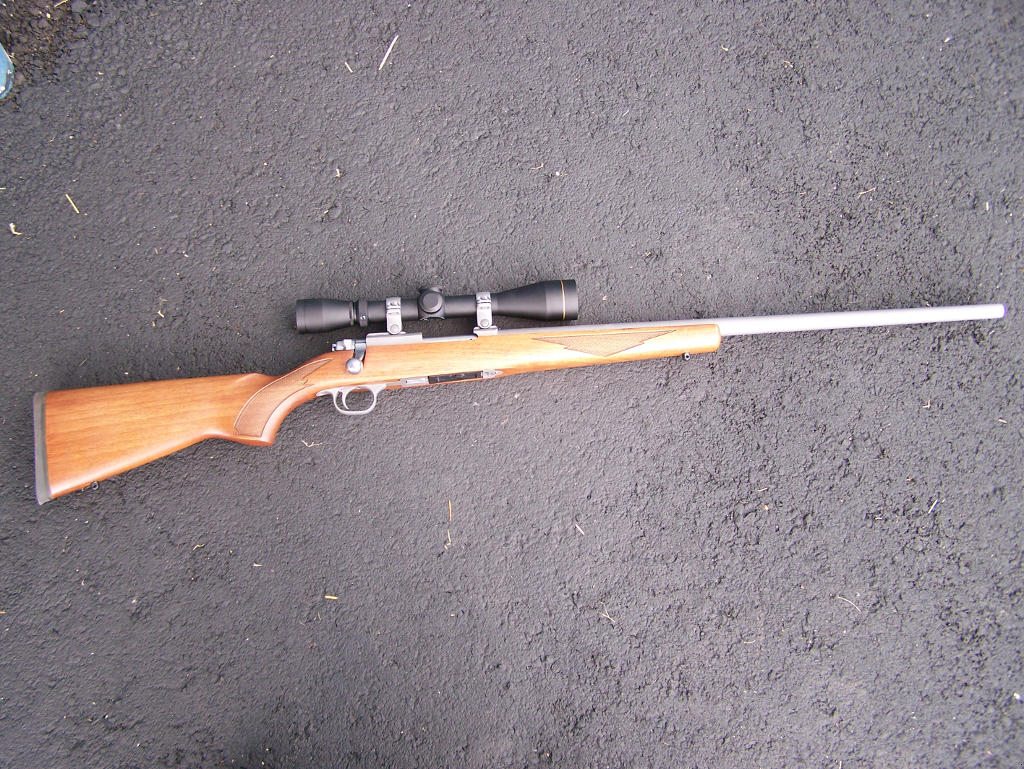
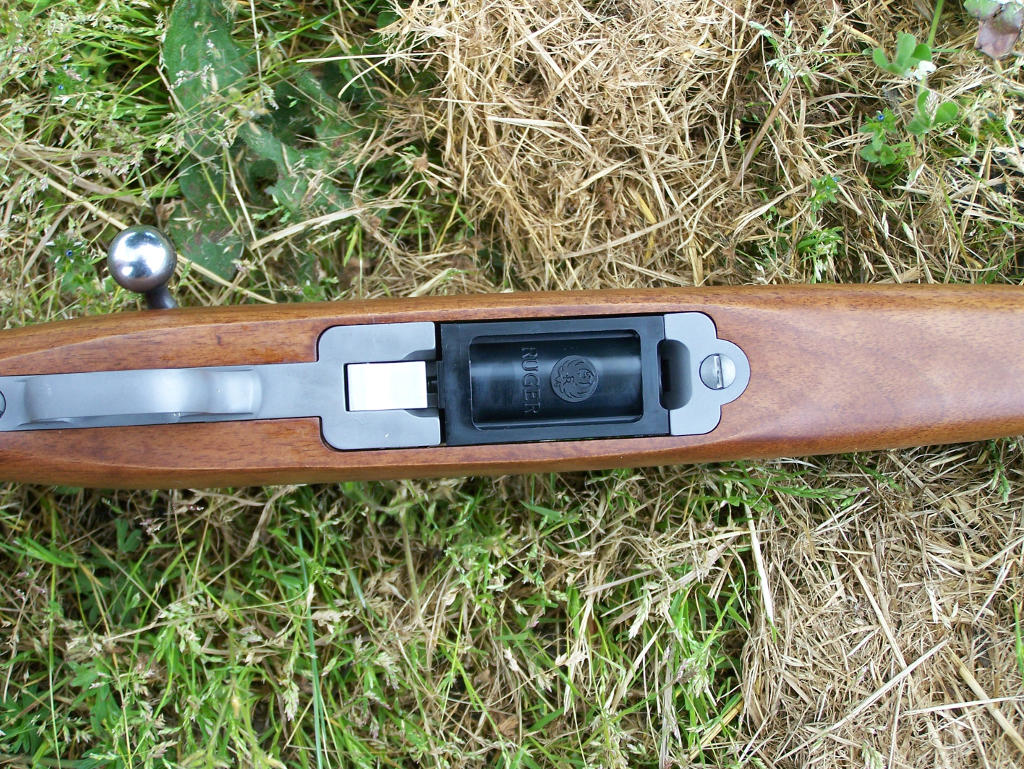
Ruger recently announced their Model 77/17 rotary magazine rifle in .17 WSM, and after looking over the press release I decided to order one. To be sure, the Ruger Model 77 is one stout rifle in any caliber you get it in, and it has been my experience that they are exceptionally accurate, too. I’ve never been disappointed by a Ruger Model 77, EVER! The model under review here is the American walnut stocked version with a stainless steel barrel. The gun comes without any sights, so you need to mount a scope. The barrel is 24 inches long, and the rotary magazine holds six rounds, though I was hoping for ten rounds. The rifle comes in at 7.50-lbs, but it actually feels a little heavier than that to my way of thinking. The wood on my sample didn’t disappoint; it was beautiful. The bolt action itself operated smoothly and had a 90-degree throw to operate it. The Model 77 comes with integral scope mounts, machined directly into the receiver. Ruger also provides scope rings with the rifle, which is nice! The three position safety allows you to lock the bolt to load and unload the rifle with the safety on. The only thing needed was ammo and a scope. I mounted a Leupold 3-9X40 scope and grabbed some Winchester .17 WSM ammo from the gun shop. I got their 20-gr polymer tipped fodder, and I was ready to go.
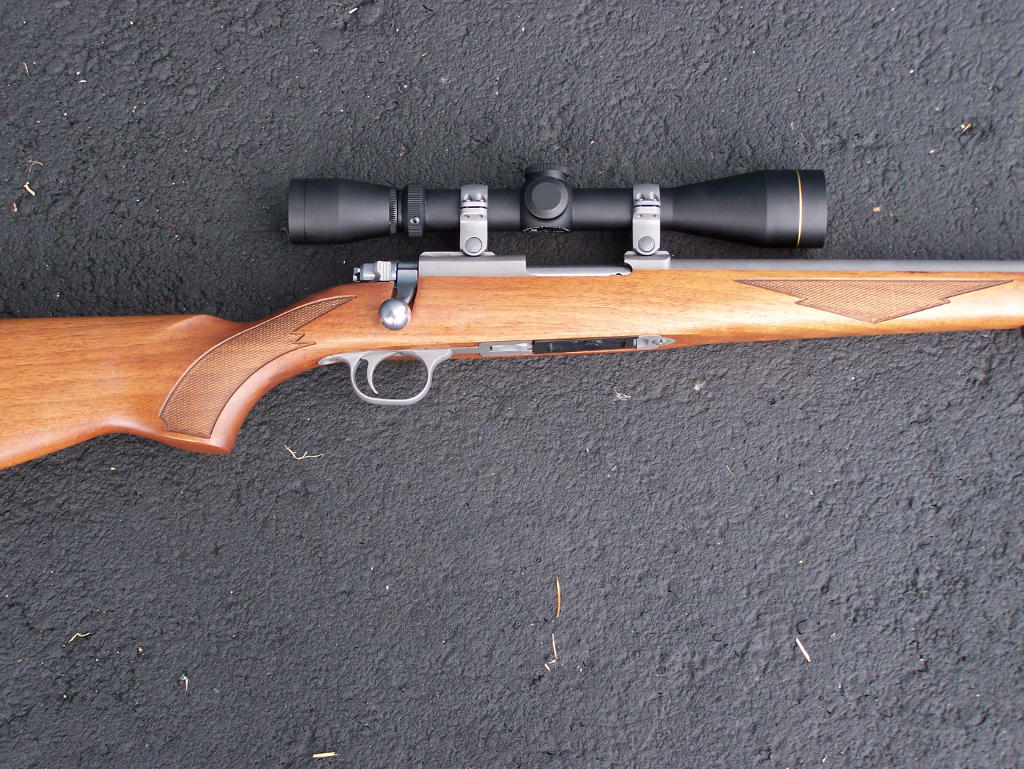
I’m not all that familiar with the .17 WSM. My only experience was with it in a borrowed Savage rifle for an article, and I didn’t shoot as much as I would have liked to. Ammo was in very short supply back in 2013. A few words on the .17 WSM ammo is in order. This caliber descended from the .27 caliber nail gun blank, by necking it down to take a .17 caliber bullet. Muzzle velocity is around 3,000 FPS, and, of course, this is a rimfire round and not a center fire round.
The .17 WSM was designed, in my humble opinion, to be a very flat shooting rimfire round, capable of taking game the size of coyote and smaller out to several hundred yards, which are ranges the .22 LR, .22 Mag can only dream of doing. Winchester claims this is the fastest rim fire round in the world, and I have no reason to doubt or argue this claim. Nothing else even comes close in velocity!
I haven’t been out varmint hunting in quite a few years, unless you consider moles in my front yard as varmints. Any more, I just blast ’em with a shotgun when I see a new mound appearing in my yard. I used to hunt my brother-in-law’s ranch in southern Oregon. I’d hunt ground squirrels, where on a good day I could easily kill a couple hundred in his front field alone in early Spring. I mostly used a .22 LR rifle or handgun of some sort, and I had to get close; the front field on his ranch in about 300 acres. However, if I had this Ruger M77 in .17 WSM, I could have set up a shooting table on the hill and sat there all day long, picking off those little critters without having to move all over the field in order to get closer for a shot.
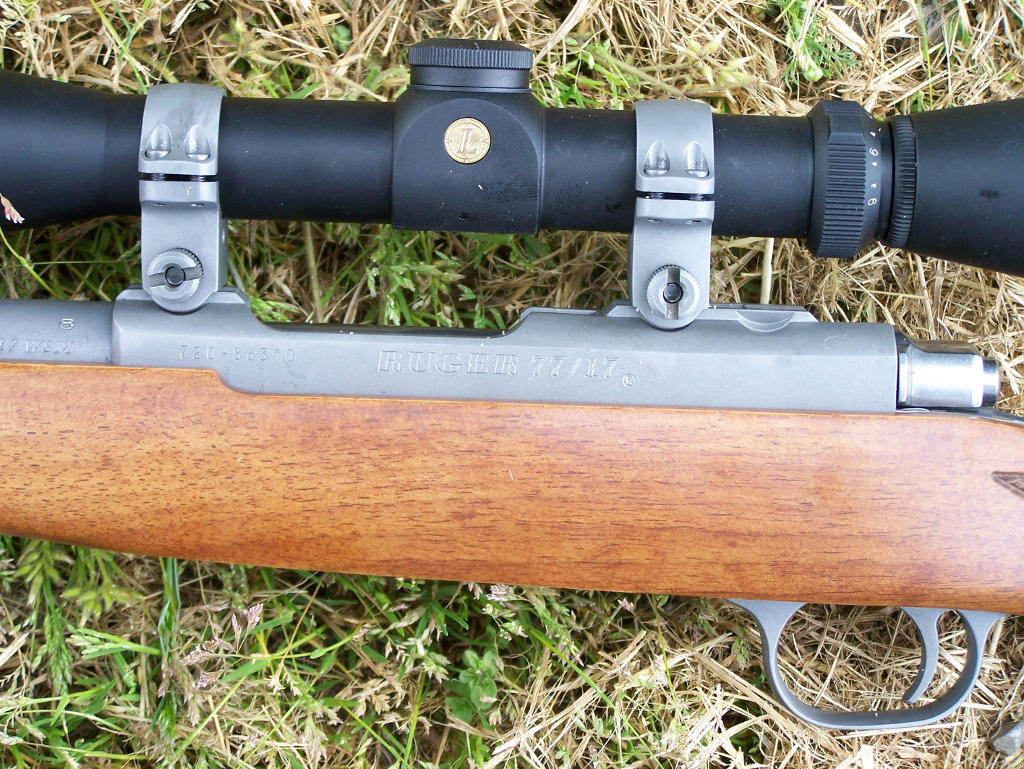
I zeroed the Ruger at 100 yards, and I wasn’t too worried about drop out to 200+ yards because the .17 WSM is very flat shooting, as I mentioned. It took me a bit of doing to get the Leupold scope fine-tuned with the itty-bitty .17 caliber bullets. I wanted the best zero possible for my testing. During my shooting, I fired more than 200 rounds of ammo, most of it downrange at 100 yards, and if I did my part I could get groups slightly larger than one inch, if the wind wasn’t blowing. When the wind blew, I was all over the target, due to some strong winds on the mountain where I shoot sometimes. I believe the Ruger is capable of groups under an inch, with the right ammo and if I’m really on my game. I only had the 20-gr Winchester poly tipped ammo for my testing. Ammo is still a bit hard to come by these days. All shooting was from a shooting bag, over a large boulder, and it was a bit lower than I liked, but it worked just fine for my testing. I suspect, if I had gone prone, I might have gotten better groups with the Ruger.
When I tested the Savage Arms rifle in .17 WSM, it was an okay performer, and it was priced about right. However, this Ruger M77 is the cream of the crop. We are talking about a big game rifle, for the most part, that is sized down (the action) to handle the .17 WSM round. The gun doesn’t have to be this well made; however, it is, and I love it. Needless to say, there was zero recoil with this 7.5-lbs rifle.

I’m a bit surprised though, that when Ruger jumped on the .17 WSM caliber, that they didn’t chamber this round in their American Rimfire Rifle or their 10/22 (10/17?) to start with and then work their way up to the cream of the crop– the M77. I’m hoping that Ruger will at least work on the American Rimfire Rifle and find a way to chamber it in .17 WSM to make it much more affordable to the consumer. The M77 in .17 WSM has a full retail of $999. That’s not cheap, but then again no other rifle chambered in this caliber comes close to the quality of the Ruger M77. Still, one can hope that the engineers at Ruger and the powers-that-be will decided to chamber the .17 WSM caliber in the American Rimfire Rifle or the Ruger semiauto 10/22 line-up.
So, where exactly does the new Ruger M77 .17 WSM fit in, in the scheme of things? Well, to be sure, it’s an outstanding caliber for varmint hunting at ranges far beyond what any .22 caliber round can even begin to think about taking game cleanly. Secondly, ammo prices have finally started to come down quite a bit for the .17 WSM; so that’s real good news. However, the ammo is still a bit hard to find, so shop around for the best prices and quantity you need. Also, from a survival standpoint, I can see the little .17 WSM being used for hunting small game, cleanly, not wondering if your .22 LR or .22 WMR will get the job done. Also, the round is much quieter to shoot, so you can do some hunting without disturbing the neighbors out in the country. You don’t want everyone knowing that, in a survival situation, you are able to get some game meat. A big center-fire rifle will surely draw attention your way when you pull the trigger.
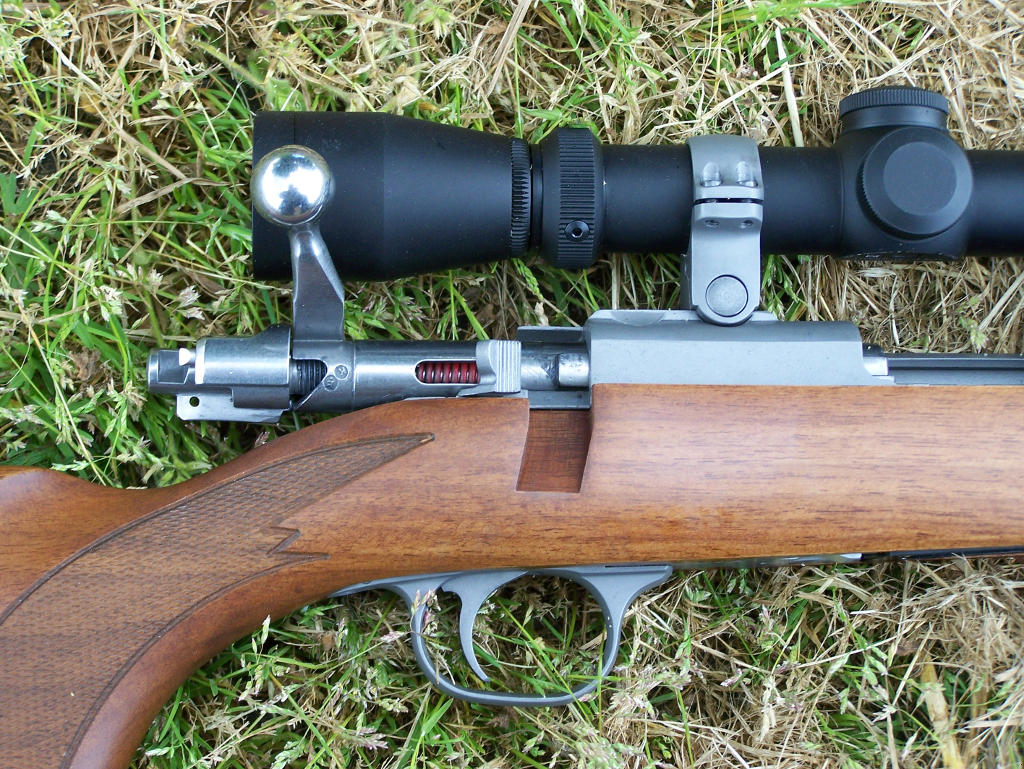
I’m really starting to get sold on the .17 WSM round, now that I’ve had a little more experience with it, now that more gun companies have jumped on-board, and having Ruger come out with the M77 in .17 WSM is just an added bonus in my book. Check one out at your local gun shop, I think you’ll be as impressed as I was with the M77. Then again, Ruger doesn’t disappoint!
– Senior Product Review Editor, Pat Cascio
Here is my grandmother Upton’s shortcake recipe. This is fantastic with strawberries or peaches. Of course, Grandma served this with some real whipped cream. It serves six.
o o o
Useful Recipe and Cooking Links:
Do you have a favorite recipe that would be of interest to SurvivalBlog readers? Please send it via e-mail. Thanks!
HJL,
Hi! Can anyone tell me why parking your vehicle in a metal building will not provide the same EMP shielding as a metal ammo box or trash can? If my building is all steel, with no windows and has a metal roll up door, then where is the wave penetration? I was wondering if any experts out there knew the answer. Thanks. – R.M.
HJL Responds: The key to a Faraday cage is that the construction has good electrical conductivity across the entire surface and that there are no “holes” that are large enough to allow significant leakage through the barrier. This is usually accomplished with press fit seals on doors and windows along with solid connections on the seams. A metal garage is usually put together with standard construction practices that may or may not meet the criteria required for good electrical conductivity and minimization of gaps or holes. The metal panels are usually screwed together with standard hardware and the screws are spaced based on the mechanical strength rather than the electrical properties. They are generally too far apart and they may not even make a good electrical connection. If there is an electrical connection, it can change over time as the exposed metal corrodes. In addition, the floor usually does not have any shielding in it, allowing significant leakage that way.
It is possible to build a metal building with the right properties, but you have to start out knowing that is what you want, because it can be difficult to retrofit afterwards.
When Money Dies – G.G.
o o o
California’s war against the middle class: Massive income inequality pushes a growth in crowded rental households and lack of income growth.
o o o
Why We Should Get Used To Low Oil Prices
o o o
The WHY of the Christian States of America.. – C.B.
o o o
It’s good to see some good peace officers out there! Constitutionally aware police officer dresses down thug security guard – T.P.
o o o
The Army’s robo-exoskeleton will help soldiers shoot straighter – D.S.
HJL Adds: This will be an interesting development to follow. It has always been my understanding that the tremors it is designed to combat are not the issue with “misses” but instead it’s the co-ordination with simultaneously pulling the trigger and holding on target. Our brains have a tendency to want to jerk or pull to the side causing the miss.
o o o
I guess this is better than calling 911 because your pizza delivery was late – but just barely. ‘Offended’ flea market shopper calls 911 over Confederate merchandise This whole issue is getting out of control. – D.S.
o o o
Food storage for $5 per week – J.C.
“The common denominator in all government activity is the use of force: Government either forces you to do things, forces you not to do things, or forces you to pay for things.” – Doug Newman
On July 12, 1865, George Washington Carver, the African-American scientist whose numerous discoveries helped to improve agriculture in the South, was born. He died on Jan. 5, 1943.
James or Hugh,
Regarding Odds & Sods, Monday, 6 July 2015 in reference to New American Article; “Pound Sand, Your Honor. More Americans Want States To Ignore Federal Courts”, apparently there is some ignorance afoot about the federal courts, and the federal government.
“For, whenever a question arises between the society at large and any magistrate vested with powers originally delegated by that society, it must be decided by the voice of the society itself: there is not upon earth any other tribunal to resort to.”– Sir William Blackstone, Blackstone’s Commentaries on the Laws of England, Book I, Chapter 3, pp. 205-206(my underline, noting the origin of said “vested powers”; ie, the Original States)– E.C.
Economics and Investing:
Tsipras Betrays Referendum, Sells Out to the Banks – H.L.
o o o
China Stocks and the New York Stock Exchange Shutdown: The Untold Story – H.L.
o o o
It’s Not If But When the Government Seizes Private Retirement Savings – B.B.
o o o
Brief interview w/Paul Craig Roberts. This is the best analysis of the E.U./Greek crisis you’ll hear. Why can’t a few more people step forward and frame this thing as plainly as P.C.R.? The whole interview is a grand slam homer, but if you can only listen for five minutes, minute 12 to minute 17 draw the picture well enough. -D.W.
o o o
SurvivalBlog reader G.H. prepared a spreadsheet of bank closings since 2001. It’s quite an eye opener, as you can see from the summary here.
Year
Bank Failures
Link
President
2015
?
Obama
2014
18
Obama
2013
24
Obama
2012
51
Obama
2011
92
Obama
2010
157
Obama
2009
140
Obama
2008
25
Bush
2007
3
Bush
2006
0
Bush
2005
0
Bush
2004
4
Bush
2003
3
Bush
2002
11
Bush
2001
4
Bush
Odds ‘n Sods:
New SWAT Documents Give Snapshot of Ugly Militarization of U.S. Police – H.L.
o o o
Texans organize to keep their own eye on Jade Helm – T.P.
o o o
Video: An interesting take on homemade firearms case.
o o o
Legitimizing the problem: ‘Production Versus Plunder’ ~ Part 15
o o o
A Dallas census worker harasses a home owner for over 30 minutes when told the home owner doesn’t want to participate in a voluntary survey.