
Structured Thinking for Practical Prepping for Suburban Life, by S.I.R.

I am writing this article based on my experience as Army Infantry officer, a Weapons of Mass Destruction (WMD) and intelligence professional, but most of all as someone who uses structured thinking to plan against and mitigate threats. It is important to plan for events that are less of a threat yet highly probable that in turn provide the foundation to plan for extremely dangerous threats that are less likely to happen. Structured thinking and scenario development will assist the average reader with how to move beyond theory and talk to practical planning.

The Americans I interact with live in suburban middle income communities, where we balance affordable homes against the average 30-60 minute one-way commute to our jobs. Like many of those Americans, we are concerned with the “what ifs” of disasters. I find that many well-educated people have done little to prepare for the risks that are common to both naturally occurring and man-made threats. Not preparing is generally the result of not knowing how to prepare, assuming the government will take care of them, feeling overwhelmed, or not having the time to think through situations that are likely to happen. Therefore, I am providing a “how to” methodology approach for planning against threats and mitigating their associated risks.

I am not an advocate that all must prepare for “the end of the world as we know it” (TEOTWAWKI). Even though this is a personal goal, I believe we should be realistic and have practical preparations through planning as a way of life. Most of us cannot afford to move off the grid or far away from populated centers of work. While I dream of winning the lottery and doing this, it just is not practical for many of us. What is practical for the suburban homesteader is to think through common scenarios of threats specific to their region, what those outcomes might be, and then self-assess how prepared you and your family really are. Pending the results, follow a plan to improve deficiencies and mitigate the risks over time and within budget.

Many of the more common threats, even man-made ones, require the same core preparation and planning. Planning for the highly probably threats in your region will greatly reduce anxiety of the higher impact threats. Where I live in Virginia, we deal with power outages and hazardous driving warnings on the low end of the common threats, due to winter storms and hurricanes. Even as these can be scary or exciting depending upon one’s view, the power, utilities, and drivable roads are restored to most people within a week. If one can use the methodology below and work through this likely scenario and self-assess, then they are ready to plan for the less common/no-notice events, like financial collapse and temporary shutdown of commerce to downwind hazards associated with attacks or accidents associated with toxic industrial chemical (TICs) and toxic industrial material (TIMs) sites in your area. Some threat planning will result in sheltering-in-place or being prepared to quickly relocate for several days. More extreme threats of commerce and utilities being shut down for several weeks due a wide range of events will have a bigger impact on life (extreme infectious disease, financial collapse/run on the banks, large scale city-wide explosion). I purposely do not cover TEOTWAWKI events, such as nuclear attacks, large scale bio warfare, electromagnetic pulse, etc. These truly are catastrophic and require planning and preparing at a higher level.

“How to” conduct structured thinking: Develop simple scenarios that assess the level of preparing to threat probability. By doing this, you can assess yourself and your household against a number of threats and develop a plan to improve (gap analysis).

Step 1: Scenario Generation

Scenario generation is easy, fun, and can assess multiple situations and how they might evolve. These scenarios can assist in the development of future known and unknown risks. On a sheet of graph paper, the four quadrants developed become scenario worlds generically labelled A, B, C, and D. Additionally, the X and Y axis should be labeled.

This example demonstrates a simple scenario of a severe winter storm. X axis equals “Individual/Family Preparedness” with the left endpoint labeled “Ineffective Preparation”, and the right end point labeled “Effective Preparation”. The Y axis equals “Magnitude of threat” with the bottom end point labeled “Status-quo/Minor Storm” and the top end point labeled “Catastrophic”.

For this exercise, this storm is forecasted 48 hours in advance. (This is when everyone runs to the store to get toilet paper, bread, and milk at the low end of panic to portable generators at the high end of panic.) The Magnitude of threat ranges from one day loss of power, freezing temperatures to the catastrophic extreme range of five days loss of power, inoperable driving conditions, and extreme low temperatures. Starting in the upper left quadrant, labeling this “World A” and then working clockwise, simple outcomes should be annotated per World, such as World A (Forced to flee/Forced to beg/No safety), World B (Concerned but confident/Ability to help others/Safe), World C (Panic shopping/Increased risk safety/Increased fear), and World D (Safe/No fear). World C is likely the normal outcome for most non-prepping self-assessors, whereas World B is the desired end state for all non-preppers and preppers.

Step 2: Structured Thinking

Getting to World B requires the planner to move from theory to structured thinking. A few personalized scenarios for your region should be completed. (Replace the X and Y axis with other situations.) Indicators can then be developed along the X and Y axis to provide a measurable scale. These indicators can then be applied to simple threat matrix that depicts probability and impact. This in turn will assist with how much one plans to spend or how much effort should be applied to reduce risk and/or uncertainty.

In the winter storm scenario, I applied several indicators along the X and Y axis. Along the X axis, starting at the far left end point and moving right, there are six indicators (three on scale to the left and three on scale to the right of the Y axis). These indicators are:

  1. Food & Water x 24 hours,
  2. Food & Water x 48 hours,
  3. Food & Water x 72 hours,
  4. Food & Water x 1 week,
  5. Gas generator/Food & Water x 1 week, and
  6. Gas generator/Cold weather equipment/Food & Water x 1 week

Along the Y axis, from the bottom end point moving upward, there are also six indicators (three on scale to the bottom and three on scale to the top of the X axis). These indicators are:

  1. Inoperable driving x 12 hours,
  2. Loss of power/Inoperable driving x 24 hours,
  3. Loss of power/Inoperable driving x 48 hours,
  4. Loss of power/Inoperable driving x 72 hours,
  5. Loss of power/Inoperable driving x 1 week, and
  6. Loss of power/Extreme cold/Inoperable driving x 24 hours

Ultimate preparedness for this scenario is to survive (comfortably) a week at home with no power and low temperatures. The scale allows assessment of preparedness. The results should have the planner assessing living needs in relation to the number of people living in the house. Most people have enough food in their home for several days. However, not everyone has a generator and the fuel needed for a week. (Hint: You likely have an additional 5-15 gallons of fuel in your vehicles that you can’t drive due to the snow. With planning, you can mitigate the risk of not storing a week’s worth of fuel for the generator by knowing how and having a tube to syphon the fuel. Just leave a few gallons in your vehicle for once the roads are safe to drive.)

Steps 1 and 2 can be applied to all conceivable threat scenarios. The increased risks can often be mitigated through planning and preparing. Many of the threats will require the basic fundamentals of preparation that the average suburban homeowner can easily achieve. Examples:

  1. “How to” mitigate the need to store a week’s worth of water: Many scenarios require having enough water stored to support a family of X size for Y number of days. Pending your scenario assessment, this might be 50 plus gallons for one week. Generally, suburban neighborhoods are not on well water. We are at the mercy of the utility system. The good news is that most systems will continue to provide clean water even if utility workers are stuck at home for days. However, some scenarios should plan for water pressure to end 48 hours after an event or be viewed as contaminated, pending how the local sewer systems work during power outages. In this case, knowing where the main water turnoff valve in your house (in case of contamination) is important. (Hint: Generally, it’s inside the home along the water pipe between the water heater and the outer wall.) The average four bedroom home has a water heater that is 40-60 gallons in size that will provide clean water through the drain valve at the bottom of the water heater even if no water pressure from the utility company is forcing water to your sinks. Turn a faucet on upstairs to break the plumbing vacuum and allow water to flow out the water heater drain that you just opened. Additionally, for those homes that have a chest freezer, a good technique is to fill empty (clean) plastic one-gallon milk jugs and freeze them. Just don’t fill them all the way, due to water freezing and expanding. If your freezer is half full of food, then frozen gallon jugs of water fill the void, helping your freezer operate efficiently during normal use while providing ice blocks as a temperature moderator if the power goes out for several days. In return, you then have drinkable water already stored. (I have on average five to ten gallons frozen at any given time.)
  2. “How to” mitigate medical needs: All scenarios have risks, and in many cases the probability of injury or medical need increases during common and extreme threat scenarios. Most homes have a basic first aid kit. You can supplement that with the first aid kits from personal vehicles likely parked in the garage. However, families should stockpile trauma supplies and kits knowing that deep cuts, burns, broken bones and other emergencies will have to be temporarily treated at home. The easy solution is to slowly buy kits and supplies, building up the desired stockpile. Generally, supplies do not go bad. If they do, let your children play with the bandages as training aids. This will help reduce their anxiety when they have to first use the supplies in a real emergency. Also, encourage your children to want to take basic first aid/CPR classes when age appropriate and then make it a yearly event as a family to get re-trained.
  3. “How to” prepare your personal vehicle for better support you in a time of need: A lot of effort goes into preparing for worst-case scenarios by stockpiling items at our homes. But like many suburban commuters, we spend the majority of the work week away from the home, either on the road or in the office. To mitigate the risk that you might not be able to drive home (catastrophic gridlock, EMP, major attack, or something else), you should be prepared to walk home. Therefore, an inexpensive backpack, pair of old shoes or combat boots, change of socks, old gloves, garbage bags for wet weather, and other items not normally found in a personal vehicle can greatly increase your odds of making the journey home safe. The backpack basically becomes a stuff sack for potentially useful items from the office or your vehicle to assist you on your trip. These might include bottles of water, office snacks, vehicle first aid kit, road flares, flash lights, tools, maps, and other items.

There are many more mitigating fundamentals that are common to less and extreme threats that may impact the average suburban American. Instead of a one week scale for the winter storm, example scenarios might depict a three week period of no electricity during warmer weather. For example, a hypothetical financial crisis might result in no electronic access to banking funds (no ATM access) for several days or an extreme shutdown of commerce for weeks. In this case, the logistics of getting food to store shelves ceases, regardless if you have cash. While there are no weather concerns, other outcomes in the A, B, C, and D scenario worlds will be different, and common mitigation might be the same. The indictors would likely be different, but the process of analytical thinking will be the same, such as: having an inexpensive shortwave radio receiver (stored in an anti-static bag or faraday cage for safe keeping) allowing you to get news of events in the case of a regional or nationwide event where cellular, antenna based, and cable services will likely be disrupted, or having additional cash on hand to pay local merchants even if there is no power (no charge card use) and no electronic access to bank funds (no ATM withdrawals).

Knowing the basic methodology to develop threat scenarios and assess and then develop mitigation plans will reduce risk and fear. The use of structured thinking to plan against and mitigate threats is a great technique for all. You do not have to have special training or experience to follow this process.

Letter Re: A Budget Disaster Response Kit

Hugh,

I have a couple of comments on the Budget Disaster Response Kit article by R.S. I found the article useful and thought provoking. For those that don’t have access to a metal lathe to shorten the barrel, I have used a standard tubing cutter, such as you would use to cut conduit or copper pipe, with great results.

First, make sure that the cutter will cut square to the tube, I have had a couple that tended to walk down the barrel, cutting a spiral. Second, cover the area with a few layers of masking tape to protect the finish. Finally, cut slowly. Only tighten the cutting knob a quarter turn after each rotation around the barrel. This will limit any deformation of the new barrel end.

To measure the barrel length, be sure you are clear on your state law. My state measures the barrel from the end of the breech face. To get an accurate cut, run a dowel rod down the barrel until it touches the breech face, and then mark the dowel at the end of the barrel. Next, remove the dowel and measure 18.5 inches (18″ is legal under Federal law, but 18.5″ is safer) on the dowel. Hold the dowel on the outside of the barrel with the end of barrel mark even with the end of the barrel, and then make a mark on the barrel at the 18.5 inch line where you will cut it. This sounds more complicated than it is. After cutting, you can lightly chamfer the inside of the barrel with emery paper.

Finally, to replace the bead, Brownells, Inc. sells a kit containing two beads, drill, and tap for about $8. If you are only doing one or two guns, this is probably a cost effective way to go. Don’t forget to use thread locker on the bead and to file/sand flush any part of the bead threads extending into the barrel. – Bruce F.


Letter: Who Runs the Political Process?

Good Morning Hugh,

The world is filled with interesting news today. It’s interesting because even The New York Times– one of the mouthpieces of the establishment– is pointing out the fallacy of our “democracy”, by the fact that almost half the presidential campaign money comes from only 158 families. Here is a quote from the article:

“The pluralist stance of American politics contends that true power in the United States has been constitutionally vested in “the people” through mechanisms like the electoral process, freedom of speech, and the ability to establish political parties. The traditional view is that these aspects of our political system result in a broad distribution of power that prevents any one faction from gaining an inordinate amount of influence. And today the New York Times has revealed the shortcomings of this narrative by publishing the names of the 158 wealthy families that have donated almost half of the money spent towards the 2016 presidential race. This group of donors is primarily Republican and is dominated by interests in the banking industry. These facts lend credence to the idea that national policy making is influenced heavily by a relatively small group of people. That the American body politic is largely controlled by a deep state.”

Note the reference to the Deep State. That is a concept typically reserved for tin foil hat-wearing survivalist blogs frequented by folks like us!

Interestingly, I found this on a science-news site (Slashdot.org), which typically eschews political discussions. In the past year or so I’ve noticed a few articles creeping into their feed, and when reading the comments (which are usually very articulate and intelligently thought out) I do see an undercurrent of awareness among this group (they are not sheeple, but I wouldn’t say they are awake, just yet, but they are aware).

I also stumbled on an article about custom bunkers for billionaires, though not quite as interesting and a bit sensationalized; it’s pertinent nonetheless. Again, I’m struck by the topics being thrown about in such a casual manner, as not too long ago they would only be discussed in certain circles and in hushed tones.

Thanks for your hard work and efforts. Keep fighting the good fight! – K.M.


Jim’s Quote of the Day:

“All taxation is the funding of government programs by force with threat of being taken to jail or even a summary execution – i.e. the eventual midnight SWAT raid which will surely come if anyone does not pay those taxes and refuses court orders, et cetera. So here is the rub for the Liberal Mind: You want to fund your ‘compassion’ with my tax dollars, and if I don’t agree, then you want to send men with guns to my house to either take me away, or kill me (and possibly my wife and children and certainly our dog), right on the spot, for resisting arrest.” – D. Clark


Notes for Wednesday – October 14, 2015

Safecastle (one of our loyal advertisers) is running a 35% to 51%-off sale on Lindon Farms Foods, until October 16th.

o o o

Today, we present another entry for Round 61 of the SurvivalBlog non-fiction writing contest. The nearly $12,000 worth of prizes for this round include:

First Prize:

  1. A Tactical Self-Contained 2-Series Solar Power Generator system from Always Empowered. This compact starter power system is packaged in a wheeled O.D. green EMP-shielded Pelican hard case–a $1,700 value.
  2. A Gunsite Academy Three Day Course Certificate, good for any one, two, or three day course (a $1,195 value),
  3. A course certificate from onPoint Tactical. This certificate will be for the prize winner’s choice of three-day civilian courses. (Excluding those restricted for military or government teams.) Three day onPoint courses normally cost $795,
  4. DRD Tactical is providing a 5.56 NATO QD Billet upper with a hammer forged, chrome-lined barrel and a hard case to go with your own AR lower. It will allow any standard AR type rifle to have quick change barrel, which can be assembled in less than one minute without the use of any tools, and a compact carry capability in a hard case or 3-day pack (an $1,100 value),
  5. Gun Mag Warehouse is providing 20 MagPul PMAG 30rd Magazines (a value of $300) and a Gun Mag Warehouse T-Shirt. (An equivalent prize will be awarded for residents in states with magazine restrictions.),
  6. Two cases of Mountain House freeze dried assorted entrees in #10 cans, courtesy of Ready Made Resources (a $350 value),
  7. The Ark Institute is donating a non-GMO, non-hybrid vegetable seed package–enough for two families of four, seed storage materials, a CD-ROM of Geri Guidetti’s book “Build Your Ark! How to Prepare for Self Reliance in Uncertain Times”, and two bottles of Potassium Iodate– a $325 retail value,
  8. A $250 gift certificate from Sunflower Ammo,
  9. KellyKettleUSA.com is donating both an AquaBrick water filtration kit and a Stainless Medium Scout Kelly Kettle Complete Kit with a combined retail value of $304, and
  10. Two cases of meals, Ready to Eat (MREs), courtesy of CampingSurvival.com (a $180 value).

Second Prize:

  1. A Glock form factor SIRT laser training pistol and a SIRT AR-15/M4 Laser Training Bolt, courtesy of Next Level Training, which have a combined retail value of $589,
  2. A FloJak EarthStraw “Code Red” 100-foot well pump system (a $500 value), courtesy of FloJak.com,
  3. A transferable certificate for a two-day Ultimate Bug Out Course from Florida Firearms Training. (A $400 value.)
  4. A Model 120 Series Solar Generator provided by Quantum Harvest LLC (a $340 value),
  5. A $300 gift certificate from Freeze Dry Guy,
  6. A Trekker IV™ Four-Person Emergency Kit from Emergency Essentials (a $250 value),
  7. Twenty Five books, of the winners choice, of any books published by PrepperPress.com (a $270 value),
  8. A pre-selected assortment of military surplus gear from CJL Enterprize (a $300 value),
  9. RepackBox is providing a $300 gift certificate to their site,
  10. DisasterStuff.com is kindly donating one of their Berkey-compatible 5-gallon bucket filter systems, complete with four black Berkey filter elements (a $245 value), and
  11. Safecastle is providing a package of 10 Lifestraws (a $200 value).

Third Prize:

  1. A Royal Berkey water filter, courtesy of Directive 21 (a $275 value),
  2. A $245 gift certificate from custom knifemaker Jon Kelly Designs, of Eureka, Montana.
  3. A large handmade clothes drying rack, a washboard, and a Homesteading for Beginners DVD, all courtesy of The Homestead Store, with a combined value of $206,
  4. Expanded sets of both washable feminine pads and liners, donated by Naturally Cozy (a $185 retail value),
  5. Two Super Survival Pack seed collections, a $150 value, courtesy of Seed for Security, LLC,
  6. Mayflower Trading is donating a $200 gift certificate for homesteading appliances,
  7. APEX Gun Parts is donating a $250 purchase credit,
  8. Montie Gear is donating a Precision Rest (a $249 value), and
  9. Two 1,000-foot spools of full mil-spec U.S.-made 750 paracord (in-stock colors only) from www.TOUGHGRID.com (a $240 value).

Round 61 ends on November 31st, so get busy writing and e-mail us your entry. Remember that there is a 1,500-word minimum, and that articles on practical “how to” skills for survival have an advantage in the judging.


How to Use Paddle Wire for Survival by Prepper Ray

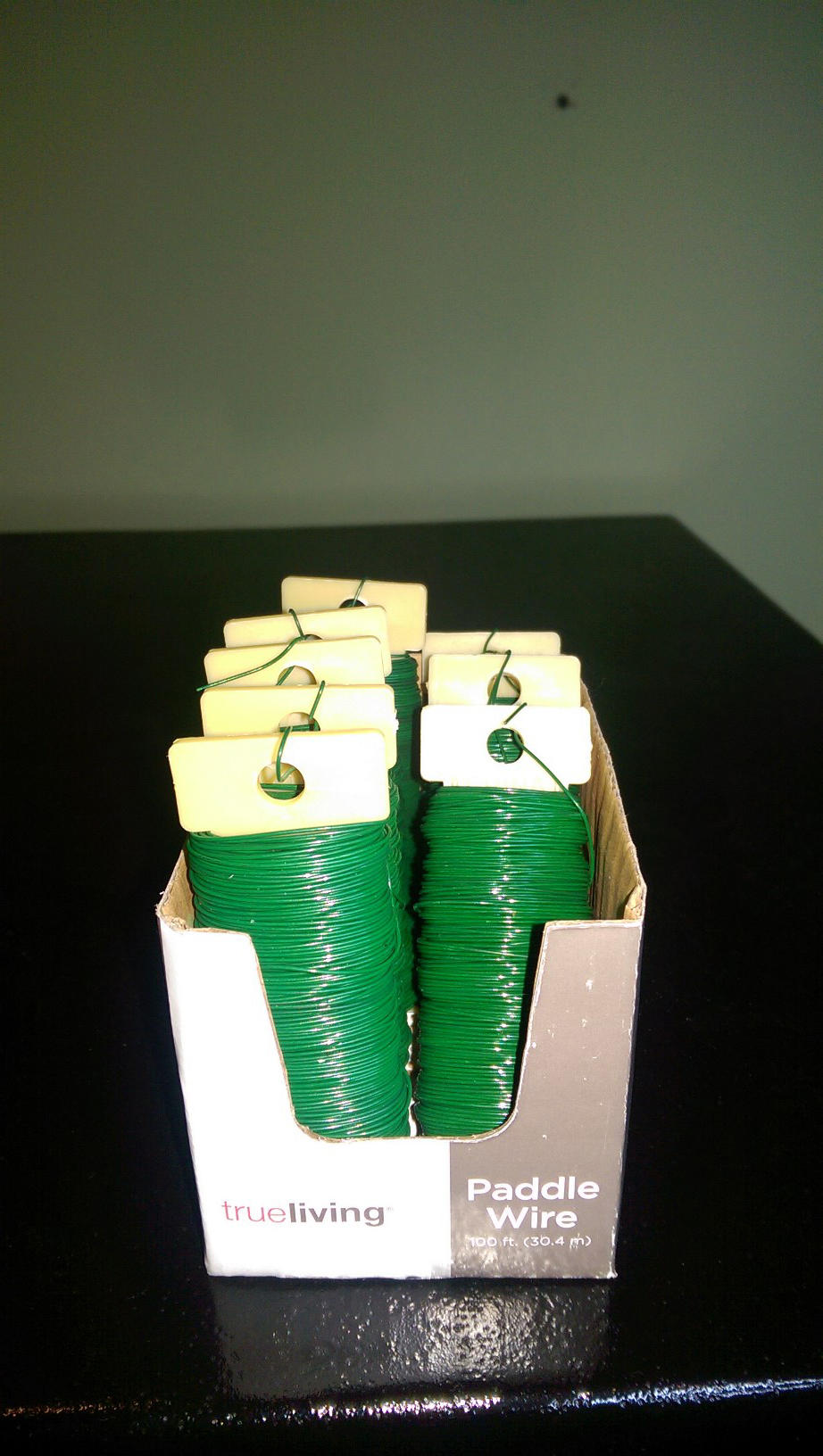
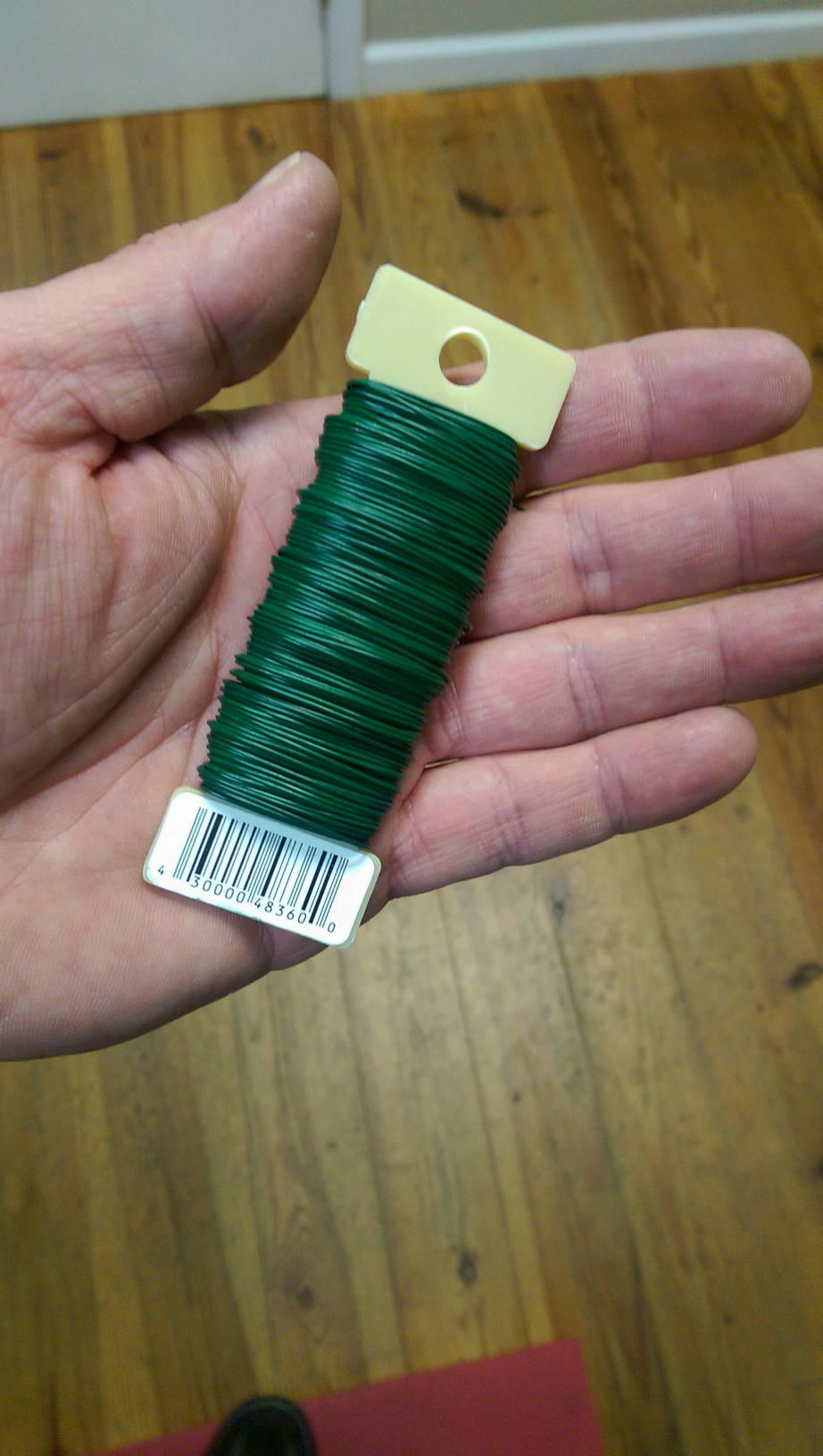
A couple of weeks ago one of my prepper friends stopped by and said: “Check this out” he hands me a small spool of green wire. I was intrigued, what is it? Trip wire? Snare wire? “It’s both and much more,” he said. After he told me a few of the ways it could be used, it became clear to me that Paddle Wire was the one missing component in my survival gear. If you don’t have a good supply of Paddle wire or never even heard of it, you wouldn’t be alone. Paddle wire is a low-cost 22 to 24 gauge green enamel coated florist’s wire. It’s used in the making of floral arrangements. paddle4Typically it comes on 100′ rolls and it is commonly available at any Dollar General store, almost all craft stores and even your local Wal-Mart. If you just simply can’t find the energy drag yourself out of the house, then Amazon along with hundreds of online retailers sell it online. Do yourself a huge favor and pick up a few rolls of it. At a cost of about $2.00 per 100′ it will be money well spent in a SHTF disaster. I now keep at least 10 spools of it around and I am always discovering new ways to use the stuff. It’s at least as versatile as duct tape or paracord, maybe even more! Easily bent, twisted and formed for almost any purpose it reminds me of the wooden spools of trip wire used by soldiers in Vietnam. Personally I am big on multipurpose items in all of my survival kits,I evaluate the usefulness of an item versus the weight and size. It’s a grading system of sorts and Paddle certainly gets high marks for its versatility and size.

Traps

Obviously the first thought that comes to mind is a snare or noose trap for small game. Traps are beneficial especially if you are going to be in one place for a while, at least overnight. They are easy to make, silent, and they work very well. There are a number of simple ways to make noose traps for small game. A single strand with a twisted loop and one end, feed the wire through the loop to form a noose and attach it to a tree or limb, this is a simple squirrel snare. Placed on the ground along the known path of small game or baited, this same configuration will even trap larger game especially when you use several strands twisted together and anchored to a nearby tree.

Lashing

Since a 100′ spool can easily be carried in your pocket and a small section can be used to lash a knife to a long stick to make an improvised spear as a defensive weapon or hunting tool. Tying up a muffler or making emergency vehicle repairs under the hood or in hot areas where duct tape won’t work.

Cooking Pyramid

paddle6

If you have ever needed to lash something that is in a high heat or even direct flame contact? Paddle wire will take care of business where duct tape or paracord would fail miserably. Using the wire to tie up a pyramid style potholder for a camp fire or even wrapping and attaching meat for a camp fire rotisserie, paddle wire is up to the task. If you have ever tried to cook apiece of wild game over an open fire only to have your meat fall into the fire you can understand how convenient this wire can be.

Drying or Cooking Rack

Keeping your clothes dry is very important to prevent hypothermia when you have been exposed to the elements. Several strands of wire wrapped across a large “Y” shaped tree branch and you’ve got yourself a fast drying rack when held near the heat of a camp fire. You can even toast bread and cook or dry meats on it as well. The enamel coating will quickly burn off leaving a clean and safe cooking surface. Paracord and duct tape have their purposes in life but high heat or open flame are certainly not one among them.

First Aid

My first aid and trauma kits are well supplied with traditional medical supplies and a few tactical battle dressings. Now a roll of Paddle wire can now be found in all my medical kits. Used as an improvised splint either folded and formed into a flat support then taped on two sides of a broken finger for support until better medical attention can be found, Paddle wire is again to the rescue.

Strength Tests

In a very unscientific tensile strength test I used a single strand of Paddle wire to lift a set of 350 pound athletic weights without failure repeatedly. Increasing the weight to 400 pounds caused consistent breakage in a series of about 10 test samples, I realize this is back yard testing and I’m sure industrial engineers would cringe at my primitive tests but I had to know the tensile strength of the wire. Now I know at least approximately how strong it is and realizing that different brands of wire may have varying results I can at least estimate that a single strand should hold up to 300 pounds or more which is quite impressive for a product originally designed to hold up a flower stem.

Security

As a TEOTWAWKI disaster becomes reality, security around your home or camp is of utmost importance. Again, Paddle wire to the rescue! You can easily setup perimeter warning devices [such as suspended warning bells or empty cans with pebbles inside] and even snares to snag and warn you of trespassers, if necessary. Using the same techniques and design for small game Paddle wire can be twisted together in two or three strand pieces on a larger scale to be used as “tanglefoot”–a way to snag and trip up the trespasser, the loop would be larger than the average foot with a slight bend upward and the top of the loop so as to catch the foot in a normal walking gate snagging the ankle, a human trap. Humans unlike animals, can easily release themselves without injury from such a trap. The advantage here is purely a warning device, maybe a psychological intimidation or perhaps a warning to give you the time needed to react to the situation and take the appropriate action.

Communications Antenna

A single strand of paddle wire extended [with insulators] between trees can make an excellent improvised antenna for radio, television, ham radio, CB, and AM/FM bands. Using nylon rope as insulating or “strain” anchor points and coaxial cable, you can construct a simple antenna. Known as a “random wire”antenna a long stretch of straight paddle wire strung as high as possible between trees or buildings. This configuration was one of the most commonly used forms of antenna in the early days of radio. I’m no radio expert but my back yard tests using various lengths of wire drastically improved the reception on everything connected to it.

Cable Braiding

Using 4 strands of paddle wire about 12 feet long, I clamped the ends in a vise and then with a steady pull and help from my cordless drill to accomplish the twist, I quickly made a strong cable. This could be done by hand if necessary, the drill made it quick and being impatient, worked for me. It was amazingly easy and strong enough to handle heavy duty jobs. The need to secure a gate or using braided cable for repairing fences or even making improvised barbed wire using finishing nails sharpened on both ends and bent into a“V” randomly into the braid at various intervals. The possibilities are only limited by your imagination and the amount of wire you have on hand.

Torches

Using an cotton rag at the end of a stick wrapped tightly with paddle wire,saturate with kerosene or lamp oil, light it and you’ve got yourself a good old fashioned torch. Don’t make the mistake of using polyester cloth as it will melt and drip flaming hot molten lava on your hand. (I learned this the hard way.)

Some Important Provisos:

Many of the techniques and traps described in this article may be regulated by state or local law and require a hunting or trapping license. I would never advocate doing anything illegal so first and foremost: obey the law! If you are going to use or practice any of the traps or snares be sure to know the laws that apply to you. The last thing you want to do is cause injury or harm to an innocent person or cause unnecessary suffering to a wild animal,injure or kill someone’s pet, or get thrown in jail. I realize that you may be a little less concerned with the law during actual TEOTWAWKI times, but you should always be responsible under any circumstances.

With literally thousands of other uses that I continue to discover everyday. Paddle wire is the perfect low cost addition to your survival and prepper gear. Be sure to have a small pair of pliers and wire cutters or a multi-tool. Oh, and last but not least.. It’s also great for floral arrangements too! -Prepper Ray in Lexington, S.C.


Letter: Grain Milling Muscles

JWR and HJL:

We bought a grain mill—the Wonder Mill Junior to be specific–from one of your advertisers and we are pleased with the purchase. However, I must warn my fellow readers that if you have bought one of these and just threw it on the shelf alongside your the stack of #10 cans and food storage buckets, then you made a mistake. Unless you regularly start your Ford Model T with a hand crank, then you are in for a morning-after surprise. This is another example of the importance of “practicing your preps.” A seven year old cannot turn the handle of my grain mill while holding the table in place. A 12 year old can do so. So can a 200-pound, 56 year-old male.

It is often suggested that our caloric intake will have to increase during TEOTWAWKI. Grinding wheat is an object lesson in that need! Also, those are not the same sets of muscles required by my hoe, shovel, or axe.

Personally, I am going to add more aspirin to my preps. – R.V.

JWR Replies: In my experience, hand-cranked grain mills should be attached to very heavy, sturdy tables of countertops. If you have to hold your table in place with each stroke, then you are using much more muscle power than would be needed if you had your mill mounted to a heavy table that could not be easily moved.

Many brands of grain mills have extension handles available, making it easier to turn their wheels, albeit with a larger arc. The extension for our Country Living brand grain mill is called a “Power Bar.” And of course many of the better-quality mills also have a notch for a V-belt, allowing them to be motorized. Just don’t do any motorizing conversion that cannot allow you to easily revert to hand-power. (That defeats the purpose of being ready for grid-down disasters.) Grinding flour by hand is a team effort at the Rawles Ranch. We all take turns, in fairly quick “tag team” succession–more or less turning the whole thing into a game. We leave our grain mill set up at the end of our kitchen countertop year-round and we grind flour a couple of times each week. (And even more often in the winter, when we tend to bake bread more often.) For bread-baking our hand-ground whole wheat four is typically used in a 70/30 ratio with store-bought white flour, to provide bread with a sufficiently fluffy texture. But we use all whole wheat flour for our pie crusts. For that flour, we always mill the flour twice (to make it finer), and we add a bit of extra butter to the dough.


Economics and Investing:

B.B. sent this Reuters article: Big U.S. firms hold $2.1 trillion overseas to avoid taxes: study

o o o

An interesting price comparison chart: Gasoline prices, worldwide. (Venezuela has the lowest price, at just $0.06 per gallon!)

Items from The Economics Team:

It’s Time to Start Talking about RECESSION

Fed Seems Ready to Deploy Negative Interest Rates in the Next Crisis

The Worst Slump in Commodities Prices Isn’t Over


Odds ‘n Sods:

I was really pleased to see that the late, great, “discontinued” Woodpile Report (edited by Ol’ Remus) is getting some new posts!

o o o

DSV sent this item at Kim Komando’s site: Creepy website shows how much Facebook knows about you

o o o

Homeschooling Gun Owners Sue NJ for $60 Million for Unconstitutional ‘Home Intrusion’. (Thanks to T.P for the link.)

o o o

NBC News (text & video): Illinois Assault Weapons Ban Before U.S. Supreme Court


Notes for Tuesday – October 13, 2015

Editorial Updates: The posting queue for the SurvivalBlog non-fiction writing contest is now quite short, so we encourage you write an article and send it in, soon. You can share your knowledge with others, and you will be eligible to win lots of valuable prepping prizes. Given the unusually short queue of entries we’ve already received, any articles that we get this week will likely be posted within 10 days!

o o o

Hugh J. Latimer will soon be returning from his vacation, and resuming his duties as Managing Editor. Thanks for putting up with my sometimes fumbling HTML editing skills, for the past two weeks! – JWR

o o o

Today, we present another entry for Round 61 of the SurvivalBlog non-fiction writing contest. The nearly $12,000 worth of prizes for this round include:

First Prize:

  1. A Tactical Self-Contained 2-Series Solar Power Generator system from Always Empowered. This compact starter power system is packaged in a wheeled O.D. green EMP-shielded Pelican hard case–a $1,700 value.
  2. A Gunsite Academy Three Day Course Certificate, good for any one, two, or three day course (a $1,195 value),
  3. A course certificate from onPoint Tactical. This certificate will be for the prize winner’s choice of three-day civilian courses. (Excluding those restricted for military or government teams.) Three day onPoint courses normally cost $795,
  4. DRD Tactical is providing a 5.56 NATO QD Billet upper with a hammer forged, chrome-lined barrel and a hard case to go with your own AR lower. It will allow any standard AR type rifle to have quick change barrel, which can be assembled in less than one minute without the use of any tools, and a compact carry capability in a hard case or 3-day pack (an $1,100 value),
  5. Gun Mag Warehouse is providing 20 MagPul PMAG 30rd Magazines (a value of $300) and a Gun Mag Warehouse T-Shirt. (An equivalent prize will be awarded for residents in states with magazine restrictions.),
  6. Two cases of Mountain House freeze dried assorted entrees in #10 cans, courtesy of Ready Made Resources (a $350 value),
  7. The Ark Institute is donating a non-GMO, non-hybrid vegetable seed package–enough for two families of four, seed storage materials, a CD-ROM of Geri Guidetti’s book “Build Your Ark! How to Prepare for Self Reliance in Uncertain Times”, and two bottles of Potassium Iodate– a $325 retail value,
  8. A $250 gift certificate from Sunflower Ammo,
  9. KellyKettleUSA.com is donating both an AquaBrick water filtration kit and a Stainless Medium Scout Kelly Kettle Complete Kit with a combined retail value of $304, and
  10. Two cases of meals, Ready to Eat (MREs), courtesy of CampingSurvival.com (a $180 value).

Second Prize:

  1. A Glock form factor SIRT laser training pistol and a SIRT AR-15/M4 Laser Training Bolt, courtesy of Next Level Training, which have a combined retail value of $589,
  2. A FloJak EarthStraw “Code Red” 100-foot well pump system (a $500 value), courtesy of FloJak.com,
  3. A transferable certificate for a two-day Ultimate Bug Out Course from Florida Firearms Training. (A $400 value.)
  4. A Model 120 Series Solar Generator provided by Quantum Harvest LLC (a $340 value),
  5. A $300 gift certificate from Freeze Dry Guy,
  6. A $250 gift card from Emergency Essentials,
  7. Twenty Five books, of the winners choice, of any books published by PrepperPress.com (a $270 value),
  8. A pre-selected assortment of military surplus gear from CJL Enterprize (a $300 value),
  9. RepackBox is providing a $300 gift certificate to their site,
  10. DisasterStuff.com is kindly donating one of their Berkey-compatible 5-gallon bucket filter systems, complete with four black Berkey filter elements (a $245 value), and
  11. Safecastle is providing a package of 10 Lifestraws (a $200 value).

Third Prize:

  1. A Royal Berkey water filter, courtesy of Directive 21 (a $275 value),
  2. A $245 gift certificate from custom knifemaker Jon Kelly Designs, of Eureka, Montana.
  3. A large handmade clothes drying rack, a washboard, and a Homesteading for Beginners DVD, all courtesy of The Homestead Store, with a combined value of $206,
  4. Expanded sets of both washable feminine pads and liners, donated by Naturally Cozy (a $185 retail value),
  5. Two Super Survival Pack seed collections, a $150 value, courtesy of Seed for Security, LLC,
  6. Mayflower Trading is donating a $200 gift certificate for homesteading appliances,
  7. APEX Gun Parts is donating a $250 purchase credit,
  8. Montie Gear is donating a Precision Rest (a $249 value), and
  9. Two 1,000-foot spools of full mil-spec U.S.-made 750 paracord (in-stock colors only) from www.TOUGHGRID.com (a $240 value).

Round 61 ends on November 31st, so get busy writing and e-mail us your entry. Remember that there is a 1,500-word minimum, and that articles on practical “how to” skills for survival have an advantage in the judging.


Internet Auction Sites for Preppers, by B.F.

I suspect most of us who are interested in self-reliance are preparing on a budget. While it would be great to order a year’s worth of food at a time, and rotate them by donating them to the local food bank, that is just not practical for most of us. Likewise with equipment, tools and other survival needs. It would be easy to just go to Amazon and order whatever we want, but I for one will need to wait until I win the lottery first.

The Internet is full of places you can buy supplies, tools, food and anything else you think you need. Many of them designed by professionals who are experts at getting you to spend your money. Some of them are also designed by scammers who can be even better at separating you from your hard earned cash.

Despite the pitfalls of the Internet, there are also a lot of places that you can get legitimate deals to help you with your preparations, whether you are getting prepared for a few days down because of storms or for TEOTWAWKI. I wanted to share a few sites that I have used that are legitimate and are places where you can find bargains to help you prepare.

I thought it would be helpful to not just list the sites, but also to tell you a bit about what bargains you can find and any tips or tricks you can use at the site. With one exception, these are all auction sites. Most of them sell government surplus from various federal, state and local agencies.

I’m sure there are other useful sites, and hope you will share if there are any you have used successfully. The sites I have found most useful, especially from a Prepper’s perspective are:

I think of Shopgoodwill.com kind of like eBay, only less well known. It is the web site that local Goodwill stores from all across the country use to sell items that they feel they can get more money for from an auction than by selling it in their local store. Because it is not as popular as eBay, I believe you can find more bargains, since there are fewer knowledgeable people bidding against you. The search engine is not the most powerful among auction sites. They tried to upgrade it a few years ago, but had a bad failure when doing so. The web site was down for more than a week before they restored it back to what it was before.

I have found some of the best bargains on things like coats and jackets,military surplus, holsters, binoculars and knives. You can sometimes also get good deals on camping equipment like stoves, pots and lanterns or on high end backpacks. A key thing to remember is that the person writing the description for what they are posting for the store is most likely not an expert on the item. This can work for you or against you. Careful searching can find bargains out there that are mis-described or that have a description misspelled. You also need to carefully read the description and look at the pictures. That antique WWII-vintage wind up wristwatch may actually be a modern quartz watch from Wal-Mart. I will say that I don’t think any of the stores deliberately try to mis-describe an item, but sometimes it just happens.

The search engine supports partial word searches, so you can use that to your advantage. For example, instead of searching for “holster” you may want to search for “holst” which will bring up items with the word holster,holsters or the misspelled holstar. Unfortunately it also brings up “upholstery”, but usually there are only a few hits for that, so you can visually filter out what you are not interested in. Before bidding, do your research and decide what you want to pay for the item. Also be sure to checkout the estimated shipping costs to ensure you don’t pay more than what the item is worth in shipping charges. You also need to be careful because some stores will not ship large, heavy or bulky items, so you will need to either pick it up in person or arrange for a local pack and ship service like a local UPS or FedEx store to pick it up and ship it to you. If you are going to have it picked up and shipped, be sure you look into the costs before you bid.

Shopgoodwill.com allows you to search by location, and every location I have checked will allow you to pick up an item locally, instead of having it shipped. I use this not only for the stores near where I live, but also for Goodwill stores where I am traveling to either for work or vacation.

Govliquidation.com is a site run by a government contractor. They took over for the old DRMO auctions that some of you may remember. They sell military surplus as well as surplus for some federal agencies. Govliquidation.com also used to sell military vehicles, however they lost the vehicle business to Govplanet.com (discussed below.) They still have a few vehicles they are selling that were in the system, but that is the exception. I bought an M35A2 Deuce-and-a-Half (2.5-ton truck) from them, and an M818 5-ton tractor. The sales went smoothly, however instead of getting the government SF-97 title document, they sent me Florida titles. The titles worked just as well went I went to register them, so it was no big deal. Govliquidation is a place where you can buy in bulk, pallet loads of cold weather equipment, spent brass by the ton, etc. For the most part, you are on your own for arranging pick up or shipping of items you purchase. Govliquidation also has tried to expand beyond government surplus, and occasionally you will see non-surplus stuff listed.Govliquidation also runs the web site Unclesamsretailoutlet.com.

Unclesamsretailoutlet.com sells military surplus, field gear, bayonets, NCO swords, clothing, MREs, ammo cans, tools and MWRO (Military Welfare and Recreation Organization) surplus in small, consumer lots at fixed prices. They have low shipping costs for small items, and have pretty good sales at least once a month, with 20% to 50% off of various categories or occasionally the entire site. They will also put stuff on clearance if it doesn’t sell after awhile. It is a store, not an auction, but it has a lot of items that preppers can use at usually pretty good prices.

GSAAuctions.gov is another auction site, however this is actually run by the government, not by a contractor (as near as I can tell). It primarily sells surplus from federal agencies other than the DOD, and also from some local agencies, mostly those that have received federal surplus that they no longer need. You can pick up some good deals on furniture, vehicles, and fire trucks and about anything else you can think of from surplus real estate such as post offices, control towers and light houses to a 300 foot Coast Guard cutter. They also have aircraft from time to time, like Chinooks, Blackhawks, and even LearJets. This site also sells items confiscated by US Marshals office or by the Internal Revenue Service. I have seen Rolexes, Mercedes SUVs, Ferraris and other high end items, although I don’t think I would buy anything that expensive from this site myself. For some of the confiscated items, real estate and ships, they require that you post a bid deposit before bidding. I have purchased a couple of 3 KW Army generators and an Air Force surplus Jeep J-20ambulance from this site. A lot of the military surplus on here was surplused out to rural fire departments, and you can still find M880 Dodge pickups indecent (usually non-running) condition if you are looking for a good pre-electronic ignition bug out vehicle.

Govdeals.com seems to be mostly used by state, county and local agencies as well as state universities and community colleges to get rid of their surplus.You can search by location on this site, just like the other sites. I have used this site for furniture (workbenches) and for surplus Crown Victorias (that I use as “daily drivers”). You can also buy police confiscated or recovered items.Sometimes you can find surplus or confiscated guns and ammunition, but often you need to have an Federal Firearms License (FFL) to bid on them. There are also some items, such as fully equipped patrol cars or fire engines, which are restricted for purchase only by other government agencies although if they don’t sell, they may come back up for sale to the public.

A favorite search that I use on the Govdeals.com site is to search for items listed in the past 24 hours, and to sort the results by auction end date. This will highlight for you stuff that was just posted that will not be up for long.I found a municipal _ ton Chevy 4WD pickup with snow blade and Tommy lift that was posted to end the same day it was listed. It was up for less than 4 hours.I ended up being the only bidder and bought it for the opening bid, which was about $400. Deals like that don’t happen often, although I have noticed Washington DC for one does post its abandoned and confiscated vehicles for just24 hour sale periods. Govdeals also sells some Canadian government surplus which is sold for Canadian dollars. I have noticed that Diesel vehicles seem to sell for much less in Canada than they do in the US. A friend’s son has purchased a couple of vehicles from Canada, and says as long as you follow the rules, it is pretty easy to bring stuff to the US.

Another site I want to highlight is Purplewave.com. I’d say this is similar to Govdeals.com, in that some state and local agencies tend to use it instead of Govdeals.com. The main difference is that Purplewave also sells surplus from private companies. You can find lots of construction and farm equipment for sale. My son has purchased a couple of vehicles from them, and it seems to work pretty slick. From what I have seen, a lot of the vehicles sell for less on Purplewave than they do locally, so if you buy at the right price, you may be able to make a profit. With Purplewave, you bid and pay on the site, and they send you the receipt (and title if there is one). You then arrange with the seller to pick up whatever you purchased, instead of with Purplewave staff.

Finally, there us GovPlanet. This is a fairly new site. They won the Federal government contract to sell military and DOD surplus vehicles. They have been in the news lately because they have begun selling HMMWVs. The good news,especially if you want your own Hummer, is that they finally circumvented the restriction that military surplus HMMWVs could only be used off road, and they are now issuing SF-97s when you buy one, which you can take to your local DMV to get a title and regular registration. Govplanet sells military construction equipment, trailers, cargo trucks, semi tractors, and many other vehicles.Their bidding process is a bit different. The actual live auction runs for less than a day, however you can “pre-bid” on any of the items for a couple of weeks prior to the day of the auction. When you pre-bid, it will tell you if you are the current highest “pre-bidder”, and you can bid again if you want. The day of the auction, you can also live bid on the item, however the live portion of the auction only lasts for a couple of hours. Govplanet is probably the easiest site to search closed auctions, so you can see what similar items to what you want have sold for before. The one thing I don’t like about Govplanet is that their starting bids are much higher than the other sites. For example, they will start the bidding for an M923 cargo truck at$2,000, where Govliquidation would start them at $100. In the long run, it does not make much difference as they almost always sell for above the starting bid anyway, but it does eliminate the (slight) possibility that you might get areal bargain. Although I have bid both by pre-bid and live bid on this site, I have not yet won anything, so I can’t speak to how easy the transaction goes from my own experience. From what I have read on a couple of military vehicle enthusiast sites, they seem to be okay to deal with.

Tips to use with all these sites are to search for alternate spellings or misspellings. Also you need to ensure that you know what the shipping and (if any) handling or other fees and expenses will be before you buy. Research what something is worth before you bid. If you have a question, email the seller. I have rarely had a seller refuse to answer me when I ask a legitimate question.Ensure you know where the item is located. You can get a great deal on cargo trucks in Guam, but the shipping will kill you. Personally, I bid what I want to pay for the item, and let the site autobid for me up to my limit. Some sites do ask if you want to use autobid or if you want to bid the full amount, so be sure of what you have selected. If someone comes in at the last minute and buys the item for $1 more than my bid, so be it. I know a lot of people who like to monitor the auction up to the last minute, hoping to “snipe” the item and get it for $1 more than their competition. While I do this on occasion, usually if someone wants to outbid me, more power to them.

If your search yields too many results to look through and you can’t figure out how to refine it, sort by price or by number of bids. This will bring to the top items that at least one other person thinks is worth buying.

Finally, if you are buying military surplus items, be sure you check to see if you are required to de-mil (or chop up) the item before you can take possession. It would not be fun to buy something like a helicopter and then find out you had to cut it up into pieces less than three feet square.

While the days of the brand new Jeep still in a crate for $45 (like they used to advertise in Popular Mechanics in the 1960s) are gone, by using these sites you can still get some useful bargains and save money on preparedness.

JWR: Adds: I agree that how you you phrase your searches is crucial to locating online auction listings and successful bidding. If there is an item that is quite sought-after and often bid up to high prices, the trick of making your search for a seller’s unintended mis-spellings (as B.F. mentioned) does indeed work! For example, last year I was the only bidder on a “no reserve” auction for Hensoldt rifle scope on an HK claw mount because the seller had mis-spelled it “Hensolt”. I got that scope right at the opening bid, which was only about one half of its normal retail price. So doing my automated searches for Hensolt, Hensodlt, Hensolth, and Hensold really paid off!