Survival Electronics- Part 1, by K.A.

Many preppers seem to think that a catastrophe would automatically cause society to revert to the 1800’s and that no electronics will survive. This unspoken assumption is not necessarily accurate, since there are a number of ways in which electronics can survive a crisis and play an important role in a survival or SHTF situation, particularly for short- and medium-term or local situations, such as storms, fires, or when forced to evacuate or go mobile. This article explores the advantages of some devices in various categories: physical needs, information, communications, and morale.

Understanding Modern Lithium-ion Batteries

Before we delve into specific devices, a word on modern Lithium-ion batteries (Li-ion or LIB) is in order. These batteries run most modern electronics, because they are very powerful and hold their charges extremely well. I have one that is used for jumping cars that loses almost no charge after being stored in a metal cabinet for months. That particular gem, an Antigravity Micro-Start, actually jump started a marine motor on a 32-foot boat once and then, several months later without recharging, jump started a Ram 2500 V-8 hemi. At the end, it still showed half of its power remained. Gone are the days of huge, heavy jump-packs with their own long terminal cables and clamps. The whole Antigravity package is slightly larger than a paperback book, contains adapters for every conceivable connection, and is only a touch heavier at 14.1 ounces, including the case. If you want to have a backup for batteries, to charge laptops, run 12v gear, and more, this 12000mAh beast fills the bill and has a built-in flashlight so you can see what you’re doing at the same time. The Antigravity can itself be recharged from a wall-plug or cigarette lighter socket. This one has a permanent place in both my everyday toolkit and my medium GOOD bag, because you never know when you need that kind of power to move stalled cars or do some of the other things described above.

All of the amazing performance of Lithium-ion batteries is contingent, however, on the proper treatment of the battery. They must, must, be fully charged prior to the first use. Failure to do so will mean that your battery will never reach its full potential. Lithium-ion batteries should also not be stored where the temperature will exceed 120 degrees Fahrenheit (50 Celsius) or lower than -4 degrees Fahrenheit (-20 degrees Celsius). You don’t want to store them with a 100% charge either. Use the device for a while until it is around 40%, then store it in a cool, dry place. This rules out leaving these devices in your get home bag in the trunk of a car. Don’t do that. Put them into your get-out-of-Dodge bag or your long-term evacuation/retreat bag that sits in some climate-controlled area, like a basement or storage area, and make a note or calendar entry to charge them and use them every six months. There is a lot of information and disinformation online regarding the safety of Lithium-ion batteries. One good source is batteryuniversity.com, which explains why the first generations of the batteries were problematic along with the science of how really low-charge Lithium-ion batteries can form bridges which can be a problem. (Below 2.00 v/ cell charge for more than a week can cause copper shunts in the cells that can cause shorting, heat, or anomalies.) If the batteries do not reach this point, the problems should not occur. Always read the manufacturer’s instructions and follow those instructions. (Yes, read the manual; it is necessary for this technology.) If you’re like me, you’ll store them in an ammo can anyway, so in the highly unlikely event that the battery does become a problem, it cannot harm anything else.

Powering and Protecting the Gear

The following items are all small, compact, light and mobile, powered by Lithium batteries, and rechargeable by USB (computer and android cell phone) charging cables and connections so that the user can be mobile, discreet, or operate as the situation dictates. It is not intended to be a substitute for an extensive compound in a remote location. If you have that kind of setup, you’ve already got generators, solar arrays, or other means of powering normal tools, and you undoubtedly have the tools in place and need read no further, unless you have a proper fallback plan that involves going mobile.

The astute reader will note that many of the items listed are expensive and all are potentially vulnerable to EMP. They should be stored in anti-static bags and then in larger metal containers or Faraday cages to protect against EMP. I use stainless steel Lunchbots available online to enclose small items in a crush-resistant and solid, electrically conductive shell, and I also picked up a .50 caliber ammo can that someone had thoughtfully lined in closed-cell foam slabs, which shield the contents from shocks and keep them from touching the metal can. Most of the devices listed in here fit handily within that single ammo can. A very few others are stored in a steel safe or within their protective bags in a lined metal cabinet. In summary, the devices should be protected so they are able to survive any catastrophe that I can survive because they will contribute substantially to getting me through the following days.

Mobile and Emergency Charging

The heart of a mobile or emergency rechargeable USB system is a hand-crank dynamo charging a battery or, where feasible, a small solar charger with integral battery so that the charge can be stored and used whenever or wherever needed.

Eton makes a basic hand-crank charger in the Eton Boost Turbine 2000 that has a 2000mAh battery. Larger sizes are available for a higher price, but the basic one is less than $20 on Amazon and less expensive as the holidays approach. They are all very compact, measuring only 5″ long, 2.2″ high, and 1″ thick, and weighing between seven and nine ounces, depending on the model. Cranking is not difficult, but it is repetitive. On the upside, however, you can do it while sitting, standing, walking, hiking, or pretty much any normal activity that doesn’t involve your hands. Here’s a nice touch: the turbine battery is itself capable of being charged by a micro-USB, so you can start your journey with a full battery without cranking and when there is sunshine you can also use a solar charger to bring this battery up using the same micro-USB. When the battery is full, the manufacturer says it is capable of charging most cellphones two times from a full charge, and most of the devices in this article take less power than a cell phone. Your mileage may vary, of course, but if you have a larger battery on your phone or device, you may want the larger turbine model.

USB-rechargeable Devices

Once you start exploring, you’ll realize there is an incredible array of USB-rechargeable Li-ion battery-powered devices these days: water purifiers, lighters, tactical lights and lasers, e-readers, phones, radios, and even some shavers and powered toothbrushes. The last ones are luxuries to be sure, but we’ll talk about why they can be important below.

Light

First, let’s start with basics, such as light in the darkness. Headlamps like the Petzl Tikka RXP are USB-chargeable. This particular model has white and red lighting mode, wide light and beam light out to 200+ yards, depending on the power setting, and both the wide and beam light can be used together. At the lowest settings, it is rated to last for 12 hours, while on the most powerful settings it will last up to three hours. Should you choose to run on AAA batteries, there is an adapter that allows that too. It is water-resistant, shock resistant, and designed for gloves-on use. About the only thing I dislike about this light is that the USB cable supplied with it is ridiculously short (about 10″), so a longer charging cable will be handy.

Tactical flashlights are also now being made in USB-rechargeable formats by reputable manufacturers such as Streamlight, Nitecore, and others. Besides the standard light, eye-searing light, and blinding strobes, the devices themselves are nearly indestructible. Other (much) less expensive devices include the USB rechargeable Streamlight ClipMate, which has a flat battery portion designed to clip onto a pocket, strap, harness, or even a hat while the light portion is on a flexible neck to focus red or white light where it is needed, say, on a map or under a car hood.

There are even a handful of USB-rechargeable laser sights available online (disclaimer: author has not used any of those sights and cannot comment on their reliability). For those who are extremely well-heeled, FLIR has a small infrared imaging device and moisture meter that uses USB-rechargeable Lithium-ion batteries, the FLIR MR160 as well as some other thermal imaging devices but so far their top-tier thermal imaging rifle scopes still require CR123 batteries. Other night-vision devices do not appear to have adopted Lithium-ion technology at this point, but it is an area that should be monitored for new developments.

Whatever your choice, any reasonable nighttime, underground, or emergency lighting need can be met through USB-rechargeable devices.

Letter Re: Harvest Right Freeze Dryer

Dear Mr. Latimer,

Having said that you have tried the home freeze dryer personally, I would like your opinion on a dilemma. If you could purchase Mountain House products at 70% off retail or spend the money on the dryer, which would you opt for? Thank you for your response and for all you and JWR do. – T.M.

Hugh responds: Without question, I would choose the freeze dryer, but cost has very little to do with this decision.

Practically all commercial freeze-dried foods have high sodium contents as well as other ingredients that we just don’t add to our own family’s foods. There is also a very limited selection of foods available for purchase. In order to use commercial products, we would have to alter our diets to match what the manufacturer produces. By freeze drying our own, we use the ingredients that we want and the foods that we like.

The Harvest Right Freeze Dryer is the most affordable option at this point for producing your own freeze-dried foods, but it is still a significant expense. If you are satisfied with the ingredients and selection of commercial foods and you can pick them up at significant discounts, there is no reason to purchase the unit, as the break-even point would be hard to achieve. If you want a wider selection or a selection more in tune with your existing diet, then it is just the ticket.

By the way, it’s been over a year since we ran the product review on the Harvest Right Freeze Dryer (about 18 months since I first had my hands on it), and with the exception of about six weeks of travel it has been running non-stop 24/7. I’ve worked that unit pretty hard, and in a few weeks we hope to have an update on our long-term experience as well as some maintenance tips. For those readers who have a unit, we would love to hear from you on what foods you are processing, especially if they are not ordinary. – Hugh


Economics and Investing:

SurvivalBlog reader G.P. sent in this link to Town Hall explaining why central banks are accepting the risks of super-low rates.

o o o

Items from the Economics Team:

5 Minimalist Secrets to Saving Money (Simplicity Relished)

China’s Fix for Falling Profits is Only Making Things Worse (Business Insider)

The Data Isn’t Good: U.S. Companies Warn Recession is Coming (Zero Hedge)

The Fed Can’t Raise Rates…But Must Pretend It Will (Mises Institute)

3M Plans to Cut 1,500 Jobs (Bloomberg Business)

Weatherford International Plans 3,000 More Job Cuts by End of 2015 (Fuel Fix)

o o o

Items from Mr. Econocobas:

US New Home Sales Fall Sharply in September (ABC News)

Fed Rate Hike Is a Risk to Stocks and Corporate Bonds, Government Says (Market Watch) – There is so much to say here but have to limit myself. First off, duh, it took a government agency to figure that out? Second, if they did away with any telegraphing of what might happen at this point it may make things a little less volatile, but if they ever raised rates (which is unlikely in my opinion) the preceding crash would be of epic proportions.


Odds ‘n Sods:

Have you noticed the growing potholes in the roads lately? It’s not your imagination. Reader G.P. sent this in: To save money, states give up on repairing some rural roads

o o o

From GJM: Eat ALL Your Dining-Out Meals In Red-State Restaurants, and Let Blue-State Disarmed Communist Serf Restaurants Serve “From Each Cook and Server According To Abilities, To Each Patron According To His Needs”, and bring a gun! Help improve probity and courtesy among those with Blue-State habits! Freedom-embracing Indiana Restaurant Gives 25% Discount To All Gun-Packing CCW Patrons! (Editor’s warning: NSA/DHS Facebook account required to view the original post.)

o o o

After years of over-regulation and draconian gun laws (and a whole generation of people who are terrified of an inanimate object), the Islamic refugee invasion pulls the trigger: Europe is now scrambling for guns. Many now wish they had a 2nd Amendment. Sent in by B.B.

o o o

SurvivalBlog reader P.M. sent in this link to EAG News on how the NEA union is targeting homeschoolers for new government restrictions.

o o o

We will certainly be interested in how this court case plays out: Amish Man Challenges Photo ID Requirement on Firearm Purchase. Sent in by RBS.


Notes for Tuesday – October 27, 2015

October 27th 1858 was the birthday of President Theodore “Teddy” Roosevelt. (He died January 6, 1919.)

o o o

I’m pleased to announce the launch of the web site for my new venture: Liberty Paradigm Publishing. Please take a look. – JWR

o o o

Today, we present another entry for Round 61 of the SurvivalBlog non-fiction writing contest. The nearly $12,000 worth of prizes for this round include:

First Prize:

  1. A Tactical Self-Contained 2-Series Solar Power Generator system from Always Empowered. This compact starter power system is packaged in a wheeled O.D. green EMP-shielded Pelican hard case (a $1,700 value),
  2. A Gunsite Academy Three Day Course Certificate that is good for any one, two, or three day course (a $1,195 value),
  3. A course certificate from onPoint Tactical for the prize winner’s choice of three-day civilian courses, excluding those restricted for military or government teams. Three day onPoint courses normally cost $795,
  4. DRD Tactical is providing a 5.56 NATO QD Billet upper with a hammer forged, chromlined barrel and a hard case to go with your own AR lower. It will allow any standard AR type rifle to have quick change barrel, which can be assembled in less than one minute without the use of any tools and a compact carry capability in a hard case or 3-day pack (an $1,100 value),
  5. Gun Mag Warehouse is providing 20 Magpul pmags 30-rd Magazines (a value of $300) and a Gun Mag Warehouse T-Shirt; (an equivalent prize will be awarded for residents in states with magazine restrictions),
  6. Two cases of Mountain House freeze dried assorted entrees in #10 cans, courtesy of Ready Made Resources (a $350 value),
  7. The Ark Institute is donating a non-GMO, non-hybrid vegetable seed package (enough for two families of four) plus seed storage materials, a CD-ROM of Geri Guidetti’s book “Build Your Ark! How to Prepare for Self Reliance in Uncertain Times”, and two bottles of Potassium Iodate (a $325 retail value),
  8. A $250 gift certificate from Sunflower Ammo,
  9. KellyKettleUSA.com is donating both an AquaBrick water filtration kit and a Stainless Medium Scout Kelly Kettle Complete Kit with a combined retail value of $304, and
  10. Two cases of meals, Ready to Eat (MREs), courtesy of CampingSurvival.com (a $180 value).

Second Prize:

  1. A Glock form factor SIRT laser training pistol and a SIRT AR-15/M4 Laser Training Bolt, courtesy of Next Level Training, which have a combined retail value of $589,
  2. A FloJak EarthStraw “Code Red” 100-foot well pump system (a $500 value), courtesy of FloJak.com,
  3. A transferable certificate for a two-day Ultimate Bug Out Course from Florida Firearms Training (a $400 value),
  4. A Model 120 Series Solar Generator provided by Quantum Harvest LLC (a $340 value),
  5. A $300 gift certificate from Freeze Dry Guy,
  6. A Trekker IV™ Four-Person Emergency Kit from Emergency Essentials (a $250 value),
  7. Twenty-five books, of the winners choice, of any books published by PrepperPress.com (a $270 value),
  8. A pre-selected assortment of military surplus gear from CJL Enterprize (a $300 value),
  9. RepackBox is providing a $300 gift certificate to their site, and
  10. Safecastle is providing a package of 10 Lifestraws (a $200 value)

Third Prize:

  1. A Royal Berkey water filter, courtesy of Directive 21 (a $275 value),
  2. A $245 gift certificate from custom knifemaker Jon Kelly Designs, of Eureka, Montana,
  3. A large handmade clothes drying rack, a washboard, and a Homesteading for Beginners DVD, all courtesy of The Homestead Store, with a combined value of $206,
  4. Expanded sets of both washable feminine pads and liners, donated by Naturally Cozy (a $185 retail value),
  5. Two Super Survival Pack seed collections, a $150 value, courtesy of Seed for Security, LLC,
  6. Mayflower Trading is donating a $200 gift certificate for homesteading appliances,
  7. APEX Gun Parts is donating a $250 purchase credit,
  8. Montie Gear is donating a Precision Rest (a $249 value), and
  9. Two 1,000-foot spools of full mil-spec U.S.-made 750 paracord (in-stock colors only) from www.TOUGHGRID.com (a $240 value).

Round 61 ends on November 30th, so get busy writing and e-mail us your entry. Remember that there is a 1,500-word minimum, and that articles on practical “how to” skills for survival have an advantage in the judging.


Firearm Noise Suppressor Overview, by S.M.

It seems that ownership and use of firearm noise suppressors, also referred to as “silencers” or “cans”, are increasingly popular in the United States. Manufacturers have responded to the increased interest and demand with new, innovative products. For those considering acquiring suppressors, I thought it might be useful if I shared my recent experiences. While there are many legal hurdles to suppressor ownership, they can be addressed fairly easily at a reasonable cost and effort. Since I am not a lawyer, I can only provide a layman’s perspective. Therefore I suggest that you research the applicable legal requirements of the federal, state, and local laws and seek legal advice from a cognizant attorney in your state as required. There are lawyers that specialize in firearms issues in most states.

Why Purchase a Suppressor For a Firearm?

Although I initially thought that a suppressor would allow me to be able to fire a firearm nearly silently, I have learned that all suppressors significantly reduce noise, but extreme quietness is possible only in certain circumstances. I have found that with the reduction in noise and blast that suppressors provide, I can enjoy all forms of shooting much more. In states that allow hunting with suppressors, the hunter is able to listen for game and exercise situational awareness with less concern about hearing damage when firing. Should a firearm need to be used inside the home or in close quarters to protect loved ones, a suppressor will reduce hearing damage to those inside the home. In the end, my interest in suppressors is to preserve my precious hearing while shooting. While traditional hearing protection (plugs and/or muffs) provide some protection from gunfire noise, it is more effective to reduce the noise level. You may wish to continue to use hearing protection, even when shooting with the suppressor.

Applications for Suppressors

In my experience, there are two basic applications for suppressors:

1) The first approach is to add a suppressor to a full-powered weapon. Perhaps you practice, hunt, train, or compete with an M4, AK, SCAR, or centerfire bolt action in common calibers, such as 5.56×45, 7.62×39, 7.62×51, 300 WIN MAG, 338 Lapua, or even 50 BMG. To maximize performance, the ammunition used results in supersonic (greater than speed of sound) projectile flight. For these weapon/ammunition combinations, use of a suppressor significantly reduces muzzle blast, but the supersonic crack and any action noise will remain unchanged. These systems may or may not be “hearing safe” without hearing protection. Although far from “silent”, the suppressor will provide benefits in terms of reduced noise and recoil, which supports improved accuracy and reduced hearing damage.

2) The second approach is to create a noise-minimized weapon system, which will require compromises. This approach requires subsonic (below speed of sound) projectile flight be achieved to avoid the noisy sonic crack, either through special (low velocity) ammunition or the use of a short barrel length that minimizes projectile velocity. Examples of this approach include a suppressor-equipped Smith & Wesson MP 15-22 with a 16-inch barrel firing subsonic 22 LR ammunition, a suppressor-equipped 300 BLK bolt action rifle firing subsonic ammunition, or a 45 ACP pistol (usually already subsonic) with a suppressor. Action cycling noise and noise coming from the action can be eliminated with a locked breech (bolt or lever action) weapon. While suppressors are typically of the thread-on or quick detach (QD) style, a suppressor integrated with the weapon barrel can be impressively quiet. Many of these combinations are more quiet than popular pellet rifles, and they are hearing safe.

Who Can Purchase and Use?

Who can purchase and use suppressors? Civilian ownership of suppressors is not outlawed by federal law, but it is regulated by the federal government under the National Firearms Act (NFA). A one-time tax of $200 applies to the purchase of each suppressor. At the time the NFA was enacted in 1934, the $200 tax was onerous, equivalent to about $3500 in 2015 dollars. Since the tax has not been inflation adjusted, the $200 tax is a much smaller barrier to suppressor ownership than any time before. Unfortunately, nine states (you can probably guess which ones) do not allow private ownership of suppressors. Besides complying with state law, the purchaser and user of suppressors needs to meet residence and age requirements, be legally able to own a firearm (non-felon), and pass a BATFE background check. Per BATFE regulations, physical possession of the suppressor is limited to the person to whom it was transferred. However, possession and use can be expanded to close family and friends when a trust is used to purchase the suppressor. (There is more on this later.)

How To Buy a Suppressor

How do I buy a suppressor? Suppressors must be purchased from an NFA dealer in your state. You may purchase the suppressor from their inventory or ask that they acquire a specific model for you. Some Internet sellers, with greater inventory and potentially lower prices, have programs to conveniently sell their inventory through local dealers. The NFA dealer will submit the necessary BATFE paperwork for you, and then you must wait for the forms to be processed and returned before you can take possession of the suppressor. The wait can typically take four to six months.

Why Use a Trust?

Suppressors can be purchased by Individuals, trusts, or corporations. If you purchase as an individual, you must obtain local Chief Law Enforcement Officer approval and submit fingerprints and photos. These requirements do not apply to a trust or a corporation. A trust is a created legal entity, created by using a local firearm-cognizant lawyer (typically costing $300-600), or by using online trust forms. Some silencer manufacturer websites provide references to trust attorneys and trust forms. Anyone listed as a trustee in the trust can be in possession of the suppressors held by the trust. A trust is recommended for those who are planning to purchase more than one suppressor, and it helps facilitate eventual transfer to heirs. Corporations have ongoing reporting and maintenance requirements, which a trust does not.

Choosing a Suppressor

The key characteristics to consider, when making a selection, are noise reduction, weight, size (length and diameter), and material; when looking for 22 LR suppressors, add clean-ability to the list of characteristic considerations. Manufacturers typically provide noise reduction specifications, but without standardized test equipment and conditions specifications between manufacturers cannot reliably be compared. Comparisons of suppressors within a specific manufacturer’s product line are likely to be reliable. Because the incremental weight of the suppressor is located at the muzzle end of the weapon, the suppressor makes the weapon feel muzzle heavy. Minimizing suppressor weight typically comes from using titanium rather than steel, and this increases the price. Smaller size suppressors are preferred, as long as noise reduction performance is not significantly compromised. Suppressors are ideally made of corrosion-resistant materials. All 22 LR suppressors should be easily disassembled for cleaning.

How Does the Suppressor Affect My Weapon?

Your weapon muzzle must accommodate the suppressor interface. For direct thread suppressors, the barrel thread must match the suppressor thread. For Quick Detach (QD) suppressors (that often use something similar to a course Acme thread), the matching QD muzzle device must be threaded onto the barrel. Multiple muzzle devices can be purchased so that the suppressor can be easily moved between weapons. Because the additional weight of the suppressor makes the weapon feel muzzle heavy and the suppressor adds length to the weapon, a short barrel length is preferred. A popular option is to use a Short Barrel (less than 16 inch) Rifle (SBR) as a suppressor host. Since SBRs are also regulated by the NFA, a similar process and tax stamp applies, but you can (where legal) purchase an SBR using your suppressor trust. Another consideration is that using a suppressor tends to increase the gas pressure that cycles your weapon, which over time could potentially wear or damage your weapon. Some weapons, such as the SCAR, have a reduced gas setting to support suppressor use. The amount of gas that comes out of the action during firing is increased when a suppressor is used, so close fitting eye protection is even more important. Lastly, a pistol with a mounted suppressor requires an appropriate holster to safely carry the assembled combination.

Suggestions for First/Only Suppressor and More

You should consider that a single suppressor can be installed on multiple firearms (not at the same time, of course), as long as the weapon caliber does not exceed the nominal suppressor caliber and the weapon has the necessary interface (thread or QD). Given the inherent differences in weapon, caliber, and suppressor characteristics, certain combinations just seem to make more sense and result in a higher level of satisfaction. I would suggest that a light weight 30 caliber QD suppressor has the most universal appeal, because with the appropriate interfacing muzzle device, it can be installed on a bolt action, M1A, AK47, M4, SCAR 16, SCAR 17, et cetera and support many calibers, such as .223, .243, .308, and 300 BLK. Some 30 caliber suppressors are even rated for higher pressure, higher velocity cartridges, such as 300 WIN MAG. The 30 caliber QD suppressor can be used with both super- and sub-sonic ammo. In my experience, owners are more pleased with lightweight suppressors, even with the associated higher prices (which is forgotten after awhile), so I would recommend that the 30 caliber QD suppressor be of lightweight titanium.

For a second suppressor, I’d suggest a direct thread 22 LR suppressor that is as small and light as possible. Unlike the centerfire suppressors, which are typically sealed assemblies, the 22 LR suppressor must support easy disassembly and cleaning to accommodate the very dirty 22 LR cartridge. While the 30 caliber or other sealed suppressor could be used on a 22 LR, it would result in a buildup of fowling within the suppressor that is not easily removed, so a dedicated 22 LR suppressor is recommended.

For a third suppressor, I’d recommend a 45 ACP pistol suppressor, which can also be used with smaller diameter calibers such as 40 S&W and 9 mm. For maximum noise reduction, subsonic ammunition should be used regardless of caliber.

In all cases, follow all applicable laws and regulations and manufacturer recommendations. Based on my personal experience, I have found that the hassles of acquiring suppressors were straightforward and not insurmountable, and the use of suppressors allows me to more safely and comfortably use and enjoy firearms. I believe there also could be tactical advantages in certain situations. I encourage anyone interested in the potential benefits of suppressors to pursue ownership, ideally via a trust.

(Full disclosure: the author owns firearms suppressors via a trust but has no financial interest in any business or organization that manufactures or sells suppressors.)


Letter Re: Toilet to Tap

Mr. Latimer,

Thanks for bringing to our attention the massive project in LA to turn sewage back into drinking water.

I must say that people should be less concerned about picking up a dangerous infections disease (the treatment of sludge is accompanied by heavy use of chlorine and/or ultraviolet light to disable bacteria and viruses) and more concerned about the fact that many of our treatment facilities lack the ability to remove the massive amount of pharmaceuticals and drugs people are on. A lot of treated water being released into the environment contains high levels of anti-depressants, birth control hormones, diabetes medication, anti-inflammatory medications, blood pressure medication…The list goes on and on.

We need only to look at what these drugs have done to the lowest in the ecosystem, creating frogs and fish that are both male and female and in some cases wiping out populations, as they are unable to reproduce.

Imagine our children drinking this water. – S.R.

HJL adds: Treatment against waterborne diseases is very effective using modern methods, but failures do occur, and given the population density of LA, any failure at any time is intolerable and probably leads to an epidemic. I am also unaware of any modern methods to treat drinking water for the drugs, hormones, and/or medications. This is just a terrible idea from the start.


News From The American Redoubt:

Every once in a while, you read about one of those crazy things that you are just sure is a “tall tale”… And then there is that time Idaho Fish and Game airdropped a bunch of beavers. Thanks to P.M. for sending in the link to Popular Mechanics.

o o o

A new documentary produced in Bozeman, Montana: Unbranded. The amazing story of four men who recently adopted 16 mustangs, broke them, and rode them from the Mexican border to the Canadian border.

o o o

Officials plan to capture wild horses in southwestern Idaho

o o o

Casper, Wyoming: City Council votes down noise ordinance after hundreds show up in protest

o o o

Train project pushed back in northern Idaho


Economics and Investing:

SurvivalBlog reader P.S. sent in a link to the US 2014 wage statistics. Basically:

If you’re making $30K, you are in the 51st percentile. In other words, 51% of the U.S. population is making the same or less than you.
If you’re making $60K, you are in the 81st percentile.
If you’re making $90K, you are in the 90th percentile.
If you’re making $125K, you are in the 95th percentile.
A 1 percenter would be making $250K or more, putting them in the 99th percentile. There are approximately 1.1M people who made between $250K and $500K in 2014.
A 0.1 percenter would be making $500K or more, putting them in the 99.9th percentile. There are approximately 130,000 people who made $500K or more in 2014.

o o o

Zero Percent Inflation: Next Up, Deflation

o o o

Items from the Economics Team:

Budget Prioritization Problems in Illinois: The State is Deep into Uncharted Territory (Reuters)

Free Fruit from Community Orchards (Frugal Living)

Working with a Meal Plan: How to Eat Well on $20 a Week (Wise Bread)

The Mises Week in Review: Governments Continue to Cling to the Follies of Central Planning (Mises Institute)

Learning About Money: What Your Child Should Know (Market Watch) Commentary: I would add a lot more about financial independence, risk reduction, acquisition of means of production, and more, but this list does provide some good ideas worth consideration in the education of young people.


Odds ‘n Sods:

If any SurvivalBlog reader has an e-mail address for the videoblogger “DEMCAD” (Reggie), please let me know. (I lost his address, in a hard drive crash.) Thanks, – JWR

o o o

SurvivalBlog reader G.P. sent in this link to the Florida Sheriffs Sovereign Citizen Training for Law Enforcement video that contains all-encompassing, inflammatory statements like these:

“They will ask ‘What is the reason you are stopping me?’ “

“Their objective is to confuse you, You don’t know their level of commitment, but they are providing you with disinformation in order to distract you to the point where they can take advantage of you and assault you or kill you.”

Is it any wonder that many contacts between law enforcement and citizens are confrontational? Law enforcement is in the position of authority, and they bear the brunt of responsibility for the direction these contacts with citizens take. This type of training is just plain wrong.

o o o

G.P. also sent in this link about Russian ships hanging out to close to undersea data cables prompting fears that Russia is prepared to sabotage them if hostilities become open and overt between the two countries.

o o o

The normally spineless Commander-in-Chief is sending a destroyer to the man-made islands in disputed waters. China has vowed to respond militarily. It’s apparently on. For those who haven’t caught on yet, the U.S. is in an economic war with China and Russia. At some point, one of those powers will realize that they cannot win with the status quo and the conflict will move out in the open. All three powers have demonstrated the ability to hurt the other two. This is not going to end well.

o o o

SurvivalBlog reader GJM writes in with his usual humor:

“Iffin you din’ ketch et, an’ you din’ skin et, ain’t noways yer gonna knows wuts innet!” Your Vegetarian Hot Dog May Contain Meat … and Human DNA I grew up on ground meat and am probably doomed, but I’ve recently stopped consuming it, since discovering that here in hyper-regulated America at least, ground beef is somehow allowed to contain prion-hosting brain and spinal tissue. “Holy Bovine Spongiform Encephalopathy, Batman!” As to my adherent/observant Jewish and Muslim friends who have believed that buying “pork free” means actually not getting porked, I can say only, “Take up thy long rifle, and likewise thy musket, and follow me.” (At least that’s an option in those states where, for a brief period to come, free men and free women can still do such things…)


Hugh’s Quote of the Day:

“A serious problem in America is the gap between academe and the mass media, which is our culture. Professors of humanities, with all their leftist fantasies, have little direct knowledge of American life and no impact whatever on public policy.” – Camille Paglia


Notes for Monday – October 26, 2015

October 26th is the anniversary of the death of American-born RLI Trooper Joseph Patrick Byrne, in Rhodesia, in 1978.

o o o

Today, we present another entry for Round 61 of the SurvivalBlog non-fiction writing contest. The nearly $12,000 worth of prizes for this round include:

First Prize:

  1. A Tactical Self-Contained 2-Series Solar Power Generator system from Always Empowered. This compact starter power system is packaged in a wheeled O.D. green EMP-shielded Pelican hard case (a $1,700 value),
  2. A Gunsite Academy Three Day Course Certificate that is good for any one, two, or three day course (a $1,195 value),
  3. A course certificate from onPoint Tactical for the prize winner’s choice of three-day civilian courses, excluding those restricted for military or government teams. Three day onPoint courses normally cost $795,
  4. DRD Tactical is providing a 5.56 NATO QD Billet upper with a hammer forged, chromlined barrel and a hard case to go with your own AR lower. It will allow any standard AR type rifle to have quick change barrel, which can be assembled in less than one minute without the use of any tools and a compact carry capability in a hard case or 3-day pack (an $1,100 value),
  5. Gun Mag Warehouse is providing 20 Magpul pmags 30-rd Magazines (a value of $300) and a Gun Mag Warehouse T-Shirt; (an equivalent prize will be awarded for residents in states with magazine restrictions),
  6. Two cases of Mountain House freeze dried assorted entrees in #10 cans, courtesy of Ready Made Resources (a $350 value),
  7. The Ark Institute is donating a non-GMO, non-hybrid vegetable seed package (enough for two families of four) plus seed storage materials, a CD-ROM of Geri Guidetti’s book “Build Your Ark! How to Prepare for Self Reliance in Uncertain Times”, and two bottles of Potassium Iodate (a $325 retail value),
  8. A $250 gift certificate from Sunflower Ammo,
  9. KellyKettleUSA.com is donating both an AquaBrick water filtration kit and a Stainless Medium Scout Kelly Kettle Complete Kit with a combined retail value of $304, and
  10. Two cases of meals, Ready to Eat (MREs), courtesy of CampingSurvival.com (a $180 value).

Second Prize:

  1. A Glock form factor SIRT laser training pistol and a SIRT AR-15/M4 Laser Training Bolt, courtesy of Next Level Training, which have a combined retail value of $589,
  2. A FloJak EarthStraw “Code Red” 100-foot well pump system (a $500 value), courtesy of FloJak.com,
  3. A transferable certificate for a two-day Ultimate Bug Out Course from Florida Firearms Training (a $400 value),
  4. A Model 120 Series Solar Generator provided by Quantum Harvest LLC (a $340 value),
  5. A $300 gift certificate from Freeze Dry Guy,
  6. A Trekker IV™ Four-Person Emergency Kit from Emergency Essentials (a $250 value),
  7. Twenty-five books, of the winners choice, of any books published by PrepperPress.com (a $270 value),
  8. A pre-selected assortment of military surplus gear from CJL Enterprize (a $300 value),
  9. RepackBox is providing a $300 gift certificate to their site, and
  10. Safecastle is providing a package of 10 Lifestraws (a $200 value)

Third Prize:

  1. A Royal Berkey water filter, courtesy of Directive 21 (a $275 value),
  2. A $245 gift certificate from custom knifemaker Jon Kelly Designs, of Eureka, Montana,
  3. A large handmade clothes drying rack, a washboard, and a Homesteading for Beginners DVD, all courtesy of The Homestead Store, with a combined value of $206,
  4. Expanded sets of both washable feminine pads and liners, donated by Naturally Cozy (a $185 retail value),
  5. Two Super Survival Pack seed collections, a $150 value, courtesy of Seed for Security, LLC,
  6. Mayflower Trading is donating a $200 gift certificate for homesteading appliances,
  7. APEX Gun Parts is donating a $250 purchase credit,
  8. Montie Gear is donating a Precision Rest (a $249 value), and
  9. Two 1,000-foot spools of full mil-spec U.S.-made 750 paracord (in-stock colors only) from www.TOUGHGRID.com (a $240 value).

Round 61 ends on November 30th, so get busy writing and e-mail us your entry. Remember that there is a 1,500-word minimum, and that articles on practical “how to” skills for survival have an advantage in the judging.


Zero Tolerance Model 180, by Pat Cascio

I hate to admit it, just hate it, but I’m a knife addict! I always have been, since I was a little kid back in Chicago. I’ve always carried some kind of folding knife in a pocket, and, to be sure, most of the kids in the neighborhood also carried pocket knives, even to school. Guess what? No one got stabbed, murdered, or expelled from school. Today, that’s a different story. In most states, it is a mandatory one year expulsion for students who have a knife at school. Instead of using good ol’ common sense and talking to the child about it or calling the parents, many administrators will simply expelled a kid for a year, placing them behind in their studies. Don’t even get me started on the Pop Tart pastry that was supposedly chewed into the shape of a pistol. I’ve studied the photos, and I can’t make that Pop Tart look like a handgun no matter how hard I might try.

I think what many people tend to forget is that a knife is a tool, first and foremost. It accomplishes certain tasks better than other similar tools. The first task that comes to my mind is cutting. While there are other tools designed for cutting, nothing beats a knife in-hand for cutting chores that require immediate attention. A knife can also be used for hunting– dressing out game plus as a weapon of last resort. However, I wouldn’t really want to bring a knife to a gunfight. I believe that most knives are used probably 90-95% of the time as a cutting tool and nothing more. Still, if you watch Hollywood movies, you’ll get the impression that a knife is second in deadliness only to a nuclear bomb. We have so much to “thank” Hollywood for, don’t we?

I go ’round and ’round with the manager at the gun shop I haunt on the quality of knives. He just doesn’t much care for knives made in Taiwan or China for some reason, and it’s not a political thing with him either. As I’ve outlined before, in my knife articles, you get as good a knife as you want from overseas, or you get one as cheaply made as you want. It depends on the company producing the knives and the price point; it’s as simple as that. I don’t especially enjoy supporting the Red Chinese government by purchasing products made in China. However, on the other hand, those jobs in China also support jobs here in the USA as well.

100_6211

Zero Tolerance is a division of Kershaw Knives in the Portland, OR area, which is my neck of the woods. I actually live about a hundred miles south and east of Portland, out in the boonies. However, every couple of years, I work my up to the Portland and surrounding areas to tour some of the knife companies in the area, since the Pacific Northwest has rapidly become the knife-making capitol of the USA, if not actually manufacturing the knives, also importing them. People are amazed when I tell them about all the knife companies we have in this area.

100_6213

I was touring the Kershaw Knives plant one day, when I was shown the new Zero Tolerance line of battle hardy folding and fixed blade knives they were coming out with under the ZT banner. To be sure, these knives are designed for hard use, by military and law enforcement, and of course anyone else can also purchase these knives. Still, the major idea behind ZT Knives is brutally strong knives that can take all the abuse you can give them and continue to function as designed. It was several months before the ZT line came out that I had to sit on pictures of the prototype knives I snapped during my tour of the Kershaw plant, and it was hard. However, I believe I was the first writer to report on the ZT line-up for knives. Since that time, I’ve also been sworn to secrecy, by ZT, when I was shown some more of their new designs, while touring the plant.

100_6215

One of the things I look for in any knife design is how well it is manufactured and how well it fits in my hand. I look at the knife steel and how well it holds an edge and how easy it is to re-sharpen after use. Look, if a knife isn’t sharp, it is a dangerous knife, as you have to exert more pressure to do any cutting, leaving the chance of your hand slipping and getting cut on the blade. A knife must be sharp or it is of no use to me, period! I also look at the intended purpose of any knife. Is it meant as a daily pocket knife for light cutting chores or designed like a tank for serious tasks? Also, if the knife simply doesn’t feel right in my hand, I don’t have a use for it.

100_6216

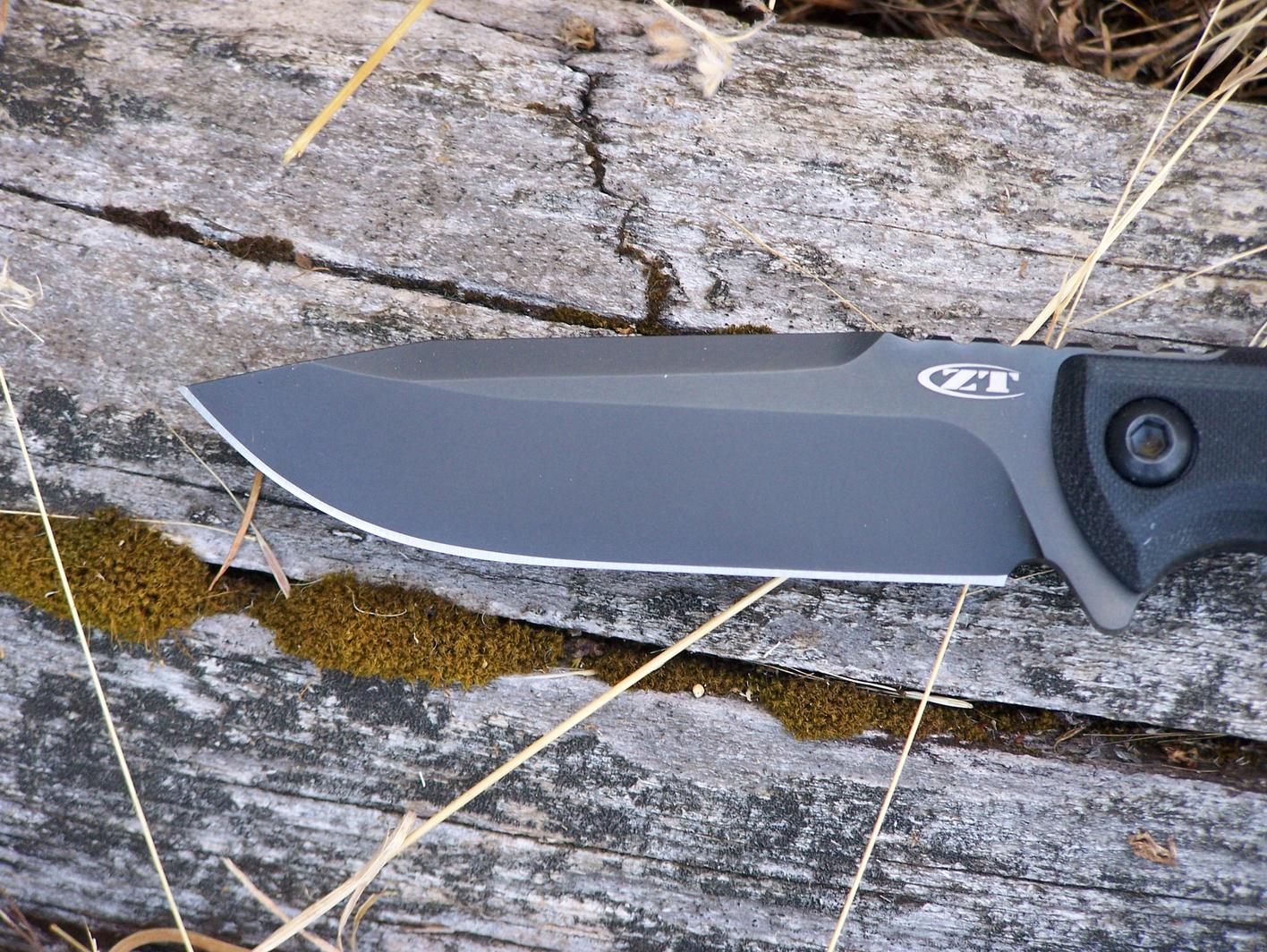
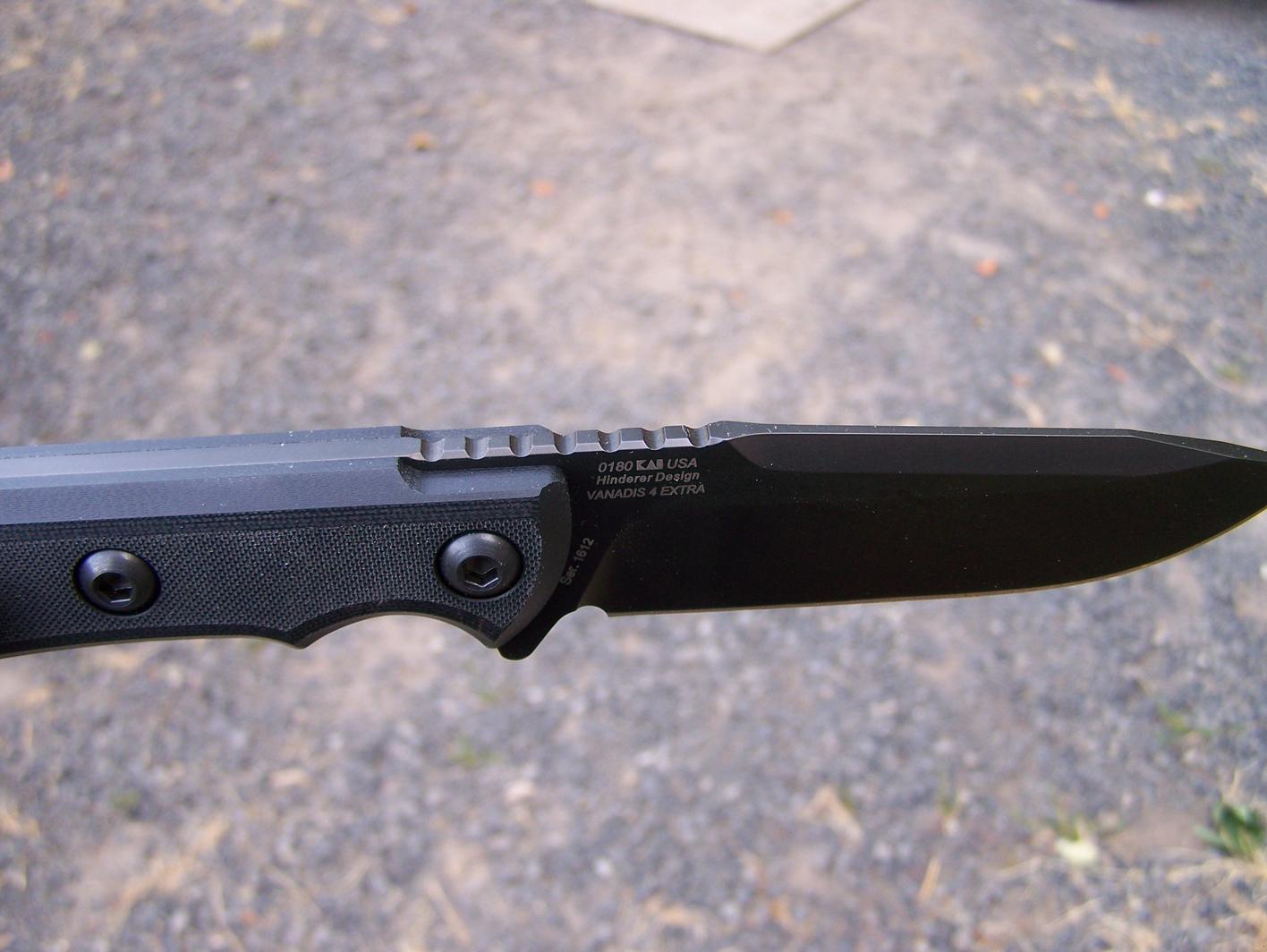
Enter the Zero Tolerance Model 180, designed by custom knife maker Rick Hinderer and based on his custom FieldTac fixed blade knife. The ZT 180 comes with a Vanadis 4 Extra powder metallurgical cold worked steel. We are talking next to bullet proof, if you ask me. It’s super tough steel. The steel is designed for hard use and to resist chipping, which is something a lot of lesser blade steels tend to do, because if you do any chopping their edge will easily chip. The blade also has the DLC coating that is non-reflective and helps resist the elements even more than just the bare steel does.

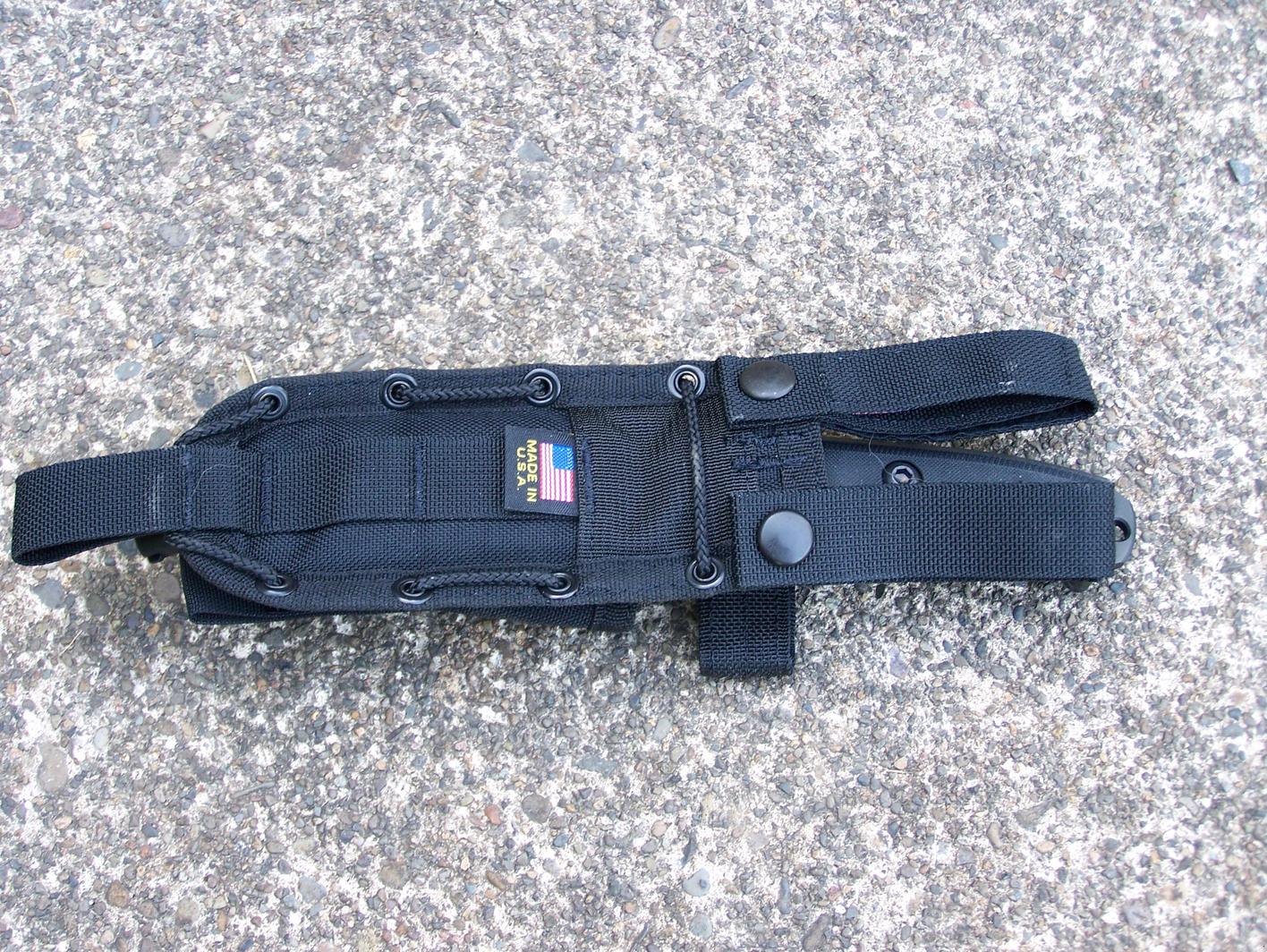
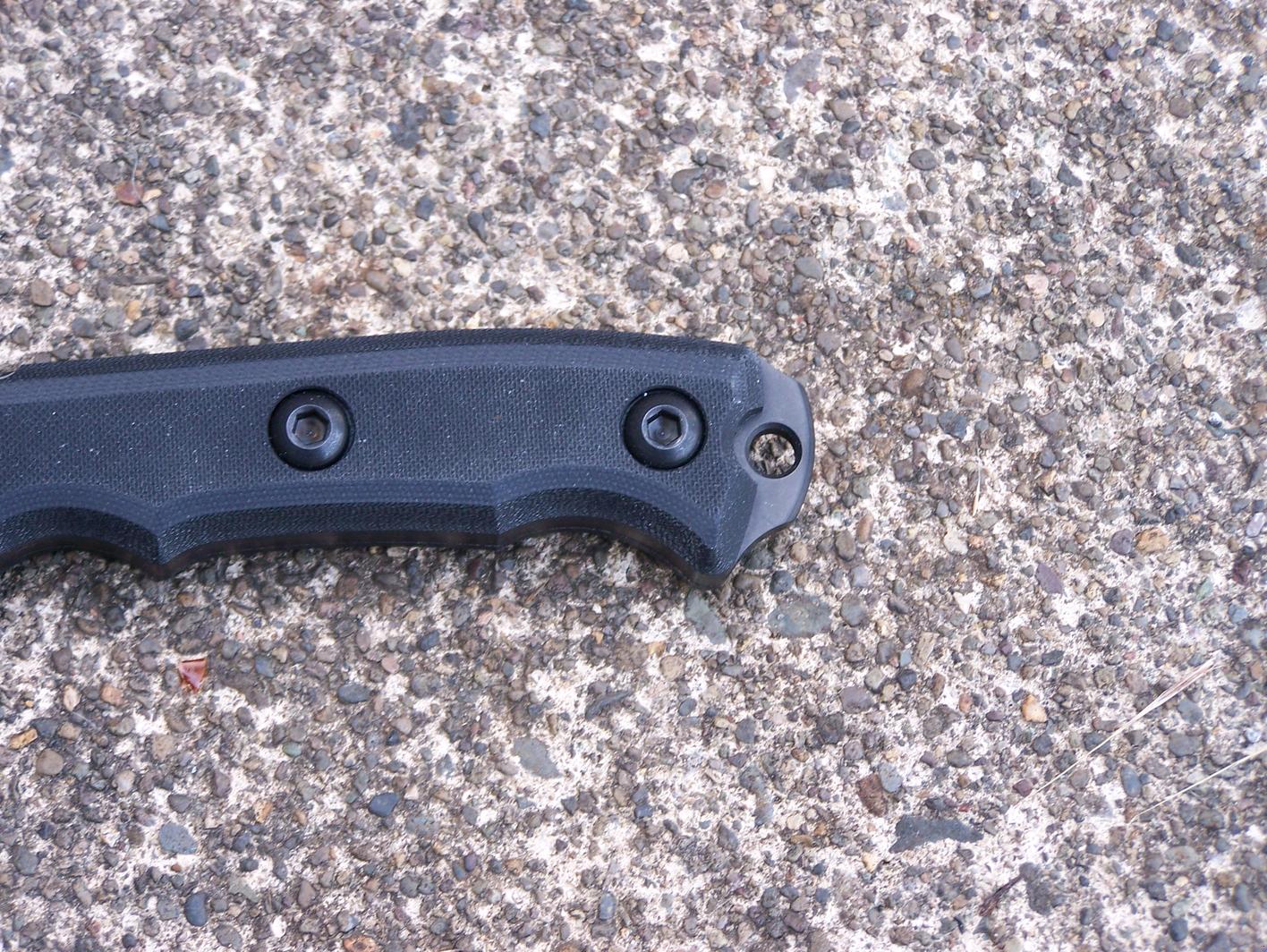
Handle scales on the ZT 180 is black G10, which is some of the best material for hard use knife handles, and it is nicely textured for a sure hold under all weather conditions, too. We also have heavy and course “friction” grooves on the rear of the blade and near the front of the handle scales, so you can really get a great hold on this knife. The handle is nicely sculptured with a finger groove on the bottom of the handle scales, and it is down swept at the back of the handle on the bottom with a lanyard hole. The blade is 4.2 inches long, which is a good size for many cutting chores and tasks. While I like a longer blade for combat use, I’ve found that a blade in the 4-inch length will take care of most of my cutting chores. Overall, the ZT 180 is 9.2 inches long. There is also a nice lined ballistic nylon sheath that comes with the ZT 180, and it is designed for tip down carry (only). There is also a pocket on the front of the sheath, for carrying a sharpening stone or perhaps a multi-tool or fire starter. I’d personally carry all three– a small sharpening stone, multi-tool, and fire starter. It’s a large pocket!

100_6217

We also have just enough of a finger guard on the lower front portion of the handle to prevent the finger from sliding onto the blade, causing some serious injury, when using the knife in the fencing grip, which is probably the most common grip most people take when holding a knife. That’s nice! The knife weighs in at a hefty 8.7 ounces. It is brutally strong, to be sure. This is the sharpened crow bar. It will do anything you ask of it and then some, and then it’ll do some more. Needless to say, the ZT 180 came shaving sharp out of the box, and during several weeks of testing, I never once had to touch-up the edge; I love that!

100_6218

I have certain criteria I use when testing knives. One is cutting hemp and poly rope. Poly rope will readily let you know if the edge isn’t sharp. I cut cardboard, a lot of cardboard. I’ve learned over the years that cardboard will really dull a knife’s edge in short order. I also slice paper as thinly as I can, and we have all manner of chores on our small homestead that require a good knife. One is the on-going fight with blackberry vines. A super sharp knife is required to keep them cut back. I also use a knife around the kitchen as well for all kinds of cutting chores, and I used the ZT 180 to baton it through some fire wood.

100_6219

Honestly, I don’t know what I could do to destroy the ZT 180. I even ran it over with my truck, and it only got the knife dirty. This is one of the toughest fixed blade knives I’ve run across in a long, long time. Any druthers? Well, yes, just one. I’d like to see ZT offer this knife with a hi-rise Kydex sheath for daily carry, instead of just the ballistic nylon sheath. While it’s great for wearing in combat or out hunting/camping, I’d like to see a lighter-weight Kydex sheath that would allow me to carry the knife on my belt for everyday use.

100_6221

To say I was totally blown away with the ZT 180 is putting it lightly, and, to be sure, it is made in the USA, in Oregon. Full retail pricing is $275, and, of course, that’s not cheap, but then again this is a ZT knife, and they are as close to custom-made as you can find at prices a lot less than you’d pay for a similar custom knife. Check one out at your local sporting goods or knife shop. I think you’ll find yourself wanting one, badly!

– Senior Product Review Editor, Pat Cascio