Notes for Tuesday – November 24, 2015

November 24th marks the day that John Knox died, in 1572. (He was born in 1514.) AtheistAgendaPedia says: “Born near Haddington Scotland, he was influenced by George Wishart, who was burned for heresy in 1546, and the following year Knox became the spokesman for the Reformation in Scotland. After imprisonment and exile in England and the European continent, in 1559 he returned to Scotland, where he supervised the preparation of the constitution and liturgy of the Reformed Church.”

o o o

The countdown is on! Just seven more days until the release of “Land of Promise”! Please wait until December 1st to place your order.

o o o

Today, we present another entry for Round 61 of the SurvivalBlog non-fiction writing contest. The nearly $12,000 worth of prizes for this round include:

First Prize:

  1. A Tactical Self-Contained 2-Series Solar Power Generator system from Always Empowered. This compact starter power system is packaged in a wheeled O.D. green EMP-shielded Pelican hard case (a $1,700 value),
  2. A Gunsite Academy Three Day Course Certificate that is good for any one, two, or three day course (a $1,195 value),
  3. A course certificate from onPoint Tactical for the prize winner’s choice of three-day civilian courses, excluding those restricted for military or government teams. Three day onPoint courses normally cost $795,
  4. DRD Tactical is providing a 5.56 NATO QD Billet upper with a hammer forged, chromlined barrel and a hard case to go with your own AR lower. It will allow any standard AR type rifle to have quick change barrel, which can be assembled in less than one minute without the use of any tools and a compact carry capability in a hard case or 3-day pack (an $1,100 value),
  5. Gun Mag Warehouse is providing 20 Magpul pmags 30-rd Magazines (a value of $300) and a Gun Mag Warehouse T-Shirt; (an equivalent prize will be awarded for residents in states with magazine restrictions),
  6. Two cases of Mountain House freeze dried assorted entrees in #10 cans, courtesy of Ready Made Resources (a $350 value),
  7. The Ark Institute is donating a non-GMO, non-hybrid vegetable seed package (enough for two families of four) plus seed storage materials, a CD-ROM of Geri Guidetti’s book “Build Your Ark! How to Prepare for Self Reliance in Uncertain Times”, and two bottles of Potassium Iodate (a $325 retail value),
  8. A $250 gift certificate from Sunflower Ammo,
  9. KellyKettleUSA.com is donating both an AquaBrick water filtration kit and a Stainless Medium Scout Kelly Kettle Complete Kit with a combined retail value of $304, and
  10. Two cases of meals, Ready to Eat (MREs), courtesy of CampingSurvival.com (a $180 value).

Second Prize:

  1. A Glock form factor SIRT laser training pistol and a SIRT AR-15/M4 Laser Training Bolt, courtesy of Next Level Training, which have a combined retail value of $589,
  2. A FloJak EarthStraw “Code Red” 100-foot well pump system (a $500 value), courtesy of FloJak.com,
  3. A transferable certificate for a two-day Ultimate Bug Out Course from Florida Firearms Training (a $400 value),
  4. A Model 120 Series Solar Generator provided by Quantum Harvest LLC (a $340 value),
  5. A $300 gift certificate from Freeze Dry Guy,
  6. A Trekker IV™ Four-Person Emergency Kit from Emergency Essentials (a $250 value),
  7. Twenty-five books, of the winners choice, of any books published by PrepperPress.com (a $270 value),
  8. A pre-selected assortment of military surplus gear from CJL Enterprize (a $300 value),
  9. RepackBox is providing a $300 gift certificate to their site, and
  10. Safecastle is providing a package of 10 LifeStraws (a $200 value)

Third Prize:

  1. A Royal Berkey water filter, courtesy of Directive 21 (a $275 value),
  2. A $245 gift certificate from custom knifemaker Jon Kelly Designs, of Eureka, Montana,
  3. A large handmade clothes drying rack, a washboard, and a Homesteading for Beginners DVD, all courtesy of The Homestead Store, with a combined value of $206,
  4. Expanded sets of both washable feminine pads and liners, donated by Naturally Cozy (a $185 retail value),
  5. Two Super Survival Pack seed collections, a $150 value, courtesy of Seed for Security, LLC,
  6. Mayflower Trading is donating a $200 gift certificate for homesteading appliances,
  7. APEX Gun Parts is donating a $250 purchase credit,
  8. Montie Gear is donating a Precision Rest (a $249 value), and
  9. Two 1,000-foot spools of full mil-spec U.S.-made 750 paracord (in-stock colors only) from www.TOUGHGRID.com (a $240 value).

Round 61 ends on November 30th, so get busy writing and e-mail us your entry. Remember that there is a 1,500-word minimum, and that articles on practical “how to” skills for survival have an advantage in the judging.


Our Family’s Journey to Preparing For an Extended Grid Down Event- Part 2, by Old Man

Katrina was one of those life-changing moments, when we awoke and realized how unprepared we really were. Katrina caused us to completely overhaul and step up our prepping. We changed many things, but for purposes of this article I will focus on the power aspects.

We began to ask ourselves what would we do if we had no power for weeks. We answered that question by taking an inventory of everything electrical in the house. Due to the work we previously did with reducing our electrical usage, we had a complete inventory. Additionally, as an unanticipated benefit, we had already optimized our electrical needs to the minimum. From that inventory we came up with a list and then decided how we were going to mitigate the loss of power. Here is what we came up with. Your milage may very.

Cooking: Our range is electric and not practical to power from a generator. While technically possible, there are better solutions. We opted to purchase a propane grill. This allows us to use it during the summer for backyard BBQs, as well as use it during power failures for cooking and heating water. As a backup, we have a supply of wood and pellets we can burn in our fireplace for cooking.

Heating: Our HVAC is electric/natural gas. As long as the natural gas is working, the electrical portion can be run from the generator. We incorporated the electrical circuit into the transfer switch previously installed. As a backup, we have a supply of wood and pellets we can burn in our fireplace.

Cooling: This is not really an issue. We have small, battery-powered, personal fans. In a worst case situation, we can just take a dip in the swimming pool.

Lighting: We decided that we would use portable, battery-powered LED lanterns and flashlights for lighting. We purchased a quantity that all run on AA batteries. We chose this route additionally as part of our light management strategy.

Refrigeration: We decided to add the refrigerator to the existing transfer switch. Our plan is to run the generator periodically to keep the refrigerator cold. We would then prioritize using the food from the refrigerator, then the freezer, then the pantry, and then finally from the larder.

Water: We are on city water, so we are in a tight spot. It’s lots of bottled water and water storage for us with the swimming pool as backup for washing, toilets, et cetera. I did install a separate transfer switch for the pool pump, so we can circulate the water using the generator.

Sanitation: We are on city sewer, so again we are in a tight spot. We can use pool water for toilets, and we have a camping portable toilet for backup.

Communications: Our main phone is a traditional landline phone. Our everyday handsets are cordless, so we keep a traditional 2500 style phone to plug-in, in the event of a power failure. For TV, we have a 12-volt TV that we can bring in from the RV and run from a jump pack with rabbit ears. Everything else, including radios, cell phones, et cetera can be run from rechargeable batteries and recharged from the 12-volt power system. (I have more on that in a moment.) For Internet, we power the DSL modem using the generator. We also have Internet via our cell phones.

Summary

For 120-volt systems, it really came down to needing to run the refrigerator/freezer (until the food is used up), the heater portion of the HVAC (only during winter), occasional Internet access, and occasionally charging batteries (when solar is overwhelmed). The generator could easily handle this and only needs to be run for a couple of hours a day. I ordered a tri-fuel conversion kit for our generator from U.S. Carburetion. This allows us to run the generator from natural gas, propane, or gas. Based on our usage, I set up a schedule to run the generator a couple of hours a day, and we have enough propane stored to get us through 60 days without power.

For 12-volt systems, it really came down to charging batteries/devices and running the Ham shack. What I eventually came up with is a completely solar powered design. I started with 500 watts of 12-volt solar panels, which is fed to a charge controller in the garage. The charge controller is connected to 210 amp hours of 12-volt glass matt batteries. The batteries are then connected to a 12-volt distribution system, where I have installed 12-volt powerpole outlets throughout the house (http://www. powerwerx.com). This forms the basis of our home 12-volt system. This system supports a continuous draw of 1 amp 24/7. This is sufficient to run our family’s repeater 24×7. It also supports the occasional running of various Ham radios. The system also is used to charge our various gadgets (phones, iPods, iPads, HT’s, et cetera). The system also has the capacity to charge various batteries using a collection of battery trays. I have two favorites– a Tenergy TN160 12 slot charger, and an Energizer CHFC2 8 slot charger. These come with AC adapters with 12-volt outputs; however, I made 12-volt powerpole cables so I can use these trays directly with the 12-volt house system. We now use the 12-volt system for our everyday living, and the best part is it is completely solar powered. Since this part of our life is already off grid, in the event of a prolonged power failure we would only need to supplement our power with the generator as mentioned above, for a couple of hours a day.

That brings us to where we are today. I have applied the learnings from this journey to our RV and retreat as well with similar success. The following are some tips gleaned from our experiences:

  • Not all utility companies are created equal.
  • Don’t assume that because the electrical grid has worked reliably for years that it will continue to do so.
  • Don’t wait for a crisis to go generator shopping.
  • Inventory your existing power use, look for opportunities to reduce usage, and know what is critical to have during grid down.
  • Don’t try to power everything with a generator. Be selective. The benefit is reduced expense in genset sizing and reduced fuel storage requirements.
  • Use solar power for battery/gadget charging.
  • Having a battery as part of the solar charging solution is important for cell phones, as you tend to come home and charge the phones overnight when there is no sun.
  • When charging battery trays, do so during the day. The excess power from the solar panels can charge the trays without depleting any power from the main batteries. Charging battery trays at night depletes power from the main battery bank and it may take a couple of days for the system to recover and come back to 100%.
  • I used an app from the Apple app store called “Boat Battery” to assist in my solar calculations.

In closing I wanted to share some professional “learnings” from Katrina.

Prior to Katrina, the SOP for data center disaster recovery was to perform regular backups of key systems, then store those backups in a secure offsite location. Then in the event that the data center was obliterated off the face of the earth, you had a contract with a DR company that would stand up a predefined list of hardware in their datacenter, retrieve your backups, and restore the backups to the new hardware. In a relativity short period of time, you would be back up and on the air again.

Then Katrina happened, and when it did it exposed a fatal flaw in that SOP. The SOP had been designed with the needs of a single company in mind. The idea was that if company XYZ lost a datacenter they would call up the DR company and execute their DR plan. The issue with Katrina was that it impacted such a large geographic area that it impacted numerous companies at the same time, taking out numerous data centers. These companies all had contracts with the same DR company it turned out, so when they all called the DR company, the DR company quickly ran out of hardware. So the end result was this:

The first companies to call the DR company got their hardware, then very quickly the biggest clients of the DR company got dibs on the remaining hardware. Everybody else got placed on a waiting list for equipment. With the just-in-time delivery model, it literally took months to get hardware and for systems to come back up, though it was expected to be just hours or days. So many companies got blindsided by this.

After Katrina, companies began to consume all available data center capacity as they began to build out their own DR facilities. This created other issues….

The moral to this story is always have a backup plan to your backup plan. Cheers.


Three Letters Re: An Alternative to Calcium Hypochlorite, by TLS

HJL,

Great article on the Pentair Intellichlor. A couple of things I gleaned from the Amazon listing attached to the article:

“…I’ve been told the power unit is simply a fancy transformer that reduces the voltage from 120V down to 12V…”

So, perhaps the unit can be run, grid-down, without the need for an (energy consuming) inverter? (directly from a battery bank?) And:

“It won’t generate chlorine if the water temperature is too cold. The water temp needs to be at least 52 degrees.”

Good to be aware of this limiting factor. – Best, P.R.

o o o

Hugh,

We all thought we’d hit a home run by storing up pool shock. Now my mind leans toward getting my prep team involved in building a 12V powered, portable “chlorinated solution generator” using one of the smaller IntelliChlor cells. What a barter resource. – DD in CO

o o o

Hugh,

A quick tip regarding the comment on stocking salt. Morton pool salt used for salt water swimming pools is 100% NaCl. I called them regarding its potential use for human consumption, and they replied that it is not approved by the FDA but it is pure. The pool salt sells in 50 pound bags for about $5. I can’t speak for any other brand.

Also, regarding the article “Obsoleting Sodium Hypochlorite”: This is an insightful and honest article on what seems to be a good product. One thing to add regarding your warning about cryptosporidium (warning 3): sunlight breaks down sodium hypochlorite (Editors note: Actually, UV radiation rapidly converts the free chlorine, which does the work of sanitization, into chloride, which is useless). If you are going to drink the water immediately, this is not a problem, and in fact, it may be a benefit. However, if the water will be stored at all, maintaining the recommended 1 ppm will likely require another addition after sun exposure.


Economics and Investing:

The Fed Balance Sheet & The Price Of Silver

o o o

Items from Professor Preponomics:

Equities vs. Everything Else: Deutsche Bank Warns One Side Must Be Wrong (Zero Hedge)

When Wall Street Gets DeFANGED — LOOK OUT! (Contra Corner)

Brazil Inflation at 12 Year Highs Compounds Economic Crisis (Financial Times)

Finland Emerges as the “New Sick Man of Europe” as the Eurozone’s Worst Performing Economy (The Telegraph)

A Sign that the World’s Richest are about to Hit a Rough Patch (Business Insider)

Puerto Rico’s Rapture (Huffington Post)

Americans Shoplift $13B in Merchandise Each Year (Market Watch)

The Price of Gasoline Resumes Downward Slide (Reuters)

Recovery? We Never Came Close. (Zero Hedge)


Odds ‘n Sods:

A recent Oath Keepers podcast interview: Winter Prepping with James Wesley, Rawles

o o o

If you can’t hide from them, obfuscate! SurvivalBlog Reader Keeper sent in this link profiling two browser plugins that gives the data collectors what they want. Enough of it to choke on and make the data random and worthless.

o o o

Or, if you prefer the more traditional way of just dropping off the radar altogether, D.S. sent in this link on How To Disappear And Live Under The Radar

o o o

Useful information for those of us who still think that all long-term battery technology involves lead plates and acid electrolytes. If you plan on humping comm. radios, using “hobby” security drones, or other high energy draw items you need to learn about LiPo batteries. They have some real advantages, but they can cause trouble, too. Sent in by T.P.

o o o

Canada to turn away single men as part of Syrian refugee resettlement plan . Sent in by P.S.


Hugh’s Quote of the Day:

“It is not from the benevolence of the butcher, the brewer, or the baker, that we expect our dinner, but from regard to their own interest. We address ourselves, not to their humanity but to their self-love, and never talk to them of our own necessities but of their advantages. Nobody but a beggar chooses to depend chiefly upon the benevolence of his fellow citizens.” – Adam Smith


Notes for Monday – November 23, 2015

FLIR is offering huge manufacturer’s rebate on many thermal imagers they make through November 30th. In addition, JRH Enterprises has put these popular models on sale as well. The very popular Scout II 240 model is on sale as well as having a $500 rebate (from FLIR). Weapons mountable Thermosight models like the RS32 are also on sale for $500 OFF and FLIR is offering a $1,000 Rebate on that model. Other FLIR models on sale with rebates at JRH Enterprises.


Pat Cascio’s Product Review: Driven From Our Homes (DVD)

There has been a few short mentions on SurvivalBlog.com and other websites about the DVD and companion book, Driven From Our Homes that is being sold by Infidel Body Armor. I have been dealing directly with IBA owner, Chad Cooper, since he started the company, and I’ve tested many of his products extensively. To be sure, IBA doesn’t produce any junk! It’s simple as that.

When Chad contacted me about his new DVD and companion book, I couldn’t wait to get it. Before it arrived, Chad was kind enough to give me access to their website so I could watch the DVD and read the book online. The video is outstanding; it’s not some homemade video created with a camcorder. This is Hollywood-type material in the DVD. What we are looking at is some kind of disaster that has taken place. Chad Cooper and some of his friends and family decide to bug out. Throughout the DVD, they stop and explain to the viewer just exactly what they are doing and why. Most of the actors in the DVD are former military or security operators, and they know their stuff. Additionally, the DVD and the book are written from a layman’s view, so you can easily understand what is being done and why. I like that.

As a former combat infantryman myself, and as a certified protection specialist, I found very little to take issue with in the book and the DVD. There is rock-solid information that anyone can use. However, you have to plan ahead of a disaster. If you wait until the last minute to get prepared and bug out, you might have lost your advantage.

Cooper and his bugout crew have a planned destination they are trying to reach after bugging out, and they do encounter some problems along the way, like needing more fuel as well as one of the team members betting wounded. After reaching their destination, there are other considerations they must contend with, like perimeter security, weapons details, and taking on the decision to either aid a nearby town under attack or ignore the pleas for help. You’ll have to get the book and DVD for yourselves to see how it plays out. I’m not giving away the ending, or is it the ending?

I guess I was really impressed with their practical and realistic approach to everything, start to finish in the DVD and book. To be sure, this is just the start. IBA has on their website, where you can join for a monthly fee, and get access to more information and videos down the line, as well as get a discount on all the products IBA sells.

If you’re new to prepping and you’re considering bugging out at some point, this DVD and book are a must read and view. Once again, it’s just good, clean information, and they demonstrate how things are done. To be sure, no plan is perfect, so you have to take things into consideration, like a team member getting wounded and how you react. There are lots of things to consider, and Cooper and his crew did an outstanding job on presenting the information to the reader and viewer. Check it all out at www.infidelbodyarmor.com for more information. It is money well spent.


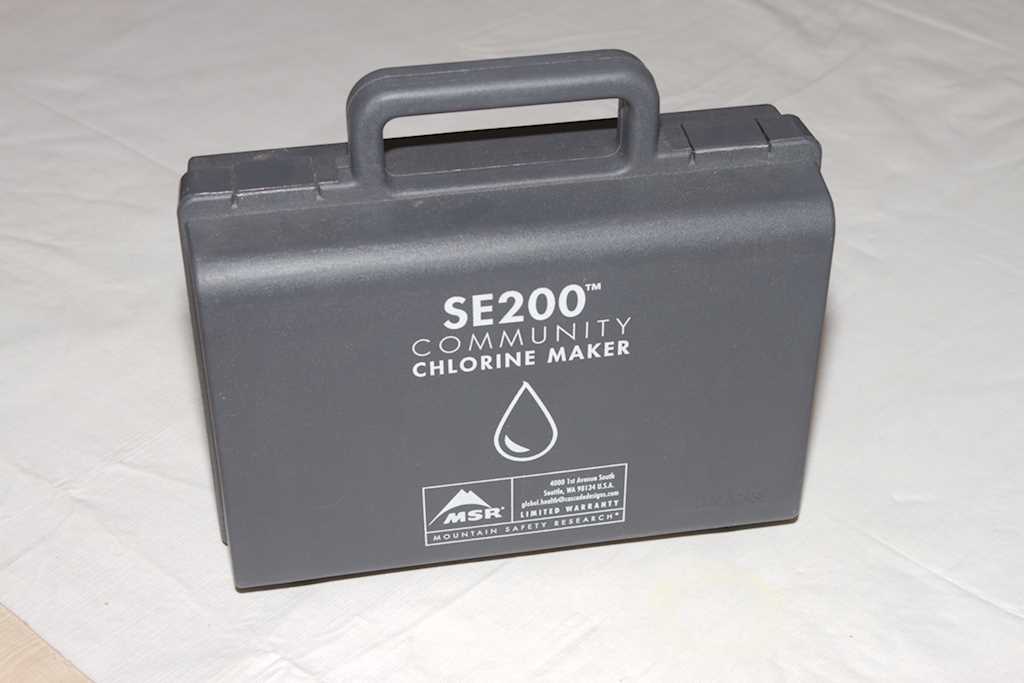
Obsoleting Sodium Hypochlorite – The MSR SE200, by Hugh Latimer

In 2004, the devastating Southeast Asia Tsunami stimulated charity from all over the world. Fresh drinking water was one of the prime concerns in this disaster and MSR (Cascade Designs) had been specializing in back country water purification for years. They lept into action, delivering many of their water purification devices to the area. Unfortunately, they learned some hard lessons along the way. In their own words, they admitted that the philanthropic effort, though well intended, was humbling. The logistics were complicated, so delivery of the devices was hindered, and once there they discovered that the size of the devices, intended for backcountry users, were impractical in the face of the enormous demand for clean water. Entire families and communities could not depend on individual devices. MSR took those humbling lessons to heart and developed a new division called MSR Global Health.

2015112203160500

The SE200 Community Chlorine Maker is the first product released by this division and is intended to support the fresh water needs of families and small communities in developing nations or disaster struck areas. I was immediately intrigued by this product when it was brought to our attention by a loyal SurvivalBlog reader and I ordered two of the units direct from Cascade Designs. According to the specifications, one unit will produce more than enough drinkable water, but I always try to operate under the principle of “two is one and one is none”. You never know when a failure of a critical system will take place, and if this unit delivered on its promises then it would become part of the critical hardware in our preps. I intentionally did not notify MSR that the purpose of the purchase was to evaluate the unit for SurvivalBlog, as I wanted to experience the whole supply chain as one of our readers would.
2015112203164500

First Impression

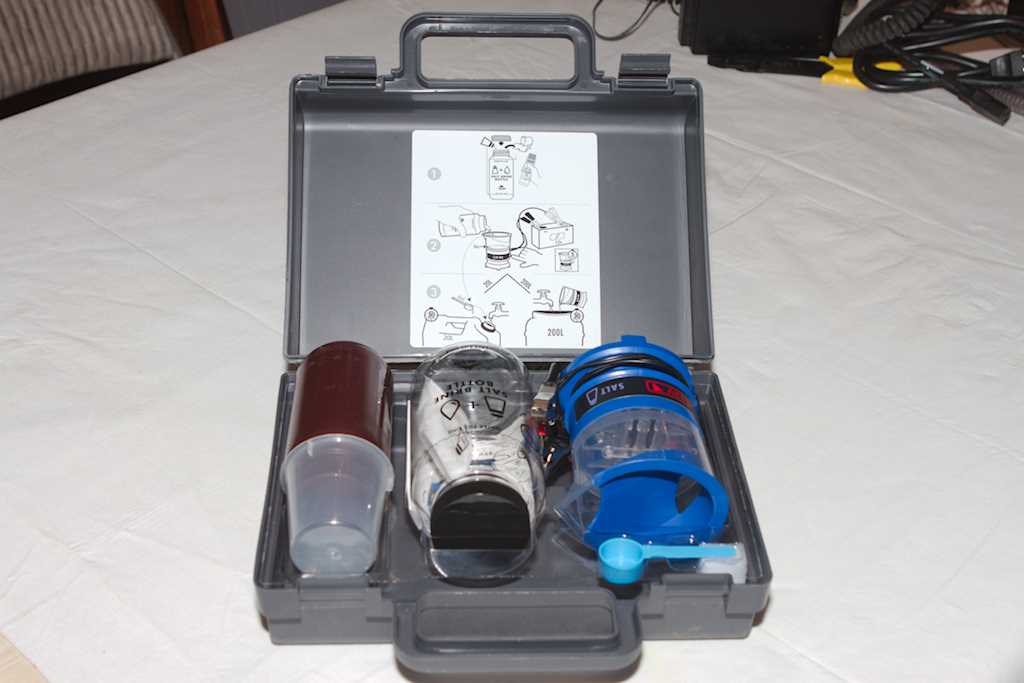
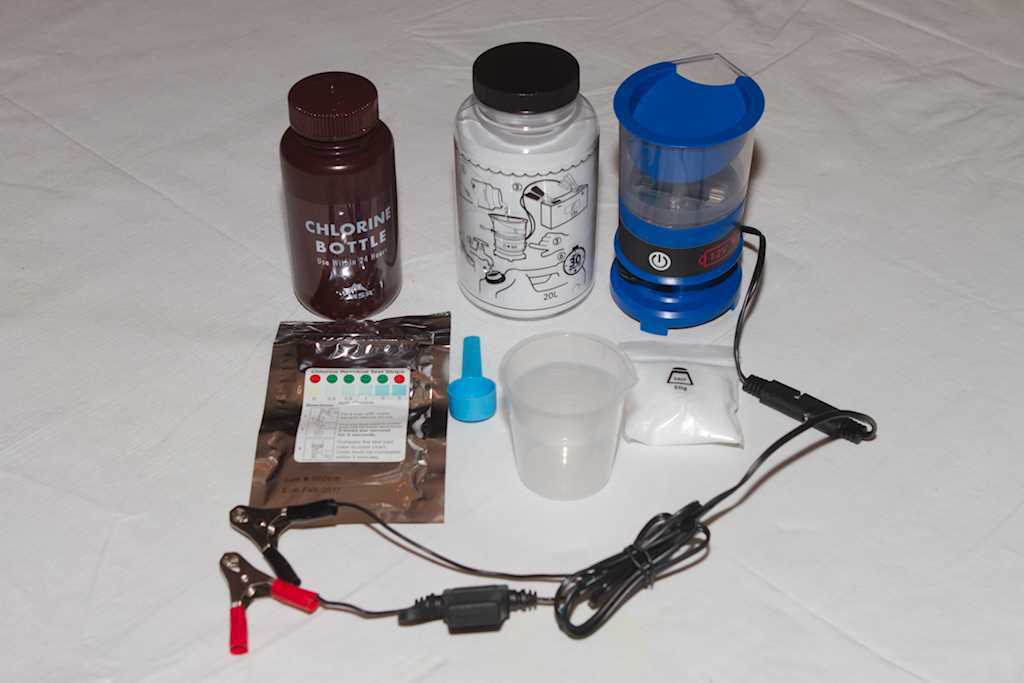
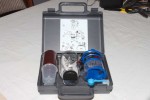
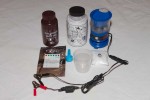
The units arrived within 10 days of ordering it. Opening the first unit to inspect the contents, I discovered that the small dosing spoon was missing. While not a big deal, the spoon aids in dosing 5-gallon or 20-liter containers, and it either showed that the unit had been previously opened or that quality control leaves a bit to be desired. I have it on my list to contact them to obtain a replacement, but if they don’t then a small 5ml syringe will work just as well. In working with this review, I only purified water in 1-gallon containers, so a small syringe actually provided more accurate dosing control. The second unit had the dosing spoon in it though. Here is a quick inventory of the contents of the case:
2015112203204100

  • 1 plastic carrying case
  • 1 set of instructions
  • 1 clear plastic bottle to hold salt brine (400ml)
  • 1 opaque plastic bottle to hold the chlorine solution (250ml)
  • 1 dosing cup (100ml graduated every 5ml)
  • 1 dosing spoon (5ml)
  • 1 salt packet (50g)
  • 1 packet of chlorine test strips with indicator
  • 1 battery cable clip
  • 1 SE200 Chlorine maker

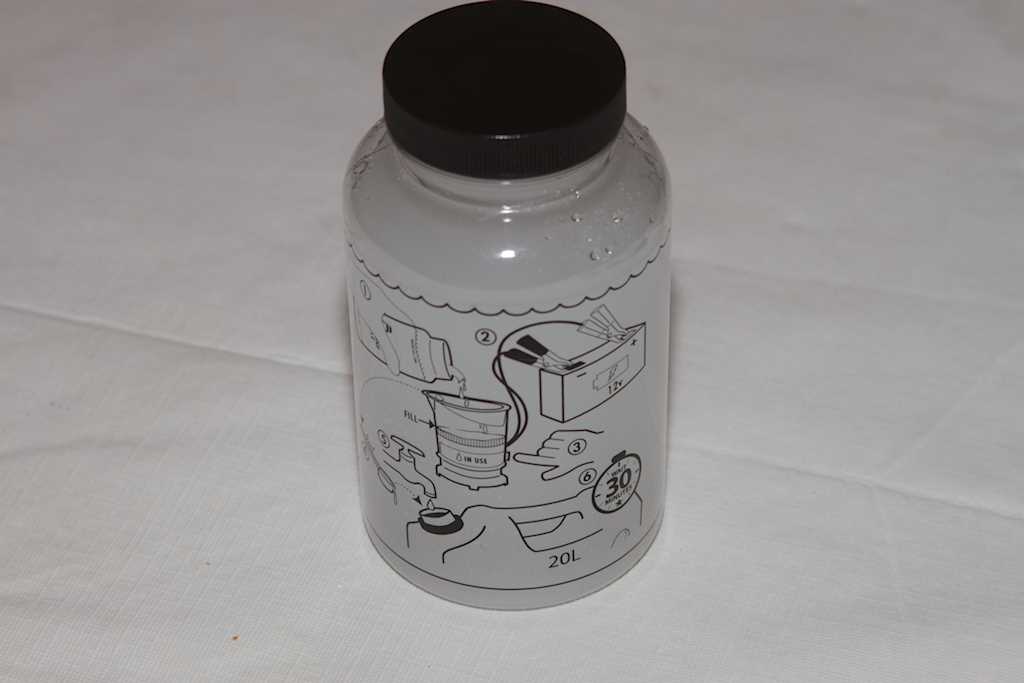
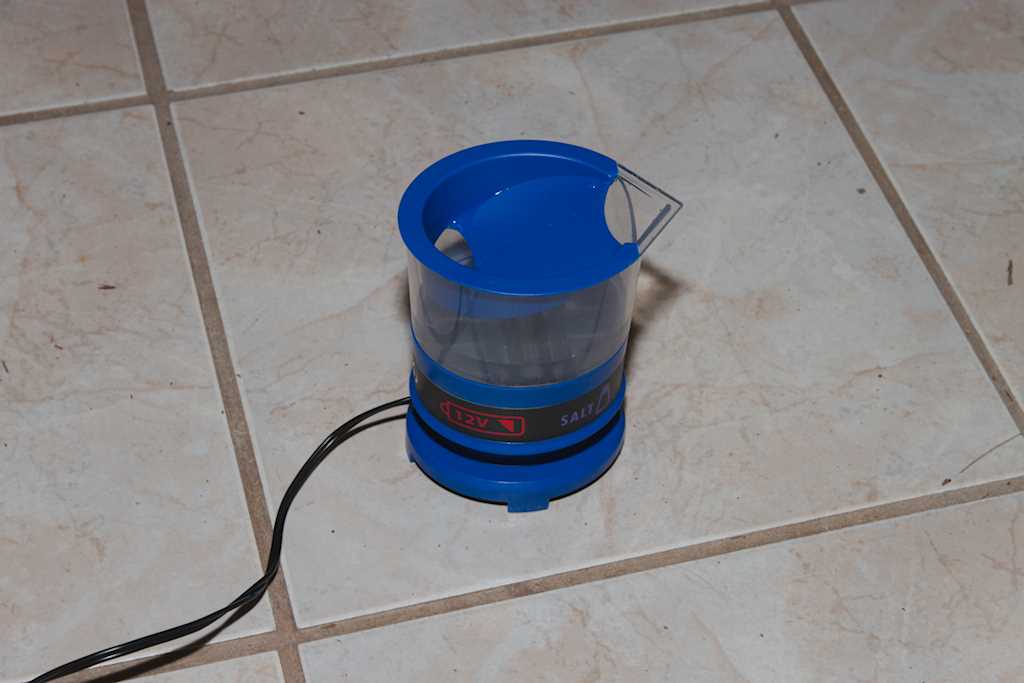
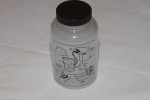
One of the first things that strikes you is that this unit is designed for emerging countries. Rather than print instructions in 50 different languages, MSR went with a pictorial concept. The operation is simple enough that just four pictures located in the lid of the box are enough to figure out the operation.
2015112203270900

Eager to try it, I operated the unit solely from the pictures in the lid of the case and had the unit operating within 10 minutes of first opening the case and had my first batch of chlorine six minutes after that. The instructions are as simple as:

  1. dumping the salt packet in the clear bottle and filling to the water line.
  2. Shaking and waiting until the salt is dissolved.
  3. Measure out 50ml and pour that into the SE200.
  4. Connect the SE200 to the battery (observing polarity).
  5. Turn the unit on, and wait until it is finished.
2015112204340400

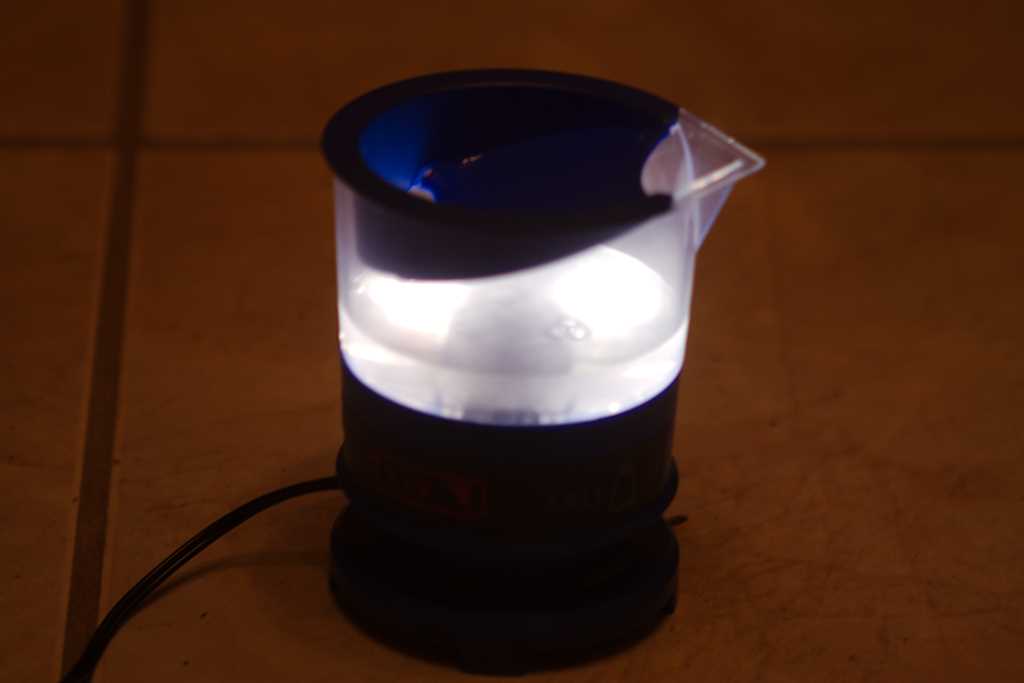
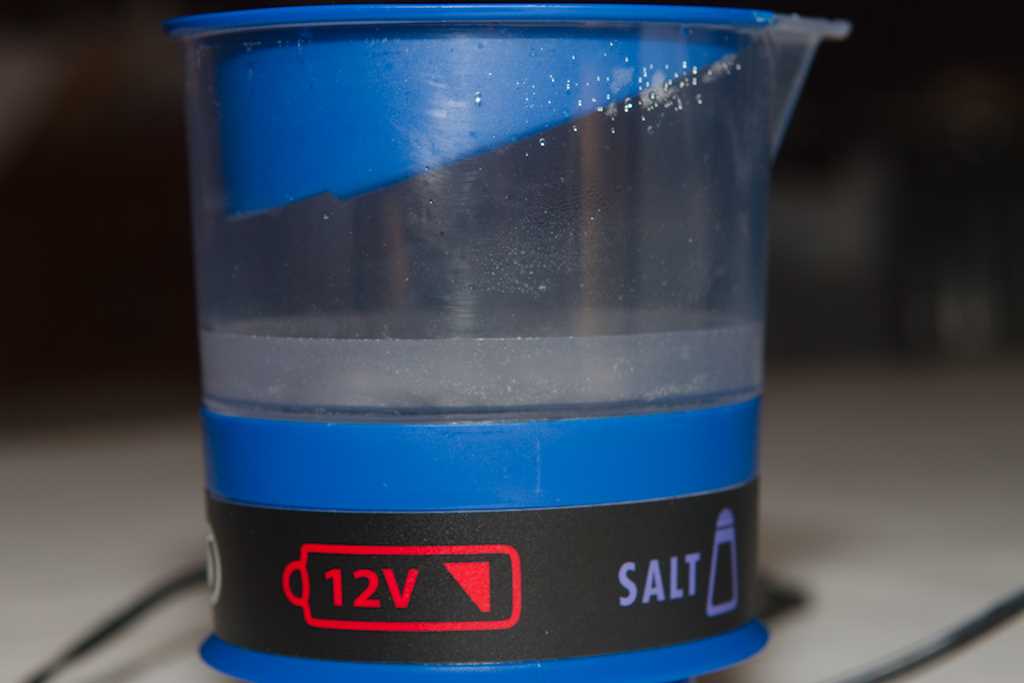
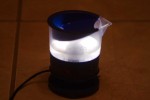
When the unit was connected to a 12V battery, it ran a self test, flashing the LEDs one at a time, purple, red, then white. After the power button was pressed, the white LEDs illuminated and stayed on during the duration of the run. During the run, the salt brine fizzed and you could see a small wisp of gas floating out of the top of the maker while the smell of chlorine (similar to that of running a pool) permeated the area around the SE200. When the unit finished, six minutes later, it beeped a quiet beep and the white LEDs began to slowly flash until the unit was disconnected from power.

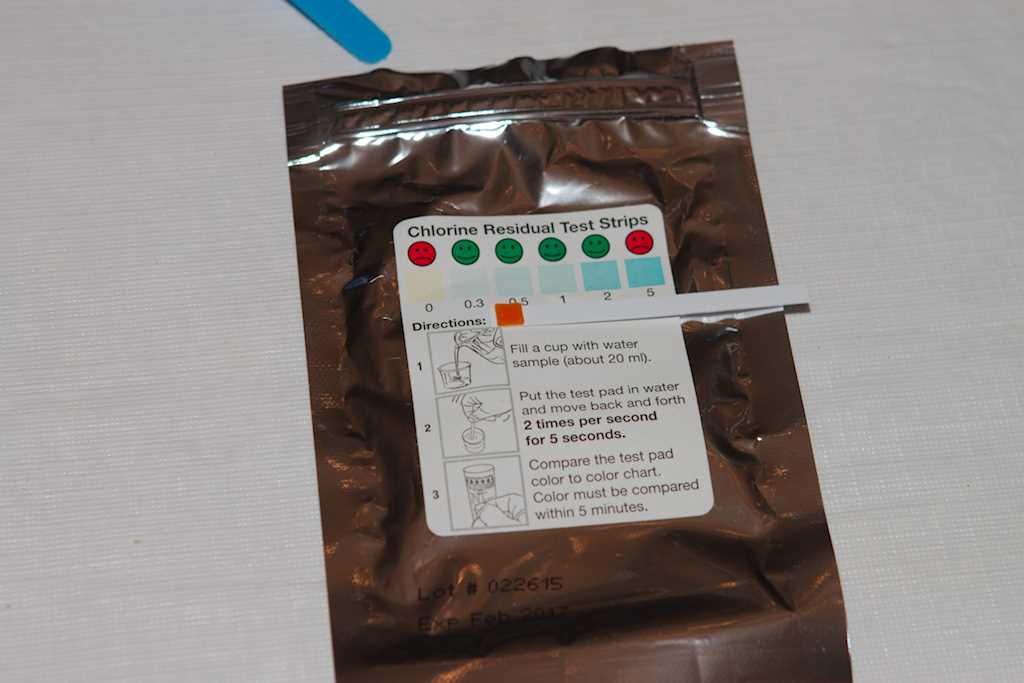
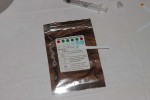
Retrieving a 1-gallon container, I filled it with water from the sink faucet, which produces well water (not chlorinated, city water), added 1 ml of the SE200-manufactured chlorine solution, and tested the water mixture with the included test strip immediately. The strip indicated a chlorine concentration in the treated water of about 2 ppm, which is a bit on the high side. Considering that the chlorine was added to tap water, which is known to be clean and that in practical use the water that you will be treating is probably not as clean and you’d let it sit to work for an hour or so, I’d call it an acceptable run.
2015112206050400

Overall, the unit performed as described, was simple enough that a child can use it, and was convenient to handle.

Techie Stuff

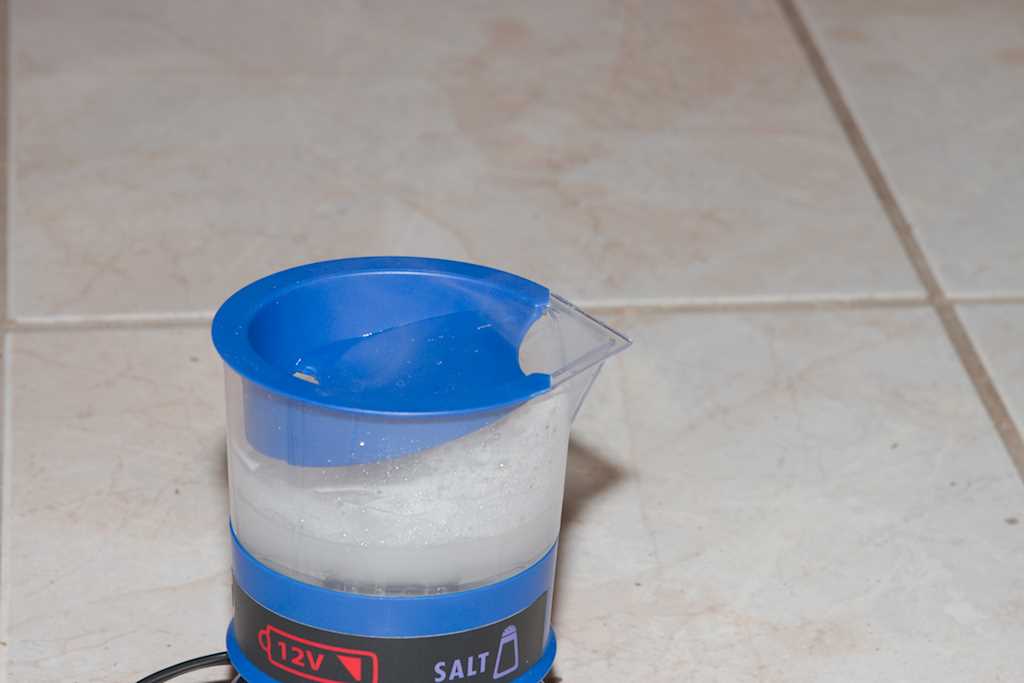
While the SE200 produces chlorine, it also produces other byproducts as well. You can visually see this when you pour the chlorine solution into the dosing cup and observe the color. The salt brine originally starts clear to light milky white, yet the chlorine solution has a distinctive yellow/brown color to it along with some solids that can be seen floating. A quick trip to Wikipedia reveals that the electrolysis produces hydrogen gas (H2) which bubbles out, chlorine gas (Cl2) which stays mostly dissolved in the solution, and sodium hydroxide (2 NaOH) which is the yellowish solid seen floating in the water. Impurities in this salt brine solution will also obviously produce other unknown compounds, so it’s best to start with the cleanest water possible for the brine.
2015112204332600

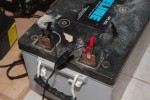
The unit runs off of a 12-volt battery. The battery shown in these pictures is one that I had on hand (a monster 255AH unit), but the SE200 will run off of any 12-volt battery. A standard car battery (~70 to 80 AH) will run the unit for 200 batches (40,000 liters of treated water). I am considering a small 3.6AH gel cell packed in with the SE200 when I move it to a Pelican 1200 case for emergency operation. That will get me several (perhaps 10) batches of solution for 2000 liters of treated water before I need to seek alternate power. When started, the unit draws 2.8 amperes, dropping to 2.2 amperes within 90 seconds for the duration of the run. This level of power usage is easily solar powered with even the most mediocre portable solar system. Several batches will use less power than charging the typical cell phone.

The unit does dump considerable energy into the brine solution. Starting at 70°F, one run raised the brine temperature to 112°F. Out of curiosity, I ran the same brine solution through another run, which raised the temperature to 130°F and did indeed double the strength of the solution. There is, however, no need to produce double (or more) concentration levels as it only takes six minutes to produce enough to treat 200 liters of water to the 1ppm level.
2015112205000200

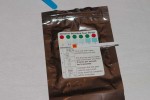
Also, when you use the test strips, make sure you are testing your treated water, not the chlorine solution from the SE200. This is a common error and you will not get a good reading on the strips (The included strips appear orange when tested this way). The point of the test is to test for residual chlorine in your drinking water to determine if you are disinfecting it enough. There is no point in testing the produced solution because you already know it contains chlorine.

A Few Warnings
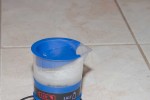
2015112204382100

Warning one: The fact that you can smell chlorine (and see occasional wisps of mist floating out of the SE200) and the fact that chlorine gas is poisonous in this form should be a strong indicator that you should only use this unit in a well-ventilated area. Do Not attempt to “smell” the chlorine close up to test the concentration. There is no warning about this on the container because this is a product that is not intended for the litigious U.S. market. You have been warned!

Warning two: Free hydrogen gas is produced by this unit, albeit in small quantities. You are also tethered to the battery by a short power cord with battery clips. Attaching the battery clips may produce a small spark. Since hydrogen is highly flammable (okay, explosively so) you do not want to run this unit in an enclosed space. Again, because this unit is not intended for the litigious U.S. market, there is no warning.

Warning three: Chlorine sanitization and oxidation are good for the vast majority of water-borne “bugs”. However, cryptosporidium is highly resistant to chlorine disinfection and UV light is the easiest compliment to this process to inactivate it. Sanitizing the drinking water in storage containers is certainly acceptable, but you should let it sit in a UV transparent container in direct sunlight before consuming (or provide some other method of removing cryptosporidium, such as super fine filtering, if the water comes from a questionable source).

Warning four: Chlorination deals with organic contaminates, which is your biggest concern in an emergency situation. It does not affect chemical contamination, heavy metals, or other such contamination. While the SE200 is fine for emergency use, long-term considerations require the use of other forms of purification and filtration. You can effectively think of chlorination as equivalent to boiling the water.

Disappointments

  1. The plastic storage case is flimsy, the insert holding the components is “cheap”, and I can see where it isn’t going to survive the rough handling that emergency situations can throw at it. However, it is roughly the size of a Pelican 1200 Small Case, so I’m going to transfer the contents to one of these.
  2. The plastic bottles are not microwaveable. (Don’t ask how I know.) I guess emerging countries are not expected to have microwave ovens on hand. But that does bring up the point of what to do when the bottles eventually break. I’ll give the specific instructions in the next section below.
  3. The connector between the SE200 and the battery clips is annoying. I get it; it’s inexpensive and it works, but it took me all of about five seconds to determine that it was coming off and being replaced by Anderson Power Poles (since all of my other 12V equipment has the same connector.
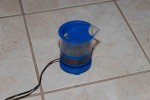
  4. 2015112204333400

  5. The power wire on the SE200 is flimsy. While the unit doesn’t draw very much power and doesn’t need a heavier cord for operation, it just feels “cheap”. The addition of Anderson Power Poles will allow interchangeability with the power cords of my other equipment, so I’ll only have to deal with the short pigtail coming out of the unit itself.
  6. Why isn’t MSR marketing this unit to the prepping world!?! If you’re storing sodium hypochlorite solely for the purpose of water disinfection, this unit completely does away with the need for that chemical (and the associated complications). Storing salt is far easier and won’t deteriorate with time.

What to do when things go wrong

Eventually, the plastic bottles will break (or you will microwave it, like I did in an attempt to speed up the dissolving of salt). What then? The large salt brine bottle is 400ml and you’re adding 50gm of salt to it. You end up with a concentration just below the saturation point. In the cold, you will have trouble getting all of the salt to dissolve. You don’t actually need this bottle if you have the ability to store a clean salt brine solution elsewhere. However, if mixing the solution on-site in a replacement bottle that is not the same size, just mix the brine solution as normal. Let the solids settle to the bottom and pour off the brine from the top to use. If there isn’t enough salt in the solution, the SE200 will flash the purple light letting you know. Mix a little more salt and try again.

You are dosing 20 liters of water with 5 ml of solution to produce roughly 1 ppm chlorine. This means that the solution you produce is roughly a .1% chlorine solution (approximately 60 times weaker than household bleach), but it’s still strong enough to matter when dosing. Rather than measure in drops like you would with household bleach, you measure in milliliters. If you loose the dosing cup or spoon, a medical syringe works just fine. In most cases, I think they work better than the spoon and cup. The dosing is simple. Use 1cc per gallon, 5cc for a 5-gallon (or 20 liter) container, and a whole batch (50ml) for a 55-gallon (or 200 liter) drum. If you lose the dosing cup, the SE200 is still marked, so you know how much brine to put in it.
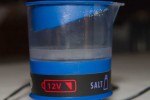
2015112205512600

You are producing an alkaline solution (because the hydrogen gas bubbles off), and the electrodes will eventually get a coating of scale on them. During my testing, there was no noticeable buildup on the electrodes, but if the purple light stays lit even after you verified the brine solution, it’s a simple matter to clean the SE200 by filling it with 50ml of vinegar and swishing it around. Just like your coffee pot, it’s probably easier to put it on a regular cleaning scheduled with vinegar rather than waiting for the buildup to interfere with operation.

Recommendations

  1. Use this as an emergency water source (especially when traveling). It fits in a BOV without hardly even noticing it. However, it is plastic and only intended for a life of five years. If you need water for a longer span of time, see the SurvivalBlog article An Alternative to Calcium Hypochlorite, by TLS for a long-term, permanent solution. I have two. One goes in the bugout trailer permanently, and the other moves between vehicles when we are taking road trips. It’s small enough that it isn’t even noticed. The old American Express adage certainly fits this unit: Don’t leave home without it.
  2. Carry an additional filtration unit, preferably an activated carbon unit, like the MSR MiniWorks or the Katydyn. The SE200 will not remove heavy metals, chemical contamination, or cryptosporidium. The activated charcoal filters will do a much better job at that. Our plan is to use the SE200 for all water usage and then water that is consumed will be run through an MSR MiniWorks (if vehicle bound) or a Berkey (if bugout trailer bound).
  3. Remember that the chlorine takes time to work. You need to wait at least 30 minutes (preferably an hour) after treating the water before using it. If you are in a hurry, this is not the method to use. However, if you are needing a large quantity and have an hour or more of time, this will get you what you need.
  4. Swap the case out with a Pelican 1200 Small Case. The first time your load shifts and smashes the box (or you drop the box), you’ll thank me.
  5. Remember to keep your chlorine residual test strips handy and current. They are inexpensive insurance that you are drinking water that is safe. They are not just used to verify that you produced chlorine but to verify the quality of the water you are drinking. If you dose the water and 30 minutes later there is no residual chlorine in it, you probably need to dose it again before using it. The chlorine is used up as it disinfects the water. No signs of chlorine means no disinfecting is occurring.
  6. Despite the fact that the water tests fine, try not to drink murky water. Let the sediments settle out or filter it before you drink it.
  7. Try using it before you need it. It’s simple to use, but you don’t want to discover a problem when you need it most.
  8. 50gm of salt makes eight batches (1600 liters of treated water). It’s easy enough to store salt and any salt will work, but I just buy an extra container of non-iodized salt every time or so that I’m at the store. The canisters are easy to manipulate and store on shelves.

The SE200 is so easy to use and convenient to store, it belongs in every person’s preps. Whether you are prepping for TEOTWAWKI or just for the next hurricane or wind storm, or even just traveling to another country on business, the peace of mind you get by knowing you have access to drinking water, no matter what, is well worth the price. I bought two and I’m keeping them. I’m recommending this to all of my friends as well. There are a few caveats, such as having to wait for the process to work and the need for some sort of 12V power, but I can’t think of any other product that will treat the same amount of water with the same ease. Just take the recommendations to make a few upgrades and get the battery, extra test strips, and lay up the salt supply. Goodbye sodium hypoclorite!

Where to Get it



Recipe of the Week: Quick Chili Con Carne, by T.M.

Instructions:

  • 1lb lean ground beef
  • 1 small onion, chopped
  • 1 tsp salt
  • 1 to 2 tsp chili powder
  • 1 bay leaf
  • 1 tsp Worcestershire sauce
  • 2 (8oz) cans tomato sauce
  • 2 (16oz) cans kidney beans, drained

Directions:

  1. In a skillet or slow-cooking pot with a browning unit, break up beef with a fork and cook until lightly browned
  2. Pour off excess fat.
  3. In a slow-cooking pot, combine meat with onion, salt, chili powder, bay leaf, Worcestershire sauce, tomato sauce, and kidney beans.
  4. Cover and cook on high for 2 to 3 hours.
  5. Remove bay leaf.

Makes 6 to 7 servings.

o o o

Useful Recipe and Cooking Links:

Dutch oven recipesfrom Troop 26 in Parkville (PDF). Sent in by Keeper.

Do you have a favorite recipe that would be of interest to SurvivalBlogreaders? Please send it via e-mail. Thanks!


Letter Re: An Alternative to Calcium Hypochlorite, by TLS

Gentlemen,

I just read the excellent article written on chlorine usage for water disinfection. As a long time analytical chemist, it was a pleasure to read such an articulate article on the subject. I wanted to add a caveat to the article. One must keep in mind that when using chlorine, a minimum contact time of one hour is required to kill organisms, and you should maintain a residual of chlorine in the water.

Contact time is the length of time the chlorine is allowed to work. And since the chlorine reacts with the organic molecules composing the undesirable organisms, its concentration drops over that time period. So the calculated the amount of chlorine to use to get to 1 ppm free (or residual) chlorine will vary based on the amount of organic material in the water. In laymen terms, the dirtier the water the longer the contact time and the higher the concentration of chlorine that is required. In normal times, chlorine is added, the chlorine is allowed to react, and the water is tested to determine free (residual) chlorine. If the residual is too low, more chlorine is added.

The maximum recommended residual chlorine level in drinking water is 4 ppm. Keep this in mind when using any chemical to treat drinking water: For the greatest safety margin, you must add enough to kill the organisms and leave a residual amount of chlorine in the water. Temperature will also greatly affect the amount of contact time required. The reaction of chlorine with undesirable organisms goes slower in cold water than warm. Keep up the good work. – JP in Kalamazoo

o o o

HJL,

One thing that hit me (while buying something to de-ice my walkways) was that I rarely see salt – sodium chloride – listed as something preppers need to stock up on, but it is something you need to consume to live, not to mention the other uses. The article on Calcium Hypochlorite (Chlorine generator) alternatives mentioned “adding salt” and that the chlorine generators turn salt into chlorination. Salt is something I get from the same store shelves as everything else, so it might be a good idea to get an extra bag of rock-salt and store it away.

I also should mention that there were several responses giving the shortcomings of running razor wire in the interior of your house. Yet I’m glad someone at least submitted the idea. It helped to have a new idea, and even if it wasn’t so good as presented it provoked a lot of discussion and several refinements and alternatives. I’d rather not discourage the inventiveness but instead look at all ideas as something to be evaluated and thought through. – T.Z.


Economics and Investing:

A very interesting read on the coming economic disaster: Is This How the Next Global Financial Meltdown Will Unfold?. Sent in by GJM

o o o

The Future of Money – Banking without a bank in Kenya. – C.L.

o o o

Items from Professor Preponomics:

Next Crisis in the Making: David Stockman Points to the $4.6T Leveraged Loan Market (Contra Corner)

ECB Policymaker Says Monetary Policy Risks Becoming Ineffective in a Low Growth World (Reuters)

China’s $1.2T Debt “Ponzi Scheme” Could Trigger Financial Crisis (Breitbart)

Container Freight Rates Plummet 70% in 3 Weeks (Zero Hedge)

Investors Warn of Greater Volatility from Liquidity Crunch (Reuters)

Top Fed Official Says Feds May Need Permanently Big Balance Sheet (Reuters)

Student Loans and Uncle Sam (Mises Institute)

Earnings of the Top 1% in Your State (Business Insider)

This City has the Most Concentrated Poverty in America (Business Insider)


Odds ‘n Sods:

From SurvivalBlog reader S.H. – While I don’t make a habit of watching PBS, this caught my attention. Though the technical aspects were mostly over my head, the ramifications were not. This type of terrorism vastly widens the threat to the power grid along with other infrastructures. Cyber War Threat

o o o

Real Danger Is Violence and War-Catherine Austin Fitts This is in-line with what I have been saying for quite some time. There is a huge economic crises coming, yet TPTB will keep kicking the can down the road, watching the crises grow larger and larger until some outside force finally determines that enough is enough. Whether it is domestic violence driven by the demise of the middle class and racial tensions or an International war on the scale of World War III, sooner or later someone will break. – link submitted by B.B.

o o o

Pioneers of ‘pee-cycling’ tout urine’s value – Of course, I’m wondering how they deal with the heavy metals from massive dosing of vitamins and chemical compounds from the over-medication of the population? – G.P.

o o o

In combat, mobility is everything…Is the same true of surviving TEOTWAWKI? Potential Danger Is in Government Responses.

o o o

An interesting twist on an old problem: Gangs of New York: Sicilian mafia offers Big Apple protection from ‘psychopathic’ ISIS Sent in by D.S.


Hugh’s Quote of the Day:

“What manner of men had lived in those days…who had so eagerly surrendered their sovereignty for a lie and a delusion? Why had they been so anxious to believe that the government could solve problems for them which had been pridefully solved, many times over, by their fathers? Had their characters become so weak and debased, so craven and emasculated, that offers of government dole had become more important than their liberty and their humanity? Had they not known that power delegated to the government becomes the club of tyrants? They must have known. They had their own history to remember, and the history of five thousand years. Yet, they had willingly and knowingly, with all this knowledge, declared themselves unfit to manage their own affairs and had placed their lives, which belonged to God only, in the hands of sinister men who had long plotted to enslave them, by wars, by “directives,” by “emergencies.” In the name of the American people, the American people had been made captive.”

– Taylor Caldwell, The Devil’s Advocate