Notes for Friday – December 18, 2015

December 18th is the birthday of Charles Wesley (18 December 1707 – 29 March 1788). He wrote more that 1,700 hymns. Today is also the birthday of Jørgen Haagen Schmith (born December 18, 1910, died October 15, 1944). He was better known under the codename Citron and was a famous Danish resistance fighter in occupied Denmark. His biographical sketch at Wikipedia describes his death, after he was tracked down by the Nazis: “German soldiers arrived at the house to arrest or kill Schmith. He fought for hours against an overwhelming force of enemy troops killing 11 and wounded scores of others before the house was set on fire and he was shot attempting to escape the flames.” His exploits were dramatized in the movie Flame and Citron.

o o o

As expected, Obama huddles with Bloomberg as he preps order on guns. Remember, he has nothing to lose at this point and he has already stated that he is willing to use executive orders, bypassing congress, to get what he wants. The White House has released a statement: “The two discussed ways to keep guns out of the hands of those who should not have access to them…” and based upon their past actions and statements, “those” would be you.

o o o

Today, we present another entry for Round 62 of the SurvivalBlog non-fiction writing contest. The nearly $12,000 worth of prizes for this round include:

First Prize:

  1. A Tactical Self-Contained 2-Series Solar Power Generator system from Always Empowered. This compact starter power system is packaged in a wheeled O.D. green EMP-shielded Pelican hard case (a $1,700 value),
  2. A Gunsite Academy Three Day Course Certificate that is good for any one, two, or three day course (a $1,195 value),
  3. A course certificate from onPoint Tactical for the prize winner’s choice of three-day civilian courses, excluding those restricted for military or government teams. Three day onPoint courses normally cost $795,
  4. DRD Tactical is providing a 5.56 NATO QD Billet upper with a hammer forged, chromlined barrel and a hard case to go with your own AR lower. It will allow any standard AR type rifle to have quick change barrel, which can be assembled in less than one minute without the use of any tools and a compact carry capability in a hard case or 3-day pack (an $1,100 value),
  5. Gun Mag Warehouse is providing 20 Magpul pmags 30-rd Magazines (a value of $300) and a Gun Mag Warehouse T-Shirt; (an equivalent prize will be awarded for residents in states with magazine restrictions),
  6. Two cases of Mountain House freeze dried assorted entrees in #10 cans, courtesy of Ready Made Resources (a $350 value),
  7. The Ark Institute is donating a non-GMO, non-hybrid vegetable seed package (enough for two families of four) plus seed storage materials, a CD-ROM of Geri Guidetti’s book “Build Your Ark! How to Prepare for Self Reliance in Uncertain Times”, and two bottles of Potassium Iodate (a $325 retail value),
  8. A $250 gift certificate from Sunflower Ammo,
  9. KellyKettleUSA.com is donating both an AquaBrick water filtration kit and a Stainless Medium Scout Kelly Kettle Complete Kit with a combined retail value of $304, and
  10. Two cases of meals, Ready to Eat (MREs), courtesy of CampingSurvival.com (a $180 value).

Second Prize:

  1. A Glock form factor SIRT laser training pistol and a SIRT AR-15/M4 Laser Training Bolt, courtesy of Next Level Training, which have a combined retail value of $589,
  2. A FloJak EarthStraw “Code Red” 100-foot well pump system (a $500 value), courtesy of FloJak.com,
  3. A transferable certificate for a two-day Ultimate Bug Out Course from Florida Firearms Training (a $400 value),
  4. A Model 175 Series Solar Generator provided by Quantum Harvest LLC (a $439 value),
  5. A Trekker IV™ Four-Person Emergency Kit from Emergency Essentials (a $250 value),
  6. A $200 gift certificate good towards any books published by PrepperPress.com,
  7. A pre-selected assortment of military surplus gear from CJL Enterprize (a $300 value),
  8. RepackBox is providing a $300 gift certificate to their site, and
  9. Safecastle is providing a package of 10 LifeStraws (a $200 value)

Third Prize:

  1. A Royal Berkey water filter, courtesy of Directive 21 (a $275 value),
  2. A $245 gift certificate from custom knifemaker Jon Kelly Designs, of Eureka, Montana,
  3. A large handmade clothes drying rack, a washboard, and a Homesteading for Beginners DVD, all courtesy of The Homestead Store, with a combined value of $206,
  4. Expanded sets of both washable feminine pads and liners, donated by Naturally Cozy (a $185 retail value),
  5. Two Super Survival Pack seed collections, a $150 value, courtesy of Seed for Security, LLC,
  6. Mayflower Trading is donating a $200 gift certificate for homesteading appliances,
  7. APEX Gun Parts is donating a $250 purchase credit,
  8. Montie Gear is donating a Precision Rest (a $249 value), and
  9. Two 1,000-foot spools of full mil-spec U.S.-made 750 paracord (in-stock colors only) from www.TOUGHGRID.com (a $240 value).

Round 62 ends on January 31st, so get busy writing and e-mail us your entry. Remember that there is a 1,500-word minimum, and that articles on practical “how to” skills for survival have an advantage in the judging.


Water Works- Part 1, by JSP

Many years ago I became friends with an older gentleman who was a retired farmer. It seemed to me that there wasn’t anything he couldn’t fix or build, whether small engines, regular engines, diesel engines, electrical, electronics, welding, and so on. Not having been raised around people like this gentleman, he was a good role model for me, especially when it came to problem solving. He and his wife had retired, sold their farm, and moved to the “city” of 30,000 people. One day he told me that they were selling their home in the city to move to a small, rural comunity. I asked him why they were moving. He said, “Because the place we are buying has its own well”. I must of had this “Yeah, so?” look on my face, because he then said, “If you don’t control your water, you don’t control your life.” I wasn’t a survivalist back then, but that statement always stuck with me.

Fast forward a couple of decades to September 11th, 2001. When the second plane hit the World Trade Center, it was obvious to me that we were under attack. I started filling everything I could find with water, including the bath tub. On September 12th, 2001, my wife and I realized that we were woefully unprepared to weather much of a storm and so began our path to preparedness. One of the first things I did was purchase a 55-gallon, food-grade barrel and fill it with water in the garage. It didn’t take long to realize that we were in a bad location and 55 gallons of water could be consumed quickly by a family of four.

That was thirteen years ago. We sold that house and moved to the country. What follows is a description of an elaborate and expensive water system designed to provide water in a grid-down situation for a homestead with livestock, gardens, and orchards, but there will be some applications to those not on a well. I provide the background above so that nobody gets discouraged at the elaborateness of our current system. We started pretty humbly and built our current system one step at a time. Trust me, we made lots of mistakes along the way. My hope for this article is two fold: 1) that it encourages people to take their water “preps” to the next level, and 2) that the reader can learn from our ideas and mistakes.

DISCLAIMER: I am not an electrician or a plumber, but I do possess a pretty good basic understanding of both. While a good set of problem-solving skills goes a long way in this arena, so too does the common sense to know when you’re working with systems where you should get professional assistance. It should go without saying that anytime water and electricity are near each other, it should be treated with the utmost of care. Also when working with hot water systems, even without electricity, you need to be careful. Furthermore, in the course of this article, I will mention some products and distributors by name. I do not have any connection to any company mentioned, economic or otherwise; I am simply a retail customer.

Our First Three Enhancements To Our Water Systems

We began by enhancing the deep water well on our property. To be conversant about your well in dealing with others, you need to know the statistics of your well, including the following:

  • Well depth
  • Pump depth
  • Static water level
  • Water delivery from the well in Gallons Per Minute (GPM)

In our case:

  • Well depth = 187 feet
  • Pump depth = 167 feet
  • Static water level = 135 feet
  • Water provided = 23 GPM

The first thing we did was to install a system to help facilitate using a gas-powered generator to run the deep well pump grid down. Most of the projects listed in this article we installed ourselves, obviously to save money but often times since this is not “plain vanilla” electricians, plumbers, and pump specialist either weren’t interested in the work or had no idea what we were wanting them to do. In this first step though, we absolutely did hire an electrician, because you are working with 240 power, which is not for the inexperienced.

Step 1: First of all, it takes a lot more electricity to get a deep water well pump to “turn over” than most people realize. At first, we purchased a 2500 watt pump that turned out to not even be close to enough “juice” to run the pump. We then purchased a Generac 7500 watt gas generator with surge ability of 12,500 watts. What that means is that many things, such as well pumps, freezer motors, and so on take a lot more power to start them turning than to keep them running. So, this generator can get something started briefly up to 12,500 watts and keep things running long term up to 7500 watts or so.

If you have ever tried to interceed into the standard deep well pump system and connect a generator to the wiring, you really need to know what you’re doing electrically, and it is not for most people, myself included. So, we had an electrician install two things. First, is a three position wall switch in our laundry room where the charge control unit and pressure tank are located. This switch directs where electricity will come from, when it enters the well pump control box. When that switch is in the “up” position, the well gets its power from the grid. In the middle position it is off, and the down position means the power comes from another source. This switch does a variety of things, but most importantly it insures that if you use a generator to run your well no “juice” back feeds down the grid power lines where some unsuspecting lineman gets killed or seriously injured by your generator.

Step 2: The second part to this was to tie that switch to a waterproof junction box outside. You can put it in the location of your choice. I chose a location where the generator would be out of site and the noise signature would at least be somewhat muted. Then you or your electrician can build a simple cord with a waterproof inline shut off switch. (I did that part, and it was easy.) So, when the grid is down and you need to run your well with a generator, you simply put the three-way switch in the down position, plug the cord into the generator on one end and the junction box on the other, and fire up the generator. This is a very safe and easy way to run a well pump with a generator, and our electrician charged under $200 to install this.

The next step was to install a Simple Pump into the well, as a back up to the deep water pump. The Simple Pump (and its competitors) are a deep water hand pump for a well. I believe they advertise that they can pull water up to 300 feet of lift, as opposed to the typical well top “pitcher pump” that usually maxes out at 25 feet of lift. There are now other brands of pumps that accomplish the same thing, but to my knowledge there weren’t choices at the time, so I have not done a side-by-side comparison of different manufacturers. For this step, we also hired the work done and our “pump man” drug his feet on this project. He had all kinds of reasons why it wouldn’t work and how you are potentially jeopardizing the wiring down to your high voltage pump, et cetera. Well, he was wrong.

One of my philosophies about hiring work done that has helped improve my skill sets is that if you are on my property and on my “dime” then I get to watch and ask questions.

A year or so after having the Simple Pump installed, I went to try it. It didn’t work. I pumped and pumped and got nothing. This was not a good feeling, as this was a major part of the backup plan. Long story short is that our pump man, when assembling the sections of pipe that come with the Simple pump, used teflon tape. Pieces of the Teflon broke off and settled at the very bottom, blocking the foot valve. We had to pull the entire pump out and redo the sections with pipe dope. The Simple Pump folks had never encountered this problem previously, but when we disassembled the foot valve and base pump we could see how the Teflon tape had interfered with things. So, the lesson learned is to use pipe dope rather than Teflon tape in all well casing applications. Also you can purchase an extended pump handle and extra “O” rings for a Simple Pump, which I highly recommend. The longer handle makes the pumping much easier.

Step 3:The last step in our path to enhance our water system was to purchase some poly water storage tanks. We purchased a 1500-gallon tank, a 300 gallon vertical tank, and a 425-gallon tank designed to fit in the back of a pick up. The 1500-gallon tank that we refer to as our “house tank” was sunk about two feet into the ground on a bed of sand, and the rest of the tank is about four feet out of the ground. This was done in a storage “lien to” that I built on the back side of our house. It is closed in and well insulated and you can’t be seen coming and going from it from the county road. At first it gave a great deal of piece of mind to have that tank full, and later it became an integral part of our gravity feed system that I will speak of later.

The 300-gallon vertical tank has a lot of versatility and would be great for the homeowner with not a lot of room in a garage, as it has a very small foot print for that many gallons of stored water. The 425-gallon pickup tank is also very versatile, if you need to venture out and bring water back from another location, be it surface water or not. Later, we purchased a Honda High Pressure two-inch gas water pump, in case we needed to load surface water, and then we built a manifold with one-inch hoses to create our own fire truck with the tank, the pump, the manifold (that just steps things down in size and has shut off valves) and two fire hoses.

A Few Thoughts On Poly Water Tanks

Generally speaking there are two kinds– above ground and those that can be buried. As you might imagine, the buriable ones are much more expensive. For example, we have purchased three buriable tanks that I will discuss later, and they tend to run about a dollar a gallon, in our location. In other words, a 1500-gallon buriable tank costs about $1500. Our 1500-gallon house tank, which is an above ground tank, was a bit over $500. Yet, we had no problems burying it down a couple of feet. Buriable tanks have ridges to provide strength against having dirt around and on top of them, so they don’t collapse. Even still, our preferred method of installing a buriable tank is excavate the hole and level it. At a bare minimum insure there are no rocks or sharp objects in the hole but better yet put down a bed of sand. Place the tank in the hole, and check for level. If it is level, fill it with water at this point and let it sit ovenight. Then, backfill the hole.

Buriable poly tanks tend to come in two types– cisterns and septic tanks. Cisterns are often white, and septic tanks are often yellow. Either can be used for water storage, but the septic tanks are often two chambered. If I was going to use a poly septic tank for water storage, prior to installation I would send someone smaller than me down a manhole with a three-inch hole saw. I would have them drill four or five holes through the wall separating the chambers near the bottom of the tank to allow water to move easily back and forth between each chamber.

One differentiation on above ground poly water tanks is that some are designed to take direct sunlight and others are not. Our “house tank” is clear or nearly clear plastic, which means that direct sunlight would absorb heat and cause the inside of the tank to mold in not much time on hot summer days. We now have an above ground tank that is green (some are black) and is referred to by its manufacturer as a “Guido” tank, which just means that the dark color helps reduce the absorbed sunlight and retards the mold growth.

Where do you get poly tanks?

In our area, they are an agricultural product usually used to hold liquid chemical fertilizers and such; so start with farm supply or “ranch and home” type stores. Just because you don’t see them at said stores doesn’t mean they don’t have them or can’t get them, so ask. Unfortunately, special ordering them can be cost prohibitive, as the shipping can run as much as the tank itself, so it’s best to try to find them in stock some place in your area.

A couple of final words on poly water storage tanks

I personally would never buy a used tank for our water purposes. They make chemical “neutralizers” that are supposed to clear out chemical residues from used tanks, but again I would only get new tanks for our water system.

Most tanks come with a “man hole” cover opening at the top and a two-inch threaded opening at the bottom. Some tanks, though, do not come with any threaded openings (besides the man hole cover), so you have to install them yourself, which is not a big deal. The fittings themselves are called ***AMAZON***bulk head fittings and can be found online or our local hardware store stocks them. They are commonly used for many water-type applications, from aquariums to boats. You use a simple hole saw in a cordless drill to make the hole and then insert the fitting and tighten it down. Typically the outside fittings are reverse thread and the inside are standard threads. The trick to installing these is to be very carefull about the size of hole you drill. Use a hole saw that is exactly the same size as the outside threads of the bulk head fitting. If it won’t go in, then use a round file and take a tiny little bit of plastic out until it will. If you drill a hole too large, you may have just ruined that tank, or at worst you need to go up to another size (say from 2″ to 3″ bulk head fitting), but that is a challenging hole to drill and keep things straight.

Finally, to fill and drain a tank from the bottom fitting or a drop tube (more on this in part 2) as apposed to opening the man hole cover and working from the top, you need ventilation. When filling the tank, the water you insert will be displacing air inside the tank. Without ventilation, there will reach a point where the air pressure inside the tank will exceed the water pressure coming into the tank, and it will stop filling. Also, say you fill the tank from the man hole cover, seal it, and then start to drain it out the bottom, at some point a vacuum will occur and it will stop draining properly.

Venting these tanks is a simple project. What I do is purchase a 1/2” bulk head fitting and install it at the top of the tank near the man hole cover. Then use 1/2” schedule 80 (plastic) nipples to get up out of the ground and high enough to avoid any snow that may be on the ground in winter (or not so tall for an above ground tank). Then attach a 90-degree fitting, a short nipple, another 90-degree fitting, and short nipple, so that now your “vent” opening is pointing down. Then cover it with some window screen material and zip tie it on to keep out any bugs.

These few projects leapfrogged our water systems dramatically for not that much money. We went from a well that could be used when the grid was up only with a small amount of stored water to a safe and easy way to run the well pump grid down plus a hand pump backup and a couple of thousand gallons of water storage.

In part 2, we will take that system to the next level and talk about how best to implement the Simple Pump, some very basic solar water tools, and a gravity feed system.


Letter Re: How To Title Retreat Property, An Overlooked Item in Your Planning, by John in the Ozarks

HJL

John in the O is right on. It is important to make it hard to track you down. He talks about insurance in a figurative sense. My day job is independent insurance agent. In the literal sense it is important in insurance for names to match. Not named? Then there’s no coverage. Find an agent that preps, confide in that agent, and get the coverage right. No one ever comes to me looking for one of my clients, particularly lawyers. Even if the insurance company is not paying attention to details, handling a check with the wrong name on it is a real problem. – RV

o o o

Hugh,

A couple things you might want to consider before you title your property under an LLC or any other corporate entity. If things go bad for you in a lawsuit or for any other reason you have to file bankruptcy, you will lose the property. Under bankruptcy law there are certain exemptions from execution. These exemptions are items that you get to keep. You get to choose either the federal exemptions or the state exemptions. The state exemptions vary, but state and federal both include homestead exemptions. Some states, like Florida, allow 100% of one home, while the feds and most states have a dollar amount maximum on one home. Corporations do not have exemptions. So, if the corporation gets sued, you lose the property. If you get sued, you forfeit the corporation and still lose the property. I might suggest that you keep at least one residence in your name.

Some states, and other governmental subdivisions, provide for reduced property tax to senior citizens. Even very old corporations don’t get that benefit. This is good only on one residence. – R.


Economics and Investing:

Something Strange Is Taking Place In The Middle Of The Atlantic Ocean – Sent in by J.C.

o o o

Baltic Dry Crashes To New Record Low As China “Demand Is Collapsing” – Sent in by G.G.

o o o

Items from Professor Preponomics:

U.S. News

Fed Betting It Will Avoid Central Bank Errors of the Past (CNS News) Commentary: The Fed’s 1937 error, Japan’s lost decades, Europe’s dubious hikes… A stroll down a less than pleasant version of memory lane. Time will unfold the story about whether or not the current quarter point rate hike was the right Federal Reserve decision, and it may not be long before we know.

Fed Aggressively Ramps Up New Tool to Pry Rates Higher (Reuters) Article Quote: “The Fed’s first tightening in more than nine years represents a big step on the tricky path of returning monetary policy to a more normal footing…”

Did “Tight” Fed Policy Cause the Financial Crisis? (Mises Institute) Spoiler Alert: “Ted Cruz and the Market Monetarists are right to blame the Fed for the financial crisis, but they are focusing on the wrong end. The real problem was the Fed’s inflation of the early and mid-2000s that fueled the housing bubble and related malinvestments.”

Bernanke Says the Fed is Likely to Add Negative Rates to Recession Fighting Toolkit (Marketwatch)

In the Middle of the Night, Congress Unveiled a Massive, Trillion-Dollar Budget Deal. Here’s what’s in it… (Business Insider) Calendar Note: The vote is set for Friday…

International News

Russia is Bracing for $30 Oil in 2016 (CNN)

Personal Economics and Household Finance

How to Get Your Finances in Order in 30 Days (Clark Howard) Note: This article was originally posted to the Clark Howard site in September, but it’s timely given both the start of a New Year just around the corner now, and in light of the uncertainty of the economic future.


Odds ‘n Sods:

There are some pretty frightening satellite images in this link sent in by RBS. Batten down the hatches! Bering Sea monster storm hits Alaska as wind gusts reach 122 MPH and waves 40ft in the Aleutian Islands.

o o o

SurvivalBlog reader B.B. sent in this link: Russia and China’s “Enhanced Human Operations” Terrify the Pentagon.

o o o

Just tourism or something else? Sheriff’s office confirms tip about possibly suspicious questions regarding Bagnell Dam.

o o o

Electromagnetic Harvester charges battery (in a day) from “thin air” While this isn’t a new concept, I do wonder how long before a law is passed against its use similar to using public power to charge cell phones in some places.

o o o

In the continuing saga of the malware masquerading as an operating system – Why Microsoft Says Windows 10 Upgrades Cannot Be Stopped.


Notes for Thursday – December 17, 2015

December 17th, 1905, was the birth day of Simo Häyhä, who was the world’s most successful sniper. Using an iron-sighted Mosin–Nagant in Finland’s Winter War, he had an astounding 505 confirmed sniper kills. He died April 1, 2002.

o o o

Today, we present another entry for Round 62 of the SurvivalBlog non-fiction writing contest. The nearly $12,000 worth of prizes for this round include:

First Prize:

  1. A Tactical Self-Contained 2-Series Solar Power Generator system from Always Empowered. This compact starter power system is packaged in a wheeled O.D. green EMP-shielded Pelican hard case (a $1,700 value),
  2. A Gunsite Academy Three Day Course Certificate that is good for any one, two, or three day course (a $1,195 value),
  3. A course certificate from onPoint Tactical for the prize winner’s choice of three-day civilian courses, excluding those restricted for military or government teams. Three day onPoint courses normally cost $795,
  4. DRD Tactical is providing a 5.56 NATO QD Billet upper with a hammer forged, chromlined barrel and a hard case to go with your own AR lower. It will allow any standard AR type rifle to have quick change barrel, which can be assembled in less than one minute without the use of any tools and a compact carry capability in a hard case or 3-day pack (an $1,100 value),
  5. Gun Mag Warehouse is providing 20 Magpul pmags 30-rd Magazines (a value of $300) and a Gun Mag Warehouse T-Shirt; (an equivalent prize will be awarded for residents in states with magazine restrictions),
  6. Two cases of Mountain House freeze dried assorted entrees in #10 cans, courtesy of Ready Made Resources (a $350 value),
  7. The Ark Institute is donating a non-GMO, non-hybrid vegetable seed package (enough for two families of four) plus seed storage materials, a CD-ROM of Geri Guidetti’s book “Build Your Ark! How to Prepare for Self Reliance in Uncertain Times”, and two bottles of Potassium Iodate (a $325 retail value),
  8. A $250 gift certificate from Sunflower Ammo,
  9. KellyKettleUSA.com is donating both an AquaBrick water filtration kit and a Stainless Medium Scout Kelly Kettle Complete Kit with a combined retail value of $304, and
  10. Two cases of meals, Ready to Eat (MREs), courtesy of CampingSurvival.com (a $180 value).

Second Prize:

  1. A Glock form factor SIRT laser training pistol and a SIRT AR-15/M4 Laser Training Bolt, courtesy of Next Level Training, which have a combined retail value of $589,
  2. A FloJak EarthStraw “Code Red” 100-foot well pump system (a $500 value), courtesy of FloJak.com,
  3. A transferable certificate for a two-day Ultimate Bug Out Course from Florida Firearms Training (a $400 value),
  4. A Model 175 Series Solar Generator provided by Quantum Harvest LLC (a $439 value),
  5. A Trekker IV™ Four-Person Emergency Kit from Emergency Essentials (a $250 value),
  6. A $200 gift certificate good towards any books published by PrepperPress.com,
  7. A pre-selected assortment of military surplus gear from CJL Enterprize (a $300 value),
  8. RepackBox is providing a $300 gift certificate to their site, and
  9. Safecastle is providing a package of 10 LifeStraws (a $200 value)

Third Prize:

  1. A Royal Berkey water filter, courtesy of Directive 21 (a $275 value),
  2. A $245 gift certificate from custom knifemaker Jon Kelly Designs, of Eureka, Montana,
  3. A large handmade clothes drying rack, a washboard, and a Homesteading for Beginners DVD, all courtesy of The Homestead Store, with a combined value of $206,
  4. Expanded sets of both washable feminine pads and liners, donated by Naturally Cozy (a $185 retail value),
  5. Two Super Survival Pack seed collections, a $150 value, courtesy of Seed for Security, LLC,
  6. Mayflower Trading is donating a $200 gift certificate for homesteading appliances,
  7. APEX Gun Parts is donating a $250 purchase credit,
  8. Montie Gear is donating a Precision Rest (a $249 value), and
  9. Two 1,000-foot spools of full mil-spec U.S.-made 750 paracord (in-stock colors only) from www.TOUGHGRID.com (a $240 value).

Round 61 ends on January 31st, so get busy writing and e-mail us your entry. Remember that there is a 1,500-word minimum, and that articles on practical “how to” skills for survival have an advantage in the judging.


Can You Buy a Budget Sniping Rifle That Is Effective?, by B.F.

There are many definitions of what sniping is. A google search results in 242,000 hits. What one writer calls sniping, another may call precision marksmanship, counter-sniping, or just plain shooting. For the purpose of this article, we will look at rifles capable of acceptable accuracy and sufficient stopping power at distances beyond those of a typical 5.56 or 7.62×39 modern sporting rifle. I’ll compare several budget rifles to a couple that are quite a bit more expensive. Shooting will be done at both 100 and 550 yards, both cold barrel and warm barrel.

Honestly, I am not convinced that a prepper will engage much in sniping. I know there are scenarios with armed roving bands of bad guys laying waste to the countryside and others where survivalists band together to overthrow an unjust post-apocalypse government and their Quislings; however, I am not sure I believe those scenarios are the most likely ones to prepare for, maybe after all your other preps are in place but not as a high priority.

I am a self-professed gun nut as well as a bargain hunter; that’s a bad combination. I have accumulated too many guns and am in the process of getting rid of some of the excess. However, I figured before I do I’d satisfy myself about the accuracy of the lower end guns. When I began getting interested in guns and shooting back in the 1960s, minute of angle (MOA) accuracy– approximately one inch at 100 yards– was uncommon. It was something that you could only expect on expensive custom guns or on guns that were finely tuned. Today, if a gun (even an inexpensive one) doesn’t shoot MOA out of the box, many consider it a “junker”. Even low end Steven’s bolt actions, retailing for well under $300 with scope, shoot MOA.

The budget guns I will be using and the price I paid for them is as follows:

  • Remington 700 BDL 7mm Magnum- Walmart $250 (clearance)
  • Remington 700 BDL .243 Winchester- Walmart $245 (clearance)
  • Remington 770 .308 Winchester- Gun Show $155 (used)
  • Remington 710 30-06- Gun Show $200 (used)
  • Ishapore 2a .308 Winchester- Pawn Shop $125 (sporterized)
  • Remington 742 Gamemaster 30-06- Gun Broker $225 (used)

For comparison purposes, I’ll use the following higher end guns. I’m not going to list the price, in case my wife might read this. These follow:

  • Remington 700 .308 custom, blueprinted with 16 ¼ inch bull barrel and folding stock 10x scope
  • State Arms Rebel custom 50 BMG 20x scope
  • Custom Springfield 1903 heavy barrel target rifle 30-06 (target sights)

The budget guns will all use a Nikon, Burris, or Leupold mid-price variable power scopes, and I’ll use Hornady Precision Hunter factory ammunition for all the guns except the 50 BMG, which will use Hornady A-max match. I am sure that I could try quite a few different types of factory or hand-loaded ammunition to find the ammunition that each rifle prefers, but finding the best load for all of these could take months, and that is not the focus of this article.

I have seen a number of references to something like the Remington 710 or 770 in .300 Win Mag as being a starter or budget sniper’s rifle for preppers. If you already have one, fine. Maybe I’ll pick one up sometime to see how they perform but given my experience with the 300 Win Mag (I have had several over the years) it has too much recoil for a casual shooter, and I don’t think a scenario where preppers will engage targets beyond 1000 yards (where the cartridge has an advantage over the .308 and the 30-06) is at all likely. Barrel life, muzzle blast, and ammunition availability are also concerns.

I have read a quote that “anyone can be a sniper once”. I am not sure where I read it, but the focus of the article was that shooting someone in cold blood when you can see their face in the scope and watch their movement is something anyone can do one time; it is the second time that people have trouble with. To give you more to think about when it comes to what it takes to be a sniper, please read the excellent article by P.A, a Marine Corps scout sniper section leader, on SurvivalBlog.

Before we get to the numbers, let’s talk a bit about sniping. The verb “to snipe” has been attributed to British soldiers in India in the 1770s, who used it to describe snipe hunters, the snipe being a small fast bird that was a hard target to hit. The actual use of the term “sniper” came into use in the 1820s. This is something to remember when you read historical novels talking about “snipers” in the revolutionary war or before. It’s not to say that sniping didn’t take place before that time; it’s just that it was not called sniping.

There is a famous quote attributed to Union Major General John Sedgwick who was berating his soldiers during the battle of Spotsylvania Court House for dodging bullets from Confederate sharpshooters by saying “They can’t hit an elephant at this distance.” Shortly after that, he was proved wrong when he was shot in the head at a distance of 500 yards by a Confederate sniper using a British Whitworth target rifle. (Obviously, I can’t personally attest to this; however, enough reliable sources exist that I believe it to be true.)

Let’s compare police and military sniping to highlight the differences. For in depth reading about snipers, I would strongly suggest The Ultimate Sniper by Maj John Plaster.

Police sniping/counter sniping

Police snipers are employed to kill a bad guy. They do this at ranges they are certain of a kill without danger to bystanders. Although there are famous (or infamous) examples where innocent bystanders are hit, I will not get into that. A study conducted by The American Snipers Association analyzed 219 engagements over the span of 20 years. It found that the average range of a police sniper shot was fifty one yards, with the longest shot being 187 yards and the shortest being less than five yards. If you think about it, the flight time of a bullet at 100 yards is one tenth of a second. Add to that another tenth of a second (minimum) between the time a sniper makes the decision to shoot and the actual shot, and you realize that the target or an innocent bystander can move a significant distance in that time. Someone at a normal walking speed of about three miles per hour moves about five and a half inches in a tenth of a second. This can make a positive shot into a miss (or a hit of an innocent bystander). At longer distances, such as 500 yards, the flight time approaches half a second. It makes you wonder whether police snipers at large public gatherings such as football games, political rallies, and demonstrations would actually shoot someone who was a threat, or if they are only there for security theater purposes.

Military Sniping Snipers are force multipliers. A military sniper is as interested in killing their target as they are in neutralizing them. As a Combat Engineer, I went through the transition from M14 anti-personnel mines to the M25 Elsie mine. Both are intended to freeze enemy troops in place and to injure a soldier, requiring two other soldiers to carry the wounded and one to provide medical treatment, although the shaped charge in the M25 does prove to be fatal more often than not after the casualty is evacuated. Likewise, the military sniper does not always care about a kill shot. He takes out command and control targets and concentrates on torso shots, not the head shots you always see in the movies. The military sniper operates as a member of a team, with the shooter and spotter trading roles to extend their effectiveness time. They often provide overwatch and security for other operations (at least in the typical MOUT operations we see today in the Middle East).

Military Designated Marksman

The Designated Marksman, unlike a sniper, operates as a part of a squad. His or her role is to engage individual targets at longer ranges (up to 800 meters) than the infantry squad is equipped or trained to do. Typically the DM will have a rifle in .308 (7.62×51) caliber and will have additional training in quick, precise shooting. The DM role came about because of the real world experience with the 5.56mm round lacking effectiveness beyond 300 meters, especially when fired from the shorter 14.5-inch barrel of the M4 carbine.

DIP Sniper

I guess a final sniper role is the DIP (Die In Place) sniper. This is a sniper who works to pin down or distract an enemy force to allow for the escape or movement of the remainder of the force. Please see JWRs novel Patriots for a very good fictional account of a prepper who makes this choice. You can also read another account in JWRs Expatriates about a sniper who is able to draw a patrol away from its intended course.

The Rifle Test

Back to the test. I wanted to test cold bore consistency, since that is probably the most likely scenario for a shoot and scoot sniper situation.

To test cold bore accuracy, I set up a separate target for each rifle at 100 yards. I fired one round, then went to the next rifle, and fired it. By the time I got done with one round from each of the nine rifles, the first one had cooled, and it was ready for the next shot. The shooting was done first thing in the morning, to avoid wind. Three rounds were fired from each rifle.

The results at 100 yards were:

  • Remington 700 BDL 7mm Magnum- 7.5 inches
  • Remington 700 BDL .243 Winchester- 1.25 inches
  • Remington 770 .308 Winchester- .90 inches
  • Remington 710 30-06- 2.25 inches
  • Ishapore 2a .308 Winchester- 3.5 inches
  • Remington 742 Gamemaster 30-06- 3.25 inches
  • Remington 700 .308 custom- .35 inches
  • State Arms Rebel custom 50- BMG- .75 inches
  • Custom Springfield 1903 heavy barrel target 30-06- .55 inches

Now, from these results, you can see that the custom guns have a definite advantage, although the Remington 770 did pretty well. You can also see that there is something wrong with the 7mm magnum. I checked the mounts and rings, changed the scopes, and still got bad results. Well, that gun was bought as a project gun anyway, so I am not worried, but this poor accuracy is unusual for a Remington 700 with less than 20 rounds fired.

Next, I drove out to the 550 yard berm and set up some more targets, again following the same procedure with one target per rifle. I had some leftover 1000 yard target centers; that gave me a large enough bullseye for the scopes with the lower magnification.

The results at this range were as follows:

  • Remington 700 BDL 7mm Magnum Could not stay on target- dropped from test
  • Remington 700 BDL .243 Winchester- 7.0 inches
  • Remington 770 .308 Winchester- .4.25 inches
  • Remington 710 30-06- 8.75 inches
  • Ishapore 2a .308 Winchester- 12.5 inches
  • Remington 742 Gamemaster 30-06- 9.25 inches
  • Remington 700 .308 custom- 2.75 inches
  • State Arms Rebel custom 50 BMG- 3.0 inches
  • Custom Springfield 1903 heavy barrel target- 2.25 inches

A couple of years ago, I did have a chance to shoot at 1000 yards during a vacation with my son at the NRAs Whittington Center outside of Raton, New Mexico. I had a few of these guns with me. I don’t recall the ammunition used, except for the two Remington .308s, which used Black Hills 168 grain HPBT match.

The results at 1000 yards were the following:

  • Remington 770 .308 Winchester, 24 inches
  • Remington 700 .308 custom, 18.75 inches (the short barrel really hurt its long range performance)
  • State Arms Rebel custom 50 BMG 20x scope, 8.25 inches
  • Custom Springfield 1903 heavy barrel target 30-06, 11.50 inches

So what conclusions can we draw from this exercise? First, it is not necessary to spend big dollars on custom or high end sniper rifles to have a gun that will make an adequate sniper rifle. With the exception of the Remington 7mm magnum, they were all accurate enough for a torso shot at 550 yards.

Second, 1000 yards is a long way off, even with expensive guns shot in the still air just after sun rise, as the groups open up quite a bit. A 1000 yard shot is probably not practical for most of us, especially in a life or death situation.

Finally, real sniping is about much more than just being able to put a round on paper from a bench. If you look at the curriculum at any of the military sniper schools, shooting is a small part of what is being taught. While it may not be a bad idea for you to own and practice with an accurate high powered rifle, true sniping capability will take more time than most of us have to invest in learning that skill.


Two Letters Re: Keep Your Bicycle Running in Tough Times, by S.H.

HJL,

The most remarkable product I ever used to save a bike tire is MXBON 105 instant industrial glue <http://www.mxbon105.com/category_s/1818.htm>. A few years ago, riding home from work at night, I missed a sharp-edged object on the road, but my front tire did not. There was an immediate 3/4″ cut across the tread, including through reinforcing fabric! After a few bad words, a couple of miles walking, two bus rides, I was home, where I removed and patched the tube, removed the tire, applied MXBON 105 to the cut, pushed the open “wound” shut for a few seconds, sanded the hardened excess glue inside the tire to smooth it, and the tire was repaired. The remounted the tire and tube, inflated to between 60 and 80 psi, have been holding pressure ever since, over some of the most poorly-maintained roads I’ve seen, though I’ve since upgraded my headlight. – AMN

o o o

James,

A good article except a real pepper would invest in solid tubes or better solid tires. I have these on my wife’s 26 inch and will get them for mine soon. At $60 a tire, it’s worth it, as flats are a past memory. This is the website.

HJL Responds: During a TEOTWAWKI event, I might be able to put up with solid tubes, but the weight added makes it a lot more work to ride. A standard, in states where puncture vine (aka goat heads) are common, is “Slime”. Even in high pressure tires (120 psi) the Slime will seal lots of small holes. You must carry a pump with you, as the rotation of the tire is critical to the sealing function and a tire that is stationary for a couple of hours will leak. I have literally seen a tire with thousands of punctures still operate with Slime.


Economics and Investing:

Items from Mr. Econocobas:

Bitcoin Or Gold: Did The Alleged Bitcoin Creator Just Settle Once And For All What Is More Valuable?

David Stockman: December 16, 2015—–When The End Of The Bubble Begins

What Benefits To Savers? Banks Rush To Hike Prime Rate To 3.50%, Forget To Increase Deposit Rate

Items from Professor Preponomics:

U.S. News

All eyes are on the FED…

Fed’s Historic Liftoff and Everything After: Decision Day Guide(Bloomberg Business) “Economists and traders expect the first interest rate increase since 2006, marking the beginning of the end for the unprecedented era of easy monetary policy. The move would come at a time when a commodity slump is causing the market for high-yield bonds to gyrate, sending tremors through financial conditions indexes and spreading unease across trading desks.”

The Fed is about the Close a Momentous Chapter in Monetary Policy History (Business Insider) Why now? “…the Fed would rather avoid a situation where it has to play catch-up and tighten financial conditions too quickly in the future than take the risk of not having enough runway to lower rates later.”

Tomorrow will be a Watershed Moment for Markets (Contra Corner) But the Fed may already be solidly positioned between the rock and the hard place… “The Fed has dithered and equivocated itself right into an impossible corner. When it raises interest rates — even by 25 basis points — tomorrow, it will begin tightening right in the teeth of the next recession. The economic downturn is already gathering force throughout the world. And, in my judgment, it will hit American shores next year or shortly thereafter.”

How the Fed Rate Hike Could Affect Housing, Autos (USA Today) In the winners’ circle? Among the few rate hike winners will be the nation’s banks– specifically with regard to rates on credit cards and home equity loans.

Wall Street Risks Edging Higher, Government Warns (Washington Examiner) Will an increase in rates curb risky investment decisions as investors reach for yield? It’s an interesting question, but seems unlikely given the risk taking evidence of the past.

International News

Coming Federal Reserve Interest Rate Hike Looms Over Global Markets (Telegraph) Will the rate hike decision hold? Deutsche Bank strategist Jim Reid says: “If the next recession comes in the next couple of years, it’s hard to imagine rates being high enough that the Fed will be able to avoid returning to zero again with risks that a fourth round of quantitative easing will be needed.”

Personal Economics and Household Finance

How Borrowers Can Prepare for Rising Interest Rates (Wall Street Journal)


Odds ‘n Sods:

From the Desk of Mike Williamson, SurvivalBlog Editor At Large: Would you trust your life to a company that can’t get its calibers straight? .22mm short?

o o o

Reader A.L. sent in this link as an outstanding response to the question about “peacful Muslims”
HJL Adds: This is a somewhat dated link but an excellent one nonetheless and worth repeating. I recently heard a podcast on Forward Observer Magazine that also gives some good reasoning. The short of it? “Islam” apparently means “submission” as in submission to Allah. If you’re going to be submissive to Allah, you need to find out what Allah’s will is. You do that by reading the Qu’ran and in its pages you learn that Islam is indeed a religion of peace. Peace that is obtained by vanquishing all of your enemies. Allah’s will is that Islam becomes not just the dominate political system but the only one. In other words it instructs “convert or die”. And we not only allow refugees of this political system masquerading as a religion into our borders, but we allow the U.N. (UNHCR) to decide who gets to come? We have truly lost our collective minds!

o o o

Reader T.Z. recommended this link on A short course in counter-terror theory. It’s a different perspective but good points.

o o o

Team led by Middle Eastern Woman Caught Surveilling U.S. Facility on Mexican Border. How many more have they missed?! – Sent in by W.C.

o o o

Several readers wrote in about the link to Firbrotext Nightwalker suits. It does appear to be available to the general public: Fibrotex Online (currently on sale)
There is also another product that may augment the Nightwalker for static locations: MVT Shield.


Hugh’s Quote of the Day:

“I shall exert every faculty I possess in aiding to prevent the Constitution from being nullified, destroyed, or impaired; and even though I should see it fail, I will still, with a voice feeble, perhaps, but earnest as ever issued from human lips, and with extinguish, call on the people to come to its rescue.” – Daniel Webster


Notes for Wednesday – December 16, 2015

December 16th, 1928, was the birthday of Philip K. Dick, who died March 2, 1982. He penned a remarkable number of sci-fi novels and novellas that have been adapted into movies, including Blade Runner, Total Recall, Screamers, Impostor, Minority Report, Paycheck, A Scanner Darkly, Next, and The Adjustment Bureau. Though he had a troubled personal life (with drug use and several failed marriages), his captivating books certainly had a knack for envisioning potential futures.

o o o

Today, we present another entry for Round 62 of the SurvivalBlog non-fiction writing contest. The nearly $12,000 worth of prizes for this round include:

First Prize:

  1. A Tactical Self-Contained 2-Series Solar Power Generator system from Always Empowered. This compact starter power system is packaged in a wheeled O.D. green EMP-shielded Pelican hard case (a $1,700 value),
  2. A Gunsite Academy Three Day Course Certificate that is good for any one, two, or three day course (a $1,195 value),
  3. A course certificate from onPoint Tactical for the prize winner’s choice of three-day civilian courses, excluding those restricted for military or government teams. Three day onPoint courses normally cost $795,
  4. DRD Tactical is providing a 5.56 NATO QD Billet upper with a hammer forged, chromlined barrel and a hard case to go with your own AR lower. It will allow any standard AR type rifle to have quick change barrel, which can be assembled in less than one minute without the use of any tools and a compact carry capability in a hard case or 3-day pack (an $1,100 value),
  5. Gun Mag Warehouse is providing 20 Magpul pmags 30-rd Magazines (a value of $300) and a Gun Mag Warehouse T-Shirt; (an equivalent prize will be awarded for residents in states with magazine restrictions),
  6. Two cases of Mountain House freeze dried assorted entrees in #10 cans, courtesy of Ready Made Resources (a $350 value),
  7. The Ark Institute is donating a non-GMO, non-hybrid vegetable seed package (enough for two families of four) plus seed storage materials, a CD-ROM of Geri Guidetti’s book “Build Your Ark! How to Prepare for Self Reliance in Uncertain Times”, and two bottles of Potassium Iodate (a $325 retail value),
  8. A $250 gift certificate from Sunflower Ammo,
  9. KellyKettleUSA.com is donating both an AquaBrick water filtration kit and a Stainless Medium Scout Kelly Kettle Complete Kit with a combined retail value of $304, and
  10. Two cases of meals, Ready to Eat (MREs), courtesy of CampingSurvival.com (a $180 value).

Second Prize:

  1. A Glock form factor SIRT laser training pistol and a SIRT AR-15/M4 Laser Training Bolt, courtesy of Next Level Training, which have a combined retail value of $589,
  2. A FloJak EarthStraw “Code Red” 100-foot well pump system (a $500 value), courtesy of FloJak.com,
  3. A transferable certificate for a two-day Ultimate Bug Out Course from Florida Firearms Training (a $400 value),
  4. A Model 175 Series Solar Generator provided by Quantum Harvest LLC (a $439 value),
  5. A Trekker IV™ Four-Person Emergency Kit from Emergency Essentials (a $250 value),
  6. A $200 gift certificate good towards any books published by PrepperPress.com,
  7. A pre-selected assortment of military surplus gear from CJL Enterprize (a $300 value),
  8. RepackBox is providing a $300 gift certificate to their site, and
  9. Safecastle is providing a package of 10 LifeStraws (a $200 value)

Third Prize:

  1. A Royal Berkey water filter, courtesy of Directive 21 (a $275 value),
  2. A $245 gift certificate from custom knifemaker Jon Kelly Designs, of Eureka, Montana,
  3. A large handmade clothes drying rack, a washboard, and a Homesteading for Beginners DVD, all courtesy of The Homestead Store, with a combined value of $206,
  4. Expanded sets of both washable feminine pads and liners, donated by Naturally Cozy (a $185 retail value),
  5. Two Super Survival Pack seed collections, a $150 value, courtesy of Seed for Security, LLC,
  6. Mayflower Trading is donating a $200 gift certificate for homesteading appliances,
  7. APEX Gun Parts is donating a $250 purchase credit,
  8. Montie Gear is donating a Precision Rest (a $249 value), and
  9. Two 1,000-foot spools of full mil-spec U.S.-made 750 paracord (in-stock colors only) from www.TOUGHGRID.com (a $240 value).

Round 61 ends on January 31st, so get busy writing and e-mail us your entry. Remember that there is a 1,500-word minimum, and that articles on practical “how to” skills for survival have an advantage in the judging.


Normalcy Bias, by KR in TN

Most people I know enjoy a little adventure. While it may not be sky diving, even the more reserved, quiet spirits appreciate a change of pace. Some get their kicks from visiting the mouse at his Magic Kingdom, while others get it from a morning in the tree stand or an afternoon under the hood. Regardless of what they do, folks like to break up the monotony of the daily grind. Doing the same ole’ same ole’ gets old, but the day to day life we live is what we’ve come to expect. Yesterday was the same as the day before it, so we expect today to be the same as yesterday and tomorrow to be the same as today. For the most part, that is exactly what will happen. In fact, what does happen when our routine is disrupted? We can get thrown off fairly easily.

What is it?

Fortunately, we normally face very few truly serious situations in our lives, and most disruptions are minor inconveniences. Car accidents happen, but relatively few are fatal; fires happen but are comparatively rare. When these tragedies do strike, we often come through them with a few bumps and occasionally smelling like smoke but with little true damage. “Those things” only happen to others– sometimes people we know– but almost never to us. This leads to what we refer to as “normalcy bias”, which is the inability to recognize the possibility or the potential severity of a disaster.

Here’s one small scale example of normalcy bias: the power is out, but you still flip light switches as you enter a room, even while you carry a flashlight or candle. You know the power isn’t working, but habit and normalcy bias prevents you from fully grasping the situation and consequences you face and making necessary adjustments. This is the same reason you open the refrigerator door numerous times and let out cold air, even when you know the power outage means it’s not running and won’t stay cold during the blackout. We’re conditioned to them working, and we assume they’ll be back soon.

While light switches and refrigerator doors are relatively minor issues, the problem with normalcy bias is that it can be absolutely deadly. Normalcy bias will kill, because it camouflages danger, allowing those threats to sneak up and bite when least expected. We’re caught flatfooted, failing to act on the signs of danger, since the expectation is that things will work out. After all, they always have, haven’t they? Rather than getting out in front of the approaching calamity and ahead of the curve, the boom falls and knocks us on our can. We can still adapt and overcome, but at that point we’re already behind the eight ball.

Consider how these situations and normalcy bias complicates your decision making. Your neighbor feels under the weather, which is perfectly understandable considering it’s been a cold, wet fall. However, is it a common cold or another case of the latest highly-contagious illness sweeping the country? The Dow opens low and quickly falls lower. Is the drop in stock prices a minor correction, or is the bottom falling out of the economy? We can’t jump at demons hidden in every shadow, but we also can’t sit back on our heels. But normalcy bias interferes with many people’s thought process and convinces them that things are fine (or will be again soon enough).

Many times it’s not ”us” that struggle with normalcy bias. We see the possibility and signs, which is why we prepare. Often it’s our spouse or children who wrestle with believing that things could drastically change for the long term, or at least long enough to completely change our way of life. This further complicates our critical thinking. When the people we care about most are telling us that everything is fine and there’s nothing to worry about, we not only have to combat our own normalcy bias, we have to contend with our loved ones’ desire to believe that all is well with the world. Deciding when to bug out is even more difficult when the very people we’re planning to care for don’t want to go along with our plans. By their reasoning, everything has turned out alright thus far, why assume the worst this time? And how many of us can blame them? We’ve seen a myriad of scenarios come to nothing, despite the undoubtable certainty that they could have easily gone the other way. So, there it is, the seed of normalcy bias, waiting to lull us to sleep at the worst possible opportunity, when we need to be most awake.

How do you overcome normalcy bias?

In the EMS world we call it “maintaining a high index of suspicion”. Just because things look relatively calm now, we keep our head up and eyes open when dealing with our patients, because we know that stable situations fall apart quickly and the sooner we recognize that slide the faster we can react, treat the patient, and get back ahead of the curve. It’s no different in the world of preps. You have to have your head on a swivel for what’s coming down the pike.

That high index of suspicion comes from being well informed and studied on the potential for problems as well as the signs and symptoms of those problems. Situational awareness was drilled into all of us in Marine Corps aircrew training. Knowing what was going on around us, and having a practiced plan for when things went wrong, was critical to our mission accomplishment. I have yet to meet a prepper who doesn’t follow the news. We look to our sources for intel and scuttlebutt to connect the dots and show us what’s going on behind the scenes. Our desire for information also accounts for the importance we give to comms and the regard we hold for radio operators. Ham operators are more than just hobbyists; they’re the backbone of our communication network and the source for gathering and dispersing ground level intel.

There’s a significant difference between situational awareness and paranoia we need to keep in mind. Situational awareness is keeping your ears open. Paranoia is believing everything you hear. Working at a retail store selling emergency preparedness supplies, I have opportunity to talk shop with many different folks with many different perspectives as well as theories. The truth is that we all come at prepping from different angles and may take a different tact on both what preparedness means or what we’re preparing for. However, despite our differing levels and subjects of concern, we all agree that we need to prepare. The bottom line is that regardless of your thirst for intel, you will never truly understand what’s going on behind the scenes. That’s not to dismiss anyone’s effort to peer behind the curtain, but a little perspective here is crucial. As my boss is fond of saying, “I’d rather be drinking a cup of coffee from a well-stocked, safe position while watching mushroom clouds in the distance with absolutely no idea what’s going on than be lying dead in a ditch knowing exactly what was happening.”

There’s another place where normalcy bias bites us. Normalcy bias leads us to assume that others are like us, think like us, act and react like us, and see the world through our lens. They don’t. No one has seen what you’ve seen or experienced what you’ve experienced. No one can ever share your unique perspective, no matter how like-minded they may be. It takes time to develop a group norm that supersedes the individual normative. However, these individual differences are essential to the group, adding perspective. The ability to see issues from other angles is absolutely indispensable, which is one of the great benefits from working together with people who may be like-minded but are not simply clones mimicking your own thoughts and opinions.

Whether friends or family, the people you surround yourself with all have their perspectives and world views. Where they differ from your own, there’s the possibility of conflict. It’s easy to lock onto the differences, focus on the places where unity is thin, and pick people apart. Most groups will implode from personality strife at the point those differences become central. The wise group is the one that learns to listen to these different voices and formulate a comprehensive plan that incorporates individual skills and talents and implements strong communication, as well as some oversight and accountability. This allows everyone to contribute to the betterment of the group, valuing others’ perspective and the differing opinions that come with them, while also providing a structure that keeps everyone moving in the same direction, not to mention adding a layer of insulation against the bite of normalcy bias.

It’s impossible to completely prepare for every contingency, but with good planning we can stay well ahead of the curve. Some days that’s the best we can get, and we have to pray that’s enough. Whether you’re working alone or with a group, a new prepper or experienced old timer, keeping strong situational awareness and a high index of suspicion will guard against falling prey to the sting of normalcy bias.


Letter: Good Idea for BOB Water

Hugh,

I thought I’d seen it all. Well, at my age I have seen most of it, but it’s not often I see a prep idea I haven’t seen before AND that makes this much sense.

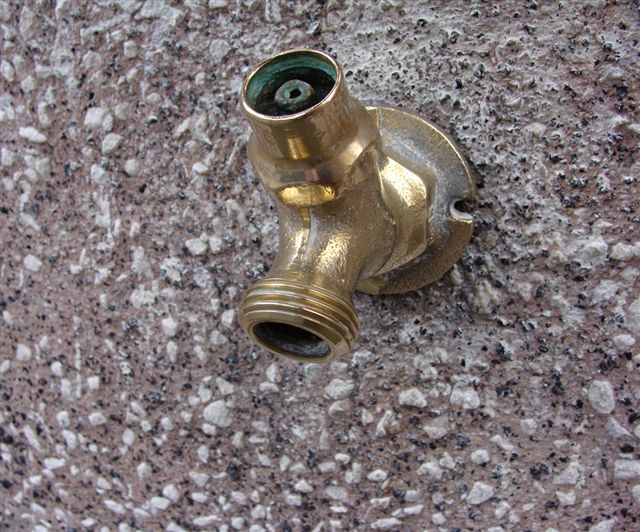
hosebibwohandle

Access to water is one of the very top preps. Many places you will see an outside water faucet (aka hose bib or sillcock). But the owner has removed the handle so only he can use it. It’s a deep hole and very difficult to manipulate without the proper handle or tool, which is by design. Enter the 4-way Sillcock Key.

It’s $8.50 from Amazon. Your local hardware store carries them in plumbing tools. I got mine locally for $6.50. Yeah, if you carry a set of socket wrenches with you, this is redundant, but the Key is a small, inexpensive, sturdy, convenient hack. I now keep one in every vehicle and one in my bugout bag. It’s the best, inexpensive idea I’ve found in a while, and a cheap Christmas gift for a prepper pal too.

MORAL: You can ALWAYS teach an ‘ol dog new tricks! – J.N.