Keeping Battery Devices Running In An Austere Environment, by Snaketzu

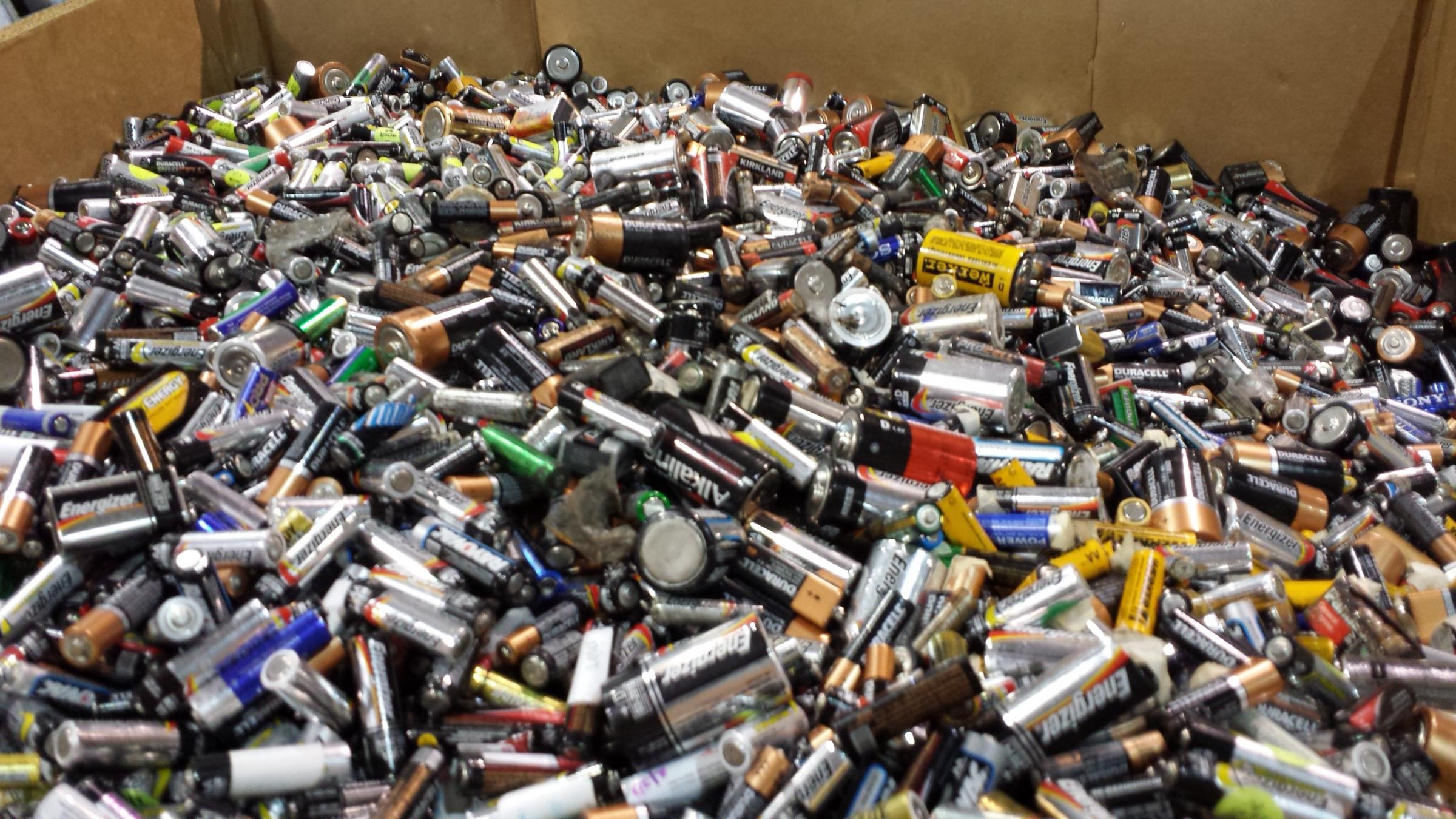
We all have at least a handful of battery-powered devices that can be very handy in an emergency or even a TEOTWAWKI situation. Weapon sights, flashlights, GPS, handheld radio, a tablet loaded with books and PDFs, night vision gear, and possibly even a cell phone are all things that could be very useful. Although everyone must be prepared to do without these devices, depending on the scenario there is no good reason to believe that these items must be discarded after the initial battery charge fails. Counting on scrounging more batteries or a power source to charge with is a recipe for failure. Luckily, the solution is neither difficult nor expensive.

First off, you must be discerning about equipment if you want to keep it working. Items that use exotic batteries that aren’t rechargeable are out. Basically, you should stick to AA or AAA batteries and also devices that use internal batteries that can be charged via USB. There are rechargeable CR123 batteries out there, but just how important is that high lumen flashlight? You can get close to the same performance with a AAA battery-powered light without adding an additional battery to your supply chain and another charger to keep them going. Likewise, there are many quality options available for weapon sights and NVG that use AAA and AA batteries. The gear that uses coin type batteries is simply not sustainable.

Second, how will you keep your batteries charged in an austere environment? A plug in or 12V wall charger is great for Plan A at the retreat, but what about Plans B and C? Your handheld devices will be even more critical if you have to leave the retreat either temporarily or permanently. Solar energy is free and abundant, but a truly portable solar charging system takes some careful thought and selective purchases.

Luckily, packable solar panels and lightweight charging equipment have coalesced around the USB standard. USB has transformed charging the batteries in small personal electronics. As long as you have a cable that fits your device and has a USB A connector on the other end for connection to a variety of power sources, you can charge your device. Something that most people don’t know, however, is that not all USB chargers are created equally. Some will only charge 2.5 watts, some will charge 5 watts, and some will charge 10 watts, and the higher the output, the faster (most) things charge. In the interest of making the best use of available sunlight and time, for a portable charging system it is obviously best to avoid any bottlenecks and stick with equipment that can and will work at the faster 10 watt level. USB works at 5 volts and the faster charging systems are rated at 2100 mA (milliamps) or 2.1 amps. The best way to tell if you are looking at equipment capable of fast USB charging is to look into the specs and see what the max output rating is. It should show a max output of 2.1 amps for one port or 3+ amps for two ports . (Dual port 4.2 amp chargers are wonderful but hard to find.)

Third, there is a variety of other equipment that can be very handy for opportunistic use of available power to do some charging. These various adapters could aid in scrounging power from generator-powered systems, vehicles during driving, or even automotive batteries from abandoned vehicles. While not absolutely necessary, such items add a lot of utility for a small trade-off in space and weight.

Specific, Basic Equipment Needs

Batteries: Panasonic Eneloops are widely regarded as the best rechargeables out there. This is not the time to stick with your favorite alkaline brand; apparently Energizer and Duracell don’t want to create too much competition for their throwaways. The standard gen4 Eneloops are the ones for most applications. They are rated for 2100 discharge cycles (that’s once a day for nearly six years), 2100 maH, and will hold 90% of charge at six months and 70% at five years, assuming a relatively stable storage temperature. Don’t be tempted by the more expensive Eneloop Pros; they have a higher 2550 maH capacity and higher charge retention but are only rated for 500 discharge cycles.

Solar Power: There is a pretty good selection of packable folding solar panels for personal charging on the market, and the prices have come down into the range of downright reasonable. GoalZero is of course a well known but expensive brand, and RAVPower, Anker, and Suaoki all have highly rated products. Most reviews of USB charging with solar panels use 15w panels, but a 20W panel is better. The reason is simple:  you can’t count on ideal conditions. My real world testing indicates it’s still not a sure thing to get 10W output (2 amps @5V) from even a 20W panel. For fast charging, you need your panel to maintain that full 5 volt 2.1 amp output as much as possible. Theoretically, a 20w panel can run two such charging circuits, so you’ll have a lot of headroom to account for cloudy conditions and/or less than ideal placement. The difference is a couple of inches in width, about 4 ounces, and around $10. It’s worth it.

Portable Battery Bank: Most solar systems are set up to charge a battery bank, which is used as both storage and a buffer. I think it’s very smart to stay with that plan for a miniature system. There are literally tons of small lithium ion power banks out there on the market that are designed to be charged via USB and then allow you to charge your cell phone on the go. As long as they have the right specs, they are ideal for our purposes. The one you choose needs to be rated at a full 5 volts and 2.1 amps output for fast charging. If it doesn’t have this, then your storage battery will become a bottleneck in your charging system. I also recommend at least 10000 maH capacity. I found a Limefuel brand battery with the proper specs, 15000 maH capacity, and a rough service casing with IP66 dust and water resistance rating. I advise avoiding gimmicks like built-in solar panels or hand cranks. It’s best to buy each component separately, buying a quality piece of gear at each stage. Combining functions inevitably leads to making compromises somewhere.

Battery Charger: I only found two good candidates for recharging AA or AAA via USB, although I expect more “smart” chargers will be hitting the market. One of them apparently has a reputation for being very picky about the input voltage, so that made the choice easier. I chose the PortaPow Intelligent USB charger. Intelligent means that it can recharge one to four batteries of any combination of AA or AAA simultaneously because it truly monitors each battery separately. This is an important distinction and a nice feature, because there are a lot of chargers out there that require you to charge batteries in pairs, which is downright inconvenient when you have a flashlight that takes three AAAs.

Additional, Very Handy Gear

  • A plug-in USB diagnostic meter– You can plug these into a USB socket and then plug your device into the back end of the meter and see real time voltage and amperage. This is handy for diagnosing problems, aiming the solar panel, and aso checking overall system performance. At around $10 and the size of a thumb drive there’s no reason not to have one.
  • Extra 3′ micro USB cables – 6′ cables should be avoided, except for bedside chargers. The extra length requires a cable of exceptional quality to maintain the full voltage at the load end. It’s best to stick with shorter cables for high performance charging.
  • An extra dual port USB high performance wall charger – You never know when you might have access to a standard receptacle and you want to be able to make the most of the opportunity, if it happens. The way to tell if you have a charger that can go full speed on both ports is to look at the amperage rating. If it has two ports, it needs a 4.2 amp rating so it can hit 2.1 amps on both ports at the same time. Most dual port USB chargers are only rated around 2 or 3 amps, so beware!
  • An extra dual port 12v receptacle USB charger – The same things I said about the wall charger apply. You never know when you might be in a moving vehicle. If you are, charge something!
  • There are a lot of DC stepdown modules floating around on the Internet that allow you to hook up to a 12V battery and give you a USB output. The better ones have a pretty wide voltage input range (8-22V) and a female USB receptacle; there are even some with a male mini USB output that are autoranging 12/24/36/48V and work down to 8 volts. These are very inexpensive and can be used with  battery clips to scavenge charge off of batteries in abandoned cars.
  • There are even hand crank power sources. They aren’t terribly expensive and don’t take up much space, so if you are trapped in shelter by the weather you can at least put some charge back in your battery bank, even if solar isn’t available.
  • There is a USB charging cable out there for the popular Baofeng UV-5R radio (and variants). This allows charging of the factory LiOn battery instead of using an insert with AAs or AAAs.

Finally, discussion of maintaining use of electronic equipment in a TEOTWAWKI scenario will inevitably run into discussion of EMP or solar storms. While I agree that a handheld GPS is likely to be useless after an EMP or SS event, there’s no reason why your charging kit and other devices can’t be stored such that they are protected. Everything I’ve discussed here fits easily into a .50 caliber ammo can, along with a backup tablet, LED flashlights, and other goodies. Placing everything in quality antistatic shielding bags and then wrapping in aluminum foil before storage in the ammo can should give >50db shielding across the entire frequency range.

Depending on your needs, a portable solar charging kit is probably not appropriate for a tactical loadout or even a bugout bag. When speed and weight are at a premium it is likely better to just pack some extra batteries. However, a portable charging system can easily be included in a secondary cache for potential long term or “plan B” use. It’s an easy preparation to make that could return big dividends.



Letter Re: Making a Last Run

Thank you so much for what you’re doing here. I don’t understand people who say they want to prep but won’t put this website on their daily reading list.

In reference to Making a Last Run, at first I was appalled that any prepper would go to the store to stock up on even more food at the last minute. At the time I thought, “Why take away from those who didn’t prepare in advance? Let them get what they can. We already have enough.”

Then I read the letter stating that with a 10-year larder it wasn’t necessary for them to make a last run, and I wondered how do you rotate 10 years worth of canned fruit or beans? I have trouble with just my one year (or so) since we quit eating canned or packaged foods. This letter also lead me to thinking about our kids.

Today as I was preparing to go to the store, I realized two valid reasons to make a last run. First, I noticed I was down on items (of course, it’s been four months since I went), but I also saw cans of food that we don’t often eat getting near their expiration date (or past…sigh). So if a disaster occurred today, I wouldn’t be as prepared as I would like. Perhaps that’s a good enough reason to make a last run. (Although there is a big part of me that still says, “You already have lots, don’t take food away from those who have so much less.”)

Secondly, I believe there is another very justifiable reason to make that last run and that is if our out-of-state kids come because they won’t be able to bring massive amounts of food. We will pray they just get here safely. That leaves us to prepare for them, but how do I prepare for eight extra people and rotate food that we rarely eat ourselves because it’s outside our normal diet? I can’t rotate food enough for 10 people when there’s only two of us eating.

That’s where a last run would come in very, very handy.

A huge thank you to all the contributors. One never stops learning.

Blessings, SM


Economics and Investing:

Alternate Unemployment Charts 25percent sound good – B.B.

o o o

The world can’t afford another financial crash – it could destroy capitalism as we know it – S.B.

o o o

Items from Professor Preponomics:

US News

Four Horsemen of the Economic Apocalypse (Business Insider) Excerpt: “It’s getting impossible to ignore all the risks… We know how leveraged banks are… If they get in trouble, then that money is gone. People have been avoiding thinking about it.”

Yellen’s Dilemma: A Downturn with No Easy Response (Reuters) No right answer, and there’s no way out. In my opinion, there were going to be consequences whether Fed Chair Yellen raised rates or held them at or very near zero. Excerpt: “The U.S. Federal Reserve’s carefully scripted decision to raise interest rates last December, and begin a return to ‘normal’ policy, may now become a nightmare for the central bank if an economic downturn forces a return to unconventional methods.”

Something Very Disturbing Spotted in a Morgan Stanley Presentation (Zero Hedge) Excerpt: “With central bankers losing credibility left and right, and failing outright to boost the ‘wealth effect’ no matter what they throw at it, the next big question is when will central planners around the world unveil the cashless society which is a necessary and sufficient condition to a regime of global NIRP.” Warning: Commentary following the ZH article may contain bad language and/or inappropriate avatar images.

International News

The World Can’t Afford Another Financial Crash – It Could Destroy Capitalism as We Know It (The Telegraph) Excerpt: “It is always a sure sign that panic has broken out when financial markets respond badly to all possible scenarios. The prospect of higher interest rates? Sell, sell, sell. A chance of lower rates? Sell, sell and sell again. A rise in the price of oil is met with as much angst as a decline. The financial markets remain addicted to help from central banks: they are desperate for yet more interventions, regardless of the consequences on the pricing of risk, the allocation of resources or the creation of unsustainable bubbles that only enrich the owners of assets.”

Is the Sovereign Debt Crisis Coming Back to Haunt Europe? (The Telegraph) Excerpt: “It is only the ECB that is holding Europe together. If the ECB was to step back you would have a massive sovereign debt crisis.”

Will Italy Prompt a Global Financial Crisis (HuffPost Business) Excerpt: “The 2.5T Dollar Question: See from the US it looks as the same as Greece. There is however, a major difference: Italy’s public debt amounts to 2,470 billion dollars. The European Central Bank or the European institutions do not have the means to rescue Italy as they did for Greece that amounted to 350 billion. that means that it would be, at least a major banking and economic crisis in Europe. I do not believe it will limited to Europe. This Italian and European banking crisis will represent a multiple of the 2008 crisis. Is there a pilot in the plane?”

Greek Economy Returns to Recession After Shrinking in Fourth Quarter (Bloomberg) Excerpt: “The Country will face renewed euro-exit fears unless its government and European creditors come up with a credible plan to make the country’s debt sustainable….” Again, an opinion: there will be no resolution without substantial write-downs.

Personal Economics and Household Finance

Top 3 Tips for 50-Somethings to Avoid Identity Theft (BankRate) Watch those medical requests for your SSNs very, very carefully. Excerpt: “If you’re in your 50s, you probably have a well-established financial identity and you probably use more medical services than you did when you were younger. Those traits can make you a prime target of identity thieves.”

o o o

SurvivalBlog and its editors are not paid investment counselors or advisers. Please see our Provisos page for details.


Odds ‘n Sods:

The Columbus Gyro Restaurant Rampage “Random Attack”: A Somali man named Mohammed comes into a restaurant called “Nazareth” and asks about the religion and national origin of the owner. He is told that the owner is a Christian Arab emigre from Israel. So Mohammed comes back a half hour later with a machete and a murderous rage.

These two lines in the CBS news article come as no surprise:

“It remained unclear what sparked the attacks. ‘Right now there’s nothing that leads us to believe that this is anything but a random attack’ “

No motive? Random? A real puzzler. Anyone with a room temperature IQ could solve this one.

These typical dismissive statements are clearly intended to deflect television viewers from the real issues: A.) Radical Islam and B.) Loose U.S. immigration policy on military age male Islamists, without sufficient screening on radical ties, other than the DHS/TSA’s horribly flawed No Fly Watchlist. Don’t be duped by the “lamestream” media. I’ve said it before: We are living in the Age of Deception and Betrayal.- JWR

o o o

US Army Develops Integral Dry Lubricant To Replace CLP – I find the term “permanent” a bit hard to swallow but a long-lasting dry lubricant would sure be welcome. – G.P.

o o o

Canada – HMCS Fredericton Heads to Aegean Sea…Do You Know Where The Aegean Sea Is?The drumbeats of war are getting louder… – P.A.

o o o

From the fine folks who brought you Round Up, Terminator Seeds, and other problems for your life: Zika HOAX exposed by South American doctors: Brain deformations caused by larvicide chemical linked to Monsanto; GM mosquitoes a ‘total failure’ – RBS

o o o

From the desk of Mike Williamson, SurvivalBlog Editor At Large: Bolt on winch – I’d be leery of ongoing use damaging bearings, and even a hard single use breaking an axle. I believe this concept has been marketed before. It would probably be okay for occasional use on a passenger vehicle.


Hugh’s Quote of the Day:

“And the disciples came and said to Him, “Why do You speak to them in parables?” Jesus answered them, “To you it has been granted to know the mysteries of the kingdom of heaven, but to them it has not been granted.” Matthew 13:10-11 (KJV)


Special Note

Saturday’s news flash on the death of Supreme Court Justice Antonin Scalia came as a shock. Given that the leftist U.S. Senate has a long history of “rubber stamp” confirmations of Supreme Court Justice nominees, this is an evil omen. The news of Scalia’s demise is troubling, even if Hitlery Clinton is not elected. The BHO Administration will undoubtedly nominate another ultra-liberal Statist, resulting in a tectonic shift in the composition of the court. (With a 5-to-4 Statist majority, the District of Columbia v. Heller decision would have gone the other way.) In essence, once Obama’s next Supreme Court nominee is seated, we can kiss the Bill of Rights goodbye.

Perhaps I should invest in large diameter PVC pipe and threaded end caps. (Given the likely shortage thereof in the near future, that would probably be a very lucrative investment.)

It is time to revisit your Plan B and Plan C preps, folks! At the very least, keep your passports valid. – JWR


Notes for Saturday – February 13, 2016

Today, February 13th, is the birthday of both Robert Charles R.C. Sproul, Jr.(born 1939), a well-respected American Calvinist theologian, and General Chuck Yeager (born, 1923), the first man to break the sound barrier.

o o o

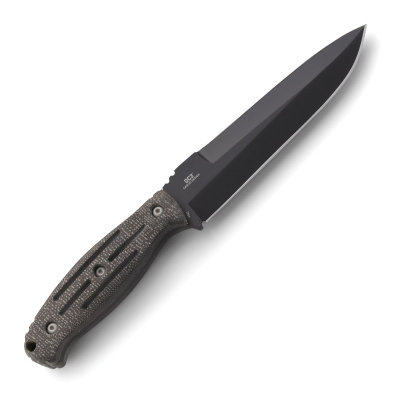
I recently received a sample of the new Columbia River Knife & Tool (CRKT) OC3 fixed-blade tactical knife, which was designed by SurvivalBlog’s Field Gear Editor, Pat Cascio, in cooperation with Brian Wagner. The overall length in nearly 11 inches, and it is constructed of SK5 steel that is black powder-coated. It has a practical drop point, yet it comes sharpened on BOTH edges, so it is practical both for utility and for fighting. (Consult your local and state laws on double-edged knives, before ordering!) The slotted grip is gray Micarta. The manufacturing is done in Taiwan. The fit and finish are superb, and the provided black reinforced hard nylon sheath comes with a MOLLE-compatible clip. These should be orderable soon. What a great knife! – JWR

o o o

Today, we present another entry for Round 63 of the SurvivalBlog non-fiction writing contest. The nearly $12,000 worth of prizes for this round include:

First Prize:

  1. A Tactical Self-Contained 2-Series Solar Power Generator system from Always Empowered. This compact starter power system is packaged in a wheeled O.D. green EMP-shielded Pelican hard case (a $1,700 value),
  2. A Gunsite Academy Three Day Course Certificate that is good for any one, two, or three day course (a $1,195 value),
  3. A course certificate from onPoint Tactical for the prize winner’s choice of three-day civilian courses, excluding those restricted for military or government teams. Three day onPoint courses normally cost $795,
  4. DRD Tactical is providing a 5.56 NATO QD Billet upper with a hammer forged, chrome-lined barrel and a hard case to go with your own AR lower. It will allow any standard AR-type rifle to have a quick change barrel, which can be assembled in less than one minute without the use of any tools and a compact carry capability in a hard case or 3-day pack (an $1,100 value),
  5. Gun Mag Warehouse is providing 20 Magpul PMAG 30-rd Magazines (a value of $300) and a Gun Mag Warehouse T-Shirt; (an equivalent prize will be awarded for residents in states with magazine restrictions),
  6. Two cases of Mountain House freeze-dried assorted entrees in #10 cans, courtesy of Ready Made Resources (a $350 value),
  7. The Ark Institute is donating a non-GMO, non-hybrid vegetable seed package (enough for two families of four) plus seed storage materials, a CD-ROM of Geri Guidetti’s book “Build Your Ark! How to Prepare for Self Reliance in Uncertain Times”, and two bottles of Potassium Iodate (a $325 retail value),
  8. A $250 gift certificate good for any product from Sunflower Ammo,
  9. KellyKettleUSA.com is donating both an AquaBrick water filtration kit and a Stainless Medium Scout Kelly Kettle Complete Kit with a combined retail value of $304, and
  10. Two cases of meals, Ready to Eat (MREs), courtesy of CampingSurvival.com (a $180 value).

Second Prize:

  1. A Glock form factor SIRT laser training pistol and a SIRT AR-15/M4 Laser Training Bolt, courtesy of Next Level Training, which have a combined retail value of $589,
  2. A transferable certificate for a two-day Ultimate Bug Out Course from Florida Firearms Training (a $400 value),
  3. A Model 175 Series Solar Generator provided by Quantum Harvest LLC (a $439 value),
  4. A Trekker IV™ Four-Person Emergency Kit from Emergency Essentials (a $250 value),
  5. A $200 gift certificate good towards any books published by PrepperPress.com,
  6. A pre-selected assortment of military surplus gear from CJL Enterprize (a $300 value),
  7. RepackBox is providing a $300 gift certificate to their site, and
  8. Safecastle is providing a package of 10 LifeStraws (a $200 value)

Third Prize:

  1. A Royal Berkey water filter, courtesy of Directive 21 (a $275 value),
  2. A $245 gift certificate from custom knife-maker Jon Kelly Designs, of Eureka, Montana,
  3. A large handmade clothes drying rack, a washboard, and a Homesteading for Beginners DVD, all courtesy of The Homestead Store, with a combined value of $206,
  4. Expanded sets of both washable feminine pads and liners, donated by Naturally Cozy (a $185 retail value),
  5. Two Super Survival Pack seed collections, a $150 value, courtesy of Seed for Security, LLC,
  6. Mayflower Trading is donating a $200 gift certificate for homesteading appliances,
  7. Montie Gear is donating a Precision Rest (a $249 value), and
  8. Two 1,000-foot spools of full mil-spec U.S.-made 750 paracord (in-stock colors only) from www.TOUGHGRID.com (a $240 value).

Round 63 ends on March 31st, so get busy writing and e-mail us your entry. Remember that there is a 1,500-word minimum, and that articles on practical “how to” skills for survival have an advantage in the judging.


Low-Carb Paleo and Primal for Preppers, by T.Z.

I wouldn’t have much to eat in “What’s for Dinner”, so I’m going to write up my own personal paleo/primal low-carb approach to nutrition, especially as it applies to prepping.

The mountain men, hunters, and others rarely had sugar and flour and were healthier. I’m not as active as them, but I’m trying to eat like them.

Micro and Macro Nutrients– What Your Body Really Needs

The first thing to do is separate nutrients from calories. You need nutrients– vitamins, minerals, protein, and a few other things to keep things running. These, like oil and radiator fluid, are things you only need a little of, but they are vital. You also need calories in your fuel tank.

You need a daily supply of vitamins and minerals, the micro-nutrients. For those, when I’m not eating a wide variety of natural food, I have a multi-megavitamin, which has more than enough of my daily supply of all the vitamins and minerals. For example, I don’t have to worry about whether salt is iodized or not, as I get it from the supplement. You need to find vitamins and minerals that are easily absorbed by the body, and try to get mega-vitamins. (The USDA 100% requirement is the amount to keep you from death, e.g. scurvy, not the amount to insure your health.) You want to have 100% of what you need each day. Note that some vitamins and minerals are toxic at high doses, so be careful. I’m still looking for the ultimate combination. (My ideal would be to be 110% of the proper amount per 50 pounds of body weight so would be good for men, women, and children.) Feedback and suggestions are welcome, as are suppliers who might want to create such.

The only macronutrient you need is protein. That is in meats, eggs, and some dairy, so instead of worrying about calories, store up the high protein foods. I didn’t mention beans and nuts; many have a lot of protein but also tend to have more carbs, so I don’t do much, but they are also a good choice. You don’t need much, usually only a few ounces, but you do need it. You can get a 5-pound jar of whey protein for about $50. (That’s two to three months for one average person.) I get one unflavored, especially without any added sugar, but there are other kinds of powdered protein. Technically you also need nucleic acids, but you tend to get enough from eating almost anything. Here again, I’m still looking for the perfect protein powder, whey? soy? or something else?

I might only add some “Omega” oil supplements, if you aren’t going to have much fat around. Some lipids are needed, even when not for energy, and your body doesn’t make all of them.

Every nutrient you need for three months fits into a bugout bag with room left over. A small cabinet can contain a 3-year supply.

This makes one thing simple in a TEOTWAWKI situation. Just get one set of vitamins and one scoop of protein, and you don’t have to worry about nutrition. No worrying about meats vs. vegetables, but are you getting enough Vitamin A, C, or D, protein, iron, or iodine?

Now for Calories – “Good Calories, Bad Calories” – Fats vs. Carbohydrates (Carbs)

What follows is a bit oversimplified for a short article, but if you want to know more, read the authors, sites, videos, and links for comprehensive information.

When your body has glucose, it won’t burn your fat. Unless you have very little and burn all the glucose daily, you will store, not burn, fat. To burn both carbs and fat, you have to burn a lot of calories like an endurance athlete or our ancestors who had to use lots of muscle power instead of having air conditioned tractors, cars, and washing machines. However, there are endurance athletes who consume no carbs– nothing starchy or sugar-related, and they do fine, many do better.

The “What’s for Dinner” article said Americans consume 40 pounds of sugar yearly. However, most are seriously obese and borderline type 2 diabetic.

Fructose is sugar, but it’s not even a good supply of calories. Only the liver can process it, and you get fatty liver (cirrhosis writ small, not unlike consuming too much alcohol, which is another toxic carb). Obviously, “High Fructose Corn Syrup” is bad, but table sugar (sucrose) is half glucose and half fructose. See Dr. Lustig’s explanation.

Grains, and especially potatoes, are simple starches, which are merely stacked glucose molecules that turn into sugar in your stomach. Yes, you can get a sugar high from potatoes and an insulin spike and everything else, as if you drank a sugary soft drink. There are complex starches in beans and other foods like nuts, but it is easier to avoid all carbs, at least to start. Maltose (in beer) is two glucose molecules. Cellulose is indigestible plant fiber. I’ll leave galactose, lactose, and the other sugars for you to search.

Glucose is also a problem. Your liver can store it up as glycogen (animal starch), as can your muscles, but they can only store a little. Endurance athletes can store lots, but they will burn it all up and burn fat too. Most of us already have a full tank. What happens to the excess fuel? When your blood glucose levels go up, your pancreas (unless you are a type 1 diabetic) releases insulin. Insulin is the hormone that says to store the calories. If your liver and muscles are empty of glycogen, it can go there. Otherwise it changes to fat. Worse, if you also eat fat at the same time you have insulin going up, that fat too will be stored. You will get fat even if you consume no fat, just sugars and starches. Worse, having insulin telling your body to store instead of burn your blood glucose makes you feel weak and hungry, because you are starving inside. You aren’t burning what you’ve just eaten.

Your body (if you aren’t an endurance athlete) will refuse to burn fat until all the internal stores of glucose have been used up and it will resist. You will feel like you are starving, you will feel weak and tired, even if you are obese if your body isn’t set to burn fat. Your body is like a flex-fuel vehicle that slows down and conserves gas until that tank is empty, and only then will switch to diesel.

When you body has adapted to burn fat, it is called “ketosis”. It takes about two weeks of not eating carbs for your body to switch. Your body releases stored fat (or what you eat), your liver turns it into ketones, and your muscles (even your brain) burns them without any problem. You don’t feel hungry. Most people say they have lots of energy and think more clearly. They lose all the extra fat and keep it off as long as they avoid carbs. Most lose their addiction to sugar; they have no insulin spikes and no starvation. Eating fat releases Leptin– the “I’m full” hormone, so they stop eating when they’ve only had a little.

Most of the diet science was revived by Gary Taubes Good Calories, Bad Calories, and his follow-up Why We Get Fat, books available from Amazon, but there is a video with the basics.

I’m also not kidding when I call it “sugar addiction”. Your brain on sugar (other than the insulin shock) looks like your brain on heroin or nicotine, or alcohol. Even caffeine’s main effect is to cause your liver to release glucose into your bloodstream. Avoid booze, illegal drugs, tobacco, but eat 40 pounds of sugar each year?

The best general site I’ve found is http://dietdoctor.com, which has everything you need, including the science, the recipes, and tips. There is much free information, but full length lectures and movies are $10/month, free for the first month. Recent samples:

Large collection of links to academic papers on Sugar by Zoe Harcombe that has a slightly different approach– never eat carbs and fats in the same meal.

Saying you must eat potatoes, pasta, bread, or sweets is wrong. You don’t have to. You can eat anything else. You can eat any green (non-starch) vegetable, salads with dressing (read the label to see if they add sugar, HFCS is in everything), eggs any style, meats, and fish. I banished carbs from my house but always have a dish of hard boiled eggs and something like a variety of near-zero-carb cheeses and lunch meats. Coffee and tea are available but no sugar (and no honey!) I have a wide variety but am rarely hungry, usually only after a long time or a lot of activity. Once I had some surgery where I couldn’t eat anything solid for a week. I wasn’t hungry and I lost 10 pounds. I tend to eat out of habit daily, and I do need the nutrients from real food– real meat, milk, eggs, vegetables, and they bring a little fat with them so I’m not pencil thin, but I’m healthy. And I’m doing almost no exercise.

My Challenge

If you want to try, give up sugars and starches for Lent. Especially break your sugar addiction, if nothing else. To switch your body to burn fat, you need to eat no more than 20 grams of carbs every day. (Read the labels, ignore “effective carbs”, and just do total carbs.) See the DietDoctor.com website or find other books– paleo or primal are two diets, Atkins was the original. You just need to read the labels and count carbs, not calories. Then eat as much as you want and maybe a little more when starting to avoid your body thinking it is starving; eat an extra egg.

Between now and Lent, eat up all the carbs in your house (or if you have stores, put them far in the back somewhere) so that by “Fat Tuesday”, green vegetables, fat, and protein are the only things you can eat without going out, but make sure some are right at hand so you can grab them when hungry. And eat a bit more salt; bullion is one way. Look up “carb-flu” for why. It is important not to have the bad calories available. Why do they have candy in the checkouts? This is like pretending having a copy of Playboy on the table is okay because you know your male friends would never give into temptation. This is the “near” in “avoid the near occasion of sin”. For Passover, the feast of unleavened bread, all leaven is removed from the home.

For Lent, eat all the eggs, meats (except when it is a day of abstinence), fish, cottage cheese, green (non-starchy) vegetables you want. I’d be careful with dairy, as milk has lactose. Just count the carbs. Don’t cheat or admit that it isn’t a fair test if you have and fail.

You can use sweeteners, but it is better to lose your sweet cravings completely; sweeteners can by themselves raise insulin levels as your body is anticipating sugar. Still, if it will make the transition easier, do so.

If it works, and you are in ketosis, burning your stored and eaten fat, no longer have a sweet tooth, and you are thinking clearly, have energy, lost 20 pounds or more, you might want to continue. You can lose as much as you want and carry your calories with you, since your body is burning fat. Then determine if you want to store more or get thinner.

Final Notes and Miscellany

As always, especially if you have special medical conditions, check with your family physician, but remember he might have been trained in the old, wrong school that only counting calories matters.

Strictly speaking, storing highly processed food, like sugar and flour, is easy, and if in TEOTWAWKI you are going to be burning 5000+ calories a day, it might be a better option. They are less expensive. (There are pallets of the usual bags at my local grocery store), and even fungi and bacteria won’t eat them.

I don’t understand why it matters if pure sucrose (there is nothing but that in the bag) comes from GMO or non-GMO plants or if it could be produced in a chemical factory.

The Healthy Home Economist is another excellent resource but more toward natural and alternative foods, cooking, and health.

The only sugars I eat is a rare raw honeycomb from local farmers. It is rumored the pollen helps with allergies. It’s not 40 pounds per year but more like four ounces at most, and there’s almost zero fructose (just some low-sugar berries. Lustig notes the natural fiber slows the release), and little starch, mostly complex starches in vegetables, but no potatoes or grains (except for an occasional experiment with paleo-food like einkorn).

I haven’t mentioned storage. I have a Harvest Right Freeze Dryer. I don’t have to mess with canning or worry about botulism, and it is less work. I can open up a bag and start crunching, or I can soak it to restore the original texture with 97% of the nutrition. Canning is high effort to store, reduces nutrition, and you have to be careful to cool afterward. What is the total cost in time, effort, and money to preserve X nutrients using canning versus a Freeze Dryer? Though, you can do canning on a wood stove.

I’ve stored what I’ve been eating all along– meats, eggs, vegetables, yogurt, cottage cheese. I buy extra and freeze-dry it; there’s one for me and one for the cabinet. I store vegetables in the growing season and meats, eggs, et cetera in winter. Oils are another matter, since they need a different approach, and the one in “Whats for Dinner?” works. I prefer butter. I might not even need to dip into my multivitamin and protein powder, if I’m just continuing to eat what I usually do but from my stores. There are lots of natural calories when you know how to get them, but you can’t control the nutrients. If I suddenly go from under 1000 to 5000 calories per day, then I won’t have to worry about eating carbs, and there’s lots of carbs around where I live since that is what the more commercial farms produce here.

Since except for an occasional garden, I don’t grow enough, I’m into CSA – community supported agriculture, Natural meats, Free range hens (sometimes running through the yard), raw milk from grass-fed cows , heirloom seed vegetables, et cetera since I don’t think we were created to digest things which come from factories. Different states have different laws, but I’m surprised – Montana is restrictive and Wyoming next door has food freedom (ignore the headline) from the link: Summer 2015: Governor Matt Mead signed the Wyoming Food Freedom Act into law on March 3. The new law gives farms, ranches, and home kitchens the right to sell any foods they produce, other than meat products, direct to the consumer without any government regulation or inspection. Sales can take place at farms, ranches, private homes, farmers markets, and through delivery. The Food Freedom Act legalizes the sale of any raw dairy product, including unaged cheese. The sale of raw cheese that has not been aged at least 60 days is prohibited in interstate commerce, but states do have the option of not having any aging requirement in their laws. At this time, Wyoming has the most favorable laws on the sale of raw dairy products in the U.S. You might want to remember that if you want to have a farm in the Redoubt. There are still regulations for more commercial sales, but I buy most products at Farmer’s markets.

Mostly, I want to eat real food. Although I suggested natural but processed supplements at the start, that is for an extreme situation. I was blessed with good health and an iron constitution, but I still feel much better since I’ve reduced the supply line and even minimal processing from the plant or animal to my table, which isn’t possible even with big-box “organic” food. Sugar and flour are bad just on that basis. In the garden of Eden, only one tree was off limits. However, the rest were firmly planted in the ground. Post flood, animals were to be respected, even if eaten and not treated like some factory input. Even raw honey, real original fruit, grains, or even potatoes are different (to draw a parallel, how many own or want dachshunds, yorkies, or poodles instead of something that could easily be mistaken for a wolf?). I’m skeptical of some of the miracle claims but am even more skeptical that processed foods aren’t seriously lacking in nutritional value. Low carbs, paleo, primal (though I don’t believe in evolution) is the closest to the ideal.


Letter Re: Making the Last Run

Hugh,

One thing I didn’t notice in his post was learning your store layouts. Most stores are pretty much laid out the same way, but they do on occasion move things around. Notice where everything is and make sure you pay attention each time you visit your local grocery store. Bread and milk are not normally placed together, thus you have to go through the whole store to get both. Milk is usually at the back of the store or at least very near the back, so that you have to go all the way through to get a gallon. This helps insure that you will pick up something you really didn’t intend on buying before you leave the store and thus enhance their sales. How many of us go in for one thing and come out with a dozen? Making sure of your layout will not only speed up your run, especially if it is an emergency situation, but also will help to keep you from impulse buying as you wander around looking for the items you need.

C.P.


Economics and Investing:

Venezuela’s Collapse Brings ‘Savage Suffering’ – Submitted by P.S.

o o o

Items from Mr. Econocobas:

Welcome To Obama’s Recovery: Carrier Moving 1400 Jobs To Mexico | Zero Hedge

Items from Professor Preponomics:

US News

How Negative Interest Rates Could Remake the Global Financial System (New York Times) Excerpt: “A decade ago, negative interest rates were a theoretical curiosity that economists would discuss almost as a parlor game. Two years ago, it began showing up as an unconventional step that a few small countries considered. Now, it is the stated policy of some of the most powerful global central banks….”

Negative Interest Rates Won’t Save Us, But Helicopter Money Might (Fortune) Really? While I don’t agree with the conclusion, this is an interesting article from the standpoint of perspective and does add to an understanding of what policymakers may be considering. Excerpt: “When the next recession hits, governments around the world will need to find the political will and the resources to engage in massive spending to drag their economies out of their demand-deficient comas.”

The Danger of Negative Interest Rates (CNBC) Should the U.S. pursue the policy of negative interest rates. It is my view that unintended consequences are likely and not well understood. Excerpt: “Standard textbook theories hold that negative interest rates are infeasible because depositors always have the outside option of holding onto cash, which is storable and therefore pays an effective interest rate of zero. Recent experience and some expanding research suggest that zero is in fact not a binding floor on interest rates.”

International News

Negative Interest Rates in Europe: A Glance at Their Causes and Implications (World Bank) Excerpt: “As an additional measure to stabilize inflation expectations, a number of major central banks in Europe—including the European Central Bank, the Danish National Bank, the Swedish Riksbank, and the Swiss National Bank—have pushed key short-term policy rates into negative territory.”

ECB Rate Cut Likely But No Appetite for Now for Radical Easing: Policymakers (Reuters) Feeling reassured? Excerpt: “Doing nothing in March is very unlikely,” the governor of one of the euro zone’s 19 central banks told Reuters. “Monetary conditions have tightened, long term inflation expectations are falling and credibility is at stake.”

Negative Interest Rates? Deflation Risks Mean They Could Be Here To Stay (The Guardian) Excerpt: “Easy monetary policy with a mix of negative interest rates and QE is not all that surprising. It is unusual, to be sure, and conventional economics text books rarely, if ever, note the issues surrounding negative interest rates. But if inflation is very low and the risk of crossing the line below zero builds, counter-cyclical monetary policy requires interest rates to be cut and cut and cut, even if that means moving them well below zero.”

Creditors Must Brace for a Tsunami of Losses in a World Awash with Debt (The Telegraph) Excerpt: “Countries have taken on far more debt than can ever be repaid. As the European banking sell-off is already signalling, creditors are in for a brutal awakening. Get ready for debt restructuring mayhem.”

Personal Economics and Household Finance

3 Easy Ways to Pay Off Your Mortgage Early (Dave Ramsey) Excerpt: “Since we’re all about getting out of debt as quickly as possible, here are a few suggestions to get your home loan paid off quickly.”

o o o

SurvivalBlog and its editors are not paid investment counselors or advisers. Please see our Provisos page for details.


Odds ‘n Sods:

Police Discover, Arrest NYC Pistol License Holder Who Stockpiled ‘45,000 Rounds of Ammunition’ – Submitted by G.P.

JWR’s Comment: This breathless account made me laugh. The journalist sounded truly horrified at the size of his “arsenal.” Out here in The American Redoubt, that gent would be considered just a typical local with a small gun collection. And some of us might feel pity for him only owning three AR-10 magazines, and hand him a few spare PMAGs, so that he’d have a respectable six or seven available. And anyone who thinks that 45,000 rounds of ammunition is a lot, then they ought to meet some of my neighbors, who have floorboards in danger of cracking, from the weight of so many ammo cans. In my valley, stocking 50,000 to 100,000 rounds is more the norm. (I’m not joking.)

o o o

From the desk of Mike Williamson, SurvivalBlog’s Editor At Large: Home made 200mm self propelled gun in Syria

o o o

There are those who believe 4GW is a losing proposition. SurvivalBlog reader P.H. sent in the link to this article that may make you look at it differently: Red Blood, White Snow.
An eye-opening, inspiring, and hopeful account of Finnish sisu when outmanned, outgunned, and with limited resources against a superior Soviet force in WWII. When the outcome is in doubt there may be lessons to be learned here, both in innovation and in adapting to bitter winter weather. The winter could be our friend.

o o o

Feds Seek Home Visits, Calling Parents “Equal Partners” – B.B.

o o o

Yet another reason to avoid social media: DHS Chief Promises to Expand Social Media Screening, Plans ‘Aggressive’ Rollout of Cyber Protections. Submitted by N.S.


Hugh’s Quote of the Day:

“The Lord gave wisdom to Solomon, just as He promised him; and there was peace between Hiram and Solomon, and the two of them made a covenant.” – 1 Kings 5:12 (KJV)


Notes for Friday – February 12, 2016

The Panic of 2016 is continuing, just as I predicted, with further sharp declines in the equities markets around the world. The push for negative interest rates is continuing. I’m now asked: “Should I buy gold?” My answer: No, buy silver, and if portability is a concern buy some platinum. Presently the ratio between the price of gold and the price of silver is a whopping 78-to-1. That makes the long-term prospects for silver much better than for gold. Meanwhile, the price of platinum is $285 per ounce less than an ounce of gold! So that too is a better investment than gold, if you are willing to hold it long term. Let me state once again: Tangibles, tangibles, tangibles! – JWR

o o o

Ted Nugent really stepped in it this week with his anti-Semitic facebook posts. The NRA wants to claim that Ted is not a spokesperson for them, yet he is a member of the board. The NRA is simultaneously trying to get me to upgrade my Life Membership to an Endowed Membership– a move I was seriously considering. However, unless and until the NRA either gets Nugent to publicly apologize or distances themselves from him by removing him from the board if no public apology is forthcoming, I will not be upgrading my membership and I encourage anyone else who was considering joining the NRA or upgrading their membership to do the same. This is one area I expect the NRA to stand on principle. – HJL

o o o

A bit far afield for SurvivalBlog, but LIGO has detected gravitational waves, confirming Einstein’s theory. Yes, space and time are interwoven and dynamic. StarTrek here we come…

o o o

Today, we present another entry for Round 63 of the SurvivalBlog non-fiction writing contest. The nearly $12,000 worth of prizes for this round include:

First Prize:

  1. A Tactical Self-Contained 2-Series Solar Power Generator system from Always Empowered. This compact starter power system is packaged in a wheeled O.D. green EMP-shielded Pelican hard case (a $1,700 value),
  2. A Gunsite Academy Three Day Course Certificate that is good for any one, two, or three day course (a $1,195 value),
  3. A course certificate from onPoint Tactical for the prize winner’s choice of three-day civilian courses, excluding those restricted for military or government teams. Three day onPoint courses normally cost $795,
  4. DRD Tactical is providing a 5.56 NATO QD Billet upper with a hammer forged, chrome-lined barrel and a hard case to go with your own AR lower. It will allow any standard AR-type rifle to have a quick change barrel, which can be assembled in less than one minute without the use of any tools and a compact carry capability in a hard case or 3-day pack (an $1,100 value),
  5. Gun Mag Warehouse is providing 20 Magpul PMAG 30-rd Magazines (a value of $300) and a Gun Mag Warehouse T-Shirt; (an equivalent prize will be awarded for residents in states with magazine restrictions),
  6. Two cases of Mountain House freeze-dried assorted entrees in #10 cans, courtesy of Ready Made Resources (a $350 value),
  7. The Ark Institute is donating a non-GMO, non-hybrid vegetable seed package (enough for two families of four) plus seed storage materials, a CD-ROM of Geri Guidetti’s book “Build Your Ark! How to Prepare for Self Reliance in Uncertain Times”, and two bottles of Potassium Iodate (a $325 retail value),
  8. A $250 gift certificate good for any product from Sunflower Ammo,
  9. KellyKettleUSA.com is donating both an AquaBrick water filtration kit and a Stainless Medium Scout Kelly Kettle Complete Kit with a combined retail value of $304, and
  10. Two cases of meals, Ready to Eat (MREs), courtesy of CampingSurvival.com (a $180 value).

Second Prize:

  1. A Glock form factor SIRT laser training pistol and a SIRT AR-15/M4 Laser Training Bolt, courtesy of Next Level Training, which have a combined retail value of $589,
  2. A transferable certificate for a two-day Ultimate Bug Out Course from Florida Firearms Training (a $400 value),
  3. A Model 175 Series Solar Generator provided by Quantum Harvest LLC (a $439 value),
  4. A Trekker IV™ Four-Person Emergency Kit from Emergency Essentials (a $250 value),
  5. A $200 gift certificate good towards any books published by PrepperPress.com,
  6. A pre-selected assortment of military surplus gear from CJL Enterprize (a $300 value),
  7. RepackBox is providing a $300 gift certificate to their site, and
  8. Safecastle is providing a package of 10 LifeStraws (a $200 value)

Third Prize:

  1. A Royal Berkey water filter, courtesy of Directive 21 (a $275 value),
  2. A $245 gift certificate from custom knife-maker Jon Kelly Designs, of Eureka, Montana,
  3. A large handmade clothes drying rack, a washboard, and a Homesteading for Beginners DVD, all courtesy of The Homestead Store, with a combined value of $206,
  4. Expanded sets of both washable feminine pads and liners, donated by Naturally Cozy (a $185 retail value),
  5. Two Super Survival Pack seed collections, a $150 value, courtesy of Seed for Security, LLC,
  6. Mayflower Trading is donating a $200 gift certificate for homesteading appliances,
  7. Montie Gear is donating a Precision Rest (a $249 value), and
  8. Two 1,000-foot spools of full mil-spec U.S.-made 750 paracord (in-stock colors only) from www.TOUGHGRID.com (a $240 value).

Round 63 ends on March 31st, so get busy writing and e-mail us your entry. Remember that there is a 1,500-word minimum, and that articles on practical “how to” skills for survival have an advantage in the judging.


Making Sense of What You Hear- Part 3, by Hal2000

Shortwave Radio

The next most important radio for preppers is a shortwave radio. Shortwave radio is generally defined as the part of the radio spectrum between 3.0 megahertz (Mhz) and 30.0 megahertz (Mhz). This is referred to as High Frequency, or HF spectrum. There are all kinds of transmissions you will hear on shortwave– Ham radio operators, International shortwave broadcasters, military communications, clandestine stations, numbers stations, and a whole lot more. You will also hear many different modes of communications as well. The bulk of what you will hear will be either standard AM broadcasting and SSB or Single Sideband transmissions.

I cannot stress strongly enough that every prepper needs a good quality shortwave receiver. With the advent of satellite and digital communications, the use of shortwave has diminished somewhat over the years, but there are still two types of stations you will want to monitor. These are the international shortwave broadcasts transmitted by foreign countries and Ham radio operators. It is interesting to listen to the news from foreign broadcast stations. In the cold war days it was viewed as propaganda. In today’s world, who is to say what constitutes propaganda considering our own MSM.

There are hundreds of shortwave receivers out there, and I will not recommend any particular one. What I can do is tell you what types of features you need and let you find the radio that suits your taste.

For general use you need one that receives AM and SSB. We defined these modes above. AM is a standard mode and they all will perform that function. In order to receive SSB stations, the radio must have some additional circuitry known as a BFO or Beat Frequency Oscillator. Careful reading of the specifications will tell you whether or not it will receive SSB signals. Look for ones that use a Phase Lock Loop or PLL tuning circuit. This type of circuit prevents frequency drift.

The HF spectrum is divided up for specific uses. Groups of frequencies known as bands are assigned to International shortwave stations, Hams, marine, aircraft, and other users. You can find many charts on the Internet that will display where you can find the stations you are looking for.

The higher end receivers also provide for the use of something called a pan adapter. What a pan adapter does is display a range of frequencies on a screen that shows what signals your radio is currently receiving. For example, you tune your radio to a specific frequency to listen to a broadcast. With a pan adapter connected to your radio, you can see other signals above and below where you are listening on the display. These signals are displayed as pips on the display, and the height of the pip is directly proportional to the strength of the signal. This is a good way to find other stations to listen to. There are pan adapters that use your computer screen and pan adapters that are stand-alone units not requiring a computer. Search the Internet for pan adapter.

If you are looking for something to listen to, you have to constantly turn the knob to tune up and down the band. With a pan adapter, you can park the receiver on one frequency and sit back and watch for other signals to show up above and below the frequency you are tuned to. This makes it much easier to find stations that have very short transmissions, such as military and clandestine radio stations.

The main things you would want to listen to would be the International Shortwave Broadcast stations and Ham radio operators. Hams generally like to talk a lot and don’t practice much OPSEC. There are other neat things though. Have you ever wondered how commercial aircraft communicate when they are over the mid Atlantic Ocean? It is done via USB on HF frequencies. In the cold war days, there were a lot of numbers stations. These were stations that would transmit long lists of numbers and were thought to be how foreign operatives received their coded information while in the U.S. These stations are still on HF today. There is even a 2013 movie about a CIA numbers station called The Numbers Station. Search for shortwave numbers stations.

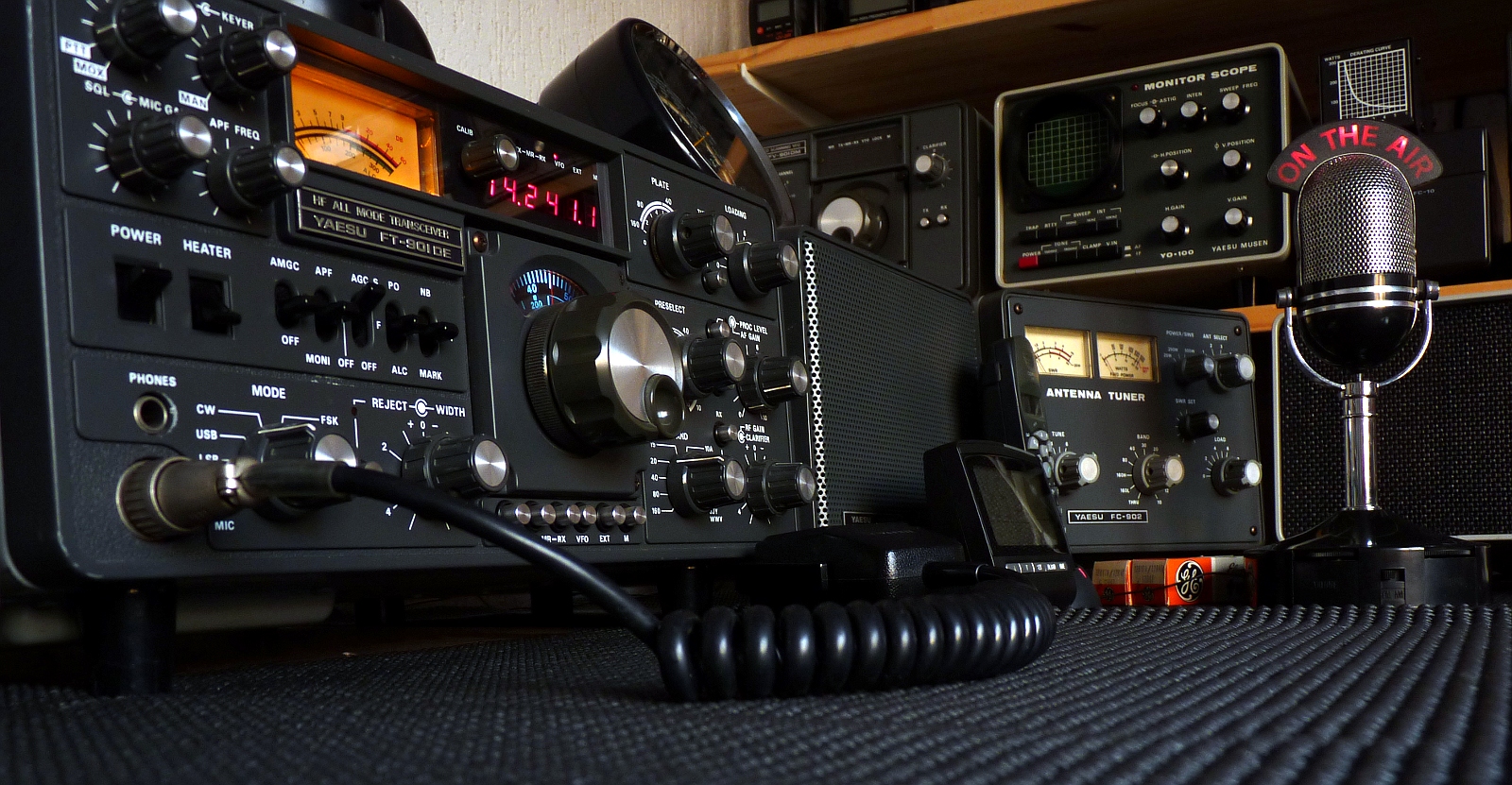
One very important point to make here is that virtually all Ham transceivers that cover the 3.0 to 30 Mhz spectrum have continuous coverage receivers in them. So, if you have a Ham transceiver, you probably already have a high end shortwave receiver built in.

Ham Radio

The last item for discussion is amateur or Ham radio.

Every prepper should have a Ham license. The Technician class license is not hard to obtain, and it will give you the license you need to transmit and receive on specified portions of the amateur bands.

Remember that a group of frequencies is known as a band. These bands are assigned names based on the frequencies they cover. For example, the 80 meter band covers the HF frequencies between 3.5 and 4.0 Mhz. The 40 meter band covers the HF frequencies between 7.0 and 7.30 Mhz, while the 2 meter band covers the VHF or Very High Frequencies between 144.0 and 148.0 Mhz. The bands above 2 meters are generally referred to by their frequency. The 222 band covers the VHF frequencies between 222.0 and 225 Mhz. The 440 band covers the UHF or Ultra High Frequencies between 420.0 and 450 Mhz, while the 900 band covers the UHF frequencies between 902 and 928 Mhz. A quick search of the Internet for amateur radio band plans will net you a lot of charts and graphs depicting all the bands and their sub uses.

One thing about Ham radio is that it covers an extremely wide range of frequencies. When using the HF bands, depending on who you want to talk to will determine what frequencies you will use. If you want to talk to someone in Europe, Africa, South America, or the Far East, you would most likely use the higher frequencies in the HF spectrum. These would be the 10, 12, 15, 17, and 20 meter Ham bands. If you want to talk to other Hams in the United States, you would most likely use the 40, 80, and 160 meter bands. Something referred to as propagation will determine your actual shortwave band usage. The sun affects propagation, and therefore you will use different bands at different times of the day depending on how far away you want to talk. Propagation is a science unto itself and way beyond discussion in this document. Search the Internet for propagation.

Over the last several years some manufacturers have begun marketing what are known as Software Defined Radios or SDR. These radios are just a box that you plug into your computer. They don’t have any knobs or a display; all control of the radio is done with software on your personal computer. Any prepper see a problem with this? In order to use your radio you have to have a very powerful personal computer hooked up to it all of the time. Not only must the software in the SDR be kept up to date, you must keep your computer software and drivers up to date as well. And if your computer breaks or locks up, there goes your Ham radio. Whenever someone asks me about SDR’s, I tell them that I don’t mind having a computer in my radio, but I don’t want my radio to be in a computer. I don’t want to have to rely on Bill Gates to use my Ham radio.

Hams are hooking radios to computers and the Internet and doing some really neat things. Using certain talk groups on a DMR repeater will allow you to talk to Hams in foreign countries on your VHF/UHF handheld. Using D-star you can dial up repeaters in foreign countries and talk to Hams there. Using IRLP you can dial up any other IRLP repeater anywhere. But all of this depends on computers and the Internet. My advice to preppers is to not base your emergency communications on anything that uses computers, cell phones, or the Internet. You need to be self sufficient and be able to operate in a stand alone environment.

Almost all current HF Ham radios contain computers for Digital Signal Processing (DSP) and other functions, but you don’t need a computer to operate them. Search for Elecraft, Yaesu, Kenwood, and Icom amateur radios. I won’t tell you what brand to buy, but they are listed in the order I recommend them to others when asked. Pay your money and take your choice.

For local coverage as a general rule, you will use 2 meters, 220, and 440 most likely over a repeater. Repeaters for Hams work the same way as they do for public service agencies in the scanning world. Repeaters are coordinated by frequency coordinators, and they usually have a website for their area. Search the Internet for coordinated Ham repeaters.

The basic mode of transmission used by Hams in VHF and UHF is FM. Probably 99 percent of communications are in FM mode, but digital communications are beginning to take hold. There are currently three types of digital modes, none of which are compatible with each other and are promoted by a specific manufacturer. Icom radio promotes a mode called D-star. Yaesu radio promotes a mode called System Fusion. Many Hams are using the Motorola Mototrbo mode known as Digital Mobile Radio or DMR. As I said before, none of these modes are compatible with each other, which has caused some consternation among Hams.

An interesting note about these digital modes. None of them currently can be understood on a scanner. Public service and trunked radio systems use a digital mode known as P25, and your digital scanner can decode that. But the digital scanners currently on the market can not decode D-star, System Fusion, or DMR. There is one fellow in a foreign country marketing a scanner that purportedly will decode P25 and DMR and System Fusion, but there’s nothing from any of the major scanner makers yet. This makes for interesting OPSEC considerations. Your group could purchase several of one type of digital mode and use simplex frequencies for your comms. This would eliminate anyone understanding you on a scanner and only another Ham with the same mode would be able to understand you.

The popularity of these modes varies around the country. Where I live, there is very little D-star activity, but there is some DMR activity. System Fusion, however, is catching on rapidly and has already overtaken the other two in popularity. Once again you need to do your homework for where you live to see which mode is the most popular before buying a radio. There are currently no manufacturers who make one radio that does all three of these modes, so you have to pick one. One thing is for sure, it will take a long time but digital modes will eventually replace FM on the VHF/UHF Ham bands.

One reason for this is that the majority of Ham repeaters consist of old obsolete commercial equipment that has been modified to operate on Ham frequencies. This is equipment from manufacturers, such as Motorola and GE, that will eventually break down and no parts will be available to repair it. It was old and obsolete when the Hams got it. Since Motorola no longer makes any commercial analog equipment, what will the Hams do? In a few years the commercial equipment currently in service will be obsolete and available on the Ham market, but it will be only digital. You see where I am going with this. It will be wise to convert to some form of digital or your repeater goes off the air.

Our radio club experienced this just last year. Our old Motorola analog repeater finally died, and we could find no parts to repair it. We purchased a new Motorola repeater that does analog and DMR and put it on the air. It was very expensive but should be good for many years. (Yes, it was the last model commercial repeater that Motorola makes that does both analog and digital.)

The reason Motorola even made a mixed mode repeater was to accommodate the commercial market during its change over from analog to digital. From now on all their equipment is strictly digital.

In the old days, AM was used on the HF Ham bands, but then a new fangled mode called SSB came out. It took a lot of years but SSB finally replaced AM. Technology marches on, and eventually you convert or you will have no one to talk to.

I recommend that you find a local Ham radio club and use local Hams as a resource. Just be careful. Don’t go to a Ham radio club and announce that you are a prepper. I know some Hams who are very anti-prepper. Use the club as a source of information. Some clubs provide classes to help you get your Technician license. Then working with club members you can determine who else might share your opinions and objectives. Clubs who promote the American Radio Relay League’s (ARRL) Amateur Radio Emergency Service (ARES) program would be a good place to start, since they are geared toward emergency services. Search ARRL and ARES.

The most important thing to take away from all of this is to listen, listen, and then listen some more. The more you listen the more you will learn, and what you hear might save your life someday.


Letter Re: Making a Last Run

Hugh,

I just wanted to add a tidbit to the article of making a last run when the SHTF by GMJ. Though this was a well written and well thought-out article and most obvious a great tool for the newbie to the art of survival, for me and my family we will not be in need of one last run. Because of all of us being a great student of this business we have benefited greatly from the steps outlined by our fellow survivalists. So for the new comer to this important scene of preparedness, you might want to pay attention. As building a deep larder (out ten years), deep medical supply (out indefinitely), deep chest of tools and defense ministry (shop tools for all types of repairs, firearms, ammo, knives, et cetera), precious metals/silver coins, and most importantly a stock pile of necessities for extended family members/bartering/charity/and just plain stock, there should be no need for anyone to make a last run. Even if my family made one last run to the store, we could only push two carts stocked to overflowing, and that would be just about 2–4 weeks of food/accessories/supplies. Add 2–4 weeks of supplies to an already ten-year larder, coupled with the danger of panicked and armed people, and it is just not feasible for our family. However, I believe this is a great article to demonstrate what a last run would entail and why you and your family wouldn’t want to be in that situation. God bless! – J.H.