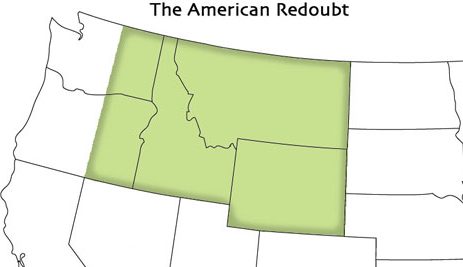
News From The American Redoubt:

Idaho: House Suspends Rules, Passes Concealed-Carry Bill. JWR’s Comments: While not a perfect bill, this is still great news for the Constitutional Carry movement. The governor is expected to sign the bill into law. The Montana legislature is expected to follow suit, when it comes back into session. (They meet only in alternating years.) Montana’s Democrat governor has twice vetoed permitless carry bills, but the legislatures plans to send him another bill with a veto-proof majority.

o o o

Elias Alias (of The Mental Militia Forums) has produced a new documentary, filmed in northwestern Montana: This Land is Our Land.

o o o

GO MONTANA! County commissioners join people’s anti-Muslim refugee movement – B.B.

o o o

Bullet casings disappear from LaVoy Finicum shooting scene, sources say – B.B.

o o o

Documents: OSP moved fatal traffic stop to avoid Grant County sheriff – RBS


Economics and Investing:

DOW JONES vs SILVER: Trading Volume Says It All

o o o

Central banks are already doing the unthinkable – you just don’t know it – G.G.

o o o

Items from Professor Preponomics:

US News

Including the Ocean Floor, the Feds Own Much More Land than You Think (Mises) Excerpt: “Is US land ownership heavily socialized? Let’s begin answering this question by considering the states with the largest percentages of government-owned lands.” The next post is a commentary from Judge Andrew Napolitano from 2014. It’s an older post, but it’s well worth reading in the context of the broad question about whether or not the federal government can constitutionally own land… Napolitano: Washington Lacks Constitutional Right to Own Land in Western States (PunditFact)

The Great Inflationary Lie: How You’ve Been Lied to About Inflation and the Cost of Living Since 2000 (My Budget 360) Excerpt: “Is inflation real? Absolutely and it is understated.”

University of Washington Wastes Science Grant (Government Waste Fraud and Abuse) Excerpt: “The University of Washington, a public university used federal funding for scientific research as its own personal piggy bank, spending hundreds of thousands of taxpayer dollars on personalized Snuggies, pottery, and a trip to Hawaii, according to a new audit report.”

Auditor: CMS Was “Passive” in Preventing Fraud in Administering Obamacare (The Washington Free Beacon) Excerpt: “…the agency did not resolve about one-third of applications with inconsistencies, which involved $1.7 billion in associated subsidies.”

How USA Today ID’d Water with High Lead Levels (USA Today) Commentary: From a financial standpoint, the clean-up of lead contamination in nearly 2,000 water systems will be orders of magnitude greater than the disaster in Flint, Michigan. This is, of course, in addition to the costs in terms of human health, which may be immeasurable. …and an additional story on the same also from USA Today: Beyond Flint: Excessive Lead Levels Found in Almost 2,000 Water Systems Across All 50 States

Life and Times During the Great Depression (Visual Capitalist) Excerpt: “The economy of the United States was destroyed almost overnight. More than 5,000 banks collapsed, and there were 12 million people out of work in America as factories, banks, and other shops closed.” …and a follow up in photos. The Pain of the Great Depression in Color: The Resilient Families Hit Hard by Economic Crisis Brought to Life in Striking Pictures (Daily Mail)

International News

Negative Interest Rates are Having an Unintended Consequence in Switzerland (Business Insider) Excerpt: “In response, it seems, Swiss banks have pushed up the cost of mortgages, particularly long-dated ones, with spreads more than doubling on average….”

Personal Economics and Household Finance

14 Ways to Save Money at the Grocery Store (Clark Howard)

o o o

SurvivalBlog and its editors are not paid investment counselors or advisers. Please see our Provisos page for details.


Odds ‘n Sods:

SurvivalBlog reader B.B. sent in this TED talk on software that can take an ordinary video and magnify nearly invisible motion and sound. If you don’t have time to watch the entire 12-minute video, at least fast forward to the 10-minute mark and observe them recover usable audio through soundproof glass by merely videotaping an empty potato chip bag. Michael Rubinstein: See invisible motion, hear silent sound

o o o

The U.S. Supreme Court has ruled that electric stun guns are Constitutionally protected.

o o o

Reader T.P. sent this in: Nevada Assemblywoman: If You Were at Bundy Ranch and Had a Gun, Nevada Prosecutors are Looking to Arrest You within the Next Few Days. I haven’t yet heard of any of these arrests taking place yet though.

o o o

Why Did The IRS Give The Dept. of Justice Twenty One CD-ROM’s? Illegal information sharing? – J.H.

o o o

It’s time to stock up on ammunition– Personal Liberty – Sent in by D.S. (HJL Adds: …and standard capacity magazines.)


Notes for Monday – March 21, 2016

Just three days after Hessian mercenary forces assaulted the local New Jersey militia at Quinton’s Bridge in 1778, the same contingent surprised the colonial militia at Hancock’s Bridge five miles from Salem. In what became known as the Massacre at Hancock’s Bridge, at least 20 members of the militia lost their lives, some after attempting to surrender. The Loyalists reputedly exclaimed, “Spare no one! Give no quarter!” as they stormed the occupied house. Judge Hancock and his brother (both Loyalists) were bayoneted in the melee by the attackers, even though they were both staunch supporters of the crown and were themselves non-violent Quakers.


Pat Cascio’s Product Review: Survival, Escape & Evasion

Back in November of 1969, during my infantry school at Ft. Lewis, WA, we were afforded a one-day Survival, Escape & Evasion training course. The entire day was spent learning how to forage food and cook it, along with learning to read the sun during the day and the stars at night, for navigation purposes. We were also taught how to escape and evade capture by enemy troops, who were played by soldiers from other military units.

During our training, we were shown a map of where we were. It also showed some of the terrain we had to cover to get to “freedom”, once we were lucky enough to escape our captors, played by drill instructors. To this day, I can still picture in the very center of the map, a swampy area that we were instructed to stay out of, for obvious reasons. There were also boundaries that we were instructed to stay within. At the end of the course, we were told we would see lights (from buses), and that was our ticket back to the barracks.

When chaos broke out, we were instructed to make a break for it, which most of us did, while others were captured right at the start and taken to the “prison” camp, where they were tortured and interrogated. One method of torture was to put you in a coffin-like box with holes in it, through which they dropped garter snakes. Of course, we didn’t know for a fact what was crawling around our body inside that box.

Myself and two other soldiers made our escape and headed for freedom, as best we could. Now, it occurred to me that playing by the rules set out to us simply wasn’t going to suffice. Who plays by the rules, when you are attempting to escape capture by the enemy? So, during the course of the night, we traveled through the swampy area as well as going outside the boundary lines, one of which were some railroad tracks. I still remember watching “enemy” soldiers walking along the railroad tracks, always looking in the direction of the area where escaping soldiers would be, never once looking in the opposite direction, where my three companions and I were often skirting the area.

At one point, we heard the sound of engines running and saw lights. We thought it was the buses running with their headlights on. Nope! It was the “prison” camp, and we almost walked right in the front gate. Needless to say, we ran off in the opposite direction with the enemy hot on our heels. We did manage to survive, escape, and evade during that 24-hour time period, but not by playing within the rules!

This brings us to a new DVD I recently had the opportunity to review for SurvivalBlog.com readers called Survival, Escape & Evasion, produced by www.TheSurvivalSummit.com with a running time of 1 hour and 37 minutes. There is a lot of material covered in this DVD. According to the DVD, in 2014 alone there were an average of 700 abductions, 8,000 home invasions, and 40 murders per day in the USA alone. If you put pencil to paper, that comes out to a violent crime every 25.3 seconds, and this is during a “safe” time. Just imagine what it will be like in a SHTF scenario?

The instructor on this video is Jack Richland, a U.S. Marine Corp veteran and the CEO of Black Scout Survival. He has attended just about every escape, evasion and survival course that has been offered. Now, this is the only negative comment I can give on the DVD; when Richland is static, just standing there, giving the viewer instructions at the start of the DVD, his delivery is a bit dry, not boring but dry, and you will need to focus on the outstanding material he is presenting. Once you get past this at the start of the video and Richland is out of this portion of the studio, things pick up. Once again, the material he presents is outstanding, second to none. I watched this DVD several times with my wife at my side. She also commented on the presentation being a little dry, and she is a teacher. Now, with that out of the way, let’s take a look at the material covered in this video.

Richland covers escape from all types of restraints, including handcuffs, duct tape, zip ties, flex cuffs, ropes, and locks. You will also learn how to escape from the trunk of a car while handcuffed. I love this part of the DVD; you will learn how to use everyday items carried on your person to help you escape. I especially enjoyed his section on lock-picking. I took a locksmithing course many years ago, just out of curiosity, and learned how to pick all kinds of locks. Many, everyday common locks are easy to pick with very little training, while other types of locks are more difficult to pick open. Richland spent a lot of time demonstrating lock picking, and I enjoyed it.

There is also a section on how to lose someone you believe might be following you with some simple and effective methods. There are some anti-kidnapping methods also taught in the video. Then there are everyday, very simple disguises that you can use to change your appearance.

Without a doubt, there is a lot of material covered in this DVD, and you won’t be able to take it in during one viewing, so you’ll need to watch this DVD several times and practice what is presented to you. The DVD is well done, professionally done, not with a cheap camera and some no-talent actors. Jack Richland obviously knows what he’s talking about and teaches this material all over the country.

Today, we all feel safe when we leave our homes; however, with each passing day, it does get more dangerous out there. In a scenario where the grid might go down, or a serious SHTF scenario takes place, things can and probably will go very bad for us, and there are a lot of bad people out there who want to do us harm. If we learn to fight back, especially if we are captured, it can make the difference between life and death. If you escape, you will live to fight another day.

“Survival, Escape & Evasion” is a DVD that can save your life, if you train and practice the techniques that are presented in it. This DVD from thesurvivalsummit.com is only $29.95 and is well worth the asking price. It is not only entertaining, but you will learn some valuable skills that will save your life one day. Pick up a copy and have your entire family sit down and watch it with you.

– Senior Product Review Editor, Pat Cascio


The Long and Short of Bolt Action Rifle Magazines

I often hear from consulting clients and other SurvivalBlog readers with bolt action rifles who are looking for a magazine with more than the standard 3 or 4 round capacity. (“Just in case”, they say.) Thankfully, there are now several aftermarket extended detachable magazine systems available. Here are some examples:

Remington M700

Most Model 700 Remington rifle owners are probably already familiar with the Accuracy International Chassis System (AICS) detachable magazine bottom metal and magazines, available from Brownells and several other vendors. (Note: The steel magazines are fairly expensive, but the great news is that MagPul now makes both long action and short action polymer PMAGs in the AICS pattern that are quite affordable. You can order those through GunMag Warehouse for less than $40 each.) The AICS system installation is reversible and requires no gunsmithing.

If you own a M700 chambered in .223 Remington, Pacific Tool and Gauge makes nifty trigger housing groups that accept standard alloy AR-15 magazines. (Note: The bottom of the receiver must be slightly milled out, to provide clearance for the magazines. Hence this particular conversion is non-reversible.)

Winchester Model 70

AICS magazine conversions are also available for Model 70 Winchesters, both short and long action. The M5 Stealth DM (Detachable Magazine) System for M70 is available from Brownells or Stocky’s.

Savage Bolt Action

Savage bolt action rifle owners should check out Darkeagle Custom. They make very nice 10-round magazines for several Savage variants that already have center feed detachable magazines. Be advised that these will only fit certain detachable box magazine (“DBM”) Savage rifles, so double check before you order. By the way, they also make extended magazine release buttons and oversize bolt knobs.

Mosin Nagant

Pro-Mag–a company with mixed reviews on their quality control–makes a 10-round magazine for Mosin-Nagant rifles available for less than $19, but… caveat emptor.

Mauser M1898 (And Some Clones)

For many years, International Military Antiques (IMA) made a quasi-replica of the German WWI semi-detachable M1898 Mauser “Trench magazine” with 25-round capacity. These won’t pass muster with the exacting eye of button-counting historical re-enactors, but at least they function quite well. A much more authentic Trench magazine replica is available from Keep Shooting (a loyal SurvivalBlog advertiser).

I’ve also heard of a conversion available for Israeli K98s chambered in 7.62mm NATO that use HKG3 or CETME magazines, but in a recent web search I wasn’t able to track them down.

A few replica Springfield Model 1903 trench magazines were also produced back in the 1970s, but finding one those on the secondary market might turn into a Grail Quest.

Other Bolt Actions

Absent a big gunsmithing budget, the owners of other brands of bolt action rifles are probably out of luck, beyond the factory offerings. Tikka, for example, makes quite expensive spare “extended” magazines that only add a couple cartridges. Ditto for some Weatherby rifles. But given enough time and money, most skilled gunsmiths can probably fabricate you an extended magazine, although it probably won’t be quickly detachable, unless you are starting out with a rifle that already has DBM bottom metal. Long action Mauser-pattern rifles can sometimes be converted to accept military surplus MG13 magazines, which are surprisingly inexpensive and plentiful. (The same magazine has been adapted for Hakim and Ljungman rifles.) With some “cutting and pasting”, BAR magazines have also been converted for use in some bolt actions.

At one time I owned a Winchester Model 70 chambered in .308 Winchester that had been converted to accept standard M14 magazines. But the company that did that conversion–Moe’s Competitor’s Supplies (MCS)–no longer does this work.

Conclusion

If you want to give your bolt action greater capacity, then first do plenty of research on the Internet and proceed with caution. My general advice is to make fully reversible conversions, especially if your rifle has any collector’s value, such as pre-’64 Winchesters. Don’t grind or whittle on one of those, or your grandchildren might never forgive you. The same advice applies to camouflage paint jobs. Now that we live in the era of removable Gun Skins camouflage wraps, you have no excuse. You should probably keep any rifle that has any collector’s value original.)

In a perfect world, the makers of all bolt action rifles would have long ago standardized with just a couple of types of detachable magazines–preferably inexpensive military surplus magazines. But, of course, we don’t live in a perfect world. So get creative, and you may be surprised at what you can accomplish. – JWR


Letter Re: The Fallacy of Hunting as a Survival Technique

HJL,

In the article he omits two important points:

  1. Are you willing to leave your safety, family, and supplies to wander out into an “anything goes” environment? You can bet there will be no one wearing fluorescent orange.
  2. You are not the only one “hunting”. You are also “game”.

    When you are dragging home your equipment, weapon, and your kill as well as possibly a few bits of yourself, who is going to stay home and guard your door? When it goes up, all bets are off. All the “rules” are no more. Better to store than go out in the war (zone). On black Friday now, people will stomp each other to get a Tickle Me Elmo doll. Think what it will be like when they want FOOD! – Kenny in Pa


Recipe of the Week: Pumpkin Nut Bread

Ingredients:

  • 1½ cups flour
  • 1¼ tsp soda
  • 1 tsp salt
  • 1 tsp ground cinnamon
  • ½ tsp ground nutmeg
  • 1 cup canned pumpkin
  • 1 cup sugar
  • ½ cup buttermilk
  • 1 egg
  • 2 tbs soft butter
  • 1 cup chopped pecans

Directions:

  1. Sift flour, soda, salt, and spices.
  2. Combine pumpkin, sugar, buttermilk, and egg in a mixing bowl.
  3. Add dry ingredients and butter; beat until well blended.
  4. Stir in nuts.
  5. Spread in a well-greased and floured 4 to 5 cup mold or a 1-lb coffee can; cover with foil.
  6. Place your rack in your slow-cooking pot.
  7. Pour 2 cups of hot water in the pot.
  8. Place covered bread container on the rack.
  9. Cover pot and cook on high 3 to 4 hours.
  10. Turn out on a cooling rack.

You can serve this warm or cool.

o o o

Useful Recipe and Cooking Links:

Do you have a favorite recipe that would be of interest to SurvivalBlog readers? Please send it via e-mail. Thanks!


Economics and Investing:

Social Security Administration Beneficiaries Top 60,000,000 – B.B.

o o o

Subprime Auto Delinquencies Soar Past Crisis Levels, Now Highest In 20 Years – G.G.

o o o

Items from Professor Preponomics:

US News

We Need the Pain that Comes with More Saving (Mises)

Jacques: When Will the Sky Fall for Detroit Public Schools? (Detroit News) Excerpt: “The district’s latest emergency manager, former bankruptcy Judge Steven Rhodes, is trying to strike fear into lawmakers this week about the impending cash flow woes, in the hopes that the April 8 deadline will force the Legislature to pass bills to send an infusion of cash to DPS.”

Here’s Where the $110 Billion in Wall Street Fines Went (Fortune)

Banks Got Bailed Out, Homeowners Got Sold Out – and the Feds Made a Killing (The Fiscal Times) Excerpt: “But a news investigation into the aftermath of the crisis shows that the U.S. government did turn a profit on after-the-fact enforcement of these interlocking frauds, without distributing those profits to the homeowner victims.”

Peabody Energy Warns It May File for Bankruptcy Protection (AP The Big Story) Excerpt: “A slowing global economy and toughening environmental standards have slammed the coal industry, which is already beset by bankruptcies, shuttered mines and layoffs.”

International News

Norway Cuts Interest Rates and Warns They Could Go Negative (The Telegraph) Excerpt: “Norway’s counterparts in Sweden and Denmark have already plunged their interest rates below zero in a bid to prevent the appreciation of their currencies and stoke inflation.”

IMF Backs Unconventional Monetary Policies Despite Warnings from Emerging Economies (Reuters)

Personal Economics and Household Finance

50 Ways to Save $500 this Month (Huffington Post)

o o o

SurvivalBlog and its editors are not paid investment counselors or advisers. Please see our Provisos page for details.


Odds ‘n Sods:

Clinton says Supreme Court ‘wrong on the Second Amendment’ – She also criticized the NRA during this fundraiser: “I’m going to speak out, I’m going to do everything I can to rally people against this pernicious, corrupting influence of the NRA,” she said. “And we’re going to do whatever we can.” – T.P.

o o o

For those who don’t want to spend hundreds of dollars to upgrade their old computer hardware, or perhaps are looking for an inexpensive alternative for a 2nd computer: Endless Mini – $79 computer. It’s not blazingly fast, but it does the job. – P.S.

o o o

Navy Dad Goes on Hunger Strike in Kansas Until State-Kidnapped Children are Returned or He Starves to Death. While all parties involved have some issues, the abuses of the state are way overboard here. – D.S.

o o o

Will America’s way of life survive? – S.L.

o o o

Somali ‘refugee’ influx continues unabated – W.C.


Jim’s Quote of the Day:

“The ability to refer to a document (or a person or any thing else) is in general a fundamental right of free speech to the same extent that speech is free. Making the reference with a hypertext link is more efficient but changes nothing else. . . . We cannot regard anyone as having the “right not to be referred to” without completely pulling the rug out from under free speech. . . .It is difficult to emphasize how important these issues are for society. The first amendment to the Constitution of the United States, for example, addresses the right to speak. The right to make reference to something is inherent in that right. On the web, to make reference without making a link is possible but ineffective – like speaking but with a paper bag over your head.” – Tim Berners-Lee


Notes for Sunday – March 20, 2016

March 20th is the birthday of Mel Tappan (born 1933, died 1980). His perennially popular survivalist books Survival Gunsand Tappan on Survivalhave a well-deserved following.

o o o

Today, we present another entry for Round 63 of the SurvivalBlog non-fiction writing contest. The nearly $12,000 worth of prizes for this round include:

First Prize:

  1. A Tactical Self-Contained 2-Series Solar Power Generator system from Always Empowered. This compact starter power system is packaged in a wheeled O.D. green EMP-shielded Pelican hard case (a $1,700 value),
  2. A Gunsite Academy Three Day Course Certificate that is good for any one, two, or three day course (a $1,195 value),
  3. A course certificate from onPoint Tactical for the prize winner’s choice of three-day civilian courses, excluding those restricted for military or government teams. Three day onPoint courses normally cost $795,
  4. DRD Tactical is providing a 5.56 NATO QD Billet upper with a hammer forged, chrome-lined barrel and a hard case to go with your own AR lower. It will allow any standard AR-type rifle to have a quick change barrel, which can be assembled in less than one minute without the use of any tools and a compact carry capability in a hard case or 3-day pack (an $1,100 value),
  5. Gun Mag Warehouse is providing 20 Magpul PMAG 30-rd Magazines (a value of $300) and a Gun Mag Warehouse T-Shirt; (an equivalent prize will be awarded for residents in states with magazine restrictions),
  6. Two cases of Mountain House freeze-dried assorted entrees in #10 cans, courtesy of Ready Made Resources (a $350 value),
  7. The Ark Institute is donating a non-GMO, non-hybrid vegetable seed package (enough for two families of four) plus seed storage materials, a CD-ROM of Geri Guidetti’s book “Build Your Ark! How to Prepare for Self Reliance in Uncertain Times”, and two bottles of Potassium Iodate (a $325 retail value),
  8. A $250 gift certificate good for any product from Sunflower Ammo,
  9. KellyKettleUSA.com is donating both an AquaBrick water filtration kit with a retail value of $250, and
  10. Two cases of meals, Ready to Eat (MREs), courtesy of CampingSurvival.com (a $180 value).

Second Prize:

  1. A Glock form factor SIRT laser training pistol and a SIRT AR-15/M4 Laser Training Bolt, courtesy of Next Level Training, which have a combined retail value of $589,
  2. A transferable certificate for a two-day Ultimate Bug Out Course from Florida Firearms Training (a $400 value),
  3. A Model 175 Series Solar Generator provided by Quantum Harvest LLC (a $439 value),
  4. A Trekker IV™ Four-Person Emergency Kit from Emergency Essentials (a $250 value),
  5. A $200 gift certificate good towards any books published by PrepperPress.com,
  6. A pre-selected assortment of military surplus gear from CJL Enterprize (a $300 value),
  7. RepackBox is providing a $300 gift certificate to their site, and
  8. Safecastle is providing a package of 10 LifeStraws (a $200 value)

Third Prize:

  1. A Royal Berkey water filter, courtesy of Directive 21 (a $275 value),
  2. A $245 gift certificate from custom knife-maker Jon Kelly Designs, of Eureka, Montana,
  3. A large handmade clothes drying rack, a washboard, and a Homesteading for Beginners DVD, all courtesy of The Homestead Store, with a combined value of $206,
  4. Expanded sets of both washable feminine pads and liners, donated by Naturally Cozy (a $185 retail value),
  5. Two Super Survival Pack seed collections, a $150 value, courtesy of Seed for Security, LLC,
  6. Mayflower Trading is donating a $200 gift certificate for homesteading appliances,
  7. Montie Gear is donating a Precision Rest (a $249 value), and
  8. Two 1,000-foot spools of full mil-spec U.S.-made 750 paracord (in-stock colors only) from www.TOUGHGRID.com (a $240 value).

Round 63 ends on March 31st, so get busy writing and e-mail us your entry. Remember that there is a 1,500-word minimum, and that articles on practical “how to” skills for survival have an advantage in the judging.


Backup Electric Power Design Considerations- Part 2, by Duliskov

Solar Energy Generation

For any significant solar power generation, plan to cover your entire roof with panels. Consider installing a few panels on the roof of your trailer, if you have one; this will give you mobile power and better concealment. If you make the panels tilt or slide out from under each other, you can significantly increase the total surface exposed to the sun while stationary. Alternatively, install the panels on a ground support for easy access and scalability. Make sure that the selected location does not have structures or trees casting a shadow over, and take photos in different times of the day and all seasons. Power generation capability of slightly shaded solar panels drops dramatically, even if the shadow covers only 5% of their surface. If you don’t have the luxury of time, you can use an application to simulate where the shadows of each object will be at any given moment in time, summer or winter. (For example, you can use “Light Trac” iPhone app.)

The distance between the panels and the battery bank is essential, especially in case of low voltage, 12-24 Volt transfer to battery charger. The cable will dissipate part of the current as heat, wasting it, and the cables will be extremely expensive. A better option is to use a higher voltage, for example 96 Volts, or installing an inverter at the panels and sending an AC current down the line to the battery bank. Another option is to install individual self-synchronizing inverters for each panel. They will synchronize frequency with each other and the utility power, so you can simply plug them into your house grid via a special switch and feed your house simultaneously from the solar panels and utility power at the same time. The battery bank will be charged from any outlet in your house. This will make solar contribute to your energy bill without re-arranging your incoming utility lines and will be transparent to your utility company. Alternatively, it is possible to isolate few circuits on a separate panel to be only fed by solar and the battery bank.

Wind Energy Generation

Wind power is noisy. If you install wind turbines on a mast connected to the frame of your house, you will hear the grinding noise throughout your house, especially with larger turbines. Smaller turbines are not going to satisfy your power needs of a larger bank, but they can supplement a solar array or generator. Specialists in wind energy say “go big or forget about it”, because wind energy is extremely inefficient in the case of small scale generators. I never installed a wind turbine, but I read many books and distilled for myself the following: don’t do wind under 5 KW; for the cost of installation and maintenance, you could buy a larger solar system and have less trouble over time.

Hydro Energy Generation

If you are lucky enough to have a creek or river flowing through your property, you can tap into hydro power. Obviously, in summer the creek may dry up and in the winter it may freeze up, but otherwise it is a constantly available source of power. Be mindful of the ecosystem of the creek when deciding how much water to divert to your project. Also, make sure local regulations allow for what you are planning to do. The water/energy of the river flowing through your land may not be legally yours. Check with local authorities before you invest in hydro generation.

Generally there are two most important considerations in selecting the micro-hydro turbine. Firstly, how high is the water column. (This depends on the steepness of the terrain or the height of the dam.) Twice the height is twice the energy the water will produce. Secondarily is the volume of water you can divert to the turbine. Again, power output is proportional to volume. This will drive to either go with an impulse turbine (optimal for the high velocity low volume) or with a reaction turbine (low velocity of water but high volume). Unfortunately, I don’t have direct experience with hydro myself. Interestingly, the 5KW rule seems to apply here as well, based on literature: forget about it if you can’t go big.

Gas/Propane Generators

Gas/propane generators sometimes have a 240V split phase output. It is best to load both sides equally; otherwise you will be wasting half of the power of your generator. Be careful buying cords. The majority incorrectly only tap into one side of 240V outlet. Buy something like this to optimally use generator power. And when wiring into your house using a transfer switch, ensure that the circuits you wired to one side or another are about equal in terms of power consumption under normal conditions.

Propane has indefinite shelf life versus gasoline. Keep in mind that in winter the propane tank will have less pressure inside. If the propane is used at a high rate, the expansion cools the tank further. You may end up having access to only about half of the propane in the tank, unless you warm your tank while using it with, for instance, this blanket. The 120 Volt heater with magnetic head does not make good enough contact with the convex surface of the tank to transfer enough heat to keep it warm. I tried two 400W heaters attached to a 20lb tank and they barely raised the temperature by a few degrees, which was not sufficient. They work well on flat paramagnetic surfaces though.

Battery Charger

When selecting the solar battery charger, make sure you pick an MPPT (maximum power point tracking) type. They will allow for fluctuation in the input voltage, while flexibly adjusting the voltage conversion ratio, so they utilize the full power of the solar panel, not wasting any energy. In other words, their peak conversion efficiency is close to 100%, no matter how much sun is hitting your panels. There is a good technical explanation of PWM vs MPPT technology online. The same is true for wind turbines. However, many wind turbines come with a built-in battery charger, so pay attention to what is built in. Not all are equal.

Sensitive Equipment and Battery Care

Lower quality generators may not operate at exactly 60 Hz (50Hz in other countries) and can cause electronics to misbehave or UPSes to switch to internal batteries due to low quality of current received. You may want to consider protecting sensitive equipment with an isolation transformer.

Figure-2

If your batteries have multiple types of posts, it is usually less expensive and more secure to use the ones with holes in them to connect wires. Cover the car type posts with short pieces of garden hose, just a bit longer that the post itself; this will prevent shorting if you accidentally drop a wrench onto the battery. You can also use shrink tubing on cables to reduce the risk of shorts.

Some battery manufacturers provide a max torque rating for screws attaching cables. Be careful and measure your torque wrench, because you can ruin your battery by twisting the soft lead post with excessive force.

Apply shrink wrap or terminal caps boots to cover as much of the exposed conductor as possible to prevent shorts.

Tips

It is a good idea to install a 12 volt outlet right next to your batteries, for instances, where you connect them to the inverter, so that you can power a 12 volt tool or light directly without power conversion back and forth. A 12V outlet can be used without powering an inverter.

If you have power tools, it is useful to have a car charger for the tool batteries to recharge your tools without running the inverter, which can use as much power as it deposits into the batteries.

Energy Storage

The only practical way to store electric energy is in chemical form in batteries. There is loss of energy while it is being deposited into batteries and converted into chemical energy and then also while the battery sits in storage (self-discharge). The following is applicable to 12 Volt lead acid batteries.

The output from a battery will be DC current. Batteries are built from units of 2 Volts each. For example, six of these units make a 12 Volt battery. Physically larger batteries are more susceptible to damage from rough handling (drops, vibration) because they use larger plates. Some batteries are of a sealed type of manufacturing and require no maintenance, but be aware however that the pressure regulators on sealed batteries will vent above 5 psi typically, resulting in permanent loss of electrolytes that is impossible to replenish due to their sealed nature. These batteries needs to be charged very carefully with temperature corrected charging regime, especially at high ambient temperature. Other batteries are of open type and will evaporate water while being charged, requiring a periodic refill with distilled water (manual or automatic). The open type also emit hydrogen gas, which may accumulate in the battery compartment and explode with a spark; therefore, adequate ventilation is needed. Because hydrogen is lighter than air, ventilate at the top not bottom of the compartment. They can also spill acid more easily. There is no consent amongst specialists which type is best for deep cycle energy backup systems. While sealed batteries require less attention if “ruined” by overcharging at high temps, they can’t be corrected as easily as open types.

Due to low voltages, when supplying power to pumps, microwave ovens, welding equipment, and other large loads, the current flowing through the cables from batteries to the inverter is very high, easily in the hundreds of amperes. This requires cables with very little resistance– beefy expensive ones. (There is good information on cables online.) Generally speaking, anything below 1.0AWG will be inadequate to power a 2kW or larger inverter. I suggest using welding cables or similar, because they are pure copper, not alloys, with less resistance, and are built of hundreds of thin wires, that makes them very flexible, relatively speaking of course, and easy to work with. Also their outer shell is multi-layer and much more durable. Thick cables require capable crimping tool. If by any chance your connectors will be exposed to salt water, only use a tinned copper connector, as copper “rusts” in salt water quickly and tin protects the connectors and wire. Alternatively, you can cover the surface of your connections with dielectric silicone grease, but that will make re-arranging your batteries a little messier. You can buy premade connecting cables, but I suggest developing the skill and acquiring the equipment to do this yourself.


Sarah Latimer: Inspiring Family Unity and Heroic Identity- Part 2

Some suggestions for activities with these Bible stories, include:

  1. For young children, tell them the story of Noah’s ark. Make a paper ark by using a brown paper grocery bag, animal crackers, crayons/markers, construction paper, and hot glue. Take a brown paper grocery bag and cut across from side to side, leaving the bottom and about four inches for the bottom and side. Now, take the top, cut away portion of the bag and cut five 2”x5” strips; fold these strips in half so that they are now 2”x2½”. Have your child draw full-figured Noah and his wife and three sons on each of these strips. Next, cut several 1”x1” squares and have your child draw some windows. Then, take the strips of Noah and his family and fold the bottom ½” of the two sides of the strips in opposite directions and hot glue to the bottom of the bag, so that Noah’s family stand up inside the paper ark. Next, take several animal crackers and hot glue them on the bottom of the bag. Glue the windows onto the sides of the paper ark. Now, you have your paper ark! Set it at the dinner table and discuss it as a family over a special meal, giving thanks to God for His provision for Noah and all of the animals. Talk about how long it took them to build the ark and that they were alone in doing this, even though they tried to get others to repent and come along. Ask the children if this isn’t what your family has been doing about preparedness too. There are many parallels between what is happening in our world today and what was going on in the times of Noah. Discuss what is appropriate for your children’s ages.

    For older children, have them select one of the stories of Noah (Gen. 5:28-9:1), Joseph (Gen. 37-47), David (I Samual 17), Esther (Book of Esther), or Ruth (Book of Ruth); read it; and choose to dress the part and act out the story or some part or it, write about what the story teaches us, and/or help prepare a celebratory meal to honor the LORD for His work through the person they have selected to study and then tell the family the story at the meal. Again, discuss the parallels between what Noah (or other bible hero) and his/her family experienced in preparing for their hardship/rescue and what your family is experiencing in preparing for TEOTWAWKI. At the family meal, everyone might say a prayer giving thanks for something they have learned through this story.

  2. Depending upon the ages of your children (grandchildren), either guide them with or on their behalf conduct interviews with grandparents, aunts, uncles, and others who have done extraordinary things and overcome challenges. If you homeschool (which I highly recommend) have them prepare questionnaires, conduct the interviews, write drafts, and finalize biographical papers. For young children, tell your children stories and show them pictures of family members. If you know when they came to America on a boat, tell them about that. If you know of some of the hardships your family endured, share this. Tell them about the Great Depression and those in your family who endured and survived it and what that was like for them. Tell about other historical hardships that your family endured or health crisis. Did someone lose a leg or an arm in a war or a battle of some kind? Tell them how they persevered with a cheerful heart. Look for the good and strong in your family and champion them. Don’t emphasize the failures; share the successes! We all have some of both. Sure, we may share some of the hardships and sorrow, but bring forward the idea that through obedience there is reward and with hard work and perseverance there is great potential for success.

    You don’t have any family nearby or you were adopted? Go to the nearest nursing home and “adopt” some older people there. Find some veterans and some older people and you’ll hear stories of perseverance. Just listen.

  3. Look into family history. You may have someone in your family who has already worked on your family history and done considerable research, but if there is no one, there are many resources, including ancestry.com. Find when your ancestors came to the United States and where they came from. Many came as a result of persecution or political crisis, so look at the dates and places and see what was happening in history at that time that might have prompted their relocation.

    When homeschooling, our family did some research on our forefather’s homeland, at least from where those who came to America left. While we’d heard the name, we didn’t know much about a famous relative (not direct ancestor) who was martyred for his faith in God and his unwavering belief in the authority of the Bible. In reading Foxe’s Book of Martyrs, we learned much more about this distant relative and then were able to do more research. This encouraged our children in their faith. We talked about scenarios where our faith might be challenged and we might be persecuted also. What would we do? We don’t celebrate Halloween in our family, but during the time of studying about this relative we dressed in that native land’s attire and in period clothing that resembled the time when he was martyred. We had a feast of foods that might have been eaten at that time and did our best to imagine what his life was like and what he went through. Our children, ten years later, still remember this and tell me they are strengthened to stand firm for their faith when they think of him. Maybe you don’t have someone from Foxe’s Book of Martyrs in your ancestry, but you have people who have stood against evil and/or against hardship. You just have to find them and celebrate God’s strength in carrying them through. Use your imagination, too, like we did with our role playing dinner.

  4. Research your family’s sir name(s) and find its meaning and base of nationality, if you do not know your nationality. Share this with your family. Look into foods and contributions that the people of your nationality have contributed to our lives today. What did these people invent? Maybe one of your older children might do some research on one of the inventions that came from that country or even replicate a scientific experiment/project.
  5. Study a friend or neighbor’s nationality also. It is important that we learn to respect people who are different than us, too! Enjoy different foods, music, art, clothing, and customs. God desires that all of His children come to Him, regardless of their skin color, national origin, gender, et cetera.

    “Wherefore receive ye one another, as Christ also received us to the glory of God.” Romans 15:7

    One suggestion I would strongly make is to look at the Hebrew/Jewish culture and learn to appreciate it, especially if you love the Bible.

    “But now ye also put off all these; anger, wrath, malice, blasphemy, filthy communication out of your mouth. Lie not one to another, seeing that ye have put off the old man with his deeds; and have put on the new man, which is renewed in knowledge after the image of him that created him: where there is neither Greek nor Jew, circumcision nor uncircumcision, Barbarian, Scythian, bond nor free: but Christ is all, and in all.”

    Through a greater understanding of Hebrew culture, we are better able to understand the Bible, which was given to us through this culture. Through this language, which God Himself used to speak the ten commandments and all of the commandments given to Moses and which Jesus and the disciples also spoke, we were given the greatest instruction for abundant living and survival possible! Learning about this culture is like finding distant cousins you didn’t know you had and having some of the stories you remember from childhood finally make sense when you get together and discuss them. Take the examples of Noah, Joseph, David, Esther, and Ruth for example. They are very relevant to our understanding of the New Testament and our Savior– Jesus.

Take consolation in and strength from the groups to which you belong and celebrate them, but do not forget that others are precious also! Hate is not of God, nor is any supremacy thinking! Again, God “without respect of persons judgeth according to every man’s work”. (I Peter 1:17)

So, whatever nationality you are, whatever skin color or language, and wherever you live, teach your children that they belong and that others who are different are special too. Give them a sense of confidence that men and women before them have trusted in God, worked hard, prepared, been obedient, and survived to be remembered by them. Feel that you also belong, and make it a celebration that you are united together in love, every day of the year!