Notes for Sunday – March 27, 2016

March 27th is the birthday of the late Robert W. Ford(born 1923, died 20 September 2013). He was an amazing man who had a remarkable life. His book, Wind Between The Worlds (an account of experiences in Tibet, captivity by the communist Chinese, and his fight against brainwashing), is highly recommended. It is available for free download.

Also, in 1794, in response to attacks and kidnapping by the Barbary pirates, the United States Congress passed the Naval Act to establish a naval force consisting of the USS Constitution and five other frigates, which eventually became the United States Navy. (Wikipedia)

o o o

Naturally Cozy, one of our advertisers, has an Easter Coupon this week for 15% off order that is good through 4/2/2016. Use “risen16” as the coupon code on checkout.

o o o

UV Paqlite has a new product coming out called the Mule Light V2. It eliminates the need for buying traditional chemical glow sticks and can be pre-ordered now.

o o o

I was saddened to hear that actor and president of Screen Actors Guild (SAG) Ken Howard passed away last week, at age 71. Ken and I had several conversations a few years back, when he was exploring doing a miniseries production based on my novel Patriots. That project never came to fruition, but it was great knowing that Ken was a kindred spirit. Ken Howard is most often remembered for his role on television in The White Shadow and in the movie 1776. But my favorite one of his many roles was as leading man Dave Barrett in the now almost forgotten Quinn Martin/CBS television series Manhunter. This was a show that aired in 1974 and 1975 about a WWI-veteran bounty hunter, set in Idaho during the 1930s gangster era. I hope that the entire 22-episode series is eventually released in a digital format, as a tribute to Ken Howard. He was a fine man who will be missed.


Garden Planning Tips- Part 1, by Sarah Latimer

Well, spring has sprung, the bulbs are coming up, and plants are showing signs of life around us. My daffodils are coming up, the hyacinth are blooming, and lilacs budding. I am yearning for fresh fruits and vegetables from our garden, though we have plenty left from last year’s crop. The surplus is mostly stored in freeze-dried and dehydrated form in either vacuum-sealed jars or mylar bags, but we still have a good amount in the freezer waiting to be eaten or freeze-dried. There are also still some vegetables, like carrots and onions, stored in cool, sandy soil through the winter for fresh eating, cooking, and/or replanting/seed-making. We thank the LORD for the bounty given last year, which is a healthy, tasty gift given from the earth He created for us to guard and care for!

While Hugh is most certainly the God-ordained head of our household, he gives guidance as needed and delegates responsibilities. We operate as a great team, happily in the manner God instructs. (I am a blessed and well cared-for woman, willing to serve my mighty leader, Hugh, in whatever he asks of me, and he not only says he would readily die for me but he does so, daily, by sacrificing his own desires to prefer my needs and desires and those of the members of our household over his own.) As such, one of my responsibilities is to oversee food management. I take that very seriously. That does not simply entail meal planning, shopping, and meal preparation; in our family, it involves the management of food production, long-term food storage, and inventory also.

Food management is a continuous effort, even in winter, as that is when we continue moving things from the freezer into the freeze dryer and dehydrator to make room in the freezers for the fresh produce that will be coming out of the gardens. So, our family’s food production operation is a constant work in progress, only taking time off for our Sabbath rest.

We produce the bulk of our annual vegetables and herbs ourselves as well as many of our fruits, spices, teas, and medicines, too. We even have some to share with loved ones, as the LORD guides or as we are blessed with visitors. What a joy that is!

We grow a large, annual vegetable garden and then also have perennial vegetable/herb gardens plus medicinal and tea gardens as well as fruit trees and bushes, all requiring care.

While I may manage the food for the family, Hugh and every member of the family, in various capacities, participates. The only area where I work alone is in the garden design/planning. So, today, I’d like to share some of my tips on that. I thought I’d give you a few of the planning tips and resources that I have used over the years to help me. These are by no means comprehensive. We have had some excellent articles written on SurvivalBlog about how to begin gardening, which use very similar methods to mine and address garden location selection, fencing/barriers, soil preparations and amendments, seeds, tools, and details. I have some additions I’ll make in future articles, too, but these are great articles to get you started in addition to what I’m sharing today. The Tennessean provided very detailed information from seeds and growing specific plans to soil, composting, wind breaks, tools and equipment, and food storage, permaculture, and operational security in his article on “Our Experience Growing and Storing Our Own Food”Part 1, Part 2, and Part 3. AJ has excellent information for some of us in ”Learning How to Grow Food in the American Redoubt”.

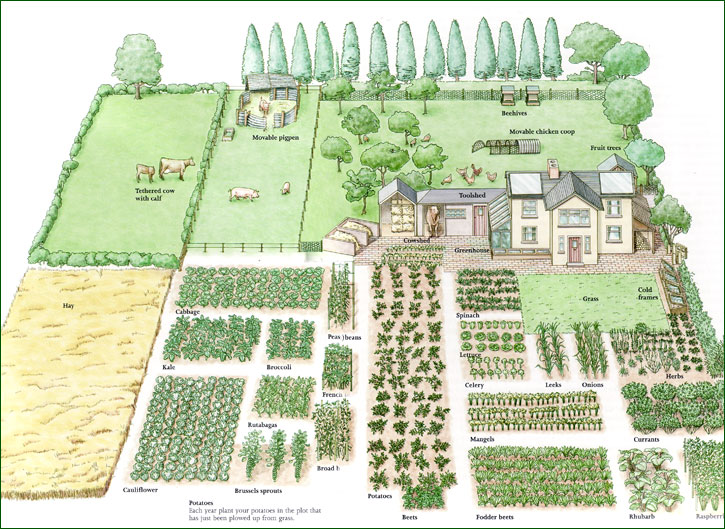
Since our garden is worked as a family team, and certainly if you are working as a group, I highly recommend that you have a pictorial plan of your garden that can be shared with everyone. This way your visual learners will be able to get the vision of what the end goal looks like from the beginning and will be more motivated toward the end. Drawing your garden is helpful, not only for the work of seeding or transplanting but also earlier in establishing rows and/or setting up irrigation, depending upon how you are watering, and in putting up trellises or any other garden support systems, especially those that need to go in before the plants emerge or are recognizable. If you are like me, you may have people helping in your garden from time to time who do not know what certain plants look like and feel a bit overwhelmed when faced with venturing into your large garden to find something for whatever reason; so when you tell them to go pick two of the largest bell peppers, they really appreciate having a map of your large garden to help them find where the bell pepper plants are located. You can tell them how to pick or cut your fruit and vegetables and then just hand them a map. (It’s a good idea to have multiple copies of your garden map and laminate each, or put them inside plastic page protector sheets, so that if the maps are dropped in water or mud they aren’t ruined.) I keep one posted in my kitchen on the refrigerator to be reviewed any time. I have found that the garden planner software available through Mother Earth’s News is a great resource! I’ve used it for years, and each year it just gets better with more plants and capabilities. Because I continue to subscribe, my garden plans year after year remain and help me rotate my garden plants, but I believe you can use it for a 30-day free trial. So, why would I rotate my garden rather than just planting it the same each year? I’ll tell you about that, but first, let’s continue talking about the mapping and spacing of the garden.

Plant Spacing and Placement

When visiting a young family who had just put in their first garden a few years back, I saw that their long, beautiful rows were all only one foot apart. When I asked what they were growing and heard the list that included squash, tomatoes, spinach, melons, and corn, I knew they were in for some surprises once those plants grew to maturity…if they grew to maturity due to the limited space for the roots to grow. Just like people, who must have enough air to breathe and food to eat, plants must have enough sunshine, air, water, and nutrients if they are going to live and thrive. So crowding them is not a good idea. On top of their ability to grow, we must be able to get into our garden to harvest without damaging our precious crop, so having long, narrow rows with no room to get into the garden is not efficient. Raised beds that are reached into from outside walkways or long rows with room in which to walk between are necessary for hand harvesting, which is how most families harvest and certainly will be the means for harvesting if/when there is no more fuel for tractors available. So, allot plenty of room for the plants you are growing. Some, like carrots, require only a few square inches each, while others, like melons and squash, require multiple square feet. Again, the online garden planning tool from Mother Earth News is very helpful in this function. Depending upon what plant you are placing into your garden space design, it allots the appropriate amount of space per plant. It has a grid, showing your garden’s dimensions, which you provided in the set up. (You can have multiple garden plots, too.) You can drag the corner dot of a particular kind of plant to place multiple plants, and it will tell you how many plants of this particular type fit within that space. It’s a great planning feature that simplifies the process, especially for a novice who isn’t sure how much space to dedicate for a specific number of plants in their planning process.

When placing plants, remember the maturity height and shadows that tall plants will create. I place my plant beds/rows running east to west for drainage purposes (because of a slight slope), to give the plants maximum sunlight as the sun progresses across the southern horizon, and so that I can place taller plants on the north side, or in rotating the tall plants to the southern side of the garden, I give more space between the bed/row to allow for sunlight to reach behind the taller plants to those shorter ones behind them. For example, I will space rows of corn, which grows over five feet tall and fairly dense, at least three feet apart and put corn on the north end of the garden so that it does not shade low-growing plants. When I rotate the position of the corn to other areas of the annual vegetable garden, I will provide at least four feet of space on the north (shaded) side before planting a low-growing plant, like bush beans or potatoes.

Crop Rotation

Some plants, like corn, extract a great deal of nitrogen from the soil while others, like beans, put nitrogen into the soil. Crop rotation is designed to prevent overcropping– exhausting arable land by excessive cultivation. Instead, rotating the crops to various parts of your garden allows regeneration of the soil through a variety of plants that enrich it where some plants withdraw. I understand that there are some who get by without crop rotation by using cover crops put in during the fall and grown during the winter and then tilled into the garden several months before the garden is planted in order to provide increase nitrogen into the soil, but I have not yet done this in any large scale. I have had a fair crop of dandelions, grass, and lettuce from blown-in and dropped seeds, and even some other volunteer plants come up each early spring that get tilled in (or transplanted into pots, depending upon the plant) before planting begins months later. Everything that has died in the garden gets put back into it. (We don’t waste much, as either the animals or the garden/compost get almost all of our food/plant waste.)

Additionally, certain plants attract certain “bad” microbes and also insects that may lay eggs in the soil where these plants were grown in the previous year. By rotating where you plant them within your garden, you may help minimize damage to young plants by making the new plants less accessible to their predators and disease, since they are no longer in the same area where the “parents” were last year. This, of course, is a very simplistic explanation, but it is the concept.

Tomatoes, corn, and melons are some of the plants that must be rotated each year. However, some plants are just fine staying in the same place year after year. Because of the microclimates within my garden compounded with the fact that a few items, like lettuce and celery, prefer cooler temperatures and I have filtered afternoon shade offered in two west corners that work well for them in my high elevation during the heat of summer, there are several annual crops that are not rotated in my garden, but these have companions that help to protect them from predators.


Letter Re: Advice on Learning Morse Code

Hugh,

Learning the Morse code is not particularly difficult, but there are several common pitfalls that typically interfere with the learning process. The best advice I have for learning the Morse code is to get together with someone who is proficient with the code and work one on one with that person. This way, you can avoid developing bad habits that you will have to unlearn later.

If such a person is not available, then learning the code becomes a bit more difficult. The most important thing to keep in mind is that the Morse code is an aural language. It is the pattern of sounds, not the number of dots or dashes, that make up the language. You can hum a song learned in your youth because you heard it a lot; you sang and/or hummed it a lot, and the sounds of that song became incorporated into your brain. Learning the Morse code requires that same skill set.

The Morse code is made up of only three things– the sound represented by di (or dit), the sound represented by dah, and the spaces in between. Many people just learning the code don’t understand the importance of the spacing. There are many CW operators on the air that run their code together horribly. This makes copying them very error prone and difficult. Proper spacing will help avoid this.

Another thing to understand is that receiving the code and sending the code are two different skill sets. Most people find sending the code relatively easy compared to receiving it, once the characters are learned.

The first task is to learn the sounds of the characters. Say the patterns out loud to yourself as you write down the individual characters. You say dih-dah dit, and you write down ‘R’, etc. Listen to the code sent properly at about 12 to 15 words per minute using one of the apps mentioned in HJL’s response to the original letter. A common mistake is to learn the characters at a very slow rate first. If you do this, you’ll find it even more difficult to learn a reasonable rate as you will have to forget the previously learned slow rate while attempting to learn the new sounds at the faster rate. If you learn the code characters at around 15 words per minute from the beginning, the transition to 20 to 25 words per minute is very easy and comes quite naturally with practice and experience.

When I was learning the code, one thing that helped me a lot was to attempt to say the code for the letters and words found on street signs I passed as I drove around town every day. I would try to say everything on the sign before I passed it. At first, all I could do was the numbers on speed limit signs. I quickly learned “STOP”, “SPEED”, and “LIMIT”, and other common words. Another thing that helped me was to say the words I was reading in the newspaper, magazines, or even the cereal box in the code. Remember, you are trying to associate the sound patterns you hear to each character. Learning the code takes a significant directed effort. You must do the work.

As to sending the code, HJL was correct in his response saying that a straight key and paddle require two different skill sets. However, I would suggest learning on a straight key first. With a straight key, you are developing muscle memory in your hand, wrist, and forearm. How you hold and move your wrist, hand, and arm relative to your key matters. Practice will develop muscle memory over time. Also, the quality of your key and its proper adjustment matter. Again, the best advice is to seek out the help of a skilled CW operator. With the skills learned with the straight key, you can send the code adequately with as little as two wires pressed together.

Learning first on the paddle allows you to send code much faster and sooner than with a straight key. The result of the ease of sending code is that you end up sending faster than you can receive; when the other person comes back to you at that fast speed, you get lost, panic, miss most of what they are saying, and feel dumb. Learning the paddle after first becoming proficient with a straight key tends to improve your overall quality of sending the code.

Working another CW operator while sending and receiving good quality code with proper spacing and at a fairly quick pace is a real pleasure. Working someone who is erratic in their sending speed with words and characters jammed together is inefficient and is a lot more work than pleasure.

I hope this helps some of you who are having difficulty learning the Morse code. I’ve been an avid CW op for over 40 years, and it is still my favorite mode. I hope to work some of you on the bands soon.


Economics and Investing:

Stuck in the Monetary Mud. All the Fed can do is hope, says Peter Schiff. Sent in by H.L.

o o o

Fiscal and Monetary Madness. Excerpt: “A world of fiat currencies “managed” by central banks descends into the trap of exponentially increasing debt that leads, slowly or rapidly, toward monetary madness and … Train wreck ahead!

o o o

How Oil Can Be Used To Defeat ISIS

o o o

Youtube: The Central Bankers And Corporations Are Running The Country: John Titus. – Sent in by RBS

o o o

If your country’s broke, don’t hold all of your savings there

o o o

Japan’s (Third) Lost Decade. Excerpt: “Today, a full 25 years after the bubble burst in Japan, that country continues to struggle with deflation, zero interest rates, weak banks, adverse demographics, and periodic bouts of negative growth. Japan has endured a 26-year depression, and there is no end in sight.”

o o o

Items from Professor Preponomics:

Professor Preponomics’ Reading Recommendation

From the Cato Institute store: Going for Broke: Deficits, Debt and the Entitlement Crisis by Michael D. Tanner

US News

Commentary: The GOP and Social Security (Cato) Excerpt: “…Social Security’s unfunded liabilities approach $26 trillion. That’s not because of waste or administrative glitches; it’s because of shifting demographics.”

Southern Tennessee Medical Center, LLC to Pay $2.48 Million to Settle False Claims Act and Overpayment Allegations (Justice.gov)

21st Century Oncology to Pay $19.75 Million to Settle Alleged False Claims for Unnecessary Laboratory Tests (Justice.gov)

Tennessee Children’s Food Program Under Scrutiny (Government Waste Fraud and Abuse) One word comes to mind immediately. Dispicable. Excerpt: “…a subsequent investigation by The Tennessean, which found unscrupulous contractors in some cases were pocketing funds intended for hungry children. In one instance, a contractor spent money on lavish bonuses, home improvements and on-demand movies in hotels.”

International News

Central Banks are Already Doing the Unthinkable – You Just Don’t Know It (The Telegraph) Excerpt: “A catch-all term, helicopter drops describe the process by which central banks can create money to transfer to the public or private sector to stimulate economic activity and spending.”

Personal Economics and Household Finance

Snapchat, Seagate Among Companies Duped in Tax-Fraud Scam (Clark Howard) Excerpt: “A major phishing scheme has tricked several major companies — among them, the messaging service Snapchat and disk-drive maker Seagate Technology — into relinquishing tax documents that exposed their workers’ incomes, addresses and Social Security numbers.”

Watch Out for this New Tax Scam (Market Watch) Excerpt: “The IRS says it has begun receiving reports “in the last few weeks” of phone scams that use a slightly different tactic: They don’t ask for money, and instead request personal financial information, pretending they need to verify it.”

o o o

SurvivalBlog and its editors are not paid investment counselors or advisers. Please see our Provisos page for details.


Odds ‘n Sods:

With the onslaught against your constitutional rights and the example of the Malhuer arrests, now might be a good time to seriously consider the “what if”. 10 Things to Know When Facing Criminal Charges

o o o

Bill introduced to go after anonymous “burner phones”. Reader S.P. does contract work with a large mobile carrier and says these prepaid phones are the device of choice for drug dealers, hookers, pimps, and more. It is BIG money for the mobile industry, too. Get some popcorn and watch the lobbying begin. The chains of tyranny grow stronger and more numerous with every passing year.

o o o

Belgian nuclear plant guard is murdered and has his security pass stolen. – Submitted by DSV.

o o o

Reader A.M writes in: Mark Levin had an excellent interview with Dr. Peter V. Pry on Levin TV on March 25th. Dr. Pry is an expert on EMP risk and has a couple book titles out available through Amazon:

Blackout Wars: State Initiatives to Achieve Preparedness Against an Electromagnetic Pulse (EMP) Catastrophe (2015)

Electric Armageddon: Civil-Military Preparedness for an Electromagnetic Pulse Catastrophe (2013)

o o o

North Korea nukes Washington… in its propaganda video, anyway Wishful thinking propaganda from the King of crazy, but they get closer to this capability every year. – DMS


Hugh’s Quote of the Day:

“There is therefore now no condemnation to them which are in Christ Jesus, who walk not after the flesh, but after the Spirit. For the law of the Spirit of life in Christ Jesus hath made me free from the law of sin and death.” Romans 8:1-2 (KJV)


Notes for Saturday – March 26, 2016

Today, we present another entry for Round 63 of the SurvivalBlog non-fiction writing contest. The nearly $12,000 worth of prizes for this round include:

First Prize:

  1. A Tactical Self-Contained 2-Series Solar Power Generator system from Always Empowered. This compact starter power system is packaged in a wheeled O.D. green EMP-shielded Pelican hard case (a $1,700 value),
  2. A Gunsite Academy Three Day Course Certificate that is good for any one, two, or three day course (a $1,195 value),
  3. A course certificate from onPoint Tactical for the prize winner’s choice of three-day civilian courses, excluding those restricted for military or government teams. Three day onPoint courses normally cost $795,
  4. DRD Tactical is providing a 5.56 NATO QD Billet upper with a hammer forged, chrome-lined barrel and a hard case to go with your own AR lower. It will allow any standard AR-type rifle to have a quick change barrel, which can be assembled in less than one minute without the use of any tools and a compact carry capability in a hard case or 3-day pack (an $1,100 value),
  5. Gun Mag Warehouse is providing 20 Magpul PMAG 30-rd Magazines (a value of $300) and a Gun Mag Warehouse T-Shirt; (an equivalent prize will be awarded for residents in states with magazine restrictions),
  6. Two cases of Mountain House freeze-dried assorted entrees in #10 cans, courtesy of Ready Made Resources (a $350 value),
  7. The Ark Institute is donating a non-GMO, non-hybrid vegetable seed package (enough for two families of four) plus seed storage materials, a CD-ROM of Geri Guidetti’s book “Build Your Ark! How to Prepare for Self Reliance in Uncertain Times”, and two bottles of Potassium Iodate (a $325 retail value),
  8. A $250 gift certificate good for any product from Sunflower Ammo,
  9. KellyKettleUSA.com is donating both an AquaBrick water filtration kit with a retail value of $250, and
  10. Two cases of meals, Ready to Eat (MREs), courtesy of CampingSurvival.com (a $180 value).

Second Prize:

  1. A Glock form factor SIRT laser training pistol and a SIRT AR-15/M4 Laser Training Bolt, courtesy of Next Level Training, which have a combined retail value of $589,
  2. A transferable certificate for a two-day Ultimate Bug Out Course from Florida Firearms Training (a $400 value),
  3. A Model 175 Series Solar Generator provided by Quantum Harvest LLC (a $439 value),
  4. A Trekker IV™ Four-Person Emergency Kit from Emergency Essentials (a $250 value),
  5. A $200 gift certificate good towards any books published by PrepperPress.com,
  6. A pre-selected assortment of military surplus gear from CJL Enterprize (a $300 value),
  7. RepackBox is providing a $300 gift certificate to their site, and
  8. Safecastle is providing a package of 10 LifeStraws (a $200 value)

Third Prize:

  1. A Royal Berkey water filter, courtesy of Directive 21 (a $275 value),
  2. A $245 gift certificate from custom knife-maker Jon Kelly Designs, of Eureka, Montana,
  3. A large handmade clothes drying rack, a washboard, and a Homesteading for Beginners DVD, all courtesy of The Homestead Store, with a combined value of $206,
  4. Expanded sets of both washable feminine pads and liners, donated by Naturally Cozy (a $185 retail value),
  5. Two Super Survival Pack seed collections, a $150 value, courtesy of Seed for Security, LLC,
  6. Mayflower Trading is donating a $200 gift certificate for homesteading appliances,
  7. Montie Gear is donating a Precision Rest (a $249 value), and
  8. Two 1,000-foot spools of full mil-spec U.S.-made 750 paracord (in-stock colors only) from www.TOUGHGRID.com (a $240 value).

Round 63 ends on March 31st, so get busy writing and e-mail us your entry. Remember that there is a 1,500-word minimum, and that articles on practical “how to” skills for survival have an advantage in the judging.


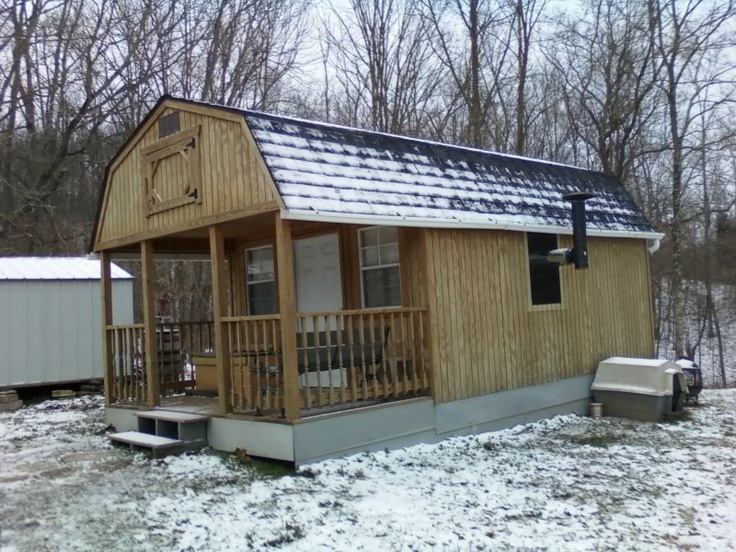
How Two People Can Build A Fully Functional Bug Out Cabin For About $10,000 In Just Two Days, by S.T.

There are many builders of sheds that are available all over the U.S. I picked this builder as an example because their products are available in my area and I have seen their products in person. This builder also offers free delivery and setup in my area. Make sure that the exterior paint color and roof color you choose will blend in with the area where your cabin will be placed and will not stick out saying “I am here, so please come and get me”.

First, pick your size of ***LINK to http://www.backyardoutfittersinc.com/products/treated-buildings/lofted-barn-cabin-playhouse/***shed. Some options are:

  • 12′ X 28′ with a metal roof for $6,820.00 + approx $500.00 for a workbench & shelves
  • 12′ X 32′ with a metal roof $7,695.00 + approx $750.00 for a workbench & shelves
  • 12′ X 36′ with a metal roof $8,640.00 + approx $900.00 for a workbench & shelves

For this estimate, I used the 12′ X 28′ with a metal roof at $6,820.00 + approx $500.00 for the workbench & shelves.

Supplies Needed

Now, move on to my shopping list, which includes the following:

  • Laundry sink, $95. Get one or two? I would purchase two; you will see why later on.
  • Curved shower curtain rod, $56.
  • One Shower curtain (fabric), $5.00
  • 12” square ceramic tiles (quantity will depend on which size cabin you picked), under $100
  • Roll insulation (quantity will depend on which size cabin you picked), approx $200
  • 1/4” birch plywood (quantity will depend on which size cabin you picked), approx $1,000
  • Bag of nails, $10
  • Composting toilets, $20 (5-gallon buckets with toilet seat lid)
  • Additional 5-gallon buckets, free
  • Six each Plastic 55 gallon drums, $20 each (minimum quantity), or if available the 250 gallon totes.
  • Six each No freeze faucets $42 each for 55 gallon drums (not needed if you are using totes)
  • One each Drum pump $20, optional
  • Ten yards of 100% cotton fabric. Be sure to pick something colorful and fun, plus one yard of quilt batting, total of $60.
  • Eye hooks $5
  • 100′ para cord $10.
  • 12 each Pallets (free)
  • Two gallons of paint or varnish $50
  • 24 to 30 concrete blocks, $30

Building The Cabin

Now, let’s start building your bug out location. This is a simple but very functional bug out cabin. This cabin does not have any electricity, running water, or sewer. However, as you will see, you will be able to do without these.

Once you have your building delivered and leveled, you are ready to turn the empty shed into a very usable cabin.

  1. Set out all of the purchased materials, supplies, and any equipment and future supplies you brought from home or made, after the delivery people leave. Sort them in to piles of like items.
  2. Clean out the 55-gallon drums or totes and add the frost-proof faucets to each of the drums. Set each drum or tote on top of two or three stacked pallets. Set one at each corner and one in the middle of each long side of your cabin. Because the building I chose has a metal roof, it is perfect for a rain catchment system.
  3. Add the rolled insulation to the walls and roof. If you live in very cold winter area and have the extra funds, I would also add foam insulation board over the rolled insulation for extra R-Factor.
  4. Add the birch plywood over the insulation.
  5. Tile the top shelf of the work bench. (Use the large 12′ X 12” tiles to keep the grout lines and costs to a minimum.) This will now be your kitchen counter. You now have enough room for a camp stove and food prep and a 5-gallon water jug over the future laundry sink. The shelf under the kitchen counter is for the everyday food storage and storage of your dishes. If you have the funds, I would also tile this shelf using the same 12′ X 12” tiles. I would also add some peg board and peg board hooks over the counter as storage for holding equipment, such as large utensils and pots and lids, out of the way.
  6. Add one of the laundry sinks next to your new kitchen counter. Add a 5-gallon bucket under the sink to collect the water for disposal as needed. Use this sink for dishes and hand washing and winter weather laundry.
  7. Next to the laundry sink, install the curved shower curtain rod and the fabric shower curtain, and then install two composting toilets behind the curtain– one toilet for liquids and one for solids. (As a special note, urine can be poured around your cabin to repel wildlife.)
  8. Measure and cut the fabric to cover the kitchen counter lower shelfs; make sure to include enough extra fabric to the height to make a channel. Measure and cut the fabric to cover the back wall storage shelves, making sure to also include enough extra fabric to make a channel to hang the fabric from. If there is any leftover fabric, I would use it to make cloth napkins, dish towels, and window quilts. For the window quilts, just use cup hooks and grommets to hang them.
  9. Using the cup hooks and paracord, string the paracord just under the kitchen counter. Using the cup books and paracord string the paracord in front of the storage shelves. String the paracord through the channel in the fabric, to hide your new storage areas. Instead of sewing a channel for the paracord, you could insert grommets in the fabric.
  10. Paint or varnish the floor, as not only a way to protect the floor but also to protect your feet from potential splinters and to give your cabin a more finished look and feel.
  11. If you purchased a second laundry sink, place it outside on the back wall of the cabin. This will be used for laundry in good weather and for processing game and fish in the spring, summer, and fall. Remember to add a 5-gallon bucket underneath the sink. A folding work table or a hand-built table should be placed next to the outdoor sink to add extra work surface and a place to set a 5-gallon jug of water. If you are in a cold weather area, please remember to bring the water jug inside at the start of winter to prevent the jug from breaking.
  12. Take the concrete blocks and build a square using two to three blocks on each of the four sides and then three to five blocks high. Fill the hollow blocks with soil or sand. Place metal screening material, then a heavy duty metal cooking rack over the top, and you now have a burn box, an outdoor cooking stove, an outdoor canning stove, or even an outdoor dehydrator.
  13. Use the leftover paracord outside to build a clothesline.

The back wall of storage shelves inside the cabin will be used to store all of your LTS foods, supplies, and clothing.

Estimated Cost to Build Your Bug Out Cabin

The combined list of supplies, including the shed but not the land comes to an approximate total of $10,000.

Depending on the area of the U.S. where you live, you may want to and need to add a small pot belly stove and the necessary bricks to set the stove on. A small wood stove is available for under $300, plus the cost for the stove pipe, and it will heat this square footage very well. These types of stoves have a flat top so you can cook a meal on it or make a pot of coffee with an old time percolator. Just a personal note that I think coffee made in a percolator is better than a drip coffee maker or any french press, but I am a Folger’s women and think Starbucks and other designer coffee is swill.

Depending on what you have available on hand, you may be able to reduce the costs. For example, as I already have the fabric, quilt batting, paracord, cup hooks, buckets, nails, shower curtain, paint, and some other supplies, so my costs go down. Furthermore, you may be able to obtain some of the items, such as blocks and bricks for free. The items you have on hand will assist in completing any upgrades.

It only took two days and two people to turn this once empty shell of a shed into a 336 square foot completed bug out cabin.

Now, it was time to stock the new cabin. That meant adding the LTS food stuffs, a Coleman camp stove, camping dishes, cooking utensils, pots and pans, clothes, cots, folding camping chairs, bedding, medical supplies, 5-gallon water jugs, oil lamps, water filter, et cetera. I suggest adding some homemade small hand-braided rugs around the cabin for more of a home feeling and to keep the feet warm during the winter months.

Extra storage space can be obtained by adding some screw in coat hooks along the walls for coats. Add some reusable grocery bags on more of the hooks to hold things like gloves, scarves, homeschooling materials, books, sewing supplies. Even more extra storage can be added by using fabric boxes to store clothing, such as socks, underwear, and dirty laundry. Additional hooks could be placed on the outside walls for storage of items such as extra buckets, gardening tools, fishing equipment, snow shovels. Because the cots are folding, they can be folded up and stored during the day.

Optional items I would add over time, as money permits, include the following:

  • Fold up TV tray tables
  • Inflatable mats for the cots
  • An outhouse to dispose of waste from the indoor bucket toilet and for use during the warm months. (This would be my very first project) after the cabin was completed. If you have additional helpers, it can be completed at the same time as the cabin.
  • I would add some type of brace to the inside of the door and a dead bolt.
  • I would also add some very heavy window quilts to not only keep heat in during the winter and the heat out during the summer, but will also keep out any prying eyes.
  • I would also add a folding laundry drying rack for use indoors during bad weather. To protect wooden the floor of the cabin, place a heavy rug and then old towels on top of the rug, before setting the drying rack on top of towels.
  • Picnic table, for good weather eating outdoors and homeschooling.
  • If there are children. If you have children spend the extra $500 to $600 to get the loft space for use as an extra sleeping area and storage space.
  • If you are planning on getting a 12′ X 36′ or larger, some builders offer a loft on each end. Just add some homemade curtains for privacy and noise reduction.
  • The only thing I have not covered is a shower. As this bug out cabin has no electric or indoor plumbing. I live in an area where we get lots of cold and snow during the winter season; so for spring, summer, and fall I would take a hard-sided kiddie pool outside and using a ice pick add two or three rings of holes in the bottom of the pool, add about 2” or 3” of pebbles, then place on the ground add a 4” X 4” post on each side of the pool, then top the posts with another 4” X 4” post and add some eye hooks and a shower curtain. Add some additional hooks on the underside of the top post to hang sun shower bags. There is also, in the PAW fiction book Lights Out, a description of an outdoor shower using a 55-gallon drum. For winter use, I would purchase a stock tank and use heated water indoors.

This project would lend itself to future upgrades, such as some solar panels for a future limited amount of electricity, say for a chest freezer that could be located outside. Also, more water storage and roof gutters would be nice.

If you have a large family, more than one of these cabins can be constructed and placed in a circle with the doors facing inside the circle and the outhouse outside of the circle.

If you are in a state, such as Oregon, that thinks they own the water that falls from the sky which you and I call rain, you can complete everything but adding the rain catchment water barrels before SHTF. Then, later, add the rain catchment water barrels after SHTF.

Disclosure: I have no affiliation with any of the links that are posted. These links are for instructional and pricing purposes only.

One final thought is that if you have additional money, you can have a basement dug and built; then set the shed over the completed basement. Just cut out a 4′ X 4′ section of the floor and then re-attach the cutout floor section with hinges and add a ladder for easy access, and cover it with a rug so you have hidden access to the basement.


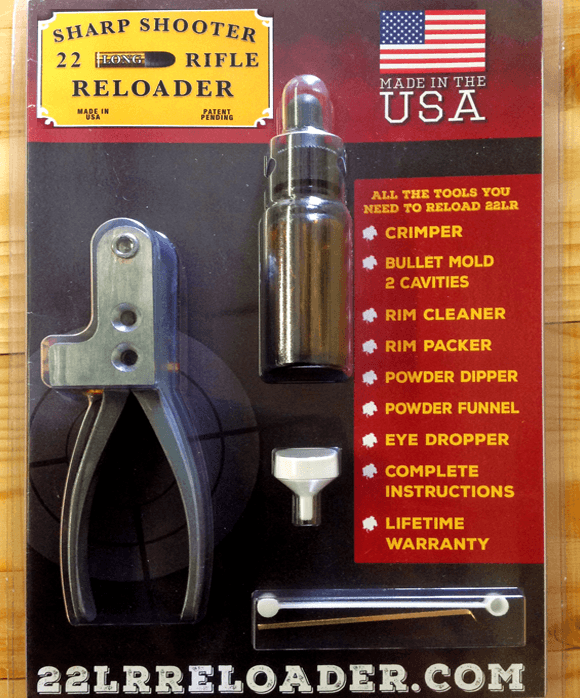
Letter Re: Sharp Shooter 22LR Reloader

Dear Sir:

While looking through a magazine the other day, I came across an advertisement for the Sharp Shooter 22LR Reloader tool. According to the ad, this kit includes everything you need to reload spent 22 shells. Due to the unavailability of 22lr in my neck of the woods, I thought this might be a good option. (I have large amounts of empty shells that I have been saving for another project.) My question is: Have you, or any of the SurvivalBlog readers, had any experience with this tool and kit? Is it an easy process? How reliable are the reloads? Is there a high rate of duds? The price for the tool and kit seem reasonable. I don’t mind putting in the work to load a couple thousand rounds. (It beats watching TV.) Perhaps this would be a good topic for a product review. I would really hate to waste my money on something that doesn’t work or cranks out garbage ammo. The website for the product is www.22lrreloader.com. Any info, insight, or experience you have or know of would be greatly appreciated.

Sincerely, Iowa Farm Boy

HJL Replies: I purchased one of these almost a year ago. I picked up the basic kit and the die. What I found is that it does indeed produce usable ammo. The only misfire I had was due to the firing pin hitting the exact same spot that had hit originally (a pretty slim chance but possible). Given that it is 22lr, the concept of reliability for self defense didn’t really bother me.

Time is another thing entirely. I do reload most of my own ammo on a couple of Dillon presses. This was entirely manual, and I didn’t really care for it. It can be done, but when 22lr ammo is so inexpensive, I have to wonder about the current viability. If there wasn’t any supply, I would consider it, but for now it’s relegated to the bottom drawer as a nice tool to have in a pinch but not very practical right now. The kit did seem to be well made. I would not consider it junk at all.

I did not try to obtain chemicals independent of the kit to make the primer; I just used their kit.


Economics and Investing:

Reader DSV suggested this: Bagfuls of Pocket Change… Handfuls of Heritage – Shanghai Metals Market.

o o o

Japan Goes Full Krugman: Plans Un-Depositable, Non-Cash “Gift-Certificate” Money Drop To Young People – G.G.

o o o

Items from Professor Preponomics:

Professor Preponomics’ Reading Recommendation

Going for Broke: Deficits, Debt and the Entitlement Crisis by Michael D. Tanner

US News

Commentary: The GOP and Social Security (Cato) Excerpt: “…Social Security’s unfunded liabilities approach $26 trillion. That’s not because of waste or administrative glitches; it’s because of shifting demographics.”

Southern Tennessee Medical Center, LLC to Pay $2.48 Million to Settle False Claims Act and Overpayment Allegations (Justice.gov)

21st Century Oncology to Pay $19.75 Million to Settle Alleged False Claims for Unnecessary Laboratory Tests (Justice.gov)

Tennessee Children’s Food Program Under Scrutiny (Government Waste Fraud and Abuse) One word comes to mind immediately. Despicable. Excerpt: “…a subsequent investigation by The Tennessean, which found unscrupulous contractors in some cases were pocketing funds intended for hungry children. In one instance, a contractor spent money on lavish bonuses, home improvements and on-demand movies in hotels.”

International News

Central Banks are Already Doing the Unthinkable – You Just Don’t Know It (The Telegraph) Excerpt: “A catch-all term, helicopter drops describe the process by which central banks can create money to transfer to the public or private sector to stimulate economic activity and spending.”

Personal Economics and Household Finance

Snapchat, Seagate Among Companies Duped in Tax-Fraud Scam (Clark Howard) Excerpt: “A major phishing scheme has tricked several major companies — among them, the messaging service Snapchat and disk-drive maker Seagate Technology — into relinquishing tax documents that exposed their workers’ incomes, addresses and Social Security numbers.”

Watch Out for this New Tax Scam (Market Watch) Excerpt: “The IRS says it has begun receiving reports “in the last few weeks” of phone scams that use a slightly different tactic: They don’t ask for money, and instead request personal financial information, pretending they need to verify it.”

o o o

SurvivalBlog and its editors are not paid investment counselors or advisers. Please see our Provisos page for details.


Odds ‘n Sods:

This is an older YouTube posting, but it is fascinating. Bullet impacts on steel, glass, corners, and both full penetration and non-penetration are included. It is particularly interesting to see solid metal flow like liquid under the extreme pressures produced by the impacts. 1 million fps Slow Motion video of bullet impacts made by Werner Mehl from Kurzzeit

o o o

If you are a Verizon customer, you may need to pay attention to this one – Breaking News: Massive Verizon data breach – customer info stolen! – DSV

o o o

Islam is not the problem #BrusselsAttacks – I would also add that Islam is somewhat more than a set of beliefs. It is a political power structure masquerading as a religion.

o o o

Hope for the Dead. Excerpt: When America was in its infancy and struggling to find a culture and frustrated at governance from Great Britain, the word most frequently uttered in speeches and pamphlets and editorials was not “safety” or “taxes” or “peace”; it was “freedom.”

o o o

Embedded within the heartbreak of the story of the missing, injured, and killed is the exchange that reflects what happens to people who are traumatized. This is instructive for all those of us who prepare… We need to recognize this in ourselves and in others in times of crisis or emergency. “Frustrating” search for family of U.S. couple missing in Brussels – A.M.


Hugh’s Quote of the Day:

“…but this thing commanded I them, saying, Obey my voice, and I will be your God, and ye shall be my people: and walk ye in all the ways that I have commanded you, that it may be well unto you. But they hearkened not, nor inclined their ear, but walked in the counsels and in the imagination of their evil heart, and went backward, and not forward.” – Jeremiah 7:23-24 (KJV)


Notes for Friday – March 25, 2016

March 25th National Medal of Honor day is officially observed on March 25th of each year.On March 25 1944 RAF Flight Sergeant Nicholas Alkemade survived a jump from a Lancaster bomber from 18,000 feet over Germany without a parachute. His fall was broken by pine trees and soft snow, and he suffered only a sprained leg.

This is the birthday of English film director David Lean, (of Doctor Zhivago fame), born in Croydon, England in 1908.

o o o

You Better Pray You Never Meet America”: NRA’s New Charlie Daniels – Sent in by J.H.

o o o

Today, we present another entry for Round 63 of the SurvivalBlog non-fiction writing contest. The nearly $12,000 worth of prizes for this round include:

First Prize:

  1. A Tactical Self-Contained 2-Series Solar Power Generator system from Always Empowered. This compact starter power system is packaged in a wheeled O.D. green EMP-shielded Pelican hard case (a $1,700 value),
  2. A Gunsite Academy Three Day Course Certificate that is good for any one, two, or three day course (a $1,195 value),
  3. A course certificate from onPoint Tactical for the prize winner’s choice of three-day civilian courses, excluding those restricted for military or government teams. Three day onPoint courses normally cost $795,
  4. DRD Tactical is providing a 5.56 NATO QD Billet upper with a hammer forged, chrome-lined barrel and a hard case to go with your own AR lower. It will allow any standard AR-type rifle to have a quick change barrel, which can be assembled in less than one minute without the use of any tools and a compact carry capability in a hard case or 3-day pack (an $1,100 value),
  5. Gun Mag Warehouse is providing 20 Magpul PMAG 30-rd Magazines (a value of $300) and a Gun Mag Warehouse T-Shirt; (an equivalent prize will be awarded for residents in states with magazine restrictions),
  6. Two cases of Mountain House freeze-dried assorted entrees in #10 cans, courtesy of Ready Made Resources (a $350 value),
  7. The Ark Institute is donating a non-GMO, non-hybrid vegetable seed package (enough for two families of four) plus seed storage materials, a CD-ROM of Geri Guidetti’s book “Build Your Ark! How to Prepare for Self Reliance in Uncertain Times”, and two bottles of Potassium Iodate (a $325 retail value),
  8. A $250 gift certificate good for any product from Sunflower Ammo,
  9. KellyKettleUSA.com is donating both an AquaBrick water filtration kit with a retail value of $250, and
  10. Two cases of meals, Ready to Eat (MREs), courtesy of CampingSurvival.com (a $180 value).

Second Prize:

  1. A Glock form factor SIRT laser training pistol and a SIRT AR-15/M4 Laser Training Bolt, courtesy of Next Level Training, which have a combined retail value of $589,
  2. A transferable certificate for a two-day Ultimate Bug Out Course from Florida Firearms Training (a $400 value),
  3. A Model 175 Series Solar Generator provided by Quantum Harvest LLC (a $439 value),
  4. A Trekker IV™ Four-Person Emergency Kit from Emergency Essentials (a $250 value),
  5. A $200 gift certificate good towards any books published by PrepperPress.com,
  6. A pre-selected assortment of military surplus gear from CJL Enterprize (a $300 value),
  7. RepackBox is providing a $300 gift certificate to their site, and
  8. Safecastle is providing a package of 10 LifeStraws (a $200 value)

Third Prize:

  1. A Royal Berkey water filter, courtesy of Directive 21 (a $275 value),
  2. A $245 gift certificate from custom knife-maker Jon Kelly Designs, of Eureka, Montana,
  3. A large handmade clothes drying rack, a washboard, and a Homesteading for Beginners DVD, all courtesy of The Homestead Store, with a combined value of $206,
  4. Expanded sets of both washable feminine pads and liners, donated by Naturally Cozy (a $185 retail value),
  5. Two Super Survival Pack seed collections, a $150 value, courtesy of Seed for Security, LLC,
  6. Mayflower Trading is donating a $200 gift certificate for homesteading appliances,
  7. Montie Gear is donating a Precision Rest (a $249 value), and
  8. Two 1,000-foot spools of full mil-spec U.S.-made 750 paracord (in-stock colors only) from www.TOUGHGRID.com (a $240 value).

Round 63 ends on March 31st, so get busy writing and e-mail us your entry. Remember that there is a 1,500-word minimum, and that articles on practical “how to” skills for survival have an advantage in the judging.


My Favorite Materials for Clothing, by B.A.

Not being a survivalist, nor being flush with cash, I am constantly amazed at the number of times people are told to buy the newest and greatest items for their family’s welfare. Sure, if the money was available for the average person to buy the newest “gee whiz” items all of the time, we would never have to worry about TEOTWAWKI, because by the time we have finally gotten through all the fancy gear once, we would be dead of old age. In response to an outdoor sports catalog that I brought over, my mother said to me, “American’s will all starve to death, but they will look good while they do it.”

Of course, I was raised poor. I knew it, because there is plenty of people in this world who are more than happy to remind a guy of it. You did not ruin stuff; because if you did that, you then did without. Hopefully, your older cousin was changing out his wardrobe, so you had more than socks and underwear that were new. I remember having to do gym class in high school in boots, because my shoes were worn out. Yes, I eventually was kicked out of class for supposedly damaging the floor with my hard heel boots. I grew to have a very healthy respect for clothes that did not wear out.

Being Canadian, I also grew to have a healthy respect for what real warm clothes meant. If you have ever been so cold that your hands feel like they are made of broken chicken bones for hours after you are thawed out and the feeling returns, then you understand. Cheap work gloves and nylon snow suits that rip, exposing the lining in those large v-rips that never can be repaired, are things that I now refuse to even contemplate enduring.

That being said, at the risk of insulting readers, my favorite clothing materials are cotton, wool, and leather. I want clothes, not to survive the zombie apocalypse, but to survive the longest time available and to keep me in the most comfortable condition possible, without paying with my eye teeth. Think about it. There are no patents on cotton, wool, or leather. There are no material royalties that go on top of the production and sales cost. It’s like the wheel; it does not cost one cent more for a company to use this invention, because the intellectual property laws and the new science people are not trying to get more money for repackaging an old item, i.e. clothes.

Once upon a time I had the chance to wear Canadian-issue Arctic gear. The coldest it got that winter was -67 degrees Celsius with the windchill. I lived. I also learned a thing or two. The first thing I did was take my arctic mitts home and have my mother look them over and make my own copy of them. She went to a dollar store and bought an old wool overcoat, cut it up, and made both my brother and me a pair complete with the soft nose wiper on the back. She was also kind enough to knit us both toques of wool and regular wool gloves, and years later I convinced her to make me a 6-foot double knitted scarf. That is my accessories. I have all of them still, even though I changed up and bought an actual pair of Arctic mitts from Egli’s Sheep Farm in Ontario. This being the present day, I also bought a pair of shearling wool boot liners for winter boots and several full sheep hides from them to make more later. (I may have more money now, but I am still cheap.)

For my feet, I always wear wool work socks. It’s a habit broken into me that stuck. My foot wear are leather. I only have one pair of steel-toed boots. If you want to loose a toe or two, wear only steel toes in winter. Everything else in soft toed. I prefer Kamik’s boots; it is nice to be able to change out your liners every day, so that they can dry out over night proper. I work outside and hunt in them. I have walked all day in brush and swamp without twisting my ankle into a hospital visit. I get some stares in winter when I go into town, but I don’t care. I am warm, even when standing still or sitting in the cold, and they keep me going.

For my coat, I looked at buying a surplus coat, but the cost was too much. Years ago when I tried my hand at construction while freezing one day, I talked with one of the contractors and asked what he was wearing, as he never seemed to be too warm and was never cold, even as the wind ripped through the site. He was wearing Tough Duck work gear. It is a company that specializes in cotton canvas outer gear in Winnipeg. The parka I chose only cost me $100, and the lined overalls only $90. This was 18 years ago. That parka was a good civilian equivalent. I have worn that thing everywhere and done everything. It has kept me warm in -45 degree Celsius, while I sat for hours waiting for deer to say “hi”. It has kept me dry while I chained up my truck in the Rockies, and it has held every kind of tool in its pockets while fixing everything mechanical in my life. I love that coat, and its matching overalls. Everybody I know on the farm or in the workforce has one, or one like it. There is a reason. They last forever. You almost cannot destroy it. Cotton canvas, when walking through brush or over a barbed wire fence or working on machinery with sharp edges, does not tear itself to pieces. If by chance you do damage it, most likely you tore the edge where the sewing was. Even I have fixed cotton canvas by sewing my pockets back together. While cotton is flammable, it is usually treated, so you will not go up like a Roman candle, and as an added bonus, unlike synthetics, if it burns it will not bond with your skin. I had to replace my parka this winter, not because it no longer is useful, but because my wife, whom I love, is too embarrassed to be seen in public with me in it. So I went back and bought the exact same coat from the same company. Its price was $124. They do ship to the U.S. The quality is still there.

I grew up in t-shirts. Eventually, I decided that I needed something a little more. Usually that means I put on my surplus wool shirt, but sometimes I wanted something not so warm. What does a guy do? While at the farm I sucked it up and borrowed one of my dad’s shirts. You know the kind– heavy cotton in horrible plaid. That thing was comfortable. I never wanted to wear them. If my dad was wearing them, I thought they are not for me. I went and bought six more of them for myself and a couple for him to thank him. Sure enough, that summer I was sitting there sweating in a t-shirt and got to thinking about my dad’s shirts. In the summer he wears the light cotton t-shirts, in plaid of course. This time I did not even wait; I just went and bought four of them. Sure enough it was light and comfortable and inexpensive. After the clingy t-shirt, it was like I was wearing my own air conditioner. Who would’a thunk it? Our dads were onto something!

As for pants, well I only wear blue jeans. That’s simply because they are just so solid. The only concessions are cotton long johns underneath when it is too cold outside, or the canvas bib-overalls worn when it is really cold. Durability is the key. I never buy the “cool” jeans. Stone washed ones may be comfortable, but they are half worn out before you even buy them. Buying ripped jeans for style is a special kind of stupid in itself. That same pair of jeans has to do a roof, walk through thorns, and keep my legs covered. Extra pockets would be nice, but that’s why I have a jacket.

I may not be much to look at, but I am comfortable. I know that my clothes that I wear everyday are the same clothes that I will be wearing years from now. Sure it is nothing like fancy stuff out there, and when it comes down to how something will wick 2 ml of moisture at 10 degrees, the high end stuff has me beat everyday. I walked into a sports store before Christmas and everyone was wearing fancy clothes. The sales staff did not even want to talk to me. Maybe it was that nothing I wear has a logo. I don’t look like much, but I can buy double what they could, or buy the same amount and use the other half of my money on food. I think too many people are looking too far and too intensely at problems that are not really there.


Letter Re: Observations of An Old Alaskan Bushrat

Hi Mr. Rawles,

I just ran across your site and have been browsing it. Your Precepts of Survivalist Philosophy are superb. Best is that you are a 100% sold out Christian.

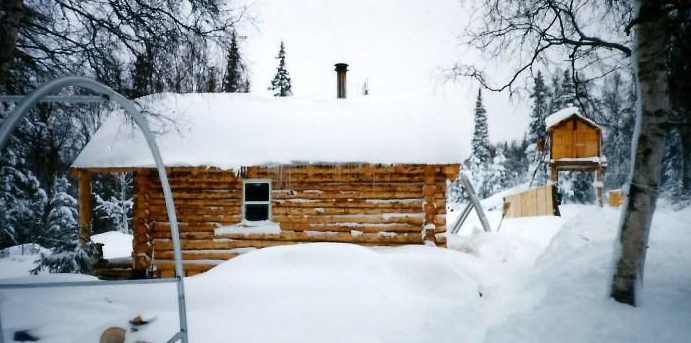
You may find a few observations of interest, from one who has lived extensively off the grid. First, some background. I grew up in a tiny community with the surf out my front door and a thousand-year-old forest that stretched for miles in back. My father grew up on a homestead and trapline among the Sarcees of the Alberta Rocky Mountain foothills. He never had a pair of shoes on until twelve, only Sarcee moccasins. My mother was raised in a sod-house and half dugout on the New Mexico plains, when Pancho Villa was raiding nearby. With such parents to form my youth, when in 1963 my employer left me with no food for ten days on my first job in Alaska as a 20-year-old, not only did I not starve but I couldn’t even get hungry. It took me no more than a half hour to an hour daily to secure all the food I could eat. Since, I once lived in a tent year-round for two years, lived four years in an 8 X 12 shack, and have put in a winter in a tent far north, where the temperatures commonly hit 40-50 degrees below. I have also dwelt extensively in a log cabin 100 air miles off the highway without electricity or running water.

Observation 1: When I think about really prepping, I think about not just setting up for the long haul but the permanent long haul. If the survival situation never gets better, you’re set. If it does get better, you can always move back to more modern life. All of the reliance on mechanisms that run on fossil fuels and use of technologies, like welding and so forth, are fine, as long as supplies last. However, if the collapse goes on long enough, survivalists will have to live with technologies of an earlier age. So here’s my take: I am not saying immediately abandon all newer technology before you are forced to, but put most of your preparation effort into reverting back into 1870’s to rural 1920’s technology. You do not want to be forced into Stone Age technology by lack of tools. I have lived a lot without electricity and running water in the ways of the turn of the 1900’s bush. It is totally comfortable and easy to slide back and forth, losing 150 years or gaining them back.

Observation 2: When you put a premium on living places, like down in America, where there is lots of sunlight to run solar generators and nice, deep, rich soil with plenty of clean water, you are looking to set up in digs that will be super attractive to the inevitable raiders. Places down there that seem rather rural and thinly populated will get populated (overrun) when the millions upon millions of city dwellers scatter out of Dodge. Hunger, and their kids going hungry, will change many into savagery, and some will be have Swat team-quality training in law enforcement and Special Forces-level military training that allows them a huge advantage in assaults on the amateur fortifications of most preppers, no matter how well laid. I don’t want to be anywhere hordes of that ilk are likely to be attracted to or have the bush and sea travel skills to reach. I don’t want them to be able to drive or even bicycle or ride a horse to my family.

My area, instead of banking on rich farm land, allows me to tap the richness of the sea. Not only from the depths but from the inter-tidal zone, where “when the tide’s out, the table’s set.” Summer or winter, it doesn’t matter. And when fuel is spent, no raider types are likely to want to row, paddle, or sail across perilous waters as far as my chosen area is from the nearest population centers, which the nearest three at 50-75 miles distance number but 50-200 souls. By the way, I won’t be totally dependent upon seaweed and forest edibles. A greenhouse will supply vegetables.

The native tribes that inhabited the area had the easiest life/highest standard of living of any in North America. It took them so little to take a living from their surroundings that they had leisure time to develop their religion, art, housing, trade, and warfare to a high standard. In their great cedar war canoes of 40-60 feet, they raided for slaves as far north as Cook Inlet and south to the Columbia. Their weaving technique is one of the world’s most complex and beautiful. This is all because the living was—and is—easy there.

Keep up your outstanding ministry,

In Him, – Rod