Maintaining Your Household in the Post-SHTF World- Part 1, by S.T.

Today I washed clothes the easy way:

  1. I placed the clothes in the washing machine, added homemade laundry soap, and turned it on.
  2. When the washer was done, I transferred the clothes to the dryer and turned it on.
  3. When the dryer was done, I removed the clothes from the dryer and folded everything.

While my automatic washing machine and automatic dryer are working, I am sitting here typing this. I do this three times every week– once for my family, once for my father who can not navigate his basement stairs, and once for my aunt who also can not navigate her basement stairs.

Every household chore in a post-apocalypse environment will also require more work, from hauling or pumping water to chopping firewood to canning food. You will also have additional chores to make and replace the store-manufactured goods that you now purchase, such as bath soap, laundry soap, and making clothes.

Laundry after SHTF is a whole other story. Here’s what it might look like:

Summer Laundry

  1. Bring three 20-gallon Rubbermaid totes outside.
  2. Bring all laundry outside.
  3. Sort laundry by color.
  4. Place homemade laundry soap in tub #1.
  5. Fill all three tubs with boiling hot water.
  6. Place dirty laundry in tub #1.
  7. Using a plunger that is only used for laundry, plunge up and down for about 10 minutes.
  8. Ring out clothes, then place the clothes in tub #2.
  9. Using the plunger, plunge up and down for about 5 minutes.
  10. Ring out the clothes, then place the clothes in tub #3.
  11. Using the plunger, plunge up and down for about 5 minutes.
  12. Ring out the clothes, and then hang on the line to dry.
  13. Start the next load of clothes. Do you have clotheslines and clothespins?

Winter Laundry

  1. Bring three 20-gallon Rubbermaid totes into your basement or onto a covered porch.
  2. Bring all laundry to where the totes are located.
  3. Sort laundry by color.
  4. Place homemade laundry soap in tub #1.
  5. Fill all tubs with boiled hot water.
  6. Place dirty laundry in tub #1.
  7. Using a plunger that is only used for laundry, plunge up and down for about 10 minutes.
  8. Ring out clothes, then place clothes in tub #2.
  9. Using the plunger, plunge up and down for about 5 minutes.
  10. Ring out the clothes, and then place clothes in tub #3.
  11. Using the plunger, plunge up and down for about 5 minutes.
  12. Ring out the clothes, and then hang on the clothes drying rack in front of the woodstove.
  13. Start the next load of clothes. Do you have a clothes drying rack?

Having a few extra kids and plungers to help would be very beneficial, as they each can man and work one of the tubs, and maybe one extra child can also hang and fold the clothes.

The amount of laundry you do will increase post-SHTF, if you are a person who relies upon a lot of disposable products, such as paper towels, paper napkins, toilet paper, and/or Kleenex, because you will have to replace all of these with cloth versions. Do you even have these cloth versions of towels, napkins, and so forth available now or the various supplies needed to make them?

Below are some alternatives to the wash tubs and a plunger method:

  • James Washer, which is $579 without the wringer and $729 with the wringer. The reviews are not very good.
  • Home Queen Wringer Washer, which is $969 plus $175 freight, and it still needs electricity. Further, this machine is made in Saudi Arabia, so I would not count on any repair parts being available.
  • Wonder Clean Washer, which is only $47 and a good idea, but it only holds two shirts. What about the 10 pairs of jeans that need to be washed?
  • GiraDora is a foot-powered washing machine that costs approximately $40. This machine is not yet being produced, and I believe that when it is produced that it will only be available in third world countries. This would be a good option for the families with children and teens, because they could do the laundry with this foot-powered machine. Maybe someone can produce something similar using the metal drum from an existing washing machine. They would be the most in demand person in a Post-SHTF world. I know I would prefer a foot-powered machine to a hand-powered machine.
  • Homemade Washing Machine, which costs $35 + the expense of purchasing and mounting a wringer. This would be an excellent alternative for a DIY person (I would make it larger to accommodate two tubs and two wringers, add a drain hole in the bottom, and buckets (to make water disposable easier). I’d also want to use a stopper. Once the design and pattern is perfected, it would make a great side business selling to the non-DIY type prepper person.
  • The Big Green Washing Machine is approximately $169.95 (wringer) plus an unknown amount for the washing machine and stand. (No price is given on the website.) This is a great option for large families or any families who plan on taking in laundry after SHTF as a potential side business. I think in order to make laundry only take one day vs two days, a second machine would be very helpful so that there would be one for washing and one for rinsing.

Ways to Reduce the Amount of Laundry

Every adult in the house should have aprons, which are used when cooking, doing laundry, gardening, and doing any other chore so that the regular clothes (jeans and shirts) will be able to be worn more than once and up to five times between washings. The aprons will be washed more often. This will also save on the wear and tear of the clothing. Heavy duty aprons should be made from a dark “cotton duck” fabric.

Clothing Repairs

Replacement clothing will not be just a drive to the local Walmart, so you will need to be able to make clothing repairs and to remake clothing into other items. In order to make these repairs, you will need a well stocked sewing box filled with thread, sewing needles, darning egg, cotton embroidery thread (for use to repair socks), iron-on patches, quilting pins, and safety pins.

Cloth Diaper & Female Hygiene Considerations

If you have small children or are possibly planning on having children in a post-SHTF environment, there will be no more disposable diapers or disposable baby wipes. You’ll need to buy cloths for cleaning. So, for the cloth diapers, I suggest washing them separately using the three bucket and plunger system as described above. In the bathroom, keep one bucket (with a lid) ½ filled with water and a tablespoon of baking soda to hold the used diapers until wash day.

A separate bucket system should also be used for any washable feminine hygiene products and washable family cloths also.

The best bucket I have found for this is the square kitty litter buckets because of the hinged lid and the square design allowing it to set next to my toilet, where a round bucket will not fit.

Cover your bathroom sinks with a piece of plywood and add an old fashioned pitcher and bowl for face washing to brushing teeth.

Cooking

Cooking will be another labor intensive job with no electricity and no more store-purchased items, such as cereal or pop-tarts. However, there are ways to reduce the amount of work.

My plan for food is one pot or one pan meals. These include, for example, scrambled eggs and biscuits for breakfast, and split pea soup, beef stew, chicken soup, or beans all with fresh homemade bread or biscuits for lunches and dinners.

Have you ever cooked a meal on your wood stove? I do this two or three times every winter, just to keep in practice.

Wonder Oven

A wonder oven is a non-electric version of a modern crockpot and a pioneer version of a hay box cooker. You can get a free PDF sewing pattern for a wonder oven online.

This is a great option for the summer months. You just heat everything to boiling for five minutes on your outside or wood stove and then place the pot in the wonder oven for five hours or so. I have ceramic tile floors, which are cool in the summer and downright cold in the winter, so when using a wonder oven in the winter, I place two or three towels under the wonder oven box to help keep in the heat.

The wonder oven can be washed in the washing machine. However, they can not be put in the dryer, so consider adding a loop to both sections to make hanging on the clothes line easier.

The wonder oven is also a great way to contain the smells of cooking food from your neighbors.

Dishes

I will state up front that my new homestead does not have an automatic dishwasher. My old city home did have one, but I washed all of the dishes by hand everyday except when there was a large holiday dinner.

I purchased some good dish pans and use one for washing and one for rinsing. This allows me to dump the water (and any bleach) outside so that it does not go into my septic system and cause problems.


Two Letters Re: Velcro on Tactical Gear

Hugh,

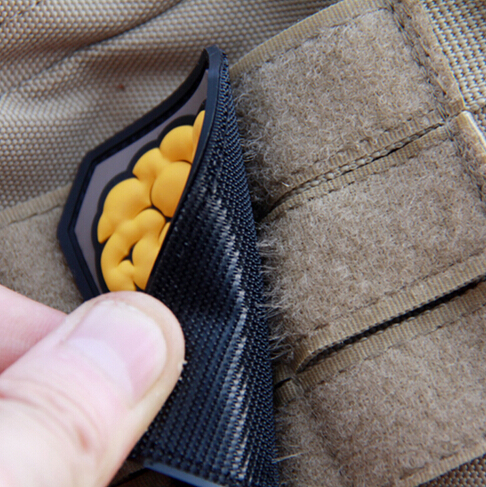
My experience with the hook-and-loop closure system is, that it works fine while it is new and clean, but deteriorates quickly. Lint is one of the biggest enemies, along with cheat grass and other vegetable contamination.

We have velcro on a camera case closure, and one time it came in handy when a moose was headed toward us with its hackles up. Zip, and the moose made a 90-degree turn to the left and trotted away.

But in situations where the noise could draw fire, a snap is usually less loud. Better yet, unsnap your retainer early on, before the sound is so likely to telegraph your intentions. Practicing damping the sound of snaps by applying finger pressure to the metal, and making a slow, controlled release of the popping parts. (Same applies to the safety controls on weapons. For example, the “AK clack” can be overcome by lifting the lever away from the receiver while moving it; and the clicking of the hammer when cocking external-hammer long guns can be eliminated by holding the trigger back while cocking the hammer. Same goes for the old knob-cocking single-shot .22–pull trigger, cock knob, release trigger.

Years ago, my father got a Leatherman Supertool that came with a nylon belt pouch. The closure was velcro, and failed in a short period of time. So, we put a snap in it, and the pouch is still working–at an age of about 17 years. The velcro is still there, but is completely non-functional.

Shoes are another item that many of us have had experience with. Velcro straps instead of laces. I my experience, they collect lint, hair, vegetation, and get to looking ratty well before the rest of the shoe wears out.

So, each to his own. I like snaps, side-release buckles, leather straps with buckles, buttons, and button studs. Zippers are nice to avoid, and velcro is a problem to be fixed. – C.

o o o

SurvivalBlog reader J.R wrote in with the link to this method of solving the Velcro noise issue.


Economics and Investing:

It’s High Time To Worry About The U.S. Economy

o o o

China’s banking regulator moves to contain off-balance sheet risk. Excerpt: “Authorities are tightening scrutiny of the lenders as the growing use of complex financial structures has raised concerns that bad lending and credit risks can be concealed.”

o o o

ECB blames you for negative interest rates

o o o

Banks Quickly Abolishing Your Ability to Use & Store Cash – Sent in by DSV

o o o

Social Security: Why Congress is messing with your benefits – Many are being forced to take their benefits sooner and at a lower level than they planned. – Sent in by B.B.

o o o

SurvivalBlog and its editors are not paid investment counselors or advisers. Please see our Provisos page for details.


Odds ‘n Sods:

Sent in by Reader T.Z. – Apologies for the fbomb title, but I wanted to get the info out. Here in the Redoubt we often forget there are those north of the parallel. ‘It’s a F[*] Ghost Town’: Inside Canada’s Fort McMurray As It Burns. Please keep them in your prayers.

o o o

New addition on SurvivalRealty, Stunning Log Home Sits Quietly Off The Grid, located 49 miles into the Coeur d’Alene National Forest, near the backcountry Magee Airport.

o o o

Houston School Officials Call Police After Student Tries Buying Lunch With ( REAL) $2 Bill. “There are some people who’ve never seen a $2 bill, including, it would seem police, school officials and cafeteria workers in Houston who were convinced an eighth-grader was using counterfeit money to buy chicken nuggets during lunch.” – Sent in by T.P.

o o o

Suicide bomber taken down by poisoned arrow – Sent in by J.W.

o o o

What kind of nation drafts women and sends them to war? – Sent in by RBS


Hugh’s Quote of the Day:

“That measures of this nature [the draft] should be debated at all in the councils of a free government is cause of dismay. The question is nothing less than whether the most essential rights of personal liberty shall be surrendered and despotism embraced in its worst form.” – Daniel Webster


Notes for Wednesday – May 04, 2016

On May 4, 1970, Ohio National Guardsmen opened fire on anti-war protesters at Kent State University, killing four students and wounding nine others. Also on this day in 1994, Israeli Prime Minister Yitzhak Rabin and PLO leader Yasser Arafat signed an accord on Palestinian autonomy that granted self-rule in the Gaza Strip and Jericho, creating what the world believed would be peace at last in the Middle East. Of course, the Palestinians then, as now, threw away the peace agreement and resumed hostilities towards Israel.

o o o

Don’t you wish there was a solar system that was EMP, lightning, and CME hardened as well as portable? You’re in luck! Ready Made Resources has just announced that they are carrying the Sol-Ark system that is specifically designed to withstand these vents while in operation, and prices start at only $7,750 including shipping. The average human is good for about 250 watt hours of work (about the output of a typical solar panel). Do you really want to turn that wheat grinder by hand during TEOTWAWKI?

o o o

Today, we present another entry for Round 64 of the SurvivalBlog non-fiction writing contest. The nearly $12,000 worth of prizes for this round include:

First Prize:

  1. A Tactical Self-Contained 2-Series Solar Power Generator system from Always Empowered. This compact starter power system is packaged in a wheeled O.D. green EMP-shielded Pelican hard case (a $1,700 value),
  2. A Gunsite Academy Three Day Course Certificate that is good for any one, two, or three day course (a $1,195 value),
  3. A course certificate from onPoint Tactical for the prize winner’s choice of three-day civilian courses, excluding those restricted for military or government teams. Three day onPoint courses normally cost $795,
  4. DRD Tactical is providing a 5.56 NATO QD Billet upper with a hammer forged, chrome-lined barrel and a hard case to go with your own AR lower. It will allow any standard AR-type rifle to have a quick change barrel, which can be assembled in less than one minute without the use of any tools and a compact carry capability in a hard case or 3-day pack (an $1,100 value),
  5. Gun Mag Warehouse is providing 20 Magpul PMAG 30-rd Magazines (a value of $300) and a Gun Mag Warehouse T-Shirt; (an equivalent prize will be awarded for residents in states with magazine restrictions),
  6. Two cases of Mountain House freeze-dried assorted entrees in #10 cans, courtesy of Ready Made Resources (a $350 value),
  7. The Ark Institute is donating a non-GMO, non-hybrid vegetable seed package (enough for two families of four) plus seed storage materials, a CD-ROM of Geri Guidetti’s book “Build Your Ark! How to Prepare for Self Reliance in Uncertain Times”, and two bottles of Potassium Iodate (a $325 retail value),
  8. A $250 gift certificate good for any product from Sunflower Ammo,
  9. KellyKettleUSA.com is donating an AquaBrick water filtration kit with a retail value of $250, and
  10. Two cases of meals, Ready to Eat (MREs), courtesy of CampingSurvival.com (a $180 value).

Second Prize:

  1. A Glock form factor SIRT laser training pistol and a SIRT AR-15/M4 Laser Training Bolt, courtesy of Next Level Training, which have a combined retail value of $589,
  2. A transferable certificate for a two-day Ultimate Bug Out Course from Florida Firearms Training (a $400 value),
  3. A Model 175 Series Solar Generator provided by Quantum Harvest LLC (a $439 value),
  4. A Trekker IV™ Four-Person Emergency Kit from Emergency Essentials (a $250 value),
  5. A $200 gift certificate good towards any books published by PrepperPress.com,
  6. A pre-selected assortment of military surplus gear from CJL Enterprize (a $300 value),
  7. RepackBox is providing a $300 gift certificate to their site, and
  8. Safecastle is providing a package of 10 LifeStraws (a $200 value)
  9. American Gunsmithing Institute (AGI) is providing a $300 certificate good towards any of their DVD training courses.

Third Prize:

  1. A Royal Berkey water filter, courtesy of Directive 21 (a $275 value),
  2. A $245 gift certificate from custom knife-maker Jon Kelly Designs, of Eureka, Montana,
  3. A large handmade clothes drying rack, a washboard, and a Homesteading for Beginners DVD, all courtesy of The Homestead Store, with a combined value of $206,
  4. Expanded sets of both washable feminine pads and liners, donated by Naturally Cozy (a $185 retail value),
  5. Two Super Survival Pack seed collections, a $150 value, courtesy of Seed for Security, LLC,
  6. Mayflower Trading is donating a $200 gift certificate for homesteading appliances,
  7. Montie Gear is donating a Precision Rest (a $249 value), and
  8. Two 1,000-foot spools of full mil-spec U.S.-made 750 paracord (in-stock colors only) from www.TOUGHGRID.com (a $240 value).

Round 64 ends on May 31st, so get busy writing and e-mail us your entry. Remember that there is a 1,500-word minimum, and that articles on practical “how to” skills for survival have an advantage in the judging.


Surviving the 2015 Fire of Lake County California- Part 2, by B.G.

Looters- Lessons Learned

  1. You don’t need to be an expert killer to deter an attacker. The people who loot an evacuated area are generally cowardly. You need only appear more of a threat than the average person.
  2. Buy a gun, learn to use it, but don’t obsess. The survivalist fantasy of defending your home against squads of organized killers is just that– fantasy. What is more realistic is that you will stumble into the opportunist that thinks “mandatory evacuation” means “no one is at home”.
  3. Encounters can happen any time. If you are staying, start carrying a gun shortly after mandatory evacuations are called. Stay out of sight and in an area were it is unlikely for anyone to sneak up on you. Getting the drop on an intruder is 99% of the game.
  4. Dogs or geese are very useful. The food and water you need to keep them alive is worth it. You won’t sleep well with looters around, but you’ll sleep better with a furred or feathered intruder alarm.
  5. A sign warning that looters will be shot is worth the effort. Which house would you choose: the one with a warning sign or the one without?

Dealing With Martial Law (or Something Close To It)

Four days after the fire, my wife and I decided it was best for me to try and go back to work. What I saw in the pre-dawn as I drove to work was surreal and another story all together. Ultimately I had no trouble getting past the roadblocks and out of the evacuation zone. Getting in back in five five days after the fire was a lot tougher. The county, sick of the looting, felt .50 cal machine guns and National Guard MPs should do the trick. As far as I could tell, it seemed to work in that the looting stopped. On Friday, I headed home with a truck full of goodies for the family. My wife, who is on friendly terms with most of our neighbors, had learned from them where all the road blocks were. She was also rightfully paranoid that I would get mistaken as a looter and shot if I tried to run along the back roads. I decided to try and talk my way in. I showed my ID with a local address on it at the first roadblock and they let me through without too much of a hassle. The second roadblock was manned by two U.S. Forest Service police officers who were not locals. I stopped my pickup at the roadblock and right into a strange but ultimately beneficial situation. In front of me was a dirty, middle aged man leaning out of a diesel pickup screaming at the officers. He was a neighbor of mine who was doing contract tree felling work for California Fire. While he was out sawing down burnt trees that were threatening power lines, the law had decided to block his only road home. He was rightfully upset. I got out of my truck and chatted with the officers, who were glad that I wasn’t someone who would yell at them. I quickly learned the rules; cars or people shall not pass. It was time to look for loopholes. I asked if material could pass the checkpoint. That seemed to stump them, and they had to call their supervisor to ask. I eventually got the answer– yes, I could drop the stuff over the checkpoint, and, no, they would not arrest my wife when she came to pick it up. I started stacking animal feed and gasoline cans over the checkpoint. A crowd of my angry neighbors started to gather and wanted to know why the police were letting me drop my stuff past their checkpoint but not letting them go home. I did not hear the answer the officers gave over the shouting. I was hoping that they would get so distracted by the crowd that I could sneak home. However, by the time I was done stacking, the officers had given up a hopeless and deteriorating situation and left. I remember being irritated that I had stacked all this stuff neatly for my wife and now I would have to put it all back in the truck and drive home.

Lessons Learned

  1. The police and National Guard are staffed by human beings. If a disaster is limited in scope it is likely to be secured by professional officers who are firm but flexible and know when to defuse. Try talking to them. You will find, in most cases, that they are human beings who will find ways to bend the rules for the good of the situation.
  2. The government is trying to help you, really. Far too many preppers view the government’s role in a disaster with suspicion. This should not be your initial reaction. The soldiers or officers you will likely encounter are really there to help you. Try to look at the situation from their point of view.
  3. Your neighbors are a good source of intelligence. Get on friendly terms with at least some of your neighbors. Before I got back to the evacuation area, neighbors were filling my wife in on the intelligence picture with critical information about road blocks and road closures.

Things We Could Have Done Better

On the whole, we were much better prepared for this disaster than most. We were sitting on a mountain of water and food. We had medical supplies and the knowledge to use them. (I’m a medical device engineer, and my wife was a nurse.) However, here are some things I wished I had done better and will being adding to my disaster preparations:

  1. Have different kinds of checklists for different situations. I plan on creating two types of checklists. One type of checklist will deal with staying put. This checklist will be fairly long and will run in order of most important to least important things needed to set up my home for prolonged isolation and defense. The other type is a series of bug out checklists with mobilization times. I plan to make them in 10 minute, 1 hour, and 10 hour increments. The 10 minute checklist will only contain the essentials. The one hour will have a little more, and so on. These sorts of checklists would have been invaluable in knowing what to take and what to leave. Remember, you will not have 100% mental capabilities in a crisis. Pre-planning will free up your precious cognitive capacity.
  2. A gas tight, fireproof shelter. Not having to contemplate evacuation, due to a disaster, is a huge advantage. You can build a shelter to suit almost any likely disaster.
  3. Noisemakers and tripwires. I think I would have slept a lot better had we been surrounded by a thorough early warning system. Anything you can do to preserve your ability to rest is important.
  4. Solar phone/battery charger. Firing up an entire generator or starting your car to charge a cell phone is very wasteful. You can greatly reduce your generator fuel requirements if you can charge your phone and radio with the sun or a crank handle.
  5. Design a road block. A crash-resistant gate that I can open for emergency vehicles is a great way to deter looters. If they can’t get a car or van near your place, they will go somewhere else.

Aftermath of the Almost 2000 Structures Destroyed

Of the 2,000 structures destroyed by the Valley Fire, about 1,600 were actual homes; 20% of the land area in Lake County burned in 2015. Four people died, and four firefighters were evacuated to burn units but survived. Those who died were either unable or unwilling to flee. I had done business with one of those who died. He refused to leave his home and was burned alive. I did some crying in the weeks that followed. It is hard to see ten concrete slabs in a neat row where houses once stood. The tent cities became huge and dangerous places to live. Every day, I drive past at least one car with its plastic bodywork melted. There is some hope though. As of February, 2016, almost 500 homes were in the process of being rebuilt and the tent cities are empty. Everyone I know is getting ready for the next fire, and so am I.


Letter Re: Velcro on Tactical Gear

Dear Hugh,

Regarding the use of Velcro on tactical gear, I have something which might be of importance that I would like to share.

Due to an old athletic injury, I wear an ankle brace for both stability and compression on a daily basis. I have been wearing a brace of one kind or another for more than 40 years. I currently use a brace employing an elastic wrap around with a Velcro closure. It is both convenient and holds tight.

Until, that is, the Velcro begins to wear out. With daily use it does wear out rather quickly.

I have to replace my brace about twice a year. As the Velcro wears out, it no longer holds the elastic in place.

In a SHTF situation, consider several things: A. Your gear is going to get dirty; as Velcro gets dirty, it is not as effective, and cleaning it is not really an option as pieces of fabric and lint can get caught in it and inhibit it from doing its job of sticking to itself.

B. Through heavy daily use it simply wears out rather quickly. I DO use my Velcro brace in the here and now, and I have purchased many extra braces for the future, however I have set aside some less convenient but likely more durable methods of stabilizing my weak ankle in a SHTF scenario. I have purchased some alternative ankle stabilizers without the wrap arounds, some ace bandages, and several pair of high top hiking boots, which I have broken in very well.

In short, I would go with a snap closure on your tactical gear as I have done. Velcro is an amazing modern invention, but without a practical means of manufacturing more I do not see it as being viable for long-term use.

One suggestion though would be to raid the local fabric stores and buy several spools of Velcro in order that it might be sewn into any tactical gear as it wears out. But I still believe that at some point, those snap closures may seem like a nice luxury.

Just my opinion!

Keep posting, and I will keep reading “The Blog”!

God bless and God be with You! – Plain Jane Prepper


Economics and Investing:

Video: Gold COT’s and Sentiment Levels – “Traders you don’t have to chase, you will get a better opportunity. Traders already long should trail a stop. Old Turkey’s just ignore the market for the next 4-5 years”

o o o

Puerto Rico Default Bruises Dollar, Boosts Gold

o o o

In 6 Months Since Budget Deal: Debt Up More Than $1 Trillion – Submitted by B.B.

o o o

Silver & Gold Rally Led By China As They Take Over Pricing

o o o

Another Sign That Wall Street Doesn’t Believe The Rally

o o o

SurvivalBlog and its editors are not paid investment counselors or advisers. Please see our Provisos page for details.


Readers’ Recommendations of the Week:

Movie recommendations from DMS:

If you don’t have time for a movie, Best speech ever to a father/ future husband.

Finding Normal (it’s not what you have, it’s how you live).

The Book of Esther.

Do You Believe?

Escape.

Just Let Go (a true story of forgiveness)

Like Dandelion Dust (yes, this actually happens)

The Greening of Whitney Brown.

The Railway Man (WW2 true story/parental warning: graphic torture)

o o o

Reader STS wrote in to suggest “The Great Human Race” on NatGeo, suggesting that those with an interest in early bushcraft techniques might find it interesting.

o o o

Do you have a movie, video, or book you would recommend to other SurvivalBlog readers? If so email us.


Odds ‘n Sods:

Colorado Sends Non-Vaccinating Parents ILLEGAL Order to “Register Their Child With the State” – Sent in by DSV.

o o o

What do you do when you have barbarians and no gate? You build a wall… in Kenya – Kenya can build a wall and we can’t?? – Submitted by B.B.

o o o

Student Gunned Down During Robbery Near “Gun Free” Campus In NJ – Not just gun free campuses but gun free all of NJ! At least to protect oneself outside the home. ?- D.S.

o o o

Edward Snowden: Whistleblowing Is Not Just Leaking — It’s an Act of Political Resistance

o o o

Sweden Is Upgrading to Private Healthcare – Socialized medicine has failed. No system can survive that plunders those who work to pay for those who don’t or won’t. – C.T.


Notes for Tuesday – May 03, 2016

May 3, 1952 is the birthday of Pastor Chuck Baldwin. He has done yeoman service in promoting the American Redoubt movement.

o o o

Today, we present another entry for Round 64 of the SurvivalBlog non-fiction writing contest. The nearly $12,000 worth of prizes for this round include:

First Prize:

  1. A Tactical Self-Contained 2-Series Solar Power Generator system from Always Empowered. This compact starter power system is packaged in a wheeled O.D. green EMP-shielded Pelican hard case (a $1,700 value),
  2. A Gunsite Academy Three Day Course Certificate that is good for any one, two, or three day course (a $1,195 value),
  3. A course certificate from onPoint Tactical for the prize winner’s choice of three-day civilian courses, excluding those restricted for military or government teams. Three day onPoint courses normally cost $795,
  4. DRD Tactical is providing a 5.56 NATO QD Billet upper with a hammer forged, chrome-lined barrel and a hard case to go with your own AR lower. It will allow any standard AR-type rifle to have a quick change barrel, which can be assembled in less than one minute without the use of any tools and a compact carry capability in a hard case or 3-day pack (an $1,100 value),
  5. Gun Mag Warehouse is providing 20 Magpul PMAG 30-rd Magazines (a value of $300) and a Gun Mag Warehouse T-Shirt; (an equivalent prize will be awarded for residents in states with magazine restrictions),
  6. Two cases of Mountain House freeze-dried assorted entrees in #10 cans, courtesy of Ready Made Resources (a $350 value),
  7. The Ark Institute is donating a non-GMO, non-hybrid vegetable seed package (enough for two families of four) plus seed storage materials, a CD-ROM of Geri Guidetti’s book “Build Your Ark! How to Prepare for Self Reliance in Uncertain Times”, and two bottles of Potassium Iodate (a $325 retail value),
  8. A $250 gift certificate good for any product from Sunflower Ammo,
  9. KellyKettleUSA.com is donating an AquaBrick water filtration kit with a retail value of $250, and
  10. Two cases of meals, Ready to Eat (MREs), courtesy of CampingSurvival.com (a $180 value).

Second Prize:

  1. A Glock form factor SIRT laser training pistol and a SIRT AR-15/M4 Laser Training Bolt, courtesy of Next Level Training, which have a combined retail value of $589,
  2. A transferable certificate for a two-day Ultimate Bug Out Course from Florida Firearms Training (a $400 value),
  3. A Model 175 Series Solar Generator provided by Quantum Harvest LLC (a $439 value),
  4. A Trekker IV™ Four-Person Emergency Kit from Emergency Essentials (a $250 value),
  5. A $200 gift certificate good towards any books published by PrepperPress.com,
  6. A pre-selected assortment of military surplus gear from CJL Enterprize (a $300 value),
  7. RepackBox is providing a $300 gift certificate to their site, and
  8. Safecastle is providing a package of 10 LifeStraws (a $200 value)
  9. American Gunsmithing Institute (AGI) is providing a $300 certificate good towards any of their DVD training courses.

Third Prize:

  1. A Royal Berkey water filter, courtesy of Directive 21 (a $275 value),
  2. A $245 gift certificate from custom knife-maker Jon Kelly Designs, of Eureka, Montana,
  3. A large handmade clothes drying rack, a washboard, and a Homesteading for Beginners DVD, all courtesy of The Homestead Store, with a combined value of $206,
  4. Expanded sets of both washable feminine pads and liners, donated by Naturally Cozy (a $185 retail value),
  5. Two Super Survival Pack seed collections, a $150 value, courtesy of Seed for Security, LLC,
  6. Mayflower Trading is donating a $200 gift certificate for homesteading appliances,
  7. Montie Gear is donating a Precision Rest (a $249 value), and
  8. Two 1,000-foot spools of full mil-spec U.S.-made 750 paracord (in-stock colors only) from www.TOUGHGRID.com (a $240 value).

Round 64 ends on May 31st, so get busy writing and e-mail us your entry. Remember that there is a 1,500-word minimum, and that articles on practical “how to” skills for survival have an advantage in the judging.


Surviving the 2015 Fire of Lake County California- Part 1, by B.G.

This is a true story of a thirty-something survivalist/engineer and his family as well as some lessons learned in the second most destructive fire in California history.

I had seen other large fires in Lake County over the years, and they would arrive in apocalyptic fashion, as the up swelling of a mushroom cloud. This one started no differently on a windy afternoon as I was pulling pork chops off of the grill. At about one o’clock in the afternoon, the wall of black smoke that erupted to our south immediately flattened out due to the wind. It formed an anvil shape with its horns stabbing like a dagger at the hamlet of Middletown. We immediately got out the portable scanner that I had bought in response to two other large fires that had recently missed our home. The day suddenly became night, and the roosters crowed. The underbelly of the black curtain soon glowed a hellish orange, and the power was cut. Our cell phone and scanner became the only window through this curtain. Listening to the scanner, it became clear that the carefully designed incident command system– the backbone of the wildland firefighter organization– began to crack like the men’s voices over the radio. Despite a flurry of chaotic and often misleading radio chatter, one thing was certain; it was coming.

Outsmarting The Fire and the People Fleeing It

As the flames crept closer, we could hear homes being leveled as their propane tanks boiled and peeled open. From an engineering standpoint, 500 gallons of a liquid turns into a gas all within a few thousandths of a second. A home is blown over by the expanding gas before the propane has a chance to ignite. At one point, we could hear the deep thud of a home being turned to matchsticks every 30 seconds. At times, the base of the smoke was so bright that I didn’t mind having the power cut, as I could read a newspaper at midnight. I had soon loaded food, fuel, medical supplies, a large chainsaw, bolt cutters, and guns into the pickup in preparation to escape. In a second car, we had the two children’s car seats and cotton blankets to put over the kids. My thinking was that I would ride out front in the pickup and cut through any gates or saw through any fallen trees that might block us. As we felt we had fairly good situational awareness, we decided to stay put. The fire was still pretty far from us, and the number of traffic collisions due to “lookie loos” was appalling. The danger of a traffic accident outweighed the dangers of the fire. I am a person who likes to take action, and just waiting for things is not my nature. I also had this gnawing sense that we had made a mistake in staying and that my wife and children would meet a horrible end. My wife, who was a former wildland firefighter in Colorado, kept telling me that she could keep us safer by staying put. She had been listening faithfully to the scanner and knew all the lingo, fire behavior, and nearby landmarks much better than I did. She had formed a mental picture of the fire that I did not have the training to synthesize. To me the Valley Fire, as it would be called, was just a glowing hell on the horizon that would burn my children alive. Just as I was about to force us to leave, she got very stern with me, reiterating, “we must stay put!”, but I needed convincing. I got out a fire map given to us by the fire service from another fire that burned near us a few weeks earlier. I asked her to draw out the fire lines in pencil on the map. That map was an unbelievably useful tool. I could immediately see why she wanted us to stay put. The fire was headed toward us, but it was going to burn through the community of Hidden Valley Lake first. With the map, I could see that as Hidden Valley Lake was evacuated our only paved egress was going to be or was already totally jammed with escapees. (We learned later that it took an acquaintance of ours an hour to travel a few miles on our planned escape route.) Based on the scanner chatter, we estimated how long it would take to fully evacuate Hidden Valley Lake. We then estimated how long it would take the fire to get to us. It was pretty obvious that we could wait out the jam of evacuees, let the road clear, and then evacuate. Our decision was reinforced by radio reports of people being burned in their cars while stuck in traffic jams. In the end, things worked out better than we hoped. The traffic did abate and, just as we were making final preparations to leave, the wind shifted and spared our home. The fire had come within two miles.

Lessons Learned

A. Situational awareness is the most important asset in a disaster. Do not rely on newscasts, as they are too slow and they lack the detail required to make meaningful decisions. A portable scanner should be an early purchase in your disaster preparedness.

B. It may be better to stay than go. We were probably safer for the vast portion of our ordeal by staying put. Obviously, the information you garner will dictate your decision making.

C. Think slowly. Modern society is built on speed, and we are constantly rewarded for making rapid choices. Unless the threat is immediate, you probably have a lot more time to make decisions than you think. It is hard to take your eyes off a wall of fire coming toward you and to plan. However, deliberate thinking is far more powerful than speed in most disasters.

D. Paper maps and pencils offer more protection than guns. As a disaster unfolds, create a map of the flood, fire, epidemic, or whatever. Note the names of major streets or landmarks near you, and listen for them on your scanner. You will make better decisions with a clear and tangible picture in front of you.

E. You will be somewhat confused, overwhelmed, and the situation will feel almost unreal. Disasters are chaotic, by definition. On top of worrying about your loved ones, there is a pervasive sense of unreality. Don’t let this alarm you. It’s a perfectly normal reaction to an abnormal situation. The whole experience felt similar to the first weeks after the arrival of a new baby. Disasters thrust you into a mental fog by stress and sleep deprivation. All the disaster preparedness literature I have read over the years completely failed to warn me just how much my cognitive skills would be impacted by fear and lack of sleep.

Looters

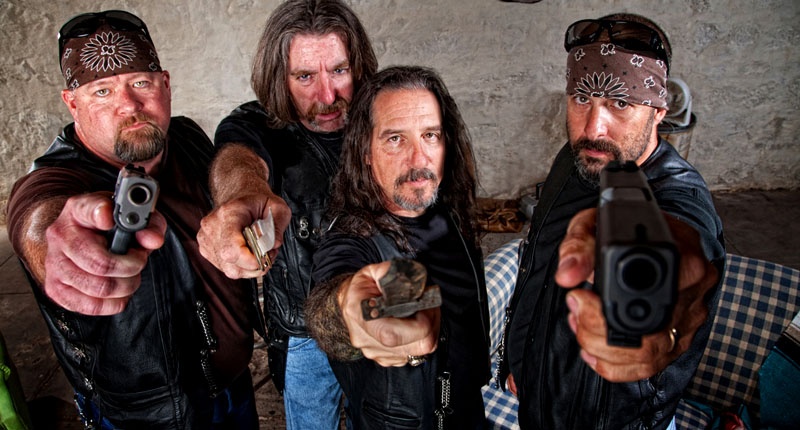
A few days into our ordeal, after the fire lines had stabilized, we started to hear reports on the police radio frequencies of looters. Apparently, when an area is designated as under mandatory evacuation, an undesirable element starts looting the homes in that area. I began carrying a pump action shotgun everywhere I went. (I have a rather amusing picture of me pushing a child in a rope swing while carrying a slung shotgun.) One afternoon I could hear unexpected vehicles coming up our driveway. (Our house is far up a dirt road.) The dogs started going nuts. Two bikers riding in front as scouts came up our driveway, followed by a white van. These were the idiot type, tough guy bikers with their leather vests and rocker patches. (I wish I was kidding; it was so stupid.) I got lucky; their gaze was not initially on me. I had just made up my mind to empty six rounds of 00 buck into them when they looked at me and raced off. I didn’t even get the weapon fully off my shoulder. I would learn later that the sheriff chased these guys all over the county, though I’m not sure if they were ever caught. Within half an hour of this incident, I put out a sign that blocked the road saying “looters will be shot without warning”. Thankfully, I did not have any more encounters with looters. However, three men were arrested by the Lake County Sheriff not two miles from us. One had a .40 cal pistol. The following account from September 17th, 2015, from the Press Democrat gives you an idea of what their intentions were. “In the vehicle, he found a full face mask, 3 pairs of gloves, tools, duct tape, zip ties, numerous key rings with keys, acetone, lighter, headlamps, flashlights, binoculars, empty plastic bags, empty garbage bags, a backpack, and large knives”. Who knows what these men would have done to my wife and my children. However, by the looks of the equipment captured with them, they were armed and equipped for night looting, and they expected little resistance.


Letter Re: Velcro on Tactical Gear

Hi Hugh!

Concerning your Velcro usage information request, it is possible to snow/ice load Velcro in transitional weather until it functions poorly. Specially, if the loops are a bit “used”, the stuff can end up nearly dead. We end up replacing Velcro on snowmobile suits and other winter gear if it gets like this. Personally, I have a hypothesis that sometimes the stuff gets beat up by the cold/wind/wet combination, as covered areas of Velcro on the same suits/gear seem to hold up longer.

Another issue, and why years ago my unit didn’t allow any Velcro in our deployment gear, is noise. Nothing stands out in the quiet more than the sharp rip of Velcro being opened. A couple years back Velcro introduced a “Quiet Closure Hook and Loop” version that can work where the orientation of the two tabs is pretty constant. This may still give you away if something like a snag opens it “against the grain”.

Keep up the great work! – Steve W.