Notes for Thursday – May 26, 2016

May 26th is the birthday of Randall Hank Williams (Hank Williams, Jr.). He was born in 1949. When not touring, he lives somewhere in Montana, so he qualifies as a Redoubter. He reportedly has a large gun collection, which is heavy on Sharps rifles and rifles that have factory letters showing that they were originally shipped to Montana. His song A Country Boy Can Survive is of course practically a survivalist anthem. His father was just 29 when he died, and despite a couple of close calls Hank Jr. is now 67, so he may yet live to a ripe old age.

o o o

Today, we present another entry for Round 64 of the SurvivalBlog non-fiction writing contest. The nearly $12,000 worth of prizes for this round include:

First Prize:

  1. A Tactical Self-Contained 2-Series Solar Power Generator system from Always Empowered. This compact starter power system is packaged in a wheeled O.D. green EMP-shielded Pelican hard case (a $1,700 value),
  2. A Gunsite Academy Three Day Course Certificate that is good for any one, two, or three day course (a $1,195 value),
  3. A course certificate from onPoint Tactical for the prize winner’s choice of three-day civilian courses, excluding those restricted for military or government teams. Three day onPoint courses normally cost $795,
  4. DRD Tactical is providing a 5.56 NATO QD Billet upper with a hammer forged, chrome-lined barrel and a hard case to go with your own AR lower. It will allow any standard AR-type rifle to have a quick change barrel, which can be assembled in less than one minute without the use of any tools and a compact carry capability in a hard case or 3-day pack (an $1,100 value),
  5. Gun Mag Warehouse is providing 20 Magpul PMAG 30-rd Magazines (a value of $300) and a Gun Mag Warehouse T-Shirt; (an equivalent prize will be awarded for residents in states with magazine restrictions),
  6. Two cases of Mountain House freeze-dried assorted entrees in #10 cans, courtesy of Ready Made Resources (a $350 value),
  7. The Ark Institute is donating a non-GMO, non-hybrid vegetable seed package (enough for two families of four) plus seed storage materials, a CD-ROM of Geri Guidetti’s book “Build Your Ark! How to Prepare for Self Reliance in Uncertain Times”, and two bottles of Potassium Iodate (a $325 retail value),
  8. A $250 gift certificate good for any product from Sunflower Ammo,
  9. KellyKettleUSA.com is donating an AquaBrick water filtration kit with a retail value of $250, and
  10. Two cases of meals, Ready to Eat (MREs), courtesy of CampingSurvival.com (a $180 value).

Second Prize:

  1. A Glock form factor SIRT laser training pistol and a SIRT AR-15/M4 Laser Training Bolt, courtesy of Next Level Training, which have a combined retail value of $589,
  2. A transferable certificate for a two-day Ultimate Bug Out Course from Florida Firearms Training (a $400 value),
  3. A Model 175 Series Solar Generator provided by Quantum Harvest LLC (a $439 value),
  4. A Trekker IV™ Four-Person Emergency Kit from Emergency Essentials (a $250 value),
  5. A $200 gift certificate good towards any books published by PrepperPress.com,
  6. A pre-selected assortment of military surplus gear from CJL Enterprize (a $300 value),
  7. RepackBox is providing a $300 gift certificate to their site, and
  8. Safecastle is providing a package of 10 LifeStraws (a $200 value)
  9. American Gunsmithing Institute (AGI) is providing a $300 certificate good towards any of their DVD training courses.

Third Prize:

  1. A Royal Berkey water filter, courtesy of Directive 21 (a $275 value),
  2. A $245 gift certificate from custom knife-maker Jon Kelly Designs, of Eureka, Montana,
  3. A large handmade clothes drying rack, a washboard, and a Homesteading for Beginners DVD, all courtesy of The Homestead Store, with a combined value of $206,
  4. Expanded sets of both washable feminine pads and liners, donated by Naturally Cozy (a $185 retail value),
  5. Two Super Survival Pack seed collections, a $150 value, courtesy of Seed for Security, LLC,
  6. Mayflower Trading is donating a $200 gift certificate for homesteading appliances,
  7. Montie Gear is donating a Precision Rest (a $249 value), and
  8. Two 1,000-foot spools of full mil-spec U.S.-made 750 paracord (in-stock colors only) from www.TOUGHGRID.com (a $240 value).

Round 64 ends on May 31st, so get busy writing and e-mail us your entry. Remember that there is a 1,500-word minimum, and that articles on practical “how to” skills for survival have an advantage in the judging.


The Prepper’s American Dream: A Practical Guide To Strategic Relocation- Part 3, by Charles T.

Land:

  • Does the area you are moving to offer an improvement from your current residential situation?
  • How fertile is the ground, if you are planning on gardening?
  • Are there regulations on livestock or farming activities, if you plan on farming?
  • What is the cost of living, compared to your current location?
  • Is the housing market higher or lower compared to your current location?
  • Are property taxes higher or lower in your location?
  • Is the kind of house/property you would like to purchase readily available?
  • Do houses tend to stay on the market for a long time, or is the resell time short?
  • Is the temperature and climate what you are used to?
  • Are the winters extremely harsh and long lasting?
  • Are the summers extremely hot and humid?
  • Are there any nuclear or military targets nearby?
  • Where would the prevailing winds blow, if the nearest nuclear reactor melted down?
  • Is the land or water poisoned from industrial contamination?
  • Will you be on well or city water?
  • Is the area prone to natural disasters, such as earthquakes, tornadoes, drought, or hurricanes?

Land is one of the most fun sections for researching. Using one of the online real estate sites, like Trulia or Zillow can help you gain a good feel for the area. You can always call a real estate agent to get an idea as well or contact ***LINK TO*** survivalrealty.com to see if they have any listings in your desired area.

Education:

  • If you are looking at getting additional training for your career, are there local opportunities?
  • What do the school districts look like where your children may attend?
  • If you plan on homeschooling, are there co-ops where you can get help from like-minded parents?
  • Are there any negative regulations towards homeschooling families?
  • Will your children be enabled economically to move forward or will their potential be stunted by a poor school system?
  • Will your kids need to move out of the area once they reach adult age to start careers or families?
  • What would be the impact, if you had to switch your children’s schools mid year?

As you wrestle through these questions and the many more that will come up as you search, remember to always filter the answer through your core values.

Don’t get target fixation. Just because somewhere looks perfect on Google, it doesn’t mean that it will be a good match for you. The only way to really know an area is to go there. It is highly recommended that you physically visit the place you are evaluating, hopefully multiple times. Drive around for a few days, cruise the neighborhoods, go to some church services, eat at local restaurants, and visit in both the best and worst seasons. Will you be a help or a hindrance to this community?

Once you have intellectually, emotionally, and as a family decided to move to a specific location, you have accomplished what is probably the hardest part.

When discussing our move with my grandfather-in-law, who had moved from Canada to the United States decades ago, he shared some wise words. He said, “Moving is easy. It’s deciding to move that is hard.”

Step 2: Executing the Plan

Now that you have a plan and a relocation target, it is time to execute. The more solid and detailed your plan, the easier, faster, and less painful its execution will be.

Execution step 1: Find employment.

Use the Internet. Use your phone. Use your contacts. Just make sure that you have employment secured before you move.

There are so many online resources now to help you find a job that I will not spend too much time detailing the specific options available to you. However, here are the general options.

  • Online job boards (Monster, Indeed, et cetera)
  • Cold calling (Find a company in your target area and contact them directly.)
  • Recruiting services
  • Capitalizing on your social network

I was able to use a recruiting service to help me find a job in my desired field at a salary that was comparable to my previous position.

Once you have your employment secured, and only then, should you terminate your current position. Do not quit until you have written guarantees from your next employer.

Execution Step 2: Find a home.

You need a place to sleep. There has been bountiful information contributed on SurvivalBlog for choosing a retreat location, if that is what you are shooting for.

Make sure that the place you choose lines up with your core values or has the potential to provide for them in the future.

If you are totally new to the area, a real estate agent can provide valuable information in only a few minutes that would take hours or days to determine online or may never be known otherwise.

Rather than rushing into a house immediately, it may be wise to rent for a few months to make sure you have a good feel for the area before committing long term to a particular property.

We rented for two months while looking and initially wanted a small homestead with land. During our search we realized we couldn’t comfortably afford our “dream” house at the present time, so we bought a small house in good neighborhood with great community. Eventually we will move, but in the mean time we are doing what we can with what we have, which is exactly the skill set we will need if SHTF.

Execution Step 3: Find a community.

Either before or immediately after your move, reach out to new neighbors, friends, and long lost relatives that may be near your new location. If you can get a welcoming committee to grease the social wheels for you, integration will be much easier.

Execution Step 4: Leave well.

As you begin your move, the temptation will be to get so focused on your future situation that you neglect your current one.

Don’t forget to thank friends, family, and community members for the wonderful memories and times you have had with them. Most likely, there are people that care about you in your current location and they will miss you when you are gone. This is why it is so important to focus on why you are moving somewhere that you love rather than leaving somewhere you hate. This philosophy leaves a much better taste in the mouths of your loved ones and will have them cheering for you rather than wondering what they did wrong to make you leave.

Once your plan is executed and you are successfully relocated to your dream area, it is time for the final step.

Step 3: Surviving the Plan

“Everybody’s got plans…until they get hit.” ~Mike Tyson

Here’s the deal; no matter how well thought out your plans, you will run into problems in their execution. Things may change midstream. Job prospects may fall through. Spouses may change their minds. You may change your mind. It is essential to learn to roll with the punches and keep focusing on your core values. It may take years for you to fully execute on your dreams. That is okay. What else were you going to do?

One of the biggest and most difficult problems people face when relocating is the culture shock. Once the excitement of progress wears off and you are in a new routine, the little things that you overlooked before have the opportunity to become big things.

Understand that even if you move one town over, there is a different culture that you need to learn and assimilate to. Where you are moving the people will be different. Their values, culture, and accents may be different, and you may never fully “fit in”.

Even so, try your best to assimilate. There have been some excellent articles on SurvivalBlog recently about moving to rural areas. Especially if you are moving from a city, you need to prepare for a total reprogramming. People may move slower. People may drive slower. People may talk slower. You can either become frustrated, or you can realize that you moved here for a slower, different pace and that means you yourself may need to slow down too. Maybe they don’t move too slow; you just move too fast.

If your new area is highly religious and you are not, you may never be able to fully engage in the community if you are not attending a local church. It may be worth just biting the bullet and viewing it as a social and economic move if you are not religious. Who knows, you may find that you enjoy their company more than you thought.

If you are given help moving in by the community, remember to not let it turn into a one-way street. As soon as you can, start reaching out to help others and try to be as self sufficient as possible. Remember in your new area, your most important resources are your neighbors and community. Even so, if you only view them as “survival capitol”, the odds are you won’t be viewed as a normal human being. Please don’t tell people you moved to escape the coming apocalypse. That is a one-way ticket to social ostracization. Tell people how much you love the area and how excited you are to be there, and mean it. Engage in the business of life first, and as you develop your new home, community, and family life, the business of survival will not seem very hard at all.

In summary, don’t let fear get in the way of following your dreams. If your goals are different from your reality, some hard work and risk taking may mean the difference between the life you want and the life you have.


Letter Re: Velcro

Hugh,

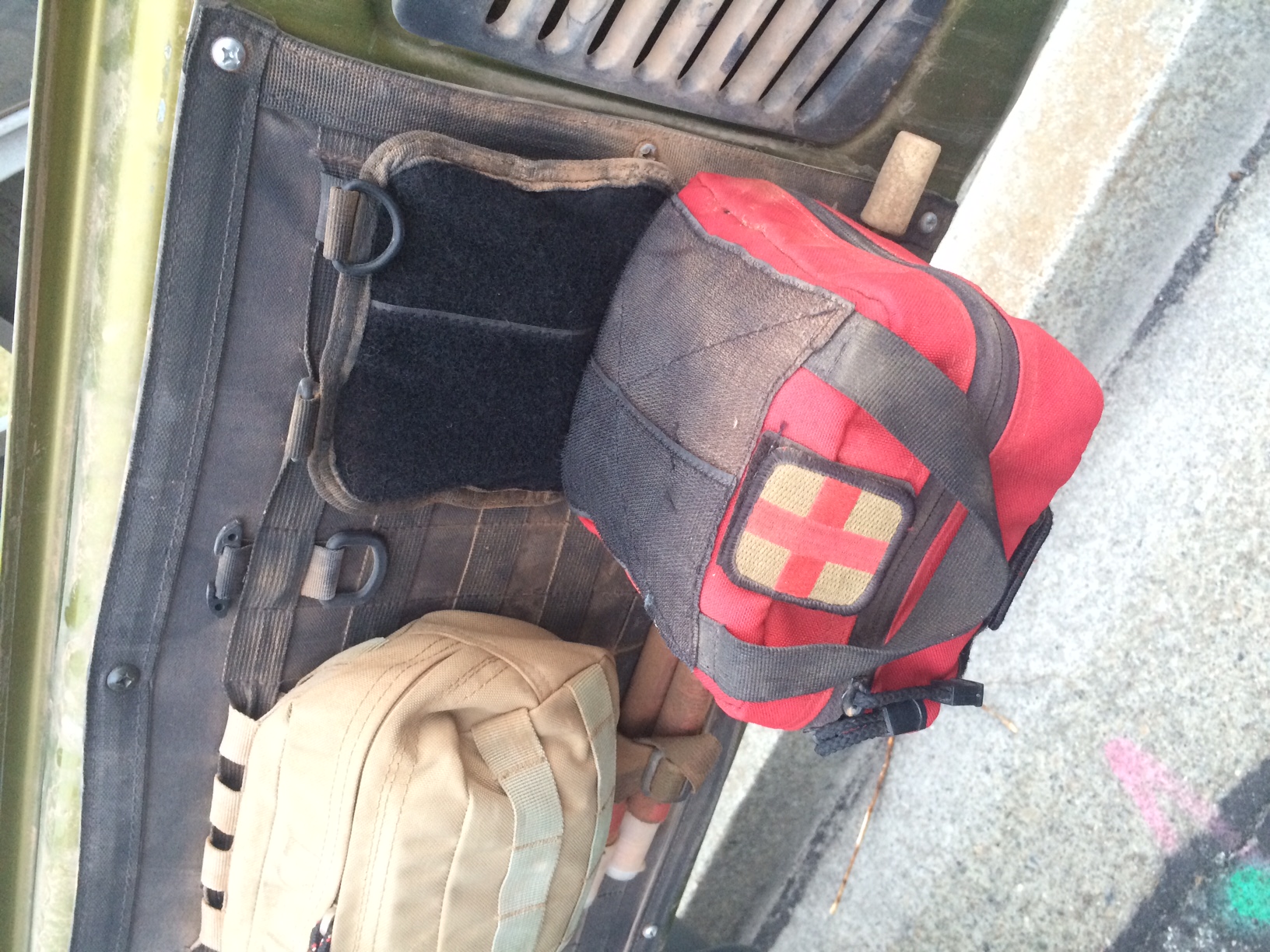
IMG_6434

There was some discussion a few weeks ago about using hook and loop fasteners for gear. As this photo demonstrates, it’s essentially useless after about two years. Avoid. – D.D.


Economics and Investing:

Understanding Societal Collapse: Warnings From Venezuela’s Crisis – Sent in by B.B.

o o o

Canadian Silver Maple Sales Surge To Highest Record Ever

o o o

New Mexico, suing the EPA over spill caused by the agency, Seeking $100 million – Some runoff from a pond in Montana gets 15 years in prison. Poisoning Flint, Michigan or the Navajo Nation? Nothing. – T.Z.

o o o

Banks Keep Cutting Bond Traders as One-Third Gone Since 2011

o o o

SurvivalBlog and its editors are not paid investment counselors or advisers. Please see our Provisos page for details.


Odds ‘n Sods:

Venezuela is a warning! Did You Know That Venezuela Banned Guns for Private Citizens Only 4 Years Ago? – Four years is just ONE term of a presidency. Only four years after this forced disarmament, they reached today’s headlines/breadlines. – D.S.

o o o

Company claims new software program can identify terrorists – “An Israeli start-up claims it has developed a software program that can identify terrorists, pedophiles and ace poker players by analyzing their facial features.” – A.S.

HJL’s Comment: Perhaps now would be a good time to watch Minority Report again.

o o o

US Mulling Plan To Infect Mosquitoes With Bacteria To Curb Zika Virus – What happens when they bite you? – W.C.

o o o

NBC: Your Children Will Be Microchipped “Sooner Rather Than Later” – W.C.

o o o

Another Oregon standoff? Sheriff warns lawmakers over Owyhee Canyonlands plan – RBS


Jim’s Quote of the Day:

“Knowledge isn’t restrained by the limits of Malthus. Information doesn’t need topsoil to grow in, only freedom. Given eager minds and experimentation, it feeds itself like a chain react.” – David Brin, Earth


Notes for Wednesday – May 25, 2016

On May 25th, 1787, The Constitutional Convention convened in Philadelphia with George Washington presiding. The task of the peaceful overthrow of the new American government as it had been defined by the Article of Confederation eventually led to the United States Constitution that is so abused today.

o o o

Today, we present another entry for Round 64 of the SurvivalBlog non-fiction writing contest. The nearly $12,000 worth of prizes for this round include:

First Prize:

  1. A Tactical Self-Contained 2-Series Solar Power Generator system from Always Empowered. This compact starter power system is packaged in a wheeled O.D. green EMP-shielded Pelican hard case (a $1,700 value),
  2. A Gunsite Academy Three Day Course Certificate that is good for any one, two, or three day course (a $1,195 value),
  3. A course certificate from onPoint Tactical for the prize winner’s choice of three-day civilian courses, excluding those restricted for military or government teams. Three day onPoint courses normally cost $795,
  4. DRD Tactical is providing a 5.56 NATO QD Billet upper with a hammer forged, chrome-lined barrel and a hard case to go with your own AR lower. It will allow any standard AR-type rifle to have a quick change barrel, which can be assembled in less than one minute without the use of any tools and a compact carry capability in a hard case or 3-day pack (an $1,100 value),
  5. Gun Mag Warehouse is providing 20 Magpul PMAG 30-rd Magazines (a value of $300) and a Gun Mag Warehouse T-Shirt; (an equivalent prize will be awarded for residents in states with magazine restrictions),
  6. Two cases of Mountain House freeze-dried assorted entrees in #10 cans, courtesy of Ready Made Resources (a $350 value),
  7. The Ark Institute is donating a non-GMO, non-hybrid vegetable seed package (enough for two families of four) plus seed storage materials, a CD-ROM of Geri Guidetti’s book “Build Your Ark! How to Prepare for Self Reliance in Uncertain Times”, and two bottles of Potassium Iodate (a $325 retail value),
  8. A $250 gift certificate good for any product from Sunflower Ammo,
  9. KellyKettleUSA.com is donating an AquaBrick water filtration kit with a retail value of $250, and
  10. Two cases of meals, Ready to Eat (MREs), courtesy of CampingSurvival.com (a $180 value).

Second Prize:

  1. A Glock form factor SIRT laser training pistol and a SIRT AR-15/M4 Laser Training Bolt, courtesy of Next Level Training, which have a combined retail value of $589,
  2. A transferable certificate for a two-day Ultimate Bug Out Course from Florida Firearms Training (a $400 value),
  3. A Model 175 Series Solar Generator provided by Quantum Harvest LLC (a $439 value),
  4. A Trekker IV™ Four-Person Emergency Kit from Emergency Essentials (a $250 value),
  5. A $200 gift certificate good towards any books published by PrepperPress.com,
  6. A pre-selected assortment of military surplus gear from CJL Enterprize (a $300 value),
  7. RepackBox is providing a $300 gift certificate to their site, and
  8. Safecastle is providing a package of 10 LifeStraws (a $200 value)
  9. American Gunsmithing Institute (AGI) is providing a $300 certificate good towards any of their DVD training courses.

Third Prize:

  1. A Royal Berkey water filter, courtesy of Directive 21 (a $275 value),
  2. A $245 gift certificate from custom knife-maker Jon Kelly Designs, of Eureka, Montana,
  3. A large handmade clothes drying rack, a washboard, and a Homesteading for Beginners DVD, all courtesy of The Homestead Store, with a combined value of $206,
  4. Expanded sets of both washable feminine pads and liners, donated by Naturally Cozy (a $185 retail value),
  5. Two Super Survival Pack seed collections, a $150 value, courtesy of Seed for Security, LLC,
  6. Mayflower Trading is donating a $200 gift certificate for homesteading appliances,
  7. Montie Gear is donating a Precision Rest (a $249 value), and
  8. Two 1,000-foot spools of full mil-spec U.S.-made 750 paracord (in-stock colors only) from www.TOUGHGRID.com (a $240 value).

Round 64 ends on May 31st, so get busy writing and e-mail us your entry. Remember that there is a 1,500-word minimum, and that articles on practical “how to” skills for survival have an advantage in the judging.


The Prepper’s American Dream: A Practical Guide To Strategic Relocation- Part 2, by Charles T.

Planning a relocation

When my wife and I realized that our current location was not where we wanted to stay long term, we had to take the hard step of figuring out where else to go. To do this, we leaned heavily on the core values we had identified for ourselves. We began our relocation pursuit by identifying that we were looking for somewhere that met the following criteria:

  1. We could afford to purchase a house on one salary.
  2. We could afford to have my wife stay at home with kids.
  3. There were mountains and plentiful outdoor spaces to explore.
  4. The culture was very family oriented.
  5. I could find a job that would provide for our immediate needs and wouldn’t be too limiting of a career step.
  6. The tax structure left us with as much in our pocket as possible.
  7. Legislation around personal freedoms were unobtrusive.
  8. We were far enough from major cities to feel “rural” but not so far from civilization that we had limited access to basic necessities.
  9. We could be within four hours of at least some direct family members and could be a potential rallying point in a time of emergency.

Once you have your core values determined, plan on spending considerable time researching where you would like to go. If you have always had somewhere you wanted to move, then this step might be a lot shorter and easier for you.

We set our initial search within the continental U.S., to make the moving process as easy as possible. To meet our family criteria, we limited the scope to somewhere east of the Mississippi River. From there, we looked at tax structures to see which states were most favorable to our current position. After determining the single state with the lowest tax burden, we started examining the major cities to see which one had the most job opportunities around it, and we also looked at the smaller cities that would offer opportunities but also be off the main paths.

After identifying some likely candidates, we spent considerable time researching the housing and job markets in each of the three major cities we identified. Eventually reaching a research wall, we took a week off work and visited each of the cities. We drove around neighborhoods in each of the cities for seven days straight, visiting friends or family that we had lined up prior to the trip. This was not only fun but invaluable for determining the actual feel on the ground.

When we returned, we had settled on two cities we would be happy with, and we started applying to jobs in the surrounding towns of those cities that we had explored and liked. After a few months, I was able to secure an interview at a company in one of the quiet towns outside our second favorite city. My wife and I flew down and fell in love with the area. We accepted the offer, and within two weeks we had both quit our jobs, and we moved into a new apartment 1000 miles away from where we grew up.

We quickly looked for a house and were able to find a modest property on half an acre that fit the low end of our budget. It was not a perfect “prepper” retreat, but it was leaps and bounds better than where we were before. We have a solid community in our neighborhood and are enjoying the new relationships we are forming. In a few years we plan to move to an area with a little more land and space, but we didn’t want to extend ourselves too far with our first house.

So let’s break this down and determine the steps that you should follow when planning your relocation. We are still in the creating a plan stage here, and as you can see this is very important!

Here is a quick recap of where we are now:

  1. You have determined your core values individually and as a family, if you are married or have kids.
  2. You have identified the gaps between your desired situation and your reality.
  3. You have determined that there is no way to meet your goals without relocating to a different area.

Congratulations! You are about to become a migrant. This is a treasured and celebrated lifestyle in America and has been a constant driver of progress from the Pilgrims to Western Expansion. The drive to better one’s situation by relocating has been a central part of the American dream throughout our country’s short history.

Relocation Planning: Location determination

The most important thing to remember when choosing a new location is that you are not picking a bug out location; you are picking a life location. TEOTWAWKI may or may not happen during your lifetime. There are plenty of moldy bomb shelters from the 70’s that thankfully never got used. Do not only plan for the worst case scenario. You want your move to be defined by what you are moving toward and not what you are moving away from. If your entire move is defined by fear, you will bring that negative perception to your new area, and you will make integrating in your new home much more difficult. If it is defined by how much you love the area you are moving to, that story plays out much nicer in your own mind and in the minds of the the people you are moving towards or away from.

Resources

There are several very important considerations for your new area. The reason people (and maybe you) live in large population centers is because they offer many resources within a small geographical area. Sure, there may not be a lot of food production resources, but you have large amounts of human capital, and where there are lots of people there are usually abundant ways to make money (and more problems).

If you are looking to move to somewhere more rural or farther from a city, you need to take a close look at the resources you will have available to you. Key resources to evaluate are:

  • Employment,
  • Community,
  • Family,
  • Land, and
  • Education.

Below are some thoughts about and a few questions to wrestle through relating to each of these areas.

Employment is probably one of the most, if not the most, important resources to consider. If you mortgage the perfect prepper estate yet lose it all because your job disappears, you are in a worse spot than when you started. Questions to consider:

  • Does the area you are evaluating have the economic potential to support you and your family?
  • Is all industry tied to one factory that is struggling to get by and may shut down within the next few years?
  • If you plan on opening your own business, is there entrenched competition in your market?
  • Will you be taking an income hit by moving to this area, or will your maximum income potential be reduced?
  • Are the taxes higher or lower?
  • Would you need to move to a different area if you lost your job?
  • Moving with a family can easily cost ten thousand dollars; do you have the cash on hand for this expense or will an employer pay for it?
  • If your trade is in a field that requires a large amount of customers to be successful, would the area offer enough resources to provide for your needs?

Community:

  • What do you know about the culture of the place you are evaluating?
  • What is crime like in the area?
  • What is the education level in the area?
  • Is the area friendly or closed towards outsiders?
  • Are your hobbies accepted or frowned up?
  • Are there opportunities readily available for you to connect with local people?
  • If you are religious, is there a church or denomination located close to your target area that lines up with your values?
  • If you are non-religious, is the culture heavily religious and would this create a significant barrier to overcome?
  • When you look at the area, do you think it should be changed or that you would like to change to be more like it?
  • How attached are your children to their current situation? How much emotional distress would they feel detaching from their current social circles?
  • Are there opportunities for your children to pursue their passions?

Family:

  • Is the area near or far to your immediate family or relatives?
  • Would you be in a place where family would retreat to, or would you need to bug out in the case of an emergency?
  • How will your immediate family feel, if you move far outside of a range that they can frequently visit?
  • If you are looking at moving far from family, will that be okay for you or your spouse/kids emotionally?
  • Can you afford the cost of traveling to visit relatives on holidays?
  • How far are you from a major airport, in case you need to travel quickly?
  • Will your spouse thrive with the new lifestyle, and are they fully on-board with this decision? Don’t lose a marriage you have for the sake of an unknown future.


Letter Re: Hoof Trimming Piece

Hugh,

Please pass my thanks to Charles T. for that. Interestingly, I had just come from the Oklahoma Horseshoeing School, having gotten one of my horses shod, when I opened the website and saw that piece. While waiting for the horse, I visited with a student from Mississippi, one from Wisconsin, and one from Colorado. They were in the 13-week class. After that intense training, they know their craft. A number of students were making horseshoes at the forge. It’s nice to know that ancient art is alive and well. – F.T.


Economics and Investing:

France Hit By Gas Shortages, Rationing After Refinery Workers Go On Strike “In the aftermath of the French labor law reform, local refinery workers have launched a strike to hit the government where it hurts the most. Protesters have blocked deliveries to gas stations from at least half of France’s eight refineries, and workers at three Total refineries have voted to halt all output by Tuesday. The effect was immediate: as an IEA analyst observed, `there is a noticeable fuel shortage in the North West and North of the country, including parts of the greater Paris region.’” – H.L.

o o o

The case of the $629 Band-Aid — and what it reveals about American health care – RBS

o o o

ETF Gold Holdings Rise At The Fastest Pace Since 2009 As Central Banker Credibility Plunges

o o o

More than one-in-five working age Millennials live at home: California has two of the top four metro areas with Millennials living at home

o o o

SurvivalBlog and its editors are not paid investment counselors or advisers. Please see our Provisos page for details.


Readers’ Recommendations of the Week:

Reader DMS suggested the book Dark Waters. It’s about the only U.S. submarine to serve 4 decades, and very few even knew it existed.

o o o

Reader G.L. recommended the movie Alone, but not Alone. Based on a true story, the movie follows two immigrant sisters who are captured by the Delaware Indians. This movie is also known for the theme song by the same title which was nominated for an Oscar, then disqualified.


Odds ‘n Sods:

After imprisoning Oregon ranchers, Obama to sign an executive order legalizing BLM tyranny to take over any land it wants – B.B.

o o o

Baby boomers to blame for lost generation of gardeners – DSV

o o o

A bit like closing the barn door after the horses have already escaped: Finally Getting Serious about Identifying Islamists? – D.P.

o o o

There’s No Place To Hide From Surveillance Technology In 2016 – A.S.

o o o

Obama banishes Vietnam war era with lifting of arms ban U.S. Arms going to Vietnam? What’s next, selling arms to ISIS? Wait, we are already doing that! – A.S.


Jim’s Quote of the Day:

“It’s said that ‘power corrupts’, but actually it’s more true that power attracts the corruptible. The sane are usually attracted by other things than power. When they do act, they think of it as service, which has limits. The tyrant, though, seeks mastery, for which he is insatiable, implacable.” – David Brin, The Postman


Notes for Tuesday – May 24, 2016

On May 24th, 1775, John Hancock was elected president of the Second Continental Congress. He is best known for his large signature on the Declaration of Independence, which he jested the British could read without spectacles.

o o o

Today, we present another entry for Round 64 of the SurvivalBlog non-fiction writing contest. The nearly $12,000 worth of prizes for this round include:

First Prize:

  1. A Tactical Self-Contained 2-Series Solar Power Generator system from Always Empowered. This compact starter power system is packaged in a wheeled O.D. green EMP-shielded Pelican hard case (a $1,700 value),
  2. A Gunsite Academy Three Day Course Certificate that is good for any one, two, or three day course (a $1,195 value),
  3. A course certificate from onPoint Tactical for the prize winner’s choice of three-day civilian courses, excluding those restricted for military or government teams. Three day onPoint courses normally cost $795,
  4. DRD Tactical is providing a 5.56 NATO QD Billet upper with a hammer forged, chrome-lined barrel and a hard case to go with your own AR lower. It will allow any standard AR-type rifle to have a quick change barrel, which can be assembled in less than one minute without the use of any tools and a compact carry capability in a hard case or 3-day pack (an $1,100 value),
  5. Gun Mag Warehouse is providing 20 Magpul PMAG 30-rd Magazines (a value of $300) and a Gun Mag Warehouse T-Shirt; (an equivalent prize will be awarded for residents in states with magazine restrictions),
  6. Two cases of Mountain House freeze-dried assorted entrees in #10 cans, courtesy of Ready Made Resources (a $350 value),
  7. The Ark Institute is donating a non-GMO, non-hybrid vegetable seed package (enough for two families of four) plus seed storage materials, a CD-ROM of Geri Guidetti’s book “Build Your Ark! How to Prepare for Self Reliance in Uncertain Times”, and two bottles of Potassium Iodate (a $325 retail value),
  8. A $250 gift certificate good for any product from Sunflower Ammo,
  9. KellyKettleUSA.com is donating an AquaBrick water filtration kit with a retail value of $250, and
  10. Two cases of meals, Ready to Eat (MREs), courtesy of CampingSurvival.com (a $180 value).

Second Prize:

  1. A Glock form factor SIRT laser training pistol and a SIRT AR-15/M4 Laser Training Bolt, courtesy of Next Level Training, which have a combined retail value of $589,
  2. A transferable certificate for a two-day Ultimate Bug Out Course from Florida Firearms Training (a $400 value),
  3. A Model 175 Series Solar Generator provided by Quantum Harvest LLC (a $439 value),
  4. A Trekker IV™ Four-Person Emergency Kit from Emergency Essentials (a $250 value),
  5. A $200 gift certificate good towards any books published by PrepperPress.com,
  6. A pre-selected assortment of military surplus gear from CJL Enterprize (a $300 value),
  7. RepackBox is providing a $300 gift certificate to their site, and
  8. Safecastle is providing a package of 10 LifeStraws (a $200 value)
  9. American Gunsmithing Institute (AGI) is providing a $300 certificate good towards any of their DVD training courses.

Third Prize:

  1. A Royal Berkey water filter, courtesy of Directive 21 (a $275 value),
  2. A $245 gift certificate from custom knife-maker Jon Kelly Designs, of Eureka, Montana,
  3. A large handmade clothes drying rack, a washboard, and a Homesteading for Beginners DVD, all courtesy of The Homestead Store, with a combined value of $206,
  4. Expanded sets of both washable feminine pads and liners, donated by Naturally Cozy (a $185 retail value),
  5. Two Super Survival Pack seed collections, a $150 value, courtesy of Seed for Security, LLC,
  6. Mayflower Trading is donating a $200 gift certificate for homesteading appliances,
  7. Montie Gear is donating a Precision Rest (a $249 value), and
  8. Two 1,000-foot spools of full mil-spec U.S.-made 750 paracord (in-stock colors only) from www.TOUGHGRID.com (a $240 value).

Round 64 ends on May 31st, so get busy writing and e-mail us your entry. Remember that there is a 1,500-word minimum, and that articles on practical “how to” skills for survival have an advantage in the judging.


The Prepper’s American Dream: A Practical Guide To Strategic Relocation- Part 1, by Charles T.

If you closed your eyes and pictured your ideal bug out location, what would your mind’s eye see? You’d probably see green grass, blue skies, rolling hills, fertile farmland, your family, friendly neighbors, and a basement stocked with a thousand years of food and supplies. Now, open your eyes. Is that what surrounds you now? If not, then why not? Are you stuck in a job, weighed down by family obligations, struggling with debt, or just filled with fear?

Many of us have an idea of what we want in life and what we think would be best for our family, but at the end of the day that picture seems a far cry from reality. Do we have the guts to change this, to actually do something about our current situation? Or, are we content just reading blogs and fantasizing about “some day”?

About four years ago, my wife and I started taking a difficult look at our current situation. Was the life we were living the life we wanted? And if not, could we change it? We had some hard talks about our individual and family values. Through a few months of discussion and learning we decided that:

  1. We wanted to live within our means and carry no debt, other than a mortgage.
  2. We wanted to get out of our apartment and buy a house.
  3. Our ideal location was somewhere rural, with mountains and plenty of outdoor places to explore.
  4. My wife wanted to stay home with any future children we had, and potentially home school.
  5. I wanted a career where I would work to live and not live to work.

Were these things happening already or were they possible in the future, with our current path?

The answer came back sharply as “no”.

  1. We had about 40k worth of debt from school and car loans.
  2. On one salary, we could not afford any house in our area, even with no other debt.
  3. We lived in one of the most over-priced and congested areas of the country.
  4. On one salary, we could not afford a house and kids.
  5. Conversations with my boss assured me that “in order to move ahead in this company, I would need to be prepared to miss my kids’ kindergarten graduations”.

So, basically, our current situation was the complete opposite of where we wanted to be, and it conflicted entirely with our personal values.

What to do? At this point there were really two options.

  1. Compromise on our core values and keep both of us working and struggling to get by.
  2. Make drastic life changes with high risk to get to where we wanted to be.

We chose option #2.

It took four years, but we accomplished our goals. We paid off all our debt, searched the country for a place with a more affordable standard of living and the lifestyle we wanted, applied to jobs in the target area, accepted a job, quit our current ones, and moved 1000 miles away from where we were born and raised. Since arriving at our new “bug in” location in a wonderful small town, we have bought a house, conceived a child, and are preparing for my wife to stay at home full time while I work at my very family-oriented job.

Some people reading this have already walked this path. To others, this sounds like something out of dream that you could never imagine doing. However, you could do it. It just takes a lot of hard work, determination and luck.

This article will share how you can plan your own strategic relocation, follow the American dream, and stop living for other people’s desires instead of your own. In this article, we will cover:

  • Creating a plan,
  • Executing the plan, and
  • Surviving the plan.

Step 1: Creating A Plan

Before you start making any changes in your life, you need to plan. As Benjamin Franklin once wisely said, “If you fail to plan, you are planning to fail!”

Planning task 1: Identify what you want.

This is the absolute most crucial part of the entire process. If you fail to accurately determine what you actually want to accomplish, you will spend a life time chasing the wrong dreams and suffer a lot of unnecessary hurt, anxiety, and frustration along the way. Sit down by yourself or with your spouse, and list out what you want in life.

Answer questions like:

  • If you could live anywhere, where would you live?
  • If you could work any job, what would you do?
  • How much do you value self-sufficiency over convenience?
  • How important is it to have neighbors close by or at a distance?
  • What type of work environments do I thrive in?
  • What are my financial priorities?
  • Would I rather have something I want now and be in debt or wait until it could be bought with cash?
  • What are my career aspirations?
  • What kind of luxuries could I not live without?
  • If I had a $5000 tax return, would I save it for an emergency or spend it on a vacation?
  • Do I want other people to educate my children or take that responsibility myself?
  • Do I want to run my household off one income or two?
  • Do I have hobbies that take a lot of time that I want to prioritize or can only happen in certain areas?
  • Does legislation in my current area negatively affect the freedoms I would like to pursue?
  • How important is being close to immediate family?
  • Would I be comfortable staying in my current residence in the event of societal collapse?

As you answer these questions and the many more you will think up, write them down and then share them with your spouse (or someone you trust, if you are single). Hopefully, your spouse’s and your answers will be pretty complementary. Now look carefully and with an open mind at each other’s lists. These are things they just charted out as life goals and desires. Some may seem odd or trivial to you. They are not! These are your spouse’s passions, dreams, and visions. You need to realize that if they wrote them down, they are important and need to be valued just as highly as your own desires.

I cannot overemphasize how critical it is to get this step right. Take your time. My spouse and I took months hashing this step out. It sets the direction for the rest of your life, so don’t rush it. Find the big things that you most agree on, and use those to determine your path.

Planning task 2: Identify the gaps and prioritize.

Now that you know what you want in life, check it against reality. For some of you, you are already living your dreams. Keep it up and enjoy your life. Others will notice significant gaps between what they desire and what they have.

The odds are you identified quite a few things that you would like to have or do. As best you can, you need to condense, cut, and optimize your goals. Are there any that are related and would fall into place if you hit a bigger goal? Any that really aren’t that important? Any that can be squeezed out for the sake of something better?

Try to come up with five core goals, and then document their current situation. Are they a reality, or does some hard work need to be done to get there? These are your core values and will drive the rest of this process.

Planning task 3: Plan your attack.

Now that you have identified your core values and where your current life deviates from what you want, it is time to start identifying some practical next steps. Merely knowing that things are not where you want them to be will leave you hopeless, if you fail to take the next step.

Once you have identified your core values, you may realize that you can live the life you want in your current location and relocation is not necessary. If your primary goals are career related, then moving to an area far from the city may be out of the cards, and you will need to focus more on doing the best with what you have where you are. Maybe you could develop an extremely solid alternative bug out location and escape plan for if there was an emergency.

Similarly, if you currently live close to family and have an extremely tight set of relationships and community that you are a part of, it might not be worth trading those human resources for a little more land. Groups of survivors will have a huge advantage over even individual family units in a collapse, and you want to make sure you don’t undervalue your current situation.

If you decide to stay where you are, fully commit to that vision. A less than optimal plan that is fully executed is better than a perfect plan that never gets started. There are people that will survive in every area of the world if there is a societal breakdown. Just focus on being the guy that survives and not the guy who dies.

Whether you decide to stay or go, you can still tackle your gaps. Let’s look at how to break down a gap and then accomplish it. I like to explain concepts with math, so I created a formula here to help you understand your next task.

Goal-Reality=Work

The difference between your goal and reality will determine how much work you have to do to get to where your goal is. The farther your reality is from your goal, the more work it will take to get there. If your goal is to be a self sufficient farmer in a Redoubt state, but you currently live on a beach in Maine, you have a very large gap and a lot of work ahead of you. You need to decide now that you will take whatever steps are required to get to your goal. If you don’t, you will never get there.

“A goal without a plan is a wish.” ~Antoine de Saint-Exupery

For each of your goals, come up with a detailed plan of how to get there and put dates next to each step. Here is an example.

Goal: Be debt free.

Reality: 40k in debt.

Plan:

  1. Take an extra job on weekends to help pay down quicker. $200 per month.
  2. Divert “fun” expenditure money into loans. $100 per month.
  3. Skip $3600 vacation each year until debt is paid off. $300 per month.
  4. Don’t attend that cross country wedding for a cousin you haven’t seen in three years. $800 one time.
  5. Sell motorized toy that is underutilized. $3000 one time.
  6. Continue making normal payments of $500 per month.

After dumping the one time money into the debt, you will have 36200 left. Keeping the current level of monthly debt attack going, it will take you three years to get out of debt. Is this a long time? Yes. However, three years will pass quick, and you need to remember the options that will open up to you after your debt is paid off and you are not obligated to $1000 per month of payments.

Here is another common example that we will spend the rest of our time on.

Goal: Live a reasonably self-sufficient lifestyle in an area off the beaten path from the golden hoards.

Reality: Live in a third floor apartment by a major city.

Identifying that the place you currently live is most likely a death trap in a SHTF event and is not where you want to be long term is one of the most difficult Goal-Reality formulas to solve. Where you live has enormous implications for your lifestyle. Changing your current location without adequate foresight can have catastrophic consequences for yourself, your family, and your career. As a result of these consequences, the plan here needs to be detailed, well thought out,and created with full buy-in from all interested parties.