Prepper Axioms That I Find Puzzling- Part 1, by N.B.

(SurvivalBlog Disclaimer: The views and opinions expressed in this article are those of the author and do not necessarily reflect the official policy or position of SurvivalBlog, its editors, or its advertisers.)

My situation is not yours, and what works for me may not necessarily work for you. Only you can decide the best course of action for yourself. This article contains my opinions, which you may find useful. You may also find them bizarre or even shocking. Luckily, in accordance with natural law, you are under no obligation to accept my opinions. All that said, there are several prepper ideas that are held so dearly they are treated like fundamental laws of the universe. I find some of them to be very puzzling and would like to share why I think these ideas must be reconsidered.

Prepper Axiom 1: Eat what you store, and store what you eat.

I find this to be troubling. On the surface it sounds great. Store the foods you like to eat, and then when the SHTF you won’t have too much of a shock. I agree the idea is sound in theory, but in practice I think it is unrealistic.

  • After a major disaster, your diet is going to change. This is an unavoidable fact. I would guess that currently you eat few dandelions or raccoons; afterwards, you will be eating these sorts of things out of necessity. No matter how secure your food preps are, you will always want to supplement them if you can, and that means eating foods you’re not used to.
  • Some foods lend themselves very well to storage and are very nutritious, but I don’t eat them regularly. A great example is oats. Properly stored, they stay good essentially forever, are loaded with nutrients, and are cheap. I do not dislike them, but I don’t eat them day to day, because I think they take too much time to make in the mornings. That said, I have hundreds of pounds in buckets.
  • Possibly the worst reason to not stock certain foods is because you do not like them. Food is food. If it nourishes, it is good. In a survival situation, being a picky eater is dangerous and arrogant. There is an exercise you can do, which I myself have done: pick some particular dish you hate. For me, it’s cottage cheese. Then, tell yourselves for the next five days you will eat only that dish for lunch, or else go hungry. It takes some discipline, but it works, and sooner or later you will eat the food you hate simply to avoid another skipped meal. I know this practice sounds barbaric, but it really does help to desensitize your taste buds. Being picky about food is a learned behavior and can be unlearned.
    • Note: Do not attempt this procedure if you have a genuine food allergy, as you can’t simply will that away. Obviously, you must structure your food preps to minimize any physical harm.
  • Let’s say you have a carefully determined food plan for one year. Every meal is planned out to the smallest detail, with every molecule of ingredients carefully cataloged. I find this approach to be dangerous, because it is inflexible. Such a plan would work if everything went right, but by definition in a survival situation things are not going right. Let’s say you have a flood, infestation, or other calamity and lose part of your store. Having everything planned out is inflexible, and flexibility is what will keep you alive. For me, I store basic ingredients in their most simple form and plan to combine as needed to produce meals. I do not have a single meal planned out in advance.
  • Worry less about expiration dates. Due to liability, these are incredibly conservative. For example, with canned goods, as long as the seal is intact the contents will be safe to eat forever. The interior of the can is sterile. Bacteria do not simply appear out of nowhere; they will have to work their way in from a flaw in the seal. If you open a can and the food looks alright, smells alright, and tastes alright, then you’ll be fine. As an exercise, I obtained some Beenie Weenies that were six years out of date and ate them. Why would I do that? To train myself to get over my fear of expired food and to accept that the situation wasn’t ideal.
  • Many people do not store nearly enough calories. I have sufficient food stored to feed seven adults and four children for one year. Given that a child needs about half as much food as an adult, that is a total of nine full size rations. I stock 3,000 calories per person per day, bringing the total for the year to approximately 10 million calories. I actually consider this to be woefully inadequate. To my mind, 3,000 calories per day is the absolute bare minimum for an adult in a survival situation. A caloric count of 4,500 would be better, plus a buffer in case some of the food store is lost. Given how important food is, I would store at least 5,000 calories per adult per day.
  • Lastly, in a survival situation, you’re going to get food poisoning. It can’t be avoided. While you can and should take steps to minimize the risk, a better solution would be to store the supplies to treat it and to learn to accept it.

Prepper Axiom #2: Obsessing about how to protect yourself.

I see this a lot, particularly with new preppers. They will ask “is a .45 better than a 9mm? Should I get a shotgun or a rifle?” Or, they’ll say, “All I need to do is buy an AR-15 and stick it in the safe until TEOTWAWKI.” I have some thoughts about this as well.

  • Any pistol caliber is only ever going to be, at best, adequate. A pistol is no substitute for a shotgun or rifle. If you think you are going to be in a violent altercation, bring a long gun. Now, obviously we do not know when we might be accosted, not to mention we might not always be able to carry a long gun. The pistol is useful because it is easily carried. You can holster one, carry it all day, and go about your business while always remaining armed. Pistols are good. However, don’t get caught up in the minutia of which caliber is “the best”. Some may or may not be better than others, but none of them will ever be more than adequate. My advice is to find someone who has a bunch of pistols in several calibers, and try them all out. Pick the one you think is the best for you. I personally shoot 9mm. Now, there is not a pistol round on earth I can’t shoot well, so I have many options. However, the most my wife can handle is 9mm, so I shoot it too. It makes zero sense to outfit the different members of your tribe with different calibers, as it is a logistical nightmare. Standardize as much as possible.
  • I have a love/hate relationship with the AR-15. It has its pros: lightweight, relatively inexpensive, relatively reliable, and easy to use. My wife uses one. However, simply because many people use it does not always mean it is best for you. You may be better suited with a different caliber, such as .308 or 7.62×39, depending on your situation. Possibly you would need a scoped bolt action rifle more. My advice, again, is to try out as many rifles as you can before buying one. If you do that and decide the AR-15 is the one you want, great. However, don’t rush out to buy one simply because everyone else does. Pick what’s right for you.
  • Whatever gun you decide to buy, get at least 2,500 rounds of practice ammo and work your way through it. There is absolutely no substitute for trigger time.
  • Get training. Plinking at the range is great, but it is not enough. Buy the very best training you can afford. If all you can get is a couple weekends with an Iraq vet, then so be it. Too many people purchase guns and don’t learn how to use them.
  • The gun itself doesn’t matter so much. Being willing to shoot is always going to be more important than what you’re shooting with. Any gun that goes bang when you tell it to is better than throwing rocks. Custom rifles with match grade triggers and top quality glass are nice, but a rifle is only as good as the man shooting it. If you are skilled at shooting, you will be more effective with a crappy gun than an amateur will be with a great one.
  • I am a big believer in martial arts training. I personally take Krav Maga lessons. I usually do six hours a week, but that may be excessive. Want to learn how to face multiple attackers while your hands are tied and there’s a bag over your head? Krav will teach you. You can learn how to disarm a person pointing a rifle in your face, how to defend against and attack with a knife, how to escape when there’s a guy straddling you punching you in the face, and more. Of course, you can also learn how to punch and kick.
    • I chose Krav because I think it’s “cool” and has a lot of real world application. In truth, any style will do. If you have a shred of competence at any martial arts style you will be greatly ahead of most people.
    • The value of martial arts training is threefold. The third most important thing is learning how to hit. The second is learning how to take a hit. The most important thing is learning how act when attacked. If you are ever the recipient of violence, doing the wrong thing is almost always better than doing nothing.
  • Body armor is great stuff. Get at least level 3, which will stop common rifle calibers. I recommend steel armor, which is usually an alloy called AR500. It is inexpensive and very effective. The downside is it is heavy. Ceramic armors are much lighter. However, ceramic armor only really works if it can be replaced often, as it is susceptible to fracturing. That’s fine for the military but less useful for preppers, as resupply won’t be possible. The steel armor will withstand multiple hits and last essentially forever in storage. For the same price as a set of ceramic plates, you can get two or three sets of steel plates, which should last you quite awhile. Many people complain about the weight of the steel plates, but in most cases they simply need more PT. If you can’t walk a mile wearing armor plates, water, and magazines, then I seriously question whether you are in good enough shape to survive a disaster.
  • Should you find yourself in a battle and are faced with enemy wounded, you will have to decide if you will treat them, dispose of them, or leave them to their own devices. Decide before the battle.
  • If attacked, you will be afraid. That is very natural. Turn fear into anger. Inside every person is a predator ready to tear into the opponent with teeth and claws. Unleash it, but be aware that it is hard to put it back inside.
  • Lastly, consider the following. There are many strong, capable people who think they’re afraid of nothing. Put them against a pissed off opossum, and few will be able to stand their ground. Though the opossum has a great disadvantage, he is so fierce and so oblivious to his own danger that he can make a much larger opponent back off. He fights even when he has no chance of victory, and that can turn the tide.

Letter Re: Reloading

Hugh,

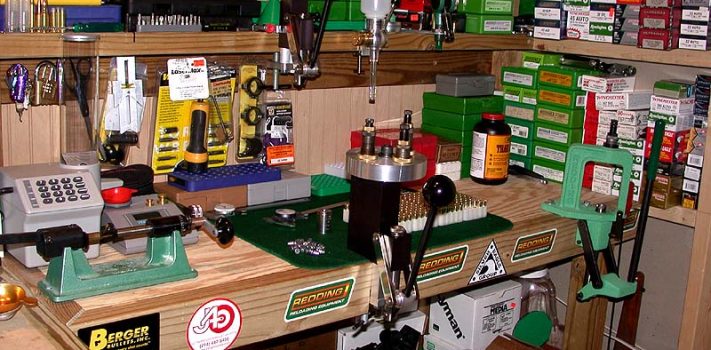
I have been a hand loader for 30 years. The test load technique described by S.B. was shown to me by a retired gentleman that long ago. Like S.B., I had a rifle that would not accurately shoot factory ammo. Using hand loaded ammo that was tuned to that rifle, it delivered groups just over 1 inch at 100 yards. I’ve used hundreds of these loads over time. When I pull the trigger I expect that round to go off as planned. I expect the bullet to land very near where the crosshairs were when the gun went off. By the way, that technique can be used for any cartridge and component combo to optimize accuracy.

I also can tweak any given round to tilt the results. One load uses ultra sleek bullets with a high energy propellant to ‘deliver the mail’ at long range. I also make low cost practice and small game rounds that use cast lead or copper plated bullets and a small amount of propellant yet still deliver good accuracy. I pick an application and develop a load that fills that application.

For instance, like most folks my shotgun has a single barrel. I use hand loads to expand my effectiveness. Spreader loads open the pattern for that first close shot. The next shot is a standard type that delivers the standard range pattern as controlled by the choke. The third shot is a load assembled to deliver a tighter pattern. Three shots, three different patterns, and all are from a single barrel shotgun.

I can better control costs. Components are available in bulk. Just like comparing the cost of a single roll of paper towel from a convenience store versus a huge bulk pack of paper towel from Costco. You pay more for the bulk pack, but the cost per roll is much less.

Lastly, an important safety tip. Get your data from legitimate sources. That gun is going off in your hands, in front of your face. Safety first! – T.J.Away


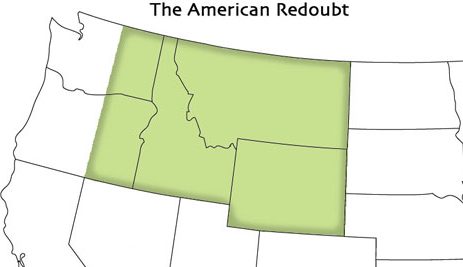
News From The American Redoubt:

Transgender shopper accused of taking pics of woman in changing room in Idaho TARGET store. Guess their bathroom policy thingy isn’t working out so great there either. – RBS

o o o

Woman leads officers on 120 mph motorcycle chase

o o o

Candidate: Export Wyoming coal through Idaho port

o o o

Montana sets grizzly hunt rules ahead of federal decision

o o o

In Redoubt News, we read: Judge Rules Against Political Prisoners AGAIN.

o o o

Radio Free Redoubt: Episode 16-28 Coups, Grievances, And Hypocrisy


Economics and Investing:

The financial system is breaking down at an unimaginable pace – From $0 two years ago to $13 trillion in negative yield government bonds. – G.P.

o o o

Oil Prices Fall on Product Glut

o o o

EU Said to Eye ‘Nuclear Option’ to Force May’s Hand on Exit

o o o

Ireland Hits Brexit Alarm in Biggest Foreign Crisis in 50 Years

o o o

SurvivalBlog and its editors are not paid investment counselors or advisers. Please see our Provisos page for details.


Odds ‘n Sods:

Middle-class Venezuelans liquidate savings to stockpile food

o o o

Video: Mike Adams suggests a method to keep TSA agents from stealing valuables from your suitcase, using an inexpensive Kryptonite retractable cable lock.

o o o

Sheriff David Clarke Throw Down Against CNN’s Don Lemon Over Black Lives Matter – Link sent in by C.T.

o o o

German police kill Afghan teen after train axe attack – A.S.

o o o

Deranged California Politician Is Blaming The NRA For Baton Rouge Cop Murders


Jim’s Quote of the Day:

“Under a tyranny, most friends are a liability. One quarter of them turn ‘reasonable’ and become your enemies, one quarter are afraid to speak, and one quarter are killed and you die with them. But the blessed are the final quarter keep you alive.” – Sinclair Lewis


Notes for Monday – July 18, 2016

The vast majority of recent headlines about the Islamist Bastille Day terror attack in Nice, France mysteriously seem to have missing words. “Truck rams Bastille Day crowd in Nice, France, killing at least 84” shouts the Washington Post. The Philadelphia Star headline proclaims: “Bastille Day Horror: Terror Truck Kills 84 in France.” And The New York Times headline reads: “Scores Die in Nice, France, as Truck Plows Into Bastille Day Crowd.” The missing words are of course: “Islamist terrorist driving a…” America’s leftist journalists seem to have selective blindness. And when they write headlines, they are selectively mute. Journalists consistently attribute sentience and ill will to inanimate objects like knives, guns, and trucks. But those are simply tools, and they do not operate autonomously. Nay, they must be wielded by a human being, and it is up that human to decide whether to use those tools for good or for evil.

When you see slanted journalism like this, please take the time to contact the editors of those publications and insist that their staff writers stop attributing inanimate tools with murderous intent. Remind them that donuts and Big Gulps are not responsible for obesity. (It take a human being with an appetite to accomplish that.) Knives, guns, baseball bats, and trucks are not responsible for murder any more than laptop computers are responsible for libel. – JWR

o o o

Seed for Security is having a fantastic sale. Their Super Survival Pack is now 20% off. This pack includes four pounds of survival seeds and two pints of healthful grains. All of their seed is heirloom and non GMO, and none is hybrid. Their 4-page detailed Seed Saving Guide is included. Also included are six metallized polybags with each pack ordered, enabling you to try your hand at seed saving. This offer is for a limited time.


Pat Cascio’s Product Review: Gerber Big Rock Camp Knife

I used to test and write about a lot of Gerber knives in the past. However, for whatever reason, Gerber rarely sends any writers knives for articles. I guess business must be good and they don’t need the free ink. Last time I toured the Gerber factory was back in the early 1990s, and it was busy. I understand that these days many Gerber knives are made in China, so let’s get that out of the way. The knife under review today is their Big Rock Camp Knife, and the model number is 22-01588. I can live with some products that are made in China, if the quality is there. Otherwise, I pass if I can find similar products made in the USA at a comparable price and quality. As I have stated in the past, you get as good as you want from China. If you want a 50-cent knife, you can get one. If you want a thousand dollar knife, you can get one of those, too. And, Gerber doesn’t use slave labor in the factory that makes their knives.

I’m always on the lookout for great bargains when I’m out shopping. I rarely shop at Walmart, because of the low quality of many of the products they sell; many are made in China. However, our local northwest small box store, Bi-Mart, is my favorite store to shop at. It is a membership only store. I just pay $5 for a lifetime membership and can’t beat that with any other membership store. I’ve been a member for more than 35 years. The department manager in the sporting goods department knows that I’m a writer and that I love guns and knives, so he showed me the Gerber Big Rock Camp Knife. He knows how to sell products. He puts it in a customer’s hand and goes from there.

100_6365

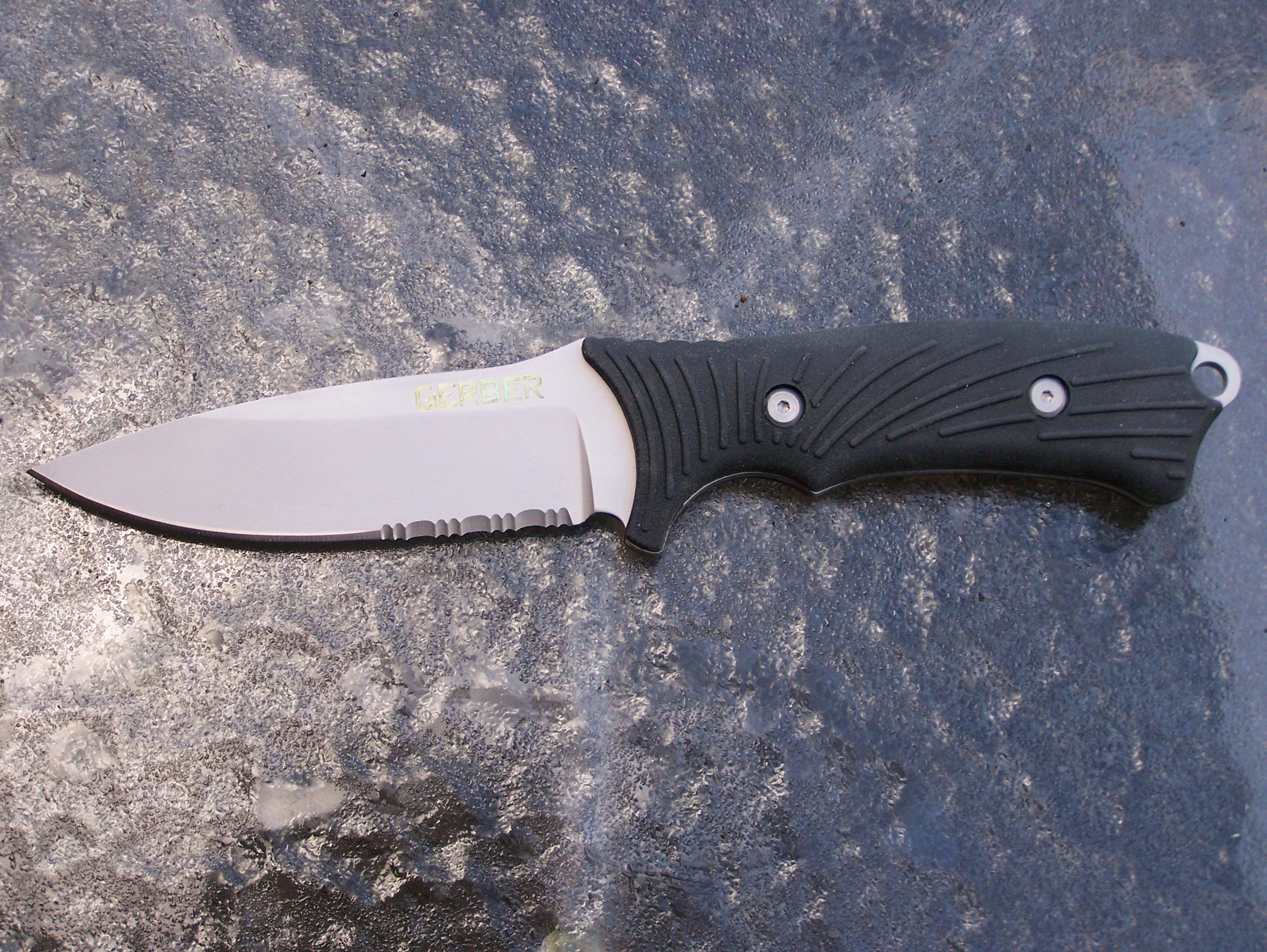
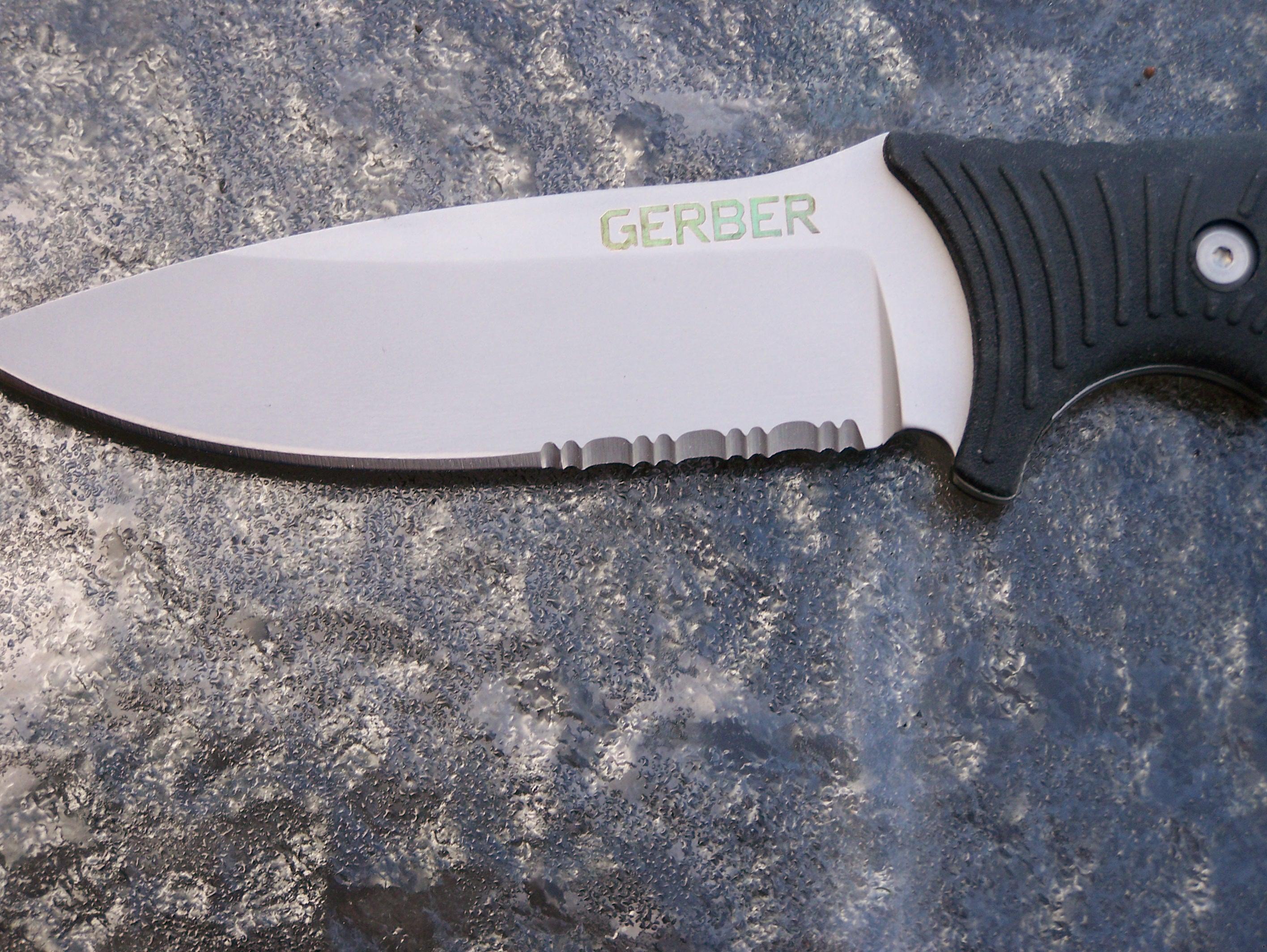
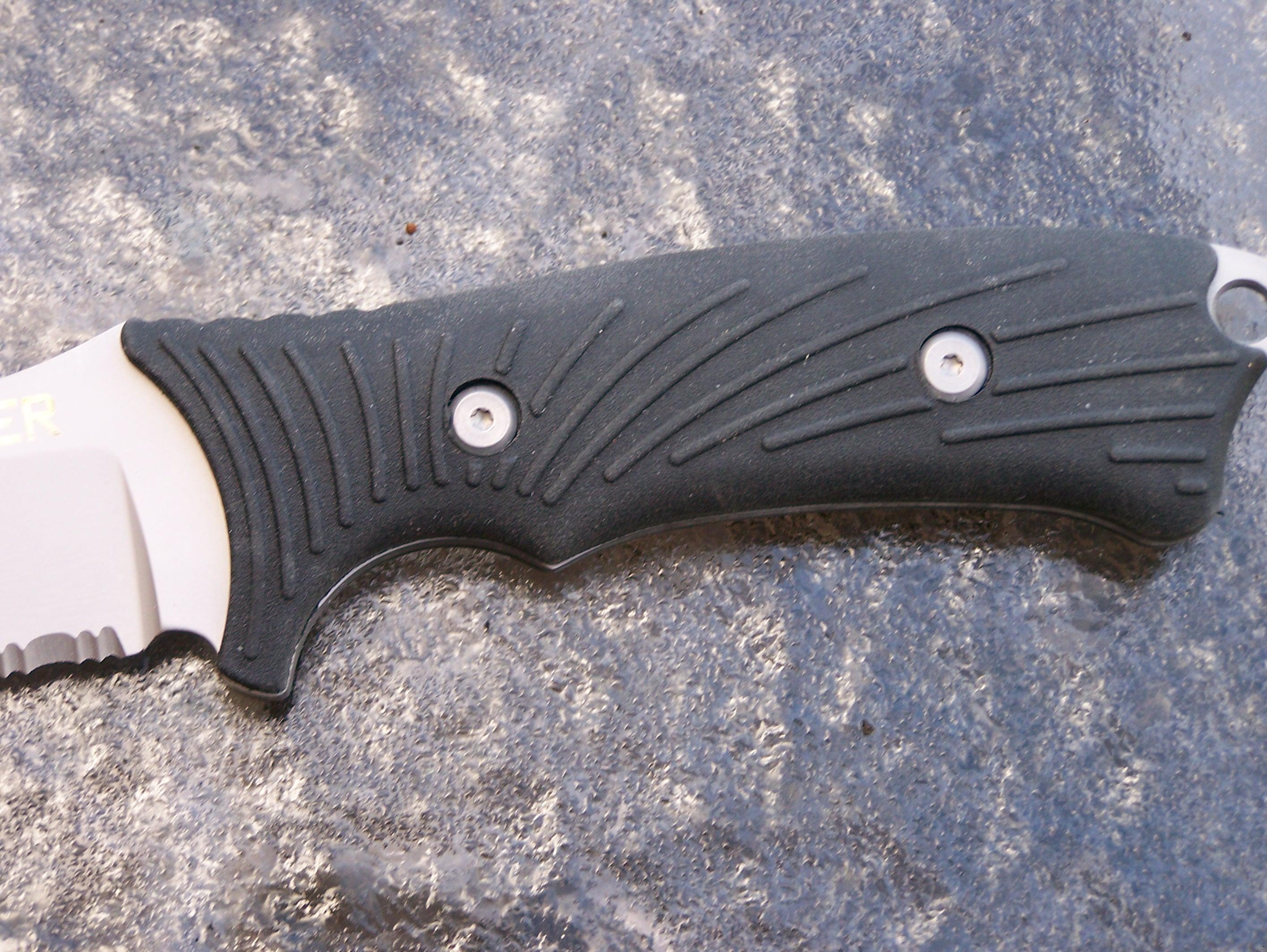
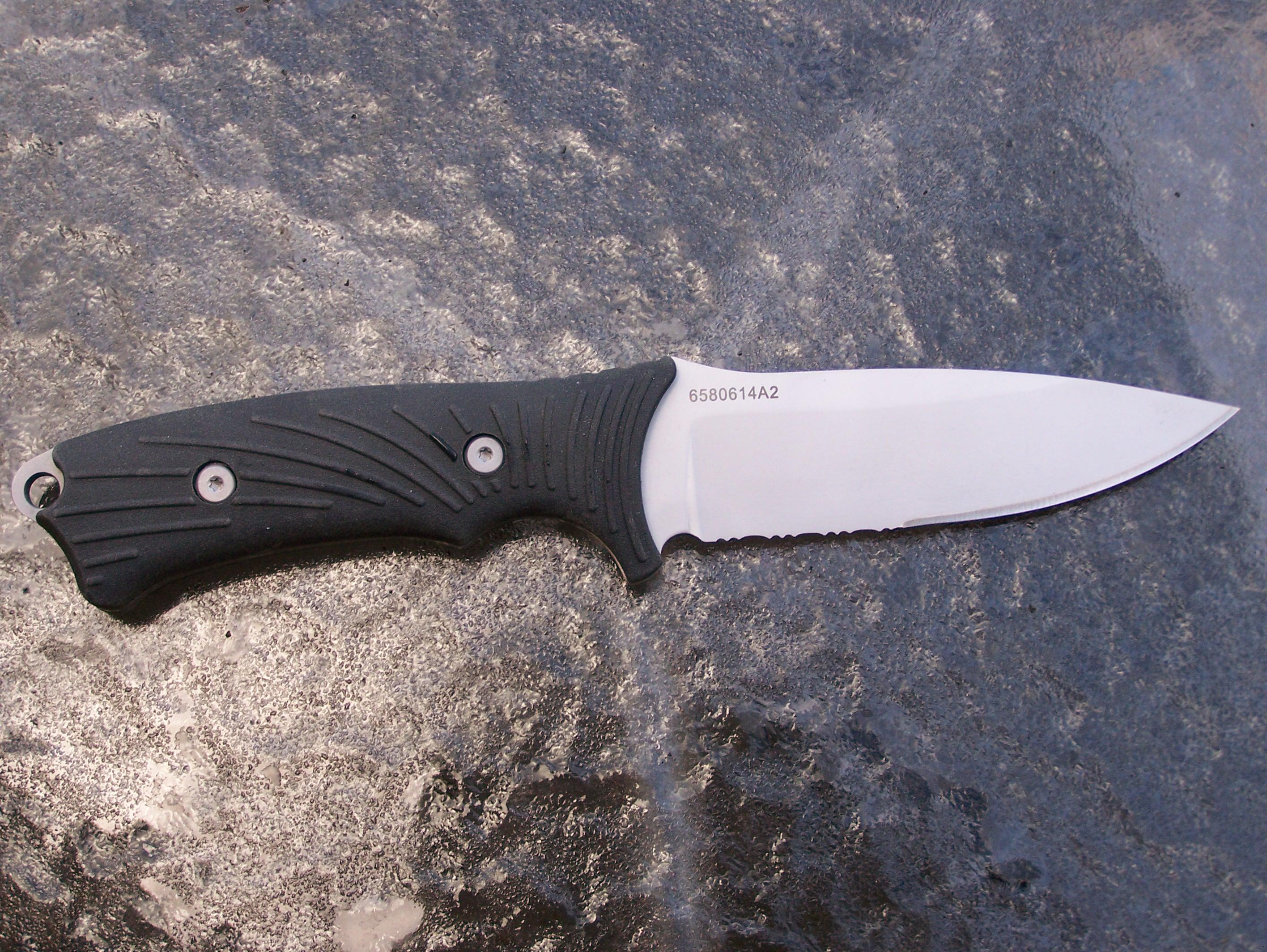
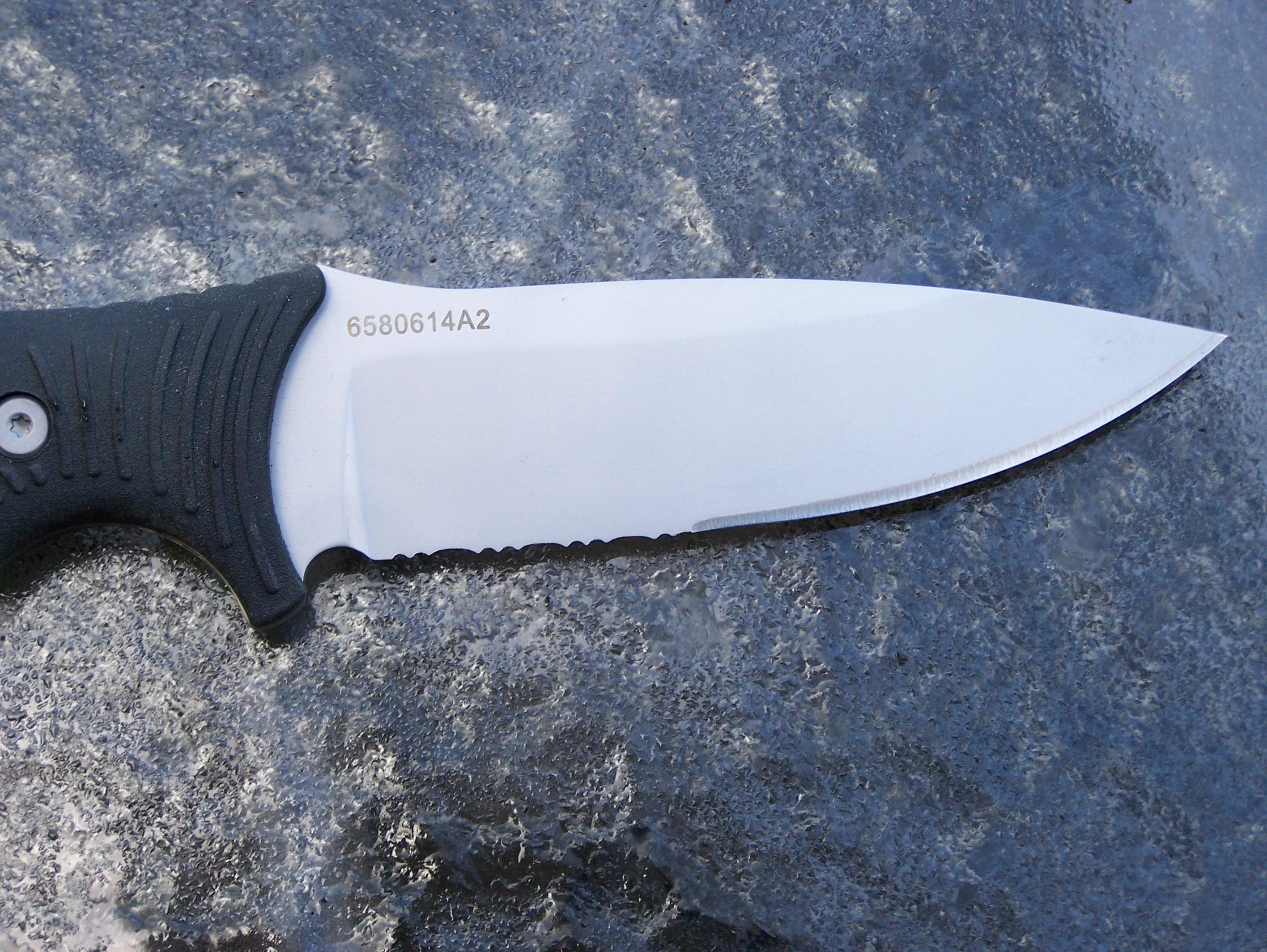
The Big Rock Camp Knife has a 4.5-inch 440A stainless steel blade, with a soft satin finish on it with a full tang. Now, I like 440A stainless steel. It is a bit easier to re-sharpen than 440C, which is so popular these days, and it holds an edge a good long time, too. The overall length of the knife is 9.4 inches, and it is a fixed blade. What sold me on the knife is the SoftGrip rubber handle covering. It is an over mold on the full tang. The knife only weighs 6.3 ounces, too. There are partial serrations on the rear of the blade, but they are very shallow and not all that useful for many tasks you’d use serrations for. Still, they are there.

Some of my cutting tasks consist of cutting wet hemp rope, as well as cotton rope, and poly rope, and the serrations helped with the poly rope a little bit. They just aren’t aggressive enough to really dig into poly rope, and it is some tough stuff to cut on the best of days.

100_6366

The SoftGrip rubber over mold handle covering is really nice. It secures the knife in your hand under any weather conditions and has two different types of patterns molded into the rubber. This is very nice. The handle scales are secured with two Torx screws. There is also a lanyard hole on the butt of the knife but no lanyard was included. You can put some 550 para cord on it when you get a chance. The blade design is something of a drop point, which is one of the most used and useful knife designs ever.

100_6367

There is a scallop on the bottom of the handle for your index finger, which just naturally falls into it for a sure hold. The handle with the SoftGrip isn’t very thick. It is a bit thin, but it works for the overall design of the knife. There are friction grooves machined in to the top of the handle, for a perfect thumb placement, too. So, thought went into the design of the knife. I’m sure it was designed in-house at Gerber. The 440A stainless steel blade came razor sharp out of the box, and during my testing it never needed a touch-up. However, after my testing, I did put a keen edge on the blade, so it is ready to use next time around.

100_6368

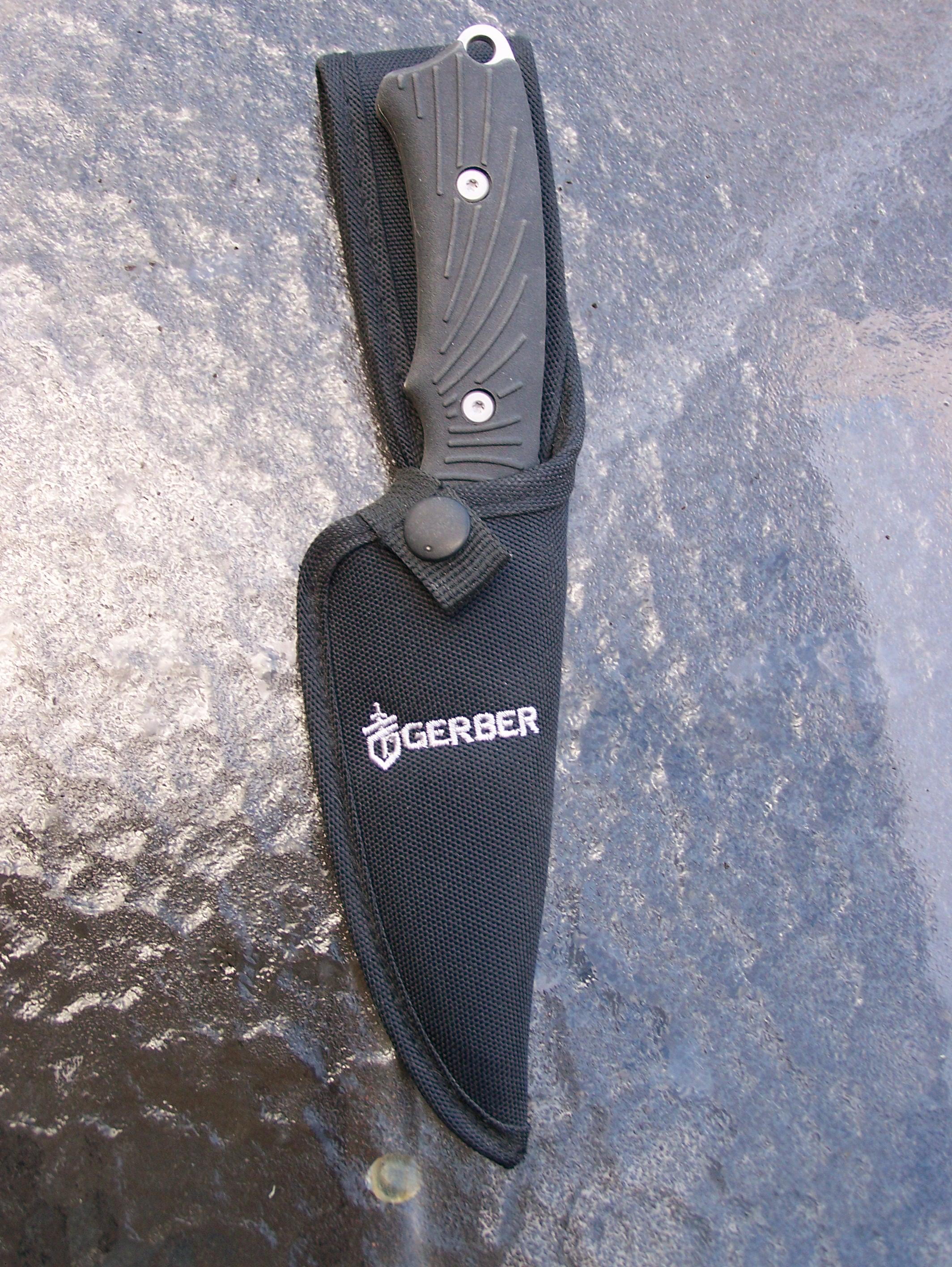
Now, for the bad news– the sheath! It is made out of ballistic nylon of some sort, and it has a poly lining so the blade can’t cut through in the event of a fall or if you aren’t careful putting the knife back into the sheath. That is a nice feature. However, the knife is a loose fit in the sheath; it moves around. There is a snap loop to keep the knife in the sheath, and it works out quite well. Still, I’d like to see a better fitting sheath. The belt loop on the sheath is big enough to fit on the biggest belt, even a military A.L.I.C.E. pistol belt, so that’s a good thing. Still, I think Gerber could do better on the sheath. It wouldn’t take much to make it fit the knife better.

I used the knife for several months around my small rural homestead for all manner of cutting chores, and one of the biggest problems we face are blackberry vines. They are tough, really tough, and it takes a sharp knife to cut through them with one swipe. The Gerber was up to the task, too. Every couple of years, I use some blackberry killer on the blackberry vines, and it is good for a year or two, but they come back. We all love to eat blackberries, and my wife love to make pancake syrup from them, too. However, they have wicked and long thorns, and at times, seem to reach out and grab you. You are well advised to wear a heavy, long sleeved shirt and gloves when picking blackberries.

100_6369

The knife was also tested as a throwing knife, though I never could get it to stick. Then again, it was not designed for this. However, it is a good test of the tip of the knife. Quite often, when a knife hits the ground, the tip will snap off. I had no such problem with the Gerber, and the SoftGrip handle scales never came loose from the full-tang handle, either.

I could easily slice newsprint without any effort, and opening UPS, FedEx, and USPS boxes was no problem with the sharp blade. I can easily see this knife as a great fixed blade for dressing out game. Even the biggest game wouldn’t be much of a chore, and I don’t think it would need to be re-sharpened until the job was done. As to a survival knife, and we’ve touched on this many times in other articles, what kind of survival are we talking about? I would prefer a little bit bigger and more stout blade for long-term survival uses. However, if this is all you had, it can get the job done, from making a fuzzy stick to help start fires to dressing out game or fish. The 440A will rust as well all stainless steel blades, if you don’t give them a little bit of care. However, it will weather the elements. I left the knife sitting on the patio table for several days, during some rain storms, and it didn’t rust. Still, it is advised to give the knife a little tender loving care.

100_6370

The biggest selling point of this knife was how great it felt in the hand. The sheath, yeah it is lacking, but you can find a nice leather sheath some place for a few bucks. It was also the selling price, under $30! What? Yeah, you read that right. It is under $30, and I checked around the ‘net and found that seems to be the selling price. This is a lot of knife for very little money. You can buy one for your bug out bag or your e-box in each of your cars, and it won’t break the bank. I’ve been testing and reviewing knives for about 25 years now, and this is a quality knife with good blade steel at a steal-of-a-deal, if you ask me.

– Senior Product Review Editor, Pat Cascio


Recipe of the Week: Teriyaki Steak

Ingredients:

  • 2 to 2½ lbs boneless chuck steak
  • 1 tsp ginger
  • 1 Tbsp sugar
  • 2 Tbsp oil
  • ½ cup soy sauce
  • 1 clove garlic, crushed

Directions:

  1. Cut steak into ¼-inch thick or smaller slices.
  2. Combine remaining ingredients in a small bowl.
  3. Place meat in a slow-cooking pot and pour the sauce over it.
  4. Cover and cook on low for 6 to 8 hours.
  5. Serve with rice

Makes 5 to 6 servings.

o o o

Do you have a favorite recipe that would be of interest to SurvivalBlog readers? Please send it via e-mail. Thanks!


Odds ‘n Sods:

Over at Notes From The Bunker, our friend Commander Zero has some great comments on self defense and the importance of situational awareness in the context of the Bastille Day transport par chariot attack in Nice: French Stuff.

o o o

Too Big to Jail – Thanks to reader MtH for the link

o o o

A consulting client recently asked me for advice on selecting for an off-road vehicle and expressed an interest in buying a surplus Humvee. I recommended that he watch the auctions at GovPlanet, and wait to find a M1114 (the up-armored HMMWV variant) at a reasonable price.- JWR

o o o

Four headlines from Sunday:

Baton Rouge shooting: 3 officers dead; shooter was Missouri man, sources say – (CNN) – Reporter notes that it is unknown why the shooter did this.
Three Baton Rouge Officers Killed, Three Injured in ‘Ambush’ – (NBCNews) – The shooter identified as a Marine.
Gunman Identified in Shooting That Killed 3 Baton Rouge Officers – (ABCNews) – The shooter identified as a Marine.
3 law enforcement officers killed, 3 others injured in Baton Rouge shooting – (FoxNews) – The shooter identified as a Marine.

Once again, did you notice what was missing from these major news headlines? It’s also missing from the content of the articles. Baton Rouge Shooter Gavin Eugene Long Was Nation Of Islam Member, Railed Against ‘Crackers’ On YouTube Channel

o o o

Amish Man Beats Big Brother 4 Times Running


Notes for Sunday – July 17, 2016

On this day in 1776, the Continental Congress learns of General George Washington’s refusal to accept a dispatch from British General William Howe and his brother, Admiral Richard Viscount Howe, opening peace negotiations, because it failed to use the title “general”. In response, Congress proclaimed that the commander-in-chief acted “with a dignity becoming his station,” and directed all American commanders to receive only letters addressed to them “in the characters they respectively sustain.”


Budget Planning- Part 2, by Sarah Latimer

I recently heard of some people praying against the spirit of indebtedness. I thought to myself that all they need to do is resist the temptation to over-spend. It is not a spirit or Satan that causes anyone to go into debt. It is merely a desire for and purchase of things for which a person does not have the ability to pay. We have the choice to buy what we want or to walk away and make do with what we have. Those of us who either have or currently are struggling with indebtedness have made the choice to make purchases with money we borrowed rather than money or property we owned. It is not a spirit but a choice. Indebtedness may be addictive in that coveting and the desire for things that a person doesn’t have and can’t afford on their own may become somewhat of an obsession, but like any addiction the first step to making a change is owning responsibility for the wrong action. Blaming a spirit or Satan for our purchase decisions does not accomplish this. Anyone challenged with indebtedness should not be looking at others to blame but should take a hard look directly in the mirror to see who is responsible for over-spending.

I have to admit that in years past, when I was going through some rough patches in life, I consoled myself at the mall and bought more than my budget could afford, using my credit card. It felt good at the moment, but later on it was very painful. It took a lot of self discipline to get a handle on my “purchase therapy” shopping sessions, but I have done it. You can, too! A budget is a great way to set boundaries for ourselves and help us achieve well thought out goals. Boundaries are necessary in all aspects of our live to be healthy, and God put some excellent ones in place for our own good. When we don’t listen to Him, we get into all kinds of trouble.

The evil that exists in the world exists because people have allowed it to thrive. It doesn’t start out as a powerful, widespread evil. The pattern that I see repeated is one where evil usually gets a foothold when people do not follow God’s instructions, chaos ensues, and then there is an opening for the evil to step in with its lies and deception. We have to be discerning and wise and not fall for this deception that we “have to look like the Joneses’” or have to have what our parents had and more by the time we’re 30. If Christians had been responsible to follow God’s instructions and not made decisions selfishly regarding our finances, marriages, children, entertainment choices, and so forth, there would not be the foothold for the evil influences that we now face. Some of the responsibility belongs with each of us. We can make changes and can be responsible beginning today. It may not save our nation from financial crisis, but it will make a difference in our families, as we reduce debt and increase our real assets.

It may be that some just don’t know how to establish a budget to help make decisions. If this is your situation, I hope to provide you with a basic outline in this series of articles, but there are many detailed workbooks and resources available to walk you through also. Let’s talk about how to take responsibility for our finances and our purchase decisions so that they line up with God’s word.

Income

The family income includes all monies that come into the household through work or sales, whether it is regular or irregular, that contribute to the family’s expenses/plans. This is the basis for our budget, because it is what we have to work with. Spending more than what comes in is what makes a person vulnerable and a debtor. It should be a goal to get out of debt, so the goal should be to spend less than the income amount. In order to do this, we must plan spending around the income amount.

Our family’s income is what will provide the basis for our family’s survival, for our needs, our wants, our future, and also for the needs of others we choose to help. It is necessary that everyone in the family do their part to contribute to the resources of the family in some way, whether it is in bringing in income or reduce expenses. Both count equally toward having money left over to reduce debt, buy things for the present and future, and save or invest. There have been times when a portion of my teenagers’ incomes were included in our family budget, too. Of course, this has to be a family decision, but when things are hard and the family is working together as a team toward goals, everyone pitches in. Teenagers get a roof over their head and meals and clothings and so forth from parents. There have been various ways we have handled their wants and needs. (We’ll talk more about this later in the “expenses” section.)

While some family members may not be able to bring in actual cash income, they may be able to save or provide substitutes for things that would otherwise have to be purchased and be expenses. For example, in our family, I cook things that are homemade rather than eating at restaurants or buying expensive prepared meals, and the children and grandchildren help with a garden, some animals, and orchard so that fewer groceries have to be purchased. This stretches our income. Other areas where family can help stretch the income by alleviating expenses is in: sewing, auto maintenance and repair, home maintenance and repair, hair cuts/services, house cleaning, animal care, animal husbandry/raising/butchering, cheese-making, candle-making, soap making, and much more. Furthermore, children should be encouraged to do their part as their age enables. It is still practical for children to do some “work”, like babysitting for family friends or cutting the grass of a known neighbor or taking care of animals for neighbors while they are on vacation. These are jobs that might pay something and can provide “fun” money for the children’s wants, where parents provide for their needs. It teaches children responsibility and that they had better choose their “wants” wisely, because there are limited resources. Then, our children are more likely to take care of the thing(s) that they purchased from their jobs, too, because they truly value them more.

While the government is readily handing out welfare to millions of Americans, we are told as Christians that we should look after our family members in need, so our incomes should not only look out for us but for our widowed mothers, grandmothers, and aunts. We are certainly to do all that we can to provide for our own families! To not provide for our own (or do our best to try to do so) is worse than someone who does not believe in God.

“And these things give in charge, that they may be blameless. 8 But if any provide not for his own, and specially for those of his own house, he hath denied the faith, and is worse than an infidel.” I Timothy 5:7-8

In this economic condition, it is necessary to think outside the box for ways to bring in income and often a single source of income is not enough or not wise for the unstable future ahead. JWR and contributors to the blog have provided some good articles with ideas for careers or moon-lighting jobs to bring in extra income that is not dependent upon employment and are more likely to survive in a TEOTWAWKI situation. No one has a 100% sure job. Things happen. I have successfully worked myself out of multiple jobs by managing/publicizing my employers’ companies, which were then bought by buyers who only had positions for me if I relocated somewhere I had no interest in living. Congratulations and surprise! I got a nice bonus and severance check but had to look for another job all over again, sometimes at very inopportune times. The current job market is not one I’d want to have to seek employment. This is one where it is better to make your own job and develop products and/or skills that others need locally (or can easily be sold through online stores, like Amazon). Dependence upon a big company remaining stable through the rocky road ahead is a big gamble. We need to have work that our community will need and choose to purchase (or barter) no matter how hard times get.

So, first sit down and look at what is realistic right now for your family’s income. List everyone’s source of income– husband’s job, wife’s job, Social Security check(s), any extra work done or items or services regularly sold (eggs sold, babysitting or house cleaning services, quilts made and sold, etc), rent received from anyone on property you own, annuity payments received, interest income, any cash gifts or inheritance payments received, and any other source of income you receive each month. If you get paid weekly, multiply the weekly amount by 4.2 to get an approximate monthly amount and write that calculated amount down instead of the weekly. Figure out what your family’s total income during a typical month is for each source of income and then total them all up. This is what your family’s current income looks like.

If you don’t have the exact figures kept for all of the incomes sources you know about right now, then estimate on the low side and start writing down sources of income and amounts during the upcoming month as money comes in. Setting up a financial notebook that is dedicated for this purpose is a good idea. It can be a very useful tool to help you stay organized! Keep it near where you go through the mail so that when a check or a statement comes in, you can easily write the information down in your notebook. (The same will be true of expense information arriving in the mail, too, but we’ll talk about that later in this article series.)

After writing down the sources of income, begin thinking about how you could realistically increase your income. What skills, tools, capabilities, and opportunities do you have available to you that could help bring in more income and/or replace expenses? Do not yet write down what you are saving or potential income. Just write down what income you are currently bringing in, though you may want to make a list someplace other than your financial notebook of ideas of what you can reduce off the upcoming expenditure list and potential income sources you might pursue. Brainstorm those ideas and pray about what is realistic and what the LORD might be leading you to do. Ladies, just remember that caring for your home and family is your first priority so don’t jump on anything that would sacrifice that important job. Also, do not count on future income that you don’t yet have and make any commitments or spend any money in anticipation of possible income. However, you might want to begin working toward this future income. It often takes time to build up a small side business, so you better get started planning and working on it now!

In the next part of this series of articles, we’ll hit Self Discipline and Expenses.