
September 4, 1862 is the fateful day that General Lee invaded the North with 50,000 troops. Historians will banter back and forth about the real reasons for the civil war, but we will probably never fully understand. It is my personal belief that General Lee was gambling on a quick offensive because the South did not have the resources for a prolonged war. Whatever the case was, President Abraham Lincoln trampled the Constitution and created the foundation for the “Big Brother” government we have today.
- Ad SurvivalRealty.com: Sell Your Remote LandAdvertise your hard-to-sell remote land to eager buters. We specialize in rural, remote, and off-grid properties worldwide. Affordable ads. No commissions are charged!
- Ad Elk Creek Company - Percussion Blackpowder Guns - No FFL Required.Elk Creek Company - Percussion Blackpowder Guns - Pre-1899 Guns - Knives - Bayonets - Magazines - The last bastion of privacy!
Lay The Groundwork for the Future- Part 1, by Sarah Latimer
I really feel like a farmer’s wife this week. We’ve been busy up to our eyebrows harvesting, processing the harvest, canning, freeze drying, dehydrating, and even butchering as well as doing some welding and other structural homesteading chores. Whew! It’s been a hard but productive week. I am exhausted and thankful that Sabbath is almost here so we can rest, and even before it arrives I give God great thanks for His goodness and provision and for the knowledge to participate in the cycle of life!
It’s Hard Work, But It’s For Their Future
There are mornings when I wake up really tired and just think I would really like to roll over and stay in bed for another hour or two before facing my very long “to do” list, but then I think of my family. I picture the big round eyes of my grandchildren, who are continuously seeking to explore, learn, and understand the world around them and are such soft pieces of clay needing to be gently molded and firmly protected so that they can become the unique and productive masterpieces God has destined in His heart for them to become. I think of my adult children and the hard work they invest in caring for our family and their own families and the productive physical, intellectual, and creative contributions they make to society, their families, and to me personally. I think of my hard working husband who is just brilliant and relies upon me as his help mate to oversee many aspects of our living, including our nourishment and supplies for such, and I think of the friends, extended family, and community that need our help, too. I think of our parents who we care for who got up to check on us in the night when we were children eve when they were very tired and would rather have just rolled over and gone back to sleep. I think about the future that seems more and more likely, where there just aren’t enough resources and people are hungry, sick, homeless, and desperate to survive. It usually doesn’t require me to get that far into the thought process before I am up and getting going, but some days I have to go all the way through this logic to get the motivation to push this aging body onward. This body that used to belong to a “morning person” and jump out of bed before sunrise is not so enthusiastic about leaving the comfort of her very comfortable Temperapedic bed after a short night’s sleep. The days are long and the nights too short, but we will do what is required during the harvest season, because it won’t always be a harvest season. Winter is coming. Hard times are coming. Some are already here around us, from what I am hearing.
Are you prepared to care for yourself and your loved ones in the event that the produce trucks stop rolling into your community, if stores close due to lack of electricity or commerce? Do you have the resources, knowledge, and experience to be able to provide for your family long term, if California and Florida don’t produce and we can no longer import produce? What if your community were cut off from the rest of the world? How would you survive without the grocery store, gas station, bank, or dollar store?
Is It Really Too Hard?
While I listen to some of my lady friends talk about their experiences with high prices and even recalls on store produce, meats, and supplies, our family is enjoying a plentiful supply of homegrown fruits, vegetables, and herbs as well as eggs and meat. We are at the peak of our garden’s harvesting and I am enjoying being able to share the bountiful blessing with them. They are grateful because they either don’t have gardens, have given up on their garden, or only had a tiny one that merely gave them a small taste of the potential goodness a garden offers. Guests at our dinner table rave over the feasts of whole grain breads, flavorful vegetables, tender meats, herbed side dishes, aromatic beverages, and delicious desserts.
Some of the friends who had gardens have given up on them due to weeds, drought, heavy rains, or just the busy-ness of life. It wasn’t as easy as they expected it would be. They enjoy the delicious proceeds from my garden but just weren’t willing to put in the time and energy to give their own garden a real go this year, or they only had a few containers and barely had anything to show for the work they put into growing a few plants. Those in that latter category are the ones most earnestly seeking more. It is my hope that they will expand their gardens next year, because they have learned and tasted the difference in homegrown and store bought. They’ve seen some success and know it is possible. Some of these folks are farmers who produce grains for livestock in massive quantities, but their families just don’t grow food for themselves. It is an adjustment to pursue self sufficiency by growing small beds of many types of crops, but it is necessary.
I sometimes think about the childhood story: The Little Red Hen and wonder at what point it will begin to apply. So far I am still able to share, some. However, I am careful not to allow anyone to become dependent. Other families need to become self-sufficient on their own. There will be a day when I cannot share any longer. What they have is what they will live (or die) with. It is my hope that they will see the benefits of my garden and desire it for themselves. I am happy to help them along the way, but they have to do the work.
Like anything, you get back what you put into it. Fruits, vegetables, eggs, and meat don’t just drop out of the sky like manna. It takes work, practice, and some failures to teach you along the way before you begin to really get it right. Also, what works for me where I live– with my soil, weather, water, seeds, and practices– may not work well for you. There are basic principles, some of which I will describe below, that apply everywhere, but we have to find what is required for where we live. I have repeatedly read and experienced that the greatest investment should be in the soil. It takes time and effort to get the soil right. It is the foundation and the “ground work” so to speak upon which the garden depends. One of the biggest differences by area is pests. What pests I battle may be very different from what you battle, so solutions are different, too. However, having healthy plants is a great weapon against pests, and you don’t get healthy plants without good soil– the foundation of your garden.
The Foundation of Your Food Supplies
A garden should be the foundation of your food supplies. I cannot emphasize this enough! While you may be storing years of dried foods in your larder, there will come a time when that food either expires, gets used up, gets destroyed or stolen, or has to be left behind for some reason. It simply won’t last forever. I do encourage everyone to have a larder of stored foods, preferably several year’s worth of food that they are accustomed to eating and that can be easily prepared. However, knowing how and having the means to grow and produce food as well as preserve it is much more valuable than having a really large larder, because you can then renew your food inventory when there is no food to be purchased and shipped to you. You are not dependent on others, so long as you have stored seeds, maintained gardening tools, access to water, and good soil.
Are you willing to begin the journey to gardening? Do you want the confidence that you can provide food for your loved ones? It is work, but you can wake up thinking about those you love and know that you have the ability to invest in literally nourishing their future. It takes work and perseverance, and in some locations and environments it requires more effort than in others. Are you willing to begin the journey to lay the foundation for a renewable food supply? If so, start laying the ground work– plan the location and start building the soil right now and through the fall and winter. The soil needs time to become rich. It may actually take years before your garden soil is producing optimally, so do not delay.
I don’t think we have time to waste. I know that I am already grateful not to have to spend hundreds of dollars a month on meats, eggs, and produce and to have a higher quality than what is available at the markets, with absolutely no pesticides or genetically modified organisms. Wouldn’t you like this same satisfaction? Wouldn’t you like this kind of security, even if the banks and grocery stores close? Wouldn’t you like to not begin a countdown to the end when the SHTF but rather know that you will be able to continue growing and increasing your supplies (or at least slow your depletion rate through your garden supplementation)?
In part 2 of this article series, I will share ideas for how to determine the best location for your garden and prepare the soil, including possible crop covers to put in right away. Please start thinking about how you can be part of the production of your food rather than just a consumer and storer! Your life and those you love may depend upon your knowledge and experience with food production and preservation. There is no time to waste in learning these skills! Even our government is telling us to begin preparing, though Obama says it is because of “global warming” that we need to do so. Finally, he doesn’t act like he is our savior and that everything is okay. Of course, he can’t be blamed for global warming, can he? Global warming is not even on my list of concerns. Temperature fluctuation cycles take place and are normal. What is not normal is a cosmic (way beyond skyrocketing) level of national indebtedness, irresponsible government bail outs, and red carpet invitations to terrorists to come and dwell among us. We must learn to care for ourselves and those we love at home!
Food production and preservation is a fundamental skill I encourage you to begin pursuing and practicing NOW!
- Ad USA Berkey Water Filters - Start Drinking Purified Water Today!#1 Trusted Gravity Water Purification System! Start Drinking Purified Water now with a Berkey water filtration system. Find systems, replacement filters, parts and more here.
- Ad California Legal Rifles & Pistols!WBT makes all popular rifles compliant for your restrictive state. Choose from a wide range of top brands made compliant for your state.
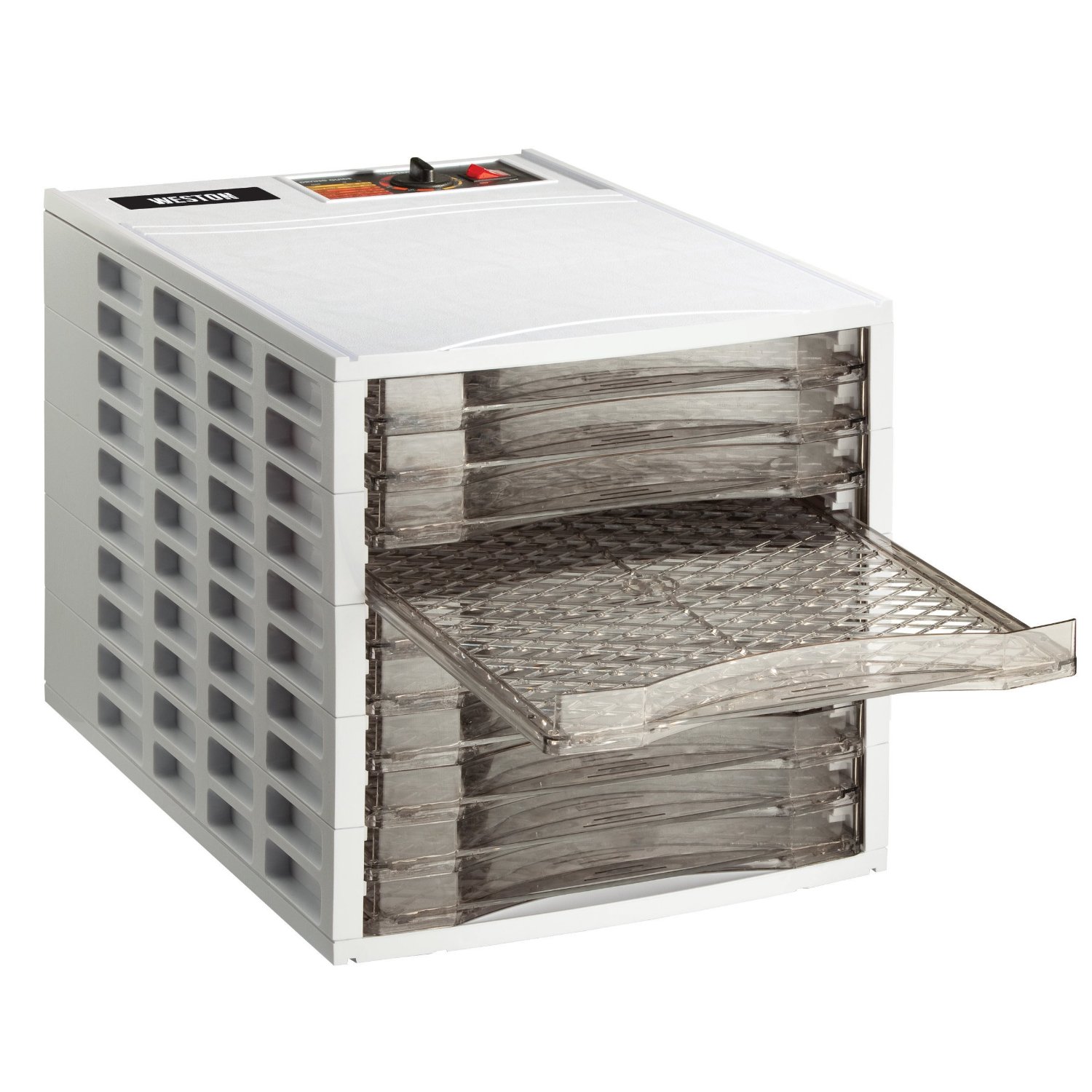
Letter Re: Dehydrator Screens
Hugh,
I’m not sure how I came across SurvivalBlog, but I’ve been reading it for a while now and really like it. I’m glad to see someone “telling it like it is”.
Anyway, the post about dehydrator screens caught my eye, ’cause I’ve been thinking about that very topic lately. And wouldn’t you know it, I got my dehydrator from Aldi (my default grocery store) and it has (just as I wanted) round trays. Yesterday, I went into Dollar Tree (another favorite) for something entirely unrelated and came across some splatter guards for skillets. (I should probably get one for my cast iron skillet for the next time I make Maryland Fried Chicken.) The inspiration hit. I grabbed a tape measure and measured one. When I got home, I measured the trays on my dehydrator. The screen is ~1″ smaller than the tray. The next time I’m at Dollar Tree, I’ll pick up five of them. -The Old Sarge
- Ad USA Berkey Water Filters - Start Drinking Purified Water Today!#1 Trusted Gravity Water Purification System! Start Drinking Purified Water now with a Berkey water filtration system. Find systems, replacement filters, parts and more here.
- Ad Click Here --> Civil Defense ManualNOW BACK IN STOCK How to protect, you, your family, friends and neighborhood in coming times of civil unrest… and much more!

Economics and Investing:
Conor Sen: Conditions Are Ripe for a Big-City Exodus
o o o
Which shipping company is next to fall? People should view this as a canary about the decline of the global economy. Hanjin Shipping bankruptcy unlikely to ease glut of ships – P.S.
o o o
OPEC Pumps Record Crude In August
o o o
Yet another example of consolidation of ownership at a local level. McDonald’s Is Pushing Out the Small Fries
o o o
The Ethics of Entrepreneurship and Profit
o o o
SurvivalBlog and its editors are not paid investment counselors or advisers. Please see our Provisos page for details.
- Ad STRATEGIC RELOCATION REALTYFOR SALE: Self-sustaining Rural Property situated meticulously in serene locales distant from densely populated sanctuary cities. Remember…HISTORY Favors the PREPARED!
- Ad SIEGE belts: The essential go-anywhere GRAY MAN accessory. Solid 5.5-7 oz of persuasive power has saved many on their daily routines & travels. Revered "Thousand-Year Buckles" with stunning hand-crafted finishes. Complements CCW. Lear more..SIEGE STOVES: the ultimate high-performance portable survival stove. SIEGE BELTS: Use code "SBLOG" at checkout for $20 off any belt. Gifts that have saved lives. Be prepared!
Odds ‘n Sods:
Another Cold Steel Rawles Voyager knife review, this time from Germany (auf Deutsch): Cold Steel Rawles Voyager XL Tanto
o o o
o o o
‘Prepper’ Obama: Says nation is on its own, preparing is your ‘duty’ – G.G.
o o o
Leaked Catalogue Reveals a Vast Array of Military Spy Gear Offered to U.S. Police – B.B.
o o o
- Ad Survival RealtyFind your secure and sustainable home. The leading marketplace for rural, remote, and off-grid properties worldwide. Affordable ads. No commissions are charged!
- Ad Elk Creek Company - Federally-Exempt No-Paperwork GunsPre-1899 Antique Cartridge Guns -- No FFL Required. Can be mailed to your doorstep with no Federal paperwork!
Hugh’s Quote of the Day:
“Ye are of God, little children, and have overcome them: because greater is he that is in you, than he that is in the world.” 1 John 4:4 (KJV)
- Ad Survival RealtyFind your secure and sustainable home. The leading marketplace for rural, remote, and off-grid properties worldwide. Affordable ads. No commissions are charged!
Notes for Saturday – September 03, 2016
On September 3rd, 1752, Great Britain and it’s colonies, including the future United States of America, officially adopted the Gregorian calendar, and it immediately became September the 14th.
The First Steps of IRA Confiscation Have Arrived, by Will Lehr
There is approximately $17 trillion sitting in retirement accounts, 401ks, and pensions. Sources of liquidity of such magnitude are certainly at risk in the face of the upcoming financial crisis. The U.S. government, its central bank, and its entire financial and banking system are about to face a massive shortfall for cash.
In 2008 the bailout required via TARP was $700 billion, and estimates of backdoor easing and bailouts are in the tens of trillions, or more, not to mention the confirmed and admitted trillions in Federal Reserve off balance sheet transactions. This time the bubble is many multiples bigger, deeper, and broader. The derivative time bomb fuse has been lit. In fact, one very informed friend of mine believes there is $5 trillion per week in backdoor derivative “papering over” taking place right now.
We have seen bail-ins across the globe and warned clients and friends that they are coming to a bank account and IRA/401k near you. When governments and their central banks go broke, they steal from private industry. It is historical fact. It is the basis for taxation.
I initially thought that the IRA & 401k bail in would be dressed up as a “Save America Bond” that would be sold on the populace to help rebuild once the next banking crisis hits. Ownership of this bond would be mandatory at a certain percentage within IRA and 401k accounts and it would pay a nice guaranteed rate of return. The majority of the populace would swallow the bait. However, I was wrong. I believe that the powers that be are already “bailing in” in a much more covert way.
About two weeks ago we received news that a major 401k administrator was doing away with its money market fund only to offer a short-term government bond fund instead. Just yesterday I received a letter that a client of mine had just received from another even bigger 401k administrator–one with like $3 trillion in assets under management big.
Then it hit me; they don’t have to sell anything to the public. Our criminal government doesn’t need permission. It will simply collude with the big banks to force treasury investment via limited investment portfolio options. Let me explain…
Money market accounts are cash equivalent accounts, currently holding almost $3 trillion. This is where you would normally keep your IRA or 401k cash if you were not invested in stocks, bonds, mutual funds, et cetera. Many people think they are “out of the market” when they have told their advisor or plan administrator to sell their stocks. If your account is with Paychex or Vanguard, not only are you still in the market but you are 100% in U.S. government bonds; it’s very sneaky. Most people won’t even catch it.
I believe that the U.S. central bank, a.k.a. the Federal Reserve, and the U.S. Treasury have colluded with the Wall Street banks to force investment into treasury bonds to prop up the U.S. dollar. The announcements from these institutions are proof. However, I believe they are in the process of taking it a step further.
A vast majority of 401k and IRA accounts in this country are held and administered by the big banks. The self-directed IRA marketplace is only about 2% of total retirement assets. Next, we will see the investment portfolio options completely change. There already exist some 401k plans that have very limited investment options, maybe three or four different baskets of mutual funds offered by XYZ institution, and of course a money market or cash equivalent. I believe we will see limits across the board, and that money market is just the beginning. The next letter from your IRA custodian will inform that it no longer allows the ownership of individual stocks and other securities but only mutual funds, which by the way own mostly, if not only, U.S. treasury bonds. The vast majority of people will be forced into U.S. treasuries unbeknownst to them.
Another element of the Vanguard letter that should be noted is their mention that this new “Vanguard Federal Money Market Fund, as a U.S. government money market fund, will not be subject to fees or restrictions under the new regulations.” Does this mean that fees will be imposed on the institutions that do not comply? As my partner, Gus, would say, “When collusion fails, coercion is required.”
For this reason, among others, we have long been advocates of using a shelter like the LLC IRA to remove assets from the system without the tax burden. Putting your IRA into a self-directed limited liability company allows you to invest in tangible assets that cannot be stolen with the swipe of a pen and click of a mouse.
For more information:
Letter Re: Banking Questions
Hugh,
August proved to be an eye opening experience regarding “Big Brother” and the banking system. We recently sold our home in a large metro area to move to our own redoubt in an adjacent county. During the underwriting process for a mortgage, the banker asked which bank has the money we identified as savings? Our savings was in physical cash, however, the bank underwriters won’t accept this when applying for a mortgage. The mortgage originator instructed us to get the money in our checking account. We proceeded to deposit cash every few days for a month. A couple of months go by and a letter arrives from our bank of 31 years telling us after a review from their “compliance department” they are closing our accounts. Apparently, depositing our savings into the bank triggered some algorithm that identified us as money launderers or drug dealers. No call from the bank, no opportunity to work it out; just close your account!
We use cash for nearly everything, it’s our decision, our choice, it’s legal and moral, and it’s the way we choose to operate. So, if you’re like us, beware because the old rules of the bank reporting deposits or withdrawals over $10,000 has been lowered significantly. It’s my understanding that today if you deposit or withdraw cash, even $1,000 the bank may track and report this… GW
Economics and Investing:
US Factory Orders Tumble For Longest Streak In History – B.B.
o o o
The Sinister Side of a Cashless Society – G.S.
o o o
Solid Hiring Without Wage Jump Tests Fed Hopes for Inflation
o o o
SurvivalBlog and its editors are not paid investment counselors or advisers. Please see our Provisos page for details.
Odds ‘n Sods:
Video: Family of Seven Living Completely Off-Grid in Northern Canada
o o o
Cold Steel Rawles Voyager knife review video: (By fellow blogger Nutnfancy).
o o o
Crowds surge into the streets to demand recall of Venezuela President Nicolas Maduro – R.C.
o o o
Homestead Moma has an article on making a family oriented BOB: How to build the best bug out bag for large families – stop spending money on junk!
o o o
Could be time to stock up, depending on your needs : FDA Orders Antibacterials Removed From Consumer Soaps
Hugh’s Quote of the Day:
“No weapon that is formed against thee shall prosper; and every tongue that shall rise against thee in judgment thou shalt condemn. This is the heritage of the servants of the Lord, and their righteousness is of me, saith the Lord.” – Isaiah 54:17 (KJV)
Notes for Friday – September 02, 2016
September 2, 1969 is the day that the first automatic teller machine (ATM) made its first public debut, dispensing cash to customers at Chemical Bank in Rockville Center, New York. While being as indispensable to most people as cell phones and e-mail, they have introduced a whole new set of issues. Consumers are faced with scams, skimmers, and robbers, and even fake ATMs have been discovered.
o o o
JRH Enterprises is having a big Labor Day weekend sale on new PVS14 night vision devices with a 10 year warranty and DKX M3 Level III lightweight armor plates. You might want to check out their FLIR Scout TK thermal imager for $599.
August in Precious Metals, by Steven Cochran of Gainesville Coins
Welcome to SurvivalBlog’s Precious Metals Month in Review, by Steven Cochran of Gainseville Coins where we take a look at “the month that was” in precious metals. Each month, we cover the price action of gold and examine the “what” and “why” behind those numbers.
What Did Gold Do in August?
Every August, most of Europe is off on summer vacation, as are a good number of Wall St traders. With far fewer trades per day, liquidity suffers. Orders that normally would not be big enough to move gold prices have a larger effect when fewer traders are participating.
And so the case was for gold in August. It started the month at a three-week high, jumping over $10 an ounce to trade in a range between $1350 and $1360. On August 5th, the non-farm payrolls report came in much better than anticipated. This raised the odds that the Fed would raise interest rates next month,and knocked gold down by $20.
Strength in gold prices the following week lead to some short-covering in the futures market and some bargain hunting in physical. As usual, it was the chain reaction of “Probability of Fed Rate Hike ? Dollar Price ? Gold price” that moved the markets.
On August 24th, gold prices edged down enough to trigger some automated selling, which then triggered more automatic selling. A $10 fall in the spot price saw gold trading under $1330 for the first time for the month. Hawkish press conferences by Federal Reserve officials designed to prop up the dollar kept gold prices between $1320 and $1325 for the rest of the month.
Factors Affecting Gold This Month
Most of the factors affecting gold in August could once again be labeled “central banks behaving badly”. Mario Draghi over at the European Central Bank and Haruhiko Kuroda at the Bank of Japan keep distorting the natural behavior of the markets, hoping they will eventually do what their theories say they will do. In the meantime, they keep inflating the stock bubble and artificially suppress interest rates so their nation can borrow more money to keep up their deficit spending.
Negative Interest Rates
Speaking of interest rates, the negative rates that the ECB is forcing onto European banks have pressured them so much that they are passing on the negative rates to large consumer deposits. Banks have been charging large corporate and institutional clients negative rates since the ECB imposed them in 2014. Some of these banks are signaling their discontent over the central bank’s market distortions by threatening to pull billions out of the system and hoard paper banknotes. You know you’ve gone off the reservation when the IMF warns that your policies are distorting the financial market and endangering banks. The Fed is up to its old tricks of having regional Fed presidents saying two opposite things to keep the markets guessing on the timetable for the next rate hike. They fail to realize that uncertain markets are frail markets. The uncertainty wasn’t helped when the release of the July FOMC meeting minutes revealed a split ticket on the subject of raising interest rates now, opposed to later. This whipsawing of the markets ended the last week of the month, as everyone from Yellen on down pushed a hawkish theme to make the markets believe that the Fed could raise interest rates in September, if they wanted. There are more than the usual reasons to think that the Fedheads are full of hot air. A study showed that since 1990, when the Fed actually began telling the public when it adjusted interest rates, there has never been an interest rate hike in the two months prior to a Presidential election.
Brexit
While some recent upbeat economic news in the UK has many Brits who voted to leave the EU saying “I told you so”, there are plenty of surprises lurking behind the scenes. One is the very real possibility that banks in London’s famous financial district may be cut off from easy business with the rest of the EU. All banks in the EU are allowed to do business in all EU countries without having to form a branch in each nation. The co-leader of German Chancellor Angela Merkel’s political party told reporters, “If you’re member of a club you have certain benefits, but if you’re out, you will not have the benefits any more.” Similarly, the German economic minister said that “we need to make sure that we don’t allow Britain to keep the nice things, so to speak, related to Europe while taking no responsibility.” What he and others really mean is, they have to make Brexit so painful for the UK that no other country will want to go through with leaving. Meanwhile legislators in Northern Ireland have filed suit against the UK government to stop Brexit, on grounds that any move to withdraw from the EU violates the North Ireland consitution. Scotland, who voted not to leave the UK in 2014 because it would remove them from the European Union, has been upset ever since the June 23 Brexit vote. Feeling that they were double crossed, some Scots have started agitating for a new independence vote.
On the Retail Front
On the subject of Brexit, the Royal Mint reported that the day after the Bank of England cut interest rates and started their quantitative easing/money printing scheme, traffic to the Mint’s bullion trading site spiked 250%. That translated into 25% higher sales and 50% higher profit from the week previous.
Across the Irish Sea, demand for gold in Northern Ireland has doubled. Some Belfast jewelers have a waiting list for gold Sovereign coins. Why Sovereigns in particular? They are exempt from Capital Gains Tax in the UK!
The U.S. Mint reported that Silver Eagle and Gold Buffalo sales are down this summer, but Gold Eagle sales are up. According to the latest data from the U.S. Mint, there have been 483,000 1 oz Gold Eagles, 51,000 half-oz Gold Eagles, 100,000 quarter-ounce Gold Eagles, and 615,000 tenth-ounce Gold Eagles sold so far this year, for a total of 595,000 troy ounces of gold.
The Swiss central bank revealed that it made a profit of 7.6 billion francs on its gold holdings for the first half of the year.
The Austrian Mint published its 2015 annual report this month, showing that last year was the third-best year in history for the 822-year old mint. With gold still trading almost $300 an ounce higher this year, we look forward to seeing the sales figures for 2016.
The Russian central bank announced that the 200,000 troy ounces of gold it bought last month put Russian gold reserves over the 1,500 metric ton mark.
Millions of Indian farmers are celebrating the end of a two-year drought by using profits from their crops to push gold demand up 20% from July. The Indian fall wedding season is starting, and gold jewelry can account for up to 50% of the cost of a wedding.
Market Buzz
We read a lot of articles this month regarding the gold market, and most are pointing in the same direction: up. Since we’re heading into fall already, our own Everett Millman looks forward with the gold outlook for 2017.
All this extra gold demand has meant the revival of the “cash for gold” business.
The World Gold Council announced that the first six months of 2016 were the second-best first half performance for gold in history. The 25% gain in gold prices was the best six-month start in more than 35 years. Investment demand was the largest component of gold demand for two consecutive quarters, the first time this has ever happened.
Simon Black at Sovereign Man forecasts that gold prices could jump by 50%, once the multi-billion dollar institutional funds finally decide to stop buying zero-yield bonds and overpriced blue chip stocks. He notes that the $7 trillion global gold market is the only large asset sector that is both undervalued and can absorb the billion dollar trades these funds make. Jim Rickards warns that the extraordinary monetary policies of the world’s central banks are set to fail. He notes that waiting for the panic before buying could leave you with hands full of debased fiat currency. “Physical gold is very scarce; when the price really does break upwards, you’re not going to be able to get it. The time to get it is now,” he said. Those playing with gold futures and ETFs will also be left in the cold. “When everyone wants to convert their paper to physical (gold)…there’s not going to be enough to go around,” Frank Holmes, at US Global Investors, echoes the theory that a shortage in physical gold is looming. Gold production is falling, as older gold mines are exhausted. He says it can take 20 years or more to build a new gold mine, and that’s assuming you have already found a large deposit. If demand for gold keeps growing, we all know what will happen to the price. On CNBC’s “Fast Money,” trader Brian Kelly says the uptrend in gold remains intact, thanks to central banks. In the world of negative interest rates on deposits, the old gold bear taunt about gold and cash has reversed: “The old joke used to be that gold’s a rock that you pay somebody else to store,” said Kelly. “Well now [paper] cash is that rock.” The World Gold Council calls the present global economic situation a “perfect storm” for gold. With bond yields artificially suppressed by central banks to zero or below, gold is the only safe haven asset that gives a positive return (due to rising prices).
Waking Up On Wall St
More analysts at TBTF banks on Wall St are waking up to the fact many of us have known all along: gold is stable money in a world warped by central bank policies.
For example, Deutsche Bank analysts reveal the reason behind the April 2013 flash crash in gold. Oh, and they have a target of $1,700 gold, using a “gold to central banks balance sheets” formula.
Over at Fidelity, analyst Nick Peters says that investors should still be buying gold, even with the recent price gains.
If anyone should know when to buy gold, it should be the head of the Rothschild family. Lord Rothschild has cut the family’s exposure to equities from 55% to 44% this year, selling hundreds of millions of dollars in stocks and adding to the trust’s position in gold. He points to negative interest rates and quantitative easing from the central banks as his reason to get out of overpriced stocks. The Rothschild Investment Trust has returned 58% over the last three years. High-net-worth individuals (the “1%”) are looking to offshore havens to store their bullion– places like Singapore, where precious metals storage has nearly doubled at one of the leading vault providers.
While on the subject of private vault storage outside the banking system, the Comptroller of the state of Texas has issued an open Request For Proposal from those companies wanting to build and operate the planned Texas Bullion Depository. Those guys digging for the underground Nazi Gold Train in the mountains of western Poland have come up empty, but the locals have struck paydirt catering to the tourism the story has encouraged. The fight over the ten Langbord 1933 Double Eagles may be on its way to the Supreme Court, after the family lost an appeals court judgment
Looking Ahead
We end this month back in India, where police pulled over a drunk driver in a minivan, only to find out he was was delivering $30,000 of coins from the central bank by himself, with no guard.
Letter: Banking Questions
Sir:
We only use our bank for a checking account to funnel our paychecks through and to pay bills. If banks go to negative interest rates or start confiscating accounts to cover their liabilities, what are we to do? Are we to switch to check cashing services and to money orders to pay bills? I am not seeing this addressed anywhere.
HJL Comments: Right now, the negative interest rates mostly affect interbank deposits. However, many have already seen the effects of fees, which make your bank account essentially a negative interest bearing account. If your monthly fee for having an account is ten dollars and the bank is only paying 0.1% interest on it, how much do you have to have in the account just to pay for the storage of that money and/or the use of the account? While using a debit card is a convenience, it allows the bank (and whoever has access to those records) to track your spending habits and mine them for metadata as well. SurvivalBlog has long advocated only keeping the cash in the bank that you need to operate with on a monthly basis. All other monies should be kept elsewhere and possibly in forms that are not so volatile.