Pat Cascio’s Product Review: S&W Bodyguard .38 Special

As I mentioned in a previous article, some SurvivalBlog readers have asked me to do some articles on good ol’ fashioned revolvers, so here’s another to consider. Many people mistakenly believe that a revolver is outdated or not of any use in survival. However, it depends on what you consider outdated and what type of survival we are talking about. Many people believe that “survival” means living off the land in the mountains or woods. Well, I guess that’s one type of survival. However, they are many other situations that can be considered survival. To many, it just means getting through the day without anything serious happening to them. Survival can take on many different characters, if you ask me.

I was born and raised in Chicago, Illinois, where I lived for 27 years before I moved away. Due to unforeseen circumstances, I was forced to move back there for another two years. Now, for anyone who lives in a big and dangerous city, survival takes on a whole different aspect in their lives. I had more than my fair share of run-ins, dangerous run-ins, when I lived in Chicago, and I survived! So, to a city dweller, survival might mean not getting killed on any given day.

There has been a “thing” in Chicago with many who owns guns for self defense, and I don’t know where it started. Many gun owners there own either a little .25 ACP pistol or a .38 Special snubby for self defense. Believe me, I know a lot of people who fall into owning one or both of these types of guns. To my way of thinking, a .25 ACP handgun isn’t a good choice, ever! I knew a fellow, who worked at a gas station and was robbed. The perp shot him in the mouth with a .25 ACP handgun, and it only chipped my friend’s tooth! Take it for what it’s worth. However, I will admit, in my much younger days, I did on occasion carry a little .25 ACP of some type.100_6494
Now, with the above said, the little .38 Special snubby revolver is still a good choice for a self-defense handgun. I can hear the cries now with folks saying, “It doesn’t carry enough ammo.” Well, what are your goals when carrying a handgun for self defense on a daily basis? My first goal is to avoid trouble, if at all possible. Secondly, if forced, I will use deadly force to defend myself and those in my care. If I know I’m going to face a terrorist attack, I would most certainly strap on something more than a 5-shot revolver. Still, if I were only carrying a 5-shot .38 Spl revolver, I’d have at least two speed reloaders on-hand. And, if 15-rounds of ammo doesn’t get me out of trouble, then I don’t know what will. I’m no longer a police officer, so I don’t feel the need to carry four or more spare magazines with me on a daily basis.
100_6496

There is still a thriving market for .38 Special snubby revolvers, and the gun under review today is the S&W .38 Spl. Bodyguard. This is a neat little 5-shot revolver with a 1.9” Bbl, and the gun is super light weight at just a mere 14.36 ounces. The gun has a fixed rear sight and a fixed blade front sight. The barrel is stainless steel enclosed in an aluminum shroud. The frame is mostly aluminum with some polymer material as well, which is a rather unusual combination, but it works. The gun is also rated to handle +P ammo, but you won’t want to take a box of +P out and shoot it during one range session. There is also a rubber grip, to help absorb recoil.

100_6498

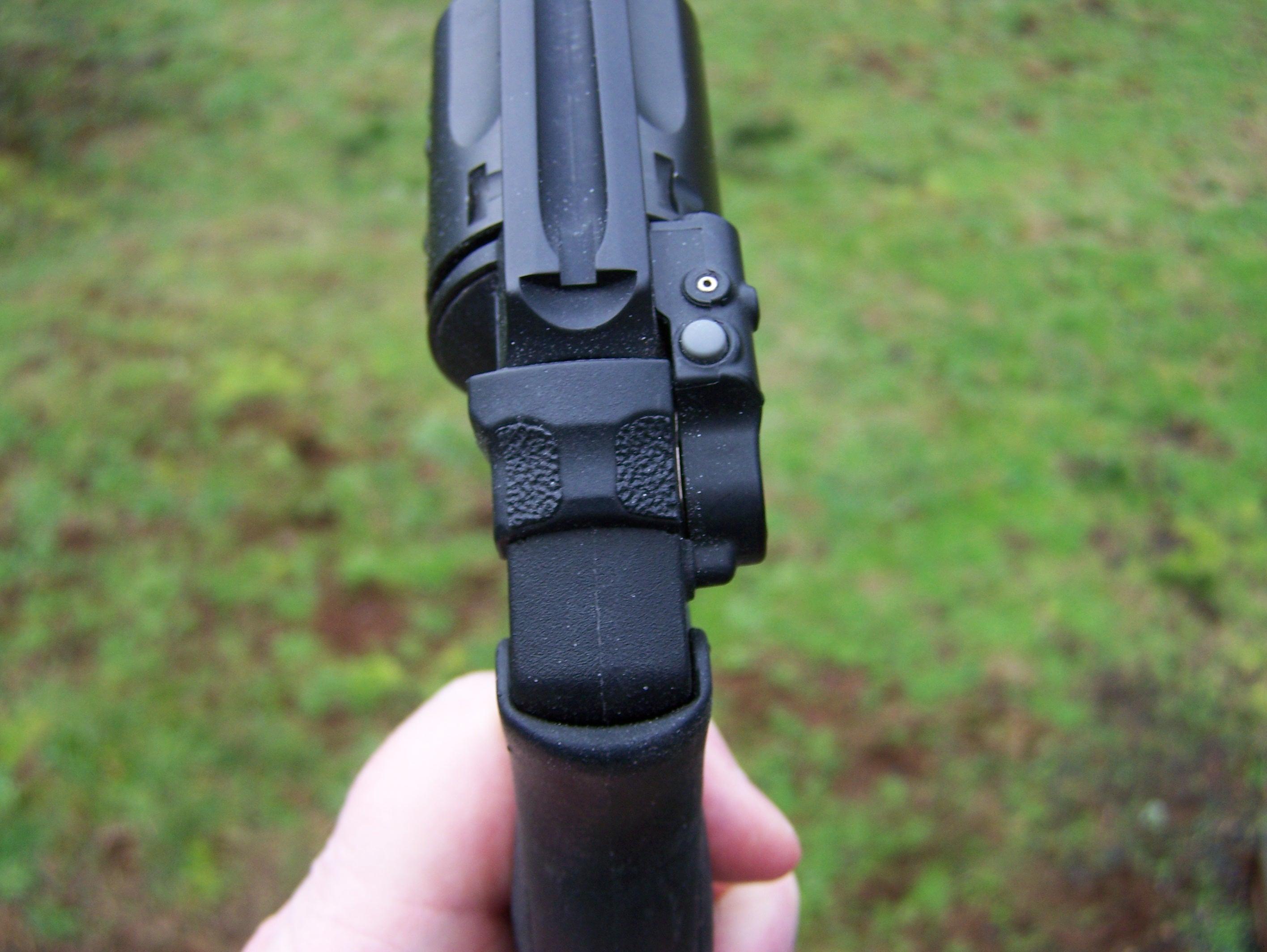
The unique aspect of the S&W Bodyguard snubby is the attached laser on the rear of the frame. (See the pics!) Mine has a laser manufactured by Insights, and some of the guns have a laser from Crimson Trace. I don’t know why the difference or the change, but both are effective lasers. The laser is switched on by pressing a little button on the top of it. It isn’t “instinctive” where you grab the gun and the laser turns on, like many of the Crimson Trace lasers do. They have pressure points or small on/off buttons that you don’t hardly notice. Just grip the gun and the laser comes on. Still, this is a nice laser setup, and it allows you to carry the gun in just about any style of holster. (Some laser setups don’t allow this.)
100_6501

The Bodyguard has a nice, black subdued finish on it that seems to help repel the elements, too. As mentioned, there is a stainless steel barrel, but it is inside of a shroud made out of aluminum. This keeps the weight of the gun down a bit. Many S&W snubby revolvers have a barrel that is 1.8” long. This one is 1.9” long. The rubber grips on the gun are nice for absorbing recoil, but they’re not nearly as soft as those made by Hogue or other aftermarket grip makers. Still, it is better than hard wooden grips.

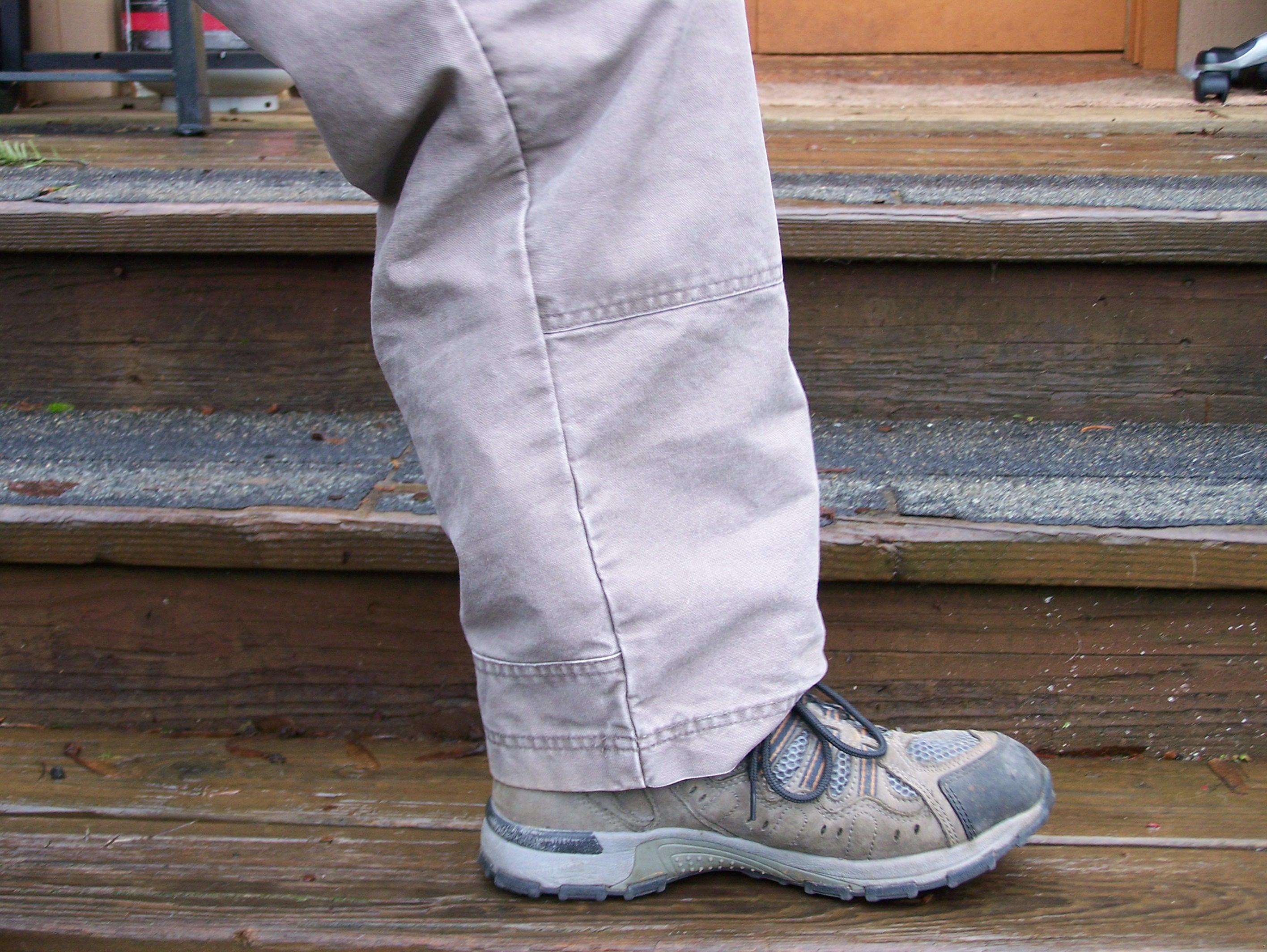
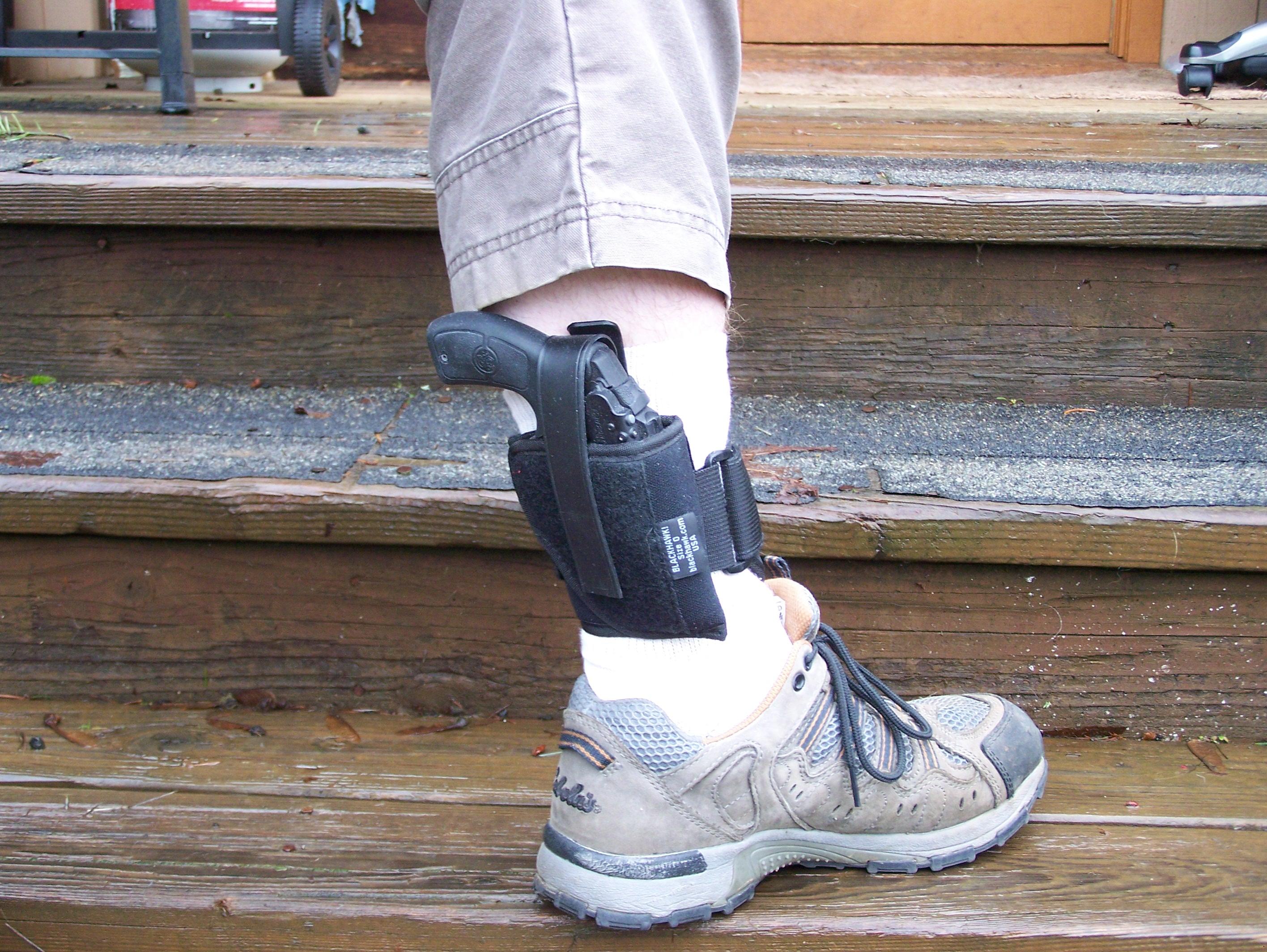
I’ll admit that for a lot of years I was a huge S&W fan but not any more for a lot of reasons. However, this little Bodyguard is one dandy concealed carry handgun. I don’t carry it a lot, and it is not my main carry gun. I carry it in an ankle holster from Blackhawk Products, and the gun rides nicely on the inside of my left ankle/leg. I don’t even know it’s there, mainly because I’ve carried a backup this way for many years. I don’t carry a reload for the Bodyguard, because it is my backup. However, I do carry a spare mag for my main carry gun.

100_6502

I had a good selection of .38 Spl ammo to run through the little Bodyguard. From Black Hills Ammunition, I had their 125-gr JHP +P load, their 148-gr Match HBWC, and their 158-gr CNL Cowboy load. From Buffalo Bore Ammunition, I had their 110-gr Barnes TAC-XP all-copper hollow point and the same load in +P that was designed for short-barreled revolvers, 158-gr Hard Cast Outdoorsman load, and their 125-gr Low Velocity JHP +P –, designed to expand at lower speeds. From Double Tap Ammunition, I had their 148-gr Match Wad Cutter. So, I had a good sampling of ammo to run those this little snubby.

There is some contention, and I’m not going to settle the dispute here, as to how effective any +P ammo is in a little snubby revolver. However, I will say this; when I carry a snubby of any sort, I stoke it with +P ammo, period! I believe the little bit added velocity will help those bullets expand better and penetrate a bit deeper to get the job done.

100_6507

There were no malfunctions with the Bodyguard, other than the laser batteries went dead on me and, of course, in bright sunlight a red dot laser is hard to see at best. Still, I like the intimidation factor of a laser, and it is great for low-light shooting. In all, I fired 300 rounds during my shooting sessions. Firing for accuracy was done at seven yards, which is a fair enough test for this little short barreled revolver. I didn’t use any sort of rest but just fired two-handed. I was able to keep all my shots around the 3-inch mark, and that’s good enough for the intended purpose of this little gun, which is self defense.

I can’t say any of the ammo I tested was really more accurate than any of the other brands or types I tested, not at that short range. I will say though that the Black Hills 158-gr CNL Cowboy load printed a tad bit tighter groups. It was not a big difference, but it was measurable. The Bodyguard was really a lot of fun to shoot, although the +P loads do get your attention after firing several cylinders full. However, in real life, you won’t even notice the recoil because your adrenaline will be pumping.

100_6508

So, if you think that the revolver is dead, think again. It isn’t! There are a lot of different makes and models of revolvers out there that are still good sellers, and they will get the job done. Many women prefer a revolver over a semiauto handgun, for the simplicity of aim and pull the trigger with no safeties to fumble with, no slide to pull back; you just aim and fire, and that is not a bad thing. So, next time you’re in the market for a new handgun, take a close look at some of the revolvers at your local gun shop.

– Senior Product Review Editor, Pat Cascio



Recipe of the Week: Knockwurst With Hot German Potato Salad

Ingredients:

  • 4 large potatoes
  • 1 onion, sliced
  • 1 tsp salt
  • Water
  • 4 slices of bacon, diced
  • 2 Tbsp flour
  • 2 Tbsp sugar
  • 1 tsp dry mustard
  • 1 tsp salt
  • ¼ tsp pepper
  • ¼ cup vinegar
  • ½ tsp celery seeds
  • 4 knockwurst links
  • 1 Tbsp finely chopped parsley

Directions:

  1. Peel and slice potatoes.
  2. Combine with onion in slow cooking pot, then sprinkle with 1 tsp salt and cover with water.
  3. Cover and cook on low for 5 to 6 hours, or on high for 2 to 3 hours.
  4. Remove from pot, drain thorougly and return to the pot.
  5. Cook the bacon in a skillet; then stir in flour, sugar, mustard, 1 tsp salt, and pepper, and mix well.
  6. Add the vinegar, 1/4 cup water, and celery seeds.
  7. Cook several minutes or until thickened.
  8. Pour over cooked drained potatoes and top with knockwurst.
  9. Turn the control to high, cover and cook for an additional 30 to 40 minutes or until mixture is hot.
  10. Sprinkle with parsley and serve.

Makes 4 servings.

o o o

Do you have a favorite recipe that would be of interest to SurvivalBlog readers? Please send it via e-mail. Thanks!


Letter Re: Moving to Alaska

HJL,

A recent contributor had a great letter about their move to rural Alaska. I wish them the best of luck.

Living in rural Alaska myself, though off the road system, I can only hope they fair well here. My family are in the process of doing the reverse move from Alaska to the Redoubt. Interestingly enough, I had a letter posted on Survivalblog about eight years ago about my move from the city to rural off-road system Alaska.

Alaska has some distinct advantages, mainly the lack of people outside cities and available subsistence in some areas. But everything else is expensive and logistically challenging.

For example, the writer mentioned buying a chain saw for firewood. Unless you are near somewhere to buy parts at a moment’s notice, everyone up here takes two saws into the woods. Parts take days to get and cost more in postage than they are worth. Get used to paying double for stuff.

A recent freighter into the port of Anchorage was a week late due to a longshoreman strike in Washington. All the store shelves across Alaska were looking pretty ragged by the 7-10 day mark. Imagine if they stopped coming. My shelves were stocked, but I get tired of salmon pretty quick any more.

Also mentioned was shipping guns. One option to think about for someone moving either way is to use the Alaska Marine Highway Ferry system. A ride from Whitter AK to Bellingham WA is fairly expensive to take a car, but you never have a border crossing to deal with. So your guns can stay safely packed away and generate no paper trail.

A short look at Alaska news headlines will tell you all about the money problems the state is having with the decline in oil prices. The state has no money. The oil companies are laying off right and left, so a lot of formerly well off people have no money and lots of bills. Things are getting down right tight up here. Fine if you want to disappear and just live off the land, but that’s much, much harder to do than one thinks up here. It take years to get setup right, and even then, you’d better like fish and rhubarb, working long hours with the bugs in the summers, and keeping sane during the other eight months.

Bryan B in AK


Economics and Investing:

Brexit Shows Why Central Planning Won’t Work

o o o

Ex-Barclays traders sentenced to up to six-and-a-half years for Libor rigging. Excerpt: “The sentences come four years after Barclays became the first of 11 powerful banks and brokerages to be slapped with a hefty fine for their role in the rate fixing scandal, sparking a political backlash that forced out former CEO Bob Diamond, an overhaul of Libor rules and the criminal inquiry.”

o o o

An economic riddle: Where are all the construction workers?

o o o

DANGER: The World Is Now On The Verge Of The Largest Destruction Of Wealth In History

o o o

Recent credit card hack is worse than you thought – DSV

o o o

SurvivalBlog and its editors are not paid investment counselors or advisers. Please see our Provisos page for details.


Odds ‘n Sods:

Amateur radio – HF go box – P.S.

o o o

They just don’t get it: TIME Suggests Another 9/11 Is Necessary to Re-direct American Anger

o o o

Video commentary from an older Brit on the chaos: We Saved Our Democracy

o o o

The Law Is Dying because Morality Is Dying Technically, morality is what we do, and ethics is what we ought to do, but you get the idea. – B.B.

o o o

Americans urged to ‘buy a gun, get trained, carry it always’ (Note: unrelated auto-starting video on the page.) – W.C.


Notes for Sunday – July 10, 2016

July 10th is the birthday of British novelist John Wyndham. (His full name was John Wyndham Parkes Lucas Beynon Harris, but Harris shortened that to just John Wyndham for his pen name.) He was born in 1903 and died March 11, 1969. Harris was a good friend of fellow novelist Samuel Youd (1922-2012), who wrote under several pen names, including John Christopher. Both men were famous for writing what are often called “cosy catastrophies”. Several of Wyndham’s novels and short stories have been adapted to film, with varying degrees of success. One of the best of these was a parallel universe story called Random Quest.


Budget Planning- Part 1, by Sarah Latimer

Let me start off by saying that I am not a Certified Public Accountant, lawyer, stock broker, licensed financial planner, or banker. I have no licenses or certificates that enable me to give special advice or guidance regarding your finances. I am also not an ordained minister, though I have attended seminary. What I am writing below comes from personal experience combined with a business degree and both business and home management experience along with my understanding of the Word given to us from YHWH– the God of Abraham, Isaac, and Jacob. (I believe it is necessary in these days to define which god one is referring to.) Mainly the following comes from the school of hard knocks, where I have learned through my own mistakes and successes as well as those of my friends and family and from the study of Scripture. So, please read and learn what might help you, but prayerfully make your own decisions, seek professional counsel where it is needed, and consider that my situation and those described here may not apply to you. Each of us is responsible for our own choices and the consequences of our actions, whether these actions have to do with working to obtain property, defending our property, or making property sale/purchase decisions.

What’s Money To You?

To me, money is a tool. It is merely a means of substitutionary value for something of real or perceived value. Oxford dictionary defines it as “A current medium of exchange in the form of coins and banknotes”. However, we are learning that the government is making it more difficult to use tangible coins and banknotes and is pressing for electronic money use rather than paper or coins so that they can track all of our spending. I think it is a good thing for us to track how our money is used but not a good thing for the government or others to know exactly how we spend our money. I use it to buy beans, Band-aids, and much more, but the list of all the things I buy from various vendors is for me to know and no one else. That’s very personal and private information!

On multiple occasions, I have heard a pastor or speaker say, “Show me your checkbook and I’ll tell you who is your god.” While there is something to that saying about the checkbook revealing our priorities, how we spend our money is between us and God. I do believe we will have to answer for our financial choices, along with all of our actions on that judgment day, and we need to take our financial decisions a lot more seriously, but our purchase history should be private.

A wiser man said, “Don’t tell me who your god is. Let me see what you do and then I will tell you who your god is.” People are watching us to see who our god is. If we make a promise to pay for something or to pay someone for the work and benefit we’ve received from their effort, we should be people of our word and pay them what was agreed in advance. Our Savior tells us, in Matthew 5:37: “But let your communication be, Yea, yea; Nay, nay: for whatsoever is more than these cometh of evil.” Either we are truthful people of integrity or not. Our God keeps His promises and so should we, at least to the best of our ability. Given this, we should be cautious about the promises we make, whether in regards to money or anything so that our “yes” can be yes and our “no” can truly be no. We must very thoughtfully and prayerfully enter into agreements, including purchase or sales transactions. Letting emotions rule our finances is no better than letting our emotions rule our tongues or our fists. It can get us into a lot of trouble and debt!

Lack of Self-Control in Spending Leads to All Kinds of Evil and Turmoil

Money is a dirty word to some people, while it is a god to others. At times, some have considered me to be rich, though only those outside the U.S. would likely say that about me now. My life choices, directed by a loving God, have brought me to a humble lifestyle, where I am far more content and truly happy than when I lived a more worldly and luxurious suburban lifestyle with the large, multistory four bedroom home with a manicured yard and sprinkler system on a cul-de-sac in a neighborhood that included million dollar homes and when I drove a Lexus and a Corvette. That was not the goal in my life and did not bring satisfaction! “Stuff” does not bring lasting happiness to anyone. My goal, which has brought joy and deep happiness, even in what seemed to be difficult circumstances, is peace with God, worshiping Him, and obeying Him. It is my hope that others will be drawn to Him and find the peace “that passeth understanding” and the truly abundant life He offers through belief in His Son, obedience to His Spirit, and Words of Instruction about spiritual, relational, and physical matters. By following God’s ways, we are able to find deep joy and contentment on this earth. It is not in the attainment of money that we find happiness or in its absence that we find sorrow. In fact the love of money opens doors for many problems in our lives. The apostle Paul wrote in his first epistle to Timothy:

“If any man teach otherwise, and consent not to wholesome words, even the words of our Lord Jesus Christ, and to the doctrine which is according to godliness; he is proud, knowing nothing, but doting about questions and strifes of words, whereof cometh envy, strife, railings, evil surmisings, perverse disputings of men of corrupt minds, and destitute of the truth, supposing that gain is godliness: from such withdraw thyself. But godliness with contentment is great gain. For we brought nothing into this world, and it is certain we can carry nothing out. And having food and raiment let us be therewith content. But they that will be rich fall into temptation and a snare, and into many foolish and hurtful lusts, which drown men in destruction and perdition. For the love of money is the root of all evil: which while some coveted after, they have erred from the faith, and pierced themselves through with many sorrows. But thou, O man of God, flee these things; and follow after righteousness, godliness, faith, love, patience, meekness.” 1 Timothy 6:3

Now, I am not saying that money in itself is evil. Oh, no! It is the love and obsession over money that leads to evil. When our eyes focus on money and the objects it will buy instead of our God and families, friends, and service to others, then we have derailed. We grasp for what rusts, breaks, decays, and dies instead of what has eternal benefit and provides deep fulfillment. Money is not required to produce a smile or generate laughter. We don’t have to buy a hug. These things have an intrinsic value that cannot be bought. While a purchased object may generate a smile, so can a joke, magic trick, a wink, or tickling. There are often non-monetary options that produce equally, or greater, valued results than what is purchased. Not everything is about money! Money is just a tool, and it is not bad when it is used as a resource rather than the focus of our attention.

When I hear of families having a difficult time managing on an annual income of $250,000 or more, I know there is something wrong, because most American families can get by just fine on a small fraction of this amount! Certainly, our economy is taking a toll and I have sticker shock at the stores myself, but there are too many things considered “necessities” that just are not. What I see is a lack of self discipline and budgeting in the lives of most Americans, just as it has been the case in my own life in the past. I can confidently say this is the problem for most families because of the enormous rate of indebtedness that exists in the U.S. It is astounding! It is not only our government’s indebtedness that has caused our nation’s weak economic situation either. In 2015, the average household credit card debt was over $15,000. Because that is an average, this means that there are many households was far more than $15,000 of credit card debt. That’s crazy! This does not consider the enormous additional debt from mortgages, college loans, car loans, and other types of debt; this is just credit cards. I shudder to think how people can carry so much debt. I shudder to recall how much debt burden I once carried, too.

Proverbs 22:7 tells us: “The rich ruleth over the poor, and the borrower is servant to the lender.” Debt is a heavy burden, and the lender may be a tyrant, changing the terms, confiscating property, or even evicting your family from your home. We have all heard of folks losing their homes to mortgage foreclosures. Now, we have also heard of cars, homes, bank accounts, furniture, and personal property being seized by the government because of college loan payment default.

I think that most people have given into the myriad of commercials and messages telling them that they need this item or that to be “acceptable”. Everyone wants to live in a home that looks like a model home, drive a new car, dress in the latest fashions, have their children in the trendy neighborhood or private school, and have the biggest flat screen t.v. on the block. None of that matters! Not any of this makes one bit of difference to who you are and whether you will survive TEOTWAWKI or how God will judge your heart. It doesn’t speak of who your god is either. In fact, the more luxury you have the less likely you are to point to the God of Abraham, Isaac, and Jacob. Sure, Abraham was a wealthy man, but he was also a hospitable and generous man, too. He gave his nephew, Lot, the first choice of the lands and remained very humble. God blessed him in spite of him getting the lesser quality lands. Even though Lot took the better lands and got into trouble, Abraham pleaded with God on Lot’s behalf. In Abraham’s maturity, his business actions spoke volumes about who he was and who his God was, too.

In Part 2 of this series, I will talk about the income portion of your budget, which includes all of the financial resources that comes into the household, and we will talk about expanding it.


Odds ‘n Sods:

Super typhoon hits Taiwan, cutting power and transport (Note: The page has an auto-starting video about the story.)

o o o

Has the Foundation Been Laid For the Confiscation of Guns? – W.C.

o o o

Video: Judge Jeanine nails it in her opening statement on Saturday. The issue isn’t racism; it’s anarchy! Dirt Bag Shooter & Obama: Judge Jeanine Opening Statement 7/9/16

o o o

The Race War Has Begun – When the leaders of the country decide that the law is only for us “little people”, this contempt for authority is what they breed in the populace.

o o o

Agency OK with race through Nevada desert; critics cry foul – B.B.


Notes for Saturday – July 09, 2016

July 9, 1956 was the birthday of actor/director/producer Tom Hanks. His acting in the movie Saving Private Ryan is riveting.

The same day in 1938 was the birthday of Brian Dennehy. He is most often remembered for his role as the alien leader in Coccoon, but he was cast in many other movies and in hundreds of television shows.

o o o

Unbelievable!

FBI didn’t record Clinton interview, did not administer sworn oath.

JWR’s Comment: Years ago, preppers started predicting Without Rule of Law (WROL) situations. I never thought that we’d see it come about quite this way. And on the same note, I distinctly recall one of my university history lecturers, Professor Harry Gailey, stating: “One of the distinguishing characteristics of a tyrant is that they consider themselves above the law, and the government treats them as such.” We have arrived, folks!

o o o

We’ve just started a special one-week “Fire Sale” on the Ten Year Special Edition SurvivalBlog Archive, which includes ALL of the blog posts and static pages from 2005 to 2015, as well as the biggest-ever collection of bonus books. You can get your choice of the two DVD set or a digital download for just $10.99. The Fire Sale ends on July 15, 2016, so order soon! – JWR

o o o

Today, we present another entry for Round 65 of the SurvivalBlog non-fiction writing contest. The nearly $12,000 worth of prizes for this round include:

First Prize:

  1. A Tactical Self-Contained 2-Series Solar Power Generator system from Always Empowered. This compact starter power system is packaged in a wheeled O.D. green EMP-shielded Pelican hard case (a $1,700 value),
  2. A Gunsite Academy Three Day Course Certificate that is good for any one, two, or three day course (a $1,195 value),
  3. A course certificate from onPoint Tactical for the prize winner’s choice of three-day civilian courses, excluding those restricted for military or government teams. Three day onPoint courses normally cost $795,
  4. DRD Tactical is providing a 5.56 NATO QD Billet upper with a hammer forged, chrome-lined barrel and a hard case to go with your own AR lower. It will allow any standard AR-type rifle to have a quick change barrel, which can be assembled in less than one minute without the use of any tools and a compact carry capability in a hard case or 3-day pack (an $1,100 value),
  5. Gun Mag Warehouse is providing 20 Magpul PMAG 30-rd Magazines (a value of $300) and a Gun Mag Warehouse T-Shirt; (an equivalent prize will be awarded for residents in states with magazine restrictions),
  6. Two cases of Mountain House freeze-dried assorted entrees in #10 cans, courtesy of Ready Made Resources (a $350 value),
  7. The Ark Institute is donating a non-GMO, non-hybrid vegetable seed package (enough for two families of four) plus seed storage materials, a CD-ROM of Geri Guidetti’s book “Build Your Ark! How to Prepare for Self Reliance in Uncertain Times”, and two bottles of Potassium Iodate (a $325 retail value),
  8. A $250 gift certificate good for any product from Sunflower Ammo,
  9. KellyKettleUSA.com is donating an AquaBrick water filtration kit with a retail value of $250, and
  10. Two cases of meals, Ready to Eat (MREs), courtesy of CampingSurvival.com (a $180 value).

Second Prize:

  1. A Glock form factor SIRT laser training pistol and a SIRT AR-15/M4 Laser Training Bolt, courtesy of Next Level Training, which have a combined retail value of $589,
  2. A transferable certificate for a two-day Ultimate Bug Out Course from Florida Firearms Training (a $400 value),
  3. A Model 175 Series Solar Generator provided by Quantum Harvest LLC (a $439 value),
  4. A Trekker IV™ Four-Person Emergency Kit from Emergency Essentials (a $250 value),
  5. A $200 gift certificate good towards any books published by PrepperPress.com,
  6. A pre-selected assortment of military surplus gear from CJL Enterprize (a $300 value),
  7. RepackBox is providing a $300 gift certificate to their site, and
  8. American Gunsmithing Institute (AGI) is providing a $300 certificate good towards any of their DVD training courses.

Third Prize:

  1. A Royal Berkey water filter, courtesy of Directive 21 (a $275 value),
  2. A $245 gift certificate from custom knife-maker Jon Kelly Designs, of Eureka, Montana,
  3. A large handmade clothes drying rack, a washboard, and a Homesteading for Beginners DVD, all courtesy of The Homestead Store, with a combined value of $206,
  4. Expanded sets of both washable feminine pads and liners, donated by Naturally Cozy (a $185 retail value),
  5. Two Super Survival Pack seed collections, a $150 value, courtesy of Seed for Security, LLC,
  6. Mayflower Trading is donating a $200 gift certificate for homesteading appliances,
  7. Montie Gear is donating a Precision Rest (a $249 value), and
  8. Two 1,000-foot spools of full mil-spec U.S.-made 750 paracord (in-stock colors only) from www.TOUGHGRID.com (a $240 value).

Round 65 ends on July 31st, so get busy writing and e-mail us your entry. Remember that there is a 1,500-word minimum, and that articles on practical “how to” skills for survival have an advantage in the judging.


Mindset of Financial Preparedness: The Color Code, by L.F. in Texas

We live in a world where almost everything happens rapidly and often by remote. Books and movies are downloaded from the Internet for instant entertainment. We travel freely and quickly around the world. Things like automatic dishwashers and laundry machines aren’t even remarkable anymore. And everywhere we go, in person or online, we are enticed to spend money freely, without thought of tomorrow. Being a prepper, however, means that we are thinking ahead to what might happen tomorrow, or next month or year, and getting ready for those possibilities. How does that affect our financial strategies?

Colonel Jeff Cooper was a Marine officer and a great tactical thinker, and founder of the Gunsite Academy, which is still a premier firearms training institute. He developed the color code to teach tactical awareness. The colors of the code are white, yellow, orange, and red. In condition white, you are relaxed and unable to respond quickly. A good example would be someone walking down a busy street, looking at their iPhone with headphones in place. That person is a perfect target for a robbery. In condition yellow, you are paying attention to your surroundings and are prepared to respond if anything unusual occurs. Col. Cooper often pointed out that there is almost never a time when it is safe to drop from yellow to white, even in your own home. In condition orange, you have spotted a potential threat and are thinking of options to respond. Your response time will be much lower if something happens when you are in condition orange than condition yellow. For example, think abut walking down that same street in condition yellow when you see a group of young men approaching wearing gang colors. You move to orange, cross the street, and place your hand on your concealed weapon. Finally, in condition red, you are actually under attack. You have made the decision to fight back and are responding to the threat. Going from condition white straight to red is difficult and makes an effective response unlikely.

The color code is a good way to visualize the mindset necessary to be ready to respond to a physical threat. But how can it help us financially? Our society encourages us to live in a financial white condition, so we need to understand why we should be living in yellow and preparing for orange and red.

The financial world has changed substantially in the last 30 years. In the 1980s, interest rates on savings were 6-12 percent. There was a reason to keep money in the bank, simply because it made more money. Currently, interest rates are being maintained at very low rates by the Federal Reserve, so those savings accounts make around 0.01% to 0.06%. So, if you put $10,000 in the bank for a year in 1984 at 10%, you would have $11,000 at the end of the year. That’s a good payoff. If you put the same $10,000 away now for a year at 0.1% (rounding up, assuming you found a great rate), you would have $10,010 at the end of the year. That’s enough extra to buy dinner at a fast food restaurant for one person. It is much less incentive to save. Meanwhile, negative interest rates are now a reality in Japan, Switzerland, Sweden, and Europe. If you put 10,000 into two-year Swiss bonds, for example, you would lose approximately 1.2% a year ($120). That’s crazy! Surely people will pull out their cash and put it under their mattresses? Apparently not. But people certainly are saving less than they used to.

So if we plan to prepare financially by saving cash in the bank, we need to realize that is not going to be a good long-term strategy. Not only will we be losing to inflation, but with negative interest that cash will continue to lose value. Saving via the stock market is a topic for another article, but suffice to say that in a situation in which preparedness strategies will be necessary, the stock market will be in a downturn also.

If we want to get out of condition white financially, we need first to become aware of the current financial situation, both in our own homes and in the country as a whole. The federal debt, of course, is almost beyond understanding, as it approaches 20 trillion dollars. Federal debt was set up by Alexander Hamilton in the 1790s to pay the expenses of the Revolutionary War, but that debt was actually paid off over time. In fact, paying off the Federal debt was actually accomplished twice, in the 1830s when the initial Revolutionary War debt was paid off and then a second time after debt was again accrued in the Civil War and paid off by the end of the 1800s. After the depression of 1929, however, the U.S. began accruing debt that would never be paid. Financial experts estimate that when interest payments reach about 12% of gross domestic product, the government will default. If interest rates remain near zero, we are a long way from that default. But if interest rates rise, we will get close to default very quickly. Now we know why the Federal Reserve is keeping interest rates low. So let’s plan for that to continue!

One of the prime movers in both our national and our personal financial situations is spending. If we spend more than we make, we will be in debt. Nationally, we may not be able to influence the problem. However, personally, there are decisions we can make every day to put us in a condition of financial readiness. Let’s take a look at possible differences between a person in financial condition white and someone else in condition yellow.

Mr. White is a manager for a large company and makes $58,000 per year. He lives in the suburbs in a four bedroom, four bath home, which cost $285,000 with his wife and three children. They all have cell phones. He drives to work in his 2015 Escalade. He plans to get a new car next year. He always stops on his drive in at Starbucks, where he gets a Grande black and white latte and usually also a bite to eat. He eats lunch at one of the many restaurants around the office. Today at lunch, he was telling one of his coworkers about the trip to Florida he is planning for next month. His family can’t decide between Disney and Universal Studios, so they plan to stop at both. Mr. White is also interested in preparedness and often watches Doomsday Preppers with his wife on their very large bedroom TV, which gets all possible channels of cable and also wifi for $220 per month. The kids don’t like the show, so they watch TV in their own bedrooms. Mr. White has an AR and a couple of pistols, but he hasn’t put aside any food or other supplies because he just hasn’t got money to spare for that.

Mr. Yellow also works as a manager in the same company and makes the same $58,000 per year. He lives farther away from work than Mr. White, but he drives his 2012 pickup truck to the train station every morning and takes the train to work. Mr. Yellow and his wife live on a small farm, in a three bedroom, two bath home, which cost $185,000. Two of their three kids share a bedroom. Mr. Yellow brings coffee from home on the train and also uses the time to write a blog on self-sufficient living. Advertisers on the blog pay to promote products, adding an extra $200 per month to his income. Mr. Yellow also brings his own lunch, often composed of products from his garden and farm. He doesn’t have cable, but his family has a wifi Internet system, which is $50 per month and provides limited data. They have one TV in the living room, but they usually play board games or read instead of watching it. Only one of Mr. Yellow’s kids has his own phone, and he pays for it himself by mowing lawns for the neighbors. The Yellows are planning a camping trip to Yellowstone this year and will practice survival scenarios as they see the sights there. The Yellows have a year of freeze-dried and home-canned food stored, and everyone in the family over age seven is trained and able to use firearms and has equipment appropriate for their age.

I know what you are thinking. Not everyone wants to move to the country and quit spending money on expensive coffee. Your lifestyle changes don’t have to be that extreme to move to condition yellow. But do you really want to remain in financial ignorance? Probably not. Let’s look at some concrete and realistic steps to get out of white condition.

First, control your discretionary spending. If you eat out all the time, that’s a huge area of potential savings. If you are going to Florida to visit a theme park on vacation, pick one park and get the multi-day discount tickets. You don’t have to see everything at once. Evaluate any monthly recurring bills. Cutting or at least downsizing cable will help. Look at your phone bills. I had AT&T for years with unlimited data grandfathered. I finally decided to make a change when the bills hit $150 per month. Now I pay $45 per month for more data than I use, my phone cost $39 and the battery lasts all day. (It’s an android). Yes, I missed my iPhone for a while, but I got over it. Also, my service is just as good as it was on AT&T, but when I call the company they actually answer! Who knew?

Second, control your monthly spending that isn’t completely discretionary. For example, if you can live in a somewhat smaller house and save $200 per month on your mortgage, that will add up to $2400 per year or $24000 over 10 years. That’s tax free income, by the way. Even better, if you can live in a small house and pay off your mortgage, your lifestyle will improve dramatically. Calculate how much interest you are paying monthly and you will convince yourself. Check out your healthcare bills. Even if you have company insurance, you may not be using that vision plan, and if you are buying insurance in the “marketplace”, you certainly need to shop yearly.

Finally, get out of debt and stay out. If you are in debt, you can’t walk away from your job if things go bad. You can’t move easily to another area of the country. You don’t have a cushion in the case of illness or injury in the family. There are many resources to help with planning to reduce debt. Dave Ramsey and Crown Financial both offer courses that are helpful. The tips in the paragraphs above are the first step– cut spending.

Why do we want to be in financial condition yellow? If we are aware of our surroundings, we know that unexpected events may happen and we are ready for them. So if we lose our job to layoffs, have a family member with a serious illness, or just need a new air conditioner in our vehicle, we can respond quickly and without panic. In condition yellow, we are spending less than we are making. We have savings in cash to cover several months of living expenses, and we are prepared with food storage and supplies that can be used in a financial emergency, just like in any other emergency. We know that something may happen, and we are ready.

What happens in financial condition orange? Condition orange means that we have become aware of a potential threat. If you find out your company is in financial difficulty, you might move to condition orange. Cut all unnecessary spending and save every possible dime, check your food storage, and calculate how long you can go without an income to prepare for potential layoffs. If you have been living in yellow, you may be prepared to live for six months or a year even without further spending cuts. If you have been living in white, you may want to get your resume ready quickly.

And finally, what is condition red? If one of your children is severely injured in a car accident and you have to take time off work to be with the child in the hospital and then months of rehab, can you still pay your mortgage? We hope it won’t happen, but we live in yellow so that if a financial disaster happens, we can still remain ready. Another example of condition red is what may happen if the global financial markets become unstable. If you have not been following events in Venezuela, you should read up on the current problems there. Financial mismanagement has left the entire country short of food and basic supplies. Venezuelans are in condition red with no end in sight. Unfortunately, many of them went from condition white straight to red. Living in condition yellow, hopefully you would see the early signs of financial collapse and increase your stockpiles of food, spending cash savings that would shortly evaporate anyway with rampant inflation. Making the transition gradually from yellow to orange to red is far less painful than the jump from white to red.

So what about savings, in this era of negative interest rates and bank bail-ins (in which failing banks seize depositor’s money)? It is still helpful to have cash in the bank to cover expenses for a few months. However, saving more cash in the bank or cash instruments, like CDs or money market funds, is no longer a safe and effective investment. Gold and silver are relatively easy to store, but they are also somewhat risky as prices fluctuate and you may have to pay a premium to sell them. Stocks are always risky. As my mom, who lived through the Great Depression, used to say, “Never invest money in the stock market that you can’t afford to lose.” That’s still true today. Food is bulky to store and may have a limited shelf life, but it has certainly appreciated in value considerably in the last 30 years, if you have been following prices at the grocery store. Guns similarly have consistently appreciated in value, though they may become illegal to own eventually (topic for another article!). Land or single family homes may still be good investments, though they are not easily liquidated. Diversification is probably the best investment preparation at this point. Spending money to learn new skills may also be a safe and effective investment. For example, cheese making, crafting furniture, working as a gunsmith, training police dogs, or other skills and crafts might become profitable hobbies and potentially life-saving sources of income in an economic collapse.

If you have been living like most Americans in financial condition white, accruing debt and consistently spending more than you earn, simply reversing that equation and paying down debt will put you into condition yellow. Paying attention to your financial condition is the first step to effective financial preparedness. If you have already eliminated credit card and vehicle debt, then began preparing for potential financial threats, and consider paying off your mortgage as well. Finally, be aware and informed of financial events in the United States and the world, and consider the implications for yourself and your family. Living in financial condition yellow may mean a few lifestyle changes and some extra time spent following world events, but the ability to respond to financial threats without surprise or stress is a good trade for that iPhone or grande latte.


Three Letters Re: Canning Jars

HJL,

I just wanted to let the readers know that Uline has a wide selection of jars, from 1/2 pint up through 1/2 gallon, with lids and rings. – C.S.

o o o

Hugh,

Here is an interesting way to store mason jars in your pantry: Bug-Out Pantry – R.T.

o o o

Hi Hugh,

Thanks for the info on food preservation. In this latest round, you mentioned pressure canning only lean meats. Why is that? Fat is an essential nutrient. – J.J.

HJL comments: The fat complicates the canning process and can cause less than desirable results. Because the meat is a non-acid product, long processing times in a pressure canner are the norm. The fat tends to liquefy at these temperatures and can interfere with jar sealing and because of the processing times, you can’t just run the jar through another heat cycle if it doesn’t seal. In other words, the failure rate of canning high-fat meat tends to be higher. That’s not to say that it can’t be done; it just complicates the matter.