“Then the word of the Lord came unto me, saying,
Before I formed thee in the belly I knew thee; and before thou camest forth out of the womb I sanctified thee, and I ordained thee a prophet unto the nations.” Jeremiah 1:4-5 (KJV)

“Then the word of the Lord came unto me, saying,
Before I formed thee in the belly I knew thee; and before thou camest forth out of the womb I sanctified thee, and I ordained thee a prophet unto the nations.” Jeremiah 1:4-5 (KJV)
August 5th is the sad anniversary of the Mann Gulch Fire in Montana that took the lives of 13 firefighters (including 12 smokejumpers and one former smokejumper), in 1949. The intense, fast-moving forest fire took place in what later became the Gates of the Mountains Wilderness. The events of that fire were chronicled in the book Young Men and Fire by Norman Maclean and immortalized in the haunting lyrics of the ballad Cold Missouri Waters by James Keelaghan.
o o o
Today, we present another entry for Round 66 of the SurvivalBlog non-fiction writing contest. The nearly $12,000 worth of prizes for this round include:
First Prize:
Second Prize:
Third Prize:
Round 66 ends on September 31st, so get busy writing and e-mail us your entry. Remember that there is a 1,500-word minimum, and that articles on practical “how to” skills for survival have an advantage in the judging.
What are you preparing for? Are you getting ready to survive an EMP attack? A financial meltdown? Flu pandemic? Nuclear holocaust? Regardless of what we are preparing for, sometimes it is healthy to ask ourselves how we are living in the meantime. Those of us who feel a need to prepare do it with a passion, but are we preparing in sensible ways that allow us to enjoy life each day, or are we so busy watching and waiting for the chaos of life to justify the time and money we’ve spent on our “preps” that we miss a lot of the important business of living in the moment?
I was born in the late 50’s and grew up just outside of Washington, D.C. The Cuban missile crisis happened while I was in kindergarten. To this day, I remember it vividly. We were sent home early from school wearing name tags. When my sister and I walked up to our house, my father was loading up the car so we were ready to flee at a moment’s notice. Around that same time, I remember touring a fallout shelter, which my parents were considering buying and burying in the backyard. Living where we did, they thought long and hard about that one. Lots of our neighbors did, too. A few years later, I remember standing on the porch of our suburban D.C. home with my father after Martin Luther King had been killed. Riots quickly erupted. We could hear the explosions in downtown D.C., only a few miles away, from the rioting and devastation. The experience was chilling. Then Richard Nixon resigned after Watergate. I was in college at the time and working a summer job at the Pentagon. I listened as people I worked with, who came from all different backgrounds, actively talked amongst themselves and wondered if the government was going to fall and if the guidelines provided by the Constitution were gone forever. I remember sitting in line for gas during the gas crisis of the 70’s and creeping along mile after slow mile (on odd or even days, according to your license plate number) for a turn to fill up the tank. When I married a career Army man, we spent years living overseas, mostly off-base in German and English neighborhoods. During the first Gulf war, while my husband was deployed to the Gulf, military families living off base were given very specific safety instructions. One of the things I had to do every morning was get down on my hands and knees to check under the car before I drove our children to school to see if there was anything suspicious under there. I would always keep the children inside while I turned the key in the ignition, just to make sure I hadn’t missed anything and the car didn’t explode. Sound to you like maybe I was overreacting? My husband was the duty officer of the day when the Red Army faction tried to blow up the NATO school in southern Germany with a car bomb in the 80’s. He only survived because of a faulty timing mechanism on the bomb.
So what else is new, you might ask. You say that you already know we live in an unsettled world. My point in rehearsing my little history is to share the fact that, although I grew up in a home where we were always prepared and my husband and I continued to practice always being prepared, I never felt like a prepper. I applaud prepping. I respect independence and self-sufficiency. However, I see too many people today who are so busy prepping that they seem to have forgotten how to live happily in the here and now. I offer up the following guidelines as examples of my own benchmarks. They are my mental safeguards that help me to be prepared but keep me from crossing over into an unhealthy obsession with prepping. And yes, there is such a thing as an unhealthy obsession with prepping. Any virtue carried to an unhealthy extreme becomes a liability.
Rule #1: Prepping supplies cannot spill over into the comfortable living areas of my home. I don’t care how valuable certain items might be for bartering after the SHTF, if they interfere with my ability to provide a comfortable living environment for my family, then they have no place in my home. Making memories in the here and now is important, and I don’t want my child’s predominate memory being that there was never a clear path to walk between rooms and that she was embarrassed to invite a friend over because the clutter was so bad. I believe in stocking up; I really do. I have a tower of TP out in the shed and buckets of wheat in the downstairs closet to prove it. However, my family members feel like they live in a clean, comfortable home, well, at least most of the time.
Rule #2: Every spare minute cannot be devoted to prepping. Prepping takes time and careful thought, but every hour spent prepping is an hour that you will never get back with your family for family memories. We combine the two when it makes sense. Working in our garden together as a family teaches many valuable lessons. However, if the kids are endlessly waiting around to play football with their dad and he is always too busy because it is more important to organize his bug out bag, then the wrong lesson is being taught. I have watched parents justify all of their time spent prepping by saying that they are doing it for their family. In my experience, children would rather have their parents’ time than just about any other resource. Okay, so maybe they won’t have the coolest gadgets or the greatest variety of foods in a crisis situation. But if they have good memories with their parents in the here and now, most will consider that a more-than-fair trade-off. There is also a much greater likelihood that they will function more effectively as a family unit and know how to support each other. They will also probably be happier and more adaptable.
Rule #3: Prepping decisions need to be jointly agreed on by both spouses. Otherwise, resentment simmers and eventually boils over. The biggest argument my husband and I ever had (and this is the truth) was about shipping empty Clorox bottles I had saved for water storage from Massachusetts to England during a military move. He was livid that I would even think of expecting the U.S. taxpayers to spend their hard-earned dollars on such folly. My position was that it had taken me two years to save up that many empty bottles. I made enough sacrifices as a military spouse already. It wasn’t fair that every two years I had to go back and start from zero again. In the end, we compromised. Mostly, I gave in. We shipped a few empty bottles– just enough so I could start a water storage plan as soon as our baggage arrived. The rest were thrown away. Prepping decisions always involve time or money, and both are important resources. Both parties need to be equally invested in those decisions. Even if one party is willing to do all of the gardening chores, both parties need to be in agreement on the amount of lawn to dedicate to the garden as opposed to, say, a hot tub and pool.
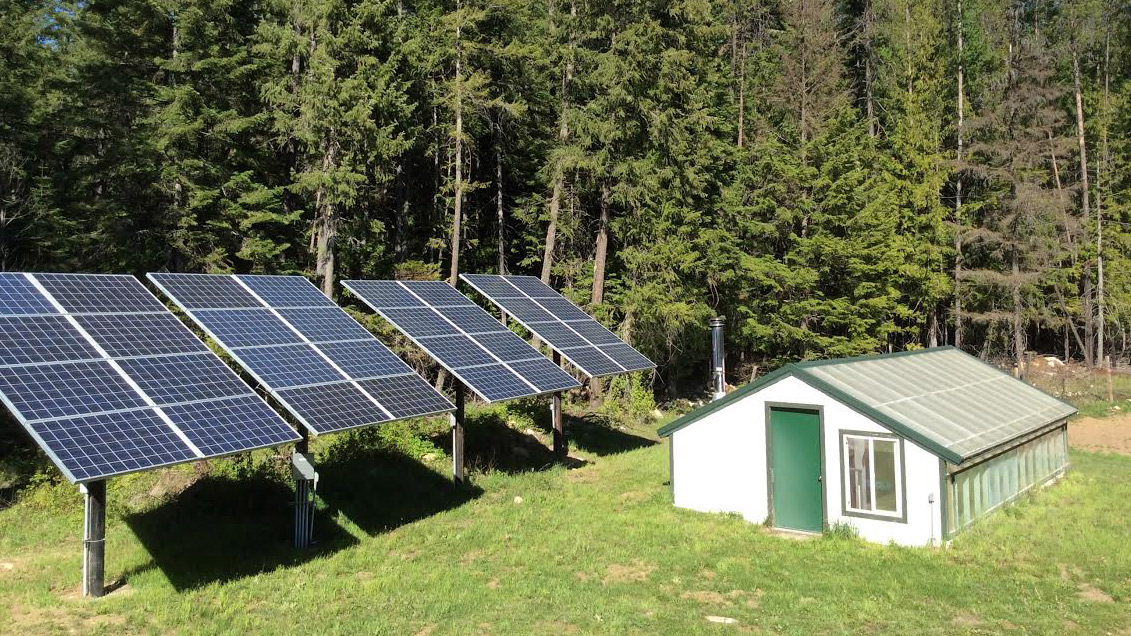
Rule #4: Specialization is smart. Be grateful for the skills of others. They save you boatloads of time and effort, which allows you more time to enjoy the genuine pleasures of life. None of us is good at everything. I am really good at sewing, storing and preserving food, and gardening, but I am hopeless at figuring out solar energy configurations and options. In fact, pretty much anything having to do with energy seems to slip right out of my brain, no matter how many times I try to get it to stick up there. Luckily for me, my brother helped me to set up a very efficient and functional off-grid solar system that would power our freezer, fans, wheat grinder, lights, and other small electrical appliances if the power went out. I am now looking for a smallish fridge that will work well given the capacity of the system. My brother is my best source of advice. Likewise, he was thinking there was no point in his trying to garden at his cabin, which sits above 8000 feet in the Rockies. I was able to share with him some tomato seeds I had that were developed in Russia during Soviet times for a short, cool summer growing season. He hasn’t planted them yet, but the growing seasons aren’t that different, and I think there is a good chance that they will work. Being able to share your individual areas of specializations with those you trust can save everyone valuable time, which can then be spent on simply enjoying life.
Rule #5: Keep the Sabbath Day holy. I find that if I focus on worshiping my Savior on the Sabbath, my time during the rest of the week is expanded to compensate. My financial resources also seem to stretch further. It has to do with the economy of heaven, and it really does work. My husband and I never prep on the Sabbath, and we feel that we have been blessed in our preparedness efforts as a result. Try it for yourself. If there is a particular area of being prepared that challenges you, or if you are short of funds for a particular purchase and you can’t see where the money is going to come from, or if your spouse or other family members are not as supportive of your efforts as they could be, try simply keeping the Sabbath day holy; test the Lord. He always comes through. I can say that miracles have happened in my own life by following this simple principle.
No matter how many years we are blessed with, life is short. While there is no denying that we live in a dangerous world that challenges us with a multitude of different scenarios to prepare for, we always need to be mindful of the need to live our lives each day with gratitude and joy and to set the example for other family members in this as well. Peace comes from being prepared, yes, but joy comes from living. Here’s to finding a sensible balance.
Dear Editor,
We had a line of storms blow through with extraordinarily strong winds, blowing trees down over multiple counties. We were blessed to have family, friends, and a church member help clean up the limbs and fallen tree on the family place. When lunch time came, I had to run to the store and get some food to feed everybody. This gave me a great idea: Along with the food you put back, include a portion for one or two meals for around ten people, so that you can feed whoever comes to help out. A spaghetti dinner for ten is less expensive than tree service and an appropriate “Thank you!”
I also have a question about red dot sights you may be able to help with. I would like to find one that could withstand the beating that being mounted on an HK91 delivers. I had a bad experience with an open red dot on a much gentler 308: The screw-on battery cover kept popping off while shooting. So, I’m understandably wary. BSA warned me against using their red dot tube sights on the HK91 platform. (I can provide the email if desired.) Is there a red dot sight that won’t get beat to bits riding that bull? Thanks, and keep your stick on the ice! – Cliff
HJL Comments: red dot tube sights that can take a beating pretty much leaves out all of the lower cost options. The only two that I have successfully used on such platforms are the Trijicon and Aimpoint Pro. Both are not inexpensive options, but you pretty much get what you pay for.
No cash allowed: Stores refusing to accept money – K.B.
o o o
Death of ‘financial whiz’ on Queensland beach exposes suspected $100 million Ponzi scheme – A.S.
o o o
Bank of England wields stimulus ‘sledgehammer’ to beat Brexit blues. The Bank of England has cut rates for the first time since 2009 along with restarting bond purchases.
o o o
Chicago Seeks Tax Hike to Avert Insolvency for Pension Fund
o o o
SurvivalBlog and its editors are not paid investment counselors or advisers. Please see our Provisos page for details.
How To Navigate Using the Sun and Stars – DSV
o o o
A rather long video (2½ hours), but if you’ve got the time, it’s well worth the watch: The Truth About The Fall of Rome: Modern Parallels with Stefan Molyneux – T.Z.
o o o
Princeton Study Exposes New Ways Sites Are Spying on You – G.G.
o o o
DHS To Run Elections, Wants Voting Classified As “Critical Infrastructure” DHS has turned America into a Police State and now they want to take control of our elections! According to a NY Times article, the Obama administration wants DHS to run our electronic ballot casting system. DHS wants to classify our election process as “critical infrastructure”. Do you really believe we can trust DHS with our voting system? DHS/TSA have been accused of corruption nearly since their inception – H.L.
o o o
Wearing ‘Don’t Tread on Me’ insignia could be punishable racial harassment – B.B.
“Conservatives and liberals are kindred spirits as far as government spending is concerned. First, let’s make sure we understand what government spending is. Since government has no resources of its own, and since there’s no Tooth Fairy handing Congress the funds for the programs it enacts, we are forced to recognize that government spending is no less than the confiscation of one person’s property to give it to another to whom it does not belong – in effect, legalized theft.” – Walter E. Williams
On August 4th, 1944, 15 year old Jewish diarist Anne Frank and her family were captured by the Nazi Gestapo. The Franks had taken shelter is a small space in a sealed off area of an Amsterdam warehouse along with another Jewish family and a single Jewish man. They were aided by Christian friends who brought them food and supplies. Her diary survived the war, overlooked by the Gestapo, but Anne and nearly all of the others perished in the Nazi death camps.
This is the second article in a series about using intelligence for preparedness. I’m starting from square zero, in order to introduce a new crop of Americans to the concept of using intelligence, to prove that there’s a need for intelligence, and to get readers quickly up to speed on how to incorporate it into their security planning. After getting caught up to speed, if you’d like to gain a deeper knowledge and put theory into practice, a book entitled *SHTF Intelligence will show you the way forward. You can find a small homework exercise here.
In the first article, we covered why we need intelligence and an introduction to the Intelligence Cycle. We use this cycle in order to produce early warning intelligence and threat intelligence; those are the top two priorities for the Analysis & Control Element (ACE) in a SHTF situation. Our ACE is the brain where we funnel information and out comes actionable intelligence. The ACE’s job is to inform the leadership about threats in the area, where they might be, and what they might do next. If we can get community involvement and start producing intelligence, then our work will be well worth the effort.
This second article is going to take our intelligence requirements– the things we need to know but don’t– and move on to Phase 2 of the cycle: Collection. (If you haven’t generated any intelligence requirements yet, you can get a start at the homework page.)
In any SHTF situation, we’re going to face one of two problems: either we’re not going to have enough information to make well-informed, time-sensitive decisions, or we’re going to have too much information to wade through, which will slow down our decision-making process. So what’s the lesson? We need to begin developing streams of information now in order to avoid problem number one, and we need to know what to do with that information in order to avoid problem number two. Let’s focus on solving problem number one.
It seems like a poor decision to believe that we’ll have access to lots of information during an SHTF scenario. I’m more than willing to concede that information will not be as inexpensive and easy to collect then as it is now. So the more information we can collect now, the less we’ll have to collect later. For now, while information is inexpensive and easy, we’re going to focus mainly on the Internet and other widely available sources of information.
Say what you want about Google, but there is no better online tool to collect massive amounts of information. (That obviously goes both ways, as it’s always collecting information about you, so it’s a good idea to use online anonymity tools and an anonymous or pseudonymous email address.) We run into a problem, however, when collecting that information monopolizes our time. Who has time to sit at a desk and search for hours on end for information that may not even exist online? Not me, and that’s why we need to automate collection as much as possible.
Google Alertsis a great resource for automated intelligence collection. Some of my searches include:
Etc…
Also, be sure to replace “Waller County” with your own town or county and state, and start getting more local information. You could even do searches for the name of your community or subdivision or for nearby landmarks. If you need help creating searches on Google Alerts, then just refer back to your intelligence requirements, which identify your intelligence gaps. (Caveat: You’re likely going to get some articles or posts that aren’t relevant. Don’t worry about them. Focus on what satisfies your requirements or that you can use to produce area intelligence.)
What Google Alerts does for us is creates a daily roll-up of new articles that Google finds about those subjects. I start my day every morning checking my Google Alerts to find more information about my area, and it saves me a great deal of time. Now, assuming that our searches use quality logic, one problem we may run into is a lack of reporting, especially if you live in a very rural area. If that’s the case, then we have a few options. First, I’d encourage you to go volunteer with your county sheriff’s office or local police department and get to know the crime, drug, and gang information from knowledgeable sources. Second, we could approach our local paper, if they’re not already doing it, to start writing more about crime or drugs or gangs (or all three) in the area. Third, if there’s no area paper or they’re not interested, then we could start doing it ourselves. (Local area “micro-papers” like the Appalachian Messenger are a great way to get our message out to the community, as well.)
I’d also encourage you to search Twitter and other social media for your area. For instance, a search for Hempstead, Texas on Twitter doesn’t seem to reveal much pertinent information immediately. However, I’m identifying people who live nearby posting about what’s important to them, and that’s certainly of some intelligence value. After a little digging, I’ve found a like-minded individual and discovered someone who could be a threat to my community.
If you’re concerned about critical infrastructure in the area, I’d steer you towards the Energy Information Administration (EIA) and their US Energy Mapping System, where you can see the critical infrastructure in your county (or across the country). If you’re interested in the human terrain, sites like City Data are great resources with tons of relevant information and mapping tools.
Of course, we can’t forget about the radio networks. You can rely on your Ham radio guy, or you can study for the technician or general class amateur radio test and begin learning Ham radio yourself. Forget about transmitting for a moment. Our ability to listen into communications, whether they’re from first responders, law enforcement, or a Ham radio operator passing along relevant information, is a mission-critical skill for the ACE. If we don’t have around-the-clock monitoring of at least police scanner, then we’re missing out on potentially a lot of important information.
In a grid-down situation, or a scenario where our intelligence requirement can’t be satisfied with open source information, we’re going to rely heavily on other humans to collect for us. Let’s steer clear of calling this “source operations”, because it doesn’t need to be that complex or professional to get us through an emergency. By expanding our circle of friends and acquaintances, we’re expanding our access to information. Building rapport and becoming friends with individuals who are likely to have important information is going to greatly increase our ability to maintain situational awareness.
Beyond that, we should be using the eyes and ears of those in our community. We need to get our neighbors “bought in” to the idea that community security is everyone’s responsibility. I hate to use the phrase “See Something, Say Something”, however, DHS is on track to building lots of channels of information of potential intelligence value. Our message to the community could be as simple as, “Let me know if you see anything suspicious.”
Alternatively, starting (or joining) a neighborhood watch program is a great option. Not only will we get access to law enforcement officers and crime information, but we can also build a reporting system and give our community members a seat at the table. It also gives us a great excuse (something we call “cover for action”) to go door-to-door asking questions and providing information as the block leader of the Neighborhood Watch.
Finally, we absolutely need to be using police scanners and any other technology we have in order to stay on top of the changing security situation. In the Ultimate ACE Startup Guide, I’ve outlined what we need, why we need it, and where to get it.
When we consider all the websites, radio frequencies, and humans to which we have access, there’s virtually no end to the potential for collection. (Just ask the NSA.) Having developed intelligence reporting streams is going to pay dividends for us when we have to navigate our way through an SHTF situation, and it’s going to solve problem number one: not having enough information. That’s a problem we can avoid by doing some homework now and setting our community up for success by developing sources to use later when we need to provide security.
In the next article, we’re moving to Phase Three of the Intelligence Cycle, which is Analysis & Processing. I’ll talk about how we can sort through information and begin building intelligence products that will support our mission of community security.
Samuel Culper is the director of Forward Observer, a threat intelligence service that focuses on domestic SHTF issues. He’s a former military and contract intelligence analyst, and author of SHTF Intelligence: An Intelligence Analyst’s Guide to Community Security. You can find out more about the SHTF Intelligence Center at his website.
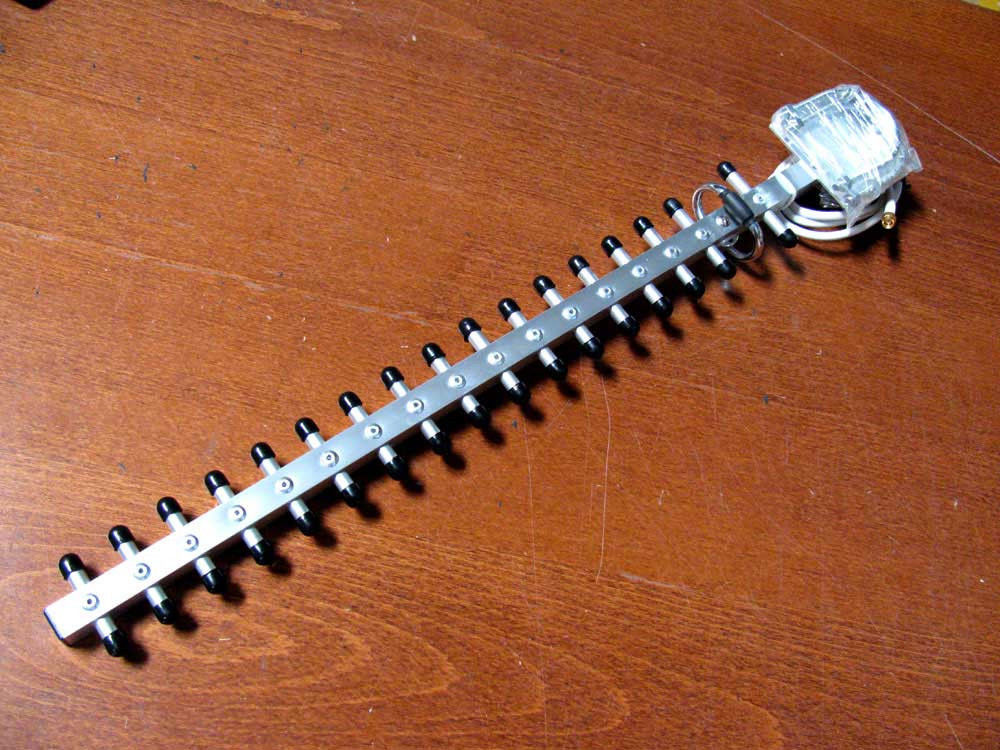
It’s better to find an adapter with antenna port. This is a high-powered single-band adapter or a dual band (I’d recommend the 5Ghz band if possible, but it is still a bit rare) with RP-SMA connection. Then add a good antenna; the omni is probably equal to the Yagi. If there isn’t interference and is dual band but this Yagi will pull in from a longer distance. If you can get two and get a connector, you can put it “in the middle” like in a tree and point one at the source and one where you are using it, and it will be a very narrow beam. And, yes, I’ve used such. There are other adapters, antennas, and amplifiers (which I won’t go into) when I didn’t want to go through the problem of installing cable for just a few hours per day when I was home and a “main office lobby with free wifi” was available. There are various ways to get passwords for routers. Another thing is to get an inexpensive router and just “install it free” and leave it somewhere they have a few loose ethernet connections.
One thing to be careful with is some adapters can change their MAC address, which can be used as a fingerprint. (It will indicate the manufacturer, and if they try hard they might be able to trace who originally bought it.) Either randomize the MAC or buy “used” and rotate or use wifi adapters as you would “burner phones”. While the MAC is normally only known to the router, it will leave a DHCP record for hours or days on most routers. – TZ
Man The Lifeboats : US Economy Sinking – Mike Maloney
o o o
SRSrocco Precious Metals Webinar: Big Events Coming & 1 Oz Silver Buys 6 Months Of Food In Venezuela
o o o
Rush to withdraw savings as threat of negative rate looms – DSV
o o o
Why The Bear Market Could Be Over In A Flash
o o o
SurvivalBlog and its editors are not paid investment counselors or advisers. Please see our Provisos page for details.
Robb Moffett, from Rob’s Homemade Life posted a new video that shows a DIY body camera from an eyeglass pouch and an old Kodak Playsport video camera. Remember, everyone is a reporter now.
o o o
Starving Venezuelans Break Into Zoo to Butcher Animal. This is what Communism does to a country! The zoo has lost 50 animals so far – starved to death. Being food secure in one’s home is critical! Governments can and do turn on its citizens – H.L.
o o o
Obama Shortens Sentences For 56 With Gun Convictions – B.S.
o o o
Germany sees record requests for self-defense weapons – P.S.
o o o
OPSEC – Very Cool Hardware Firewalls to connected with a dedicated VPN server – D.W.
Government’s view of the economy could be summed up in a few short phrases: If it moves, tax it. If it keeps moving, regulate it. And if it stops moving, subsidize it. – Ronald Reagan
August 3rd, 1846 is the day that the Donner party found a note warning the emigrants that their expected route through the mountains ahead was nearly impassable. Hastings, an unscrupulous trail guide, had created his own “short cut” route and wasn’t even at the meeting place at Fort Bridger but had left word for the party to continue on. Hastings had claimed easy passage through the rugged Wasatch Mountains but had left a note attached to a forked stick for the party explaining that the route was more difficult than he thought. Eventually reduced to cannibalism, only 45 of the original 89 emigrants reached California the following year.
o o o
SurvivalBlog would like to welcome AMTAC as a new advertiser. They specialize in “precision engineered silence” for your weapon of choice. Head on over to amtacsuppressors.com and check them out.
o o o
Today, we present another entry for Round 66 of the SurvivalBlog non-fiction writing contest. The nearly $12,000 worth of prizes for this round include:
First Prize:
Second Prize:
Third Prize:
Round 66 ends on September 31st, so get busy writing and e-mail us your entry. Remember that there is a 1,500-word minimum, and that articles on practical “how to” skills for survival have an advantage in the judging.
With global economic instability rising and personal security issues taking center stage in the U.S., consumer demand is increasing for remote properties that offer security and the ability to be self-contained. This could include providing your own electric power, drinking water, food, and personal protection. In other words, it’s the ability to live independently, in a self-sufficient manner, with renewable resources far from urban chaos. Are you looking for a remote survival property?
Think very seriously about it. We did, and what follows is a checklist of considerations for finding a survival retreat. It is the culmination of a four-year process of searching, site visitations, and more searching. When we started our search 10 years ago, we were living about 100 miles from “ground zero” for every nutjob with a terrorist death wish. There was some urgency, even then. We knew we had to prepare to Get Out of Dodge. We were convinced that, when things go South, having a dedicated safe retreat for relocating our loved ones would put your minds at relative ease, and it did. It would make no difference what the SHTF crisis was. It could be man-made or a natural disaster that causes you to leave your immediate area; it could be a nationwide financial melt-down or a long-term security situation that could make returning to your primary residence perilous or impractical. Having a retreat, when facing TEOTWAWKI, provides you with a secure place to go that is far from inner city anarchy and where you can safely maintain food reserves and other supplies and start your life over again. If that sounds like a practical alternative to holing up in your house while looters with sledgehammers crack open nearby ATMs, then our experiences could be a good primer for you.
Where do you start in determining a good location for your survival retreat? Start by doing your own research. Understand that it’s going to take some time commitment to find what you want. It’s probably one of the most important purchases of your life and for your loved ones, so take the time to be thorough. Read up on what makes a good retreat property. James Wesley, Rawls’ book, Rawles on Retreats and Relocation, is a good place to start. Joel Skousen’s Strategic Relocation is another well-known reference. Use popular Internet sites (like SurvivalRealty.com) to select your top two or three areas of the country, and learn all you can about those locations. Be sure what you select is within your budget and is a practical choice for your family and/or retreat mates. Unless you have unlimited funds, there will be trade-offs and compromises in your selection process. Eventually, you’ll boil down to the lowest common denominator– the “must-haves” at your retreat property. Once you’ve really narrowed your choices to one single area, get some professional help. If you don’t buy and sell properties on a routine basis or have a very close friend who already lives in the area you’ve selected and is willing to help you, you’ll want to consider finding a seasoned real estate broker– a highly experienced expert in local retreat properties. Talk with all of the rural property brokers in the area you’ve identified. Research the brokers thoroughly, and talk to their past clients. Consider someone very familiar with the county courthouse and who can demonstrate a good track record of satisfying clients, not just having the most listings or selling the most houses. Remember, this person must be someone you trust to be knowledgeable, thorough, and discreet; you’re not looking for a fast-buck artist. An expert who understands pricing elasticity in your area can guide you to properties that you can afford and assist, if necessary, with finding owner-financed properties and other purchasing options to meet your needs. Of course, you must have your finances in order and be seriously ready to pull the trigger when you find the property that you want.
Once you have pinpointed a short list of properties in your chosen area, these are some significant points to consider. Later in this article, I’ve included a fairly complete checklist of critical considerations and questions. It’s not exhaustive, but based on our own experiences it can serve as a practical guide for most everyone. These are some initial questions to ask yourself about the best sites you’ve selected.
Location: The most important rule of real estate is always location, and this is the overriding consideration in choosing any retreat location. How will you get to this location in a disaster, if it’s a multi-state drive away? What’s the population of the local area? Is the property defensible? How far off the beaten path do you want to be? How close is it from major population centers and evacuation “lines of drift”? How many access points are there?
Water: You must have year-round reliable drinking water. Are there wells, streams, springs, rainwater collection potential, and/or ponds? You need redundant water sources that are independent from city water services. What will it cost to develop or remediate these? What are average rainfall amounts for the area?
Self-sufficiency: Is the site suitable for solar energy production, wind mills, or mini-hydro power applications? Is the soil favorable for growing your own food, if necessary, and for raising livestock? Is there plentiful wild game? Is their adequate timber for building and firewood for heating your home? If you need it, what would it take to get central station electricity and city water, natural gas, and sewer to the location?
Cost of living: Can you find employment in the area? What’s the zoning situation, and how about property taxes? What are insurance costs? What sources are available locally for various services, such as hospitals, diesel mechanics, electricians, plumbers, and/or earth movers? Where are schools and churches?
Finally, don’t procrastinate. If you’re reading this, you already recognize a serious need for the security of your loved ones and close friends, should a disaster occur. Get started now. Identify a general location that is accessible and well suited to your needs. As noted in other SurvivalBlog posts, you can use City-Data.com as an effective tool to pare down your location choices. Contact a local real estate expert that specializes in retreat properties from your chosen area. Good luck and good hunting.
There’s a lot to consider in seeking a survival property, but take it one step at a time and you won’t be overwhelmed. You’ll find it’s a lot like prepping; you start with your top survival priorities and work at it with conviction and patience over time until you have assembled what you need and learned how to deploy your acquired resources. A survival property search can be fun and very rewarding, even though it can be a long, thoughtful, decision-making process that you and your family do not enter into lightly. Sure, finding the “right” property for your needs and budget takes some time, but don’t drag your feet on starting your search process. Consider the alternatives; they are not pleasant. Leaving the city at the last minute with your family and a car full of luggage is definitely not a smart strategy. You need a specific safe destination and a solid plan (or two or three or four plans) to get to your retreat. Being aimless and mobile is high risk for even the best prepared individuals. Believe me, most city dwellers assume they are safe if they stay in their cozy house. That’s their survival plan. The error of this supposition becomes sadly obvious when the first well-armed looters invade their neighborhood. These pillagers definitely had their own plan all along, which was to take what you have as a means for their own survival. Of course, there are other city folks who really believe they can “head for the hills” and survive with their old “Boy Scout” skills. That scenario does not have a happy ending. What’s left is about 97% of the population clueless and totally unprepared. By the time they figure out there’s a serious problem and no one is coming to help them, the Seven-11’s are already empty. Be smart; be among the 3% that have a secure retreat location in advance and a plan to get to it in an emergency if you are not already living on site. In fact, have multiple backup plans to reach your retreat expeditiously, with the fuel reserves for a reliable vehicle to transport you and loved ones there as safely as possible.
Finding a good survival retreat location is not a difficult task. But putting off your search will only ensure that you’ll likely not have a safe retreat when you or your family needs it most. Start your research now. Select a general retreat location (multi-county) in a region you like, look over these checklist questions, and contact a local expert in survival retreat properties. Good luck on your journey, and God bless.