
Seed Collecting- Part 1, by Sarah Latimer

The fall season has arrived and so have the cool, or downright cold, night temperatures that go with it. The garden has not only past its peaked but mostly “petered out” with relatively little left in the garden. Though you may feel inclined to clear or burn the garden and till the soil in preparation for winter snow, I encourage you to wait. There may be a treasure to be snatched from it first, if you dare engage in the adventure of seed collecting.

If you have grown plants that are a heirloom variety or at least are a variety that is not a hybrid or GMO, then you can collect the seed and, if handled, stored, and planted properly, expect the seed to grow the same kind of plant and to produce the same type of leaves, flowers, and fruit/vegetables as the plant from which the seed came. Now, I know, there are a lot of “ifs” in that previous statement. I will try to deal with those in the following article to increase your success. There is some skill required, but there is an enormous reward, in my opinion. Not only does a seed collector save money by not having to purchase new seed each season, but they also gain confidence in their inventory of seed for the next growing season and their knowledge of how to procure more seed for the future no matter what circumstances they face. An experienced seed collector could venture into any garden, even in the spring thaw, and find a great deal of seed that they could take with them to plant elsewhere for their family’s sustenance and/or for barter. After being left out in the winter weather, the germination rate of these seeds may be reduced for some plants, but there will be some viable seeds. Many seeds require a freeze in order to germinate later in the garden. Seed collecting is not difficult, and it is something that children can help with. Make it a treasure-hunting adventure, but know that it has it down side, too.

Let me be blunt. Seed collecting is work. It is messy, time consuming, table/counter consuming, tedious, and even occasionally disappointing. However, its benefits far outweigh the costs, in my opinion. Though, for some, seeds may seem inexpensive to purchase when compared to the time it takes to learn and go through the whole process of seed collecting and storing, you should consider the value of this learned skill and the ability to grow a garden even if seeds can no longer be shipped to you or readily purchased from major seed distributors.

Plants are created to reproduce, though their seed is found in various places and it looks quite different for each type of plant. However, mankind has manipulated nature. Some hybrid and GMO plants will not produce seed that germinates and grows into plants and, in other cases, the plants that grow will not produce fruit or will produce something different than what the seed came from. It shocks me that people have actually crossed insects and vegetable seeds. That is just wrong and clearly unnatural! I strongly urge people to avoid GMO altogether, even if you are not collecting seed, and if you want to collect seed then you should not grow hybrid plants either. There are plenty of wonderful heirloom plants available. In the past decade or so, the number of companies offering heirloom seed is increasing. With the increased consumer demand, even the major seed companies like Gurney’s and Burpee’s are carrying more heirloom seed and plants and identifying them as such than they were a few years ago. On top of that, there are many more small suppliers of heirloom seed and plants, not to mention the seed saving groups that are cropping up everywhere (pun intended).

I have enjoyed learning about plants and how to identify seed and teaching others, especially the children. It is also a pleasure to share my seed with others who are learning to garden. Eventually, you learn to identify carrot seeds and tell them from lettuce seeds. Both are small but they’re different, and the more time you spend with them the more familiar you become. Now, I am not a botanist or a licensed expert, but I will happily share how I have gathered seeds that have produced delicious food in our gardens year after year. I may not describe each of the very best ways to process and store seeds, but the following is what has worked best for me. I hope you’ll benefit from this and give some of it a try. Some of this is quite easily done and a shame not to attempt especially if you have heirloom produce growing in your garden organically-grown, heirloom produce that was grown in your area. Let’s get started looking at the way different plants provide their seed and we can harvest it for next year’s garden. We’ll look at seed by basic plant type.

Common Vegetables

I’m reviewing these vegetables in no particular order, except that I did think of salad right off the bat, so we are going to list the seeds for the basics of my tossed salad first. (I usually also include a fifteen or so of the beautiful and tasty blue borage flowers from the garden in a large shared salad, when they are available, but these don’t belong in the vegetable category and will be listed first in garden-friendly flowers.)

Lettuce

Lettuce prefers cool or warm weather rather than the intense heat of mid-summer, so it tends to bolt in heat. When this happens the leaves are not as flavorful so many people will pull it up. I always leave some for seed later. The stalk-like stem that grows up out of the lettuce will eventually grow up to several feet tall, even as tall as four feet, and produce clusters of yellow flowers that are similar to miniature, cone-shaped dandelions. If pollinated, once the plant matures and dies, there are numerous seeds under each white fluff inside the brown flower ovary. If there are no or few green buds remaining, I will take an empty 5-gallon bucket, bend the stalk over so that the seed cluster will fit down inside my bucket, and then beat the plant head against the sides of the bucket to release the seed. It may even require that you use your hands to roll the seed pods between them to release the seed, but usually beating them against the side is adequate if they are mature and dry seeds, which are the ones you want anyway. If you do this, you will capture some pollen and filament also, but that is not a problem as long as everything is very dry and nothing that is stored with your seed is green or moist. You don’t want green seed or green seed pods, so don’t get aggressive in collecting so much so that these fall off of the stalk and into your seed. (If you happen to capture a lady bug, please release it. It is a friend in your garden, where it eats the aphids.) To partially separate the seed from everything else that falls into my bucket, I shake it by bumping the side of the bucket quite a bit. The seed tends to fall to the bottom while the fluff and other stuff stays more to the top. I remove the top that does not contain much seed and leave what’s in the bottom. Lettuce seed looks somewhat like tiny black, brown, or white rice. After doing a preliminary separation, I make sure it is dry and do my best to remove any aphids that might also be alive among what I gathered by putting it in ziploc storage bags with paper toweling on top to absorb any moisture and for aphids to crawl up on to die. (Be sure to close the ziploc bags so the aphids cannot escape. You will remove the toweling once the aphids have died, a few days later.) I set the bags in partial sunlight so the moisture is drawn out and I tilt them from side to side a little each day to move the contents around, allowing for moisture to rise out of it over the course of three to seven days. If there appears to be much moisture, it may be necessary to replace the toweling daily. After the aphids have died and it appears that the moisture is gone, I open the ziploc, remove the toweling, and pour the seed out on a tray for a final drying over at least two days. If there is a lot of debris remaining in the seed, I may strain it through a large-holed colander. Then, I bag or jar the seed. (That process will be disclosed later.)

Broccoli/Cauliflower

Broccoli florets, if not cut to be eaten but left on the plant, will eventually bolt and produce blooms. The blooms will produce pods that contain seed. Once the pods turn a golden color and dry, carefully remove these pods. I gently crush them into a clean bowl and allow them to sit to assure their dryness for at least three days before storing. Alternatively, I have also cut the broccoli stalks before the pods were fully dry and then hung them to let the pods finish drying before collecting the seed. Regardless, the seed pods need to be thoroughly dry before you remove them from the stalk and crush them. (If you leave the pods on the stalk, you must be very careful not to crush the pod during the removal process or the seed will be lost into the soil.) Broccoli seeds are very small and round. To extract the seed, you can use a rolling pin on top of waxed paper, if you don’t want to use your finger to crush the seed pods.


Letter Re: Questions on Gas

Hugh,

I would like to ask a question to your other readers. What is the difference between butane, propane, CNG, and piped in home natural gas? Can they be used interchangeably? For instance, can I burn butane in my propane camp stove? Can I use propane in my refillable butane lighters? Can all of these be used in propane vehicles, et cetera? – D.H.


Odds ‘n Sods:

The lamestream media recently noted that Hitlery Clinton has demanded a stepstool at the upcoming presidential debate, because she feels height challenged. I think that she must be channeling North Korea’s Comrade Nam II’s penchant for trickery at the Panmunjon Peace Talks. Comrade Clinton certainly is using the Collectivist playbook to full advantage. – JWR

o o o

A person can dream can’t they? – Man Shouts “Hillary For Prison” And Clinton Responds With “Let’s Make It Happen!” – M.R.

o o o

LA Police Union: Commission Wants Cops To Run From Armed Suspects – B.B.

o o o

Suspect In Deadly Washington State Mall Shooting Identified – W.C.

o o o

Border Sheriff To Illegal Immigration Supporters: Put America First For Once – B.B.


Hugh’s Quote of the Day:

“I say then, Hath God cast away his people? God forbid. For I also am an Israelite, of the seed of Abraham, of the tribe of Benjamin. God hath not cast away his people which he foreknew. Wot ye not what the scripture saith of Elias?” – Romans 11:1-2 (KJV)


Notes for Saturday – September 24, 2016

In 1492AD, Columbus set sail with 17 ships on his 2nd voyage to the Americas. Also on this date in 1775, Ethan Allen was captured by the British.

o o o

Today, we present another entry for Round 66 of the SurvivalBlog non-fiction writing contest. The nearly $12,000 worth of prizes for this round include:

First Prize:

  1. A Tactical Self-Contained 2-Series Solar Power Generator system from Always Empowered. This compact starter power system is packaged in a wheeled O.D. green EMP-shielded Pelican hard case (a $1,700 value),
  2. A Gunsite Academy Three Day Course Certificate that is good for any one, two, or three day course (a $1,195 value),
  3. A course certificate from onPoint Tactical for the prize winner’s choice of three-day civilian courses, excluding those restricted for military or government teams. Three day onPoint courses normally cost $795,
  4. DRD Tactical is providing a 5.56 NATO QD Billet upper with a hammer forged, chrome-lined barrel and a hard case to go with your own AR lower. It will allow any standard AR-type rifle to have a quick change barrel, which can be assembled in less than one minute without the use of any tools and a compact carry capability in a hard case or 3-day pack (an $1,100 value),
  5. Gun Mag Warehouse is providing 20 Magpul PMAG 30-rd Magazines (a value of $300) and a Gun Mag Warehouse T-Shirt; (an equivalent prize will be awarded for residents in states with magazine restrictions),
  6. Two cases of Mountain House freeze-dried assorted entrees in #10 cans, courtesy of Ready Made Resources (a $350 value),
  7. The Ark Institute is donating a non-GMO, non-hybrid vegetable seed package (enough for two families of four) plus seed storage materials, a CD-ROM of Geri Guidetti’s book “Build Your Ark! How to Prepare for Self Reliance in Uncertain Times”, and two bottles of Potassium Iodate (a $325 retail value),
  8. A $250 gift certificate good for any product from Sunflower Ammo,
  9. KellyKettleUSA.com is donating an AquaBrick water filtration kit with a retail value of $250, and
  10. Two cases of meals, Ready to Eat (MREs), courtesy of CampingSurvival.com (a $180 value).

Second Prize:

  1. A Glock form factor SIRT laser training pistol and a SIRT AR-15/M4 Laser Training Bolt, courtesy of Next Level Training, which have a combined retail value of $589,
  2. A transferable certificate for a two-day Ultimate Bug Out Course from Florida Firearms Training (a $400 value),
  3. A Model 175 Series Solar Generator provided by Quantum Harvest LLC (a $439 value),
  4. A Trekker IV™ Four-Person Emergency Kit from Emergency Essentials (a $250 value),
  5. A $200 gift certificate good towards any books published by PrepperPress.com,
  6. A pre-selected assortment of military surplus gear from CJL Enterprize (a $300 value),
  7. RepackBox is providing a $300 gift certificate to their site, and
  8. American Gunsmithing Institute (AGI) is providing a $300 certificate good towards any of their DVD training courses.

Third Prize:

  1. A Royal Berkey water filter, courtesy of Directive 21 (a $275 value),
  2. A $245 gift certificate from custom knife-maker Jon Kelly Designs, of Eureka, Montana,
  3. A large handmade clothes drying rack, a washboard, and a Homesteading for Beginners DVD, all courtesy of The Homestead Store, with a combined value of $206,
  4. Expanded sets of both washable feminine pads and liners, donated by Naturally Cozy (a $185 retail value),
  5. Two Super Survival Pack seed collections, a $150 value, courtesy of Seed for Security, LLC,
  6. Mayflower Trading is donating a $200 gift certificate for homesteading appliances,
  7. Montie Gear is donating a Precision Rest (a $249 value), and
  8. Two 1,000-foot spools of full mil-spec U.S.-made 750 paracord (in-stock colors only) from www.TOUGHGRID.com (a $240 value).

Round 66 ends on September 31st, so get busy writing and e-mail us your entry. Remember that there is a 1,500-word minimum, and that articles on practical “how to” skills for survival have an advantage in the judging.


Why a Higher Alert Level Is Appropriate This Fall, by Kass Andrada

Since time immemorial, the spring and fall have been war-fighting seasons. Aggressors chose Spring if they wanted a lengthy campaign to cover a lot of ground or reduce fortifications before winter. Fall was chosen if they wanted a shorter campaign followed by consolidating gains and regrouping over the winter. It is only in modern times that all-weather fighting has become more common, but even then there are reasons to prefer spring and fall– thaws, road travel, better or worse flying weather, fog, rain, fewer storms or more, more comfortable temperatures, or better mechanical and physical reliability.

This fall is shaping up to be a very dangerous time on the world stage. Russia has moved armed troops to the Crimea near the border with the Ukraine. North Korea has announced it is resuming production of plutonium after announcing that it had successfully miniaturized nuclear weapons so they could fit onto the ICBMs that the North is continually launching near Japan. China has issued various warnings– to India that if it wants trade concessions it will mind its own business, and to Australia that the Aussies are less than a “paper tiger” and should conduct themselves appropriately. Meanwhile China has seized territory and built islands near Japan, the Philippines, and Indonesia, causing those nations and protectorates a great deal of concern. Vietnam moved missile launchers to positions where they can be brought to bear on the region. The U.S. recently moved B-1 bombers, B-2s, and the venerable B-52 BUFFs to Guam so their flight time is relatively short. Of course, this also exposes them to enemy action.

China’s military activities are not simply limited to their immediate vicinity. They’ve also built a new base in Djibouti, in East Africa at the base of the Red Sea looking out toward the Arabian Peninsula. They did this in less than a year and sent several thousand soldiers to that post. They’re also looking at getting a base in the Atlantic Ocean on the West Coast of Africa in Namibia. Their acquisition of naval bases across the Indian Ocean and around toward South America has been referred to as the “string of pearls” by some, but this has been watched with growing concern by strategists who note that China has never had a base in the Atlantic Ocean from which its ships might steam directly to Washington D.C. or Rio with equal aplomb.

On the domestic front, the United States is bound up in election season with a departing president doing unpredictable things and two major candidates who each have potential repercussions around the globe. Wildfires rage in the west. Floods drown large swaths of land in the southeast and riots and attacks on law enforcement officers have been occurring with appalling regularity. The southern border remains less than secure, and there is still only a 2% physical inspection rate on shipping containers in 3,700 cargo and passenger terminals in the U.S. The Federal Reserve indicated that it was hacked in 2012, 2013, and 2014. The IRS lost 300,000 taxpayer records to hackers. The Democrat National Committee was notoriously hacked. Many may have forgotten that the federal Office of Personnel Management was hacked for more than 20 million federal employee records in 2015, including security cleared personnel and the fingerprints of some 5.6 million employees, many of whom had classified clearances and likely used biometrics to access ultra-secure areas. As icing on that particular mud-cake, there are reports of daily probes and soft attacks on the electronic infrastructure that sustains the U.S.– electric stations, nuclear plants, shipping terminals, pumping stations, stock markets, commodity markets, and the list goes on. The people who are supposed to defend the U.S. aren’t immune. The FBI itself was hacked, director John Brennan’s email was compromised, and at least one law enforcement portal was breached.

It’s not just the government either. Anthem lost information on 80 million current and former customers, including names, Social Security numbers, birth dates, addresses, and income data. A company called Securus lost 70 million phone calls and many call recordings from U.S. prisons. Patreon, a crowd-funding service, was hacked resulting in access to millions of accounts, although they insist that credit card data and social security information was not compromised. Target was nailed for 40 million accounts. Experian, Ashley Madison, CVS, Walgreens, Costco, and Rite Aid all lost huge chunks of customer accounts, and carriers like Verizon also lost to the incessant hackers.

If you’re reading this, you’re probably already aware of the magnitude of the problem. You’ve probably even taken steps to protect yourself and your loved ones in the event of an emergency, and you probably already conduct your life at least at a low-level state of awareness of your surroundings and world events.

You may not, however, be aware of a particularly ugly confluence of events. China’s moves in the Spratley-Scarborough area, commonly referred to as the “South China Sea”, may not be due to raw belligerence but due to their own internal pressures. Over one point three billion people eat a lot every single day. Time reported four days ago, on August 17, 2016, that “the nation of 1.3 billion accounts for almost a fifth of the world’s population, yet boasts just 7% of arable land. Moderate to severe soil degradation affects more than 40% of the country, exacerbated by overuse of fertilizer, intensive grazing and the reliance on biomass for rural energy.” China is also ruining its own environment with wildly uncontrolled pollution, poisoning its long-term viability, and forcing its hand toward expansion, clean lands, and untapped resources. It is also allocating food resources toward long-term development and away from immediate needs. About 70% of China’s corn is used to feed livestock rather than the populace. China, as a nation, is therefore heavily dependent on the seafood market, consuming 35% of the region’s take.

The fish population in the South China Sea region, however, has been massively over-harvested, declining by 95% since the 1950’s. So where is the additional food supposed to come from? The world’s great agrarian economies, and the U.S. in particular, have not really been exporting much, only about $30 billion, to China. Soybeans have been by far the largest export from the U.S. to China, but that only totaled about $12.7 billion. That’s a lot of beans, to be sure, but it’s nowhere near the potential demand.

Time reported that China has made significant acquisitions overseas, including Australia’s largest dairy, over 324,000 hectares of farmland in Argentina, and soybean-processing plants worth several billion dollars in Brazil. A Chinese company also bought Smithfield Foods in America and now owns one in four pigs in the United States. Forbes suggested in 2014 that China was buying land and resources in the Ukraine, which already ships a huge amount to China. Its first corn shipment came in October 2013 as part of a $3 billion loan-for-corn deal that involved Kiev receiving multi-billion dollar credit lines in exchange for soft commodities. It was also reported that the Chinese entered into a live cattle export agreement with Australia to meet its rapidly growing beef demand. Starting in 2016, China was expected to spend as much as $2 billion per year to import one million head of livestock cattle annually from Australia. Meanwhile, China is working on a cow-cloning factory to try to produce its own cows on a massively expedited basis.

However, the bottom line is: China cannot produce enough food for its people right now.

Now if you were a nation that was facing a choice between possibly losing 20 million people or more to starvation or aggressively pushing your boundaries and using every means at your disposal to acquire and control food sources to assure a constant supply of enough food, would you consider military aggression? What is the loss of several hundred thousand soldiers in a short, sharp campaign in order to guarantee that millions of people who would otherwise starve can actually be fed and survive?

China already suffered through the “Great Famine” of 1958-1962, during which they may have lost between 20 million and 40 million people to starvation and social unrest. They have no intention of ever suffering a famine and social upheaval on that level again. They suffered under Japanese aggression in the Second World War, losing some 14 million people and suffering 80 to 100 million refugees. They now celebrate an unofficial annual “Day of Humiliation” in which they actively remember their grievances with Japan and the world at large. That day was September 18.

A heightened state of awareness is probably appropriate until a peaceful solution to China’s food problem is developed.


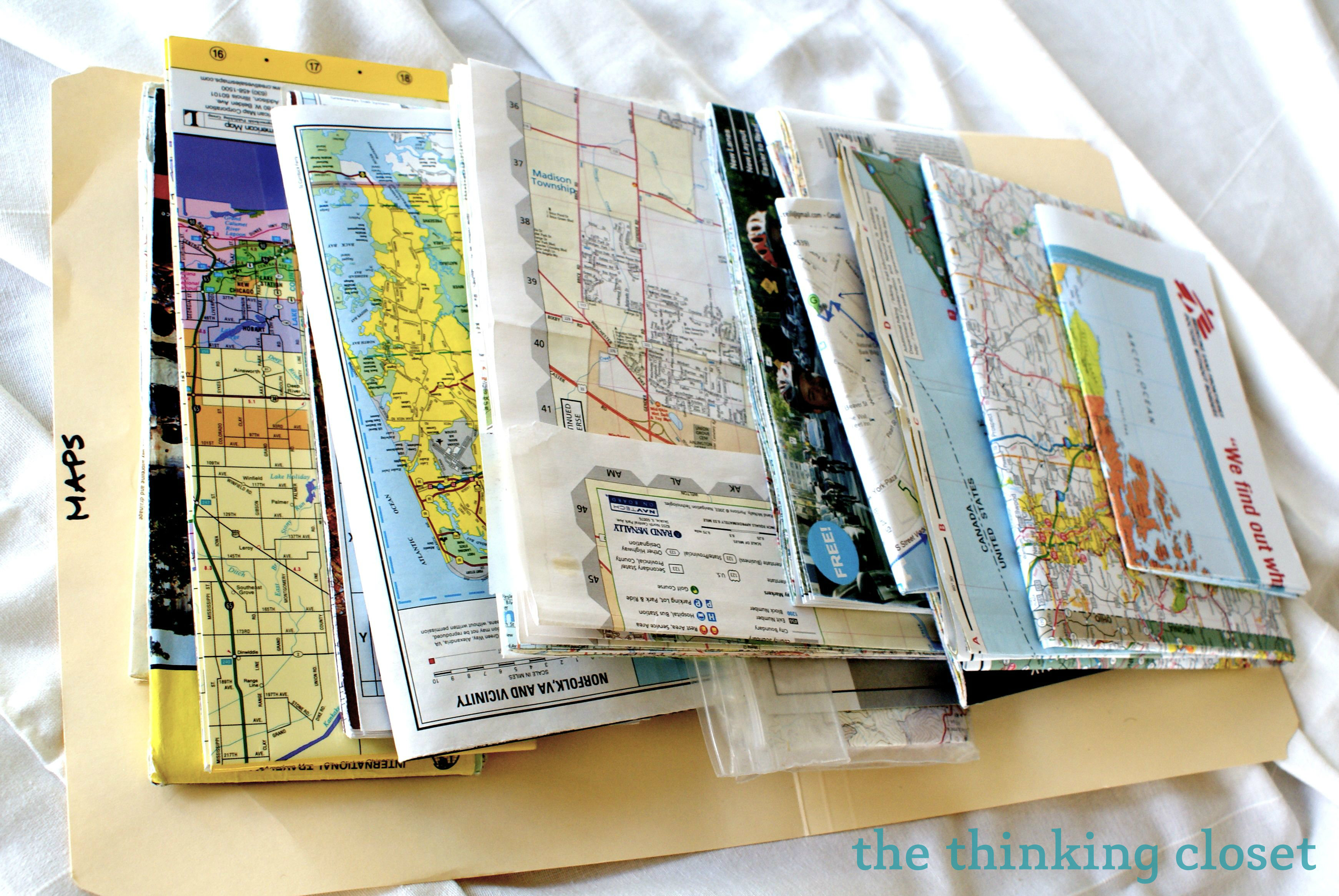
Even More Letters Re: Paper Road Maps

HJL,

Before we beat this map availability issue to a pulp, I would like to mention two more very important sources for maps…

Don’t forget forest maps for your specific areas available at any USFS Forest HQ’s or Ranger station (around $9 each), available nation wide. The other is Bureau of Land Management maps, available at any BLM station (primarily west of the Rockies). (I would think State forest also have some type of area recreational maps.) These maps are very large and excellent for directions on logging roads, mining roads, camping areas, and off road trails to name a few. All Forest Service and BLM roads are marked with very small (numbered) road signs, usually on a post or even a tree at almost every trail head, trail or road crossing, et cetera. And, yes, they do correspond with standard road maps (interstates and side roads) if they’re in the map area. – R.L.

o o o

HJL,

For the Mac users out there, this website offers software and maps – an inexpensive way to have an entire library of topographic and nautical maps at your finger tips. You just print off the sections you will be hiking as needed. You can even create your own maps and geo-reference them using this software.

When the grid power is out, I use a car adapter on my laptop and keep a solar panel for the eventuality of having no fuel. The laser printer does require a sine wave inverter to power off the car battery.

HJL’s note: I use Garmin’s Base Camp software, which also does the same thing (using their topo maps). However, it is certainly more difficult to print your own maps from the software than to print maps designed for use on paper.

o o o

Hugh,

A resource for paper maps may be the local county website or state DOT. I was fortunate to obtain a map of my county. It is a scale of one inch equals a mile. I got it printed full size to a 30”x30” map. I enjoy the website and have learned a great deal

o o o

Hugh,

For folded paper state highway maps, the website below is a good resource. They have links to many states that offers the maps. Worked for me to get several maps free in the mail. – K.


Hugh’s Quote of the Day:

“Arise, shine; for thy light is come,
and the glory of the Lord is risen upon thee.
For, behold, the darkness shall cover the earth,
and gross darkness the people:
but the Lord shall arise upon thee,
and his glory shall be seen upon thee.” – Isaiah 60:1-2 (KJV)


Notes for Friday – September 23, 2016

Today, we present another entry for Round 66 of the SurvivalBlog non-fiction writing contest. The nearly $12,000 worth of prizes for this round include:

First Prize:

  1. A Tactical Self-Contained 2-Series Solar Power Generator system from Always Empowered. This compact starter power system is packaged in a wheeled O.D. green EMP-shielded Pelican hard case (a $1,700 value),
  2. A Gunsite Academy Three Day Course Certificate that is good for any one, two, or three day course (a $1,195 value),
  3. A course certificate from onPoint Tactical for the prize winner’s choice of three-day civilian courses, excluding those restricted for military or government teams. Three day onPoint courses normally cost $795,
  4. DRD Tactical is providing a 5.56 NATO QD Billet upper with a hammer forged, chrome-lined barrel and a hard case to go with your own AR lower. It will allow any standard AR-type rifle to have a quick change barrel, which can be assembled in less than one minute without the use of any tools and a compact carry capability in a hard case or 3-day pack (an $1,100 value),
  5. Gun Mag Warehouse is providing 20 Magpul PMAG 30-rd Magazines (a value of $300) and a Gun Mag Warehouse T-Shirt; (an equivalent prize will be awarded for residents in states with magazine restrictions),
  6. Two cases of Mountain House freeze-dried assorted entrees in #10 cans, courtesy of Ready Made Resources (a $350 value),
  7. The Ark Institute is donating a non-GMO, non-hybrid vegetable seed package (enough for two families of four) plus seed storage materials, a CD-ROM of Geri Guidetti’s book “Build Your Ark! How to Prepare for Self Reliance in Uncertain Times”, and two bottles of Potassium Iodate (a $325 retail value),
  8. A $250 gift certificate good for any product from Sunflower Ammo,
  9. KellyKettleUSA.com is donating an AquaBrick water filtration kit with a retail value of $250, and
  10. Two cases of meals, Ready to Eat (MREs), courtesy of CampingSurvival.com (a $180 value).

Second Prize:

  1. A Glock form factor SIRT laser training pistol and a SIRT AR-15/M4 Laser Training Bolt, courtesy of Next Level Training, which have a combined retail value of $589,
  2. A transferable certificate for a two-day Ultimate Bug Out Course from Florida Firearms Training (a $400 value),
  3. A Model 175 Series Solar Generator provided by Quantum Harvest LLC (a $439 value),
  4. A Trekker IV™ Four-Person Emergency Kit from Emergency Essentials (a $250 value),
  5. A $200 gift certificate good towards any books published by PrepperPress.com,
  6. A pre-selected assortment of military surplus gear from CJL Enterprize (a $300 value),
  7. RepackBox is providing a $300 gift certificate to their site, and
  8. American Gunsmithing Institute (AGI) is providing a $300 certificate good towards any of their DVD training courses.

Third Prize:

  1. A Royal Berkey water filter, courtesy of Directive 21 (a $275 value),
  2. A $245 gift certificate from custom knife-maker Jon Kelly Designs, of Eureka, Montana,
  3. A large handmade clothes drying rack, a washboard, and a Homesteading for Beginners DVD, all courtesy of The Homestead Store, with a combined value of $206,
  4. Expanded sets of both washable feminine pads and liners, donated by Naturally Cozy (a $185 retail value),
  5. Two Super Survival Pack seed collections, a $150 value, courtesy of Seed for Security, LLC,
  6. Mayflower Trading is donating a $200 gift certificate for homesteading appliances,
  7. Montie Gear is donating a Precision Rest (a $249 value), and
  8. Two 1,000-foot spools of full mil-spec U.S.-made 750 paracord (in-stock colors only) from www.TOUGHGRID.com (a $240 value).

Round 66 ends on September 31st, so get busy writing and e-mail us your entry. Remember that there is a 1,500-word minimum, and that articles on practical “how to” skills for survival have an advantage in the judging.


The Time Is Short, Stock Up!- Part 2, by J.H.

What Do You Need? (continued)

Black Rifle Accessories/Parts

As mentioned, I am not a gunsmith by any means. Fortunately for most enthusiasts, however, most issues that develop can be resolved without a professional, and broken/worn parts can be easily replaced yourself. With this in mind, I recommend purchasing one entire bolt carrier group for each of your black rifles. These contain every piece that will commonly need replacement over the course of your rifle’s lifetime. The chance that you will need all of them is slim to none. However, in addition to ensuring you have the necessary parts to repair 90% of the issues you are liable to run into, they may very well make for excellent barter/sales pieces. These can be found now easily complete for $70 online (please check this sites advertisers first), so having a spare group for every rifle is a smart investment, in my opinion. Take that for what it is worth. Additionally, if you are purchasing baseline black rifle models (as I did), you are likely to find that they are just that– baseline. I recommend equipping them with a three point nylon tactical sling and at the very least, a Ruger flip up rear site or MAGPUL flip up rear site (as both makers offer one for under $20), and a Meprolights (tritium) front site (I have had excellent experience with meprolights. In general, if it is good enough for the Israeli Army, it’s sure good enough for me!), or at the very least a generic rail mounted red dot scope. If you can afford higher model optics, triggers, et cetera, by all means go for it, but each of your rifles should have at least the slings and sights. Further, I recommend an Otis cleaning system kit for each of your rifles. These small zippered pouches are compact and complete, with excellent quality. Finally, I would recommend purchasing a lifetime supply of whatever are your preferred rifle lubricants and rifle cleaning solutions. Personally, I prefer CLP Breakfree and Hoppes #9, but whatever you prefer, make sure you own plenty of it. I’ll delve into why I say this later in the article.

Ballistics

Without the appropriate projectiles, any firearm is just a rather crude but expensive club. More figurative ink has been spilled on Internet forums on ammunition stockpiles, how much, what kind, and how to store it than could ever be read in a lifetime, and only a glutton for punishment would ever want to. But since my $0.02 is worth about as much as anybody’s, what I have done and what I recommend is that for every firearm you have, you stock and maintain on hand 2000 rounds. One thousand of these rounds are what I refer to as general purpose rotational rounds. These are used for trips to the range, hunting, plinking, training, and the day-to-day usage. You use it and then replace it. The other 1000 rounds are socked and sealed away for a very bad day, to be touched only in case of emergency. So, if you own, for example, a Glock 17 and a Glock 19, you should have 4000 rounds of 9mm on hand; you’d have 2000 in general rotational use and 2000 set aside for a very-bad-no-good-rotten-day. Please understand that these are what I (just me!) consider to be a comfortable minimum. There is no such thing as too much ammo, ever! I have heard the argument that on a very-bad-no-good-rotten-day, one could easily expend 500 rounds. So if you can, buy it (without a background check); buy it until you can’t anymore, but don’t buy at the expense of everything else on this list.

Standard Capacity Magazines

These seem to be second only to “Assault Rifles” on Liberal’s hit list. I have always marveled at the contempt and loathing they view these with, as even a novice shooter can change an empty magazine out of a firearm in the time it takes to clap your hands twice. But they despise them, and I am confident they will be part of the next ban, should it be enacted. As such, the importance of ensuring that you have an adequate supply of the standard magazines that accompany your firearm cannot be understated. Having them available to barter and/or sell is also no less (and given their compactness and greater mobility, perhaps more) important than your spare black rifles. Here are my thoughts on how to handle inventory for your standard capacity magazines. In my case, I am a Glock Fan. You may like Springfield or Ruger or 1911’s or S&W; it doesn’t matter. Stay with me here. When I purchased my Glocks, I made certain to purchase the 4th Generation Models, solely because they came with an extra magazine, with three in the box instead of the normal two. In addition to these three, I purchased five more for each firearm. This brought my total to eight standard capacity magazines for each pistol. (There’s no magic to this number. Eight just happened to be my number when I played ball, and I like even numbers.) These eight are for personal, rotational use, never to be separated from their firearm. Then, in anticipation of them being effected by a ban, I bought an additional half-dozen of each pistol’s magazine. These are a part of the barter/investment stock that, worse comes to worse, I can always use myself. So, for each pistol, I have a total of 14 standard capacity magazines– eight for use and six for barter. As far as rifles go, I will focus here on black rifles and BX-25 magazines made for the ubiquitous Ruger 10/22 rifles. My family has standardized with the AR-15 format rifle. I won’t get into the .223 and .308 debate. It is pointless (in my opinion) and well off-topic. The women (my wife, mother, two sisters, and young nieces), who would make up our group in a crisis situation, are small in stature, and the men (myself, my father, and two brothers-in-law) were introduced to the AR Platform in our military service. Familiarity and manageability win. For each black rifle, I keep ten PMAGS by Magpul in rotational use. These are the magazines that are never to be separated from the rifles. As far as inventory, I buy them whenever I can. In my mind, if a ban goes into effect, these may very well be worth their weight in silver when it is all said and done. I buy them in bulk. (Buying 10 at a time, you can get them in at $10.50 a piece online, and on Sundays at gun shows I have dickered them down to $9.75 when I bought the last 13 he had at his table.) I honestly cannot tell you how many PMAGS I’ve purchased. I pick them up regularly when the budget allows for it, and I have for years. I consider them to be the best of my “tangible investment portfolio”. An often overlooked standard capacity magazine that I recommend having a few of is the BX-25 magazine; it’s the twenty-five round capacity magazine for the Ruger 10/22. Granted, it is a poor self defense caliber, but some of the most fun days in my life have involved plinking around with that rifle, and more than one squirrel met its end on the wrong end of that rifle. I consider these mags more or less for fun, but I do keep four in reserve. You never know what you might be able to barter them for.

Training

Ah, you knew that was coming, didn’t you? Having a gun vault full of rifles and firearms is absolutely useless if you don’t know what you are doing with them. To all my former fellow (and probably several current) service members, I have some bad news. If you’re anything like me (and you probably are), you’ve forgotten much of the rudimentary unit and individual tactics and drills you were taught ten years ago. Also, tactics have changed, and you, my friend, have gotten older. I say this as a thirty-five-year-old man who visited the lovely district of Kandahar for a nice “vacation” in 2003. If you can afford to attend one of the finer schools that advertise on this blog, please do so. If you cannot, you would be surprised what you may find in your own area. For example, the price tag for me for a plane trip to Nevada to attend Gun Site is too prohibitive for me, much as I wish it were not. (Again, please understand that all of the things I’ve mentioned having in inventory have been accumulated over years, not over nights). Nevertheless, in the fairly large town one hour west of me, there is a small security firm that provides bodyguards and personal security (usually for musicians in town for a concert or other celebrities there for whatever reason). The owner is a former green beret with multiple combat tours and a myriad of tactical expertise that the average Joe in the service doesn’t get. During the winter (slow months for him), he augments his income by holding one- and two-day tactical and marksmanship shooting classes quite a reasonable fee. Is it Thunder Ranch? Nope, but it sure beats trying to remember or learning from Airborne Youtube Rangers. (As a side note, please remember that bad training is probably worse than no training. Avoid these poseurs.) Also, practice, practice, practice. Range time is inexpensive. Make sure you know how to use all of your equipment.

Zip It!

I’d like to close with just a short reminder and an explanation for why I recommend buying things like a lifetime supply of Hoppes #9. As it is right now, you can walk into your local Wal-Mart and walk out with five bottles of Rem Oil, and no one is really going to care. In the future, with the expansion of this entire “If You See Something, Say Something” atmosphere, such an action may be viewed with great suspicion. Do not stick out, now or later. Some folks call this OPSEC, I just call it “common sense”. If everyone knows you as the guy with a ton of black rifles or the boxes of PMAGS, when the Stasi come knocking for them, guess who’s going to come to mind first? Again, I am not advocating any illegal activity. I’m only pointing out that keeping your head down, minding your own business, and making it easier for other folks to mind theirs by not giving them anything to talk about makes everyone’s life more pleasant. That is true now, and it will continue to be true when and if a ban ever goes into effect.

I continue to pray for us all, and for our nation and its leaders. I sincerely hope that I am wrong, but in the event that I am correct, well, the truth of the matter is that I could take virtually all of my inventory to a gun show and not lose a penny on my “investments”. And I can do what I do now– providing piece of mind and security and sleeping at night, knowing that I have prepared, legally and morally. God bless you all and good luck!


More Letters Re: Paper Maps

Hugh,

Hunting and sport shops also sell detailed map books for many states. These maps are designed for hunters and show roads, in great detail, that are often not shown on typical road maps. – M.J.

o o o

Hugh,

A recent reader post mentioned cleanroom paper, pointing out that it is very strong and durable. DuPont Tyvek was originally created as paper for cleanroom use because it does not shed fibers like pulp-made paper does. It was later discovered to be quite useful as air barrier house wrap; Dupont’s patent has expired, so a number of competitors are manufacturing a similar product.

Because so much of it is used in house construction, scraps are frequently available around construction sites, but get permission before “dumpster diving” for it. Tyvek (and DuPont’s competitors’ similar products) does not tear but may be cut into sheets with shears or knives. It does work well for sturdy note paper, I’ve been using it for years around work sites. It is fussy regarding what kind of marking it will accept, because the material is quite dense; permanent markers, such as Sharpies, work well, as do the higher quality indelible roller ball point inks. Pencil works, too, but since the graphite does not fully impregnate the material it’s more difficult to read.

The material is UV-degradable; most manufacturers require their housewrap not be exposed to sunlight for more than 30 days. That’s a warranty issue that is concerned with the material’s physical integrity and resistance to air penetration. It will degrade noticeably over time, but used as writing paper that’s not much of a concern.

Regarding printing on Tyvek, ink jet printers work but do not do well with it, because the material is quite resistant to absorbing liquid. Tyvek, in fact, allows moisture to flow through rather than be absorbed. This is a feature of the product, not a bug, which helps prevent wood rot on houses caused by trapped moisture. Toner, used in copiers and laser printers, fuses (melts) at 106F-114F and has similar problems to ink jet ink regarding bonding with Tyvek. It works, but expect it to smear in most cases and fade fairly quickly. – N.K.

o o o

HJL,

Our local UPS store also prints maps on their E-size printer, and one option is waterproof ink on Tyvek, usually for Topo or Hunting maps. They are practically indestructible. – T.Z.

o o o

HJL,

Here, in the great white north, many snowmobile clubs print very detailed maps of the county they live in. They get local businesses (usually taverns) to sponsor the cost. These maps are about the size of the old service station maps. They are extremely detailed. I have at least one for my surrounding counties. Best of all, they are usually free at a sponsor’s business. – Carl in the UP