From Unprepared to Prepped – A Beginner’s Guide – Part 1, by Mr. Wobbet

Introduction When thinking of what a “prepper” might look like, I am quite far from your expectations. I am an avid indoorsman who enjoys watching television and having stuff delivered. I am not a gardener, a camper, a hunter, or an adventurer. I don’t have anything against those things, it’s just not who I am. But a collection of life events and experiences have convinced me that learning those skills and adopting an attitude of preparedness is important for myself and my family. Once I made the decision, I had to ask the question of how I get there. I’m …


A Top-10 Prepping List, Multi-Tool Not Included – Part 4, by St. Funogas

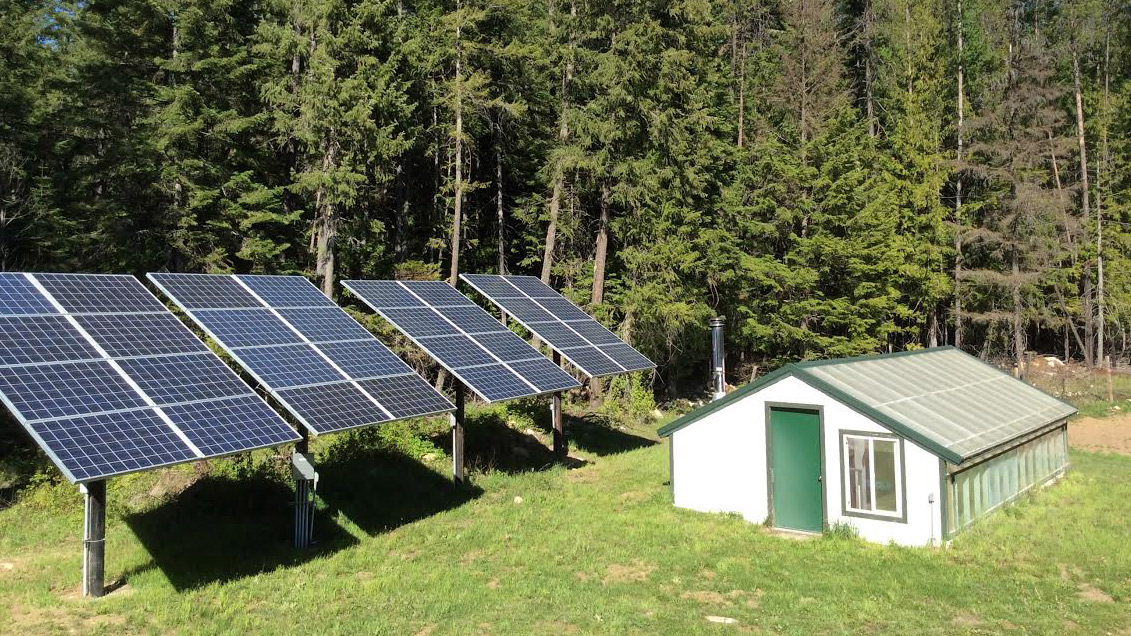
(Continued from Part 3.) 7. ELECTRICITY Prepping for electricity was only on one of the top-10 lists I could find, and wasn’t mentioned at all even on most of the lengthier prepping lists. Of all the things we take for granted in our daily lives, electricity has to be one of the most common. If the Schumer hits the fan, there’s no need to step back to the 1800s and punish ourselves by living electricity free when there are some inexpensive, easy-to-use modern-day options. Too many preppers haven’t gotten past that 1800s mentality and modernized their thought, a conclusion I …


A Top-10 Prepping List, Multi-Tool Not Included – Part 3, by St. Funogas

(Continued from Part 2.) 5. TOILET Now that we have a warm house, food, water, and a way to defend it all, we need a workable sanitation system. Many preppers won’t have enough water to waste it flushing toilets so an outhouse or composting toilet will be necessary. Regardless of whether you have a flush toilet or something else, find a way to save the urine. Not only is it the best garden fertilizer, it will also speed up the composting process as well. Best of all, fertilizing the pile with urine allows us to add things which we can’t …


A Top-10 Prepping List, Multi-Tool Not Included – Part 2, by St. Funogas

(Continued from Part 1.) 3. WOODSTOVE Currently, only 1.7% of American homes heat with wood with an additional 7.7% use it for their secondary source of heat. That leaves 90% of Americans without a sustainable way to heat their homes if the SHTF. Don’t be one of those 90% if you want to survive your first post-SHTF winter. Based on those numbers, for most preppers heat will be the second most difficult thing (after water) to prepare for on a long-term sustainable basis. And because it’s so difficult, it’ll be the most neglected topic among their prepping priorities. Don’t ignore …


Loaves, Fishes, Tree Bark, Seeds, and Knowledge – Part 8, by The Chemical Engineer

(Continued from Part 7. This concludes the article.) 4 – How Much Food Can We Afford To Share With Others? Now, let’s consider the controversial topic of sharing our limited food resources with a neighborhood group. Think of this option like investing money in start-up companies, high risk for the chance at high rewards but in this case the money is our food and the companies are people that need some of our food to have the strength to work on survival projects with us. I will do my best to outline facts and calculations that will help us to …


Loaves, Fishes, Tree Bark, Seeds, and Knowledge – Part 4, by The Chemical Engineer

(Continued from Part 3.) 2.5 – Options For Using Local Cambium Resources If we have prepared beforehand to harvest tree cambium and a Type 2 Emergency (T2E) happens, we will have three main choices to consider in my view. I encourage you to make this decision prayerfully and with your group’s best judgment. Every choice in a disaster is a set of trade-offs with no perfect solutions. If we actively try and help our neighbors early there is no doubt that this will reduce early suffering for some and could lead to ongoing beneficial cooperation. If more people are pulling …


Loaves, Fishes, Tree Bark, Seeds, and Knowledge – Part 3, by The Chemical Engineer

(Continued from Part 2.) 2.3 – Finding Edible Cambium Locally And Harvesting It If we live in an area with a sufficient number of trees, the next step would be to find out which ones have edible cambium. To accomplish this I recommend two sources. First, you would need to buy the National Audubon Society’s book titled Trees of North America or something equivalent. Here are two free sources that just have tree maps: Tree Map Link 1 and Tree Map Link 2. I am referring to the 2021 edition of Trees of North America in my following statements. This …


Loaves, Fishes, Tree Bark, Seeds, and Knowledge – Part 2, by The Chemical Engineer

(Continued from Part 1,) Fifth, I believe that people are the most valuable creation on the planet for religious and practical reasons. The more people we have, the more knowledge they generate and can apply. I believe the growth of knowledge, personal freedom, and rule of law are the significant causes of mankind rising out of historical poverty. Great books like The Ultimate Resource 2, by Julian Simon, and Superabundance, by Gale Pooley and Marian L. Tupy, hammer home the fact that increased populations have increased prosperity. This is very counter to conventional wisdom because Malthusian thinking has warped much …


Loaves, Fishes, Tree Bark, Seeds, and Knowledge – Part 1, by The Chemical Engineer

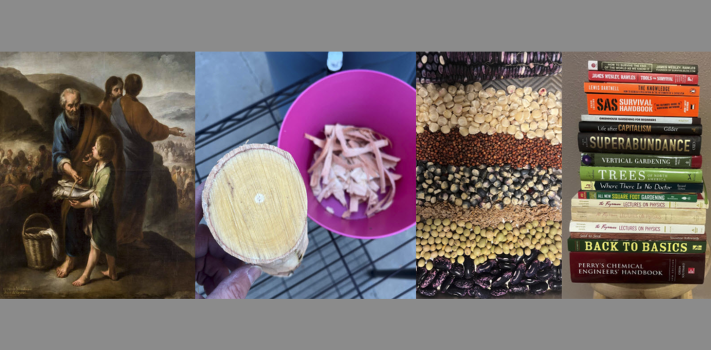
JWR’s Introductory Note:  At just over 20,000 words, this is perhaps the longest single-topic contributed article ever serialized in SurvivalBlog. I consider it an important piece to ponder.  Please read all eight parts before sending your comments. I will post most of them in the Snippets column on October 29th. — I want to start with a brief but sincere thank you to all the article writers I have learned from here at SurvivalBlog.com. Your efforts have made a difference for me and many others. I hope my contribution can have a similar benefit to others. Thank you. Let me …


The Social and Psychological Cost of Preparedness, by A.C.

This is one topic that rarely gets any attention in the preparedness community, and I want to break it down all the way from the “prepper stigma” to the arguments and counterpoints we can make when confronted with the “tinfoil hat” comments by non-preppers in our lives. The act of preparing for an emergency is almost universally portrayed in popular culture as a solitary, dramatic, and often paranoid pursuit. Hollywood tends to show only the aftermath, illustrating the lone survivor who only needs their preps, but the reality of the emotional and social journey toward self-sufficiency is frequently ignored. While …


Rebuilding an Old Vehicle as a Daily Driver – Part 3, by Lodge Pole

(Continued from Part 1. This concludes the article.) Electrical I keep a variety of spare fuses on hand in the glovebox. Fuses are cheap and do not go bad if kept dry. I also keep a voltmeter in the glove box. Ensure the cigarette lighter works. Replacing a cigarette lighter plug is simple. Having an operable lighter plug can mean the difference of not only being able to pump up a flat tire, but also preventing hypothermia. If you are stuck in the backcountry, a cigarette lighter can be used to start a fire. The factory battery cables mounted to …


Rebuilding an Old Vehicle as a Daily Driver – Part 2, by Lodge Pole

(Continued from Part 1.) Transmission The truck has a three-speed automatic transmission with a manual 4×4 transfer case. As much as I love driving a standard, manual transmission, the ease and comfort of an automatic is preferred for the places we go, and how we use the truck. Standard vs. automatic transmission is completely personal preference. Both have advantages and disadvantages. Use what works best for you and your lifestyle. I keep a quart of Automatic Transmission Fluid (ATF) in the truck box at all times. Dump bed and Greaseable Fittings All of the hydraulic lines are original from when …


Rebuilding an Old Vehicle as a Daily Driver – Part 1, by Lodge Pole

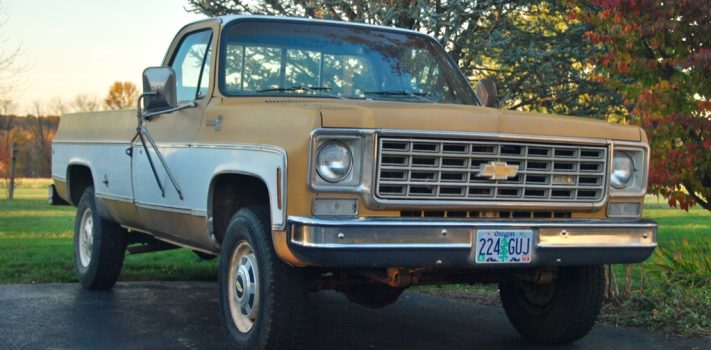
In 1975, for the first time in his life, my grandfather, who was a Great Depression era child, splurged and ordered a brand-new vehicle from the factory. It was a 1976 Chevrolet Silverado K20 4×4. (Aside from the color, it looks a lot like the one pictured above.) This piece of machinery was his pride and joy until the day he passed away. Shortly after he picked it up from the dealership, he had a dump bed installed. He wanted it to look stock, and still have the usefulness and functionality of a standard bed, so he hired a fabricator …


JIT Training for Trusted Friends, Family, and Neighbors, by Dr. Bob

This article will provide some thoughts on how to address a few common problems seen in the preparedness community. The first problem involves the difficulty finding like-minded people to form a community before the Stuff Hits The Fan (SHTF). The second problem is how to engage friends, family, and neighbors so that they take actions to prepare their families prior to SHTF. These problems are related and center on the realization that many people are bound by their current life circumstances and are unwilling or unable to consider that the current paradigm is in danger and, secondly, many of those …


A Three-Year Window or a Three-Month Window?

As an observer of contemporary politics, economics, and emerging threats, I have come to the conclusion that the last three years of Donald John Trump’s second term as President may provide a potential window of opportunity. If we were now living under a Harris-Walz Administration, we would surely be out of time to prepare. I have my doubts about Trump’s sincerity when he talks about scaling back the size and power of government. Alarmingly, the gains of the DOGE project were wiped out by the huge deficit spending included in the recent  “Big, Beautiful Bill”.  But I don’t consider DJT …