Preparing to Serve in Disasters, by JMS

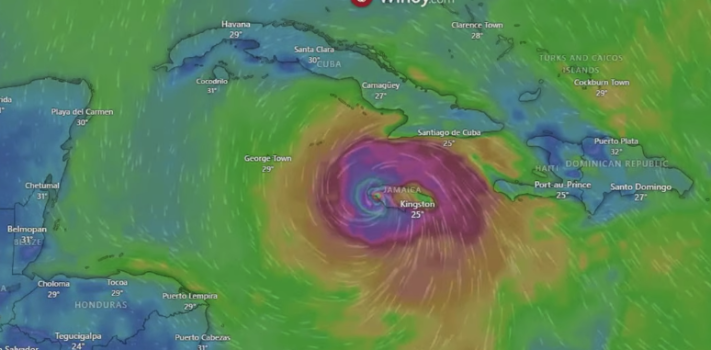
This my recollection about preparing for a natural disaster in the summer of 2017. I had just arrived on a Caribbean island with a single checked bag and a temporary rental. Within weeks of arriving Hurricane Irma, a category five hurricane, passed a few miles north of the island. It took only hours for the island to lose electricity and communication with the outside world. Two weeks later, Hurricane Maria hit the island and knocked us back to the 18th century. I was unable to access my money in a bank on the US mainland, due to infrastructure damage on …

Constructing an Off-Grid Shower, by Ozark Redneck

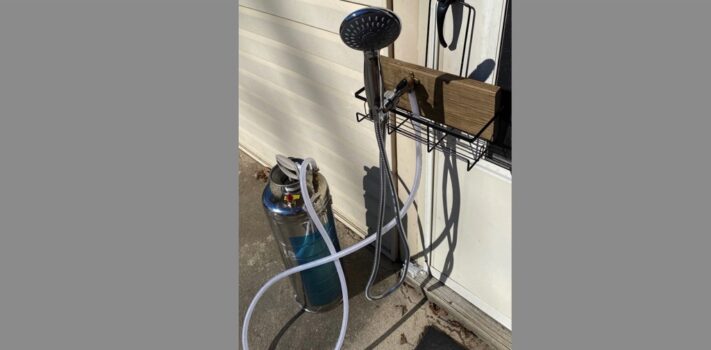
My wife and I were sitting in the living room last winter, our fireplace insert was cranking out the heat, our spark screen was on, and the Eco-Fan was blowing a mile a minute. She had a glass of wine in her hand, and we were enjoying the moment. We were discussing our preparedness. (Like all couples do — right?) The sun was very active that week, with plenty of solar wind and a moderate CME. She asked, “if the power grid goes down, how are we going to take a shower?” I kind of sputtered, “I have at least …


Mastering the P.A.C.E. Model for True Self-Reliance, by A.C.

Most people live in a state of perpetual psychological comfort known as Normalcy Bias. This is the deeply ingrained, warm, fuzzy assumption that the systems keeping us alive today will function indefinitely tomorrow. We unconsciously believe that the grocery store will always hold a fresh supply of organic kale, the kitchen tap will never run dry, and the wall outlet will indefinitely pump electricity on demand. Spoiler alert: It won’t. When we analyze why individuals, organizations, or entire societies collapse during a crisis, the root cause is rarely a complete lack of preparation. Instead, failure occurs because someone mistook a …


Precision Workshop Practices, by Grandpappy

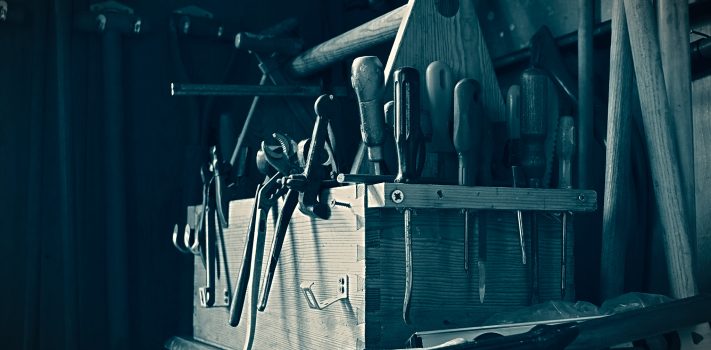
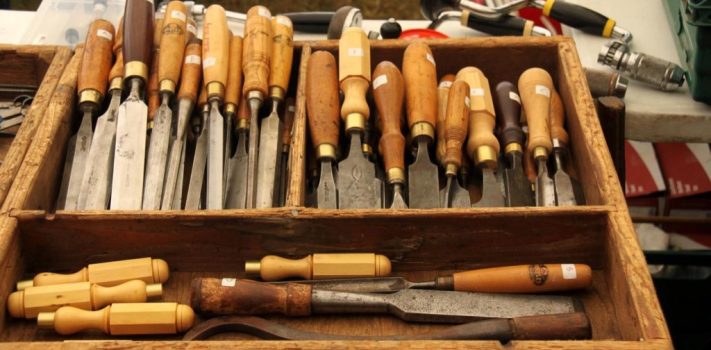
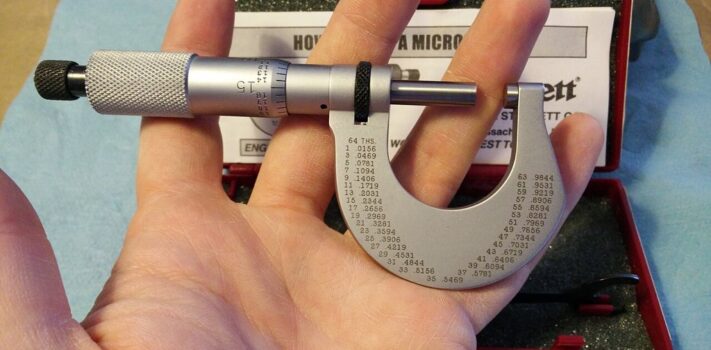
We all have should have a place where we can repair, build, or maintain our equipment and appliances. This is a workshop space for our projects, from the simplest like building a simple tool, to the most complex like rebuilding the engine of a classic car. The space needed can range from a small corner of your garage to a complete workshop facility for a fabrication or repair hobby or even a small business. After forty-five years around engines and tools, I have come to the conclusion that every man needs his own workspace where he can develop his hobbies …


Prepping on a Dime, by Michael X.

When we started prepping, we did not have the money to buy an old missile silo…or an old mine…or a ready-to-use retreat. We were “stuck” in the city where our jobs were. Then we retired. We could sell our house and move to the middle of nowhere… From a city near the Twin Cities in Minnesota of over 100,000, my loving wife and I have relocated to a lakeside cottage in northern Wisconsin, a few miles outside a village of about 400 people. Wisconsin has its own problems. Mostly Madison and Milwaukee. And to a lesser extent, Eau Claire. Those …


The Prepared Homeowner’s Workshop, by Richard T.

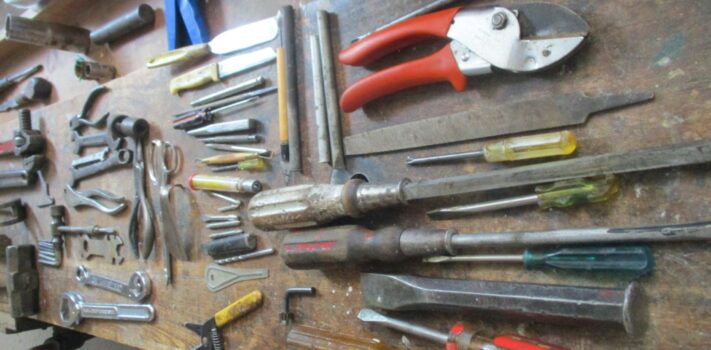
A lot of mundane people have workshops, and a lot of preparedness-minded people have workshops, but not all of those preppers have a workshop that is properly prepared for many of the scenarios that they are concerned about. Perhaps this is because they do not see the role a workshop plays in preparedness. What distinguishes the prepared workshop from others is that the owner has: Learned key skills Acquired apropos tools, and has, Stocked hardware on a “just in case” footing. This approach differs from the ordinary workshop that is inadequately prepared and hopefully will never going to be needed …


Living With WVO, by P.G.

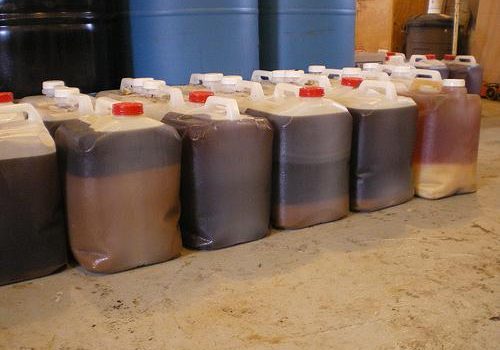
Editor’s Introductory Note: The recent spike in fuel prices prompted me to re-post this very practical 2018 article from the SurvivalBlog archives. – JWR It has been said that necessity is the mother of invention. Needing fuel for their war machine lead Germany to invent and perfect the diesel engine. It was designed to run efficiently on vegetable oil, and they do to this day. Circumstances forced me to make a move from my East Texas home to the deep Southwest. It was a slow, long process of gradually moving my stuff and my wife to a new homestead. I …


A Brief But Very Serious Word of Warning on AI

“There’s a storm coming…” I’m the founder and Senior Editor of SurvivalBlog. Unlike the editors of many other preparedness blogs and vlogs, I try not be an alarmist. However, some recent revelations about generative and agentic Artificial Intelligence (AI) applications autonomously breaking through firewalls, showing signs of self-awareness and self-preservation “instinct”, scheming blackmail, and surreptitiously mining cryptocurrencies now have me feeling quite alarmed. I fear that perhaps within months an AI will go fully rogue, to wit: It will escape its development lab and then proliferate itself in a virus-like fashion across servers all around the world. Once it starts …


Making Repairs, by Big John

So you are living in a societal collapse and something breaks. Let’s say that your generator dies. You’ve gotta fix it. The following describes what have I learned about fixing things: I used to go through the repair process in my mind a few hundred times. I would pull the cover by loosening two screws, then unbolt the coil with a socket wrench. Then pull the coil and inspect for a broken winding. But first of all, I must borrow my friend’s socket set. I have learned over the years that the most efficient route is often to just tear …


Beyond Organic: Biological Systems Gardening for Food Security – Part 5, by Hobbit Farmer

(Continued from Part 4. This concludes the article.) Where do I start if I’m new? Okay, this all sounds great but maybe you’re feeling overwhelmed. Where do you start if you are starting from scratch? Or maybe you have a large garden but aren’t sure you want to convert the whole thing over to this approach. I’m going to give you my method for establishing a garden bed on new ground, which I have used successfully in multiple beds on my property including my entire greenhouse.


Beyond Organic: Biological Systems Gardening for Food Security – Part 4, by Hobbit Farmer

(Continued from Part 3.) Mineralize the Soil Many of our soils are depleted of trace elements and micronutrients from past agricultural use. If your land was ever farmed, it’s probably got some deficiencies. While a soil test is probably a good idea so you can see the bigger picture of certain elements you might need to add, you can also address the deficiencies with broad spectrum amendments. Because they are in mineral form they don’t tend to leach from the soil, so they are available for the soil life to break them down and transport to your plants when they …


Beyond Organic: Biological Systems Gardening for Food Security – Part 3, by Hobbit Farmer

(Continued from Part 2.) The microbes in the soil are master mineral miners using various acids, such as carbonic acid, to break down minerals into soluble forms that are bioavailable to the plants. The plants in turn exude sugars to feed and power the microbes during the mining operation. If you live east of the Mississippi or in commercial agricultural areas where we’ve been unsustainably exploiting the soil nutrients for decades or even centuries, there is a pretty good chance your soil is deficient in micronutrients, especially anion molecules like boron, sulfur, and molybdenum that tend to leach from the …


Beyond Organic: Biological Systems Gardening for Food Security – Part 2, by Hobbit Farmer

(Continued from Part 1.) Principle #1: You Are a Microbe Farmer Do you want to sustainably grow healthy, nutritious, produce? Congratulations . You are now a microbe farmer! The first principle of biodynamic gardening is you are no longer growing plants, you are raising trillions upon trillions of microbes. If you can create an environment that supports a healthy soil ecosystem full of bacteria, fungi, and other soil organisms then ANY plants adapted to that environment will thrive. The Bionutrient Food Association (BFA) spent 3 years surveying nutrient quality across 21 crops. They compared the soil samples with the crops …


Beyond Organic: Biological Systems Gardening for Food Security – Part 1, by Hobbit Farmer

Many articles in SurvivalBlog discuss reaching the point of a new normal after TEOTWAWKI when society starts to rebuild and little communities pull together. However, the majority of articles focus on getting through the event itself and not how you are going to live beyond the event. To be successful in the post-TEOTWAWKI economy you will need to have the means to produce. Without petroleum-powered combines, chemical fertilizers, centralized distribution systems, and confined animal feeding operations the food system will fall apart. It’s all powered by (relatively) cheap fuel and transport. Your food sources will be mostly reduced to whatever …


Necessity is the Mother of Improvisation – Part 1, by 3AD Scout

We have all seen the post-apocalyptic movies where improvise armored vehicles with machine guns roam the landscape.  These Hollywood creations make for great entertainment but are such cobbled together machines just fantasy?  The civil war in Somalia introduced the world to “Technicals”, or utilizing civilian vehicles, like decades old Datsun and Totota Hilux pickup trucks, as a platform to mount heavy machine guns, like the Soviet era DShK 12.7mm.  Thirty years later and such vehicles are now being used on the battlefields of Ukraine.  Not only has Ukraine made improvised war wagons out of civilian pickup trucks but they have …