Post-SHTF Lighting: Portable Power Stations – Part 2, by St. Funogas

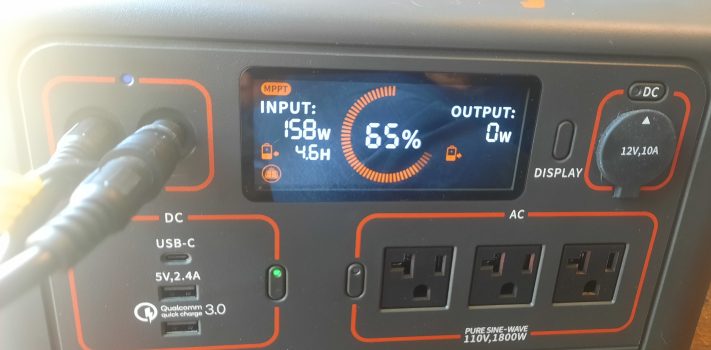
(Continued from Part 1.) DETERMINING HOW LONG A PPS CAN SUPPLY POWER To determine how long a fully-charged PPS will last, three things must be considered: 1.) The wattage of the device being powered 2.) How long you need it to run for, and 3.) The wattage capacity of the PPS battery. As previously mentioned, to simplify the math some of the battery rules are ignored such as maximum drawdown percentage of a battery and the energy loss when inverting from 12 Volts DC to 120 Volts AC. Appliance Wattage – Nearly every 120 VAC electric device has the wattage …
Post-SHTF Lighting: Portable Power Stations – Part 1, by St. Funogas

This is the second of a four-article series on post-SHTF lighting options. It covers the basics of portable power stations (PPS) as well as what kinds of lights to consider using with a PPS or other 12-volt DC source of power. I hope those who read Part 1 of this series on off-grid lighting came to realize that for a post-SHTF world, a portable power station (PPS) is not only far less expensive than candles or oil lamps, but also healthier and safer. When managed properly, not only can a PPS provide all or most of the light we’ll need …


Post-SHTF Lighting – Part 3, by St. Funogas

(Continued from Part 2. This concludes the article.) THIRD OPTION: RECHARGEABLE LED LIGHTS This section will be a very basic look at the broad topic of rechargeable lights. The bulk of the information and all of the many options will be presented in the next article of this series on post-SHTF lighting. In order to use rechargeables for illumination after the SHTF three things are needed: 1. rechargeable lights 2. a charging device 3. a “plug-and-play” solar panel 1. Rechargeable lights Rechargeable lights come in a wide variety of styles with options such as battery capacity, hi, medium, and low …


Post-SHTF Lighting – Part 2, by St. Funogas

(Continued from Part 1.) Paraffin Lamps Halfway between a candle and an oil lamp are paraffin lamps. They’re similar to oil lamps and burn the same fuel but they come in a small jar with a wick. They’re essentially a small oil lamp that burns more like a candle. I thought it would be interesting to test one but by the time I finished with the candle portion of my tests, there was no doubt in my mind these paraffin lamps with their small wicks and long burn times (one claimed 115 hours) wouldn’t be much better than candles. There’s …


Post-SHTF Lighting – Part 1, by St. Funogas

Author’s Introductory Disclaimer: I have no association with or receive any benefit from any of the companies whose products are mentioned in this article. They’re used for examples only, I haven’t used some of them, I’m not making recommendations, and the reader is advised to do their own research before making any purchases. This is the first article of a planned series, discussing the various options for lighting our homesteads in a permanent grid-down world. Some of us have been in a multi-day grid-down situation at least once in our lives. For some, it is an inconvenience, for others an …


Photovoltaic Power and Prepping – Part 4, by B.S.V.

(Continued from Part 3. This concludes the article.) Question: Will I have power when the grid is down? Question: Can I get net metering with a solar-only system, or do I need storage? Battery size With all the information above, you will be better situated to properly size your storage system. Just be aware that (unless you’re in a totally different socioeconomic class than I) you probably won’t get all the storage you want. I started off with the idea that I wanted to be three-days independent of the grid. When I found the cost of that, I scaled back. …


The Final Countdown: Last-Minute Readiness Checks – Part 2, by Michael X.

(Continued from Part 1. This concludes the article.) Water List This is an item for the first three days. This is super important and needs to be one of the first items confirmed. Check locations and condition of water sources: Bottled Water/Stored water containers Well water (power dependent) Lake water – are there containers to carry and larger containers to store lake water? Is there a rainwater collection option available? Is the Berkey/Filtered water system ready? Can the tub be successfully filled with water from the system before the power goes out or the line pressure is gone? Can I …


The Final Countdown: Last-Minute Readiness Checks – Part 1, by Michael X.

Hypothetically, (of course), assume for a moment that the proverbial fan has been hit. Now you have three days….or two weeks….or two months…until the consequences of the event hit where you are. Good luck guessing how long it takes to hit you. Are you as ready as you can be? Are you sure? How do you know? How and when it hits you, whatever it may be, may be based on three key things: the type/cause of disaster, your proximity to the disaster or populated areas, and the stability of your systems (electricity, water, fuel, and human support systems). THE …


Weather the Storm with Backup Power – Part 3, by E.R.

(Continued from Part 2. This concludes the article.) Inverters Most of us are interested in running a few 120 volt AC appliances. The fridge, the furnace, the shallow well pump – standard AC devices that we want to keep alive during a power outage. For these we will require what is known as an inverter. Inverters take DC battery power and invert it into standard 120 volt AC household power. Inverters are available in all shapes and sizes these days. You can get off-shore-manufactured modified sine wave inverters that plug into the cigarette lighter plug in your car, rather cheaply. …


Weather the Storm with Backup Power – Part 2, by E.R.

(Continued from Part 1.) Charging Overview At a high level, the stages of charging a battery include: bulk, absorption, and float. On batteries that have been discharged deeply, there is also an equalization charge required. Bulk charging demands high current. Absorption charging requires less current but a slightly elevated voltage. Float is your trickle charge which has low current at about one volt above the stasis voltage of a charged battery. As covered in a recent SurvivalBlog article, the charge levels of flooded batteries can be determined accurately using a hydrometer. Each cell should have an equal level of charge. …


Weather the Storm with Backup Power – Part 1, by E.R

This adventure begins with a windstorm after which it took crews days to repair the severely damaged power lines. At that time we had been using a pair of old end-of-life batteries rescued from a Cummins diesel pickup truck connected to a conventional marine battery charger as our backup power. We waited all day as our freezer continued operations, powered by these old batteries. Towards dusk, I finally dragged out the generator to power the rest. Surely, there was a better way. That summer, I finally made it a priority to get solar panels installed up on the roof and …


NightBuddy 230° LED Headlamp, by Thomas Christianson

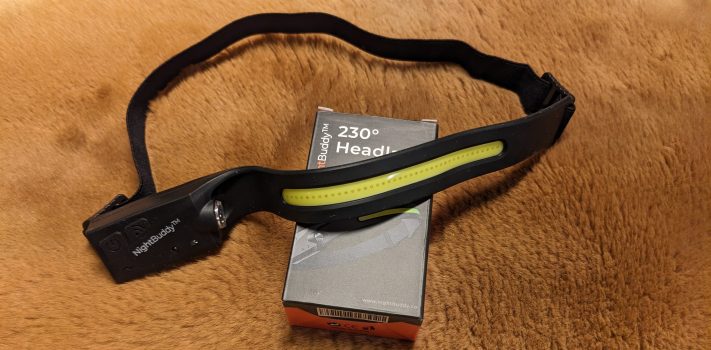
The NightBuddy 230° LED headlamp uses an LED lightbar that bends around the forehead at the front of the lamp. This provides an even flood of illumination that is excellent for working outdoors in the dark. It is reliable, lightweight, compact, rechargeable, water-resistant, and easy to use. Battery life is somewhat less than advertised. I must also admit to being somewhat disgruntled by the fact that it is made in China. I feel that NightBuddy Customer Support was not 100% forthright when I inquired about its place of manufacture. The NightBuddy cost $34.95 from www.nightbuddy.com at the time of this …


Some Last-Minute Purchases and Preps – Part 2, by M.M.

(Continued from Part 1.  This concludes the article.) #6   12-volt deep cycle batteries and at least two battery charges. (I prefer the 2-,6-, and 10-Amp chargers. I do have a 50-amp charger, but it is hard on a battery. The slower the charge, the better the life expectancy of the battery). These are extremely important and are actually my #2 priority item only after fuel. Get several if they are available. You can build a light system for your property using 12-volt lights or buy an inverter that switches to A/C  use. For outside lighting go to an RV/off-road store …


Retreat Logistics: Establishing Burn Rates, by 3AD Scout

What is a “burn rate”?  It is simply the period of time it takes to go through a given commodity or resource.  Establishing burn rates are important since it is those burn rates that will help determine how much of an commodity or resource you store before an incident and burn rates will also help you manage your resources in a post-incident environment.   In the Prepping world we already have a few burn rates established.  The amount of calories and water we need per day are for the most part for bare minimums.  That is we know we need about …


A Nuclear Attack Quick Actions Checklist – Part 2, by Anon-6

(Continued from Part 1. This concludes the article.) – To filter air: Need to get fresh air into the shelter without pulling in fallout particles In rack 1 is everything you need to set up an air filter system that pulls in filtered air Checklist with step-by-step pictures is on the clipboard Instructions are also written on the plywood board that will go in the opened movie room window slot (board already has 12” holes in it for the small yellow industrial fan to pull air into the movie room through one of the furnace filters) [Rack 1 contains a …