Post-SHTF Lighting: Portable Power Stations – Part 1, by St. Funogas

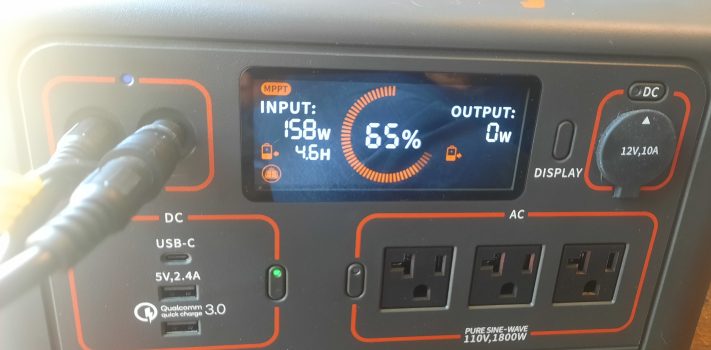
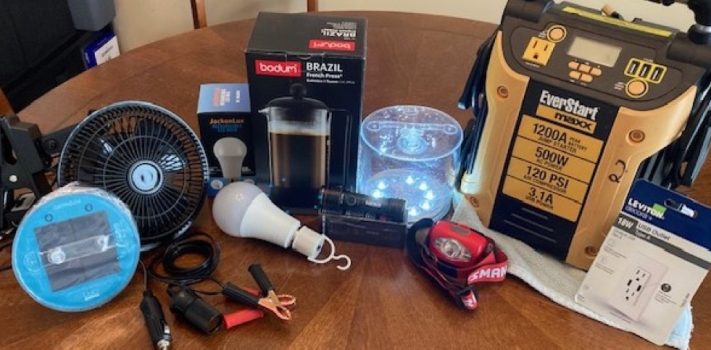
This is the second of a four-article series on post-SHTF lighting options. It covers the basics of portable power stations (PPS) as well as what kinds of lights to consider using with a PPS or other 12-volt DC source of power. I hope those who read Part 1 of this series on off-grid lighting came to realize that for a post-SHTF world, a portable power station (PPS) is not only far less expensive than candles or oil lamps, but also healthier and safer. When managed properly, not only can a PPS provide all or most of the light we’ll need …


The Survival Mindset: A Two-Decade Retrospective

Introduction SurvivalBlog is now in its 20th calendar year. I began posting the blog in August, 2005.  That was just a few weeks before Hurricane Katrina. Over the past two decades, I’ve had many opportunities to write about what I generally term The Survival Mindset. The following is a mashup and updates to four brief blog essays that I wrote and posted in SurvivalBlog in November, 2005 and in April, 2006: Prepper Angst Many of my recent consulting clients have mentioned the same feeling of unease about the coming years. Perhaps it is just the general predisposition of my consulting …


Post-SHTF Lighting – Part 3, by St. Funogas

(Continued from Part 2. This concludes the article.) THIRD OPTION: RECHARGEABLE LED LIGHTS This section will be a very basic look at the broad topic of rechargeable lights. The bulk of the information and all of the many options will be presented in the next article of this series on post-SHTF lighting. In order to use rechargeables for illumination after the SHTF three things are needed: 1. rechargeable lights 2. a charging device 3. a “plug-and-play” solar panel 1. Rechargeable lights Rechargeable lights come in a wide variety of styles with options such as battery capacity, hi, medium, and low …


Circuit Breaker Panel Labeling, by Free Loader

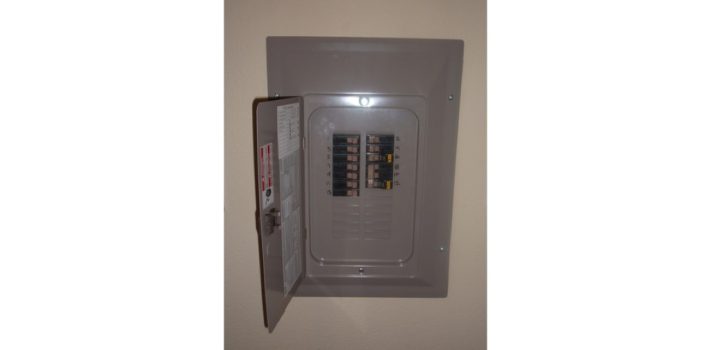
Most people’s circuit breaker panels that I’ve seen (including my own) are poorly labeled regarding where each circuit breaker’s current actually goes. Many panel descriptions are either very vague about what circuits are on each breaker or they aren’t labeled at all. Usually, this happens because the person who installed the panel was in a hurry to finish the wiring and never returned to label them properly. When they did label them, it was often with something vague like “east half house” or “basement.” These descriptions aren’t very helpful when you’re trying to locate the specific breaker for a particular …


Another Look at Listeroid Engines, by Graham Sliecker

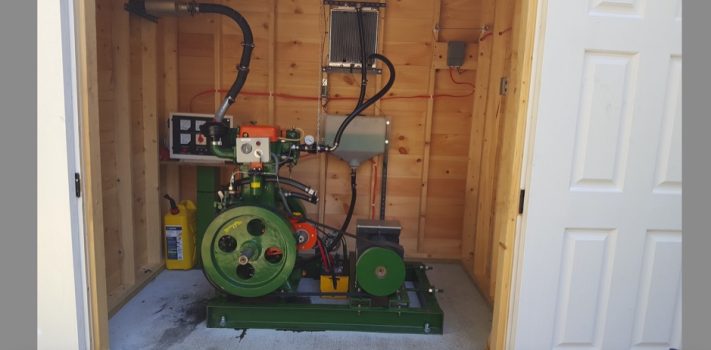
Editor’s Introductory Note: The following is a guest post, rather than a writing contest entry. The author is with Bolton Power Equipment. They have been importing Listeroid engines since 2014. For long service life, in my opinion, nothing beats a low-RPM engine. Small, high-RPM engines have practical engine llfespans that are often measured in just thousands of hours.  But larger, low-RPM engines with flywheels have practical engine llfespans that are often measured in tens of thousands or even hundreds of thousands of hours. Listeroid engines have been discussed in SurvivalBlog since our early days. See, for example: Lister Low RPM …


Photovoltaic Power and Prepping – Part 4, by B.S.V.

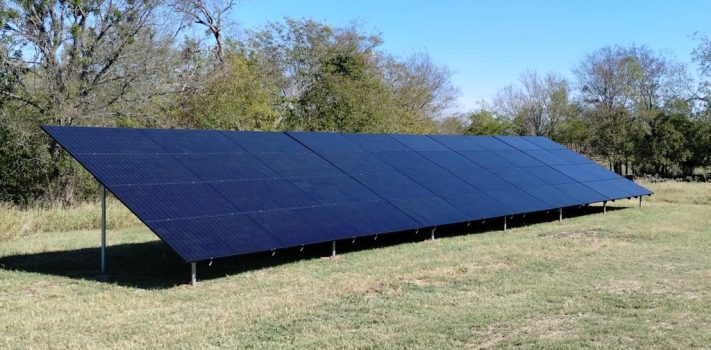
(Continued from Part 3. This concludes the article.) Question: Will I have power when the grid is down? Question: Can I get net metering with a solar-only system, or do I need storage? Battery size With all the information above, you will be better situated to properly size your storage system. Just be aware that (unless you’re in a totally different socioeconomic class than I) you probably won’t get all the storage you want. I started off with the idea that I wanted to be three-days independent of the grid. When I found the cost of that, I scaled back. …


Photovoltaic Power and Prepping – Part 3, by B.S.V.

(Continued from Part 2.) When it came to setting angles, my installer wanted to install at the U.S. default angle of 20 degrees. That angle serves the most people across the country in most situations. Now, I’m a taller-than average, bigger-than-average guy and wear extra-large gloves, so I know one-size does not fit all. You must consider what is best for you and your goals and not just what may be the rule of thumb. I happened to hear the guys talking about the angle after they had already set the poles in the ground. Like I said, I hadn’t …


Photovoltaic Power and Prepping – Part 2, by B.S.V.

(Continued from Part 1.) Question: How is my system size being determined? Question: How many hours per day of power production will I have? Here is where a little ‘art’ comes into all this ‘science’. Panels come in a few different sizes, usually around 325 to 425 Watts. The most common seems to be 400 Watts of generation. What they try to do is balance your usage with the size of panels. In the above case, it would take about 50 panels @ 400 watts per panel to equal the 19kW system (actually 20, but that is where the ‘art’ …


Lessons From Hurricane Helene – Part 1, by A.F.

The following recounts some Hurricane Helene lessons learned from Western South Carolina. Our power went off for the final time around 5:30 on Friday morning. It had blinked on and off twice earlier in the night, but I didn’t pay the warnings any attention. In the end, we were without power for nine days and only tonight as I’m writing this, 26 days post-storm did we get our regular Internet service back. I am fully aware that these are First World problems and compared to so many, Helene took it easy on us. Beyond ensuring that our vehicles were fueled, …


Hurricane Milton After Action Review – Part 1, by Soyez Ferme

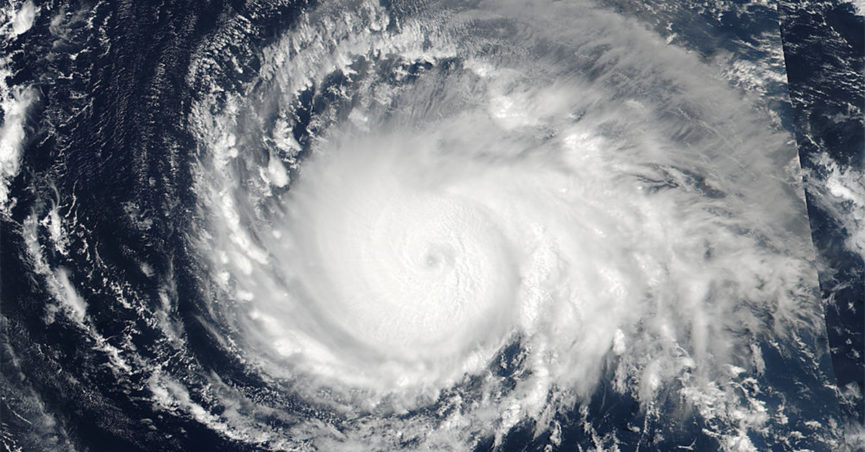
Date and Location: October 9, 2024 — West Coast of Florida, under the eye of Hurricane Milton, inland from landfall. Hurricane winds howled outside, and the rain pelted the windows when the lights flickered for the final time and died. On the darkest of nights as Hurricane Milton unleashed its fury on our rural Florida bunker, my mom confidently stated, “I feel safe here.” After a long, and mostly sleepless night, we rose before dawn to walk the property. What follows is a breakdown of the good, the bad and the ugly of our preparedness strategy for weathering a vicious …


Our Hurricane Experience in South Carolina, by K.U.

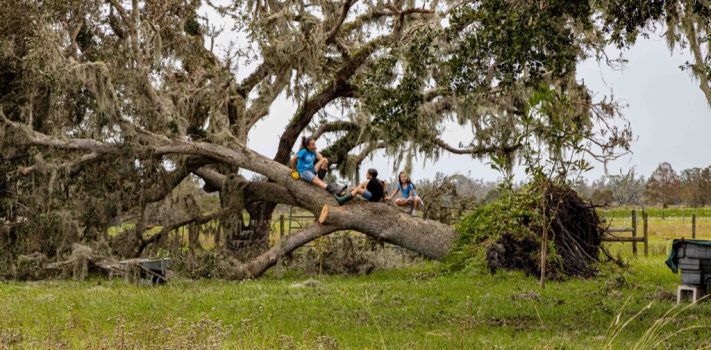
We live in a rural county about 60 miles from Augusta, Georgia. The night of September 26th, 2024 was one we never thought we’d experience so far inland. A full-blown hurricane was upon us (winds were recorded at 80-100mph in our county). We awoke early on the 27th to no power and 1 bar of very spotty cell service. We built our house on a hill and made sure that no trees were nearby, so our house had minimal damage. We had some water come in and down a wall from the chimney, but plan to fix that with a …


Lessons Learned from Hurricane Helene, by N.C. Ham

I really did not give a lot of thought ahead of time about the approaching storm. I spent time at U.S. Naval Station Guantanamo in Cuba growing up and I have lived through several hurricanes in the Southeast. I won’t make that mistake again. I now see how we can get way too comfortable with the daily situation live in and not see the forest for the trees. My work location is several hours from my home which is in the mountains of Western North Carolina. I work from home about half the time and was in the mountains when …


The Final Countdown: Last-Minute Readiness Checks – Part 2, by Michael X.

(Continued from Part 1. This concludes the article.) Water List This is an item for the first three days. This is super important and needs to be one of the first items confirmed. Check locations and condition of water sources: Bottled Water/Stored water containers Well water (power dependent) Lake water – are there containers to carry and larger containers to store lake water? Is there a rainwater collection option available? Is the Berkey/Filtered water system ready? Can the tub be successfully filled with water from the system before the power goes out or the line pressure is gone? Can I …


The Final Countdown: Last-Minute Readiness Checks – Part 1, by Michael X.

Hypothetically, (of course), assume for a moment that the proverbial fan has been hit. Now you have three days….or two weeks….or two months…until the consequences of the event hit where you are. Good luck guessing how long it takes to hit you. Are you as ready as you can be? Are you sure? How do you know? How and when it hits you, whatever it may be, may be based on three key things: the type/cause of disaster, your proximity to the disaster or populated areas, and the stability of your systems (electricity, water, fuel, and human support systems). THE …


Learning From My Amish Neighbor, by 3AD Scout

In February of this year, our neighbor sold his two houses and business. One of those houses was sold to our new neighbors. They are Old Order Amish who still do not use any electric lights on their buggies but rather use Kerosene lamps. It has been an interesting few months watching them transform their new-to-them home to their off-grid Amish lifestyle. I was wondering how the new owners would heat the large old farmhouse and get their water since the old neighbor used electricity for such things. The previous neighbor had an outside wood furnace that supplied both heat …