Considering Drones – Part 1, by Oregon Bill

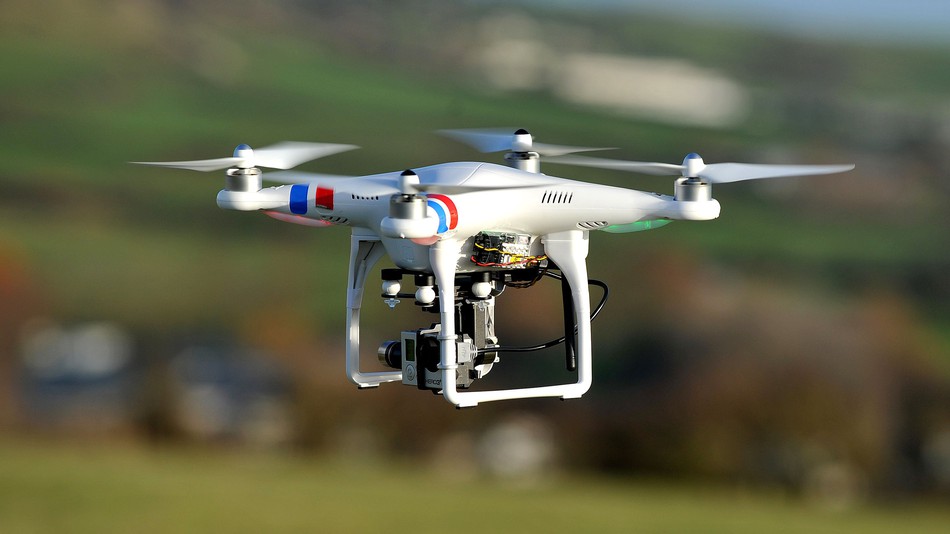
Love them or hate them, remote controlled flying devices are everywhere and offer “game-changer” capabilities everyone should consider for their personal protection and toolset. Commonly referred to as “drones” I’d like to offer some personal experiences and learnings both in using and trying to deter them from use around me and my property. Specifically, I will discuss any remotely-controlled flying device including quadcopters, helicopters, or airplanes piloted by a remote operator and how they can aid in personal or property protection or pose a real threat. I’m not going to get into military tools but will focus on devices easily …


Precision Iron Sight Alignment and Accuracy, by Auli

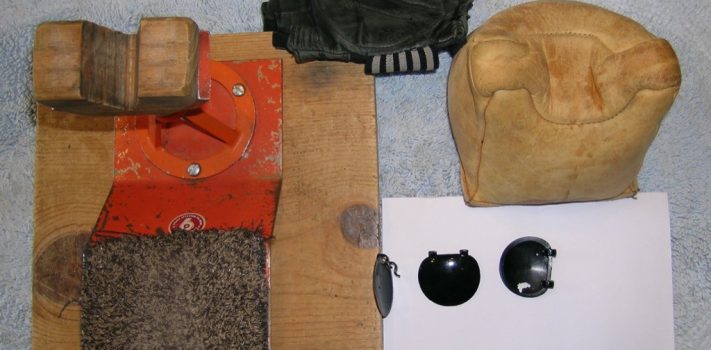
I know there have been many fine articles here at SurvivalBlog on firearms and accuracy submitted in the past, yet I feel as though I can contribute something unique and useful with my combination of tools and methodology…see what you think. For myself, there are a few tools I utilize perhaps above and beyond what most folks I have observed employ, and then other basic tools. The two items I would like to especially emphasize in this article, among others, are the chin rest bag for pistol sighting and the optical occluder for enhanced focus for both pistol and long …


Books and Why You Need Them – Part 2, by Born Free

(Continued from Part 1. This concludes the article.) I’m sure all SurvivalBlog readers can come up with a list of things they value and believe, often handed down from their parents, grandparents, and great grandparents. With the continual onslaught of controversial ideologies, it might behoove one to pick up a book and turn off the digital world. It might give your soul solace. It might remind you of the things you knew to be true as a child. It might be a reference for discussions with family members. Don’t be afraid to review your own version of your cultural heritage …


Books and Why You Need Them – Part 1, by Born Free

Every time I moved, I schlepped boxes upon boxes of heavy books, not to mention the bookcases. Only one time that I moved did I have “professional” movers, and all the rest of the times were with the help of family and friends. I’ve moved at least 10 times in the past 40 years. I won’t go into the details of moving the piano, twice, upstairs. At some point, since I could not carry the boxes myself anymore, I started letting go of my books. I had a vast library of technical books (networks and systems), but the technology had …


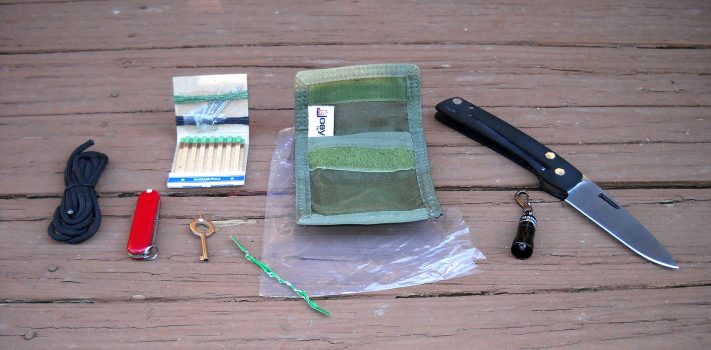
A Micro Survival Kit for Everyday Carry – Part 2, by M.B.

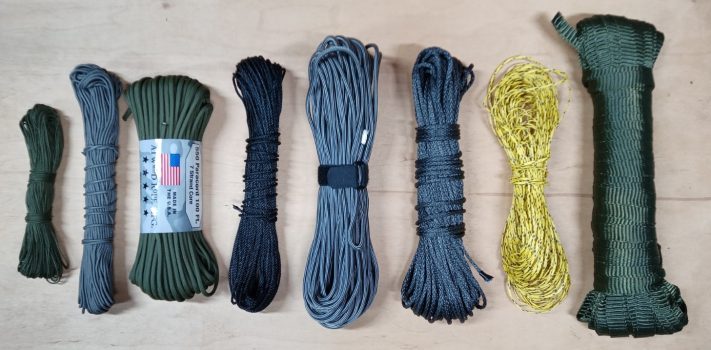
(Continued from Part 1. This concludes the article.) Tool #2: Cordage Cordage — string, rope, etc. — is another of our oldest tools. Early people would have used animal sinew or plant fibers. No matter what its form, cordage is an essential element for making shelters, tools, and weapons, in first aid, and for making needed repairs. Smallest Considered: Dental floss Largest considered: Paracord Final choice: Paracord, plus several feet of fishing line AND thread Honorable mentions: Braided fishline, carpet or upholstery thread Thread – Strong thread is wonderfully useful for small tasks and repairs, such as attaching a feather …


A Micro Survival Kit for Everyday Carry – Part 1, by M.B.

In Jules Verne’s 1874 novel, The Mysterious Island, a group of Union men escape from a Confederate prison during the U.S. Civil War, in an observation balloon. They are swept away into a massive storm and survive a crash landing on a Pacific island with nothing but what they are wearing and what’s in their pockets. In an early scene, the castaways have gathered food, firewood and tinder, but the character preparing the fire suddenly discovers that he has lost his waterproof match container. A frantic search among the castaways uncovers a single match in one character’s vest, and this …


Black Gold: Organic Matter – Part 2, by R.M.

(Continued from Part 1. This concludes the article.) Do you have access to sawdust? In most places where I have lived, I have had access to free sawdust. Sawdust is almost pure carbon = organic matter (yes I know it’s not quite that simple, but for the purpose of how to make your soil better, it really is). Put it on your plants and they will most likely die from lack of nitrogen as the sawdust absorbs it. For the best and fastest composting, you need a ratio of carbon to nitrogen of 7:1, and sawdust is all carbon, no …


Black Gold: Organic Matter – Part 1, by R.M.

Organic matter should be considered black gold. This aricle will describe why you need to work on it, now. Summary: Higher organic matter soils are just about drought-proof, need far less fertilizer, and the organic matter will balance out acid/base and many other conditions resulting in healthier plants that are more resistant to everything from too wet / too dry to insects and disease. I started gardening in the sand hills of Florida over 50 years ago. 78 feet of sand until you hit clay. My first garden was a total failure. For my second garden I followed the exact …


Pistol Lasers and Red Dots, by Francis

Introductory Note: I’m Francis The Semi-Prepper. Two of my articles have been featured in SurvivalBlog: The Semi-Prepper, Part 1, dated May 26, 2020 and Part 2 dated May 27, 2020 and, Abandoning Home, by Francis dated Aug 11, 2020 I reference these as they include my background and beliefs. I’m trying to be proactive but I’ll never be a full prepper. I am constantly thinking and trying to do what I have to do to be prepared for the ominous times coming and to pass onto our grandchildren something of value. We already know the Lord but the Lord helps …


Basic Clock Repair and Few Thoughts on Time, by St. Funogas

In The Novice’s recent article Timekeeping When the Grid is Down, he asked for someone with a better knowledge to write an article for TEOTWAWKI clock and watch repair. While we’re waiting for that person to step up to the plate, and I hope they do, I thought that I’d offer some of the clock-repair basics I’ve learned in the past eight months. I’ve always loved any kind of windup time piece. Some combination of the beauty, intricacies, and the mechanical aspects of clocks captured my imagination at a young age. Once I used my birthday money to buy $2.50 …


On Leadership, by Old Bobbert

Editor’s Introductory Note:  This is the 30th article written by Old Bobbert that has been posted in SurvivalBlog.  In all, he’s written more than 97,000 words for SurvivalBlog, and we are grateful! — True leadership is a status conferred by knowledgeable persons whose choices reflect their recognition of ability, experience, integrity, character, and a full commitment to a common cause or endeavor. Being chosen as a leader generally is a result of a decision that they will be supported and enabled by the leader to be successful and secure in the common group efforts. Often the new group members have …


Raising Beef on a Small Homestead – Part 2, by K.R.

(Continued from Part 1. This concludes the article.) Transportation We started out not owning a trailer. We bought calves from someone who would deliver, borrowed trailers to purchase hay, and used a mobile butcher who killed and quartered the animals on site. I think it is possible to limp along in this manner for a while until one figures out whether or not beef production is going to be a permanent thing. We have since purchased a new Maverick stock trailer (from Quality Trailer Sales of Boise, Idaho), which seemed the best quality for the price. We bought a new …


Raising Beef on a Small Homestead – Part 1, by K.R.

Raising beef cattle may be outside the comfort zone of many Survival Blog readers, but it doesn’t need to be. At least that is what my wife and I found out. Doing so on a small, manageable scale has significantly upgraded our level of land management, food preparation, and enjoyment. Now we can’t imaging our high altitude (6,500 feet) American Redoubt retreat without full freezers of steaks, roasts, and burgers, all the nutritious compost we could ever hope for, and our two Highland cows roaming our mountainous 20 acres. Many might say that, “I’ve never raised livestock and want to …


Survival Gardening: The Most Vital Prep – Part 3, by T.J. Dixon

(Continued from Part 2. This concludes the article.) Your crops should be started indoors 4 to 6 weeks before you’re ready to put them out. Since your space is small to start, you will only need one or two 72 cell starter trays; you can also use egg trays or make pots from rolled up paper. When you are selecting your seeds look for heirloom or “open-pollinated” seeds; they will be labeled on the seed packet. Since you will be harvesting next year’s seeds from your little garden, you do not want hybrid seeds. Heirloom and open-pollinated seeds will reproduce …


Survival Gardening: The Most Vital Prep – Part 2, by T.J. Dixon

(Continued from Part 1.) The planting process starts by seeding most crops indoors under artificial lights about 4-6 weeks before it is time to plant them outside; Here, refer to the USDA Hardiness information for planting times. Most crops need from 60 to 90 days to mature after you’ve transplanted. In Zone 5, I start spring seeds indoors in February, summer seeds indoors in April and fall seeds in July. Once things have sprouted, they need to be transitioned outside. You cannot just take a plant from the low light of the indoors into the full power of the sun …