Wandering in the New World- Part 2, by JMD

Yesterday, I began writing about the post-SHTF conditions that may make a wandering nomad type lifestyle much more practical and reasonable. We are talking about considerations for this and continuing with this further today. Situational Awareness – You need to always be aware of your surroundings, where you are and where you can quickly get to for cover and concealment. Medical If a medical emergency occurs, you probably won’t have anyone to rely on but yourself and/or your group. You’ll need to learn how to handle common injuries and illnesses with what you have available. Bushcraft Since you won’t have …


Wandering in the New World- Part 1, by JMD

Let’s explore the concept of wandering. If you’ve been involved in the world of preparedness for any length of time, you’re familiar with terms like “Bug-Out Location” (BOL) and “Bugging-In”, and you have probably read or participated in discussions about ways to go about securing your house/neighborhood/compound/town. Humans as a species tend to be social animals, and gathering in fixed locations in large groups has always had many advantages, including security, stable relationships, sharing of labor, farming, et cetera. But there have always been individuals and small groups who prefer (or are forced) to minimize their interactions with “society” and …


Sweet Spot For the 21st Century With Calibers Beating .308- Part 4, by Alpine Evader

Today, I’ll wrap up this series by writing about fire teams and our planning and training regimen. Also, I’ll outline some of our desires for the future. Fire Teams of Four (or Three) In SHTF, two fire teams of four would be absolutely fabulous, but we practice with one less person. This factors in SHTF reality, when we’ll suffer injuries, illness, homestead security, et cetera, into our planning and training regimen. A command element of four people– a squad leader, radio, two NCOs– would round this fantasy of a full-strength fire team out. We aren’t into fantasy, but that’s what …


Sweet Spot For the 21st Century With Calibers Beating .308- Part 3, by Alpine Evader

Yesterday, in part two of this “sweet spot” series, I moved beyond telling about my high altitude survival group and our plans and I began telling about my loadout long-term results and recommendations. I’ll continue with this by recommending some ammo. 115 Grain 6.8 Ammo You’ll find that 115 grain 6.8 SPC Sellier & Belliot (S&B) ammo just got undercut by 115 grain American Eagle; both are about $0.62 per round. 6.8 ball ammo will crush cinder blocks within 200 yards far more effectively than any 5.56 ammo. That’s true even if you include green-tip SLAP rounds out of either …


Sweet Spot For the 21st Century With Calibers Beating .308- Part 2, by Alpine Evader

Yesterday, I began writing by telling the summary up front. I said we recommend against adopting the beautiful, survival standard of .308/7.62x51mm caliber semi-automatic rifles. Instead, I stated, “The least expensive and best upgrade to any existing AR-15 fire team for high altitude blended threats is to purchase standardized barrels and stock up on single-use, heavier bullets.” I also shared about our survival group’s location decisions. So, who am I to make these statements and recommendations? Author’s Relevant Background I climbed my first 14,000+ foot peak at the age of 12 in a summer camp located smack dab in the …


Sweet Spot For the 21st Century With Calibers Beating .308- Part 1, by Alpine Evader

This week I finished my five-year analysis on five intermediate range cartridges. I did an overview of semi-auto rifle logistics in six calibers. Scope of operations must support mounted vehicle extraction (Getting Out of Dodge/Bugout). Hostage recovery (Close Quarter Combat) and  a more typical three to four-person Fire Team foot patrol/maneuver element 6,000 feet above sea level must also be supported. We train for pain. But we are smart, hairless apes/intelligently designed, free-thinking primates, so we plan-do-check-act (or use the OODA Loop) wisely. “Amateurs study tactics,” goes an old saying, “armchair generals study strategy, but professionals study logistics.” The Sweet …


Essential Survival Tips From A Hurricane Irma Survivor, by C.S.

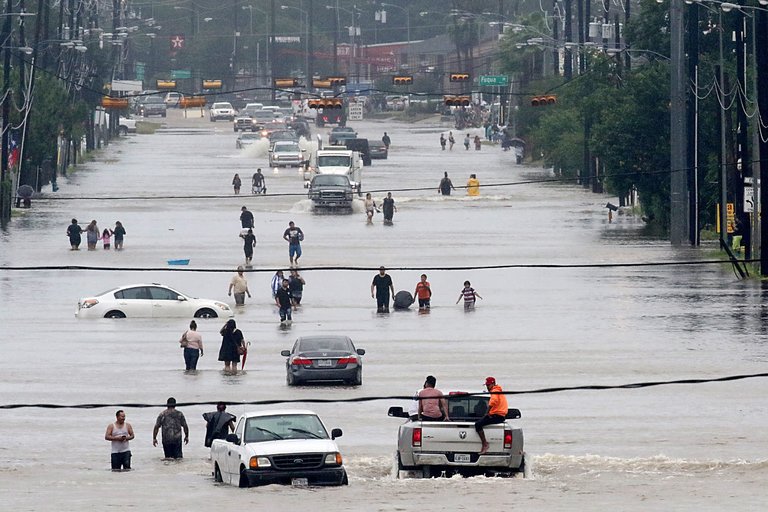
At the time I began writing this, Hurricane Irma had hit only eight days earlier. From it and other hurricane experiences, I have learned some valuable lessons. The first is, use your head. No, do not use it to hammer the shutters down. What I mean is, use some common sense. Demonstrating a Lack of Reasoning Here are some things that happened here in South Florida that demonstrated a lack of reasoning: A guy burned down his house because he wasn’t careful while pouring gas in his generator that was running. The spillage later caught on fire, torching his entire …


Letter: The Three Greatest Threats To Our Mutual Survival

To The Readers, Artificial intelligence (AI), nuclear war, and economic collapse; represent the greatest threats to our survival as human beings. AI If we continue on our present path, computers will be able to out-think us. Every battle will be lost to an opponent that is smarter than us. Nuclear Devastation Alternatively, a hot-headed dictator may lose their cool, and may fire his nuclear arsenal upon humanity. This could [trigger a general exchange] leading us all to extinction. Economic Collapse Even economic collapse would devastating. We would struggle amongst ourselves for basic necessities. I have heard several arguments concerning all …


Memory Longer Than A Gold Fish, by NavyVet_77

While some people get frustrated over short-term memory issues of the aged, others wonder if young Americans have a more serious issue with their absent memory of history that seems to last no longer than that of a gold fish. Many of those we see participating in the Antifa/BLM movements are between the ages of 16 and 25. Other age groups are involved, but the clear majority of participants are from a younger demographic. So many people ask themselves, “What is going through the minds of these protesters?” and “Why?”. Communism/Marxist Ideologies Seeping Into Children’s Lives Communism (which is based …


Guest Article: Considerations for Night Operations- Part 4, by Max Alexander

Yesterday, I talked about the technology behind night vision and combined thermal/IR devices as well as what should and should not be mounted on your rifle. I also wrote about when to use head mounted night vision. Now, let’s continue a little further with the idea of head mounted night vision and use of night vision in conflicts as we conclude this article series. How To Mount Night Vision Monocular To Head The question often comes up of how to mount your night vision monocular to your head. The provided “skull crusher” is not popular. The most effective way to …


Guest Article: Considerations for Night Operations- Part 3, by Max Alexander

Yesterday, I shared about the use of illumination flares and what to do when caught in one as well as began discussing the use of night vision in a patrol situation. Night Vision Technology Now, let’s talk a little bit about the night vision technology. Your standard night vision devices, such as the PVS-14, are image intensifiers. This means that they amplify ambient light to produce the familiar green image. (Now, you can get white image versions.) On a lighter night they work better, on a darker night not so good. This is because they magnify the available light. These …


Guest Article: Considerations for Night Operations- Part 2, by Max Alexander

Yesterday, we began looking at how to see and move at night with low tech- or no tech equipment. I shared about the importance of developing and protecting natural night vision and ways to more safely patrol at night. You cannot assume that darkness masks your movement, but you can adjust. Let’s continue with this in mind. Adjusting To Challenges of Moving At Night So there are challenges of moving at night when working low-tech. But it’s actually something that you can get used to after a little bit of practice. You can get very comfortable at it. You need …


Guest Article: Considerations for Night Operations- Part 1, by Max Alexander

Let’s talk about night operations. This is a topic that often comes up, particularly with regards to modern night vision equipment. There are multiple aspects to discuss about night operations, so my intent will be to give a broad brush of the various aspects in order to clarify, and open it up to comment and discussion. We are primarily concerned with the armed civilian in an SHTF environment. Thus, you will only have the equipment that you purchased or acquired. We can certainly take pointers from practices within the military, and that is part of the intent of this article, …