
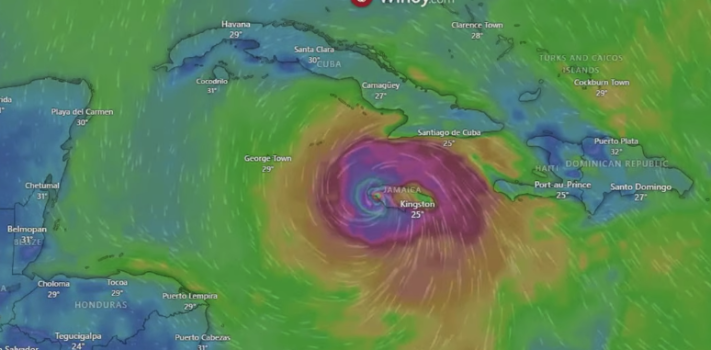


This my recollection about preparing for a natural disaster in the summer of 2017. I had just arrived on a Caribbean island with a single checked bag and a temporary rental. Within weeks of arriving Hurricane Irma, a category five hurricane, passed a few miles north of the island. It took only hours for the island to lose electricity and communication with the outside world. Two weeks later, Hurricane Maria hit the island and knocked us back to the 18th century.
I was unable to access my money in a bank on the US mainland, due to infrastructure damage on the island, and befriended only a few people in the short time I had been there. My ability to adequately prepare was also inhibited as the island had gone more than a month without resupply.
This is how I prepared. Though it may appear to have little value to those who believe they are prepared, with water purification and food and, likely, munitions, I learned that service is a preparation that requires little more than empathy and understanding.
The week before Maria
The story begins a few days before the second hurricane, Maria, struck. The island had, for the most part, repaired the damage from Irma. Normal shipments to the island were still delayed by the first hurricane, though one could say the island was bouncing back. People were optimistic and tourists were gradually arriving by air and cruise ship, leaving everyone feeling relieved. When the dock in my small town of about 2,000 people was repaired I took the first boat out to snorkel an off-shore area. We had dodged a bullet, or so we thought.
While returning from the snorkeling trip I sat on the boat’s flying bridge and talked with the boat’s captain. After radioing the marina with our return float plan she left the radio on and we listened to chatter about another hurricane, this one named “Maria”. As we had both just weathered Irma the captain and I made eye contact but remained silent while listening to the sporadic radio messages about the storm. Many of the messages were being passed along, from boat to boat, and relayed the latest storm projection’s from various governments’ weather agencies. We were both worried, of course, but the hurricane was still far to east.
After returning home I carried my gear back to my rented bungalow and turned on my NOAA weather radio. Maria had developed into a category five hurricane within twenty-four hours of her formation off Cape Verde. Early projections put the island in her path. I sat in front of the bungalow’s only fan and thought about the situation. The few grocery stores within walking distance were largely empty and my mainland bank accounts were inaccessible. I had only about $300 in my wallet.
I thought about leaving the island, but not unlike that wonderful story about Cortez’s ships, upon my arrival to the island I had figuratively burned my ships. I quit my job, sold or gave nearly all of my belongings, and moved to the island. This was more than a trip — I was restarting my life and would not give up on my decision. Nevertheless, I looked into the possibility of leaving ahead of the storm. I could fly back to the US and rent a place for a month, and then return to the island. I had sailing experience and could have likely found a ride off the island crewing one of the sailboats leaving for calmer waters outside the storm’s predicted path. But neither of those options were suitable to me as I had moved to the island. Turning tail and running, then returning, struck me a poor way to begin one’s life anew. It would be a step back. And I didn’t believe I was destined to die in a hurricane.
What none of us on the island knew, though, was that the Federal Emergency Management Agency’s Caribbean Distribution Center warehouse was nearly empty of supplies. Most of the supplies had been distributed after hurricane Irma and not yet restocked. Though I have never been one to rely upon government assistance in difficult times, I do appreciate that disaster response reduces the overall stress and social disruption after a major disaster. One the biggest risks to those who are responsible and prepare are those who do not, and, in that sense, we all rely upon others, whether it be FEMA or our neighbors who take responsibility for themselves.
The days before Hurricane Maria
In the last days before Maria’s arrival the hurricane’s severity and projected path firmed up enough so that a few nations were flying their citizens out of the storm’s path. That increased everyone’s apprehension about the incoming hurricane and I set about preparing. I was ineligible for those mercy flights as a US citizen, so I watched, with some envy, as large Airbus flights left the islands.
I did not have access to a car, so I purchased a $40 wheeled shopping cart and set about exploring the small stores and shopping centers outside my town. What I found was stores with empty shelves and I realized that $300 to spend was not that different from having $3,000 — there was simply nothing to buy. Still, I managed, over two days, to cart 24 gallons of bottled water back to my bungalow.
By the second day I had to walk miles to reach stores with anything available. I managed to find some frozen meat and blocks of ice, which would last a few days in my freezer once the power was out. And, to my surprise, some cans of food.
My last trip, which was on the morning the day the storm arrived, depressed me. Stores were empty and the shopkeepers were installing sheets of plywood over the windows and doors. I had nothing better to do so I walked around the narrow valley and found a drugstore that remained opened. Though it was a mass of confusion as people filled prescriptions, I hid my wheeled shopping cart in some bushes and ventured inside.
The confusion and panic of people was overwhelming as many scrambled to have prescriptions filled. But the store’s few aisles were ignored so I wandered them. I had been praying for guidance and prayers, I believe, are answered only when we are listening and calm. Inspiration strikes at the oddest of moments and, on one aisle, it struck.
I grabbed a small plastic shopping basket near the store’s door and loaded it with basic first aid supplies. I counted down from the money I had available and was able to procure bandages, aspirin, mercurochrome, iodine, and medical tape. While paying at the register I saw bags of hard candy, and for reasons I couldn’t explain at the time, I purchased some of those.
The last store I found, while walking back to my bungalow, was a cramped bodega on the first floor of the proprietor’s home. I entered and purchased the last canned food he had, which included two cans of coconut milk as well as a box of gallon-sized sealable plastic bags and matches. I still chuckle at that, as what felt ironic at the time — who buys canned coconut milk on a tropical island? But it became useful later on, as did the first aid supplies.
The storm
Back at my bungalow I sorted through my preparations and was surprised to see I had cobbled enough canned food to have one can per day for two weeks. I did not have enough water, but my bungalow had a propane stove, which would allow me to boil any water I found.
The bungalow was furnished so I spent the final afternoon moving heavy objects from kitchen cabinets and stowing them in cupboards beneath the counter. If a wall came down I didn’t want to be dodging pots and pans. I tested the hurricane shutters and removed the glass panes from the windows. Hurricane Irma had sent unsecured items flying and I didn’t want to contend with broken glass during a hurricane.
I stowed my tablet, mobile phone, and e-book reader in plastic bags, along with the medical supplies and matches. I put these into a daypack and then rolled up a clean change of clothing and packed that in a plastic bag, as well. If I had to flee my bungalow I’d be able to grab that daypack with some supplies and my wallet and passport. Fortunately I grew up camping, hunting, and backpacking and have never lost the minimum preparation of a pocket knife, fire starter, flashlight, and water purification tablets. I retrieved those from my single checked bag and also placed them in the daypack.
Then I waited. The prediction was for hurricane winds to first hit around sunset. The National Weather Service was anticipating an all-night storm. Twelve hours. The island’s government promised to keep the power on through the afternoon, so I charged my mobile phone and ebook reader. The anticipation was too much for me to relax so I walked up a hill to a vantage point and watched the hurricane move towards us from the Atlantic’s eastern horizon.
Hurricane Maria, like Irma, began with bands of winds and rain that raked across the Caribbean sea in giant furious tentacles. The storm’s dark spiral arms approached, moved overhead, and then disappeared over the horizon. Though Maria moved closer with each claw, it also brought a breeze and cool rain which felt good. To the east the sky turned from gray to purple and black. As the sun sank beneath the Caribbean Sea the sky became a solid wall of dark lit with flashes of lightning.
I didn’t ask God to spare me the wrath of the storm. I have never believed in praying for things or begging for things to not happen. Instead I prayed the Serenity Prayer and asked for strength necessary to remain calm through the storm, and if I lived, to be useful to those around me. The fear I felt didn’t bother me. After all, we need fear to exhibit strength and courage. I got up from the hillside and in the evening’s fading light I headed back to my bungalow.
Back home I filled empty pots with water from the tap and made coffee. A couple of new friends joined me and we sat on the bungalow’s covered porch. This gave us a view of the storm and the option, I reasoned, to scurry inside or leave the bungalow entirely if it looked like it would collapse. We settled into the wicker furniture and, while there was still power and a functioning internet, checked the hurricane’s progress.
Maria had already laid waste to several islands and we huddled around the tablet’s small screen. After a few minutes of watching footage of the storm we turned the tablet off and I put it back into its plastic bag. I chuckled at the impending devastation and likened watching the footage to reading a physics textbook after one’s car careens off a tall bridge. I remembered that I my prayers for deliverance from fear would be for nought if I didn’t hold my end up, so I settled back into my chair and said, “Well, look on the bright side. No one will have to trim any trees for a long time.” My new friends laughed and we poured the last of the coffee just as the island shut the power plant down.
Lightning lit up the hillside above us the entire night. The wind and rain and thunder created an experience that overwhelmed my senses. It was unlike anything I have experienced before, growing up in the American West. No blizzard or 60 below zero temperatures while snow caving compared to Maria. The Caribbean sea poured down and around us. Winds bent trees whose trunks were easily five feet across.
We alternated, at times, between laughing at macabre jokes and tearing up when we thought we were going to die. The lightning lit the sky and we watched objects tossed about by the wind. My bungalow was on a slight rise and flanked by gullies that became torrents. We could not hear anything above the rushing of the wind or lashing of rain against metal roofs.
The only time I teared up was when I heard someone nearby calling out for help. All of my instincts told me to leave the shelter of the porch, and my friends’ companionship, to find the person and provide what help I could. But I didn’t.
We had no protective gear to guard against the tree trunks, branches, furniture, sections of fencing, roofs, and loose items flying through the air. I closed my eyes and asked God to forgive me, fearing I was acting out of cowardice. But I also remembered my sailing training: never put yourself in jeopardy to save another ship, as that means more people need attending to.
I didn’t care deeply about and didn’t fear dying, but I thought about not seeing the people I love again. I thought about the fly fishing I have done. The books I have read and reread. Sunsets and sunrises above timberline in the Rocky Mountains. The animals I have hunted and fish I’ve caught and those I have silently watched from a rock outcropping or deep shade of a pine forest. Moments of pure Grace. I thought about the beauty of the world and how the things we are grateful for are also the things that bring tears to our eyes when we’re at risk of losing them. My son and mother. My brother and sister. Friends who were worried about me. Does Heaven have eagles soaring above the West’s vast oceans of pine trees? Trout swimming in cold clear water? Strong black coffee on brisk mornings while I watch the sun rise over mountains? I don’t know nor do I believe anyone knows. But I know what I have, here and now, and the gratitude I feel for this life is also the fear I feel at its end.
The eye of the hurricane arrived exactly six hours after the storm began. It brought still and quiet. Our ears ached with stabbing pain and popped with the abrupt change in atmospheric pressure. Though the eye brought some relief, we knew we were only half way through the storm. The eye crossed us us around midnight and it took a half hour to pass. Surreal doesn’t describe the experience. I’ve used the word “serene” when talking about it. I can only describe being in the eye as being in the throat of a great beast. Dark gray clouds swirled about us. The winds did not touch us but sounded like the roar of jet engines. It was a primal purgatory.
We were inside its maw, being consumed, uncertain if we’d be overlooked by the beast or swallowed. We still had six more hours of hurricane. The mountain’s gullies, on either side of us, were torrents of tree trunks, furniture, mud, and bicycles. I wondered if the cry for help I had heard a few hours earlier belonged to a person now drowned and washed out to sea.
I also felt responsible for the two friends who joined me. It was my idea to shelter on my covered porch and they trusted my judgment. I shivered some from the cold rain water, pulled my legs up, and wrapped my arms around my calves. The Serenity Prayer again came to mind and I chanted that silently. It got me through the first half of the storm and, it turns out, the second half.
The day after the storm
I was unprepared for the sun rising on a tropical island with no vegetation. The island looked like a black and white photo after a WWII battle in the South Pacific. The Caribbean Sea’s turquoise blue was pale and anemic. Tropical waters, I noticed, lose their allure when the land holds nothing but brown tree trunks and bare branches.
But we survived. We smiled at one another and for a few moments silently shared that odd comfort between people who will never be able to explain the shared experience to another.
I took stock of my bungalow and was pleased it had survived. The windows and cinderblock walls didn’t keep the rainwater out, but I had four walls and a roof. I put things back on shelves, mopped up the water, and made another cup of coffee. I was tired after being awake for 24 hours but was anxious to see how the town had fared.
I left my bungalow and headed to the one paved street that led down the hillside to the town’s waterfront. It was buckled by a palm tree that had been forced beneath the asphalt. Seaweed and dead reef fish lined our area in a uniformly neat line forty feet above the storm surge. Luckily, we were about five feet from being inundated by the rising seawater forced through the narrow streets. I decided to not cross the piled up seaweed and instead used that as the boundary of my day’s wanderings.
There were no power poles standing straight. Paint had peeled off buildings in thin sheets of color and hung limply in the stagnant hot air. With the trees bare of leaves the only shade to be found was in my bungalow or created by building walls. But I stayed away from walls because many were leaning at dangerous angles and more had collapsed. What was beautiful 24 hours earlier was now a devastation of ruin.
I returned to my bungalow. My neighbors were out and we all had horrible headaches. I shared some aspirin and slept most of the day.
The days after the storm
The first days were a slow and creeping awareness that help was not coming soon. A gloom fell across the island. The government broadcasts promised aid was coming soon, but seemed to focus more on the curfew rules and a description of the devastation. We were largely cut off from the rest of the island. Roads and bridges had washed out and downed power lines and trees prevented vehicular traffic on the few roads spared. The only ‘relief area’ was unreachable to us as it would have taken at least a half day to walk there. That clearing, we were told, would soon see MREs and bottled water delivered by helicopter.
Blackhawk helicopters flew overhead and passed without leaving food or water. I was not starving — people can generally go a long time without eating provided they have water and shelter. I considered every day a fast, broken at noon, with a single can of food. But it takes a mindset to consider feeling hungry a fast. There were many families around us and children cannot be expected to suffer quietly, bolstered by some measure of gratitude.
Most people stayed at home and cleared their yards and made repairs to hurricane shutters and rain gutters. We had seen no aid but still held out hope someone from the government would show up. I wasn’t going hungry, yet, but plenty of people around me had not prepared. Most claimed their decision was because the government would respond. I suspect preparing would have acknowledged the words “government” and “promise” do not belong in the same sentence and admitting that would have been too difficult or, perhaps, far too fatalistic for those with children.
By the third day E. coli had made its way into the water system. It spread across the island and everyday at noon, on my emergency NOAA radio, we listened to the government’s broadcast giving updates on the bacteria’s progress. The island’s only hospital had been destroyed and I was more concerned about injury and infection than hunger. The only flights off the island were by helicopter and that was reserved for the severely ill and desperately wounded. As there was no ambulance service or hospital I imagined the condition of those who were carried to the one clearing that saw a helicopter every other day.
On the fourth day my morning walk took an odd turn. I saw, on my street, a winter hat lying in the middle of the road, black and with a red fringe. It wasn’t there the prior evening and I found it odd that someone would have a knit winter cap on a tropical island, let alone appear in the middle of the street overnight. I walked towards it and realized, about five yards away, it was the remains of a cat that had been killed and skinned. I was looking at its head and coat. I found cat, dog, and chicken remains on most streets each morning after that and imagined someone killed the animal during the night so their kids wouldn’t know where the meat came from. I accepted that and the haunting looks from a father cooking meat over a small fire in their front yard. I gave the men a nod and they nodded back. There’s nothing that needs to be said about feeding one’s children and loved ones.
I drank the water in my purchased water bottles first. Then propped the empty bottles under rain downspouts and hid them amidst the island’s rubble. I didn’t collect much rainwater but what I did capture was clean.
Rumors spread faster than the hurricane. I call them ‘rumors’, largely because I do not believe anyone could substantiate the stories. But they increased the fear and desperation. A man whose leg was amputated at the hip due to an infection, which was done at a medical tent in what some called the ‘helicopter clearing’. The government retrieving bodies from the shallow waters along the island’s shoreline. Private security guards, hired by the wealthy, shooting first and not asking questions. Some of these I was to corroborate when I chanced upon a private security guard who was former military. He had run out of drinking water before his shift ended and, perhaps as repayment for two bottles of water I collected, he told me what he knew. The man who lost a leg: true. The government retrieving bodies just offshore: not true, as far as he knew.
During the day there was little to do. I read books on my ebook reader but always fell asleep in the stifling tropical heat. Without electricity the fan on my bedroom wall mocked me. The mattress was soaked from the rain and unpleasant to sit or lie upon. Comfort could not be found. I usually laid on the cool tile floor and rested my head on my damp pillow.
I examined my body for scratches before taking showers or sponge baths. I still don’t know if one can acquire an infection that way from E. coli, but it seemed a good precaution. I shaved, every morning, because it was a touchstone of normalcy. When I was able to get cellular service I sent texts to family and friends letting them know I was still alive.
Service Opportunities
Boredom and discomfort defined our days. I spent the mornings and evenings walking the streets looking for ways to help. Islanders lined up to register for emergency supplies, something I did not qualify for, since I was not a resident. I begged to differ with that definition of “resident”, but didn’t argue the point with the officials.
The lines of desperate people at the government building near my bungalow grew until they were blocks long by late morning. They all had a multitude of crying children and beleaguered moms. I began walking the length of the line showing the moms a few hard candies in my hand. They all smiled gratefully and nodded. I’d give the children a piece of candy and, if they were young enough, I’d keep one hidden in my hand and pretend I found it behind their ear. The children appreciated the distraction but it was the mothers whose faces showed a level of gratitude I’ve not seen since. What I thought was an impulse purchase at the drug store became very useful. I still chuckle at that. Was it fortuitous or an answered prayer to be useful? I think it was the later.
That little act of service endeared me to the locals. I was the only white person in town and, consequently, felt out of place. But candy for the kids and bottles of rainwater and aspirin gave me enough notoriety to earn a nickname: “crazy white dude”. People notice when you give what you have. The locals began to show me affection and a few brought me MREs. Some of the old people made the trek to the helicopter clearing and gave me the entree or desert. I never asked for food — there were too many families struggling and I was just hungry, not starving. Nevertheless, they shared some of what they had.
I have heard people claim bartering was the first economy. I readily agreed to that sentiment when I was younger, but now believe compassion and empathy and gratitude, if they don’t constitute the first economy, define an important one.
One day, while checking my watch and waiting for noon so I could eat that day’s meal, someone called my name. I went outside and a man was holding a bloody shirt on his arm. I waved him into the small courtyard my bungalow faces.
His thick Caribbean accent and gold “grills” over his teeth kept me from understanding much of what he said but he understood me. I asked him to remove the bloodied shirt and then cleaned his arm with antiseptic hand soap I purchased, applied mercurochrome, and used two butterfly bandages over the wound. It looked like a knife wound, which would be consistent with the violence that was unfolding on the island. He clearly needed stitches, but I was unprepared for that. I thought about using my travel sewing kit, but was unsure I could provide him with sterile stitches. After the butterfly bandage I wrapped gauze on his arm tightly. I did not want to apply a tourniquet but the cut was deep and, after the bandage and holding that tightly against the wound, the bleeding thankfully stopped. I wrapped his arm with medical tape and used the bloody shirt to fashion a sling. Come by tomorrow, I said, and don’t move the arm otherwise the wound may open again.
The next day he showed up, gifted we with some food from an MRE package, and I checked his arm. It didn’t appear infected so I cleaned the area again and applied some iodine and a fresh bandage. He was very grateful and mumbled something that sounded like, “I’s been a tellin’ peoples ’bout chuu”. Though the man intimidated me his smile took in his entire face and eyes and he hugged me. That he knew my name was heartening to me. I had gone from “crazy white dude” to my given name.
I had made a new friend. And the people he told about me repaid the simple first aid I administered by sharing food and saying hello and asking how I was doing.
That night I was woken by screams and gun shots. I chuckled at the hubris of a government declaring the island “gun-free”. I rearranged the furniture in my bungalow to block the front door to make it difficult, and noisy, to open. I readied my spear gun and dive knife and slept with those in hand. Paltry defenses against the firearms on a “gun-free” island, but it was all I had.
There was a noticeable change in the locals’ treatment of me. People said hello more often and usually waved. A few more brought me food. One brought me an ice cold can of soda.
The mother and newborn
Amidst my wanderings I had found a solid stone staircase that survived a building’s second floor’s collapse. I climbed that in the late afternoons as it was shaded by some of the island’s mountains and I had a view of the sea from there. Like the endless hours I have spent staring at the American West’s mountain ranges and valleys I took solace and comfort in the view.
A few days prior a military unit arrived to guard the main government building. My staircase to nowhere gave me a place to sit and watch them. Their belligerence towards the hungry, thirsty and desperate islanders was difficult to watch. The soldiers worse canteens on their belts and often yelled at locals who approached them and asked for food or water. They were too quick to brandish their carbines with threatening gestures, which is the opposite of discipline. And I remembered something my father told me as a child: governments have interests and they are not interested in individuals.
While we were boiling and drinking collected from rain spouts, the island governor had his staff wash his official SUV. His men would wet the car, drop the hose on the ground with cold water pouring out, and soap the car before rinsing it. At night lights shone from his buildings window. A rooftop air conditioner hummed. I thought about the carcasses of cats and dogs in the streets each morning and grew more and more frustrated. I wondered why I walked to the staircase each evening to watch the government building and soldiers. What were they doing? I’ll never know, but I knew they were not helping those who fund their institutions, which was enough. My evenings watching were an outlet for the frustration I felt.
As I fumed over the soldiers’ behavior a young woman walked down the street and passed my staircase. She carried an infant in her arms. She dropped to her knees at the building’s locked gate and begged the soldier for water. The governor’s men rinsed the SUV in the gated courtyard. The soldier gripped the gate and rattled it and told her to leave. She wept and explained she has no food or water and “cannot make milk” for her baby. He banged his rifle against the gate. She turned away, walked across the street, sat down, and wept.
It was too much. I walked down from my staircase perch and approached the gate. The soldier watched me. I told him he was a pathetic boy and he’d remember this episode for his whole life and, if he had a conscience, he’d wrestle with guilt over his behavior. He glared at me, across this rifle barrel and through the wrought iron gate, but, after a few moments, stared at his boots. I asked him what he would do to a man who treated his mother or wife that way. He didn’t look up. He had some glimmer of conscience, I suppose.
I left him and the gate and crossed the street to the woman and told her I could help. I walked her to the staircase and helped her sit down, and gave her a bottle of water from my pack. Then I said I’d be back with something for her baby.
I jogged back to my bungalow and chuckled as I remembered purchasing the two cans of coconut milk. I grabbed those, and a can opener, several days of canned meals, and several more bottles of water. On days I was given food I didn’t eat my canned food, and could spare what I had without disrupting my one-can-a-day rule. And she clearly needed it more than I did.
She ate straight from the can after giving her baby some of the coconut milk. She cried and thanked Jesus and that made me my cry and we sat next to each other. I put my arm around her and held her and then held her baby while she ate another can of food. She told me her husband is a construction worker and has been missing since the storm and she has no family on the island. I told her I sit on the stairs every afternoon and will give her food if she cannot find it elsewhere.
The girl who lost her family
A few days later I walked to the waterfront in search of a breeze. I was able to pass out more hard candy to children and sat on the quay with my feet in the water. Swimming was too dangerous as the waste water was flowing freely into the ocean, though this spot seemed clean. A few more kids ran up to me asking me for candy. School was obviously not being held and I enjoyed the distraction the children provided.
Then an older girl walked up asked if she could sit next to me. I said yes.
She sat down, took her sandals off and put her feet in the water, slumped her shoulders and wailed. I was afraid she’d fall off the quay so I put my arm across her shoulders and pulled her closer to me. She slumped into me and cried. I pulled a bandana and bottle of water from my pack and gave her those.
After she composed herself she used the bandana to clean her face and drank the water. Then she told me her only remaining family, her mother and aunt, had died in the hurricane. She said she was the only thing she had left. She had no family. She cried more.
I cried with her. I could not help but cry. It’s been weeks of people eating cats and dogs and begging for a drink of water. I dried my eyes and looked across the blue Caribbean sea. She was impassive, just like the mountains and wilderness I grew up near. Human emotions are like the seas and mountains on our planet: resilient and shared. They are unaware of the suffering of people. They just are. I looked at the sailboat masts that stabbed through the glassy water of the town’s small bay. With the spreaders near the top of the masts the bay looked like a graveyard of metal crosses. An occasional hammer could be heard as someone repaired something. A Blackhawk helicopter flew overhead, on its way to the “helicopter clearing”.
She said she didn’t know what to do.
I didn’t know what to say so I simply asked her if she believed in God. The Caribbean islands are, for the most part, Christian, but that bears little resemblance to the Catholicism I grew up with. But at this point, on this island and all the islands around us, any god would do. She said yes.
Then all you have to do, I said, is live. Live the best life you can that would make your mother and aunt proud of you. I told her if she finds a man and marries and she has kids she will tell her children about her mother and aunt. I told her the only antidote to grief I’m aware of is time and remembering the loved ones we have lost. But grief will always be with us, though perhaps not as a sorrow as much as a reminder to live our lives in defiance of the pain and suffering of this life. Grief can remind us that joy and happiness are choices.
She cried more, but it was through a smile. The she stood and I stood and we hugged.
Leaving The Island
About a week later the airport had a single runway open. Intermittent cell reception allowed me communicate briefly each day at 5:00 pm in the evening. My mother was able to get me a seat on the island’s second flight out.
I cleaned my bungalow to the best of my ability and skipped my final meal. I left the single can of baked beans and can opener for the next person along with the remainder of my medical supplies. And I left a note: “Courtesy of Irma and Maria.”
I was grateful to return a place with electricity and food and water but also sad to leave. I hadn’t just survived. I thrived. I prayed to be useful to the islanders and did not have to look for opportunities. And despite being an “outsider” I was treated with warmth and respect and given food.
The best preparation, it turned out, was quite simple. Meet people where they are and if the only thing we have to give is empathy and understanding then we are giving.
Today’s preparations
My preparations at our homestead, of course, are much more robust. My partner and I have three adult children and being able to provide a suitable place they can call home will always guide our decisions. We have preparations for food, water, energy, self-defense, and hunting and fishing. But those are guided by what I learned from two hurricanes: nothing is better than a person who prepares to be useful. Communities rapidly evolve during traumatic times and a bunker, or its equivalent in guns, ammunition and emergency food, can be useful for building community. That’s what gets people and communities through difficult times.
But there are a few things I now include in our ‘preps’ that I was taught by my experience. Games and physical books. Simple gestures of giving like hard candies to children who are facing something too catastrophic for the innocence of childhood.
I have two heavy duty plastic containers filled with paper, pencils, dice, decks of cards, and small board games. I became quite the dominoes player in the evenings on that island, but sorely missed chess. That’s now a prep.
And, of course, I’m better prepared to create optimism and moments that allow us to create an opportunity to choose joy and happiness. None of that is more important than my 9mm or knives or sharpening stone and blade oil. But it’s just as important.
Boredom is a terrible companion and when coupled with desperation it erodes communities and can rob us of meaning. We — you, me, and everyone else — revert in terrible circumstances. And while many of my preparations are informed by barter, bartering in compassion and kindness requires only empathy. Perhaps my experience is unique and it certainly does not approach the SHTF scenarios many of us consider when prepping. But those people on that island had no power, limited water, and even more limited food in a hot tropical environment. It’s not wrong to say all they had was hope. Many were eating people’s pets, if not their own.
Games are wonderful reminders of why people like rules. There is an inherent fairness when people agree to even the simplest rules. Our impromptu dominoes tournament turned into a nightly gathering that gave us laughter and reminded us we are stronger together than apart. When everyone is hungry it is, somehow, more bearable, when we gather for brief moments of sharing. I was knocked out of the tournament early on, but my hand-crack NOAA radio and that simple game soon grew to more people than could comfortably fit in the courtyard. We shared coconuts and warm water.
Conclusion
Preparing to serve has grounded my preparations and left me more confidant in them and myself. I like to think it’s turning that famous quote from Ronald Reagan on its head: “The nine most terrifying words in the English language: I’m from the government, and I’m here to help.” I am not from the government, and I doubt many readers of SurvivalBlog are, but our preparations put us in a position to serve. It is another way to differentiate between the sheep, wolves, and sheepdogs. The wolves are out there, they were the ones breaking into homes and brandishing and shooting firearms at night on the island. People don’t know the names of the wolves, but they will remember the name of a sheepdog.
Those with the means and frame of mind to prepare are also natural sheepdogs. We’re aware of the wolves because of our vigilance. But there are usually more sheep than wolves. The only thing I could prepare for was service, and those who saw me serving found ways to pay me back and looked out for me.