
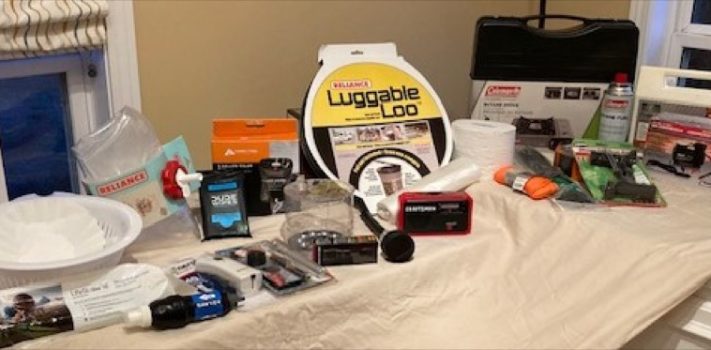


(Continued from Part 1.)
The next topic is water. I begin with the low hanging fruit of having water stored at all times. It hurts my soul to thoughtlessly parrot the “one gallon per person per day minimum” tripe we have all heard so many times. My recommendation is to store no less than three gallons per person per day or ten gallons each. I follow this up by encouraging each family set a goal of having a five-gallon water jug set aside for last minute filling for each person. For those who lament storage space, I recommend the collapsible Reliance jugs and pass around a Aqua Pod to show how easy last minute bulk storage can be. Some of the details surrounding water storage we discuss include the weight of water (8.33 pounds per gallon) so a full five gallon jug will be roughly 43 pounds, ensuring that your stored water is in small enough increments that you can easily move it, making sure your storage containers are easy to dispense from, rotating out stored water, and the value of spending a little bit more for brands that use thicker plastic if you choose to store cases of purchased bottles.
Inevitably during the early discussion of water someone will comment on harvesting from their water heater. I have drained dozens of water heaters in preparation for winterizing or replacing. Unless the tank is routinely drained, then it likely has a heavy buildup of gunk resting inside. Nonetheless, I acknowledge it might be a source and let the group know to turn off the gas/electricity to the unit prior to draining and remind them that a short garden hose will be useful.
I transition to making collected water safe for consumption over the next trio of slides. On the first slide I discuss all in one filters such as the Berkey, Sawyer and Life Straw. The next pair of slides cover filtering out solids and disinfection by boiling (one minute at a rolling boil) or chemical methods such as plain bleach and Aquamira. I take time after mentioning chemical disinfection to explain the requirement for a waiting period (contact time) prior to consumption. The final point I always make in the discussion of treating surface water is that a “Brita” type filter pitcher is not suitable for removing pathogens from natural waters.
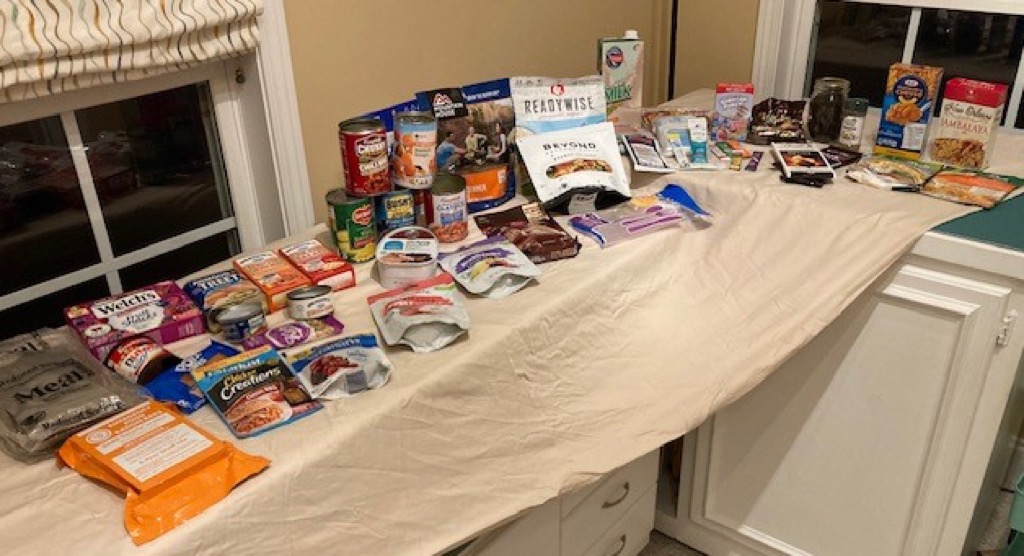 Food is the next emergency kit item to be discussed, and I present options in five groupings. The first are open and eat foods such as trail mix, PB&J, canned or foil packed meats, MREs and snacks such as jerky or granola. The second group discussed are the heat and eat canned foods that line our grocery shelves. It is true that any of these can be eaten cold but other than fruits, the other plethora of options benefits from heating. I remind the attendees that heating is different from true cooking and point out that by removing the paper labels and venting/removing the can tops that it is possible to heat these foods in their container. At this time, we also discuss the need to keep mechanical can openers, pot holders and disposable plates and utensils on hand to preserve water and be able to handle heated foods safely.
The third grouping of food stuffs we discuss are the “add hot water and wait” items. These include instant oatmeal, instant mashed potatoes, freeze dried foods and some varieties of pasta or rice sides. During this discussion I explain how freeze dried and dehydrated foods are not the same and bring up survival food buckets. I have a sample bucket purchased from Emergency Essentials that contains freeze dried ground beef, broccoli, sweet corn, strawberries and bananas. I also point out several back packer meals from Peak and Mountain House. I ask a volunteer to read the preparation instruction from a couple of these packages and also ask them to share the serving size. Once this has been done, I bring up the fourth group of emergency food.
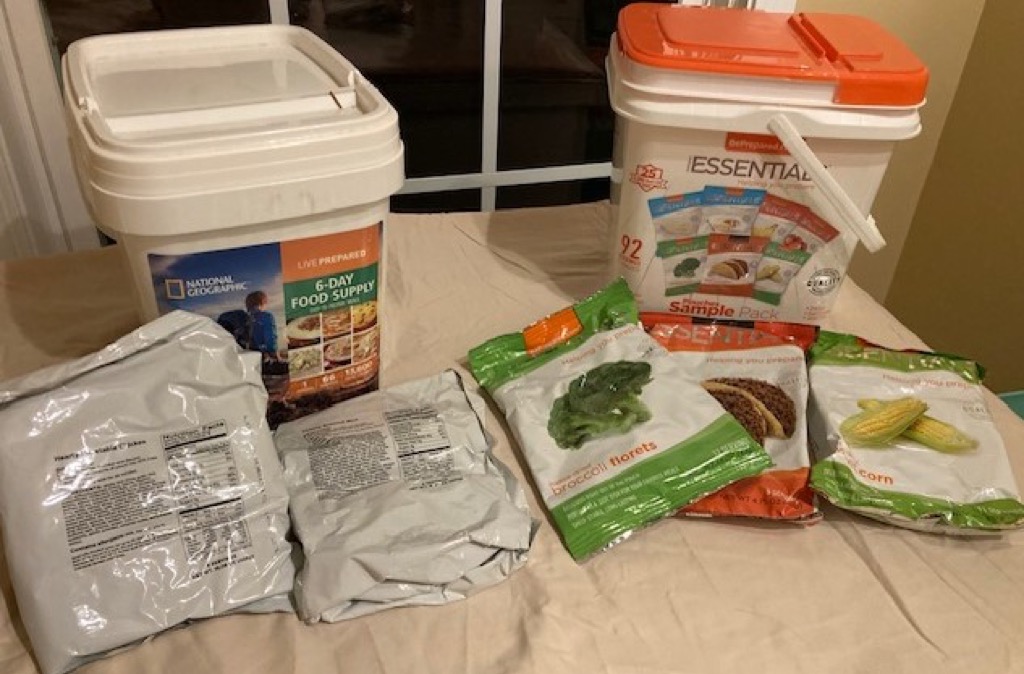 The fourth group of emergency foods we discuss are the foods that cook in/with boiling water. I hold up a small “survival food bucket” containing five entrees touted to be a 6-day food supply for one person. As any of you reading this already know, these kits contain highly processed soups, pasta and rice dishes. I stop short of telling my audience that there is no value to these meal kits, but I do point out them that the marketing behind them is deceptive. I once again ask someone to read the preparation instructions and to share the serving information. The three primary take aways I stress are that these meals require substantially more energy to prepare than similar packaged freeze-dried meals, that these survival foods are not packaged for easy partial package preparation and what the manufacturer calls a serving can be whatever quantity they choose to define it as. Case in point, the “cheesy broccoli rice” entrée instructions call for adding “the entire contents of the pouch into 8-1/4 cups of boiling water then simmer on low heat for 20 minutes”. The label also indicates that the package makes 8 half cup servings of rice. The follow up discussion then focuses on an inability during a disaster to store cooked food and what is the realistic benefit to this small portion, highly processed, high salt and predominately carbohydrate option.
The final grouping of emergency foods discussed are drinks and morale boosters. For simple hot drinks, there are teas, coffee and hot chocolate. Since most of my audience has a coffee habit, we look at the Folgers singles (that resemble a tea bag), single-serving dried coffee or bulk freeze-dried coffee. Another low-energy option mentioned is the French press coffee maker that uses regular ground coffee to make a couple of cups at a time. For cold drinks focus is given to electrolyte replacers such as Liquid IV and water flavoring packets such as Crystal Light, Flavoraid, or Wylers. Shelf-stable milk is the last beverage I mention.
In transitioning from food types to cooking methods I show a slide that offers the following well established preparedness tips. Plan around foods you already eat regularly, eat the most perishable foods you have on hand first and be sure to include foods that are high in energy and protein.
We next discuss cooking methods that do not require electricity. Gas or charcoal grills are household mainstays, the primary point we discuss here is how grills provide a dispersed heat source so best practice could involve masking off the area over part of the cooking surface to minimize heat loss and fuel consumption, especially if trying to bring water to a boil when the grill lid cannot be lowered. The “cooking” slide also shows a photo of the original Coleman white gas stove and I mention that propane versions are more common today than the gas units of old. There is also a picture of the butane “caterers’” single burner stove, as well as one of these units on the display table. Then the last photo on this slide is of a basic multi-burner propane cooker. I remind those in attendance that if their home range uses propane or natural gas, then chances are it can be lit manually.
(To be concluded tomorrow, in Part 3.)