


Back in 2016, the organizer for a local church’s senior citizen ministry approached me regarding a program she wanted someone to present on family emergency preparedness. In the two previous years our area experienced a “thousand-year flood” and the wind effects from a passing hurricane. Several of the seniors had requested a speaker who could help them think through steps that could be taken to minimize the impacts of another storm or similar short-term disaster.
This article is a summary of what that presentation has become after multiple iterations over the past ten years. My hope in sharing is that it might serve as the blueprint for a similar seminar/talk or class from which you could share your preparedness views and experience with others in your own community for the purpose of enhancing your community’s overall emergency readiness.
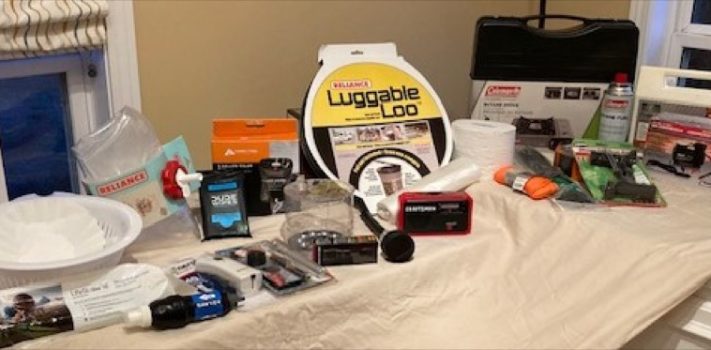
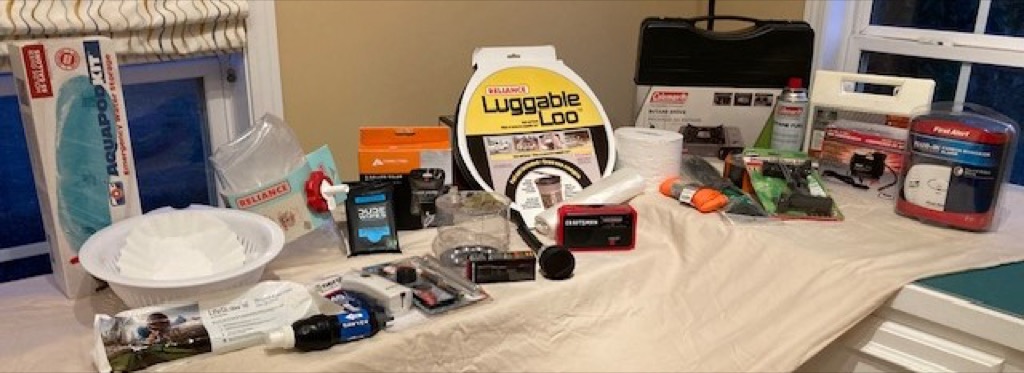
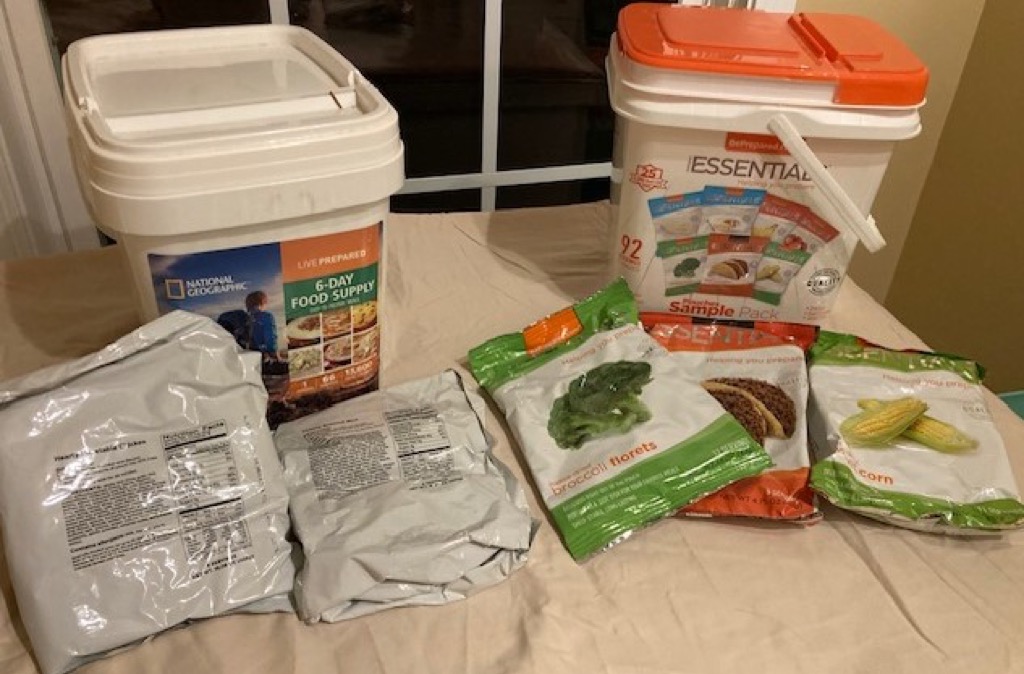
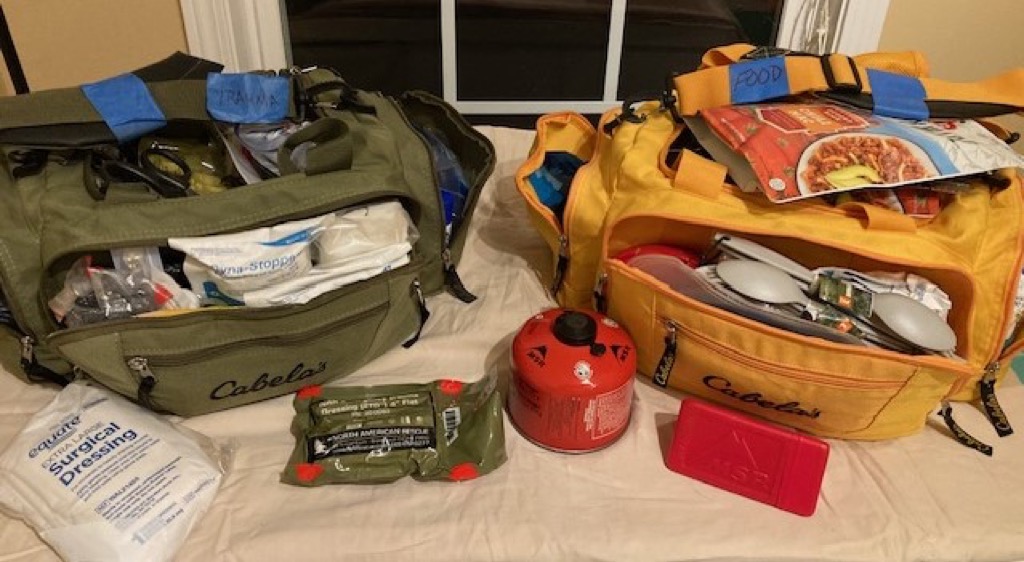 My current Powerpoint is 40 slides long and relies heavily on graphics and photos. In addition to the information on screen, I have two storage totes of example items set out on tables. The first tote is filled with example food stuffs and the second with basic preparedness supplies that can be purchased off the shelf at area stores. When I set up to share this talk, I take my personal evacuation food and first aid kits, then encourage the attendees to search the contents and ask questions. The final visual aids are a pair of sample size emergency food buckets. I can present the information in 90 minutes although with two hours, there is more time for questions or discussion and time for the attendees to “play with” the demo items on display.
Slides 1 and 2 introduce the concept of emergency preparedness with an emphasis on the family. The goal of planning what we should do before, during and after and event is introduced as are the preparedness components of making a plan relevant to your family, building a supply kit to meet short term needs and staying informed about potential disasters that could impact you.
To facilitate interaction with the attendees, before opening slide 3 I ask them what the most likely disasters for their area are. House fires, flooding, tornados and ice storms are the most common answers (we are in SC) although earth quakes and solar storms have also been mentioned. Most of the time, I have to supply that evacuation due to chemical spill associated with train derailment or the wreck of a tanker should also be considered. As the follow-up to listing likely emergencies, we then discuss some of the considerations associated with each.
For instance, emergency planning focused on a house fire would include identifying multiple means of egress for each room of the home, placement, inspection and familiarity with using a fire extinguisher, scheduled replacement of smoke detector back up batteries, recognition of the danger from smoke inhalation and knowing how to minimize the risk, and most importantly having a predetermined rally point for family members to meet at if everyone had to evacuate separately. At this point I also ask what anyone did to prepare for an event from the recent past.
After getting my audience involved, I use slides 4-7 to introduce the concept of a written family emergency plan. Ten years ago, when I first started this presentation, I would provide the pdf. “America’s PrepareAthon” from Ready.gov to the host in advance so they could print out copies to offer the attendees. This document offered both guidance for content and a starting format for developing a family emergency preparedness plan. Currently a digital form of that pdf. is available at https://www.ready.gov/plan-form and although this is a “fillable” form with the option to personalize, save and print out a family plan the guidance aspect has been reduced. This said, the overall Ready.gov website has expanded its offerings and there is a substantial amount of introductory/basic information available for newbies to preparedness.
I try to convey to my audience that once potential risks have been identified and specific responses to each risk have been brainstormed the next step is to get each pairing written down. By generating a written plan, it will become easier to track additions or changes and most importantly the written form is easy to share within the family to improve understanding and communication. I lastly iterate the value of reviewing the plan at least annually and making relevant changes.
One of the slides used in this section lists example considerations to be addressed such as, where would you shelter within your home in case of a tornado? If your family was separated by daily routine and an evacuation was required – who would retrieve children from school? if you couldn’t meet back at your home where is your alternate meeting location? Who would serve as a contact outside of the immediate area who may be able to serve as a message relay or provide outside information? What supplies do you need to care for/transport infants, children, elderly or family members with special needs?… As we have learned from our own preparedness efforts, the considerations and responses are numerous.
In this section of my presentation, I also touch on some more utilitarian aspects of planning including knowing when to call 911 for assistance, knowing how and where to shut off utilities (power, water and gas), how to manually open a garage door, how to use a fire extinguisher and how to safely hook up/use a generator to list a few examples.
Most of the engaged attendees will start looking overwhelmed at this point. I find it is important to step back and remind them that preparedness is not accomplished as one giant leap and that in all probability there is plenty of time to compile the family plan as long as there is commitment to steady progress.
To further relax my audience and introduce the second plan component i.e. building a kit of supplies, we conduct a thought exercise based on arriving home late one evening to find all of your utilities are off. The attendees are all asked to raise both hands and lower them one at a time if the answer to an upcoming question is “no”. Question 1 is, upon entering your home, can you quickly retrieve a flashlight that is guaranteed to turn on? Question 2 is, can you recharge your cell phone at least once given the power is off? Question 3 is, do you have easy to prepare foods and a way to cook them if needed for your family’s next three meals? Question 4 is the same as number three only regarding water for your family for a day. Question 5 is if you answered no to 3 or 4, do you have enough cash on hand to fill those needs? If after asking these five questions multiple people still have one or more hands up, I supplement with, if it is frigid outside do you have resources to keep your family warm overnight and the one that most often causes hands to drop is, do you have enough cash on you right now to purchase two tanks of fuel for your vehicle? At this point anyone who still has a hand up receives a freeze dried “prize” such as Mountain House ice cream/cheese cake bites or fruit from Nature’s Turn. I will also open a couple of other samples to pass around as a consolation prize for the rest of us.
 As discussion of an emergency kit begins, I stick to the introductory levels and ask the group to think in terms of what they would need for a three-day supply with which they could evacuate and what would a more robust kit that could provide for 14 days of sheltering in place require. When originally making this presentation, my wife found an image online from the Alberta Emergency Management Agency emergency checklist PDF and we use it (with source and attribution supplied) to point out typical kit components. Since it isn’t my original work, I’m not going to include it in this article, but in description the image contains a weather radio, cash, flashlight, food, water, cash, maps, first aid kit, eye glasses, hygiene items and a can opener among other items.
The next two slides are then used to provide a list of basic emergency supplies and then a supplement consisting of medical, infant, pet and evacuation related items. I encourage attendees to visit the earlier referenced Ready.gov site or the Red Cross web site to obtain adequate starter lists if the event host was not able to provide copies of the printed outline from the presentation.
After briefly discussing emergency kit components, I spend time focusing on eight specific areas to prepare in. They are securing important documents, water, food and cooking, staying warm, lighting, bathing/hygiene, toilet use and a vehicle kit.
In regards to securing important documents, we discuss backup copies, using the local register of deeds office as appropriate, fire safes or safety deposit boxes, both written and photo inventories of household items including serial numbers when appropriate and a list of documents one would need to re-establish themselves after an emergency. There are sample “important document” lists available online although you can easily offer suggestions to broaden their contents. In broad strokes the listings include personal information for each family member along with a newer photo, proof of identity documents, medical and insurance information (health, auto, home, life), legal documents, financial records, farm, business or pet records, a copy of your contacts list/address book and account passwords and so forth. I encourage attendees to keep a copy of these same records stored with a trusted friend or at a secure offsite location in the event the originals are lost from/at home.
(To be continued tomorrow, in Part 2.)