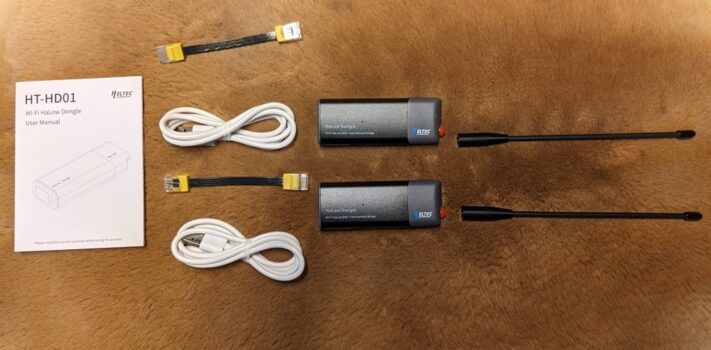
Signal Nomad HT-HD01 Network Bridge, by Thomas Christianson

The Signal Nomad HT-HD01 Network Bridge (aka “HaLow Dongle” or “Field Unit”) can be used to extend a wireless network by as much as a kilometer via the use of access point and end station transmitter/receiver units. These units — typically deployed in pairs — can be used in a remote location equipped with only Starlink or DSL Internet and no cellular coverage in order to extend a wireless signal beyond the range of traditional Wi-Fi. I am not highly skilled in the use of electronic communications devices. But even I was able to quickly and easily connect the Network …
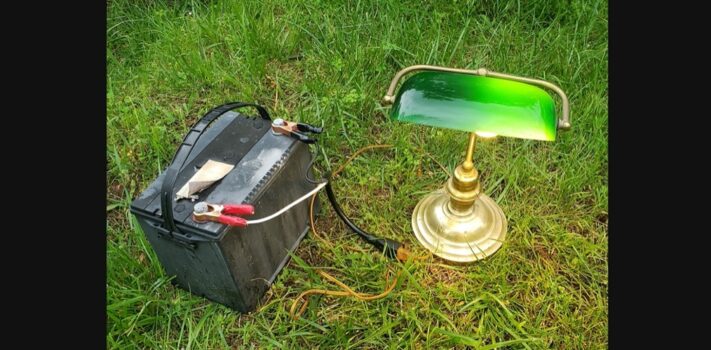
Post-SHTF Lighting: Testing My Preps – Part 2, by St. Funogas

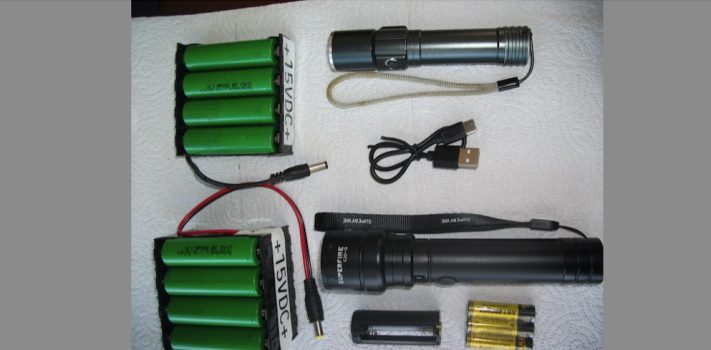
(Continued from Part 1.) Solar Panel Inventory As mentioned, to make this test more valuable to the majority of the readers I didn’t use my 3,000-watt home solar-panel system for lighting or charging batteries. I did, however, use a few smaller portable solar panels I have. 1 – 100-watt panel 1 – 15-watt panel 1 – 20-watt panel 1 – 1.8-watt trickle charger As you’d expect, the larger a solar panel is the more quickly it’ll charge a battery. For preppers who are currently without any solar panels, though not ideal, inexpensive 15-to-25-watt panels could be purchased and tucked away …


Post-SHTF Lighting: Testing My Preps – Part 1, by St. Funogas

‘This is another installment of my series of articles on how to light up our lives in TEOTWAWKIville. This article covers the results of my week-long experience testing my lighting preps. I expected this preps test to be a fairly simple but, as always, it proved to be more useful and eye-opening than I would have guessed. As with other tests I’ve done, it showed where my preps were insufficient, but more importantly, I learned several things I hadn’t even considered with respect to lighting and therefore hadn’t even thought about preparing for. Another testimony to the importance of testing …


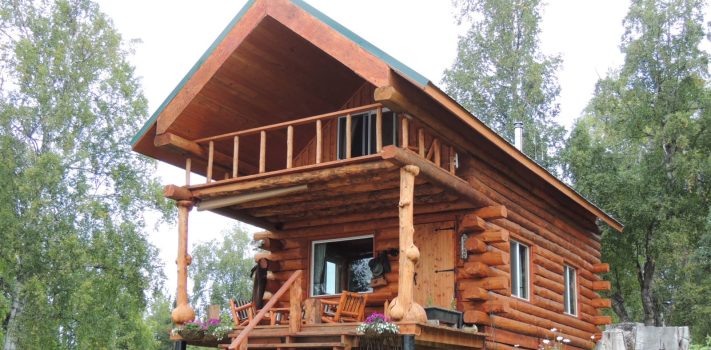
Construction and Design of a Remote, Off-Grid Residence – Part 2, by Mrs. Alaska

(Continued from Part 1.) Power Most remote homes and lodges rely on generators. The problem with generators is that they are noisy and smelly. So many people build a ventilated shed around them to buffer the noise. I appreciate that! In our case, we built the power tower (for the wind turbine, solar panels, antennas, and satellite dish) and power shed on the highest point on our property, so the 120 foot tower rises above the tallest trees, 400 feet east of the cabin. When we use the small generator as supplemental power, on rainy, snowy, still days, I am …


Construction and Design of a Remote, Off-Grid Residence – Part 1, by Mrs. Alaska

We bought undeveloped land in rural Alaska, in a region with no municipal infrastructure within a 20-minute flight to the nearest community. So, we built everything from scratch, after we hauled all the requisite supplies in by snowmobile trailer or by float plane. We made many mistakes in our design and construction, as well as a few good decisions. I actually think that people who buy a property that has an old-timer’s cabin, layout, and tools, may have an advantage in making future adjustments. The following are my suggestions for considering how to build and design property in a remote …


Understanding Hydrocarbon-Based Fuel, by Industry Guy

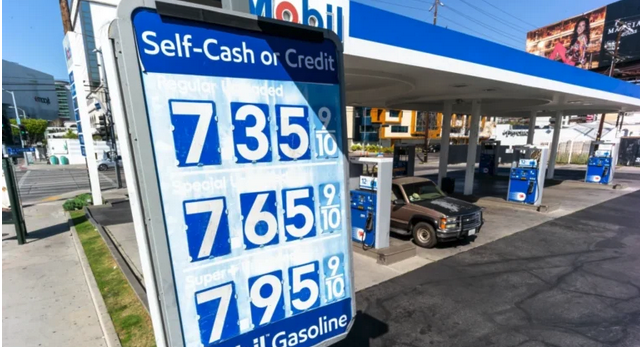
Editor’s Introductory Note: I’ve had many e-mailed questions about buying, transporting, and storing gasoline and diesel fuel in recent days. I also had a question about the available blends of gasoline. So, I thought it would be apropos to re-post a few fuel-related articles from SurvivalBlog’s deep archives.  This article dates back 16 years, to April, 2010. It was written by an anonymous reader in the fuel refining industry. Background Fuel supplies are essential for many aspects of modern society. Complex supply chains rely on hydrocarbon-fueled trucks, trains, and planes to deliver food and other supplies in near real-time. Natural …


Home Pressure Canning, by Mrs. Alaska

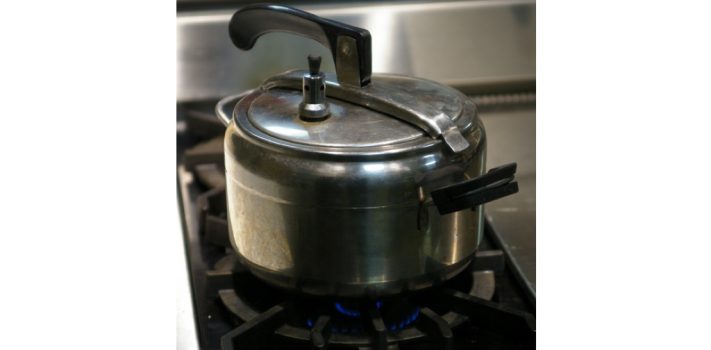
The following describes my approach at pressure canning meat and dairy products, with some comments on fruit, vegetables, and other preservation methods Pressure canning cookbooks, like Ball’s Blue Book, include recipes for making and canning meat broths, but, in my experience, most do not for meat itself. Similarly, they lack recipes for canning most dairy items. However, families have canned both for generations. Below, I share my positive experience of canning meats, cheese, and butter, for shelf-stable pantry items, based on the advice of friends whose families have done so for decades, and from my own experiences over many years …


Some Thoughts on Batteries and Flashlights, by Hoofer

We’ve read SurvivalBlog for several years, my wife first (she’s the farmer), and more recently, me… the last 4-5 years. (I’m the farmer’s husband, but, grew up on 250 acres, farming). I took particular note of the recommendation ‘not’ to use/buy appliances which use 18650 batteries (Li-ion rechargeable). We bought four of these 18650 batteries 2.5 years ago, and use them nearly every day. This particular variety is not in stock on Amazon – however, the replacements are well worth considering, if you’re actively using flashlights. Our old standard flashlights, were Mag-Lites, 3, 4, 6 D-cell versions, which we’d had …


Going Off Grid In The Tropics – Part 2, by Conan Stevens

(Continued from Part 1.  This concludes the article.) To give a vivid image of what it is still like here, the next smaller village over where my girl grew up still has a single electrical wire held up by bamboo poles with a 3W LED bulb dangling off every 100m (330 ft) or so for street lights, and house wiring running off that same single wire. But the sand roads were concreted over a few years ago, so there is improvement happening. As you can imagine in the tropics solar power works great, in dry season we have full batteries …


Going Off Grid In The Tropics – Part 1, by Conan Stevens

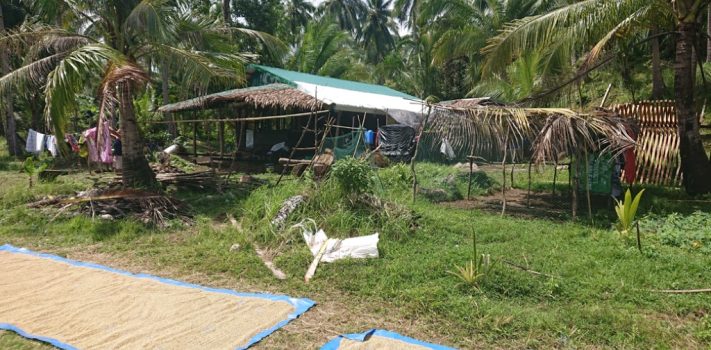
Have you ever thought about going off-grid in the tropics?  No? Well, me neither, yet that’s where I find myself. First up, though I have had food stores and access to water as a habit for over a decade I have only been living (mostly) off-grid for a year. So I’m not very experienced and still learning the ropes. But I thought my experiences here might be a curiosity and possibly be interesting reading for others. I originally moved to Thailand to work in the action film industry, 21 years ago.  Since then I saw that the country started modernising, …


Preparedness Lessons From Communist Mongolia – Part 2, by G.K.

(Continued from Part 1.  This concludes the article.) During winter, even the U.S. Embassy monitored the grid closely. The possibility of a complete system failure was taken seriously enough that commercial flights were placed on twenty-four-hour standby for potential evacuation of official personnel. We were nongovernmental residents. Those plans did not include us. Our planning had to be personal. Cold changed how time felt. Days stretched and compressed unpredictably. Waiting became a skill. Movement slowed, not from laziness, but from necessity. Mistakes in cold were costly. Dropping something, misjudging exposure, forgetting a step could mean numb fingers, wasted effort, or …


Preparedness Lessons From Communist Mongolia – Part 1, by G.K.

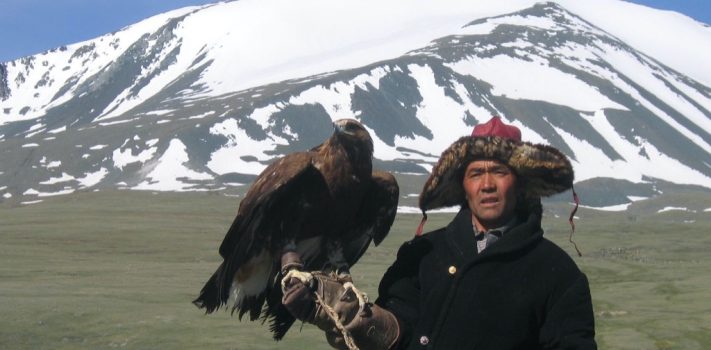
We lived in Mongolia in the early 1990s, for a few years after the collapse of the Soviet Union, during a time when the system had officially ended but its habits had not yet loosened their grip on daily life. I was in my early thirties, married, with two young daughters, trying to build a life far from anything familiar. We were not passing through, and we were not insulated expatriates. We were attempting to function inside the local economy, under local conditions, with consequences that were immediate and personal. At the time, I did not think of what we …


SWL Receiver Considerations and Buying Advice, by Sarge B.

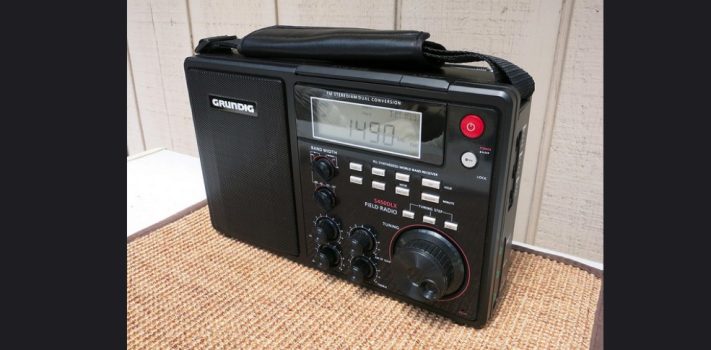
The following is my list of recommended features and some features to avoid, when looking  for a general coverage receiver. This is based upon my personal experience over the years as a shortwave listener (SWL) and Amateur Radio operator. Frequency Coverage: Look for a minimum frequency coverage of 500 kHz to 30 MHz. This covers the AM broadcast band (520 – 1710 kHz) and all of the shortwave broadcast bands (2 – 30 MHz). Coverage of the FM broadcast band (88-108 MHz) is also highly desirable. Digital frequency display: Allows precise tuning to a specific frequency. Avoid any radios with …


Small Scale PV Power For TEOTWAWKI, by Mike in Alaska

When it all hits the fan and the grid is gone for whatever reason, be it EMP, all out nuclear exchange, a hurricane, or possibly a tornado, snow knocking down trees, or as we say up here in the interior of Alaska the four reasons power goes out: it’s either too hot, too cold, too wet, or the dawgs pee on the phone pole, and when that happens, we are now all equally being given a ride back in time … a time of no lights to just switch on, no medical life sustaining devices, and now it’s “game-on”, folks. …


Practical Preparedness Suggestions – Part 2, by R.J.

(Continued from Part 1. This concludes the article.) 5. Self Defense This segment references reading, training and situational awareness that will be difficult for some people. Use what you can. Learn how to profile people and your surroundings. It happens in many forms, constantly. There are predators who don’t care about how nice you are. (Jeremiah 17:9 “The heart is deceitful above all things, and desperately wicked: who can know it?”) They will take advantage of the graces and courtesies that we usually employ to soften or de-escalate a problem. Learn what and how those predators think. Trust me, you …